
Law & Crime
Calls for State of Emergency: Failed Desperate Act of Oyetola and Oyebamiji — Governor Adeleke


By David Owei,Bayelsa
Governor Ademola Adeleke has described the call by faceless civil society groups for the declaration of a state of emergency in Osun State as the last failed desperate act of former Governor Gboyega Oyetola and Bola Oyebamiji who are frustrated by their inability to destabilise Osun State.
In a statement issued on Saturday at Osogbo, the Governor branded the call as a continuation of the failed plot by the Osun APC leadership to seize power through the backdoor after their consistent failure to win the support of Osun people.
“We reiterate well known facts in public domain that the APC is the main source of disturbance in the state, paralysing local government, mismanaging LG fund, and illegally deploying police, making Mr Oyetola and his cohorts the most hated entities in Osun political space.
The APC seized local government funds, mismanaged the same, and forcefully occupied the councils, all in a bid to provoke violence and conflict. This is a deliberate strategy to create chaos and blame it on the Adeleke-led administration.
Governor Adeleke has, however, succeeded in maintaining peace despite open confrontation and illegality being perpetrated by these groups. The call for a state of emergency is an act of frustration and desperation.
Osun APC has failed in its evil bid to destabilise and create mayhem in Osun State, hence their resort to an open call for emergency declaration, for which there is no basis or justification.
How can the APC turn around to accuse Governor Adeleke of creating a crisis in Osun when the whole world knows that it was Mr Oyetola and his cohorts that masterminded the current instability at Osun local government level?
How can any sane person blame Governor Adeleke when it was the APC illegal chairmen who had criminally hijacked the local government and who had refused to quit office after the expiration of their self-awarded tenure?
How can Governor Adeleke be responsible for the impunity of seeking tenure elongation by these illegal chairmen while staying on illegally across the councils?
How is the Governor liable when it was the Osun APC that hijacked Osun LG fund at the UBA, in direct breach of the local government finance laws?
Who can blame Governor Adeleke, who has been using state money to pay local workers, who were abandoned by the illegal APC chairmen who were hellbent on sharing billions of local government funds among themselves?
Governor Adeleke is receiving accolades on a daily basis for his legal and matured handling of the local government crisis. The Osun APC has emerged as a truly anti-people and anti-humanity political party.
“We warn agents of violence and conflict that Osun has gone past the era of brute force. No individual or group of individuals will be allowed to further disturb the peace of Osun State. Anybody found creating public mayhem will face the full wrath of the law.
“I have directed the Commissioner of Police to watch, monitor, and stop the plot to plunge Osun into an open conflict. I call on the Inspector General of Police to take note of the current trend and deploy his men to action.
“I again call on Mr President to call Mr Oyetola to order. The action of the minister is splashing mud on the names of the Presidency. Mr Oyetola and his team should allow Osun to breathe.
“Those seeking power should face the electorates; voters will decide. Political power is secured through the people, no backdoor access will work. Osun people will not bow or surrender to impunity and an unconstitutional agenda.”




By Our Correspondent
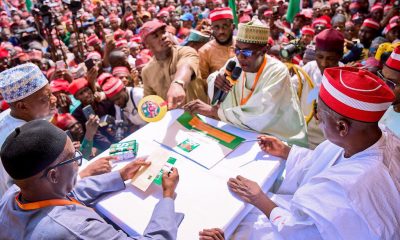
Barely three weeks after the Independent National Electoral Commission (INEC) declared governor Adeleke of Accord party winner of Osun election, the All Progressives Congress, (APC) and the Peoples Democratic Party, (PDP) have challenged the outcome of the August 15, 2026, Osun Gubernatorial elections incumbent governor’s victory as Tribunal displays two Petitions
The petitions were confirmed in a notice sighted by our correspondent at the tribunal secretariat in Osogbo on Monday, formally commencing the legal process arising from the August 15 governorship election.
The development followed confirmation by the secretary of the tribunal, Pefe Belemore, that petitions challenging the election outcome had been filed.
According to Belemore, “The necessary notices would be displayed on the tribunal’s notice board before noon on Monday.”
At the opening of the tribunal earlier in the day, Belemore was present in the courtroom alongside other officials of the secretariat as preparations were made for the commencement of proceedings.
The APC and PDP are challenging the outcome of the election, which returned Adeleke as governor for another term in office.
The display of the petitions is expected to pave the way for the service of legal processes on the parties involved and subsequent proceedings before the tribunal.
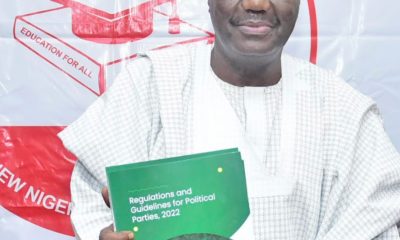
The APC’s petition, marked EPT/OS/GOV/01/2026, was filed by its governorship candidate, Bola Oyebamiji.
Oyebamiji listed Adeleke, the Accord and the Independent National Electoral Commission, INEC, as respondents in the petition challenging the election outcome.
The PDP’s petition, marked EPT/OS/GOV/02/2026, was filed by Adebayo Olugbenga Adedamola against Adeleke, INEC and the Accord.
Law & Crime
IPC-SPJ Hub Condemns Attack on Kano Journalists, …. Tasks Security Agecies on Protection during Political Rallies

By David Owei
The Safety and Protection of Journalists (SPJ) Hub of the International Press Centre (IPC) condemns the attack on journalists who were returning from covering the All Progressives Congress (APC) rally at the Sani Abacha Stadium in Kano on Saturday, 5th September 2026.
Reports reaching the Hub states that, “a vehicle conveying four Radio Nigeria Pyramid FM staff, a journalist from Guarantee Radio and another from Daily Trust, was attacked by hoodlums, who repeatedly hit the vehicle, leaving the driver to sustain injuries, while some of the journalists were hit by broken glass from the damaged vehicle.”
“The incident happened after the APC had held the Tinubu Support Group rally at the Sani Abacha Stadium in Kano,” the report further revealed.
The Executive Director of IPC, Mr. Lanre Arogundade in a statement described the unfortunate incident, as a serious concern and threat to press freedom, considering the damage on a Radio Nigeria, Pyramid FM vehicle.
Mr. Arogundade noted that, “the campaigns and rally just recently started, and journalists should not be subject to any form of attack at this time, when political activities are gradually increasing ahead of the general elections.”
The Hub is therefore calling on all security agencies to at this time be intentional about safeguarding journalists, especially those deployed to the field to cover political activities, especially during large gatherings where journalists are exposed to potential risks.
The Hub is also admonishing media organisations and journalists covering elections to always conduct security scan and safety consciousness in coverage of electoral issues.

By George Mgbeleke
The Human Rights Writers Association of Nigeria (HURIWA) has demanded the immediate suspension of officials in charge of the National Cash Transfer Office and ordered a full-scale investigation into the N33.75 billion cash transfer that the Auditor-General for the Federation and states have failed to properly account for.
HURIWA in a statement by its national coordinator, Comrade Emmanuel Nnadozie Onwubiko emphasized that Nigerians cannot continue to watch helplessly as billions of naira meant for poor and vulnerable citizens disappear into unverifiable transactions.
The group called on the Economic and Financial Crimes Commission (EFCC) to launch a vigorous forensic investigation, trace every naira, and recover any amounts determined to have been wrongly paid, diverted, or misapplied.
The Auditor-General’s findings revealed a significant breakdown in financial controls governing one of the Federal Government’s most sensitive social intervention programs, as payments to 3,295,207 households across 35 states in 2023 could not be authenticated.
HURIWA demands explanations for incomplete beneficiary details on payment vouchers and the unavailability of necessary Remita statements for reconciliation purposes. Disturbingly, auditors were reportedly obstructed by National Cash Transfer Office staff from accessing these records.
HURIWA insists on a thorough investigation to follow the money from government accounts to the final recipients, stating that no official should use bureaucracy to shield themselves as unverified billions remain in limbo. The organization urges the EFCC to verify each payment and identify genuine vulnerable Nigerians among the beneficiaries. Misallocated funds must be recovered, and those responsible held accountable.
Moreover, HURIWA stresses that this situation extends beyond the N33.75 billion, highlighting additional discrepancies totaling N36.74 billion and stressing the need for a comprehensive audit of the entire National Cash Transfer Programme.
HURIWA challenges President Bola Ahmed Tinubu to uphold public accountability and restore faith in government poverty-alleviation efforts. The organization insists that political connections should not shield individuals from accountability and demands prompt action.
HURIWA demands the Federal Government:
1. Suspend officials of the National Cash Transfer Office pending investigation.
2. Direct the EFCC to conduct a full forensic probe into the N33.75 billion and related transactions.
3. Trace every naira and identify persons/entities that received funds.
4. Recover misallocated funds and return them to the Treasury.
5. Publish credible disbursement records.
6. Investigate and prosecute those obstructing auditors.
7. Conduct a full audit of the social intervention programme and publish findings.
8. Prosecute culpable individuals following investigations and due process.
HURIWA urges that the funds meant for vulnerable citizens must reach them and calls for immediate action to restore public trust in government operations.
Find the money. Recover the money. Name those responsible. Prosecute the culpable. Return Nigerians’ money to the Treasury.**
That is the minimum accountability Nigerians deserve.

HURIWA Mourns Bello Mandiya, Hourns a Dependable Ally of Human Rights
By George Mgbeleke The Human Rights Writers Association of Nigeria (HURIWA) mourns the death of former Senator representing Katsina South...


HURIWA DEMANDS IMMEDIATE REMOVAL OF HANDCUFFS FROM Ufoma Joseph Immanuel
By George Mgbeleke The Human Rights Writers Association of Nigeria (HURIWA) says the Nigerian Correctional Service must immediately stop the...
Northern Senator Forum Mourns Senator Bello Mandiya
By George Mgbeleke The Northern Senators Forum has received with profound sadness the news of the passing of Distinguished Senator...
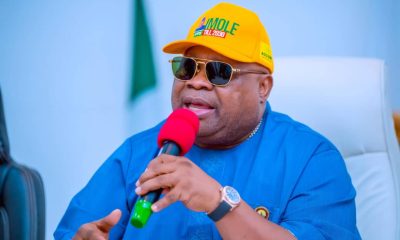

APC withdraws petition challenging Gov.Adeleke’s Victory
By Our Correspondent In dramatic twice the All Progressives Congress (APC) has filed an application seeking to withdraw the petition...

NUJ FCT Raises N5.01m Trust Fund for Late Chairman’s Children …265 members raised N5.01m to secure education, welfare of Osadebamwen’s three children
By Our Correspondent In a bid to ensure a good welfare package for its departed members and their families, the...

APC chieftain demands probe, prosecution of Atiku over $40M, SIEMENS, SPV allegations
By Our Correspondent A chieftain of the All Progressives Congress (APC), Ntufam Hilliard Eta, has called on the nation’s anti-corruption...
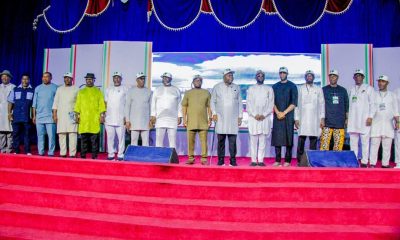

Nigerian Politics Becoming Less Violent, Says Gov Diri As CBM Holds Bayelsa Retreat
By David Owei Governor of Bayelsa State, Senator Douye Diri, has observed that the political arena in Nigeria was shifting...
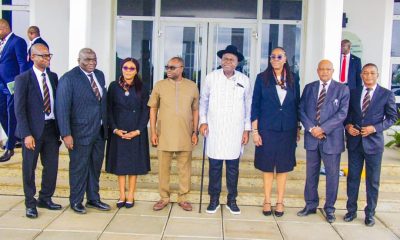

Gov Diri Seeks Increase In Law Students Quota At NDU
By David Owei Governor of Bayelsa State, Senator Douye Diri, has appealed to the Council of Legal Education to increase...


Nembe Spill: HOMEF demands cleanup, compensation, accountability
By David Owei The Health of Mother Earth Foundation (HOMEF) on Tuesday demanded urgent cleanup, compensation and accountability over an...


NCDMB to Feature Nwabuikwu’s The Pain and The Promise In Book Reading Session
By David Owei The Nigerian Content Development and Monitoring Board (NCDMB) will host the fifth edition of its Book Reading...
-
 Politics1 year ago
Gov Okpebholo moves to end Cultism *Threatens action against leading cult groups *Vows to demolish more cult houses in Edo State
-
 Politics1 year ago
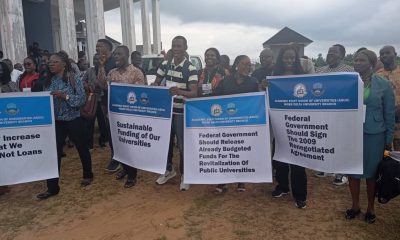
ASUU-NDU protest against FG loans, unpaid salaries,Non-Implementation of agreements …..says loans is generational slavery
-
 Business & Economy1 year ago
PC-NCG Issues Disclaimer on Purported Nigerian Coast Guard National Orientation Exercise In Anambra State
-
 Entertainment2 years ago
Jubilation galore as Parishioners of CKC Kurudu celebrate their cultural heritage ….FG should exploit our Cultural heritage to unite Nigerians-Rev Fr Dim
-

 Sports7 months ago
Bayelsa-born ex-football star’s son, Opuama donates spike shoes to Athletics Association
-

 General News2 years ago
Reps hold public hearing on FMC Ugwuaji Awkunanaw
-
 Law & Crime1 year ago
Legal practitioner raises alarm over threat to his life by CSP Muhammed Abdulkareem
-
 General News2 years ago
Celebration galore as UDA Successfully Elected New Exco ……I will digitalize processes that will raise UDA to greater height -Comr. Okejiri