
Law & Crime
Insecurity: Catholic Bishops decry worsening situation in the North

By Our Correspondent
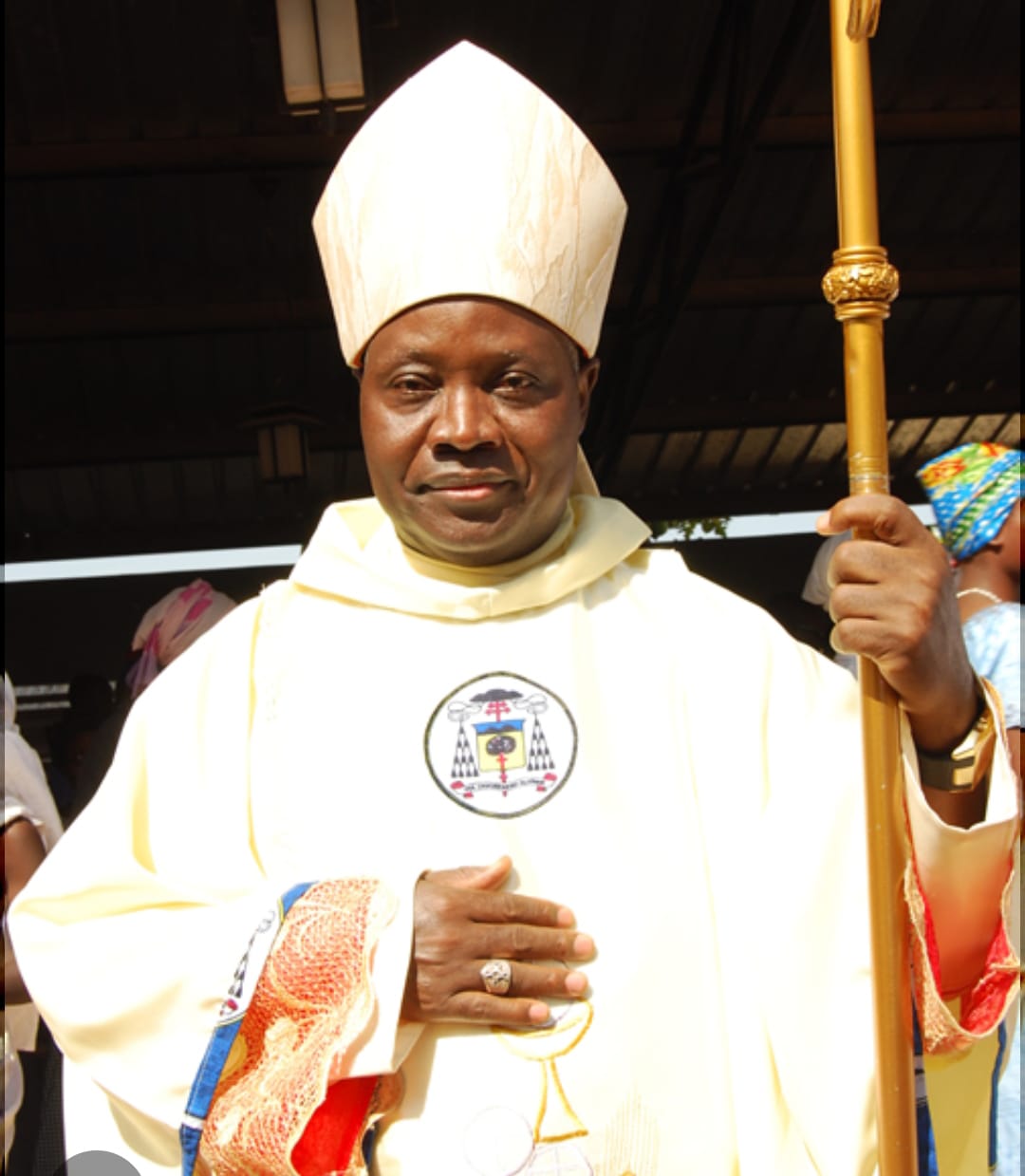
The Catholic Bishops of Northern Nigeria have decried the continued worsening insecurity in most parts of Northern Nigeria and call on relevant authorities to expedite actions to cut the trend before the region is thrown into total chaos and anarchy.
This is contained in a communique issued at the end of the inter-provincial meeting of the Catholic Bishops of Northern Nigeria that was held in Kaduna.
The group note that the region is richly blessed with enormous potentials in agriculture and solid minerals but the wave of unchecked security challenges have left the region largely impoverished and grossly underdeveloped.
They raise alarm over the crashing of food prices without measures to check the prices of farm inputs as it could lead to more farmers abandoning their farms and ultimately worsening food shortages.
“We, the Catholic Bishops of Kaduna, Abuja and Jos Ecclesiastical Provinces, following our annual meeting held at the Secretariat of the Catholic Archdiocese of Kaduna from 27 – 29 January 2026, and having prayerfully reflected on the social, economic, and moral realities confronting our nation, wish to issue the following communique:
“Although Northern Nigeria is not endowed with oil wells as found in some parts of the country, Divine Providence has richly blessed the region with vast and fertile agricultural land. If properly harnessed through sound policies, adequate security, and sustained support for farmers, this potential can significantly contribute to national food security and economic stability. As the Psalmist declares, “The earth has yielded its harvest; God, our God, has blessed us” (Psalm 67:6). Yet, blessings neglected soon become wasted opportunities.
“Agriculture must therefore be treated not merely as an economic sector, but as a moral responsibility linked to the dignity of labour, rural survival, and the common good. Policies in this sector must be guided by justice, equity, and inclusion, lest abundance give way to scarcity (cf. Isaiah 5:8).
“At the same time, we express grave concern over the worsening security situation, especially in Northern Nigeria. The persistent incidents of kidnapping for ransom, killings of innocent citizens, invasion and occupation of farming communities, and widespread displacements have created fear, trauma, and deep uncertainty among our people. Farmlands meant to sustain life have increasingly become places of danger, forcing many farmers to abandon their means of livelihood and thereby worsening hunger and poverty. A society cannot flourish where human life is continually threatened. We therefore call on all tiers of government and security agencies to intensify efforts towards the protection of lives and property, for peace can only endure where justice is upheld (cf. Isaiah 32:17).
“In addressing food insecurity, we acknowledge the government’s intention to reduce the burden of hunger through the lowering of food prices. Such concern reflects the biblical injunction: “You shall not harden your heart or close your hand against your poor brother” (Deuteronomy 15:7). However, we observe with concern that this policy has produced unintended hardships for farmers. While food prices have declined, the costs of fertilizers, herbicides, seedlings, fuel, and other farm inputs remain excessively high. As a result, many farmers are unable to earn sufficient income to meet essential obligations such as education, healthcare, and family sustenance. As Scripture affirms, “the labourer deserves his wages” (Luke 10:7); when those who feed the nation cannot benefit from their labour, discouragement and deeper poverty follow.
“Despite repeated policy commitments by successive administrations to transform agriculture, tangible results remain limited. Access to modern machinery and affordable credit facilities continue to be constrained by administrative bottlenecks and collateral requirements. Information on modern farming methods and global best practices often fail to reach rural communities in good time, while agricultural extension services remain weak due to inadequate motivation and institutional support. We therefore urge a comprehensive and coordinated review of agricultural policies to ensure sustainability, accessibility, and fairness, especially for small-scale farmers.
“We further reaffirm our conviction that education remains the foundation of any meaningful and lasting national development. Scripture exhorts us: “Train up a child in the way he should go” (Proverbs 22:6). It is, therefore, with deep concern that we recall the closure of schools in some states during the last Ramadan period. The strong reactions that followed reflected widespread anxiety over the disruption of children’s learning and formation. At a time when educational indicators in Northern Nigeria already reveal serious challenges, policies that interrupt academic activities risk further disadvantaging an entire generation. Rather than suspending learning, greater investment should be directed toward improving educational quality, infrastructure, and inclusivity. As the Word of God warns, “My people perish for lack of knowledge” (Hosea 4:6). Educational policies must therefore be guided by wisdom, dialogue, and the overriding principle of the common good.
“We also recognize the growing importance of communication and information technology in shaping contemporary society. When properly used, digital platforms can promote education, participation, and national cohesion. Yet, we express concern over the increasing spread of misinformation and false narratives through social media and other digital channels, often fueling division and mistrust. We therefore urge all citizens and media practitioners to exercise responsibility, discernment, and ethical restraint, remembering the apostolic counsel.
“Despite the many challenges confronting our nation, we remain firmly anchored in hope. Our hope is sustained by faith in God, confidence in the resilience of our people, and belief in the possibility of renewed commitment to justice, truth, and the dignity of every human person. As the Prophet assures us, “Those who hope in the Lord shall renew their strength” (Isaiah 40:31). We therefore call on all leaders and citizens to work together in sincerity and dialogue for the healing, rebuilding, and future of our nation, trusting that with God’s guidance and collective responsibility, Nigeria can yet experience peace, unity, and sustainable development” the statement reads in parts.








By Our Correspondent
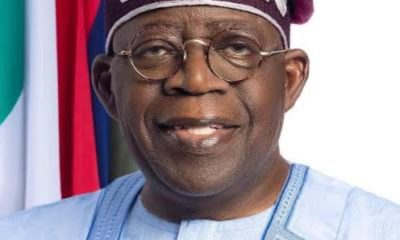
Barely three weeks after the Independent National Electoral Commission (INEC) declared governor Adeleke of Accord party winner of Osun election, the All Progressives Congress, (APC) and the Peoples Democratic Party, (PDP) have challenged the outcome of the August 15, 2026, Osun Gubernatorial elections incumbent governor’s victory as Tribunal displays two Petitions
The petitions were confirmed in a notice sighted by our correspondent at the tribunal secretariat in Osogbo on Monday, formally commencing the legal process arising from the August 15 governorship election.
The development followed confirmation by the secretary of the tribunal, Pefe Belemore, that petitions challenging the election outcome had been filed.
According to Belemore, “The necessary notices would be displayed on the tribunal’s notice board before noon on Monday.”
At the opening of the tribunal earlier in the day, Belemore was present in the courtroom alongside other officials of the secretariat as preparations were made for the commencement of proceedings.
The APC and PDP are challenging the outcome of the election, which returned Adeleke as governor for another term in office.
The display of the petitions is expected to pave the way for the service of legal processes on the parties involved and subsequent proceedings before the tribunal.
The APC’s petition, marked EPT/OS/GOV/01/2026, was filed by its governorship candidate, Bola Oyebamiji.
Oyebamiji listed Adeleke, the Accord and the Independent National Electoral Commission, INEC, as respondents in the petition challenging the election outcome.
The PDP’s petition, marked EPT/OS/GOV/02/2026, was filed by Adebayo Olugbenga Adedamola against Adeleke, INEC and the Accord.
Law & Crime
IPC-SPJ Hub Condemns Attack on Kano Journalists, …. Tasks Security Agecies on Protection during Political Rallies

By David Owei
The Safety and Protection of Journalists (SPJ) Hub of the International Press Centre (IPC) condemns the attack on journalists who were returning from covering the All Progressives Congress (APC) rally at the Sani Abacha Stadium in Kano on Saturday, 5th September 2026.
Reports reaching the Hub states that, “a vehicle conveying four Radio Nigeria Pyramid FM staff, a journalist from Guarantee Radio and another from Daily Trust, was attacked by hoodlums, who repeatedly hit the vehicle, leaving the driver to sustain injuries, while some of the journalists were hit by broken glass from the damaged vehicle.”
“The incident happened after the APC had held the Tinubu Support Group rally at the Sani Abacha Stadium in Kano,” the report further revealed.
The Executive Director of IPC, Mr. Lanre Arogundade in a statement described the unfortunate incident, as a serious concern and threat to press freedom, considering the damage on a Radio Nigeria, Pyramid FM vehicle.
Mr. Arogundade noted that, “the campaigns and rally just recently started, and journalists should not be subject to any form of attack at this time, when political activities are gradually increasing ahead of the general elections.”
The Hub is therefore calling on all security agencies to at this time be intentional about safeguarding journalists, especially those deployed to the field to cover political activities, especially during large gatherings where journalists are exposed to potential risks.
The Hub is also admonishing media organisations and journalists covering elections to always conduct security scan and safety consciousness in coverage of electoral issues.

By George Mgbeleke
The Human Rights Writers Association of Nigeria (HURIWA) has demanded the immediate suspension of officials in charge of the National Cash Transfer Office and ordered a full-scale investigation into the N33.75 billion cash transfer that the Auditor-General for the Federation and states have failed to properly account for.
HURIWA in a statement by its national coordinator, Comrade Emmanuel Nnadozie Onwubiko emphasized that Nigerians cannot continue to watch helplessly as billions of naira meant for poor and vulnerable citizens disappear into unverifiable transactions.
The group called on the Economic and Financial Crimes Commission (EFCC) to launch a vigorous forensic investigation, trace every naira, and recover any amounts determined to have been wrongly paid, diverted, or misapplied.
The Auditor-General’s findings revealed a significant breakdown in financial controls governing one of the Federal Government’s most sensitive social intervention programs, as payments to 3,295,207 households across 35 states in 2023 could not be authenticated.
HURIWA demands explanations for incomplete beneficiary details on payment vouchers and the unavailability of necessary Remita statements for reconciliation purposes. Disturbingly, auditors were reportedly obstructed by National Cash Transfer Office staff from accessing these records.
HURIWA insists on a thorough investigation to follow the money from government accounts to the final recipients, stating that no official should use bureaucracy to shield themselves as unverified billions remain in limbo. The organization urges the EFCC to verify each payment and identify genuine vulnerable Nigerians among the beneficiaries. Misallocated funds must be recovered, and those responsible held accountable.
Moreover, HURIWA stresses that this situation extends beyond the N33.75 billion, highlighting additional discrepancies totaling N36.74 billion and stressing the need for a comprehensive audit of the entire National Cash Transfer Programme.
HURIWA challenges President Bola Ahmed Tinubu to uphold public accountability and restore faith in government poverty-alleviation efforts. The organization insists that political connections should not shield individuals from accountability and demands prompt action.
HURIWA demands the Federal Government:
1. Suspend officials of the National Cash Transfer Office pending investigation.
2. Direct the EFCC to conduct a full forensic probe into the N33.75 billion and related transactions.
3. Trace every naira and identify persons/entities that received funds.
4. Recover misallocated funds and return them to the Treasury.
5. Publish credible disbursement records.
6. Investigate and prosecute those obstructing auditors.
7. Conduct a full audit of the social intervention programme and publish findings.
8. Prosecute culpable individuals following investigations and due process.
HURIWA urges that the funds meant for vulnerable citizens must reach them and calls for immediate action to restore public trust in government operations.
Find the money. Recover the money. Name those responsible. Prosecute the culpable. Return Nigerians’ money to the Treasury.**
That is the minimum accountability Nigerians deserve.


HURIWA Mourns Bello Mandiya, Hourns a Dependable Ally of Human Rights
By George Mgbeleke The Human Rights Writers Association of Nigeria (HURIWA) mourns the death of former Senator representing Katsina South...


HURIWA DEMANDS IMMEDIATE REMOVAL OF HANDCUFFS FROM Ufoma Joseph Immanuel
By George Mgbeleke The Human Rights Writers Association of Nigeria (HURIWA) says the Nigerian Correctional Service must immediately stop the...
Northern Senator Forum Mourns Senator Bello Mandiya
By George Mgbeleke The Northern Senators Forum has received with profound sadness the news of the passing of Distinguished Senator...

APC withdraws petition challenging Gov.Adeleke’s Victory
By Our Correspondent In dramatic twice the All Progressives Congress (APC) has filed an application seeking to withdraw the petition...

NUJ FCT Raises N5.01m Trust Fund for Late Chairman’s Children …265 members raised N5.01m to secure education, welfare of Osadebamwen’s three children
By Our Correspondent In a bid to ensure a good welfare package for its departed members and their families, the...

APC chieftain demands probe, prosecution of Atiku over $40M, SIEMENS, SPV allegations
By Our Correspondent A chieftain of the All Progressives Congress (APC), Ntufam Hilliard Eta, has called on the nation’s anti-corruption...

Nigerian Politics Becoming Less Violent, Says Gov Diri As CBM Holds Bayelsa Retreat
By David Owei Governor of Bayelsa State, Senator Douye Diri, has observed that the political arena in Nigeria was shifting...

Gov Diri Seeks Increase In Law Students Quota At NDU
By David Owei Governor of Bayelsa State, Senator Douye Diri, has appealed to the Council of Legal Education to increase...


Nembe Spill: HOMEF demands cleanup, compensation, accountability
By David Owei The Health of Mother Earth Foundation (HOMEF) on Tuesday demanded urgent cleanup, compensation and accountability over an...


NCDMB to Feature Nwabuikwu’s The Pain and The Promise In Book Reading Session
By David Owei The Nigerian Content Development and Monitoring Board (NCDMB) will host the fifth edition of its Book Reading...
-
 Politics1 year ago
Gov Okpebholo moves to end Cultism *Threatens action against leading cult groups *Vows to demolish more cult houses in Edo State
-
 Politics1 year ago
ASUU-NDU protest against FG loans, unpaid salaries,Non-Implementation of agreements …..says loans is generational slavery
-

 Business & Economy1 year ago
PC-NCG Issues Disclaimer on Purported Nigerian Coast Guard National Orientation Exercise In Anambra State
-
 Entertainment2 years ago
Jubilation galore as Parishioners of CKC Kurudu celebrate their cultural heritage ….FG should exploit our Cultural heritage to unite Nigerians-Rev Fr Dim
-

 Sports7 months ago
Bayelsa-born ex-football star’s son, Opuama donates spike shoes to Athletics Association
-

 General News2 years ago
Reps hold public hearing on FMC Ugwuaji Awkunanaw
-
 Law & Crime1 year ago
Legal practitioner raises alarm over threat to his life by CSP Muhammed Abdulkareem
-
 General News2 years ago
Celebration galore as UDA Successfully Elected New Exco ……I will digitalize processes that will raise UDA to greater height -Comr. Okejiri