
Politics
NASS highlightes key Reforms in 2026 Electoral Act -Reveals how parliament engaged AGF, INEC, CSOs, others two years before the enactment of Electoral law -Says electronic transmission of election results, use of BVAS for accreditation now mandatory -New law mandates political parties to maintain digital register with INEC….

Ignatius Okorocha,Abuja
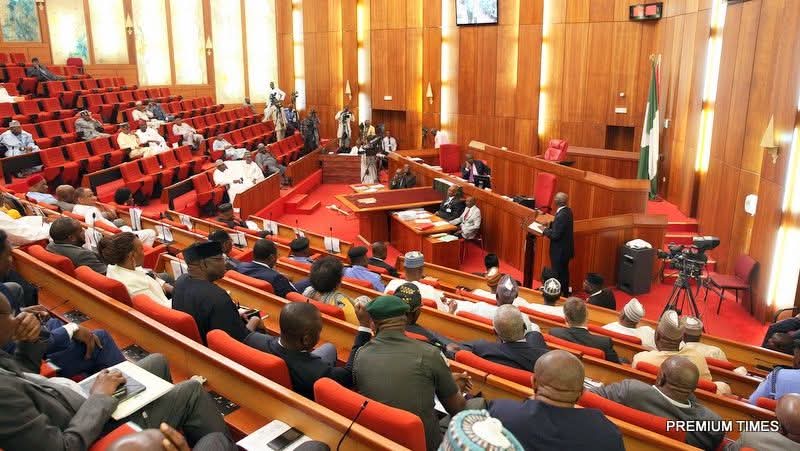
The Senate on Sunday highlighted the creation of a dedicated fund for the Independent National Electoral Commission (INEC), mandatory electronic transmission of election results and creation of a digital membership register by all political parties, among others, as part of key reforms in the Electoral Act, 2026.
The new electoral governance framework, according to the parliament, equally mandates the INEC to deploy bimodal voters verification system (BVAS) for voters accreditation; recommend two-year jail imprisonment for the Resident Electoral Commissioner (REC) that withholds vital documents; establish an electronic register of voters and review upward campaign funds for different elective offices.
Leader of the Senate, Senator Opeyemi Bamidele provided the key highlights of the new regime in a statement released by his Directorate of Media and Public Affairs on Sunday, revealing how the legislative arm engaged diverse stakeholders for two years before its eventual enactment.
According to Bamidele, National Assembly had harmonised different versions of the Electoral Bill 2026 produced by its two Chambers, especially with respect to Clause 60(3); passed the Bill into law and transmitted it to President Bola Ahmed Tinubu for assent in order to avoid constitutional crisis that might arise in the preparation of the 2027 general election.
The statement reads,”The president had subsequently signed the Electoral Bill 2026 into law after 24 hours of its enactment, thereby completing the two-year process of recrafting the new regime expected to shape the next elections positively.
“Although the civil society organisations (CSOs) had questioned the speed at which the Electoral Bill 2026 was signed into law, the president observed that the essence of democracy was designed to promote conversations aimed at deepening national development, nation-building and stability of the federation.”
Contrary to insinuations in some quarters, Bamidele explained how the National Assembly sustainably engaged the CSOs, INEC, Office of the Attorney-General of Federation (OAGF) and development partners, among others, for two consecutive years before the new electoral regime came into force.
He said the making of the new regime “is a collective work that involves nearly all critical stakeholders. The National Assembly worked with such different stakeholders as OAGF, CSOs, INEC and our development partners, among others, before we eventually completed the process.
“As we were making progress, the stakeholders too were making their input, and all the inputs were incorporated in the Act. In view of the time constraint we are facing now, I do not believe the Executive requires days or weeks to review it before assent since we all contributed to it. Its outcome is not a unilateral effort of the parliament, but of Nigerians at large.”
Consequently, Bamidele explained the potential of the new electoral governance framework “to obviously strengthen institutional independence; enhance transparency in election management; improve technological integration and reinforce accountability mechanisms in the country’s election management system.
“Under Section 3, for instance, the senate leader pointed out that the new legislation established a dedicated fund for the INEC, which according to him, would guarantee the financial autonomy, operational stability and administrative continuity of the commission.
“With this provision alone, according to Bamidele, INEC will operate with greater independence and quicker corrective powers. The section requires that election funds be released earlier, at least six months before the general election and expands INEC’s powers to review questionable result declarations made under duress or procedural violations.”
He also cited Section 47 of the Electoral Act, which mandated all presiding officers “to use BVAS or any other technological device that may be prescribed by the Commission, for the accreditation of voters, to verify, confirm or authenticate the particulars of the intending voter in the manner prescribed by the Commission.
“While Section 60(3) mandates the electronic transmission of election results to the INEC Result Viewing Portal (IReV), he revealed that Section 60(6) recommended “a six-month imprisonment or a fine of N500,000 or both against any presiding officer, who willfully frustrates the electronic transmission of election result.
“This provision is consistent with the public demands. It also stipulates another measure of consequence if any presiding officer refuses to electronically transmit the results from each polling unit to IREV. We must equally understand that IREV is not a collation platform. It was designed to enhance transparency in our electoral process. An electronic collating system is a project that requires its own planning.”
Nevertheless, the senate leader clarified that the new electoral governance framework conditionally permitted the resort to Form EC8A to transmit election results as prescribed by the INEC provided that the electronic transmission of election results failed due to communication failure,
He also pointed out Section 72(2), which recommended that a certified true copy of the order of the court “shall be sufficient for the purpose of swearing-in any candidate declared as the winner of an election by the court where that the INEC fails, refuses, or neglects to issue the certificate of return.
“Section 74(1) of the Electoral Act, according to Bamidele, specifically mandates the REC to release the certified true copy of any document within 24 hours after payment has been made. The failure to comply will attract an imprisonment of a minimum term of two years without an option of fine.”
Unlike the 2022 Electoral Act that had been repealed, Bamidele explained that “the new regime only provided for direct and consensus primaries under Section 84 (1-2) as means of electing candidates for elective offence, thereby phasing out indirect primaries to enable broader party members to participate in the process and reduce the use of money to compromise party delegates.
“But Section 77 (1-7), according to him, stipulates stringent measures that will henceforth govern and regulate the conduct of primaries and the process of electing party candidates. The section mandates each political party to maintain a digital register of its members; issue membership cards to each of them and submit such a register to the INEC 21 days before the party primaries, congresses or conventions.”
He further pointed out that a political party “shall not use any other register for party primaries, congresses and conventions than the register submitted to the INEC. Besides, any political party that fails to submit the membership register within the stipulated time shall not be eligible to field a candidate for that election. These are indeed consequential restraint measures that will deepen internal democracy and reduce the monetisation of politics in the country.”
He further explained that the new regime reviewed upward the election spending limit under Section 92(1-8) of the Electoral Act, raising the spending threshold for presidential poll from ₦5 billion to ₦10 billion; from ₦1 billion to ₦3 billion for the governorship; from ₦1000 million to ₦500 million for the Senate; from ₦70 million to ₦250 million for the House of Representatives; from ₦30 million to ₦100 million for the House of Assembly; from ₦30 million to ₦60 million for Area Council and from ₦5 million to ₦10 million for the councillorship poll.
Under Section 125(1-2), Bamidele explained how the new legislation stiffened measures against vote buying, impersonation, and result manipulation, recommending a two-year imprisonment for such offences or a fine ranging between ₦500,000 and ₦2 million or both upon conviction.
He highlighted how Section 49 mandated the presiding officer to separate the queue between men and women in any part of the country where culture did not permit it; Section 54 created support mechanism for persons with visual impairment and Section 93 (4) recommended a fine of ₦10 million for a political party that failed to submit an accurate audited return within the stipulated period.
Given these reforms, the senate leader said: “The Electoral Act, 2026 represents a consolidation and refinement of the country’s electoral governance framework. In all, the Act seeks to enhance electoral credibility, reduce disputes, and strengthen democratic governance in Nigeria.
“The Act emphasises financial and operational independence of INEC; technological integration with procedural safeguards; transparency in collation and declaration; stricter penalties for electoral offences and stronger regulation of political parties.”








Politics
Sea Incursion: Senate Demands Urgent Shoreline Protection As Ayetoro Community Faces Extinction
By our correspondent
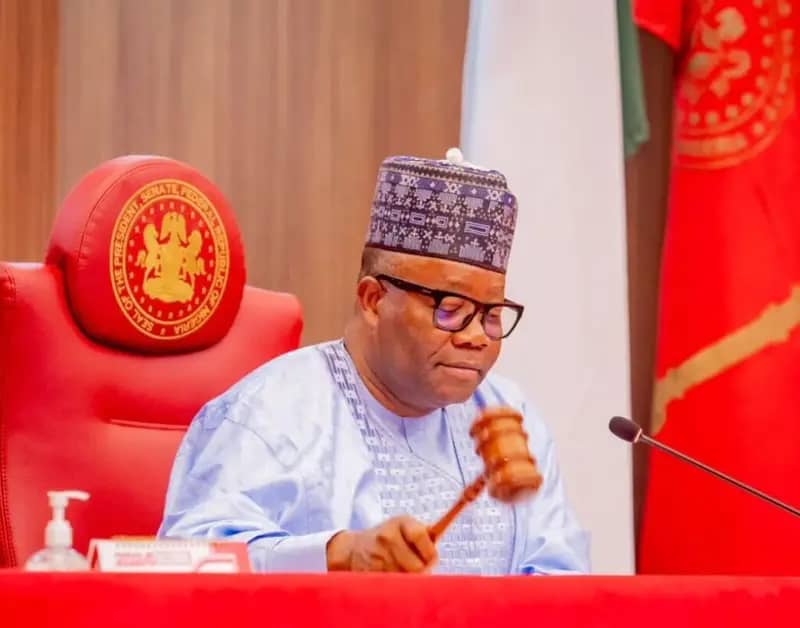
Senate on Thursday called for immediate and comprehensive shoreline protection to save Ayetoro community in Ilaje Local Government Area of Ondo State from being wiped out.
The call followed a motion moved on Thursday by Senator Dayo Faduyile (Ondo South) on the urgent need to save the historic coastal community from sea incursion.
Presenting the motion, Faduyile told the Senate that homes, livelihoods, cultural heritage and public infrastructure in Ayetoro are being progressively destroyed by ocean surges, with recent reports indicating that about 80 per cent of buildings in the community have been lost to the sea.
He said the destruction has devastated schools, healthcare facilities, places of worship and traditional institutions, displacing thousands and disrupting fishing and other economic activities.
“Continued destruction of homes and community infrastructure has displaced families, threatened access to safe water and healthcare and put the future of the historic community in grave uncertainty,” he said.
The lawmaker expressed concern that previous shoreline protection interventions have faced implementation challenges, including reported delays in earlier Niger Delta Development Commission (NDDC) contracts, necessitating verification of project status, expenditure and outstanding obligations.
He noted that the scale of the crisis exceeds the capacity of residents and requires urgent intervention by the Federal Government, Ondo State Government, relevant development agencies and international development partners.
Faduyile added that the Ondo State Oil Producing Areas Development Commission (OSOPADEC) has indicated that substantial financial resources are required to address the crisis, underscoring the need for adequate funding, sound engineering and sustainable protection measures.
He warned that further delay may result in additional loss of lives, property and livelihoods, while exposing vulnerable groups, particularly women, children and the elderly, to worsening humanitarian and environmental conditions.
The Senate, in its resolutions, called on the Federal Government, through the Federal Ministry of Environment, the NDDC and other relevant agencies, to work with the Ondo State Government and OSOPADEC to implement an adequately funded shoreline protection programme for Ayetoro.
It also called for a transparent review of all ongoing shoreline protection contracts for the community, including their funding status, outstanding obligations and completion timelines, and for necessary remedial action to be taken.
The upper chamber urged the Federal Government to explore budgetary provisions and climate adaptation financing to support sustainable coastal protection, including construction of embankment where technically appropriate, and restoration of essential community infrastructure.
It further urged the National Emergency Management Agency (NEMA) and other relevant authorities to provide immediate humanitarian assistance, safe water, healthcare and temporary shelter for residents whose homes and livelihoods are threatened.
The Senate mandated its Committees on Environment, Niger Delta Development, Ecology and Special Duties to liaise with relevant ministries and agencies on implementation and report back within four weeks.
It also mandated the Committee on Legislative Compliance to monitor implementation of its resolutions and report accordingly.
Politics
PMS Importation : Senate rejects NMDPRA’s 2022, 2023 records …says wide disparities between it and those of NNPCL unacceptable ….summons heads of agencies
By Our Correspondent
The Senate has through its committee on Public Accounts , rejected records of volume of Petroleum importation presented to it by Nigerian Midstream and Downstream Petroleum Regulatory Authority ( NMDPRA) for 2022 and 2023 on account of wide disparities between them and those presented by the Nigerian National Petroleum Company Limited ( NNPCL).
It consequently resolved to summon heads of NMDPRA , NNPCL and Nigeria Extractive Industries Transparency Initiative ( NEITI) for possible reconciliation of the records or final exposure of suspected fraud to have been carried out.
Wide disparities in records of NMDPRA and NNPCL on volume of PMS imported by the Federal Government of Nigeria in 2022 and 2023 , came to the fore when management of NMDPRA responded to queries leveled against it in the NEITI Audit report of 2021 to 2023 .
Authority Chief Executive of NMDPRA ( ACE) , Mallam Rabiu Abdullahi Umar , represented by a Deputy Director , Uzoamaka Ugwu – Ojobe , had in responding to NEITI query, told the committee that NMDPRA records on volume of Petroleum importation were credible despite disparities with those of the NNPCL .
” We stand by 3.29billion litres of PMS as volume imported in 2022 and 6.02billion litres as volume imported in 2023 against 6.27 billion litres recorded by NNPCL in 2022 and 3.88billion litres in 2023.
” The slight disparities are being looked into for possible reconciliation “, she said .
Irked by her submission , a member of tbe committee, Senator Abdul Ningi ( Bauchi Central ) , said disparities of over 50% are not slight but wide and very disturbing and suspicious .
” The disparities in records of PMS importation between NMDPRA and NNPCL in 2022 and 2023 as stated in the NEITI Oil and Gas Industry Audit report of 2021 to 2023 , are too wide to be described as slight or being looked into without the seriousness required”, he said .
Also miffed by the huge disparities in the records , Senator Dayo Faduyile ( Ondo South ) , said the disparities leave a lot of room for someone to think that something is amis .
Outrightly rejecting the NMDPRA’ s defence , Senator Anietan Bassey ( Akwa Ibom North East ) , said thorough investigation of the wide disparity must be carried out by the committee as according to him, Nigerians must not be allowed to be shortchanged on yearly basis as glaringly shown with the NMDPRA and NNPCL records of PMS importation .
“Mr Chairman and very distinguished colleagues , these questionable records of volume of PMS importation by the two agencies , must be thoroughly investigated to safe Nigerians from being yearly shortchanged and expose those milking the country dry .”, he said .
Consequently , the committee chaired by Senator Hassan Dankwabo ( Gombe North ) , rejected the NMDPRA defence and resolved to call for tripartite meeting of the agencies involved soonest .
“In view of the unacceptability of presentations made by representative of NMDPRA on queries raised against it in the NEITI Oil and Gas Audit report covering 2021 to 2023, specifically on volume of PMS imported within the years under review , this committee resolved to summon heads of NMDPRA , NNPCL and NEITI for reasons behind the wide disparities “, he said .
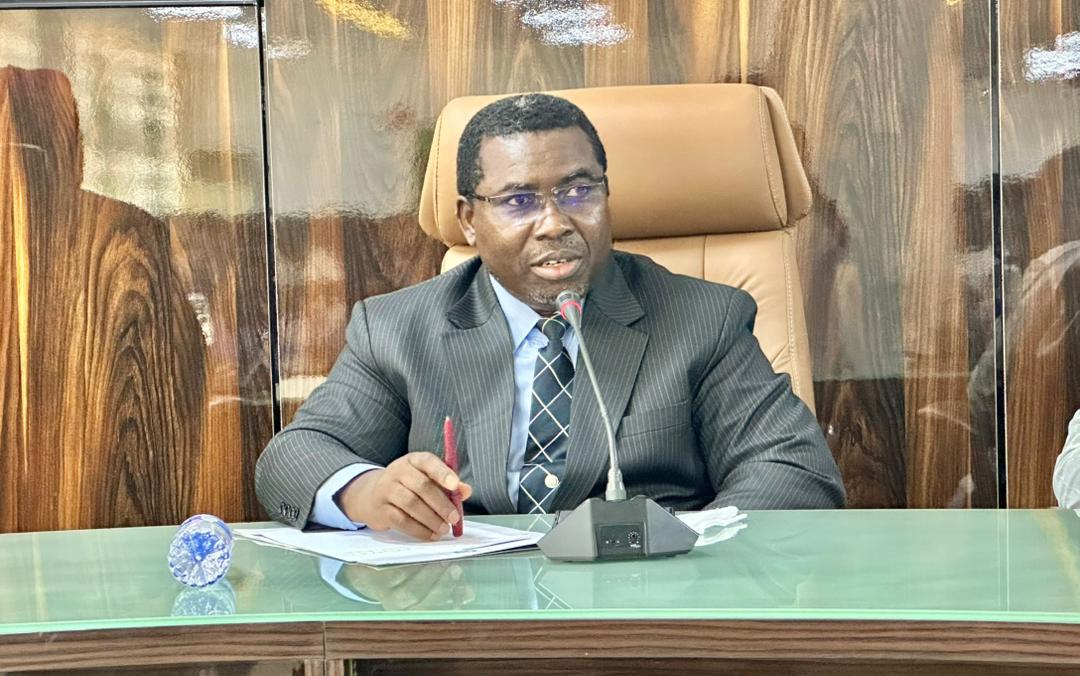
By George Mgbeleke
The Chairman of the Independent National Electoral Commission (INEC), Prof. Joash Amupitan, has said the Commission’s National Zonal Physical Assessment Tour has formally reached the South-East, as part of preparations for the 2027 General Election.
Prof. Amupitan stated this on Monday 19th October, 2026 in Enugu during a courtesy visit to the Chairman of the Enugu State Traditional Rulers Council and Chairman of the South-East Council of Traditional Rulers, HRH Igwe Sir Samuel Ikechukwu Asadu.
The Chairman, who led National Commissioners and senior management of the Commission on the visit, said the tour was beginning in the zone with homage to its traditional institutions.
“We consider it an essential administrative protocol and a deeply cherished tradition to begin our work in Enugu State by paying homage to the revered custodians of our culture, tradition, and community values,” he said.
He said the Commission had, across the geopolitical zones visited so far, prioritised direct engagement with leading traditional rulers.
“The Commission has made it a priority to interface directly with top traditional rulers, recognising that royal fathers are the ultimate anchors of grassroots peace, civic engagement, and community stability,” he stated.
Prof. Amupitan explained the purpose of the tour in the South-East.
“Our presence in Enugu and across the South-East zone is focused on auditing our operational readiness on the ground and evaluating field personnel preparedness down to the Registration Area (Ward) level,” he said.
He said the tour followed a series of operational tests under his leadership, including three off-cycle governorship elections in Anambra, Ekiti and Osun States, one Federal Capital Territory Area Council election and 16 bye-elections across the country.
The Chairman noted that each of the exercises had helped the Commission to refine election logistics, early poll openings and technological deployments.
He recalled that the Commission, a few days ago in Abuja, hosted a World Press Conference and National Stakeholders Engagement to mark 100 days to the first ballot of the 2027 General Election, where it reaffirmed its commitment to transparency, procedural integrity and strict adherence to its statutory schedule.
Prof. Amupitan reconfirmed the dates for the polls. The Presidential and National Assembly Elections will hold on Saturday, 16 January 2027, while the Governorship and State Houses of Assembly Elections will hold on Saturday, 6 February 2027.
The Chairman told the royal fathers that the Commission could not secure peaceful elections on its own.
“While INEC manages the technical and administrative aspects of elections, the moral authority to ensure peaceful voting resides within our traditional institutions,” he said.
He accordingly requested their blessings, prayers and support in three areas.
The first, he said, is grassroots Permanent Voter Card (PVC) collection, with the royal fathers mobilising citizens in all communities and Wards to collect their PVCs at designated centres, “as the PVC remains the sole instrument for accreditation.”
The second is the fight against voter apathy and vote buying, through sensitisation of communities against apathy and “the illegal practice of selling votes for short-term financial gains.”
The third is the promotion of peace and non-violence, with traditional rulers using their royal stools “to urge political parties, candidates, and youth groups to maintain decorum, avoid inflammatory rhetoric, and reject violence before, during, and after the elections.”
Prof. Amupitan said these efforts complemented the Commission’s work with the Inter-Agency Consultative Committee on Election Security (ICCES) to ensure that elections are conducted in a peaceful atmosphere.
He disclosed that the collaboration was already yielding results, with the recent arrest of the alleged kingpins behind the kidnapping of National Youth Service Corps members, who form the bulwark of the Commission’s ad hoc personnel.
“The DSS will arraign those behind these evil acts within the week,” he said.
The Chairman assured the traditional rulers of the Commission’s resolve.
“Under my leadership, INEC remains unshakeable in its commitment to neutrality, transparency, and procedural fairness,” he said.
He added: “Every valid vote cast by Ndi Enugu and citizens across the South-East will count and be accurately reflected in the final election results.”
Prof. Amupitan thanked the Chairman of the Enugu State Traditional Rulers Council and members of the Council for their warm reception, wise counsel and continued prayers for the peace and unity of the nation.
Responding, the Chairman of the Enugu State Traditional Rulers Council, His Royal Majesty Samuel Ikechukwu Asadu, the Ogadagidi I of Edem-An Ogwugwu Ancient Kingdom in Nsukka Local Government Area, pledged the support of traditional rulers for the Commission ahead of the 2027 General Election.
His Royal Majesty assured the Commission that traditional rulers would encourage indigenes who registered and are yet to collect their Permanent Voter Cards (PVCs) in their communities to do so.
“We promise that we will encourage our people to collect their PVCs,” he said.
A major highlight of the visit was the presentation of kola nuts, in keeping with Igbo tradition, alongside traditional ornaments to the INEC Chairman. In return, Prof. Amupitan presented a plaque and souvenirs to the Enugu State Traditional Rulers Council.
Shouts of Joy Rock the World As Postor Chris Opens Final Healing Streams Edition for 2026
By Our Correspondent Hundreds of millions participate in the global healing crusade as Pastor Chris ministers to the sick in...


Abuja land: Jordan Nyesom-Wike never admitted receiving $2.1m from anyone -Onoja
By Our Correspondent A Senior Advocate of Nigeria (SAN), Dr James Ogwu Onoja has warned social media commentators and bloggers...

Panel on death of 37dead illegal Miners: Commissioner alleges NSCDC goes beyond its official role of engagement
By Uthman Baba -Naseer,Minna The Commissioner for Homeland Security in Niger State Mr. Maurice Bello Magaji has alleged that the...
Abuja land: Jordan Nyesom-Wike never admitted receiving $2.1m from anyone -Onoja
By Our Correspondent A Senior Advocate of Nigeria (SAN), Dr James Ogwu Onoja has warned social media commentators and bloggers...

Sea Incursion: Senate Demands Urgent Shoreline Protection As Ayetoro Community Faces Extinction
By our correspondent Senate on Thursday called for immediate and comprehensive shoreline protection to save Ayetoro community in Ilaje Local...


FG, labour meeting over fuel price, minimum wage, tax relief, others, deadlock, as NLC orders affiliates to be on alert.
By Our Correspondent The meeting between the federal government and organised labour, convened at the ministry of labour in Abuja,...

Ebola: No evidence of community spread in Nigeria — FG
By Our Correspondent In a bid to state the true situation of Ebola spread in the country,Federal Government has declared...

Benue Massacre: Death Toll Hits 113 ..As Senate demands FG’s Intervention
By George Mgbeleke The Senate has condemned the killing of 113 persons, including six mobile police officers, in a series...

Lagos-Calabar Coastal Highway: My Disagreement With Umahi – Diri *Says Duke A Jester, So-Called National Champion Without Base
By David Owei Governor of Bayelsa State, Senator Douye Diri, on Thursday, revealed his disagreement with the Minister of Works,...


HURIWA Condemns Killing of Passengers in Sokoto, Demands Intelligence-Led Security Operations
By George Mgbeleke The Human Rights Writers Association of Nigeria (HURIWA) has condemned the reported killing of passengers by armed...
-
 Politics1 year ago
Gov Okpebholo moves to end Cultism *Threatens action against leading cult groups *Vows to demolish more cult houses in Edo State
-
 Politics1 year ago
ASUU-NDU protest against FG loans, unpaid salaries,Non-Implementation of agreements …..says loans is generational slavery
-
 Business & Economy1 year ago
PC-NCG Issues Disclaimer on Purported Nigerian Coast Guard National Orientation Exercise In Anambra State
-
 Entertainment2 years ago
Jubilation galore as Parishioners of CKC Kurudu celebrate their cultural heritage ….FG should exploit our Cultural heritage to unite Nigerians-Rev Fr Dim
-

 Sports8 months ago
Bayelsa-born ex-football star’s son, Opuama donates spike shoes to Athletics Association
-

 General News2 years ago
Reps hold public hearing on FMC Ugwuaji Awkunanaw
-
 Law & Crime1 year ago
Legal practitioner raises alarm over threat to his life by CSP Muhammed Abdulkareem
-

 General News2 years ago
Celebration galore as UDA Successfully Elected New Exco ……I will digitalize processes that will raise UDA to greater height -Comr. Okejiri