
Politics
Cracks in Delta APC deepens as senator Omo Agege And Leaders Boycott State Congress Amid Factional Feud

By David Owei,Bayelsa
There is palpable crisis and rancour currently rocking the Delta State chapter of the All Progressives Congress (APC) has reportedly deepened, as key party leaders shunned the party’s State Congress on Tuesday.
Among those absent were former Deputy Senate President and ex-senator representing Delta Central Senatorial District, Senator Ovie Omo-Agege, as well as the senator representing Delta North Senatorial District, Senator Ned Nwoko.
Also absent was Erhiatake Ibori-Suenu, member representing the Ethiope Federal Constituency in the House of Representatives and daughter of former Governor James Ibori.
Other founding leaders of the party prior to the defection of members from the Peoples Democratic Party (PDP) into the APC were also said to have boycotted the congress.
It was gathered that the Delta APC is currently divided into factions, with one bloc loyal to the Ibori/Omo-Agege camp and another aligned with the state governor, Rt. Hon. Sheriff Oborevwori, who is reportedly perceived to enjoy the backing of President Bola Tinubu and the party’s national leadership.
In Delta North, the division is said to involve one faction loyal to the immediate past governor, Dr. Ifeanyi Okowa, and another aligned with Senator Ned Nwoko.
It was learnt that the crisis is linked to allegations of imposition of candidates during the ward, local government, and state congresses, allegedly in favour of members of the defunct PDP who recently defected to the APC.
However, the Delta APC coalition has called for immediate cancellation of the purported state congress. describing it as Kangaroo and a big joke.
In a strongly worded statement made available to newsmen on Monday 2nd March, the Delta State APC Coalition for Equity alleged that several aspirants from the old APC bloc who duly paid for the State Chairmanship nomination forms were deliberately denied access to the forms despite full compliance with party guidelines.
The group described the refusal to release the forms as “exclusion through administrative obstruction,” arguing that it effectively shuts out qualified card-carrying members from participating in the party’s internal democratic process.
“This pattern raises serious concerns about transparency, equity and adherence to due process,” the coalition said, warning that the APC must not be reduced to “a platform where outcomes are predetermined and aspirants screened out through technical maneuvers”.
The coalition further alleged that recently defected elements from the Peoples Democratic Party (PDP), led by Governor Oborevwori, were exerting undue influence over the congress arrangements.
It specifically pointed to what it called “credible fears” of an orchestrated plan to install Chief Solomon Arayinka, a former Delta State PDP Chairman, as APC State Chairman, alongside Elder Moses Idu as Deputy Chairman, a move it warned would amount to “a transfer of PDP leadership structure into the APC.”
“If accurate, such action would marginalise foundational members who built this party through sacrifice and resilience,” the statement declared, insisting that “Delta APC is not an annex of any other political formation.”
The group said the alleged irregularities have sparked widespread disenchantment among loyal members across the state and could damage party unity ahead of the 2027 general elections.
In a dramatic escalation, the coalition had called on APC faithful across Delta State not to travel to Asaba for the scheduled congress on Tuesday, March 3, warning that participation would legitimize “an already decided congress.”
“Participation in a compromised kangaroo exercise will only validate injustice and erode the credibility of our party structures,” the statement read.
The coalition demanded the immediate release of nomination forms to all aspirants who had paid for them and called for the congress to be rescheduled to a new date to allow for a free and inclusive process where all card-carrying members can vote.
It also appealed directly to President Bola Ahmed Tinubu and the APC National Chairman, Professor Nentawe, as well as members of the National Working Committee, to urgently intervene, investigate the alleged irregularities and restore credibility to the process.
“Our demand is simple: fairness, transparency and equal opportunity for all aspirants,” the coalition stated, warning that justice delayed at this critical moment could have far-reaching consequences for party cohesion and electoral prospects.
The statement was signed by Ambassador Felix Datuowei, Acting Chairman; Kenchad Rafua, Acting Secretary General; and Chief Alex Ikpeazu, described as an excluded aspirant for the Delta State APC chairmanship position.
Meanwhile, Governor Sheriff Oborevwori has called for unity and peace among party members while speaking shortly after the State APC Congress held at the Cenotaph in Asaba, the Delta State capital.
However, he added, “Anyone who did not come for this State Congress is not an indigene of Delta State.”
Governor Oborevwori expressed gratitude to the outgoing executive, led by Omeni Sobotie, for steering the party through what he described as a defining transition period following the political realignment of April 2025.
He said, “I stand before you today filled with a deep sense of responsibility and brimming with optimism about the bright prospects of our great party. What began as a principled decision to align Delta State with the renewed vision of President Bola Ahmed Tinubu has evolved into a powerful and unstoppable political movement.
“I commend the discipline, cooperation and resilience demonstrated by party members across the state and the peaceful conduct of congresses in the 270 wards, 25 local government areas and the State as a testament to the APC’s internal democracy. There was no imposition. What we witnessed is broad consultation, agreement and inclusiveness. This structure belongs to all of us.
“I charge the new executive to prioritize regular meetings, strengthen grassroots engagement and intensify voter mobilization efforts ahead of the 2027 polls. Our mission is unequivocal.”
“We must secure victory at every level – the Presidency, the Senate, the House of Representatives, the Governorship and the State House of Assembly. I have confidence that the APC in the state would deliver massive votes for President Tinubu and all the party’s candidates,” the governor added.
Succinctly, the former Delta State PDP Chairman, Solomon Arenyeka emerged by consensus as the APC State Chairman. The former PDP State Organising Secretary, Emmanuel Egbabor, retained his position at the State APC Congress, while Mrs. Ifeyinwa Sobotie, wife of the immediate past APC State Chairman, emerged as the State Woman Leader, among other appointments.
Dramatically, the newly elected chairman of All Progressives Congress(APC),Chief Solomon Arenyeka has promised to end all the bitterness and acrimony that characterized the party in the past.
Arenyenka stated this at the opening remarks at the swearing-in, dwelt on the imperatives of peace, dwelling on the need for forgiveness, understanding and mutual trust from members and to all and sundry.
The chairman urged the entire party to put behind them the imbroglio that characterized the process of the congress.
Though, the congress attracted party leaders and stakeholders from across the state, ending in a charged atmosphere of celebration as the Delta APC formally inaugurated its new leadership ahead of the next electoral cycle, but some notable political figures and chieftains shun the Congress.






By Our correspondent
The Minister of Budget and Economic Planning, Senator Abubakar Atiku Bagudu, on Monday called for stronger collaboration between the National Assembly and the media to safeguard the integrity of Nigeria’s national budget from unlawful insertions.
Bagudu made the call while presenting a paper at the 2026 Capacity-Building Workshop of the Senate Press Corps (SPC) held at the National Assembly Complex, Abuja.
The workshop, with the theme: *“Leveraging Legislative Oversight and Media Collaboration to Safeguard the National Budget from Unlawful Insertions,”* was organized by the SPC under its Chairman, Taiye Odewale.
According to Bagudu, national planning is not optional but a constitutional obligation, and every insertion that is outside approved development priorities undermines sustainable growth.
He said the Federal Government under President Bola Ahmed Tinubu has introduced difficult but necessary reforms, and the budget must reflect those priorities transparently.
“The total 2026 budget rose to N68.32 trillion after necessary adjustments. We must ensure that what is finally appropriated reflects approved priorities and serves the broader interests of Nigerians,” the Minister was quoted as saying.
Bagudu reaffirmed the commitment of the Executive to work with the Legislature to close gaps between development plans and annual budgets, noting that weak alignment continues to undermine service delivery.
He stressed that legislative oversight and responsible journalism remain critical instruments to detect and expose questionable budgetary practices, including the alleged external insertion of the Presidential Fiscal and Infrastructure Project Cost (PFIPC) which is already being challenged in court by the Executive.
Earlier, SPC Chairman Taiye Odewale said the theme was chosen against the backdrop of public concern over budget padding and the need to strengthen oversight, responsible journalism and public accountability.
The workshop also included intensive training on Artificial Intelligence (AI) tools facilitated by London-based instructors from Mass Media TX Limited to equip Senate Press Corps members with emerging technologies for data analysis and investigative reporting. ba882a29
By George Mgbeleke
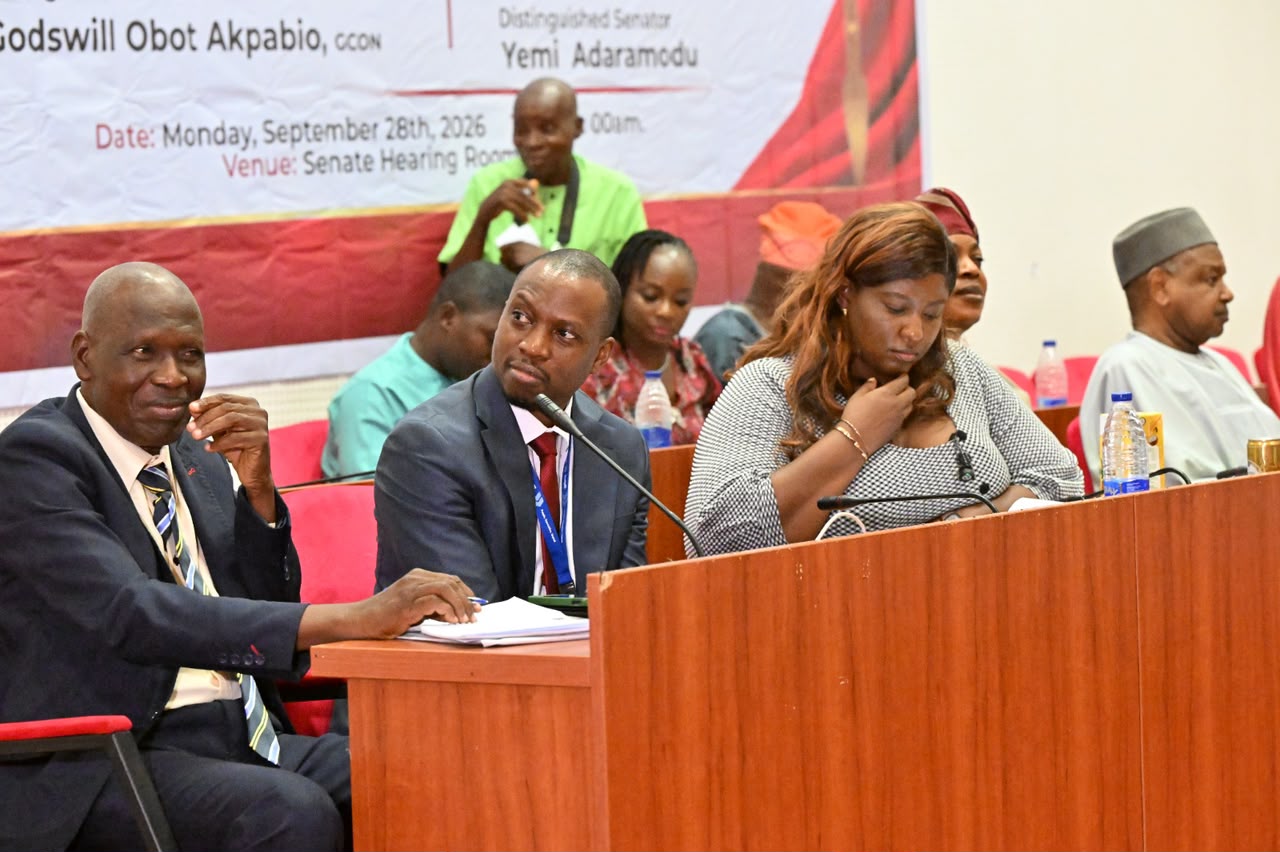
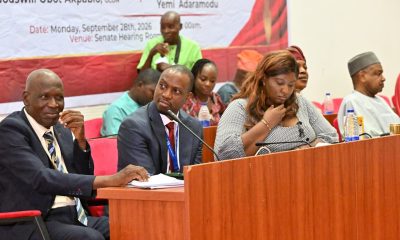
The controversial allocation of N1.3 billion to a non-existent Presidential Foreign Intervention Promotion Council (PFIPC) in the 2026 budget dominated discussions on Monday at the Senate Press Corps (SPC) Capacity-Building Workshop in Abuja, as stakeholders called for stronger legislative oversight and media collaboration to safeguard the national budget.
The workshop, held at Hearing Room 231, National Assembly Complex, with the theme *“Leveraging Legislative Oversight and Media Collaboration to Safeguard the National Budget from Unlawful Insertions,”* brought together the Executive, civil society, budget experts and journalists.
In his welcome address, Chairman of the Senate Press Corps, Chief Taiye Odewale alias Baba T., said the alleged N1.3bn allocation to the non-existent PFIPC exposed the urgent need for stronger checks against unlawful insertions.
Odewale said SPC findings showed that the allocation was not part of the N9.853 trillion added by the National Assembly to the N58.47 trillion Executive proposal that produced the N68.32 trillion 2026 budget.
He said the controversy prompted the workshop to strengthen collaboration between legislative oversight and the media in detecting questionable budget entries and to equip journalists with better knowledge of budget scrutiny and AI tools for professional reporting.
The first paper titled: *“Critical Scrutiny of Budget Line Items: Preventing Garbage In, Garbage Out and Strengthening the Roles of Legislators and the Media”* was presented by Mr. Ebu Emmanuel who represented the Executive Director of CISLAC, Auwal Musa Rafsanjani.
Key takeaways from his paper include that budget provisions must be justified, transparent, properly costed and measurable, warning that vague, duplicated or inflated items fuel waste.
He cited ICPC findings which claimed that about 4,508 inserted/padded projects worth N434.5bn and 66 duplicated projects worth N6.43bn were included in the 2022 budget.
He urged lawmakers to scrutinise provisions before appropriation, verify their purpose, MDA, location, beneficiaries, cost and expected results, and maintain a clear audit trail from proposal to final budget.
CISLAC urged the media to scrutinise budget changes, verify projects and track implementation, while institutions collaborate to strengthen transparency.
He suggested that the media should ask key questions: “What changed, why, who justified it, what will it cost, where will it be implemented, who benefits and how will delivery be verified?”
He recommended that accountability should cover proposal, justification, verification, approval, disclosure, implementation, monitoring, audit and accountability.
The second paper titled: *“From Insertion to Interrogation, the National Assembly’s Role in Evaluating the Executive’s Budget Proposal: A Guide and Roadmap for Evidence-Based, Citizen-Centred and Technology-Enabled Budget Scrutiny”* was delivered by the Director of BudgIT, Oluseun Onigbinde, represented by the Country Director of BudgIT Foundation, Vahyala Kwaga.
Onigbinde argued that budget scrutiny by the National Assembly is too often focused on appropriations rather than on public policy performance, which should be a critical component of the legislative budget process.
He identified persistent challenges affecting Nigeria’s budgeting process from the perspectives of different arms of government.
On the part of the Executive, he identified late submission of the Medium-Term Expenditure Framework and Fiscal Strategy Paper (MTEF-FSP) to the National Assembly as a recurring challenge, which often results in expenditure projections exceeding credible available resources.
On the role of the National Assembly, he noted that limited engagement with Ministries, Departments and Agencies (MDAs) contributes to weakened legislative oversight of budget implementation and performance.
BudgIT therefore recommended early submission of the budget proposal to the National Assembly at least 90 days before the end of the financial year, to allow sufficient time for review.
It also recommended that the National Assembly assess the performance of an agency’s previous budget before approving a new allocation, and called for stakeholder participation in the budget proposal and review process.
The MD/Publisher of The Eagle Times Newspaper, Mr. Ikechukwu Chukwunyere, represented by the Chief Operating Officer, Mr. Tabuko Kennedy, in his presentation titled: *“Making the Eagle Eye of the Media Sharper at Yearly Budget Scrutinies,”* identified weak budget scrutiny by the media, including overreliance on headline figures and official statements, poor understanding of budget data, limited follow-up, failure to compare allocations across years, detect duplication, verify projects on the ground and track spending from allocation to impact.
In his recommendations, he urged journalists to follow the money by comparing budgets, releases, expenditure, outputs and impact; scrutinise projects through data and field verification; check previous budgets, audit reports and procurement records; investigate red flags and distinguish verified facts from official claims.
He also proposed a Senate Press Corps Budget Accountability Reporting Desk, a joint budget scrutiny report within 72 hours of budget presentation, a public database of major projects and tracking at least 10 projects from budget document to project site.
Ms. Adeola Ademokaya, Nigeria Representative of Mass Media LLC Texas, who was Consultant and Moderator, in her presentation focused on how Artificial Intelligence can strengthen legislative budget oversight and parliamentary journalism.
She stressed that the national budget is a public trust, covering critical areas such as roads, schools, healthcare, security, jobs and infrastructure.
She said AI can help journalists analyse lengthy budget documents, compare different versions, identify vague project descriptions, unusual figures and possible duplication, and generate relevant questions for budget defence sessions. It can also simplify complex budget issues for radio, television, newspapers and social media.
However, she emphasised that AI is an assistant, not the final authority. Journalists must verify information with official documents, seek responses and exercise editorial judgment before publication.
The core message was simple: Read, question, verify, seek clarification and report responsibly. AI can make journalists faster and more effective, but human judgment remains central to credible journalism.
The workshop drew participation from lawmakers, budget experts, civil society advocates and members of the Senate Press Corps.
By Our Correspondent
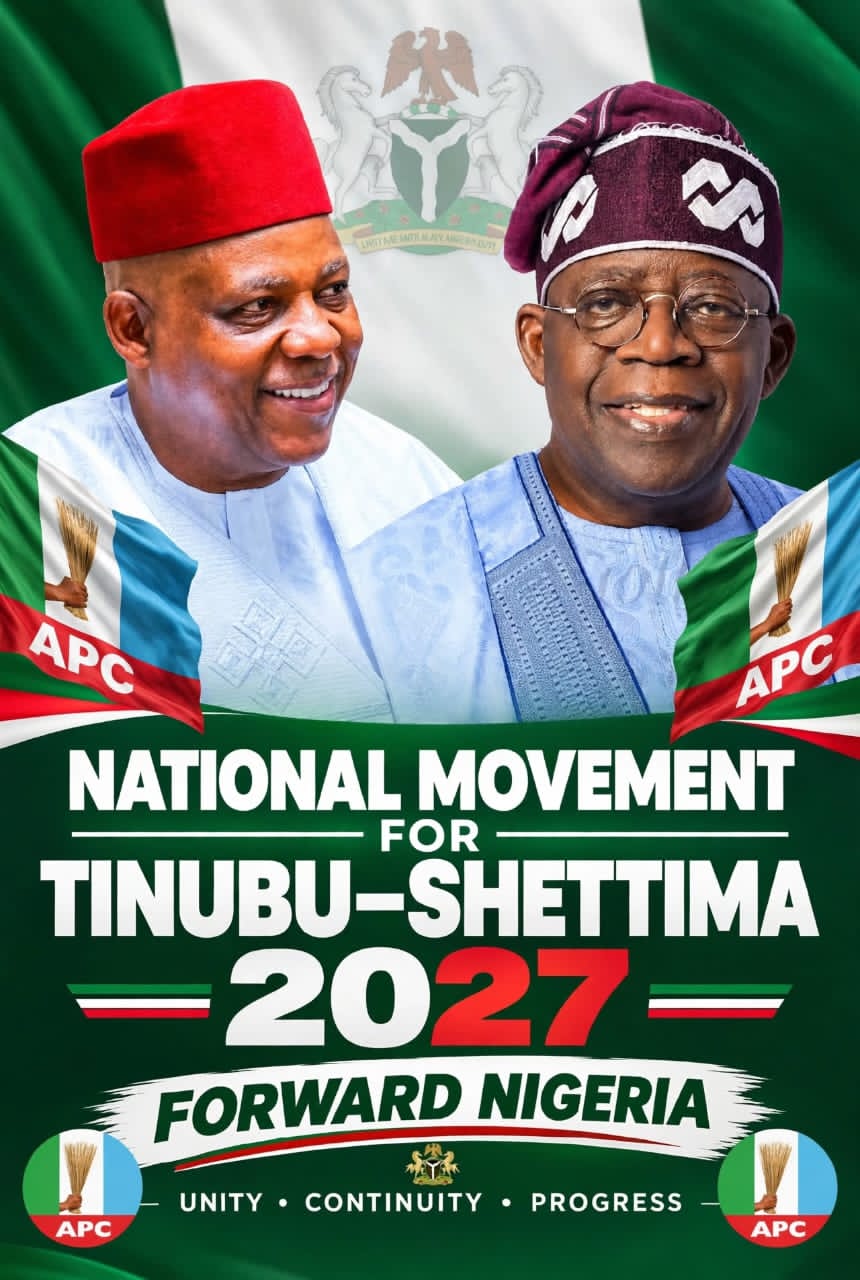
The National Movement for Tinubu-Shettima 2027 – Forward Nigeria has called for three days of national prayers for Nigeria, expressing optimism that the country will overcome its challenges and achieve stronger economic recovery, peace and sustainable development.
In a statement on Sunday signed by its National Coordinating Chairman, Prof. Rufa’i Ahmed Alkali, the Movement said the prayer initiative was aimed at strengthening hope, unity and faith in Nigeria as the country approaches its 66th Independence Anniversary on October 1, 2026.
The Movement said Nigeria was at an important stage of its national development, with ongoing efforts to address insecurity, strengthen the economy, improve food and national security, create opportunities and expand social development.
It called on its members across the country and in the diaspora to pray for the success of the economic and social reforms being implemented by President Bola Ahmed Tinubu and Vice President Kashim Shettima.
The Movement expressed support for the administration’s reform programme, urging Nigerians to remain confident in the process and support its continuation for another four years to consolidate and complete the economic and social reform agenda.
It said the prayers would focus on workers, farmers, fishermen, traders, transporters and other productive sectors, seeking safer farming communities, increased agricultural production, efficient food distribution and greater food availability.
On security, the Movement prayed for an end to kidnapping, banditry, terrorism and other violent crimes, as well as the safe return of Nigerians held captive by kidnappers.
It commended the Nigerian Armed Forces, Nigeria Police Force, Department of State Services, Nigeria Security and Civil Defence Corps and other security agencies for their sacrifices in protecting Nigerians, while praying for the families of personnel who have lost their lives in the line of duty.
It also called for protection, wisdom and courage for serving security officers, while extending prayers to children, women, persons with disabilities, internally displaced persons, elderly citizens and other vulnerable Nigerians affected by insecurity and displacement.
The Movement called for sustained efforts to create a safer environment where children can attend school, families can live peacefully and citizens can pursue their livelihoods without fear.
On governance, it prayed for President Tinubu, Vice President Shettima, governors, lawmakers, members of the judiciary, traditional rulers, public servants and other leaders at all levels, asking God to grant them wisdom and courage in advancing the country’s economic, security and development objectives.
The Movement also called for national unity, urging Nigerians to reject ethnic, religious, regional and political divisions and embrace peaceful coexistence.
Ahead of the 2027 general elections, it appealed for responsible, patriotic and issues-based political engagement, urging political actors to avoid campaigns of calumny, incendiary rhetoric and other conduct capable of deepening national divisions.
It further prayed for a peaceful, orderly, credible and transparent electoral process, stressing that political competition should strengthen Nigeria’s democracy rather than become a source of acrimony, division and violence.
“Let these three days be a period of prayer, reflection, compassion, unity and hope,” the Movement said.
It urged Nigerians to remember victims of violence, families awaiting the return of abducted relatives, fallen security personnel and communities affected by insecurity.
The Movement said its vision remained a Nigeria where all citizens could live, work, travel, farm, learn, worship and raise their families in peace and prosperity.
Alkali urged members of the National Movement across the country to participate fully in the three-day prayers, stressing that Nigeria remained a common home whose future required collective commitment and defence.
He expressed hope that the country would continue to experience greater peace, economic recovery, prosperity, stability and democratic development.
Budget Padding: Media Must Help Safeguard National Budget – Bagudu Tells SPC
By Our correspondent The Minister of Budget and Economic Planning, Senator Abubakar Atiku Bagudu, on Monday called for stronger collaboration...

N1.3bn Non-Existent Agency In 2026 Budget Sparks Alarm At Senate Press Corps Workshop
By George Mgbeleke The controversial allocation of N1.3 billion to a non-existent Presidential Foreign Intervention Promotion Council (PFIPC) in the...

Tinubu-Shettima Movement Calls for 3 Days of National Prayers
By Our Correspondent The National Movement for Tinubu-Shettima 2027 – Forward Nigeria has called for three days of national prayers...

THE UNBORN CHILD HAS HUMAN RIGHTS
By Emmanuel Nnadozie Onwubiko This piece was first written and circulated for publication in 2012. I have revisited and substantially...

NCDMB Honours Retirees, Reflects on Local Content Growth
By David Owei The Nigerian Oil and Gas Industry Content Development (NOGICD) Act, 2010 and the exponential growth of local...

2027 : PDP Candidate re-connects Zanchita community with National grid after two years of darkness
By Uthman Baba-Naseer,Minna It was a celebration galore in Zanchita community in gbako local government area of Niger State,as former...

Insecurity ,displacement alters distribution of Christian communities in Niger state to 3,417,636
By Uthman Baba -Naseer,Minna Niger state Christian leaders have disclosed that out of the Seven million, four hundred and seventy...

Death of 37 suspected illegal Miners:11 member of Judicial commission of inquiry set for inauguration on Tuesday by govrrnor Bago
BY UTHMAN BABA-NASEER,MINNA Sequel to the constitution of the Judicial commission of inquiry by the governor Mohammed Umar Bago, to...

Thanksgiving Service Heralds Bayelsa 30th Anniversary Celebration
By Dabid Owei Bayelsa State Government on Sunday held an inter-denominational thanksgiving service to kick-start activities marking the 30th anniversary...

Former Speaker challenges substition of his name with Suleiman as winner of APC primary election at Minna Fed.High Court
By Uthman Baba-Naseer,Minna The Former Speaker of the Niger State House of Assembly,Rt Hon. Adamu Usman,has filed a lawsuit before...
-
 Politics1 year ago
Gov Okpebholo moves to end Cultism *Threatens action against leading cult groups *Vows to demolish more cult houses in Edo State
-
 Politics1 year ago
ASUU-NDU protest against FG loans, unpaid salaries,Non-Implementation of agreements …..says loans is generational slavery
-
 Business & Economy1 year ago
PC-NCG Issues Disclaimer on Purported Nigerian Coast Guard National Orientation Exercise In Anambra State
-
 Entertainment2 years ago
Jubilation galore as Parishioners of CKC Kurudu celebrate their cultural heritage ….FG should exploit our Cultural heritage to unite Nigerians-Rev Fr Dim
-

 Sports7 months ago
Bayelsa-born ex-football star’s son, Opuama donates spike shoes to Athletics Association
-

 General News2 years ago
Reps hold public hearing on FMC Ugwuaji Awkunanaw
-
 Law & Crime1 year ago
Legal practitioner raises alarm over threat to his life by CSP Muhammed Abdulkareem
-
 General News2 years ago
Celebration galore as UDA Successfully Elected New Exco ……I will digitalize processes that will raise UDA to greater height -Comr. Okejiri