
Politics
IPAC Raises Alarm Over Electoral Act 2026, ……Demands Urgent Reforms Ahead of 2027 Polls ……As INEC Unveils,Defends Guidelines for Political Parties

By George Mgbeleke
National Chairman of the Inter-Party Advisory Council, Dr. Yusuf Mamman Dantalle, has called for the immediate amendment or outright repeal of the Electoral Act 2026, warning that its current provisions could undermine Nigeria’s democratic process and jeopardize the credibility of the 2027 General Election.
Dantalle made this known on Tuesday while delivering a keynote address at a high-level meeting between the Independent National Electoral Commission (INEC) and leaders of political parties, held at the Commission’s headquarters in Abuja.
The IPAC chairman described the Electoral Act 2026 as a “significant regression,” noting that it fell short of public expectations despite widespread citizen participation during earlier public hearings on constitutional and electoral reforms.
According to him, rather than strengthening democratic processes, the law introduces provisions that could “impede, weaken, and destabilize” Nigeria’s hard-earned democracy.
“It is particularly concerning that this contentious Electoral Act formed the basis upon which INEC released the timetable and schedule for the 2027 General Elections,” Dantalle said, warning that the development has placed undue pressure on political parties especially those outside government.
A major highlight of IPAC’s demands is the rejection of the Act’s provision mandating direct primaries for political parties. Dantalle argued that the mode of candidate selection should remain an internal party affair, free from legislative imposition.
He urged the National Assembly of Nigeria to urgently revisit the law and restore the option of indirect primaries, emphasizing that flexibility in internal party processes is essential for inclusivity and political stability.
The IPAC chairman also criticized the requirement for political parties to submit membership registers, including members’ National Identification Numbers (NIN), within a tight window from April 1 to April 21, 2026.
He described the directive as “impractical and exclusionary,” warning that it could disenfranchise millions of Nigerians who lack access to NIN registration facilities.
“In the spirit of participatory democracy, this requirement should be expunged,” he stated.
Dantalle further stressed the need for the full restoration of electronic transmission of election results, particularly through INEC’s IReV portal.
He insisted that results should be transmitted immediately after announcement at polling units without conditional provisions, describing the measure as “a fundamental demand of the Nigerian people” and a key safeguard for transparency.
Referencing the controversies that trailed the 2023 Nigerian presidential election, he warned against a repeat of past lapses, saying such occurrences must not be allowed to recur.
The IPAC leader also expressed concern over what he described as weakened penalties for vote buying in the new law, warning that the trend continues to erode electoral credibility.
He renewed calls for the establishment of an Electoral Offences Commission to ensure accountability and deter malpractice.
Dantalle disclosed that IPAC has formally urged the National Assembly to repeal the Electoral Act 2026 and called on development partners and the international community to deploy diplomatic influence in support of Nigeria’s democracy.
“The international community is closely observing Nigeria’s democratic trajectory,” he said, adding that expectations are high for improved outcomes in 2027.
Dantalle charged INEC to demonstrate professionalism, technological efficiency, and zero tolerance for operational lapses—particularly in the deployment of the Bimodal Voter Accreditation System (BVAS) and the IReV portal.
“The credibility of the Commission is at stake, and public confidence hinges on the assurance that every vote will count,” he noted.
Reaffirming IPAC’s role as the umbrella body of all registered political parties, Dantalle pledged the Council’s continued commitment to fostering political stability, credible elections, and democratic consolidation in Nigeria.
He emphasized the need for leadership anchored on integrity, accountability, and public trust, warning that voter apathy and distrust would persist without decisive reforms.
“We must collectively sanitise our political environment and uphold standards that inspire public confidence,” he said.
Earlier in his speech, Chairman of the Independent National Electoral Commission (INEC), Prof. Joash Amupitan, has unveiled a comprehensive review of the Commission’s Regulations and Guidelines for Political Parties, describing the move as a critical step toward strengthening Nigeria’s democratic process ahead of the 2027 General Election.
Speaking at a consultative meeting with leaders of political parties at INEC headquarters, Amupitan said the revised guidelines are designed to align with the Electoral Act 2026 and address systemic challenges affecting party operations and electoral credibility.
The INEC chairman emphasized that credible elections begin long before polling day, stressing the importance of transparency in candidate selection processes.
He added that the updated framework was developed under constitutional provisions and in line with the new electoral law, insisting that “we cannot navigate a 2027 horizon using a 2022 map.”
Amupitan highlighted the tight electoral schedule facing stakeholders, revealing that presidential and National Assembly elections are slated for January 16, 2027, while governorship and state assembly polls will hold on February 6, 2027.
According to him, the shortened timelines introduced by the Electoral Act 2026 demand what he described as “surgical precision” in planning and execution by both INEC and political parties.
The revised guidelines cover critical aspects of political party administration, including registration and mergers, internal operations, primaries, campaign conduct, finances, and deregistration procedures.
Amupitan said the reforms aim to eliminate opaque practices in party primaries, which he identified as a major driver of voter apathy and post-election litigation.
The new framework also introduces clearer rules for campaign activities, ensuring that rallies and processions are conducted peacefully and with respect for citizens’ rights.
The INEC chairman referenced provisions in the Electoral Act 2026 empowering the Commission to determine election spending limits in consultation with political parties.
He urged party leaders to pay close attention to clauses dealing with election expenses, particularly those governing party primaries and campaign financing, noting that transparency in funding is essential for credible elections.
Amupitan disclosed that the review process was informed by empirical findings from the Political Party Performance Index (PPPI), a diagnostic tool developed with support from the Westminster Foundation for Democracy.
The index, he said, revealed a significant gap between party constitutions and grassroots realities, underscoring the need for reforms to bridge the disconnect.
INEC chairman announced that the revised guidelines incorporate measurable benchmarks for the participation of women, youth, and Persons with Disabilities (PWDs) in party activities and electoral processes.
Amupitan urged political parties to view the new regulations not as constraints but as safeguards designed to protect the integrity of the electoral process.
He called on stakeholders to engage constructively during the consultation process, emphasizing that INEC remains committed to neutrality while taking a firm stance against the erosion of democratic values.
Reaffirming the Commission’s role as an impartial umpire, Amupitan stressed the need for collective responsibility in building a transparent and credible electoral system.
He said “We meet today not merely as regulators and political actors, but as joint custodians of Nigeria’s democratic future,” Amupitan said, noting that the Commission had undertaken a rigorous technical review of the 2022 regulations to reflect current legal and political realities.
“By sharpening these rules, we are protecting the sovereign will of the Nigerian people from the point of nomination to the final declaration of results,” he said.




By Our Correspondent
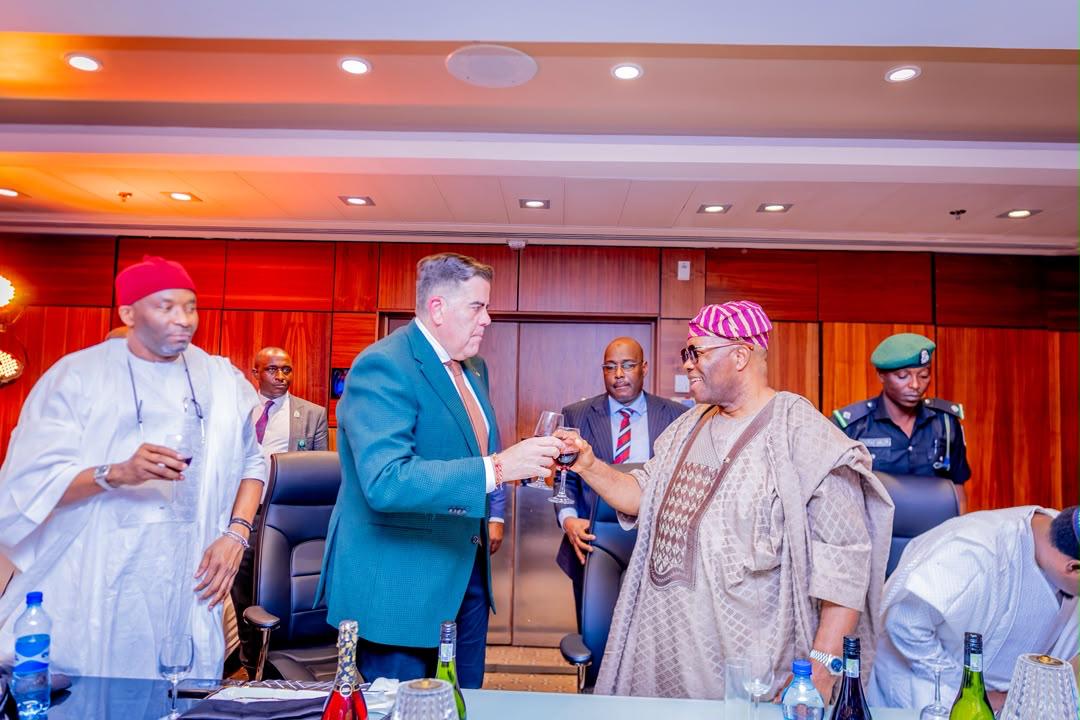
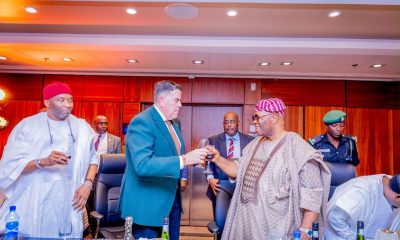
Mr Milton Dick, Speaker of Australia’s House of Representatives, has been elected as the President of the Inter-Parliamentary Union (IPU) Assembly for the 2026–2029 term.
Mr Dick was in Abuja last week to consult with the Nigerian parliament and sought their support. The Chairman of the National Assembly of the Federal Republic of Nigeria, and an Executive Member of the IPU, Godswill Akpabio had assured him of the support of Nigeria and to mobilize the support of the Africa Group of the IPU to support him.
Announcing the results in Arusha on Friday, the outgoing IPU leader, Dr. Tulia Ackson, said Milton Dick secured 56 percent of the total votes. His fellow candidates, Ms Sahiba Gafarova (Speaker of the Milli Majlis, Azerbaijan) and Mr Rojo Edwards Silva (Senator, Chile), received 38 percent and 6 percent of the votes respectively.
Dr Tulia stated that Gafarova got 124 votes while Mr Milton Dick collected 182 votes and Mr Edward Silver received 21 votes.
“So dear colleagues, let me now announce the winner please. Allow me to announce the winner please. The winner of the election of a President for the term 2026 to 2029 is Mr. Milton Dick, the Speaker of the House of Representatives of Australia,” she announced.
Prior to his election, Milton Dick said there was the need for inclusive leadership that takes account of countries and parliaments that may have limited influence in international discussions.
By George Mgbeleke
The African Democratic Congress (ADC) has described the Tinubu administration’s proposed petrol price intervention as a loan to the Nigerian people, calling it a cynical and deceitful arrangement that insults common sense, even as an electoral gimmick.
In a statement issued in Abuja on Friday by its National Publicity Secretary, Mallam Bolaji Abdullahi, the party said the proposal operates on the principle of deferred payment, with Nigerians eventually paying the costs suppliers agree to absorb today.
“This is not subsidy. Calling it subsidy would be dignifying it. It is another announcement this government has made without thinking through what it means for the Nigerian people.
“The principle is straightforward: what suppliers forgo today, Nigerians will pay later. The government wants to announce a discount, collect the applause and leave the Nigerian people to settle the bill.
“Even as an electoral gimmick, it insults common sense. Nigerians know the difference between a discount and a debt. A payment postponed is still a payment owed.”
The party added that the separate 30-day waiver of NNPC’s retail profit margin offered no lasting answer to the cost-of-living crisis.
“Food bills and transport fares will not disappear after 30 days. Nigerians need lasting relief.
“President Tinubu wants gratitude now and repayment later. He cannot claim to have lifted a burden while making arrangements to put it back after 30 days.”

By our correspondent
Disturbed by the persistent high cost living in the country,the Nigeria Labour Congress (NLC) has given the federal government a two-week ultimatum, beginning from Friday, the 9th of October, 2026 to address hardship it said its policy has slammed on Nigerians.
NLC’s communique from its Joint Meeting of the National Executive Council (NEC) and Central Working Committee (CWC) held in Abuja, said, if at the end of the two-week ultimatum, government fails to tackle the issues brought before it, the congress would have no option than to mobilise for action that would paralyse the activities of the country.
The communique signed by the NLC president, Joe Ajaero called on government to: “Take measures to reduce the price of petrol across the nation to what it was at the signing of the current national minimum wage in 2024 to cushion the impact of the energy crisis on workers and masses as being done by other nations of the world;
“Commence the process of renegotiating a new national minimum wage;
“Implement the dictates of the Terms of Settlement reached with Joint Health Sector Unions and Assembly of Healthcare Professionals (JOHESU) on the 5th day of February, 2026, and other new demands that have arisen since then.
“Implement the demands of the Joint Public Sector Negotiating Council (JPSNC)”
It said: “Failure of which the NLC will be compelled to take remedial steps as would be directed by the relevant Organs”.
The communique reaffirmed the historical responsibility of the NLC to resist all forms of exploitation and oppression, calling on all affiliates, and progressive allies to remain on high alert and fully prepared to engage in decisive efforts against all anti-people policies.
It reiterated that the Nigerian working people must remain resolute, organised, and uncompromising in the collective struggle for a fair and equitable Nigeria.
Part of the communique reads: “The National Executive Council (NEC) and the Central Working Committee (CWC) of the Nigeria Labour Congress (NLC) convened a joint meeting at the Olayitan Oyerinde Hall, Labour House, Abuja, to deliberate on the state of the nation, the existential threats facing Nigerian workers and the downtrodden masses, and the urgent tasks confronting the trade union movement in Nigeria.
“Having extensively discussed the grave economic, political, and crises of survival ravaging workers and the nation at large, NEC-in-session, in conjunction with the CWC, resolves as follows:
“The joint meeting-in-session notes with profound alarm the deepening misery inflicted on the Nigerian working class and the broader masses by the neo-liberal policies of the federal government and its state institutions. Inflation continues to soar unabated, the naira remains traumatised, wages have been rendered worthless, and the cost of living has become unbearable. The ruling elite, acting as enforcers of global monopoly capital, have demonstrated a worrying indifference to the suffering of the people, choosing instead to transfer the burden of their fiscal negligence onto the already impoverished working masses thus abandoned the people to the dictates of comprador fat cats.
“NEC-in-session declares that no society can sustainably develop under a regime of corporate plunder and neo-liberal enslavement. The Nigerian working people must therefore remain resolute, organised, and uncompromising in the collective struggle for a fair and equitable Nigeria.
“The joint meeting observes with grave concern that the current national minimum wage has been rendered worthless by the relentless depreciation of the naira and the astronomical rise in the cost of living. Nigerian workers can no longer afford the basic necessities of life; food, shelter, healthcare, transportation, and education; on their current wages.
“Consequently, NEC-in-session demands that the federal government commences the renegotiation of the national minimum wage before the end of this month. The Congress demands a living wage that reflects the true cost of living and the dignity of the Nigerian worker. Any further delay by the federal government remains unacceptable.
“The joint meeting reiterates its call on the federal government to work with relevant agencies to immediately reduce the price of Premium Motor Spirit (PMS), commonly known as petrol. The exorbitant pump price of petrol has had a cascading effect on the cost of transportation, food, and other essential goods, further deepening the hardship of workers and the masses. The government must abandon its insensitive policies that have allowed for indiscriminate hikes in the price of petroleum products which has only served to enrich a handful of oil marketers while pauperising the masses.
“The joint meeting demands that the federal government grant tax relief to workers as agreed and immediately provide Wage Awards to workers to cushion the impact of the rising cost of living. These measures are the bare minimum required to alleviate the suffering of Nigerian workers and restore a measure of dignity to their lives. The government cannot continue to demand sacrifice from workers while not offering any relief to the suffering masses and workers”.
END

Police parades 23 persons over alleged involvement in cult clashes in Bayelsà ….recovers Eight firearms, cutlasses, bottles of codine,two battle axes,20 cartridges
By David Owei The Bayelsà State Police Command led by Commissioner of Police, Mr. Ajao Saka Adewale has paraded twenty...

Wike orders ‘no work, no pay’ as FCT strike deepens, accuses NLC of politics … says teachers’ demands already resolved, directs area councils to enforce policy against striking
By Our Correspondent In an affort to force FCT workers on strike end the ongoing strike ,Minister of the Federal...

Milton Dick Elected President of the IPU Assembly
By Our Correspondent Mr Milton Dick, Speaker of Australia’s House of Representatives, has been elected as the President of the...

Fubara Reaffirms Partnership with Army -Lauds Establishment of New Brigade in Ahoada
By George Mgbeleke Governor of Rivers State, His Excellency, Sir Siminalayi Fubara, has assured the Nigerian Army of his administration’s...

NSPWB Executive Sec.stresses Board’s readiness to support Christains, Muslim Pilgrims in Niger state
BY UTHMAN BABA-NASEER,MINNA The Executive Secretary of the Niger State Pilgrims’Welfare Board,(NSPWB) Muhammed Awwal Aliyu,has reiterated the Board’s preparedness to...

Niger CJ Seeks mutual understanding between the Bar and Bench to enhance speedy dispensation of criminal, Civil Justice
By Uthman Baba-Naseer,Minna The Chief Judge of Niger State,Justice Halima Ibrahim Abdulmalik, has stressed the need for continued cordial and...

$1trn economy: NBTI showcases 298 Nigerian innovators to global investors
By Our Correspondent The National Board for Technology Incubation (NBTI) has showcased 298 Nigerian innovators from the 36 states and...


HURIWA Demands Answers Over Corps Members’ Release, Says Authorities Must Clarify Ransom Claims
By George Mbgeleke The Human Rights Writers Association of Nigeria (HURIWA) demands an urgent explanation from the Federal Government, the...

Tinubu’s Petrol Discount is a Loan To Nigerians-ADC
By George Mgbeleke The African Democratic Congress (ADC) has described the Tinubu administration’s proposed petrol price intervention as a loan...
HURIWA Demands EFCC Prosecution of Okowa, Bello …. Condemns Parties’ Choice of Politicians Facing Corruption Allegations*
By George Mgbeleke The Human Rights Writers Association of Nigeria (HURIWA) has called on the Economic and Financial Crimes Commission...
-
 Politics1 year ago
Gov Okpebholo moves to end Cultism *Threatens action against leading cult groups *Vows to demolish more cult houses in Edo State
-
 Politics1 year ago
ASUU-NDU protest against FG loans, unpaid salaries,Non-Implementation of agreements …..says loans is generational slavery
-
 Business & Economy1 year ago
PC-NCG Issues Disclaimer on Purported Nigerian Coast Guard National Orientation Exercise In Anambra State
-
 Entertainment2 years ago
Jubilation galore as Parishioners of CKC Kurudu celebrate their cultural heritage ….FG should exploit our Cultural heritage to unite Nigerians-Rev Fr Dim
-

 Sports8 months ago
Bayelsa-born ex-football star’s son, Opuama donates spike shoes to Athletics Association
-

 General News2 years ago
Reps hold public hearing on FMC Ugwuaji Awkunanaw
-
 Law & Crime1 year ago
Legal practitioner raises alarm over threat to his life by CSP Muhammed Abdulkareem
-

 General News2 years ago
Celebration galore as UDA Successfully Elected New Exco ……I will digitalize processes that will raise UDA to greater height -Comr. Okejiri