
Uncategorized
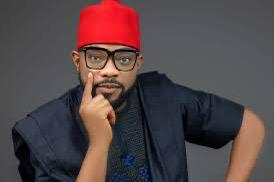
Ugochinyere: when enigma meets resilience

By Emmanuel Nnadozie Onwubiko
The tenth session of the National Assembly has a filthy image in the mindsets of millions of Nigerians. The National Assembly with Senator Godswill Akpabio who is alleged to have emerged as a Senator through a very ethically challenged modus operandi given that he never contested the party primary but was aided by the federal high Court and then an unknown political quantity from Kaduna State as speaker, is disreputable for being subservient to the whims and caprices of President Bola Ahmed Tinubu.
Ironically, within the same National Assembly are few charismatic and patriotic Nigerians with clearly people’s focused mandates and agenda which they have methodically implemented in the last three years and some months that they were inaugurated as federal law makers.
Besides, in a political climate where rhetoric often outruns results, the record emerging from Ideato North and Ideato South Federal Constituency offers a compelling counter-narrative. Ikenga Imo Ugochinyere, a member of Nigeria’s 10th House of Representatives, has quietly assembled a portfolio of constituency interventions that (if independently verified as he repeatedly challenges the public to do) reflects an uncommon blend of grassroots responsiveness and political resilience. That this record is being built from the minority benches of the Green Chamber makes it even more instructive in understanding how influence in Nigerian politics is not always a function of numerical strength, but of strategic engagement, constituency intimacy, and relentless visibility.
The conventional wisdom in Nigeria’s legislative politics is that majority party lawmakers enjoy disproportionate access to federal resources, committee leverage, and executive goodwill. Minority members, by contrast, are often consigned to the margins, their voices loud but their reach limited. Yet, Ugochinyere’s trajectory suggests that this binary is not absolute. By focusing on tangible, verifiable projects (particularly in sectors that directly affect daily life), he appears to have reframed what effective representation can look like outside the corridors of central power.
Consider the emphasis on education. Across multiple communities in Ideato North and South, school reconstruction and rehabilitation projects have reportedly been completed, ranging from primary institutions to secondary and technical schools. In a region where dilapidated classrooms and inadequate learning facilities have long undermined educational outcomes, such interventions (if sustained) could have generational impact. Education infrastructure is not merely about buildings; it is about restoring dignity to public schooling and signaling to young people that their future matters. The reported distribution of over 1,000 school desks, even as it remains ongoing, points to an understanding of the small but critical deficits that shape the learning environment.
Healthcare, another chronic weak point in many rural constituencies, also features in this evolving record. The rehabilitation of community hospitals and health centres, though still ongoing, suggests an awareness that access to primary healthcare is often the difference between life and death in underserved areas. In a country where tertiary hospitals are overwhelmed and distant, functional community health facilities can dramatically reduce preventable mortality. The challenge, as always, will be ensuring that these rehabilitated centres are not just structurally sound but also adequately staffed, equipped, and maintained.
Perhaps more telling is the scale of scholarship and human capital development initiatives attributed to Ugochinyere. Supporting hundreds of students across primary, secondary, and tertiary levels over consecutive years indicates a deliberate investment in people rather than just projects. In a constituency where economic constraints frequently truncate educational aspirations, such scholarships can alter life trajectories. Beyond the immediate beneficiaries, they create a ripple effect, fostering a culture that values education as a pathway out of poverty.
Agricultural empowerment, though modest in beneficiary numbers, aligns with the economic realities of the constituency. Ideato North and South, like much of rural Imo State, depend significantly on agriculture. Training and supporting farmers, even at a limited scale, can enhance productivity, improve livelihoods, and contribute to local food security. The real test will be whether such programmes can evolve from one-off interventions into structured, scalable initiatives that integrate access to markets, credit, and modern farming techniques.
Water access remains one of the most basic yet elusive needs in many Nigerian communities. The reported rollout of borehole projects across 24 communities, with a majority already completed, speaks to a targeted approach to addressing this gap. Clean water is foundational to public health, and its availability reduces the burden of waterborne diseases while improving overall quality of life. Electrification efforts, including the installation of solar-powered streetlights and transformers, further underscore a commitment to infrastructure that extends beyond symbolic gestures. Street lighting, often overlooked, has implications for security, commerce, and social life, particularly in semi-urban and rural settings.
Roads, drainage, and erosion control projects add another layer to this interventionist profile. In southeastern Nigeria, erosion is not merely an environmental issue; it is an existential threat to communities, swallowing homes, farmlands, and roads. Facilitating erosion control projects, alongside drainage construction, reflects an understanding of the unique ecological challenges facing the constituency. While these projects are often capital-intensive and require sustained funding, even incremental progress can mitigate long-term damage.
Market development and youth empowerment initiatives round out this emerging record. The construction of market stalls, though seemingly modest, can boost local commerce and provide structured spaces for economic activity. Similarly, the distribution of motorcycles, tricycles, and buses to youths is emblematic of a broader approach to empowerment; one that seeks to create immediate income opportunities. Direct financial support, such as cash grants to constituents, while sometimes criticized as populist, can offer short-term relief in an economy marked by inflation and unemployment.
All of this points to a lawmaker who has leaned heavily into constituency service as a political strategy. In Nigeria’s electoral calculus, visibility at home often matters more than prominence in Abuja. By embedding himself in the everyday realities of his constituents, Ugochinyere appears to have built a political brand rooted in accessibility and delivery. This may also explain the significant followership that reportedly accompanied his recent movement to a new political party. In a system where party loyalty is often fluid, what endures is the bond between a politician and his base. Charisma, in this context, is not merely about oratory; it is about the ability to translate influence into outcomes that people can see and touch.
However, an honest appraisal must also acknowledge the importance of independent verification. Nigerian politics has long been plagued by inflated claims and uncompleted projects. The repeated refrain of “Go and verify” attached to these milestones is both a challenge and an opportunity. It invites civil society, media, and constituents themselves to engage in fact-checking, site visits, and documentation. If these claims withstand scrutiny, they strengthen not just Ugochinyere’s credibility but also the broader case for performance-based politics. If gaps are found, they offer a chance for course correction and greater transparency.
As the next electoral cycle approaches, the question is how this record can be effectively leveraged in the face of anticipated political opposition, particularly from the ruling All Progressives Congress in Imo State. Campaigns in Nigeria are rarely fought on policy alone; they are battlegrounds of narratives, alliances, and perception management. For Ugochinyere, the path to a successful second-term bid will likely depend on how well he consolidates his achievements into a coherent, verifiable story that resonates with voters.
First, documentation and communication must be elevated. In an era dominated by digital media, it is not enough to execute projects; they must be effectively communicated. High-quality visual evidence, before-and-after documentation, beneficiary testimonials, and geo-tagged project data can help counter misinformation and amplify impact. A dedicated digital platform that aggregates all constituency projects, updated in real time, would not only enhance transparency but also serve as a powerful campaign tool.
Second, coalition-building within the constituency will be crucial. Politics in Imo State, as in much of Nigeria, is deeply influenced by local networks; traditional rulers, community leaders, youth groups, and religious institutions. Strengthening these relationships, ensuring inclusivity in project distribution, and maintaining open lines of communication can help inoculate against opposition attacks. A constituency that feels seen and heard is more likely to defend its representative.
Third, the campaign narrative must shift from defensive to proactive. Rather than merely responding to criticisms from opponents, Ugochinyere’s team would benefit from setting the agenda. This means articulating a clear vision for a second term; one that builds on existing achievements while addressing identified gaps. Voters are not just interested in what has been done; they want to know what comes next.
Fourth, strategic engagement with the media will be essential. In a politically charged environment, narratives can quickly be distorted. Regular press briefings, opinion pieces, and media tours of project sites can help shape public perception. Leveraging both traditional and new media platforms ensures that the message reaches diverse demographics, from rural voters to urban youths.
Fifth, legal and institutional preparedness cannot be overlooked. Nigerian elections are often contested not just at the polls but also in the courts. Ensuring compliance with electoral laws, maintaining robust documentation of campaign activities, and building a competent legal team can help navigate potential post-election disputes.
Beyond campaign mechanics, there is a deeper democratic imperative that must not be ignored. The strength of any democracy lies not in the dominance of a single party, but in the protection and accommodation of diverse political interests and voices. In Imo State, as in Nigeria at large, the temptation to marginalize opposition figures or suppress dissenting views poses a real threat to democratic consolidation. It is therefore essential that all political actors (whether aligned with the ruling party or in opposition) are afforded the space to operate freely, campaign openly, and present their ideas to the electorate without intimidation.
The presence of vibrant opposition voices, including lawmakers like Ikenga Imo Ugochinyere, is not a weakness of the system; it is its safeguard. Democracy thrives on competition, accountability, and the constant testing of ideas. When political pluralism is protected, governance improves because leaders know they can be challenged, scrutinized, and ultimately replaced through the ballot. Conversely, when political space shrinks, complacency and impunity often take root.
For Ugochinyere, this broader context presents both a challenge and an opportunity. Defending not just his seat but also the principle of inclusive political participation can elevate his campaign beyond personal ambition to a cause that resonates with a wider audience. By consistently advocating for the rights of all political actors, regardless of affiliation, he positions himself as a defender of democratic norms; a stance that can attract support even from those who may not share his party loyalty but value fairness and justice.
Finally, there is the question of party dynamics. His recent defection, accompanied by a significant following, suggests a recalibration of political alliances. Managing this transition effectively (ensuring that new party structures are functional at the grassroots level, while retaining the loyalty of existing supporters), will be critical. Party identity matters, but in constituencies like Ideato, it is often the candidate’s personal brand that ultimately determines electoral outcomes.
In the end, the story of Ikenga Imo Ugochinyere is still unfolding. What is clear, however, is that his approach offers a case study in how lawmakers can navigate structural disadvantages to deliver measurable outcomes. Whether this translates into electoral success in a second term bid will depend not just on what has been done, but on how convincingly it is presented, defended, and expanded.
For now, the challenge he throws to the public (“Go and verify”) may be the most important line in this entire narrative. In a democracy that often struggles with accountability, such an invitation, if taken seriously, could help shift the culture from blind allegiance to informed choice. And in that shift lies the true test of leadership, and the enduring promise of a system where every political voice has a place and every citizen has a stake.
*EMMANUEL NNADOZIE ONWUBIKO is from ARONDIZUOGU and a constituent of Hon. Ugochinyere. He is a former National Commissioner of the Nigerian National Human Rights Commission and the founder of HUMAN RIGHTS WRITERS ASSOCIATION OF NIGERIA (HURIWA).
By George Mgbeleke
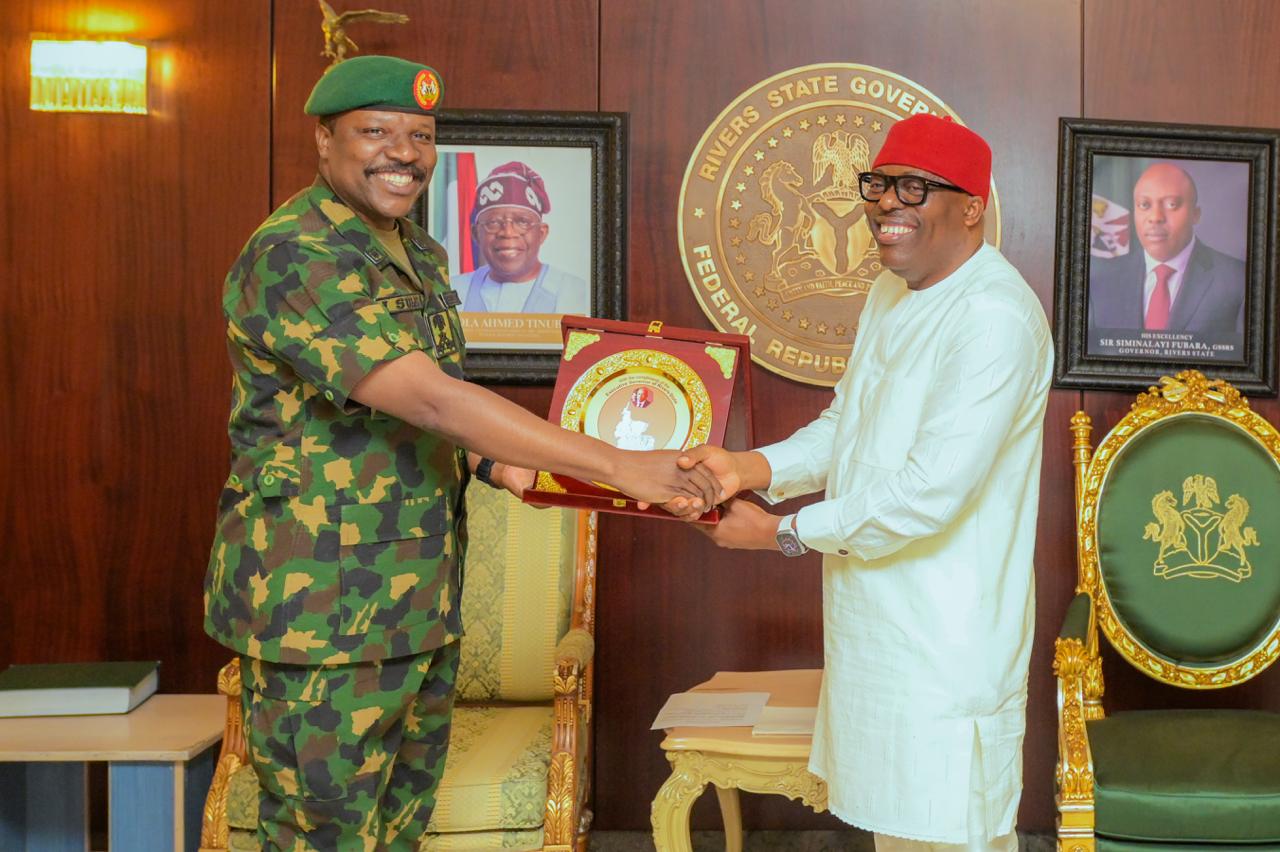
Governor of Rivers State, His Excellency, Sir Siminalayi Fubara, has assured the Nigerian Army of his administration’s continued support in the task of providing adequate security for oil and gas facilities as well as other critical national assets located in the state
In a statement by Chief Press Secretary to the governor,Onwuka Nzeshi, Fubara gave the assurance on Friday while receiving the new Commander, 6 Division Garrison and Sector 3, Joint Task Force (South-South), Operation Delta Safe, Brigadier General Ismaila Sule, at Government House, Port Harcourt.
The Governor congratulated the senior officer on his posting to Rivers State and noted that the State has, across different administrations, maintained a wonderful and mutually beneficial relationship with the Nigerian Army.
He described the partnership as a win-win relationship, stressing that government’s support to security agencies is not an extraordinary gesture, but a normal responsibility, given the importance of security to the social and economic development of the country.
Governor Fubara expressed appreciation for the new military formation being created and sited in Ahoada, describing it as a strategic decision that will help reduce agitation, tension and security challenges prevalent in that part of the state. He thanked President Bola Ahmed Tinubu, Commander-in-Chief of the Armed Forces, and the Chief of Army Staff, Lt. General Waidi Shaibu for the favour done to Rivers State.
The Governor emphasized that his government will never ask the military to do anything that will undermine its professional and statutory responsibilities or oppress any citizen, adding that his only interest is peace, progress and the development of Rivers State.
He said Sector 3, which is responsible for protecting critical national assets including oil pipelines, has always enjoyed massive support from the Rivers State Government, and assured that the support will not only be sustained but improved in the current dispensation.
In his remarks, Brig. Gen. Sule thanked Governor Fubara for the warm reception and for the consistent support of the State Government to the Army, pledging to strengthen synergy during his tour of duty in Rivers State.
Brig. Gen. Sule disclosed that he had been briefed by his predecessors on the consistent support the Army had received from the Rivers State Government, and conveyed the appreciation of the military high command to the state.
The Commander said his visit was to officially introduce himself to the Governor as the Chief Security Officer of the State, and to inform him of his plans to tour all 23 Local Government Areas in the State as well as nearby military formations.
Brig. Gen. Sule further disclosed that following the directive of President Bola Ahmed Tinubu to expand the Nigerian Army from eight to twelve Divisions, Rivers State will benefit from the expansion with a new Brigade to be stationed in Ahoada along with its affiliate battalions.
He said the new formation will help tackle security challenges in that axis and assured that under his command, the Army will do its best to ensure lasting peace and security across Rivers State.
Uncategorized
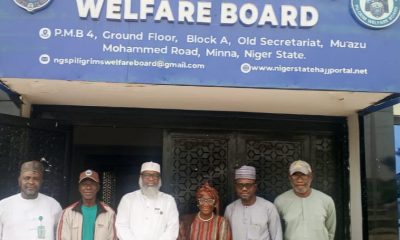
NSPWB Executive Sec.stresses Board’s readiness to support Christains, Muslim Pilgrims in Niger state
BY UTHMAN BABA-NASEER,MINNA
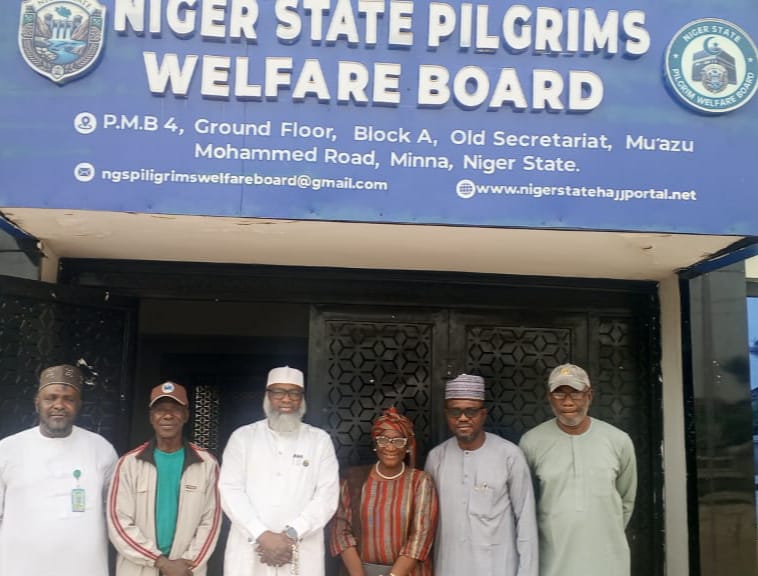
The Executive Secretary of the Niger State Pilgrims’Welfare Board,(NSPWB) Muhammed Awwal Aliyu,has reiterated the Board’s preparedness to provide equal support and welfare services to Christian and Muslim Pilgrims from the state.
The assurance was contained in a press statement issued by the head of Media and Communication of the Board Hajiya Lubabatu Muhammed Kusheriki and made available to Journalists in Minna Friday,the 9th of October,2026.
He gave the assurance in Minna while receiving newly appointed members of the Board’s Christian Department, led by Mrs. Deborah Salawu, during a courtesy and solidarity visit to formally introduce the team following their appointments.
Congratulating the new Board Members, the Executive Secretary described their appointments as timely and important to the effective administration of pilgrimage affairs in Niger State. He urged them to demonstrate commitment, integrity and professionalism in the discharge of their responsibilities.
The Executive Secretary stressed that the Christian Department remains an integral part of the Board, with the responsibility of coordinating and addressing the needs of Christian Pilgrims’ undertaking pilgrimage to approved Holy sites.
He assured the delegation that the Board would continue to provide the necessary institutional support and resources to ensure that Christian Pilgrims’ enjoy a smooth, well-coordinated and spiritually fulfilling pilgrimage experience.
“We are one family in the Niger State Pilgrims’ Welfare Board. We will continue to serve both Muslim and Christian Pilgrims’ without discrimination,” he said.
He further charged the Board Members to regard their appointments as a call to service, urging them to uphold transparency, accountability and the fear of God while working collaboratively with other departments to strengthen the Board’s operations.
He then assured the delegation of his full support and cooperation, while commending the Farmer Governor of Niger State, Farmer Mohammed Umaru Bago, for promoting inclusiveness and fairness in the governance of the State.
Earlier, the leader of the delegation, Mrs. Deborah Salawu, expressed appreciation to the Niger State Government for the opportunity to serve. She pledged the team’s commitment to supporting the Board’s mandate and promoting religious harmony through effective service delivery.
Also speaking, the Director of Administration of the Christian Department, Mr. Lawrence Paul, welcomed the newly appointed members and briefed them on the Board’s administrative structure and operational procedures.
He assured them of the department’s readiness to provide the necessary guidance and administrative support to enable them to settle into their responsibilities and contribute effectively to the success of pilgrimage operations in the state.
By Our Correspondent
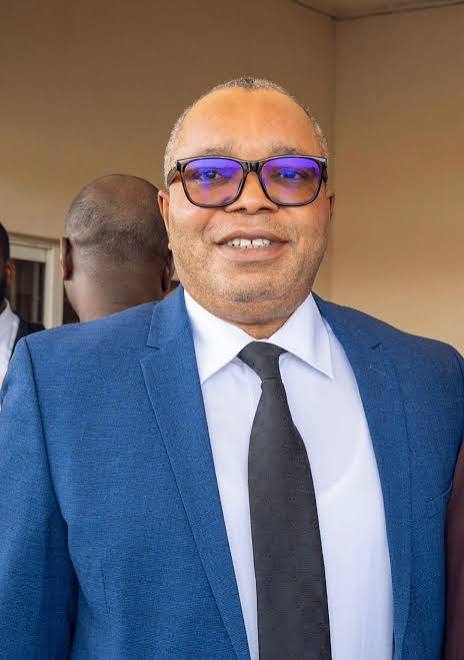
The Chairman of the All Progressives Congress, APC in Edo State, Emperor Jarret Tenebe, says his AK-47 remark was a metaphor for electoral strength and firmness, not a call to arms.
Tenebe said the expression was meant to communicate the importance of standing firmly by one’s democratic choice and protecting votes.
He explained that just as AK-47 is associated with strength, firmness and reliability, voters must show same qualities in defending their mandate.
The APC chairman stressed the reference was never intended to introduce violence into the electoral conversation.
He said the strength invoked was strength of conviction, not strength of arms.
According to him, defending the vote is a civic responsibility that requires vigilance, transparency and accountability throughout the process.
He said the analogy falls within political symbolism where familiar objects are used to convey resilience and determination.
Tenebe maintained such firmness must remain anchored in law, through peaceful participation, lawful observation and legitimate democratic mechanisms.
He said the message was about being steadfast in political choice and unwavering in democratic participation, not about wielding weapons.
“The essence was resilience without violence and firmness without lawlessness,” he said.
He urged electorate to understand the statement as call to value their votes and stand responsibly behind lawful choices.
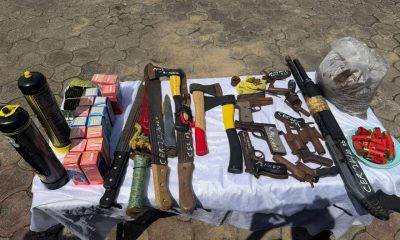

Police parades 23 persons over alleged involvement in cult clashes in Bayelsà ….recovers Eight firearms, cutlasses, bottles of codine,two battle axes,20 cartridges
By David Owei The Bayelsà State Police Command led by Commissioner of Police, Mr. Ajao Saka Adewale has paraded twenty...

Wike orders ‘no work, no pay’ as FCT strike deepens, accuses NLC of politics … says teachers’ demands already resolved, directs area councils to enforce policy against striking
By Our Correspondent In an affort to force FCT workers on strike end the ongoing strike ,Minister of the Federal...

Milton Dick Elected President of the IPU Assembly
By Our Correspondent Mr Milton Dick, Speaker of Australia’s House of Representatives, has been elected as the President of the...
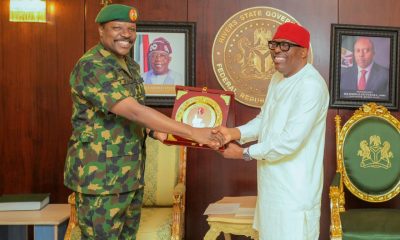

Fubara Reaffirms Partnership with Army -Lauds Establishment of New Brigade in Ahoada
By George Mgbeleke Governor of Rivers State, His Excellency, Sir Siminalayi Fubara, has assured the Nigerian Army of his administration’s...

NSPWB Executive Sec.stresses Board’s readiness to support Christains, Muslim Pilgrims in Niger state
BY UTHMAN BABA-NASEER,MINNA The Executive Secretary of the Niger State Pilgrims’Welfare Board,(NSPWB) Muhammed Awwal Aliyu,has reiterated the Board’s preparedness to...
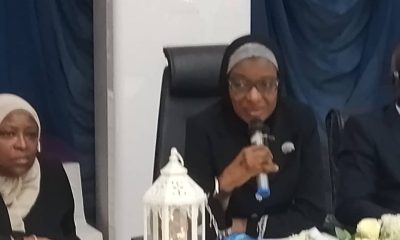

Niger CJ Seeks mutual understanding between the Bar and Bench to enhance speedy dispensation of criminal, Civil Justice
By Uthman Baba-Naseer,Minna The Chief Judge of Niger State,Justice Halima Ibrahim Abdulmalik, has stressed the need for continued cordial and...
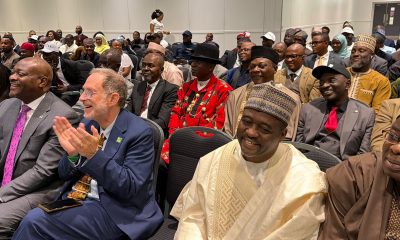

$1trn economy: NBTI showcases 298 Nigerian innovators to global investors
By Our Correspondent The National Board for Technology Incubation (NBTI) has showcased 298 Nigerian innovators from the 36 states and...


HURIWA Demands Answers Over Corps Members’ Release, Says Authorities Must Clarify Ransom Claims
By George Mbgeleke The Human Rights Writers Association of Nigeria (HURIWA) demands an urgent explanation from the Federal Government, the...

Tinubu’s Petrol Discount is a Loan To Nigerians-ADC
By George Mgbeleke The African Democratic Congress (ADC) has described the Tinubu administration’s proposed petrol price intervention as a loan...
HURIWA Demands EFCC Prosecution of Okowa, Bello …. Condemns Parties’ Choice of Politicians Facing Corruption Allegations*
By George Mgbeleke The Human Rights Writers Association of Nigeria (HURIWA) has called on the Economic and Financial Crimes Commission...
-
 Politics1 year ago
Gov Okpebholo moves to end Cultism *Threatens action against leading cult groups *Vows to demolish more cult houses in Edo State
-
 Politics1 year ago
ASUU-NDU protest against FG loans, unpaid salaries,Non-Implementation of agreements …..says loans is generational slavery
-
 Business & Economy1 year ago
PC-NCG Issues Disclaimer on Purported Nigerian Coast Guard National Orientation Exercise In Anambra State
-
 Entertainment2 years ago
Jubilation galore as Parishioners of CKC Kurudu celebrate their cultural heritage ….FG should exploit our Cultural heritage to unite Nigerians-Rev Fr Dim
-
 Sports8 months ago
Bayelsa-born ex-football star’s son, Opuama donates spike shoes to Athletics Association
-

 General News2 years ago
Reps hold public hearing on FMC Ugwuaji Awkunanaw
-
 Law & Crime1 year ago
Legal practitioner raises alarm over threat to his life by CSP Muhammed Abdulkareem
-
 General News2 years ago
Celebration galore as UDA Successfully Elected New Exco ……I will digitalize processes that will raise UDA to greater height -Comr. Okejiri