
Politics
NDLEA AND CRIMES OF MANY COLOURS*


By Emmanuel Nnadozie Onwubiko
Writers of movies in Nigeria need to look closely towards the methodology and the strategic approaches that operatives of the nation’s counter-narcotics agency NDLEA uses to track down clinically and arrests drug traffickers of different classifications. I believe a good copy written around the whole gamut of arrests of divergent genres of drug traffickers in Nigeria under the current dispensation can make a great movie. But what we are about to read is real life encounters by the NDLEA and not movies.
The underworld of hard drug trafficking is one of the most deceptive criminal ecosystems in contemporary society. Unlike conventional crimes that often reveal visible signs of violence or criminal intent, narcotics trafficking thrives on concealment, manipulation, disguise, and psychological deception. Drug traffickers have mastered the art of blending into society by assuming identities and appearances that ordinarily evoke sympathy, trust, or innocence.
In recent years, operatives of the National Drug Law Enforcement Agency have encountered a frightening spectrum of traffickers: elderly persons concealing narcotics beneath the cloak of age and frailty; women simulating pregnancy to evade suspicion; disabled individuals used as strategic shields against law enforcement scrutiny; and respectable professionals who secretly operate as couriers and coordinators in transnational trafficking syndicates.
This evolving complexity explains why the war against illicit drugs cannot be fought merely with brute force. It is a sophisticated battle of intelligence, psychology, behavioural analysis, surveillance, inter-agency collaboration, and criminological expertise. Under the leadership of Brigadier General Mohamed Buba Marwa (Rtd), the NDLEA has increasingly demonstrated that combating narcotics crimes requires more than arrests at airports and checkpoints. It demands the capacity to understand the criminal mind, predict behavioural patterns, infiltrate networks, analyse suspicious movements, and dismantle organized syndicates operating across national boundaries.
The multidimensional nature of drug crimes reflects the desperation and ingenuity of trafficking cartels. Criminologists have long argued that organized criminal enterprises constantly adapt to law enforcement tactics. This theory has proven accurate in the narcotics trade. Once traffickers realize that particular routes or methods are compromised, they rapidly evolve new concealment strategies. The use of pregnant disguises, for instance, is rooted in psychological manipulation. Society naturally accords pregnant women empathy and reduced scrutiny. Drug syndicates exploit this social conditioning. Similarly, elderly individuals are often perceived as harmless, vulnerable, or physically incapable of participating in sophisticated criminal activity. Persons living with disabilities may also receive less aggressive security checks because officers are expected to demonstrate compassion and sensitivity. Yet criminal syndicates weaponize these human emotions for operational advantage.
The implication is profound. Modern narcotics enforcement now operates at the intersection of criminal psychology and behavioural science. NDLEA operatives are increasingly trained not merely to search luggage but to read human behaviour. Microexpressions, inconsistent narratives, abnormal movement patterns, suspicious travel histories, excessive nervousness, rehearsed emotional displays, and deceptive body language now form critical components of narcotics detection. This explains why traffickers who appear physically innocent or socially respectable continue to be intercepted despite elaborate disguises.
What distinguishes the contemporary NDLEA under Marwa is the institutionalization of intelligence-led enforcement. The agency has moved beyond reactive policing into proactive criminal disruption. Arrest statistics emerging from the agency illustrate the scale of this transformation. Between 2021 and 2025, the NDLEA recorded 77,792 arrests, secured 14,225 convictions, and seized over 14.8 million kilograms of illicit substances, including cocaine, heroin, methamphetamine, tramadol, and cannabis. The agency also arrested 128 identified drug barons involved in major trafficking syndicates.
These figures are not merely administrative achievements; they represent a significant disruption of organized criminal economies. Behind every seizure lies an intricate web of surveillance, profiling, undercover intelligence gathering, financial tracking, international information sharing, and operational coordination. Drug trafficking is rarely an isolated activity. It intersects with terrorism financing, money laundering, kidnapping, arms smuggling, cybercrime, and violent organized crime. Consequently, every successful narcotics operation contributes directly to national security preservation.
The criminological significance of these operations becomes even clearer when one considers the adaptive nature of organized crime. Drug syndicates survive through innovation. They constantly recruit individuals least likely to attract suspicion. Women pretending to be pregnant have been discovered carrying narcotics in prosthetic stomach packs. Elderly traffickers have concealed substances in food items, walking aids, and clothing materials. Some traffickers swallow drug pellets internally to evade external detection. Others hide illicit substances within electronic gadgets, automobile parts, religious materials, and even children’s belongings.
To uncover such schemes requires highly specialized operational skills. NDLEA officers now rely heavily on intelligence profiling, forensic interrogation, travel pattern analysis, digital surveillance, canine units, body scanners, controlled deliveries, and international watchlist coordination. Modern drug enforcement is therefore no longer dependent solely on random searches. It increasingly relies on predictive policing and criminal intelligence architecture.
This operational sophistication explains why many traffickers are often stunned when arrested. They assume their disguise automatically guarantees immunity from suspicion. Yet intelligence-driven policing works differently. The focus is not merely on physical appearance but on behavioural anomalies and network connections. A supposedly harmless traveller may suddenly attract attention because of suspicious ticket purchases, unusual destination patterns, inconsistent documentation, or intelligence supplied by foreign partners.
Indeed, one of the strongest pillars of the NDLEA’s successes under Marwa is the strengthening of inter-agency collaboration. No modern law enforcement institution can independently combat transnational organized crime. Drug trafficking networks transcend borders, jurisdictions, and institutional mandates. This reality has compelled the NDLEA to deepen operational cooperation with the Nigeria Customs Service, immigration authorities, the police, intelligence agencies, aviation security, financial regulators, and international anti-narcotics institutions.
The memorandum of understanding between the NDLEA and the Nigeria Customs Service represents one practical example of this evolving collaborative framework. The partnership enhanced intelligence sharing, border surveillance, coordinated seizures, and joint enforcement operations against illicit trafficking networks. Such institutional synergy significantly reduces operational rivalry while strengthening collective national security outcomes.
More importantly, the agency has strengthened transnational partnerships with organizations such as the United States Drug Enforcement Administration, the United Nations Office on Drugs and Crime, European anti-narcotics institutions, and several foreign security agencies. These partnerships are indispensable because contemporary narcotics crimes operate through international supply chains. Cocaine may originate from Latin America, transit through West Africa, and ultimately target European or Asian markets. Synthetic drugs may be manufactured abroad and distributed through African corridors. Without international intelligence sharing, many trafficking networks would remain invisible.
General Marwa’s administration appears to understand that narcotics control is fundamentally global in character. The agency’s increasing engagement with foreign enforcement institutions has improved intelligence exchange, capacity building, technological support, operational training, and coordinated interdiction exercises. This globalized enforcement model has enabled the NDLEA to intercept trafficking operations before drugs even reach Nigerian territory or depart from it.
Equally noteworthy is the agency’s emphasis on professional training and human capacity development. Criminal networks evolve continuously; therefore, law enforcement competence must evolve faster. The modern NDLEA operative is no longer expected to function merely as a uniformed enforcer. He or she must understand criminal psychology, intelligence analysis, interrogation techniques, cyber-assisted investigations, financial tracking, and international legal procedures.
This explains why the agency increasingly appears several steps ahead of traffickers. Sophisticated narcotics detection requires analytical thinking and patience. Experienced officers study behavioural inconsistencies carefully. They observe how suspects respond under questioning, how they handle luggage, how they maintain eye contact, and how they react to routine screening. Often, it is not the physical evidence alone that exposes traffickers, but the collapse of carefully rehearsed deception under professional interrogation.
Criminology teaches that offenders frequently display what experts describe as “leakage behaviour”; involuntary psychological signs that betray concealed guilt. Properly trained narcotics officers understand these behavioural indicators. This knowledge transforms enforcement from random suspicion into scientific investigation.
The agency’s remarkable conviction record further underscores institutional maturity. Arrests alone do not dismantle organized crime. Successful prosecution and conviction create deterrence and weaken criminal networks structurally. The NDLEA’s 14,225 convictions within five years demonstrate increasing prosecutorial effectiveness and coordination within the criminal justice system. Convictions send a powerful message that narcotics crimes carry consequences beyond temporary detention.
Furthermore, the agency’s approach reflects an understanding that drug trafficking is not solely a criminal issue but also a public health and social stability concern. Drug abuse fuels violence, mental health deterioration, youth criminality, domestic instability, and economic decline. Organized narcotics trafficking also finances insecurity across multiple regions. Thus, the anti-drug war simultaneously functions as a national security strategy.
One of the most important lessons emerging from the NDLEA’s operational evolution is the value of intelligence-led policing. For decades, many African security institutions relied excessively on reactive enforcement. Criminals often stayed ahead because security agencies operated with outdated structures and weak information systems. The NDLEA under Marwa appears to have embraced a different philosophy: anticipate criminal activity before it manifests fully.
This intelligence-driven model deserves careful study by other Nigerian security institutions. Terrorism, banditry, kidnapping, cybercrime, arms trafficking, and financial crimes increasingly operate through decentralized and adaptive networks similar to narcotics syndicates. Combating such threats requires integrated intelligence systems, inter-agency trust, technological modernization, and international cooperation.
The success of the NDLEA demonstrates that security effectiveness is not solely determined by force deployment but by information superiority. The agency’s operational record illustrates how data analysis, surveillance coordination, behavioural profiling, strategic partnerships, and institutional professionalism can significantly weaken organized crime structures.
Importantly, the agency’s achievements also challenge dangerous stereotypes about criminality. Society often assumes criminals possess predictable appearances. Drug trafficking has proven otherwise. Criminality cuts across age, gender, physical condition, religion, education, and social status. The elderly can traffic drugs. Women can operate as cartel couriers. Persons with disabilities can be recruited into organized crime operations. Professionals can secretly coordinate narcotics networks. This reality compels law enforcement agencies to avoid superficial assumptions and instead embrace evidence-based policing.
The multidimensional character of narcotics trafficking therefore mirrors the multidimensional response required to combat it. Modern anti-drug operations demand psychological intelligence, forensic sophistication, international collaboration, legal competence, operational discipline, and institutional resilience. Under General Marwa, the NDLEA increasingly presents itself as an example of what strategic reform can achieve within Nigerian law enforcement.
The broader national implication is significant. A secure Nigeria cannot emerge where organized criminal enterprises operate freely across borders, airports, seaports, highways, and financial systems. Drug trafficking destabilizes communities, corrupts institutions, finances violence, and destroys human potential. Every successful interdiction therefore represents more than a routine arrest; it represents the protection of national stability and public safety.
Ultimately, the war against illicit drugs is not simply a contest between traffickers and security agents. It is a battle between criminal deception and institutional intelligence. The trafficker constantly searches for new disguises. The law enforcement operative must constantly refine new detection strategies. The criminal network depends on secrecy, manipulation, and corruption. The enforcement institution depends on professionalism, intelligence gathering, discipline, and collaboration.
The evidence increasingly suggests that the NDLEA, under Marwa’s leadership, has recognized this reality and adapted accordingly. Through operational sophistication, inter-agency coordination, international partnerships, and intelligence-led policing, the agency has positioned itself as one of Nigeria’s most proactive security institutions. Its evolving model offers valuable lessons for broader national security management.
As organized crime becomes increasingly complex and transnational, Nigeria’s security future will depend largely on institutions capable of thinking beyond traditional enforcement methods. The NDLEA experience demonstrates that modern security challenges require modern intelligence frameworks. In that regard, the agency’s operational trajectory may well serve as a template for combating sophisticated crimes in the twenty-first century.
We are appreciative of these phenomenal efforts of the management and operatives of the NDLEA to be far ahead of drug traffickers and all we can wish them is more and more successes.
*EMMANUEL NNADOZIE ONWUBIKO is the founder of the HUMAN RIGHTS WRITERS ASSOCIATION OF NIGERIA and was NATIONAL COMMISSIONER OF THE NATIONAL HUMAN RIGHTS COMMISSION OF NIGERIA.
Politics
2027: Tinubu Must Withdraw ‘All Is Fair in Politics’ Remark, Embrace Peaceful Coexistence — ADC-PCC
By George Mgbeleke
The African Democratic Congress Presidential Campaign Council (ADC-PCC) has called on President Bola Ahmed Tinubu to publicly retract his controversial “All Is Fair in Politics” remark, warning that such rhetoric fuels political division, emboldens thugs and poses a grave threat to the nation’s peace and stability.
The ADC-PCC also expressed concern over what it described as the President’s disturbing silence on the conduct of some APC governors and party chieftains who have openly made inflammatory statements and allegedly encouraged political violence.
In a statement signed by its Director of Media and Publicity, Kola Ologbondiyan, the ADC-PCC urged President Tinubu to rise above partisan interests and demonstrate the statesmanship expected of a national leader, citing former President Goodluck Jonathan’s unequivocal declaration that no presidential ambition was worth the blood of any Nigerian.
The Council described as shocking the President’s failure to condemn the growing wave of political violence, noting that, through his spokesman, Mr. Bayo Onanuga, the Presidency had instead chosen to caution opposition parties while shielding those allegedly responsible for violence within the ruling APC.
“President Tinubu cannot claim to desire peace when his own words provide cover for violence.
“‘All Is Fair in Politics’ is not the language of a Head of State. It is the language of political desperation and an open licence for thuggery, ballot snatching, intimidation and bloodshed.
“From Edo to Cross River, Gombe to Lagos, and Kebbi to Kaduna, Nigerians have witnessed attacks on opposition gatherings, destruction of campaign materials and the brutalisation of innocent supporters, allegedly by APC-sponsored thugs.
“Yet, Mr. President has not considered it necessary to call his governors and party members to order.
“Instead, the Presidency has resorted to diversionary tactics, blaming victims and preaching restraint to the opposition while members of the ruling party are accused of unleashing violence across the country,” the statement said.
The ADC-PCC challenged President Tinubu to explain why his condemnation of political violence appears directed at the opposition rather than members of his own party.
It asked: “Why has Mr. President refused to condemn APC governors who openly threaten opposition supporters? Why has he remained silent over public incitement by officials of his party? Why is his anger always directed at the opposition and never at those within his own political fold?”
The Council maintained that the ADC remains committed to peaceful, issue-based political engagement, insisting that its campaign is focused on addressing the country’s pressing challenges, including hunger, insecurity, unemployment, corruption and what it described as the failures of the Tinubu administration.
It accused the APC of resorting to violence because it had little to offer Nigerians in terms of credible solutions to the country’s problems.
Consequently, the ADC-PCC demanded that President Tinubu immediately and publicly withdraw his “All Is Fair in Politics” remark, condemn and call to order APC governors and party officials accused of inciting violence, and direct security agencies to protect all Nigerians impartially rather than allow them to become instruments of intimidation and oppression against opposition parties.
” Nigeria belongs to all of us. No political ambition is worth the blood of any Nigerian.
“If former President Goodluck Jonathan could make that profound declaration in 2015, President Tinubu has no excuse not to say so and demonstrate the sincerity of his commitment to peace in 2026.
“The ADC will not be intimidated. We will continue to campaign peacefully, and in 2027, Nigerians will have the opportunity to vote for competence, integrity and a new beginning,” the statement added.

By Abdullateef Bamgbose
The Founder and Convener of the Tinubu-Uba Sani Consolidation Front (TUSCOF), Malam Sani Liman Kila, MFR, has commended Kaduna State Governor, Senator Uba Sani, over the approval of land for the establishment of four additional Nigerian Army bases in strategic locations across the state.
Kila described the development as a significant step towards strengthening the state’s security architecture, improving collaboration with federal security agencies and enhancing the protection of lives and property.
The proposed military bases are to be established in Buruku, Igabi Local Government Area; Samaru Kataf, Zangon Kataf LGA; Kachia LGA; and Birnin Gwari LGA.
He noted that the approval followed a request by the Nigerian Army for additional military facilities, describing it as a demonstration of the importance of sustained cooperation between the Kaduna State Government and federal security agencies in addressing security challenges.
According to him, bringing military facilities closer to vulnerable communities would expand the operational reach of security forces, improve response capabilities and strengthen efforts to prevent and contain security threats.
Kila further emphasised that peace and security were essential to the state’s economic recovery, agricultural productivity, investment climate and sustainable development, noting that the protection of citizens remained a fundamental responsibility of government.
He also called on residents of the affected communities, traditional rulers, religious leaders and other stakeholders to support the initiative by cooperating with security agencies and providing credible intelligence.
The TUSCOF convener expressed confidence that the additional military installations would complement ongoing security efforts and contribute to creating safer communities across Kaduna State.
He added that achieving lasting peace, stability and prosperity in the state required collective responsibility and sustained collaboration among the government, security agencies and residents.
By David Owei,Bayelsa
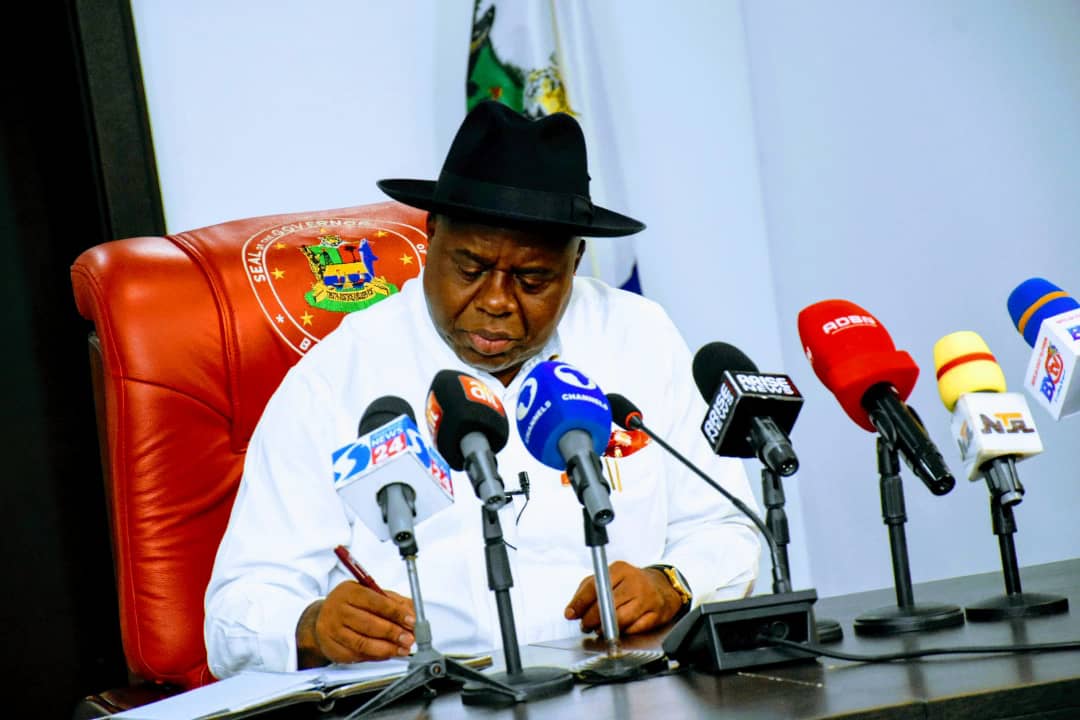
The Governor of Bayelsa State, Senator Douye Diri, has declared that President Bola Tinubu, candidate of the All Progressives Congress (APC) in the forthcoming presidential election, will garner far more votes in the South-South region than he did in 2023.
Governor Diri made the declaration while speaking with newsmen shortly after participating in the Edo State APC Presidential Campaign Rally flag-off in Benin City on Thursday.
Represented by his deputy, Dr Peter Akpe, the Bayelsa Chief Executive maintained that the majority of South-South people would vote for Tinubu in the election scheduled for 16th January, 2027, because of the impact his administration has made in the region.
He pointed out that, apart from the APC gaining firm control in all the South-South states, President Tinubu has equally shown love and political will towards tackling the challenges confronting the region.
Governor Diri, who expressed delight at the massive turnout at the Benin event and similar rallies held so far, noted that the organic support the APC is enjoying from Nigerians will translate into a commanding electoral victory in 2027.
Commenting on the level of preparedness of the Bayelsa APC family in working for the re-election of President Tinubu, he said that, contrary to unfounded claims by some opposition elements, the APC “is not only predominant but remains the party to beat in Bayelsa.”
His words: “You saw the mammoth crowd that thronged the Ogbemudia Stadium and its environs a moment ago. That is a mammoth crowd of organic supporters of our party. It is not a rented crowd. And it is like that all across the South-South.
“Our brothers and sisters in Edo have actually proved that Edo was the first to become an APC state in our region, and that they are determined to maintain its dominance in Edo.
“But as you can see today, all the states in the South-South are now APC, and the party has firm control of what happens in each of the states in the region. So, President Bola Tinubu will not only win, but will also win with a bigger margin of votes in 2027 than he did in 2023.
“The APC family is solid and it is working to return our leader, the President. You know that talk is cheap. Anybody can say anything or make any claims. January 16th is not far from now. Let us patiently wait for the results to determine the strength of the APC and that of other parties in Bayelsa.”
Meanwhile, the Edo State Governor, Senator Monday Okpebholo, reiterated his promise that President Tinubu would secure not less than 2.5 million votes from the state in the upcoming election.
Okpebholo, who attributed the achievements of his administration to what he described as uncommon support from the Tinubu-led Federal Government, vowed that nothing would stop the state from fulfilling its promise to the President.
Speaker after speaker, including the Senate President, Senator Godswill Akpabio, and former Edo State Governor, Comrade Adams Oshiomhole, assured President Tinubu that the people of the South-South would vote massively to ensure his re-election in 2027.
Addressing the mammoth crowd, President Bola Tinubu, who was represented by Vice President Kashim Shettima, urged Nigerians to objectively judge his administration by its transformational reforms, works, and its determination to complete ongoing projects.
Shettima highlighted some achievements of the administration to include the upgrade of healthcare facilities at the University of Benin Teaching Hospital, infrastructural development, provision of social support for vulnerable citizens, and improved security.
He said: “We are also investing in your educational institutions and the people who sustain them. We have allocated subsidised fertilisers to your farmers and entrepreneurs… and vocational programmes through the National Directorate of Employment.
“We are providing different kinds of financial assistance to vulnerable citizens and communities affected by disasters. We have also improved the rejuvenation of our armed forces and other security agencies, and prioritised their operational capabilities.
“We have completed some works and some works are ongoing. We ask that our stewardship be judged by the lives it has touched… and the works we are determined to complete. We seek your mandate to finish the work we have begun.”
The Deputy Governor, Dr Peter Akpe, was accompanied to the Edo State APC Presidential Campaign Rally by the State Chairman of the party, Hon. Weri Warman Ogoriba, its Women Leader, Mrs Rose Itoko-Amadi, the South-South Zonal Director for Youth Mobilisation, APC Presidential Campaign Council, Mrs Deme Pamooso, among other party chieftains.

2027: Tinubu Must Withdraw ‘All Is Fair in Politics’ Remark, Embrace Peaceful Coexistence — ADC-PCC
By George Mgbeleke The African Democratic Congress Presidential Campaign Council (ADC-PCC) has called on President Bola Ahmed Tinubu to publicly...

Kila Commends Uba Sani Over Approval Of Four New Military Bases In Kaduna
By Abdullateef Bamgbose The Founder and Convener of the Tinubu-Uba Sani Consolidation Front (TUSCOF), Malam Sani Liman Kila, MFR, has...


EFCC Secures Conviction Of Three Illegal Miners In Kwara
By Johnbosco Agu,Kwara The Ilorin Zonal Directorate of the Economic and Financial Crimes Commission, EFCC, has secured the conviction of...


Sokoto: Customs, EFCC Close Ranks Against Smugglers, Financial Criminals
By Adamu Yohana , Sokoto In a bid to protect the nation’s economy from the hands of smugglers, the Nigeria...

Court Stops PDP From Enforcing Garry’s Expulsion
By Musa Abubakar,Gombe A High Court of Gombe State has restrained the Peoples Democratic Party (PDP) from enforcing the purported...

New York Building Collapse Kills Eight, Including Two Children
By Johnson Alabi with Agency report New York authorities said Thursday that eight people, including two children, were killed after...
KIVTSD Provost Commends Uba Sani For Boosting Skills Development, Says 3500 New Learners Undergo Screening
By Ebel Okechukwu, Kaduna As part of effort to empower unskilled persons,the Provost of the Kaduna State Institute of Vocational...


Man Dies After Eating Crude Bomb Disguised As Traditional Indian Sweet
By Our Correspondent An Indian man died after a crude bomb disguised as a traditional sweet exploded in his mouth,...

NEITHER IGBO, YORUBA NOR HAUSA/FULANI PRESIDENCY
By Emmanuel Nnadozie Onwubiko With only a few days remaining before one of the most significant presidential elections in Nigeria’s...


2027: HURIWA Demands Public Voters Register, Warns Against Electoral Manipulation
By George Mgbeleke The Human Rights Writers Association of Nigeria (HURIWA) has demanded that the Independent National Electoral Commission (INEC)...
-

 Politics2 years ago
Gov Okpebholo moves to end Cultism *Threatens action against leading cult groups *Vows to demolish more cult houses in Edo State
-
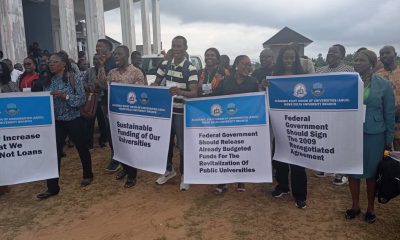
 Politics1 year ago
ASUU-NDU protest against FG loans, unpaid salaries,Non-Implementation of agreements …..says loans is generational slavery
-

 Business & Economy1 year ago
PC-NCG Issues Disclaimer on Purported Nigerian Coast Guard National Orientation Exercise In Anambra State
-
 Entertainment2 years ago
Jubilation galore as Parishioners of CKC Kurudu celebrate their cultural heritage ….FG should exploit our Cultural heritage to unite Nigerians-Rev Fr Dim
-

 Sports9 months ago
Bayelsa-born ex-football star’s son, Opuama donates spike shoes to Athletics Association
-

 General News2 years ago
Reps hold public hearing on FMC Ugwuaji Awkunanaw
-
 Law & Crime1 year ago
Legal practitioner raises alarm over threat to his life by CSP Muhammed Abdulkareem
-

 General News2 years ago
Celebration galore as UDA Successfully Elected New Exco ……I will digitalize processes that will raise UDA to greater height -Comr. Okejiri