
Oil & Gas
Fuel Crisis: Reps C’ttee Engages Importers, Distributors and Refiners to Ease Accessibility and Affordability. **Seek industry consensus on downstream reforms

By Our Correspondent
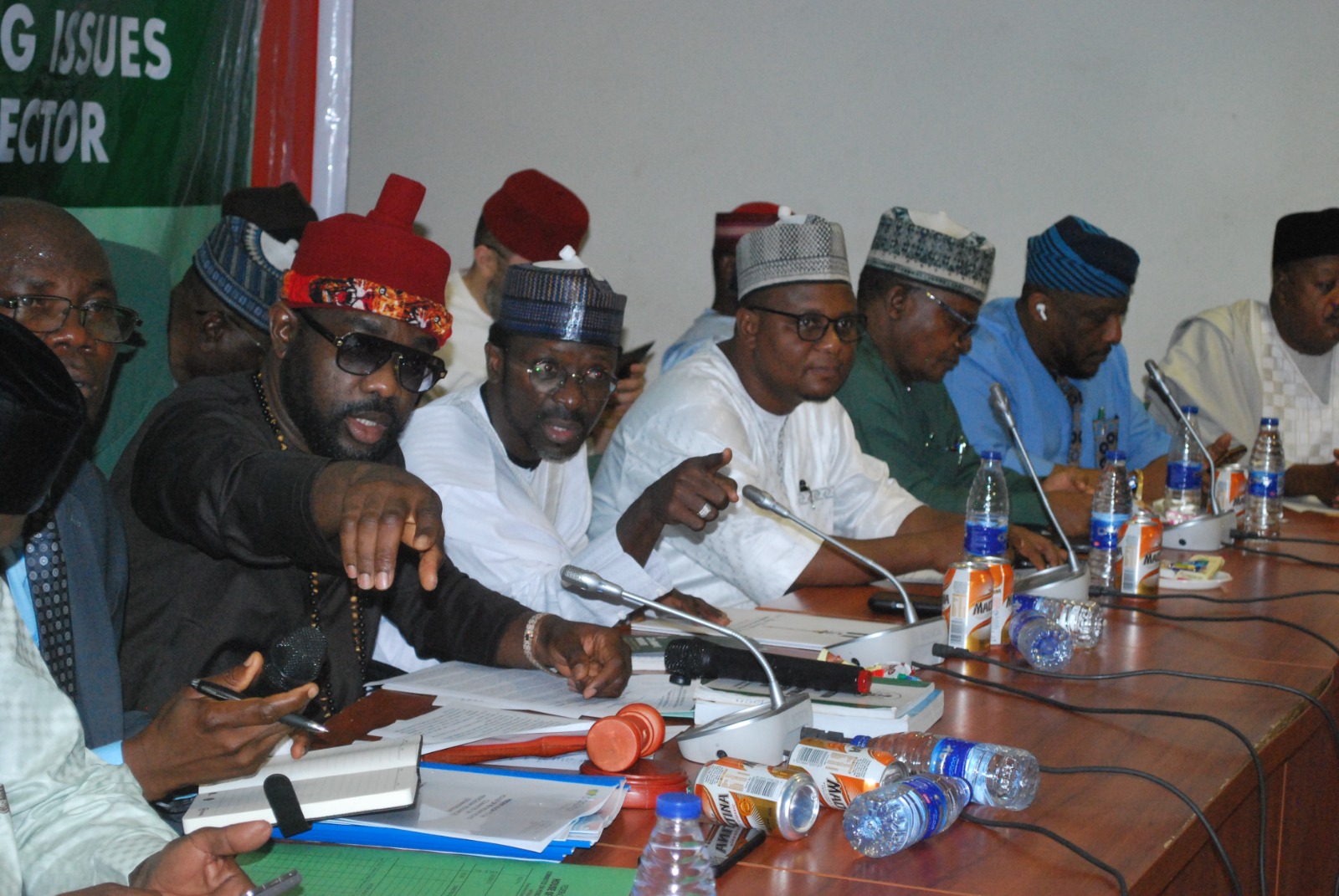
The House of Representatives Committee on Petroleum Resources (Downstream) has initiated efforts to reduce clash of interest between petroleum importers and domestic refiners, as it engaged key stakeholders in the downstream oil and gas sector to chart a common path towards energy security, stable fuel supply and sustainable industry reforms.
At a highly interactive session held on Tuesday at House wing of the National Assembly, the Committee met with executives of the Depot and Petroleum Products Marketers Association of Nigeria (DAPPMAN), the Independent Petroleum Marketers Association of Nigeria (IPMAN) and the Major Energies Marketers Association of Nigeria (MEMAN), with discussions centred on balancing support for local refining while ensuring uninterrupted fuel availability across the country.
Chairman of the House Committee Hon. Ikenga Imo Ugochinyere, said the engagement reflected the House’s commitment to inclusive lawmaking, stressing that reforms in the downstream petroleum sector would be driven by dialogue rather than confrontation.
“We are here not to interrogate, not to accuse and not to put anyone on trial. We are here to listen. We are here to talk to one another as partners who share one common destiny, a Nigeria where energy is affordable, supply is stable and no citizen suffers because petroleum products are out of reach,” he said.
Ugochinyere assured these stakeholders that no policy affecting the downstream sector would be formulated without broad consultations with operators whose investments sustain Nigeria’s petroleum distribution network.
According to him, Nigeria is at a defining stage in its energy transition, with increasing domestic refining capacity, evolving import dynamics and renewed efforts to improve pipeline security and distribution efficiency.
“The marketers, depot owners, independent operators and major marketers remain the bridge between government policy and the pump. When that bridge is strong, Nigerians enjoy stable prices and reliable supply. When it is weak, the entire nation feels the consequences,” he stated.
He said the Committee would carefully consider the submissions of all stakeholders in developing legislative interventions that would encourage investment, strengthen domestic refining, deepen competition and guarantee affordable and uninterrupted petroleum product supply.
The lawmaker further assured industry operators that the committee would continue to prioritise constructive engagement over confrontation in carrying out its oversight and legislative responsibilities.
Presenting DAPPMAN’s position, the association’s Executive Secretary, Olufemi Adewole, urged the Nigerian Midstream and Downstream Petroleum Regulatory Authority (NMDPRA) to develop practical operating-stock guidelines under Section 182 of the Petroleum Industry Act (PIA).
He said the guidelines should clearly define standards for stock measurement, reporting, quality assurance and accessibility, adding that strategic stockholding should not be measured merely by product volume but also by the industry’s capacity to finance, transport and release products quickly during emergencies or supply disruptions.
DAPPMAN also proposed the establishment of a joint market-monitoring framework involving the NMDPRA and the Federal Competition and Consumer Protection Commission (FCCPC) to monitor supply concentration, product availability, transparent allocation, fair treatment of operators and early warning indicators of market stress.
The association further called on the Federal Government to prioritize investments in critical infrastructure, including roads, railways, inland waterways, pipelines and petroleum depots, to reduce the sector’s heavy dependence on long-distance trucking from a few coastal supply hubs.
It also advocated a permanent government-industry consultative platform bringing together regulators, marketers, refiners, NNPC Limited, transport agencies and security institutions to periodically review supply conditions, infrastructure gaps and emerging risks.
In a presentation the National President Independent Petroleum Marketers Association of Nigeria IPMAN Alhaji Abubakar Shettima described the downstream petroleum industry as one of Nigeria’s most strategic sectors, noting that it remains central to powering households, industries, agriculture, transportation, healthcare and national security.
The association observed that the implementation of the Petroleum Industry Act, deregulation of fuel prices, rehabilitation of government-owned refineries and the emergence of large-scale private refineries have positioned Nigeria to evolve from a major importer of refined petroleum products into Africa’s leading refining and distribution hub.
Despite these opportunities, IPMAN identified several challenges slowing the sector’s growth, including high financing costs, multiple taxation, foreign exchange volatility, inadequate storage and transportation infrastructure, pipeline vandalism, limited access by independent marketers to refinery products, delayed payment of bridging and NTA claims, and insufficient stakeholder engagement.
The association urged the House committee to support reforms that would improve logistics, deepen market competition, reduce distribution costs, encourage investment and guarantee the sustainable availability and affordability of petroleum products nationwide.
Speaking on behalf of MEMAN, Executive Secretary Clement Isong acknowledged that Nigeria now possesses the capacity to refine petroleum products locally, meet domestic demand and export refined products to international markets.
However, he cautioned against imposing blanket restrictions on fuel imports, arguing that government must retain the flexibility to approve imports whenever necessary to safeguard national energy security.
According to him, strategic imports remain indispensable during supply shortages or unexpected market disruptions, helping to protect consumers from sharp price increases and supply crises.
Isong recommended that Nigeria establish a strategic petroleum reserve capable of sustaining at least 60 days of national consumption to cushion the country against global supply shocks and price volatility.
He cited the recent Liquefied Petroleum Gas (LPG) market as an example where increased imports successfully bridged supply shortages and moderated prices, demonstrating how timely regulatory intervention can stabilise the market.
While reaffirming MEMAN’s support for the Federal Government’s drive to strengthen domestic refining, Isong maintained that decisions on petroleum product imports should remain the exclusive responsibility of the Federal Government and the NMDPRA to ensure adequate supply, preserve healthy competition and protect consumers.
The engagement highlighted the differing perspectives among downstream operators on the future of petroleum imports and domestic refining.
These stakeholders were united in calling for policy consistency, improved infrastructure, stronger regulatory collaboration and continuous dialogue with government to ensure Nigeria’s downstream petroleum industry remains competitive, resilient and capable of guaranteeing long-term national energy security.
End
Oil & Gas
NCDMB, NLNG Commit US$9 Million to Endowment of Professorial Research Chairs in Six Nigerian Universities

By David Owei
The Nigerian Content Development and Monitoring Board (NCDMB) and the Nigeria LNG Limited (NLNG) have launched a US$9 million professorial chair endowment programme across six Nigerian universities to develop commercially viable solutions to industry challenges, strengthen local research capacity and advance technological innovation.
Under the Nigerian Content Research and Development (NC-R&D) Professorial Chair Endowment Programme, each university is to receive US$1.5 million to establish a specialised professorial chair focused on agreed industry research priorities. The initiative is being implemented in partnership with the NCDMB, under the supervision of its Planning, Research and Statistics Directorate.
The schools include the University of Ibadan, Oyo State, Rivers State University, Modibbo Adama University, Yola, Adamawa State, Aliko Dangote University of Science and Technology, Kano State, University of Nigeria, Nsukka, Enugu State, and Yakubu Gowon University, formerly the University of Abuja.
Speaking at the kick-off ceremony, NLNG’s Managing Director and Chief Executive Officer, Adeleye Falade, described the programme as an investment in Nigeria’s capacity to translate academic knowledge into practical solutions. His keynote address, titled “Reshaping Nigeria’s Future Through Innovation, Research and Capacity Development,” emphasised the importance of sustained collaboration between government, industry and academia.
“In the energy industry, we understand that technology and energy systems are evolving and the requirement for sustained research cannot be overemphasised,” Falade said.
He noted that the programme would support research into challenges central to the energy industry’s future, including improving operational efficiency, managing emissions, strengthening safety, maintaining critical infrastructure and making industrial processes more sustainable.
Beyond the research endowments, Falade outlined opportunities for a “triple helix” approach that brings government, industry and academia together through specialised programmes, sabbaticals, exchange opportunities, practical testing of research assumptions and the joint development of postgraduate curricula.
The six beneficiary universities will undertake research in distinct areas and the NLNG Research and Innovation Centre for Computer and Electrical Engineering (RICCEE) at Rivers State University is envisaged as the coordinating point for these collaborations among the universities. Falade said discussions were already under way with the university on implementation arrangements and commended its Vice-Chancellor, Professor Isaac Zeb-Obipi, for his role in advancing the proposed collaboration. We have already gotten indications of other partners like Google, Cisco and MTN who showing interest to support this initiative, he said.
Falade also highlighted the opportunities for younger researchers to deepen their expertise, investigate industry problems and learn from experienced academics and practitioners. He urged the beneficiary institutions to build on the endowments by strengthening research partnerships, attracting additional funding and pursuing the commercialisation of intellectual property.
“Expand the scope, reach for more grants and funding which can push the frontiers of knowledge and commercialisation of intellectual property,” he said.
Acknowledging NCDMB’s role in bringing the initiative to fruition, Falade called for sustained commitment to technology transfer and the development of home-grown solutions without compromising quality assurance or safety. He emphasised that the programme’s lasting value would lie in stronger institutions, research outcomes deployed in the field and the development of the next generation of Nigerian researchers and industry professionals.
In his remarks, the Executive Secretary of the NCDMB, Engr. Felix Omatsola Ogbe said the US$9 million endowment programme represents a strategic investment in the future of Nigeria’s research and innovation ecosystem.
The initiative, he said, complements the Board’s ongoing investments in research infrastructure, including the establishment of specialized R&D Centres of Excellence across six universities in the country.
He added that “taken together, these interventions demonstrate the Nigerian oil and gas industry’s commitment to creating an integrated research ecosystem that connects academic expertise, modern research infrastructure, industry requirements, and commercialization opportunities.”
Represented by the Senior Technical Adviser, Engr. Austin Uzoka, the Executive Secretary underscored that by supporting specialized professorial chairs in critical areas of the industry operations, NLNG and NCDMB is creating opportunities to bridge the longstanding gap between academic research and industrial application.
He further charged the universities to deliberately transition from research for publication to research for application, and from innovation as an academic pursuit to innovation as a driver of industrial transformation. According to him “the beneficiary universities must see this endowment as both an opportunity and a responsibility and they would be expected to deliver clearly defined research objectives, measurable outcomes, prudent resource utilization, effective stakeholder engagement, and sustained collaboration with industry partners.”
He further demanded that “these professorial chairs will generate commercially viable solutions, strengthen local technological capabilities, support industrial competitiveness, and contribute meaningfully to the long-term sustainability of Nigeria’s oil and gas industry.”
Details of the endowment indicates that the University of Ibadan will focus on natural gas processing, pollution control and environmental management, while Rivers State University will concentrate on digital engineering, intelligent energy systems, automation and asset integrity.
Modibbo Adama University will undertake research in energy transition and the environment. Aliko Dangote University of Science and Technology will focus on sustainable energy innovation and climate-resilient food systems.
The University of Nigeria, Nsukka, will specialise in green energy production and geoenvironmental engineering, while Yakubu Gowon University, formerly the University of Abuja, will focus on geoscience and satellite intelligence for resilient gas infrastructure.
Each university will work towards agreed research targets and commercialisation pathways, providing a framework for measuring progress and translating findings into practical applications. The institutions will also jointly host an information management hub to support knowledge sharing and exchange programmes.
The funding includes provision for minor civil works and infrastructure upgrades to transform identified spaces into fit-for-purpose research centres.
Proposed arrangements would enable industry professionals to contribute practical expertise in technical and non-technical disciplines while pursuing master’s and doctoral degrees. This would give students greater exposure to industry experience while strengthening the connection between postgraduate study and practical problem-solving.
The programme reinforces NLNG’s commitment to developing Nigerian capability and creating opportunities for local expertise to address industry needs, guided by its recently approved ‘NextGen Nigerian Content Strategy’ where NLNG plans to Sustain the gains
through focused delivery of previous commitments in alignment with NCDMB; Enable its business by facilitating deeper adoption Nigerian Content Development as a business principle and Accelerate growth by showing up and support the Nigerian Content transformation for posterity, in line with its vision of inspiring a sustainable future.
“Start Local, Go Global, Think Nigerian Content.”
Oil & Gas
Mele Kyari refutes alleged unaccounted N210trillion … .. Says nothing missed under him … .As Senate admits his clean bill of health submissions
By George Mgbeleke
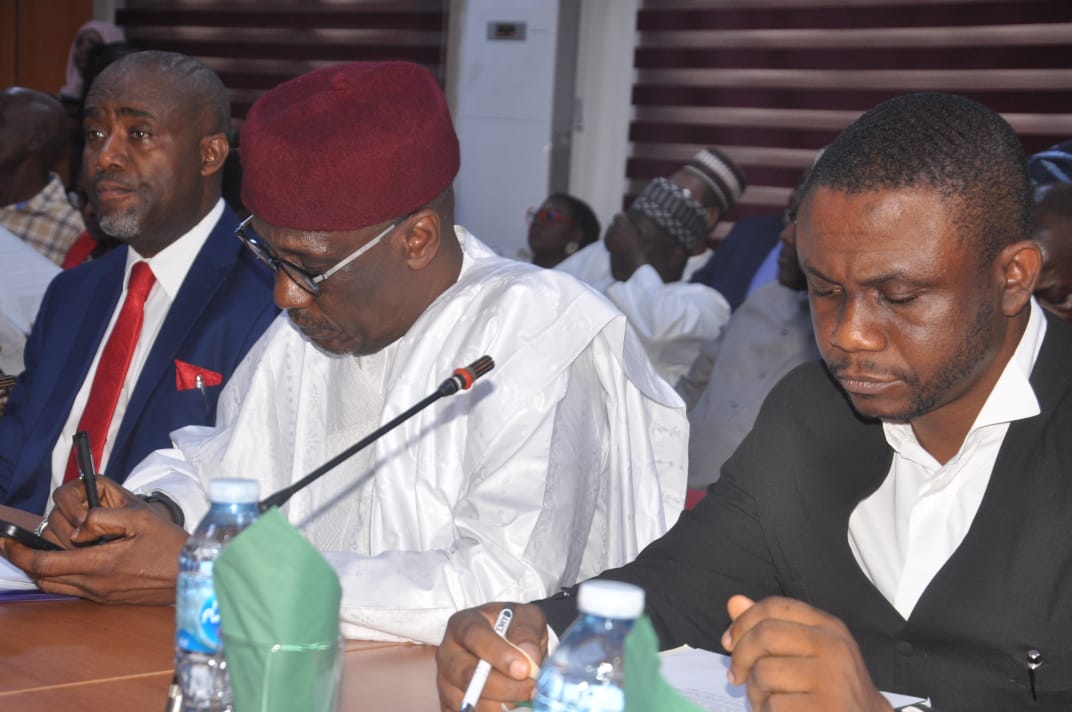
Former Group Managing Director and Chief Executive Officer ( GCEO) of the Nigerian National Petroleum Company Limited ( NNPCL), Mele Kyari refuted Tuesday alleged unaccounted N210trillion in the balance sheet of the National oil company as contained in the 2017 to 2023 Audit report .
Mele Kyari who made the rebuttal to the Senate Committee on Public Accounts declared that no such financial infraction happened under him as Chief Executive of NNPCL from 2019 to 2025 .
He said the alleged unaccounted figures arose from accounting entries which have nothing to do with financial loss .
“I wish to confirm that nothing was lost. It is simply not possible that such an amount could have been lost under my care and leadership.
“The matter relates to accounting entries, which have nothing to do with any financial loss.
“They are bookkeeping issues, and I believe the appropriate explanations have been provided in my report”, he said .
He also declared that the N5billion allegedly spent on change of name from NNPC to NNPCL , waa untrue as there was no spending like that under his watch just as he refuted queries raised in the audit report on registration and incorporation of NNPC Ltd.
He said : ” At the time of incorporation, the company was not owned by the Federation in the same manner.
“The Federation was therefore responsible for the payment relating to the incorporation of NNPC.
“However, NNPC made the payment on behalf of the Federation and subsequently charged it to the Federation’s revenue, which was reflected in what we referred to as the former NAPIMS account of NNPC.
“This was simply an accounting entry, involving approximately N2.99 billion.
“It was a payment made to government institutions responsible for providing the relevant services.
“I have also seen comments suggesting that N5 billion was paid for the naming of the company. That is not correct”.
He added by informing the Senator Ibrahim Dankwabo led committee that NNPCL under him was transformed from loss incurring corporation to a profit making company .
According to him , before his assumption of office as Group Managing Director of NNPC in 2019 , the national oil company had a huge loss of $803billion in 2018 operational year , which gradually turned to o profit making under him from 2019 .
” Mr Chairman, you may be aware from the financial records that the company recorded a loss of about $803billion in 2018.
“I took over in 2019, and we did everything possible to transform the company into a profitable organisation which made it to for the first time in its 44 years of existence, recording sustained profits”
Satisfied with the submissions of Kyari , the Committee through its Chairman said , , responses submitted to the queries shall be thoroughly studied for final decision on the audit report .
” We shall interrogate the figures submitted by the former GMD to know whether to Invite him again or not .
” For now , he has responded to the two issues relating to his leadership of NNPC during the period under review “, he said .
Oil & Gas
Gas Pipeline Host Communities Give NNPCL, PINL 14 Days Ultimatum Over Unpaid Surveillance Allowances.

By David Owei
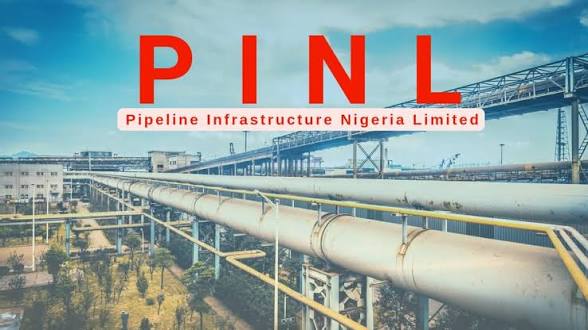
Communities and stakeholders along the Eastern Gas Network (EGN) have given the Nigeria National Petroleum Petroleum Corporation Limited (NNPCL), and
Pipeline Infrastructure Nigeria Limited (PINL) a two-week ultimatum to settle outstanding payments to surveillance contractors and guards of the gas pipelines.
The communities also demanded for inclusion in all corporate social responsibility packages of both companies.
Speaking on behalf of the EGN host communities and stakeholders at a press conference in Port Harcourt, HRH, Eze Peter Wagbara, paramount ruler (Nye Nwe Ali) of Elele-Alimini Community in Rivers State said the communities are concerned that the surveillance contractors and guards are being owed backlog of their entitlements adding that this has adversely affected families that depend on the stipends for their survival.
He said the prolonged delay in the payment has created anxiety and dissatisfaction amongst members of the communities.
Wagbara warned that if the situation persists, it could undermine the goodwill existing among the communities, PINL and NNPCL.
“The surveillance guards have families and responsibilities. They depend on the timely payment of their earnings to meet basic needs, while community stakeholders have continued to support the programme and mobilise their people in the interest of pipeline security.
“The prolonged delay has understandably created anxiety, dissatisfaction, and uncertainty among our people. We are concerned that if this situation persists, it could undermine the goodwill and confidence that have been painstakingly built between the host PINL and NNPCL”.
The monarch emphasized that their ultimatum did not connote a withdrawal of their support for pipeline protection, but an appeal for the prompt fulfilment of the obligations that sustain their participation and commitment.
The communities therefore called on PINL and its client, NNPCL, to take immediate steps to reconcile all outstanding obligations and commence the reconciliation and payment of the full backlog owed to surveillance contractors, guards, and eligible community stakeholders along the Eastern Gas Pipeline Network.
They also demanded that both organisations should ensure that the payment of surveillance contractors, guards, and eligible stakeholders resumes promptly and is sustained in accordance with agreed contractual and administrative arrangements.
Wagbara added that Eastern Gas Pipeline host communities should be formally integrated into PINL and NNPCL scholarship, youth and women empowerment, and other community development programmes, based on transparent eligibility criteria.
The communities further requested that PINL and NNPCL should engage recognised traditional rulers and community stakeholders to communicate a clear payment schedule, address outstanding concerns, and establish a sustainable mechanism for resolving future disputes.
“We hereby give PINL and NNPCL a two-week grace period from the date of this public statement to resolve the outstanding payment issues and demonstrate concrete action towards the inclusion of our communities in relevant CSR programmes.
“We expect this period to result in meaningful progress, including the settlement of the backlog, the resumption of regular payments, and the formal inclusion of our communities’ in the relevant development initiatives, ” the communities stated.
They however noted that the operations of PINL has ushered in peace and security in their communities and along the gas lines, adding that their ultimatum was not intended to undermine the operations of PINL or NNPCL, nor was an attempt to discourage investment in their region.
They insisted that their demand was a necessary appeal for fairness, accountability, and the fulfilment of obligations to communities that have embraced the responsibility of protecting critical national infrastructure.
“Our communities have keyed into the vision of community-based pipeline surveillance. Our people understand the strategic importance of the Eastern Gas Pipeline Network to national energy security and economic development, and they have continued to contribute to its protection.
“We remain committed to peaceful engagement and constructive dialogue. However, the patience of our people must not be mistaken for an absence of legitimate concerns.
Kano Supreme Court Revelation: “Resign Now Or Be Impeached ” ADC Tells Tinubu
By George Mgbeleke The African Democratic Congress (ADC) has called on President Bola Ahmed Tinubu to immediately resign from office...

2027 Anambra Budget:Soludo Proposes N893.4bn tagged Solution 2.0 to State Assembly
By Ben Nwankwo,Awka Anambra State Governor, Prof. Chukwuma Soludo on Tuesday presented the 2027 budget proposal , totaling ₦893,435,059,830 (eight...

HURIWA Accuses Tinubu of Plotting One-Party State -Warns Against Using Punlic Wealth To Fund 2027 Polls By George Mgbeleke The Human Rights Writers Association of Nigeria (HURIWA) has accused President Bola Ahmed Tinubu of pursuing a dangerous political agenda aimed at foisting a de facto one-party state on Nigeria, warning that the reported mobilisation of enormous financial and logistical resources in support of his re-election project threatens the country’s democratic future. HURIWA in a statement signed by its national coordinator, Comrade Emmanuel Nnadozie Onwubiko, said the disturbing allegations surrounding the distribution of thousands of brand-new campaign buses by politically connected individuals, including Government Ekpemupolo, popularly known as Tompolo, and the Minister of State for Defence, Bello Matawalle, raise serious questions about the sources of funding, the political interests behind the donations and the possible use of public resources to advance partisan interests. The association expressed particular concern over reports that Tompolo had donated thousands of brand-new buses and that Matawalle had provided another 1,000 buses for political mobilisation. HURIWA said Nigerians deserve to know who is financing this massive political logistics operation, the circumstances surrounding the donations and whether any public funds or government-backed resources are being channelled into what increasingly appears to be an elaborate re-election machinery. The association warned that Nigeria must not be reduced to a political marketplace where access to public wealth, strategic government appointments and control of national institutions become instruments for purchasing political dominance and weakening opposition parties. HURIWA said the growing allegations of financial opacity surrounding the Nigerian National Petroleum Company Limited (NNPCL), particularly questions about the management of petroleum revenues and security-related expenditures, make an independent investigation into the sources of political financing imperative. The association questioned why Nigerians should continue to tolerate a situation in which enormous sums allegedly move through opaque financial arrangements while the country struggles with poverty, insecurity, unemployment and deteriorating public infrastructure. HURIWA insisted that allegations of trillions of naira being channelled through security-related expenditure and politically connected intermediaries must be subjected to independent scrutiny. It warned that public institutions must never become convenient conduits for creating undisclosed political war chests. The association maintained that the President has a constitutional obligation to protect the democratic process, guarantee political pluralism and ensure that public resources are not deployed to secure partisan electoral advantages. According to HURIWA, the disturbing impression created by the reported mobilisation of enormous campaign resources is that the 2027 presidential election could be reduced to a predetermined political coronation rather than a genuine contest in which Nigerians freely determine who governs them. It warned that a government that enjoys overwhelming control of public institutions, access to public resources and the machinery of state must exercise greater restraint, not deploy such advantages to suffocate political competition. DELTA CAMPAIGN ATTACK EXPOSES DANGERS OF POLITICAL VIOLENCE HURIWA also condemned the reported attack on the campaign team of former Deputy Senate President, Senator Ovie Omo-Agege, in Uduere, Ughelli North Local Government Area of Delta State, describing the allegation as another frightening indication of the dangers confronting Nigeria’s electoral environment. The Omo-Agege Campaign Organisation alleged that armed men opened fire on the campaign team on Monday, November 23, 2026, killing four people, including two aides identified as Moses Anaughe and Akima Efemena Umukoro, while four others sustained gunshot injuries. The organisation also claimed that Senator Omo-Agege narrowly escaped the attack, which it described as an assassination attempt. HURIWA said the reported killing of four people and the injury of four others during a political campaign, if established, represents a grave assault on democratic participation and the constitutional right of citizens to associate, assemble and campaign peacefully. The association called on the Inspector-General of Police to immediately take over the investigation, ensure the protection of witnesses and survivors, identify the perpetrators and investigate whether the attack was politically motivated. It warned that Nigeria cannot afford to enter the 2027 election season under an atmosphere in which political disagreements are settled with bullets, intimidation and assassination attempts. HURIWA demanded that the Federal Government demonstrate through concrete action that no political party, candidate or supporter is above the law and that violence will not be tolerated as an instrument of electoral competition. TINUBU MUST NOT TURN NIGERIA INTO A ONE-PARTY STATE HURIWA cautioned President Tinubu against allowing the enormous political and financial advantages associated with incumbency to undermine Nigeria’s multiparty democracy. The association said the deployment of public resources for partisan purposes, if established, would amount to a betrayal of public trust and an abuse of the enormous responsibilities entrusted to the President. It demanded transparency over the reported distribution of campaign buses, an independent examination of the sources of funding and a comprehensive audit of public expenditure connected with security-related financial operations where credible evidence points to possible diversion for partisan purposes. HURIWA also urged the Independent National Electoral Commission (INEC), the Economic and Financial Crimes Commission (EFCC), the Independent Corrupt Practices and Other Related Offences Commission (ICPC) and relevant security agencies to remain vigilant against the abuse of public institutions and resources during the electoral process. The association warned that Nigeria’s democracy cannot survive if the ruling party enjoys an unchecked financial advantage, opposition voices are intimidated, political violence goes unpunished and public institutions become instruments of partisan warfare. It stressed that President Tinubu must understand that winning an election through intimidation, financial manipulation, political corruption or the abuse of state power cannot confer genuine democratic legitimacy. HURIWA therefore called on the President to demonstrate his commitment to democracy by guaranteeing a level playing field, protecting opposition parties and ensuring that the 2027 general election is decided exclusively by the free will of Nigerian voters. Nigeria belongs to all its citizens, not the ruling party. No President has the constitutional right to convert the country’s democratic institutions and public wealth into personal electoral machinery.
By George Mgbeleke The Human Rights Writers Association of Nigeria (HURIWA) has accused President Bola Ahmed Tinubu of pursuing a...
HURIWA Accuses Tinubu of Plotting One-Party State -Warns Against Using Punlic Wealth To Fund 2027 Polls By George Mgbeleke The Human Rights Writers Association of Nigeria (HURIWA) has accused President Bola Ahmed Tinubu of pursuing a dangerous political agenda aimed at foisting a de facto one-party state on Nigeria, warning that the reported mobilisation of enormous financial and logistical resources in support of his re-election project threatens the country’s democratic future. HURIWA in a statement signed by its national coordinator, Comrade Emmanuel Nnadozie Onwubiko, said the disturbing allegations surrounding the distribution of thousands of brand-new campaign buses by politically connected individuals, including Government Ekpemupolo, popularly known as Tompolo, and the Minister of State for Defence, Bello Matawalle, raise serious questions about the sources of funding, the political interests behind the donations and the possible use of public resources to advance partisan interests. The association expressed particular concern over reports that Tompolo had donated thousands of brand-new buses and that Matawalle had provided another 1,000 buses for political mobilisation. HURIWA said Nigerians deserve to know who is financing this massive political logistics operation, the circumstances surrounding the donations and whether any public funds or government-backed resources are being channelled into what increasingly appears to be an elaborate re-election machinery. The association warned that Nigeria must not be reduced to a political marketplace where access to public wealth, strategic government appointments and control of national institutions become instruments for purchasing political dominance and weakening opposition parties. HURIWA said the growing allegations of financial opacity surrounding the Nigerian National Petroleum Company Limited (NNPCL), particularly questions about the management of petroleum revenues and security-related expenditures, make an independent investigation into the sources of political financing imperative. The association questioned why Nigerians should continue to tolerate a situation in which enormous sums allegedly move through opaque financial arrangements while the country struggles with poverty, insecurity, unemployment and deteriorating public infrastructure. HURIWA insisted that allegations of trillions of naira being channelled through security-related expenditure and politically connected intermediaries must be subjected to independent scrutiny. It warned that public institutions must never become convenient conduits for creating undisclosed political war chests. The association maintained that the President has a constitutional obligation to protect the democratic process, guarantee political pluralism and ensure that public resources are not deployed to secure partisan electoral advantages. According to HURIWA, the disturbing impression created by the reported mobilisation of enormous campaign resources is that the 2027 presidential election could be reduced to a predetermined political coronation rather than a genuine contest in which Nigerians freely determine who governs them. It warned that a government that enjoys overwhelming control of public institutions, access to public resources and the machinery of state must exercise greater restraint, not deploy such advantages to suffocate political competition. DELTA CAMPAIGN ATTACK EXPOSES DANGERS OF POLITICAL VIOLENCE HURIWA also condemned the reported attack on the campaign team of former Deputy Senate President, Senator Ovie Omo-Agege, in Uduere, Ughelli North Local Government Area of Delta State, describing the allegation as another frightening indication of the dangers confronting Nigeria’s electoral environment. The Omo-Agege Campaign Organisation alleged that armed men opened fire on the campaign team on Monday, November 23, 2026, killing four people, including two aides identified as Moses Anaughe and Akima Efemena Umukoro, while four others sustained gunshot injuries. The organisation also claimed that Senator Omo-Agege narrowly escaped the attack, which it described as an assassination attempt. HURIWA said the reported killing of four people and the injury of four others during a political campaign, if established, represents a grave assault on democratic participation and the constitutional right of citizens to associate, assemble and campaign peacefully. The association called on the Inspector-General of Police to immediately take over the investigation, ensure the protection of witnesses and survivors, identify the perpetrators and investigate whether the attack was politically motivated. It warned that Nigeria cannot afford to enter the 2027 election season under an atmosphere in which political disagreements are settled with bullets, intimidation and assassination attempts. HURIWA demanded that the Federal Government demonstrate through concrete action that no political party, candidate or supporter is above the law and that violence will not be tolerated as an instrument of electoral competition. TINUBU MUST NOT TURN NIGERIA INTO A ONE-PARTY STATE HURIWA cautioned President Tinubu against allowing the enormous political and financial advantages associated with incumbency to undermine Nigeria’s multiparty democracy. The association said the deployment of public resources for partisan purposes, if established, would amount to a betrayal of public trust and an abuse of the enormous responsibilities entrusted to the President. It demanded transparency over the reported distribution of campaign buses, an independent examination of the sources of funding and a comprehensive audit of public expenditure connected with security-related financial operations where credible evidence points to possible diversion for partisan purposes. HURIWA also urged the Independent National Electoral Commission (INEC), the Economic and Financial Crimes Commission (EFCC), the Independent Corrupt Practices and Other Related Offences Commission (ICPC) and relevant security agencies to remain vigilant against the abuse of public institutions and resources during the electoral process. The association warned that Nigeria’s democracy cannot survive if the ruling party enjoys an unchecked financial advantage, opposition voices are intimidated, political violence goes unpunished and public institutions become instruments of partisan warfare. It stressed that President Tinubu must understand that winning an election through intimidation, financial manipulation, political corruption or the abuse of state power cannot confer genuine democratic legitimacy. HURIWA therefore called on the President to demonstrate his commitment to democracy by guaranteeing a level playing field, protecting opposition parties and ensuring that the 2027 general election is decided exclusively by the free will of Nigerian voters. Nigeria belongs to all its citizens, not the ruling party. No President has the constitutional right to convert the country’s democratic institutions and public wealth into personal electoral machinery
By George Mgbeleke The Human Rights Writers Association of Nigeria (HURIWA) has accused President Bola Ahmed Tinubu of pursuing a...

INEC unveils tougher safeguards as 57,000 BVAS arrive for 2027 polls …as Amupitan promises protection for election officers
By Our Correspondent The independent national electoral commission (INEC) has announced fresh technological, operational and security measures aimed at strengthening...

Boat Tragedy: Gov Diri Appeals For FG’s Support To Complete Senatorial Roads
By David Owei,Bayelsa Governor of Bayelsa State, Senator Douye Diri, has made a fresh appeal to the Federal Government to...
HURIWA Condemns Owerri Kidnap,Demands DSS,Police Use Technology To Track Down Perpetrators
By George Mgbeleke The Human Rights Writers Association of Nigeria (HURIWA) has condemned the reported kidnapping of Chidozie Oparaugo in...

Lagos-Calabar Coastal Highway to Unlock Industrial Opportunities, Tourism – Minister
By Sunday Jacob, Abuja As the year 2026 draws to a close, Nigeria’s Minister of Works, Senator David Umahi, has...

Police Raid ‘Hustle Kingdom’ In Ogun, Arrest 11 Suspects, Recover Suspected Human Remains
By our correspondent What began as an investigation into an internet fraud operation has uncovered something more disturbing in Abeokuta,...

Soludo Is On A Personal Vendetta Against Obi” — chief Okorie breaks Silence
By George Mgbeleke The founder of the All Progressives Grand Alliance (APGA), Chief Chekwas Okorie, has accused Anambra State Governor,...
-
 Politics2 years ago
Gov Okpebholo moves to end Cultism *Threatens action against leading cult groups *Vows to demolish more cult houses in Edo State
-
 Politics1 year ago
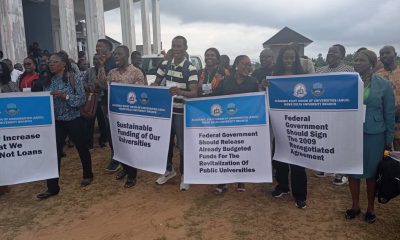
ASUU-NDU protest against FG loans, unpaid salaries,Non-Implementation of agreements …..says loans is generational slavery
-
 Business & Economy1 year ago
PC-NCG Issues Disclaimer on Purported Nigerian Coast Guard National Orientation Exercise In Anambra State
-
 Entertainment2 years ago
Jubilation galore as Parishioners of CKC Kurudu celebrate their cultural heritage ….FG should exploit our Cultural heritage to unite Nigerians-Rev Fr Dim
-

 Sports9 months ago
Bayelsa-born ex-football star’s son, Opuama donates spike shoes to Athletics Association
-

 General News2 years ago
Reps hold public hearing on FMC Ugwuaji Awkunanaw
-
 General News2 years ago
Celebration galore as UDA Successfully Elected New Exco ……I will digitalize processes that will raise UDA to greater height -Comr. Okejiri
-
 Law & Crime1 year ago
Legal practitioner raises alarm over threat to his life by CSP Muhammed Abdulkareem