
Business & Economy
Senate Extends 2025 capital budget implementation to Dec. 31 …As Bill scales final passage

By George Mgbeleke
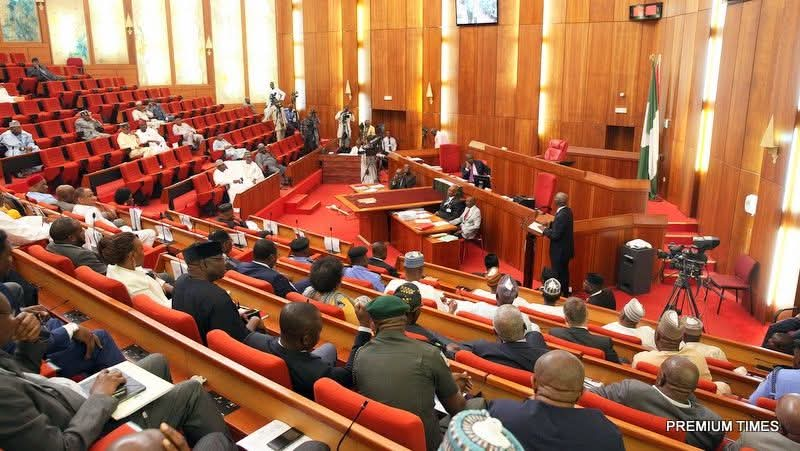
The Senate on Tuesday passed a bill extending the implementation of the capital component of the 2025 appropriation act from September. 30 to December. 31, 2026.
The bill, according to the Senate, seeks to provide additional time for Ministries, Departments and Agencies (MDAs) to complete all ongoing capital projects.
The bill, sponsored by the Leader of the Senate, Opeyemi Bamidele( Ekiti central), was read for the first time and subsequently considered for second reading after the suspension of the relevant senate rule.
Leading debate on the bill, Bamidele said the extension would provide the legal and administrative window required to fully implement projects for which funds had been appropriated and released.
He said capital budget implementation involved procurement, contract execution, mobilisation, certification of works and payment processes, among other procedures.
The Senate Leader said several infrastructure and development projects across the country were at various stages of completion and required additional time for implementation.
He said allowing the existing implementation deadline to lapse could create difficulties for MDAs in completing projects for which resources had already been appropriated and released.
He added that the extension would help prevent projects from becoming abandoned and ensure that appropriated resources were deployed for their approved purposes.
The Senate Leader stressed that the extension would not amount to a relaxation of accountability, fiscal responsibility or legislative oversight.
He said MDAs would remain required to comply with the Appropriation Act, financial regulations, procurement laws and other applicable statutes.
Contributing, the Deputy Senate President, Sen. Barau Jibrin, said the extension was important to prevent the proliferation of abandoned projects across the country.
He urged senators to support the bill, saying it would provide an opportunity for ongoing projects funded under the 2025 appropriation to be completed.
The Minority Leader, Abba Moro (Benue South) also supported the extension but urged senators to avoid unnecessary comparisons with previous administrations during debates on budget implementation.
Moro said the focus should remain on creating the necessary conditions for the government to implement its programmes and projects.
The bill was subsequently committed to the Committee of Supply, which considered and approved amendments to the relevant provisions.
The Senate thereafter passed the bill at third reading, extending the implementation of the capital component of the 2025 Appropriation Act to December 31, 2026.
The Senate President, Godswill Akpabio, thanked senators for their contributions, saying the extension would facilitate payment for contracts and completion of projects covered by the 2025 capital appropriation.
He urged relevant authorities to utilise the extended period to complete necessary contractual obligations and infrastructure projects for the benefit of Nigerians.

By Alex Okorier
In a bid to complete his projects for 2027 fiscal year,Governor, Alex Otti, has presented a proposed N1.23 trillion budget for the 2027 fiscal year to the State House of Assembly, with 80 per cent of the total expenditure allocated to capital projects.
Otti presented the appropriation bill on Thursday before the Speaker and members of the 8th Assembly, describing it as an ambitious but realistic financial plan designed to sustain the state’s development drive.
“Today, when I come to this hallowed assembly to lay the draft of the 2027 Appropriation Bill for the next fiscal year, a total budget estimate of N1.23 trillion shall be tabled before this Honourable House for consideration,” the governor said.
Giving a breakdown of the proposed revenue, Otti said N647.23 billion would come from internal and external sources, including internally generated revenue, statutory allocations from the Federation Account Allocation Committee, Value Added Tax, other federal revenue sources and capital receipts.
He said the remaining N552.67 billion would be sourced through concessional loans and strictly channelled into infrastructure projects with regenerative value.
“The balance of N552.67 billion shall be sourced through concessional loans and committed strictly to infrastructure projects with regenerative value,” he stated.
The governor projected Abia’s internally generated revenue at N199.8 billion for 2027, expressing confidence that the target would significantly strengthen the state’s fiscal position.
“The projected IGR output for the coming fiscal year is estimated at N199.8 billion, and if achieved as projected, will be enough to cover 180% of our recurrent expenditure, which puts us in a good fiscal position,” Otti said.
He disclosed that the proposed budget represented an 80 per cent increase over the current year’s estimates, while the state’s projected IGR marked a 648 per cent rise compared with 2023.
On expenditure priorities, Otti said the administration had maintained a strong emphasis on capital investment, allocating N960 billion, representing 80 per cent of the total budget, to capital expenditure, while 20 per cent would cover recurrent spending.
“We are devoting 80% of the entire budget, that is N960 billion in absolute numbers, to capital expenditure, leaving the remaining 20% for recurrent expenditure,” he said.
The governor also announced that education and healthcare would jointly receive 35 per cent of the proposed 2027 budget as part of the administration’s commitment to human capital development.
He said education would receive 20 per cent of the total budget, covering basic, secondary and tertiary institutions, while the health sector would get 15 per cent.
“This necessitates the commitment of 35% of the 2027 fiscal outlay to the education and health sectors, with basic, secondary and tertiary education receiving 20%, while the health sector gets 15%,” Otti stated.
Further outlining the sectoral priorities, the governor said the economic sector would receive 55 per cent of the proposed expenditure.
He listed agriculture, works, transportation, petroleum and solid mineral development, power and public utilities among the areas covered by the allocation.
Other areas include the Greater Aba Development Authority, land administration, arts, culture and the creative economy, digital capacity development, infrastructure and support for small and medium-scale enterprises.
#
Business & Economy
I am An Arms Delealer, Not A Defence Contractor — Kalu Clearifies , Denies IPOB Link *
By Our Correspondent, Abuj
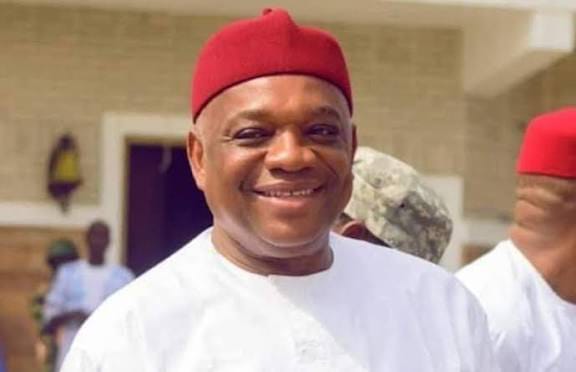
Senator Orji Uzor Kalu has doubled down on his controversial claim of being an arms dealer, but clarified that the business is strictly between countries and fully licensed.
Responding to questions from the Senate Press Corps, Kalu said he deliberately chose the word arms dealer over defence contractor because that is what the trade entails.
“I told Arise News that, yes, I am an arms dealer. I could have said I am a defence contractor, but I am not a defence contractor,” he said. “When one sells arms from one country to another country, if you have money, I will sell to you.”
He was emphatic that he does not sell to bandits, individuals or terrorists. “To sell arms all over the world means you have to be licensed. Not selling arms to bandits, not selling arms to any individual or terrorist. No, no, no.”
Kalu explained that international arms dealers operate under the close watch of intelligence agencies across the world, including the Mossad, CIA, MI6 and KGB, who track every movement of weapons from one country to another.
He dismissed reports in Abia linking him to supplying arms to IPOB as political mischief, saying such claims were being pushed by opponents ahead of elections.
“People like me are not afraid of anybody. I am sure APC is not afraid of any other party,” he said, adding that the ruling party is committed to playing the game fairly and will only defend itself if attacked.
Business & Economy
EBHA Approves ₦516.56BN 2027-2029 MTEEF budget framework, FAAC Infrastructure financing plan
By Joseph Okonkwo, Abakaliki
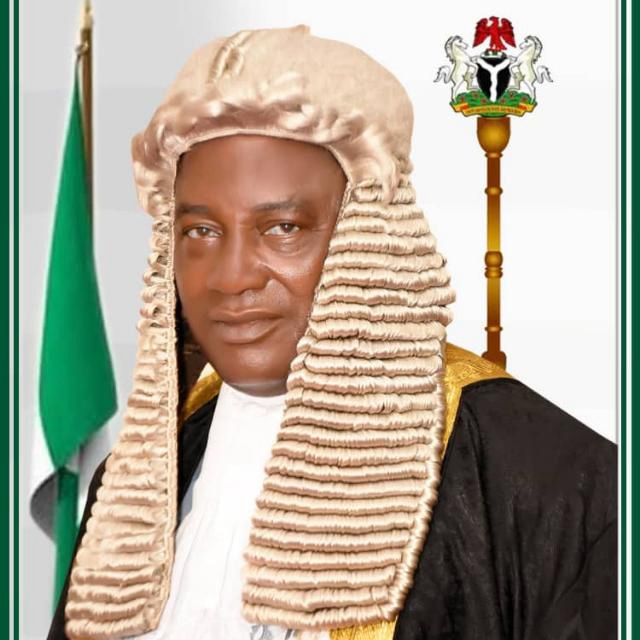
As the year draws to an end,Ebonyi State House of Assembly has unanimously approved the 2027–2029 Medium-Term Expenditure Framework (MTEF) presented by Governor Francis Ogbonna Nwifuru, alongside a proposal for the state’s participation in the Federal Allocation Account Committee (FAAC) Infrastructure Financing Programme.
The approvals were granted during Monday plenary at the Assembly Complex along Nkaliki Road, Abakaliki.
The Medium-Term Expenditure Framework, transmitted to the legislature through a letter signed by Governor Nwifuru, outlines the state’s fiscal projections, financial priorities and policy direction for the next three fiscal years.
Explaining the framework, the Speaker of the House, Rt. Hon. Moses Ije Odunwa, said it was prepared in accordance with the Fiscal Strategy Paper (FSP) and Budget Policy Statement (BPS) for the 2027–2029 period, as approved by the State Executive Council.
The Governor’s letter, which was read on the floor of the House by the Leader of the Assembly, Hon. Kingsley Ikoro, disclosed that the projected budget size for the 2027 fiscal year stands at ₦516,560,362,153 (Five Hundred and Sixteen Billion, Five Hundred and Sixty Million, Three Hundred and Sixty-Two Thousand, One Hundred and Fifty-Three Naira).
The framework also provides revenue and expenditure projections for the 2028 and 2029 fiscal years, reflecting the state’s medium-term development and financial planning objectives.
Contributing to the debate, the members representing Ebonyi North West Constituency, Hon. Aloysius Nwodo; member representing Ishielu North Constituency, Hon. Henry Eze; member representing Ezza North East Constituency, Hon. Kelvin Kenechukwu Okeh; and member representing Ebonyi North East Constituency, Hon. Chinyere Nwogbaga, described the framework as realistic, people-oriented and consistent with the People’s Charter of Needs philosophy of the Nwifuru administration.
The lawmakers in their contribugions noted that the framework reflects the government’s commitment to prioritising critical sectors, including infrastructure, human capital development, education, healthcare, agriculture and workers’ welfare.
They maintained that the proposed fiscal direction would provide a roadmap for sustainable development and effective delivery of democratic dividends to the people of Ebonyi State.
Meanwhile, the House also approved the Governor’s request for the state’s participation in the FAAC Infrastructure Financing Programme, a move expected to support infrastructure development and strengthen the state’s capacity to execute critical projects.
The approvals underscore the Assembly’s legislative support for the Nwifuru administration’s medium-term development agenda and its commitment to improving the welfare and living conditions of Ebonyi residents


it was celebration Galore, Pomp, Glamour as 37th NAFEST Kicks off in Enugu* …As Mbah preaches unity in diversity, highlights economy of culture
By Tony Nwafor In a bid to promote our cultural hertage the 37th National Festival of Arts and Culture, NAFEST...

Bayelsa Boat Mishap: Tinubu Approves N250m For Victims’ Families, Directs NDDC To Procure Boats – Backs Probe Of Incident -Casualty Figure Rises To 29
By David Owei, Bayelsa President Bola Tinubu has approved the sum of N250 million to support families of victims of...

Fulani Associations Condemn alleged Killing of 64 Fulani people in Borgu LGA -Urge Security Agencies to end recurring attacks.
BY UTHMAN BABA-NASEER,MINNA Four Fulani associations in Niger State have strongly condemned the alleged killing of 64 Fulani people in...

Reps Committee members on FCT Felicitate Hon Betara @ 60
Jonas Ezieke, Abuja Members of the House of Representatives Committee on the Federal Capital Territory (FCT) have felicitated with their...

Governance Suffers When Lawmakers Only Attack or Clap for Executive, Experts Warn -Unveil book on legislative oversight, governance
By George Mgbeleke With the 202u election around the corner,leading political scientists have challenged the political class that both antagonism...

Abia-North 2027: Kalu Bags Multiple Endorsements in Arochukwu Secures Philip Nto’s Backing, 18-Seater Bus … Receives 18-Seater Bus, Bags Fourth Senate Press Corps Award
By Our Correspondence As the 2027 general elections is fast approaching, incumbent Abia North Senator, Orji Uzor Kalu, has received...

Troops Kill Three Terrorists, Recover Motorcycles in Katsina
By Abubakar Mohammed, Katsina Troops of the Nigerian Army’s 17 Brigade have neutralised three terrorists and recovered motorcycles during clearance...


CNS Seeks Stronger Regional Maritime Security Cooperation
By Anthony Odekina, Gabon In a bid to ensure the security of businesses at the Gulf of Guinea, Chief of...


UBTH Holds Induction For Dispensing Opticians At 15th Graduation Ceremony
By Nathaniel Obasi, Benin The University of Benin Teaching Hospital (UBTH), Department of Dispensing Optics, Institute of Health Sciences and...

2027: APP raises alarm over Alleged Dismantling of Billboard by lmo Govt despite payment
By Nathniel Obasi,Owerri Less than two months to the take-off of 2027 election, the leadership of the Action People’s Party...
-

 Politics2 years ago
Gov Okpebholo moves to end Cultism *Threatens action against leading cult groups *Vows to demolish more cult houses in Edo State
-
 Politics1 year ago
ASUU-NDU protest against FG loans, unpaid salaries,Non-Implementation of agreements …..says loans is generational slavery
-

 Business & Economy1 year ago
PC-NCG Issues Disclaimer on Purported Nigerian Coast Guard National Orientation Exercise In Anambra State
-
 Entertainment2 years ago
Jubilation galore as Parishioners of CKC Kurudu celebrate their cultural heritage ….FG should exploit our Cultural heritage to unite Nigerians-Rev Fr Dim
-

 Sports9 months ago
Bayelsa-born ex-football star’s son, Opuama donates spike shoes to Athletics Association
-

 General News2 years ago
Reps hold public hearing on FMC Ugwuaji Awkunanaw
-

 Law & Crime1 year ago
Legal practitioner raises alarm over threat to his life by CSP Muhammed Abdulkareem
-
 General News2 years ago
Celebration galore as UDA Successfully Elected New Exco ……I will digitalize processes that will raise UDA to greater height -Comr. Okejiri