
Uncategorized
One killed as rival groups clash in Brass

By David Owei
A 26-year-old man identified simply as Tari, popularly known as Heavyweight, has been macheted to death following a clash between two rival youth factions in Diema community in Brass Local Government Area of Bayelsa State.
The deceased was reportedly a member of a youth faction loyal to His Highness Ingo Ikele, the Amayanabo of Diema-Brass.
A source disclosed that the crisis began when His Highness Ingo Ikele reportedly directed youths loyal to him to participate in an inspection visit to a parcel of land earmarked for a crude oil tank farm by an oil company yet to be identified.
The youths were reportedly resisted by another faction loyal to His Highness Baratuaipre Amaene, described as a rival traditional ruler in the community.
The disagreement reportedly escalated into a violent confrontation, resulting in the death of the young man who hails from Opu-Nembe (Bassambiri Nembe).
The deceased youth, according to sources close to the Divional Police headquarters, was rushed to the hospital but medical practitioners on duty declared him dead on arrival.
Contacted on the development, the Bayelsa State Police Public Relations Officer, DSP Musa Mohammed, said normalcy had been restored to the area, adding that an investigation was ongoing to determine the circumstances surrounding the clash.
Uncategorized
HURIWA urges Nigerians to speak out in rejection of the toxic legislation that creates petrol tax*

By George Mgbeleke
Prominent Civil Rights Advocacy group, HUMAN RIGHTS WRITERS ASSOCIATION OF NIGERIA (HURIWA) has challenged Nigerians to wean off the wool of political hypnosis tied around their eyes by the president Bola Ahmed Tinubu government and speak out in clear condemnation of the government and the National Assembly made up of stooges of the executive for passing the anti-people petrol tax law which the government has postponed its enforcement pending the outcome of the January 2027 Presidential and National Assembly elections.
In a statemeht signed by Comrade Emmanuel Nnadozie Onwubiko,the Rights group averred that the reason for postponing the enforcement of the petrol tax law is to deceive Nigerians to cast their votes for the incumbent president after which Nigerians wouldn’t be able to retrieve their mandate once the hitherto hidden petrol tax law is enforced.
This government does not mean well for Nigerians. How can the minister of Finance now wants Nigerians to believe that the petrol tax can only be implemented when the economy stabilises? Nigerians should know that the petrol tax was sold to the Tinubu’s administration by the World Bank and IMF that make up the Brettonwood institutions and these are the same global financial institutions that would then roll out falsified reports to show that the economy of Nigeria has stabilised thereby offering the current administration the leeway to begin the enforcement of the petrol tax law which would further impoverished millions of poorest of the poor in Nigeria. This is government magic and a political hypnosis that are being manipulated to confuse Nigerians.
HURIWA recalled that news report stated that the Senator representing the FCT in the Senate, Senator Ireti Kingibe made the revelation when she was quoted as stating that “Nigerians Are Not Aware That A Tax Law Has Been Passed, Which Requires Everyone To Pay 25% Of All Their Earnings As Tax. The National Assembly Has Already Passed This Law But It’s Scared To Implement It Now; It Will Swing Into Action Immediately After The Election If Tinubu Wins”.
The Rights group claimed that as soon as the revelation of the secret petrol tax law was made by the opposition Senator, the Tinunu’s regime through the Minister of Finance and Coordinating Minister of the Economy, Taiwo Oyedele, confirmed the revelation and asserted that the Federal Government will introduce fuel taxes when the economy stabilises and citizens’ incomes can accommodate the extra costs.
He disclosed this in an interview with ARISE News on the sidelines of the 2026 IMF and World Bank Annual Meetings in Bangkok, Thailand, explaining that the government would first consolidate its economic reforms, restore growth and improve household earnings.
Oyedele said imposing additional levies immediately after petrol subsidy removal would have worsened Nigerians’ hardship.
“You remove subsidy, you can’t immediately impose taxes. That would be insensitive. You push the people to the wall,” he said.
The minister noted that fuel taxes account for between 20 and 80 per cent of petroleum prices in some countries, while several African nations impose multiple levies on fuel products.
He said the proposed revenue would support infrastructure and help the country prepare for future disruptions in fuel supply.
“Not because we want to impose taxes, it will be because those amounts of taxes will be dedicated into road infrastructure, they’ll be dedicated into building our fuel reserve, that can help us moderate prices of fuel products, if anything happens,” he explained.
According to Oyedele, the arrangement could also allow the government to suspend the levies temporarily when necessary to cushion the effects of market shocks.
“This is what more than 50 countries around the world, they were reducing the taxes, but we had no taxes, there was nothing to reduce,” he added.
He assured Nigerians that the proposed taxes would not be introduced secretly, noting that the law requires an official order published in the Federal Government Gazette before they can take effect.
“There has to be an order published in the gazette by the finance minister, which means we can’t do it in secret,” he said.
Oyedele maintained that the taxes would only be introduced when economic conditions improved sufficiently and Nigerians could understand the reasons for the policy and its expected benefits.
Rejecting what it called political hypnosis of the current administration, the Pro-democracy and civil rights advocacy group HURIWA condemned the secret petrol tax law as another punishment from the same administration that distabilised the economy of over 130 million multidimensionally impoverished Nigerian households when it introduced the arbitrary and unilateral withdrawal of subsidy on petroleum products which unleashed multiplier effects on a massive scale just as the Rights group accused government of creating a spectacular costs of living crisus through the floating of the Naira thereby making the national currency the most worthless currwncy in the world and allowed shylock capitalists and monopolists to incessantly hike the pump price of fuel. Debunking the claim by President Tinubu that subsidy on petrol wouldn’t be restored so Nigeria does not return to ‘Egypt’, HURIWA reminded the federal government that the consequences of the mismanagement of the national economy by the administration shows that the situations of Nigerians are much more precarious than those of the pre-New Testament Israelis who left the oppressive tyranny of Pharaoh just as the Rights group stated that the policies of Pharaoh of the Biblical era were much humane than the heartless, reckless and unmitigated poor economic policies churned out by the President Tinubu’s administration since May 29th, 2023. “Mr. President, going back to the era of Pharaoh in Egypt is much better than our contemporary situations under your maladministration in 2026.”
The Rights group through the National Coordinator, Comrade Emmanuel Nnadozie Onwubiko expressesed consternation that Nigerians have accepted to be hypnotised by the president Tinubu’s administration and have failed to fight to liberate themselves from the chains of economic enslavement.
HURIWA said it is the time now for Nigerians to condemn and reject any additional taxation by this administration which would inevitably ruin the lives of over 130 million multidimensionally impoverished Nigerian households.
“Nigerians should and must peacefully carry out streets protests to denounce the new tax law which has hastely been passed without any inputs by Nigerians by the Kangaroo National Assembly populated by puppets, bootlickers and stooges of the All progressives congress and president Bola Ahmed Tinubu. We believe that only a population under political hypnosis wouldn’t make any rational efforts to fight for their precious lives that are threatened and endangered by the noxious economic maladministration by President Tinubu. Nigerians must detoxify themselves of this doldrums of political hypnosis hovering over our minds and destroying our capacity to reject bad governance of president Tinubu.”
Uncategorized
NCDMB, Dangote, Push for Sustainable Nigerian Content, Call Industry to Go Beyond Compliance
From David Owei, Yenagoa
The Nigerian Content Development and Monitoring Board (NCDMB) and the Dangote Group have urged a decisive transition from mere regulatory compliance to a stronger national commitment anchored on technological innovation and sustainable financing. They emphasized that these pillars are critical to deepening Nigerian content and driving accelerated industrial growth.
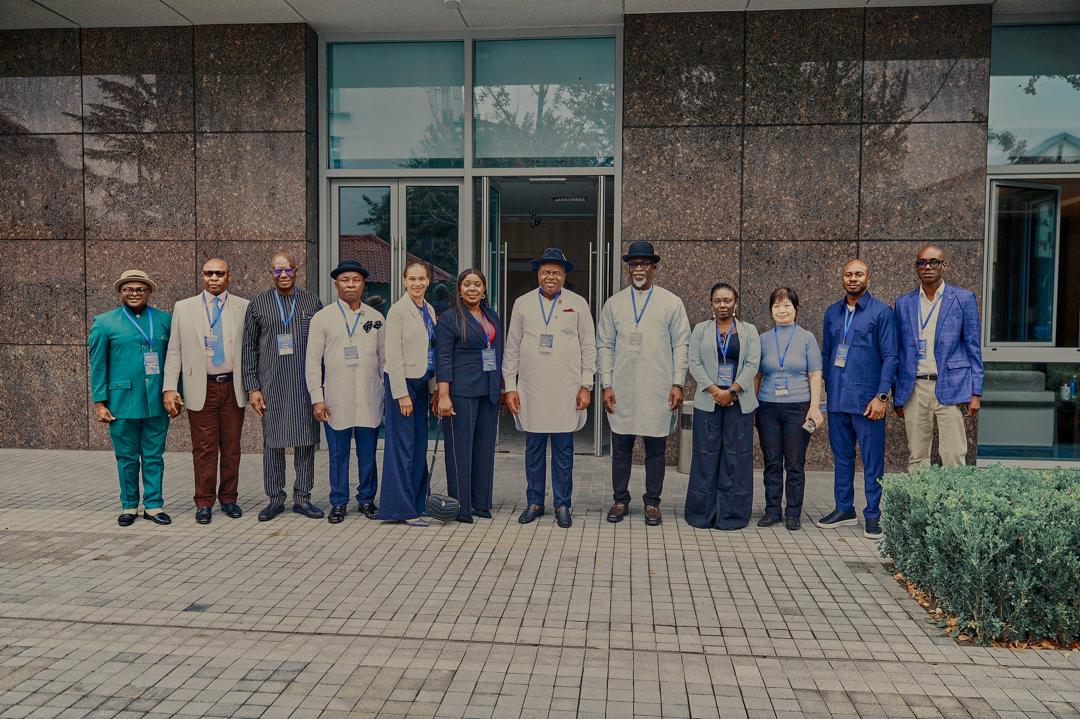
This call was made during a strategic retreat of the NCDMB/Dangote Joint Technical Committee (JTC), held in Lagos on Friday under the theme “Beyond Compliance: Partnering for Sustainable Nigerian Content Development.” The retreat convened key stakeholders from the oil and gas sector alongside representatives of relevant government institutions, fostering collaboration to tackle operational challenges and broaden indigenous participation across Nigeria’s energy value chain.
At the heart of the discussions was a shared imperative: to ensure that Nigerian content transcends statutory obligations and becomes a sustainable national economic strategy that creates jobs, develops technical expertise, strengthens local supply chains and retains greater value within the country.
In his keynote address, the Executive Secretary of NCDMB, Engr. Felix Omatsola Ogbe, represented by the Senior Technical Adviser and Director of the Project Certification and Authorisation Director (PCAD), Engr. Austin Uzoka, identified commitment, technology and financing as three fundamental requirements for building a resilient Nigerian content ecosystem.
He challenged stakeholders to look beyond compliance and confront the deeper questions of industrial sustainability, particularly how Nigeria could maintain its major industrial assets, strengthen domestic supply chains and ensure that investments in critical infrastructure deliver lasting economic value.
Drawing attention to the challenges associated with the country’s publicly owned refineries, Ogbe, emphasised the need to safeguard the sustainability of the Dangote Refinery by developing the goods, works, services and supply-chain capabilities required to support its continuous operations. The central message was clear: constructing world-class industrial facilities is only part of the task; building and maintaining the indigenous capabilities that sustain them is equally important.
He stressed the need for credible supply chains capable of supporting industrial facilities, developing local capabilities and ensuring that such expertise remains resident in Nigeria. Without reliable domestic supply chains, he warned, the economic benefits of industrial investments could continue to flow outside the country, limiting local value creation and value addition.
On technology, the Executive Secretary underscored the importance of developing Nigerian expertise to operate, maintain and sustain industrial facilities, rather than relying indefinitely on external capabilities. He also highlighted access to financing as a major constraint facing indigenous businesses. High interest rates and delays in accessing funds, he noted, can prevent Nigerian enterprises from executing projects, expanding operations and competing effectively within the oil and gas value chain.
Ogbe further challenged stakeholders to consider how Nigeria could nurture the next generation of large-scale indigenous industrialists and support other Nigerian investors seeking to establish refineries and related facilities. Acknowledging Dangote Group’s pioneering contribution to industrial development, he urged the industry to help emerging indigenous investors succeed, noting that a stronger domestic refining sector would position Nigeria as a major oil and gas hub.
Beyond its regulatory responsibilities, NCDMB used the retreat to reiterate its commitment to creating an enabling environment in which Nigerian businesses can participate meaningfully, build technical competence and compete for opportunities across the oil and gas industry.
In his presentation, the Director of Planning, Research and Statistics (DPRS) and Chairman of the NCDMB/Dangote Joint Technical Committee, Mr. Omomehin Ajimijaye, urged contractors, vendors and service providers operating within the Dangote business ecosystem to comply with Nigerian content requirements, register
on the designated digital platform, NOGICJQS and strengthen their participation in the industry.
Ajimijaye explained that the Board’s regulatory framework was designed to facilitate business growth and deepen indigenous participation, rather than create unnecessary bureaucratic bottlenecks. He identified four key compliance pillars: Nigerian content planning, workforce localisation, local procurement and capacity development.
Under these requirements, companies bidding for projects are expected to submit Nigerian content plans demonstrating how they will maximise indigenous participation. Employers must prioritise qualified Nigerians, procure locally available goods and services, and invest in skills development and technology transfer.
On expatriate employment, he explained that foreign personnel could be engaged where genuine skills gaps existed, but companies were expected to work with the Board to establish those gaps and develop succession plans that would progressively prepare Nigerians to assume such positions.
He described NOGICJQS as an important digital tool for supplier registration, prequalification, capacity verification and validation of technical expertise. Reliable industry data, he added, would help NCDMB identify skills shortages, connect businesses with qualified professionals and direct training investments towards areas of greatest need.
Ajimijaye commended Dangote Group for its collaboration with the Board since around 2019 in building capacity of Nigerians through local and overseas institutions, noting that some beneficiaries had subsequently secured employment within the group’s businesses.
He also underscored the importance of sustained investment in research and development to stimulate indigenous innovation, enhance competitiveness and enable Nigerian companies to export technical expertise.
Highlighting the impact of Nigerian content initiatives, he disclosed that the interventions had retained more than $10 billion in the Nigerian economy, generated over 50,000 direct and indirect jobs, and supported more than 50 million man-hours of training.
However, he noted that in-country value retention stood at approximately 61 per cent, below the 70 per cent target, and called for stronger collaboration among regulators, operators and service providers to close the gap.
He urged industry players to see Nigerian content not merely as an obligation but as an opportunity to expand businesses, develop technical expertise and build a more competitive domestic energy industry.
In his welcome address, the Group Vice President of Dangote Group, Dr. Edwin Devakumar, called for a fundamental shift from a compliance-driven approach to a culture of national responsibility, ownership and commitment. He maintained that laws and regulations alone could not deliver sustainable Nigerian content unless individuals, businesses and institutions genuinely embraced the responsibility of building Nigeria’s productive capacity.
“For sustainable Nigerian content development to succeed, it must not be seen as a regulatory burden. Every individual must regard it as something they genuinely want to do from the bottom of their heart,” he said.
Devakumar stressed that local content must go beyond sourcing raw materials to include skills transfer, workforce development and the growth of indigenous contractors into enterprises capable of executing increasingly complex projects.
The Director of Legal Services, NCDMB, Dr. Naboth Onyesoh, called for greater coordination among regulatory institutions, stressing that investment facilitation, petroleum regulation and Nigerian content compliance must work together to advance national economic interests. He argued that inter-agency engagement should clarify statutory responsibilities, eliminate unnecessary duplication and produce practical solutions rather than become a contest over institutional superiority.
Onyesoh challenged the perception that the Oil and Gas Free Zones Authority (OGFZA) was the sole regulator within free zones, explaining that its investment-promotion responsibilities did not override the statutory mandates of other government institutions. He noted that free-zone incentives designed to attract investment and improve the ease of doing business did not exempt operators from applicable federal laws. Depending on the nature of their operations, petroleum businesses remained subject to the relevant requirements of the Nigerian Upstream Petroleum Regulatory Commission and the Nigerian Midstream and Downstream Petroleum Regulatory Authority and NCDMB.
He also highlighted the roles of the Central Bank of Nigeria, customs and immigration authorities in facilitating financial transactions, monitoring goods and ensuring compliance with applicable regulations.
Reaffirming the importance of the Nigerian Oil and Gas Industry Content Development Act, 2010, Onyesoh said its provisions remained central to promoting indigenous participation, technology transfer, employment and domestic value retention. He cautioned against narrow interpretations that could exclude companies operating in free zones from contributing to local capacity development and the growth of Nigerian businesses.
“An incentive regime is a business advantage; it is not a regulatory exception,” he said.
The NCDMB legal director also highlighted the Board’s efforts to strengthen indigenous maritime capacity through the Nigerian Content Intervention Fund, which supports local companies in acquiring vessels and expanding their operations.
He disclosed that the Nigerian Content Fund was partnering with Nigeria LNG Limited on a shipyard project at Snake Island to boost domestic industrial capacity. He also commended the Nigerian Maritime Administration and Safety Agency (NIMASA) for collaborating with the Board on vessel verification and indigenous participation in maritime operations.
Onyesoh urged OGFZA and other agencies to intensify regular engagement, information sharing and joint resolution of operational challenges, noting that coordinated regulation would improve the ease of doing business, strengthen investor confidence, create jobs and ensure greater economic returns from Nigeria’s oil and gas resources.
Earlier, the Alternate Chairperson of the NCDMB/Dangote Joint Technical Committee, Dr. Ebele Oputa, described the retreat as a family meeting of key stakeholders united by a common objective: to place Nigerians at the centre of industrial development.
She acknowledged the contributions of participating government agencies and commended Devakumar for his longstanding commitment to Nigeria and investment in young Nigerians. She noted that his more than 33 years in the country and contributions to Nigerian content development had been instrumental to the collaboration.
By David Owei
Bayelsa State has approved the hosting of the governance secretariat of DeltasUNite, a global environmental initiative to protect the world’s deltas.
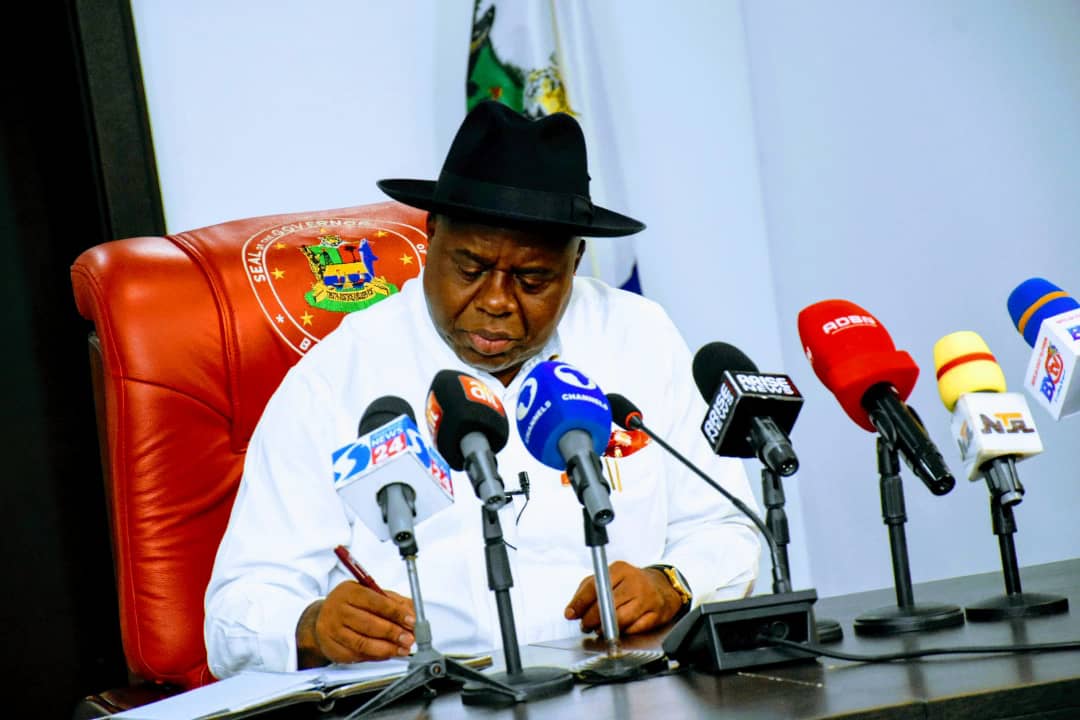
Governor Douye Diri disclosed this on Monday during the opening of a three-day 5th United Nations Ocean Decade Conference on Mega Deltas and the commencement of the China-Africa cooperation on river, coastal zone, and delta governace at the East China Normal University in Shanghai, China.
The conference attracted participants from about 23 countries, including UN officials, policy makers, researchers, scholars, pro-environment non-governmental organisations and representatives of impacted communities.
The Bayelsa governor declared support for the proposed United Nations Convention on the River Deltas (UNCRD) and stated that the governance secretariat, when established, would serve as a platform to bring impacted communities, scientists, government and investors together, in order to advance practical responses and inclusive governance to the environmental challenges confronting global delta, their security and sustainability.
Senator Diri, who chaired the opening session, also advocated for better China-Africa cooperation, saying there was need to give greater attention to sustainable development of river basins, coastal zones and the deltas.
He said: “I have approved the DeltasUNite Governance Secretariat in my state of Bayelsa. It will serve as our platform to bring communities, scientists, governments and indeed investors to identify priorities, share evidence, and shape practical, bankable responses.
“If solutions are to last, those who live with the consequences must help to design them, and those who invest must see clear returns for both people and ecosystems. Our responsibility to future generations has no expiry date.
“That conviction underpins my support for the proposed United Nations Convention on River Deltas. Advancing such a proposal will require sound science, broad consultations, engagement by national and sub-national governments, and the appropriate international processes.”
He noted that the effort to institutionalise preservation of the deltas was in tandem with the UN’s Sustainable Development Goals (SDGs), particularly Goal Six on clean water and sanitation, Goal 13 on climate change and climate action as well as Goal 14 (life below water) and Goal 17 (partnership for the goals)
“It also supports progress on poverty, hunger, and gender equality. Our commitment to sustainable development must translate into tangible gains for our women and our girls. As environmental shocks threaten livelihoods, water supplies, and education, women and girls often face greater hardships.
“We must remember that decisions made upstream affect livelihoods downstream. My state of Bayelsa is ready to share what we are learning, to learn from other states and countries, to deepen cooperation through the DeltasUNite, and our international partnerships.
“Let us bring diplomatic resolve, scientific rigor, and meaningful community participation to the work ahead of us. Our rivers, coasts, and deltas are inheritance that we are also holding in trust. Our children deserve a chance to know their worth, carry forward their cultures, and build secure futures upon this.”
In his remarks, the Coordinator of the African Centre for Climate Actions and Rural Development (ACCARD), Mr. Freeman Oluowo, who is the international facilitator of the DeltasUNite initiative, commended the Bayelsa State government and Governor Diri’s courage, leadership and support for the campaign.
Oluowo also lauded the governor’s bottom-top leadership style, which he said creates opportunity for the indigenous and local people to have a voice in decision making.
He said the UN Convention on River Deltas would become a reality as the work had reached the White Paper report stage.
Oluowo explained that the report would soon be submitted to the global body, and that it was only a matter of time, working with all stakeholders in the deltas, for the pronouncement to be made.
“The DeltasUNite is diverse. It is an initiative that is UN recognised and approved. As you all may know, the United Nations does not give you everything completely. It wants to see your actions and work. And we have done our best navigating the site,” he said.
On the governor’s entourage were the Commissioner for Environment, Ebi Ololo, his Marine and Blue Economy counterpart, Mrs. Faith Zibs-Godwin, and the Technical Adviser on International Development and Liaison, Mrs. Funkazi Koroye-Crooks.

DSS Arraigns Five suspects Over Kidnap of prospective Corps Members in Imo state
By our correspondent The Department of State Services (DSS) on tuesday, october, 20, 2026, arraigned five suspects who allegedly kidnapped...

37 illegal Dead Miners Panel: NSCDC Bans from Enforcing,Arresting Miners from Mining Site Across Nigeria-NMC North-Central
By George Mgbeleke The North Central Zonal Coordinator of Nigeria Mining Cadastral (NMC) Engr. Henry Temidayo Bolawale has said that...

HURIWA urges Nigerians to speak out in rejection of the toxic legislation that creates petrol tax*
By George Mgbeleke Prominent Civil Rights Advocacy group, HUMAN RIGHTS WRITERS ASSOCIATION OF NIGERIA (HURIWA) has challenged Nigerians to wean...

One killed as rival groups clash in Brass
By David Owei A 26-year-old man identified simply as Tari, popularly known as Heavyweight, has been macheted to death following...

NCDMB, Dangote, Push for Sustainable Nigerian Content, Call Industry to Go Beyond Compliance
From David Owei, Yenagoa The Nigerian Content Development and Monitoring Board (NCDMB) and the Dangote Group have urged a decisive...

Bayelsa To Host Governance Centre On Global River Deltas
By David Owei Bayelsa State has approved the hosting of the governance secretariat of DeltasUNite, a global environmental initiative to...

2027 Election:INEC Seeks Traditional Rulers support To Curb Vote Buying , Voter Apathy
By George Mgbeleke The Chairman of the Independent National Electoral Commission (INEC), Prof. Joash Amupitan, has said the Commission’s National...

Gov Otti Mourns Greg Ibe, Says Abia Lost Illustrious Son
By Correspondent The Governor of Abia State Dr Alex Otti has expressed shock and sadness over the death of Prof....


Group, CLO Applaud Sen Umeh for championing Igbo cause
By Our Correspondent A human rights organisation, Civil Liberties Organisation, CLO, Anambra state chapter, Monday, commended the Senator representing Anambra...


Alleged Wiretapping: Again, Court Dismisses El-Rufai’s N120m Rights violation suit *Awards N200,000 each in favour of DSS, ICPC, EFCC, AGF
By Our Correspondent A high Court of the Federal Capital Territory (FCT), on Monday, dismissed a N120 million fundamental rights...
-
 Politics1 year ago
Gov Okpebholo moves to end Cultism *Threatens action against leading cult groups *Vows to demolish more cult houses in Edo State
-
 Politics1 year ago
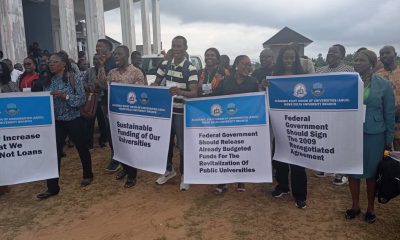
ASUU-NDU protest against FG loans, unpaid salaries,Non-Implementation of agreements …..says loans is generational slavery
-
 Business & Economy1 year ago
PC-NCG Issues Disclaimer on Purported Nigerian Coast Guard National Orientation Exercise In Anambra State
-
 Entertainment2 years ago
Jubilation galore as Parishioners of CKC Kurudu celebrate their cultural heritage ….FG should exploit our Cultural heritage to unite Nigerians-Rev Fr Dim
-

 Sports8 months ago
Bayelsa-born ex-football star’s son, Opuama donates spike shoes to Athletics Association
-

 General News2 years ago
Reps hold public hearing on FMC Ugwuaji Awkunanaw
-
 Law & Crime1 year ago
Legal practitioner raises alarm over threat to his life by CSP Muhammed Abdulkareem
-
 General News2 years ago
Celebration galore as UDA Successfully Elected New Exco ……I will digitalize processes that will raise UDA to greater height -Comr. Okejiri