
Uncategorized
APC Billion-Naira SUV-Gifts Insult To Suffering Nigerians-ADC Tells Tinubu – Demands disclosure of funding as ruling party prioritises 2027 campaigns over citizens’ hardship

By George Mgbeleke9
The African Democratic Congress (ADC) has described the distribution of seven luxury SUVs, reportedly worth about N1 billion, to youth leaders of the ruling All Progressives Congress (APC) as an obscene display of extravagance at a time when millions of Nigerians are struggling to afford food, transportation and other basic necessities.
In a statement issued on Monday, the party’s National Publicity Secretary, Mallam Bolaji Abdullahi, said the development exposed the widening disconnect between the sacrifices demanded of Nigerians and the privileges enjoyed by the ruling party’s political establishment.
“President Tinubu asks Nigerians to endure hardship while his party distributes luxury vehicles to its political operatives. Apparently, sacrifice is for ordinary Nigerians, while luxury is reserved for those working to keep the APC in power.
“The APC has found the resources to move its campaign officials around Nigeria. What it has failed to find is a convincing way to make life affordable for the Nigerians whose votes it now seeks.”
The ADC said it was particularly disturbing that the vehicles were reportedly provided for grassroots mobilisation ahead of the 2027 elections, rather than any initiative directly addressing youth unemployment or economic hardship.
“Seven APC youth leaders can receive luxury vehicles, but millions of young Nigerians are still waiting for the jobs, opportunities and economic relief they were promised. Is this the APC’s idea of youth empowerment?”
The party demanded full disclosure of the source of funding for the vehicles, including whether any public resources were involved.
“Nigerians deserve to know who paid for these vehicles. Until that question is answered, the ruling party cannot dismiss legitimate concerns about its priorities.”
Uncategorized
Gov Diri Unveils Robotic Tutors At Bayelsa Medical University *Inspects Teaching Hospital, Emergency Health Facilities
By David Owei
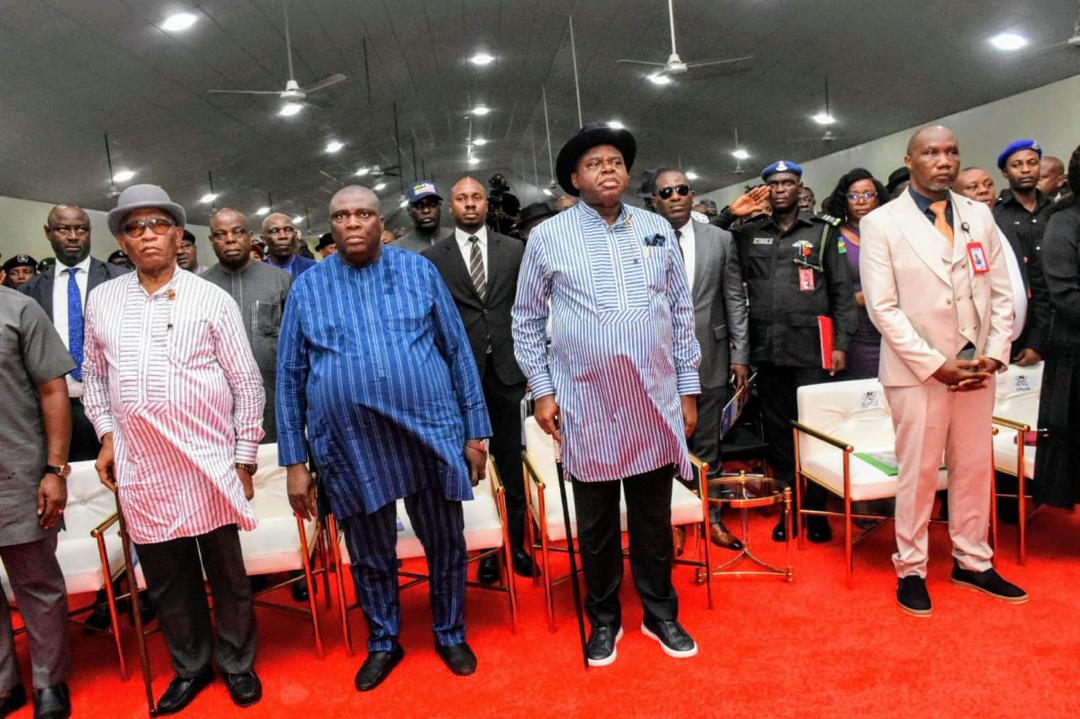
Governor of Bayelsa State, Senator Douye Diri, has unveiled Artificial Intelligence (AI)-powered robotic tutors and other digital learning innovations at the Bayelsa Medical University (BMU), Yenagoa, as part of efforts to advance medical education, research and technological development in the state.
The innovations were unveiled on Monday alongside the university’s 2025–2029 Strategic Plan, with the governor urging the institution to deploy technology to improve teaching, learning and research without replacing physical classroom interactions and the mentorship role of lecturers.
Governor Diri described the initiative as a significant step towards modernising medical education but stressed that digital tools must complement human instruction and make learning more interactive.
He challenged the university’s management to translate its strategic plan into measurable improvements in academic standards, research, infrastructure and the quality of graduates.
The governor reaffirmed his administration’s commitment to supporting BMU’s ASPIRE Agenda, which focuses on academic excellence, sustainability, partnerships and engagement, innovation and technology, research excellence, and empowerment, leadership development and welfare.
He commended the Vice-Chancellor, Prof. Dimie Ogoina, and the university management for developing a roadmap for institutional growth, charging them to collaborate with the state’s Ministries of Education and Health to achieve its objectives.
The Bayelsa governor also said his administration was strengthening science, technical and vocational education to equip young people with practical skills for employment, entrepreneurship and self-reliance.
He expressed confidence that the science-oriented schools being established across the state would provide qualified candidates for BMU and other tertiary institutions, helping the state to produce more doctors, nurses, pharmacists, radiologists, engineers and other professionals.
He acknowledged the late Governor Diepreye Alamieyeseigha, who initiated the development of the former 500-bed hospital where the university is located, and his successor, Senator Seriake Dickson, who revived the project and transformed it into the medical university.
Diri further disclosed that the university’s campus at Sampou was nearing completion and would provide additional space for its expansion.
The governor, who also inspected facilities at the newly established Bayelsa Medical University Teaching Hospital, expressed confidence in the institution’s capacity to provide advanced diagnostic services.
He said the teaching hospital was equipped to conduct x-rays and advanced scans, including Computed Tomography (CT) scans, which use x-ray technology and computer processing to produce detailed images of internal body structures.
The governor said the availability of such facilities would improve access to specialised diagnostic services and reduce the need for Bayelsans to travel outside the state for certain medical procedures.
Diri also undertook a tour of facilities at the Bayelsa State Emergency Medical Services and Ambulance System.
Earlier, the BMU Vice-Chancellor, Prof. Dimie Ogoina, said his vision was to transform the school into a globally recognised institution for medical education, research and innovation, driven by technology and sustainability.
He explained that the ASPIRE Agenda was being implemented through institutional teams and initiatives designed to improve academic quality, accountability, innovation and student welfare.
Prof. Ogoina disclosed that the university had secured accreditation for nine academic programmes while its nursing science students recorded a 96 per cent pass rate in their professional examinations.
He added that BMU researchers had produced more than 70 peer-reviewed publications.
He also announced that the university’s College of Medicine had attained full membership of the Consortium of Medical Schools of Africa while BMU was selected as one of 18 medical schools in Nigeria for a high-impact intervention programme.
On digital innovation, the Vice-Chancellor said the university had established a virtual reality, artificial intelligence and mixed-reality studio, expanded digital connectivity and introduced a “Talk to the VC” application to enable students and staff to communicate directly and confidentially with the university leadership.
He added that the institution was strengthening simulation-based learning through its clinical skills laboratory and pursuing plans to develop a smart campus, improve internet connectivity and increase internally generated revenue.
Ogoina further stated that BMU was developing a Centre of Excellence for Digital Health and Biomedical Innovation, alongside the Niger Delta Centre of Excellence for Health, Environment and Development to address regional health and environmental challenges.
He said by 2029, the university aims to become a nationally respected and internationally recognised health sciences institution distinguished by excellence in education, research, innovation, leadership and societal impact.
He thanked Governor Diri for his support to the institution, expressing confidence that the university would build on the foundation already laid to achieve its ambitions.
Uncategorized
NIDDEMOG queries Tinubu,Obi,Atiku, other Presidential candidates over clear action plan for Niger Delta …says region demands clear plan to revive abandoned East-East road, Refineries. Sea Ports, environmental degradation ..caution S/S Governors against ‘blind’ endorsement
By David Owei,Bayelsa
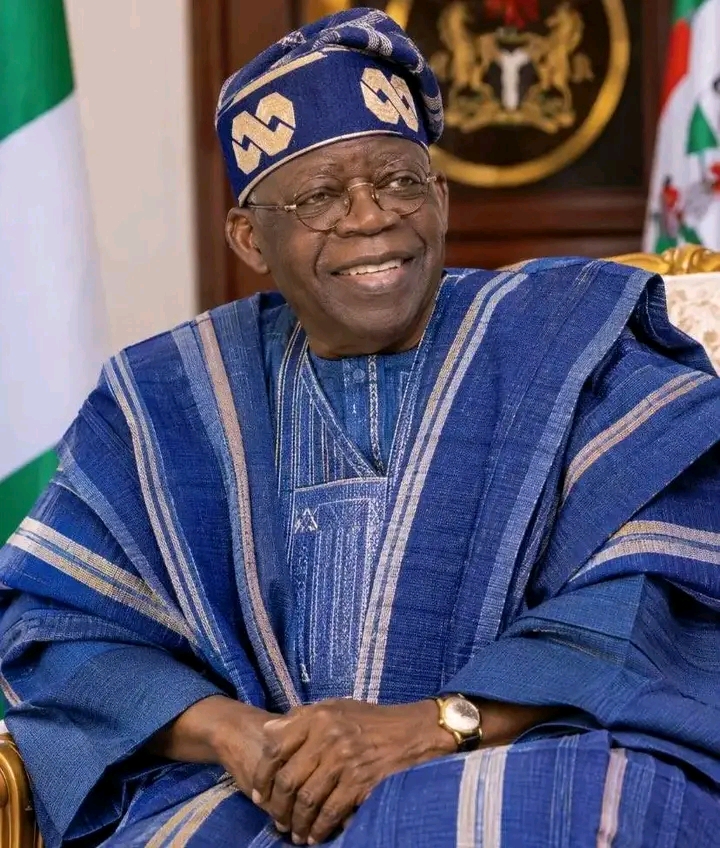
The Niger Delta Development Monitoring Group (NIDDEMOG) has challenged the Presidential Candidates of Major Political Parties in the country to make known their action plan for the Niger Delta region in the area of reviving abandoned East West road project, the Sea Ports in the region and the issue of environmental degradation.
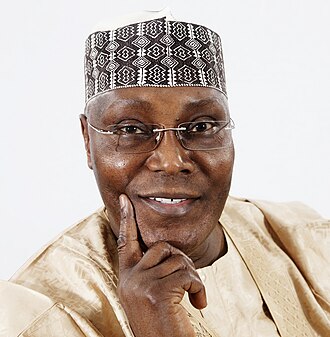
The Group warned the Presidential candidates against use of cheap controversy on who brought about poverty and other trivial issues to divert the attention of the massive voters but focus on telling each region, including the Niger Delta, their action plan for development, prosperity and empowerment.

The group’s Team Lead, Chief Nengi James-Eriworio, Officer of the Order of the Niger, OON, in a statement at the weekend also called on the State Governors of the region to show capacity in leadership by ensuring that their endorsement of a particular candidate is not mere “jamboree” but a means of securing commitment towards improving Federal Interventions in road infrastructures, Sea Ports, Refineries, improved shore protection plan for communities being washed away from the region.
He described the recent controversies on the Coastal road as an indication that most of these Presidential candidates are not in tune with challenges facing each region, particularly the Niger Delta.
He said ” How can a Former Governor of Cross Rivers, Donald Duke, who is a Presidential Candidate of a party ,be speaking with a clear knowledge of issues concerning the region? Most of the issues facing the region are not being discussed by the Presidential candidates not even President Tinubu.”
” All they believe is that the Niger Delta region is taken due to oil pipeline surveillance contracts and the Presidential Amnesty Programme (PAP). Our problem as a region is more than that. Most of our communities are being washed away by the ocean due to poor shore protection plan. We have lost many lives due to 26 years of abandoned East-West road project and we no longer have a functioning Refineries and sea Ports.”
” Instead of discussing issues on what the Federal Government will do for the states on Climate change as it’s affecting our coastal environment and remediation of the damaged environment of oil producing communities, they are busy engaging in unfair and disappointing personal attacks and use of derogatory language on one another.This would not advance the development of the Niger Delta.”
He called on the Presidential candidates to start discussing issues of “Gas flaring reduction issues, total completion of East West Road plan, Comprehensive plan on shore protection, Niger Delta States restoration and remediation plan on Cumulative Oil spills total Clean up re- naming the Hyprep as Agency for environmental cleanup.”
Chief Nengi James, who in a letter issued and addressed to each Presidential candidates, against the backdrop of the kick off of campaigns by Political Parties, said the Presidential candidates should be more concerned about the challenges confronting the coastal communities and Niger Delta region than engaging in verbal exchanges with one another over who brought poverty and violence.
He reiterate that the proposed coastal road addressed a long standing infrastructure need in the Niger Delta and should not be dismissed on political grounds, insisting that the region deserved more major investments in roads, refinery, sea Ports and bridges because of its contribution to Nigeria’s oil revenue.
He also stated that the region is in need of the upward review of the 13 per cent derivation up to 20 per cent and a clear directive to the IOCs operating in the Niger Delta States to immediately relocate their headquarters and functional offices to the region.
The NIDDEMOG leader maintained that the region needed a network of roads and bridges capable of connecting its coastal communities, improving access to markets and public services, and opening up areas that had remained difficult to reach.
He cited road projects linking parts of the Niger Delta to the Atlantic coastline, including routes around Agge and Brass in Bayelsa State, as evidence that road infrastructure could be developed in challenging coastal environments.
He also referred to road and bridge connections in the Bonny and Opobo axis of Rivers State, arguing that the region’s terrain should not be used as a reason to discount the feasibility of further infrastructure development.
Chief Nengi James said the federal government should also address the poor state of existing roads, particularly the East-West Road, while pursuing new projects such as the coastal highway.
“We are not against any Presidential candidates. All we are saying is that the region demand a commitment from each candidates for the Niger Delta region. I am one of those who advocated for it even before the Federal Government proposed the project. What we are saying is that the East-West Road and other failing roads in the region must also receive the attention they deserve,” he said.
The NIDDEMOG leader also questioned the State Governors of the region to secure committment from the Presidential candidates on the contending issues of the abandoned East-West road and other needed development initiatives rather than keeping silent amidst blind party loyalty ahead of the elections.”
By Abdullateef Bamgbose
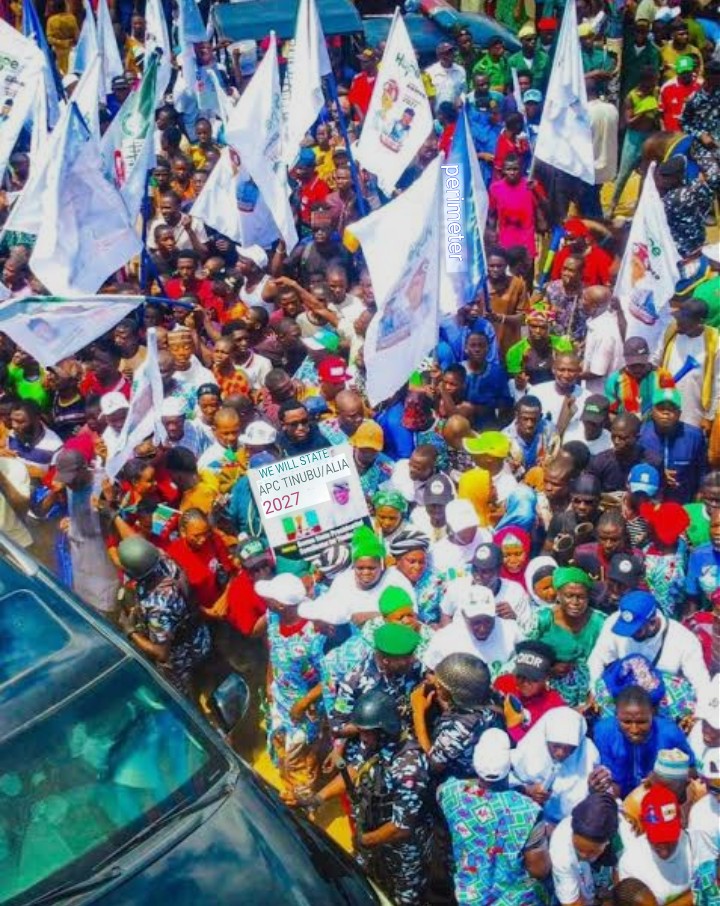
Nigerians waited with bated anticipation as political actors and parties took centre stage following the decision by the Independent National Electoral Commission (INEC) to lift the ban on political campaigns ahead of the 2027 general elections.
President Bola Ahmed Tinubu
But the opening act, particularly the All Progressives Congress (APC) campaign flag-off in Kaduna, appears to have raised a disturbing question:
Are Nigeria’s political parties going into the general elections without manifestos and, consequently, without a social contract with the electorate?
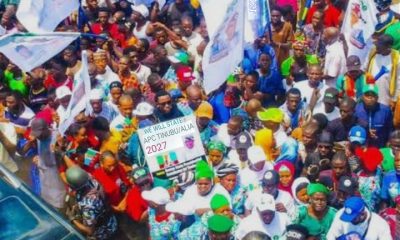
The Kaduna gathering provided the first major opportunity for the ruling party to present its political case to Nigerians. Yet, rather than witnessing a detailed presentation of a comprehensive manifesto setting out what the APC intends to do in another term, much of the political conversation revolved around responding to allegations from the opposition and defending the record of the Bola Ahmed Tinubu administration.
For political pundits, Nigerians waiting for the parties to unveil convincing manifestos may be embarking on another version of Samuel Beckett’s Waiting for Godot—waiting for something that may never come.
This is not merely a question of campaign literature. A manifesto is supposed to be the foundation of the relationship between a political party and the electorate. It tells voters what a party intends to do if entrusted with power and provides a basis upon which citizens can judge its performance.
In that sense, a manifesto is more than a collection of campaign promises. It represents a social contract between the political class and the electorate.
The absence of such a contract leaves voters with little more than personalities, slogans, rallies, accusations and counter-accusations.
That appears to be what the Kaduna campaign flag-off exposed.
Rather than a battle of competing ideas and policy alternatives, the emerging campaign is increasingly taking the form of political theatre, with the actors spending more time attacking opponents, defending their records and responding to allegations.
The ruling APC, for instance, has been compelled to devote significant attention to allegations concerning the performance of the Tinubu administration, particularly issues surrounding poverty, insecurity and the economic hardship confronting Nigerians.
President Tinubu’s appearance in Kaduna consequently became as much an exercise in defending the administration as it was an opportunity to sell a new political agenda to the electorate.
The development raises an important question: If the APC is seeking another mandate, what precisely is the social contract it is offering Nigerians for the next four years?
Is it a continuation of the policies of the first term? Is it a modified version of the administration’s economic reforms? Or is there a new programme designed to address the consequences and criticisms that have emerged from those policies?
The electorate deserves clear answers.
The same question applies to the opposition.
It is not enough for opposition parties to tell Nigerians that the APC has failed. They must explain what they intend to do differently, how they intend to do it and, crucially, how they intend to finance their promises.
The electorate cannot be expected to choose between one set of accusations and another.
It needs choices.
It needs policies.
It needs measurable targets.
It needs to know what each political party would do about unemployment, insecurity, inflation, the cost of living, education, healthcare, infrastructure, energy, agriculture and the country’s growing debt obligations.
Instead, the campaign environment appears increasingly dominated by allegations and their denials.
Barely 24 hours before the Kaduna flag-off, for instance, social media was awash with an allegation that Kaduna State Governor Uba Sani had written to the Presidential Campaign Council requesting a staggering ₦3.8 trillion for the campaign flag-off.
The allegation generated considerable attention.
Dele Alake, spokesman for the Presidential Campaign Council, subsequently denied the purported request.
The Kaduna State Government also reacted, accusing the African Democratic Congress (ADC) of allegedly planting the story on social media in an attempt to discredit the APC.
Whether the allegation was politically motivated or simply another piece of misinformation, the episode was significant because it illustrated the nature of the campaign environment that is emerging.
An allegation is made.
A denial follows.
An opponent is blamed.
The political temperature rises.
But the electorate is left without answers to the fundamental questions about governance.
For the APC, the episode also carried a familiar sense of déjà vu, given the growing use of social media as a battlefield for political allegations and counter-allegations.
Yet, beyond the controversy surrounding the alleged ₦3.8 trillion request lies a more fundamental problem.
Where is the manifesto?
The 2027 election should not merely be a referendum on personalities or a contest over which political party can mobilise the largest crowd.
It should be a contest over the future direction of Nigeria.
Unfortunately, the early signs suggest that the political parties may be preparing for an election without sufficiently defining the obligations they intend to assume towards the people.
This is dangerous for democracy.
A social contract requires both sides to understand their responsibilities. The political party seeking power makes commitments to the electorate, while voters exercise their democratic authority based, at least in part, on those commitments.
When parties do not present clear programmes, politicians can make virtually any promise during campaigns and later claim that circumstances prevented implementation.
There is then no measurable standard against which their performance can be judged.
This has been one of the enduring weaknesses of Nigeria’s electoral politics.
Manifestos are often launched with considerable fanfare during election campaigns but become almost irrelevant once politicians secure power. Policies subsequently emerge through government decisions that voters did not necessarily vote for or understand at the time of the election.
The consequence is a widening disconnect between the electorate and those elected to govern.
The 2027 election presents an opportunity to reverse that trend.
The APC, as the ruling party, has the responsibility to tell Nigerians what another Tinubu term would look like beyond the rhetoric of continuity and the defence of its record.
The opposition parties equally have a responsibility to present credible alternatives rather than relying exclusively on the failures or controversies of the incumbent government.
Nigerians should not be asked to vote simply because one candidate is less unpopular than another.
They should be offered a choice between competing visions of the Nigerian state.
The Kaduna campaign flag-off, therefore, should not be judged merely by the size of the crowd or the political speeches delivered from the podium.
Its real significance lies in what it failed to provide: a sufficiently detailed and compelling social contract between the political party and the electorate.
The 2027 election should be about more than who wants power.
It should be about what those seeking power intend to do with it.
Until the political parties answer that question through credible, measurable and implementable manifestos, the Nigerian electorate may be heading towards an election in which the actors have assembled, the campaign stages have been erected and the political drama has begun—but the contract between the politicians and the people remains unwritten.
The Kaduna theatre has opened. The actors are on stage. But where is the script—the manifesto—that tells Nigerians what comes after the applause?

Gov Diri Unveils Robotic Tutors At Bayelsa Medical University *Inspects Teaching Hospital, Emergency Health Facilities
By David Owei Governor of Bayelsa State, Senator Douye Diri, has unveiled Artificial Intelligence (AI)-powered robotic tutors and other digital...

INEC Opens 2027 Preliminary Voters’ Register Online After Public Outcry
By our corresponden The Independent National Electoral Commission (INEC) has made the Preliminary Register of Voters for the 2027 general...

Nigeria’s Fake Medicines Crisis: A National Emergency Demanding Urgent Action
By Emmanuel Nnadozie Onwubiko Nigeria is facing a public-health emergency that demands urgent, coordinated and decisive action. The widespread circulation...

NIDDEMOG queries Tinubu,Obi,Atiku, other Presidential candidates over clear action plan for Niger Delta …says region demands clear plan to revive abandoned East-East road, Refineries. Sea Ports, environmental degradation ..caution S/S Governors against ‘blind’ endorsement
By David Owei,Bayelsa The Niger Delta Development Monitoring Group (NIDDEMOG) has challenged the Presidential Candidates of Major Political Parties in...

APC Billion-Naira SUV-Gifts Insult To Suffering Nigerians-ADC Tells Tinubu – Demands disclosure of funding as ruling party prioritises 2027 campaigns over citizens’ hardship
By George Mgbeleke9 The African Democratic Congress (ADC) has described the distribution of seven luxury SUVs, reportedly worth about N1...

Insecurity is everyone’s business, Irabor to tell Nigerians at book launch
By our correspondent Former Chief of Defence Staff, CDS, General Lucky Irabor (rtd), will address Nigerians on the need for...

Kaduna Jamboree: Parties Head for 2027 Without a Social Contract
By Abdullateef Bamgbose Nigerians waited with bated anticipation as political actors and parties took centre stage following the decision by...

Ebola Patient evacuated to Switzerland as FG records clinical improvement
By our Correspondent In an effort to curtail frther spread of Ebola in parts of ghe country,Federal Government has evacuated...

NSCDC warns C’River officers against violating citizens’ fundamental rights,
By our correspondent In a bid to avoid a repeat of the death of 37 illegal Miners in Niger state...

Probe Song Threatening Massacre in Enugu, Prosecution for Incitement-HURIWA challenges DSS, IGP
By George Mgbeleke The Human Rights Writers Association of Nigeria (HURIWA) calls on the Department of State Services (DSS) and...
-
 Politics1 year ago
Gov Okpebholo moves to end Cultism *Threatens action against leading cult groups *Vows to demolish more cult houses in Edo State
-
 Politics1 year ago
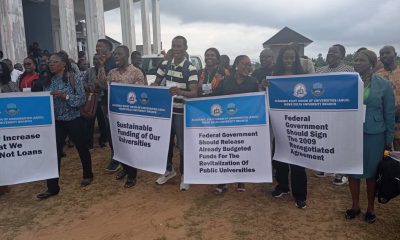
ASUU-NDU protest against FG loans, unpaid salaries,Non-Implementation of agreements …..says loans is generational slavery
-
 Business & Economy1 year ago
PC-NCG Issues Disclaimer on Purported Nigerian Coast Guard National Orientation Exercise In Anambra State
-
 Entertainment2 years ago
Jubilation galore as Parishioners of CKC Kurudu celebrate their cultural heritage ….FG should exploit our Cultural heritage to unite Nigerians-Rev Fr Dim
-
 Sports8 months ago
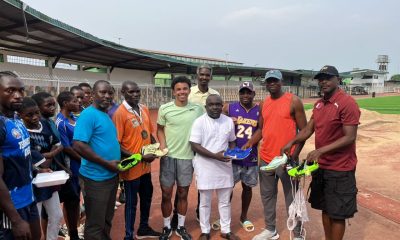
Bayelsa-born ex-football star’s son, Opuama donates spike shoes to Athletics Association
-

 General News2 years ago
Reps hold public hearing on FMC Ugwuaji Awkunanaw
-
 Law & Crime1 year ago
Legal practitioner raises alarm over threat to his life by CSP Muhammed Abdulkareem
-
 General News2 years ago
Celebration galore as UDA Successfully Elected New Exco ……I will digitalize processes that will raise UDA to greater height -Comr. Okejiri