
Uncategorized
Africa Ebola Outbreak Passes 10,000 Cases, DRC of Congo Tops List

By Our Correspondent With AFP Report
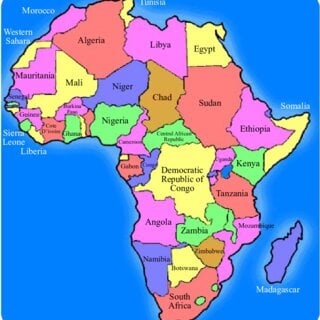
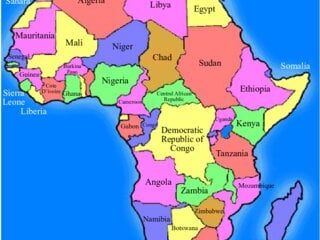
Africa’s latest outbreak of Ebola has passed 10,000 confirmed cases, the vast majority of them in the Democratic Republic of Congo, the Congolese health authorities said on Tuesday, with almost 5,000 fatalities.
According to the DRC’s figures, 10,060 people have been infected and 4,887 have died since the virus was first detected in May in the vast central African country’s deadliest outbreak in its history.
Cases have likewise been detected in Kenya, Nigeria and Uganda, with the World Health Organization warning that Africa faces a “complex” task to contain an outbreak spanning the east, west and center of the continent.
While some 2,684 have recovered from the virus in the DRC, the epidemic’s fatality rate appears to be close to 50 percent, according to the Congolese National Institute of Public Health.
Among the many challenges facing the response is the lack of any approved vaccines or treatments for the rare Bundibugyo species of Ebola behind the epidemic.
After spreading under the radar for weeks, the virus was first detected in the northeastern Congolese province of Ituri, kicking off the DRC’s 17th outbreak of the disease.
It has since spread across swathes of the country’s north and east, which is plagued by a litany of violence by various armed groups and where trust in a faraway and long-absent state is low.
Ituri and the eastern North Kivu province, the latter of which is partially controlled by the Rwanda-backed M23 militia, account for the majority of reported cases.
After registering a total of 20 cases and two deaths, neighbouring Uganda was declared Ebola-free by the WHO in late August.
Kenya, which had not reported a single case of the contagious virus until October 6, has now seen two virus deaths from nine cases, most of them from recent travellers to the DRC.
The only case so far confirmed in Nigeria, a 42-year-old Swiss woman who contracted the virus following a trip to Uganda with her husband, was evacuated to a hospital in Geneva on Monday.
Director-General of the Africa Centres for Disease Control and Prevention (Africa CDC), Congolese Jean Kaseya, told journalists his organisation was still trying to track how the patient came into contact with the virus.
“We saw that the genomic sequencing of the Kenyan case is similar to the Nigerian case. And we discovered that yesterday with some cases in Beni,” he explained.
“Today it’s an outbreak in three regions. We didn’t see that since we started to have experience of Ebola outbreaks. We were not thinking that Nigeria could be an at-risk country.”
When the outbreak was declared, just three zones of one province were affected, he said.
“Today we are talking about eight provinces, more than 66 health zones. To give you an idea, it’s like twice the size of the UK.”
Fifty-three of the patient’s contacts have been identified by the Nigerian health authorities, in a bid to stop the virus spreading across Africa’s most populous nation.
Some experts are worried that the virus, caught through contact with bodily fluids, could have spread after the Swiss couple landed back in Nigeria on October 3.
The WHO said the patient, the wife of an employee of the Swiss embassy in the capital Abuja, developed symptoms on October 7.
She then sought care in Abuja on October 11, before testing positive for Bundibugyo on October 20.
A Ugandan government spokesperson dismissed the idea that the Swiss woman could have contracted the disease while in the African Great Lakes nation.
The response to the DRC’s outbreak has been hampered by the distrust of parts of the population.
A nurse was killed and a health worker seriously wounded in the northeastern Tshopo province on Saturday, according to the WHO.
Doctor Marcel Likolo, chief medical officer of the Bafwasende health district, told journalists that young people from the area had accused the victims of trying to infect locals with tablets before attacking them.
The Ebola treatment center where the incident took place has since shut down, he said.
Since it first emerged half a century ago, Ebola has killed more than 15,000 people across Africa.
Testing of the Ervebo vaccine, which has already proven to be effective against the more common Zaire strain of the virus, has begun in recent weeks to determine whether it could also provide protection against the Bundibugyo variant.
Uncategorized
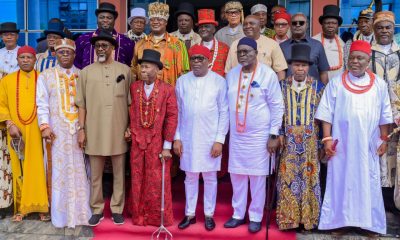
2027:Fubara Tasks Royal Fathers On Political Neutrality, Fairness *Wants Them To Remain Fathers To all Custodian of Culture,Tradition
By George Mgbeleke
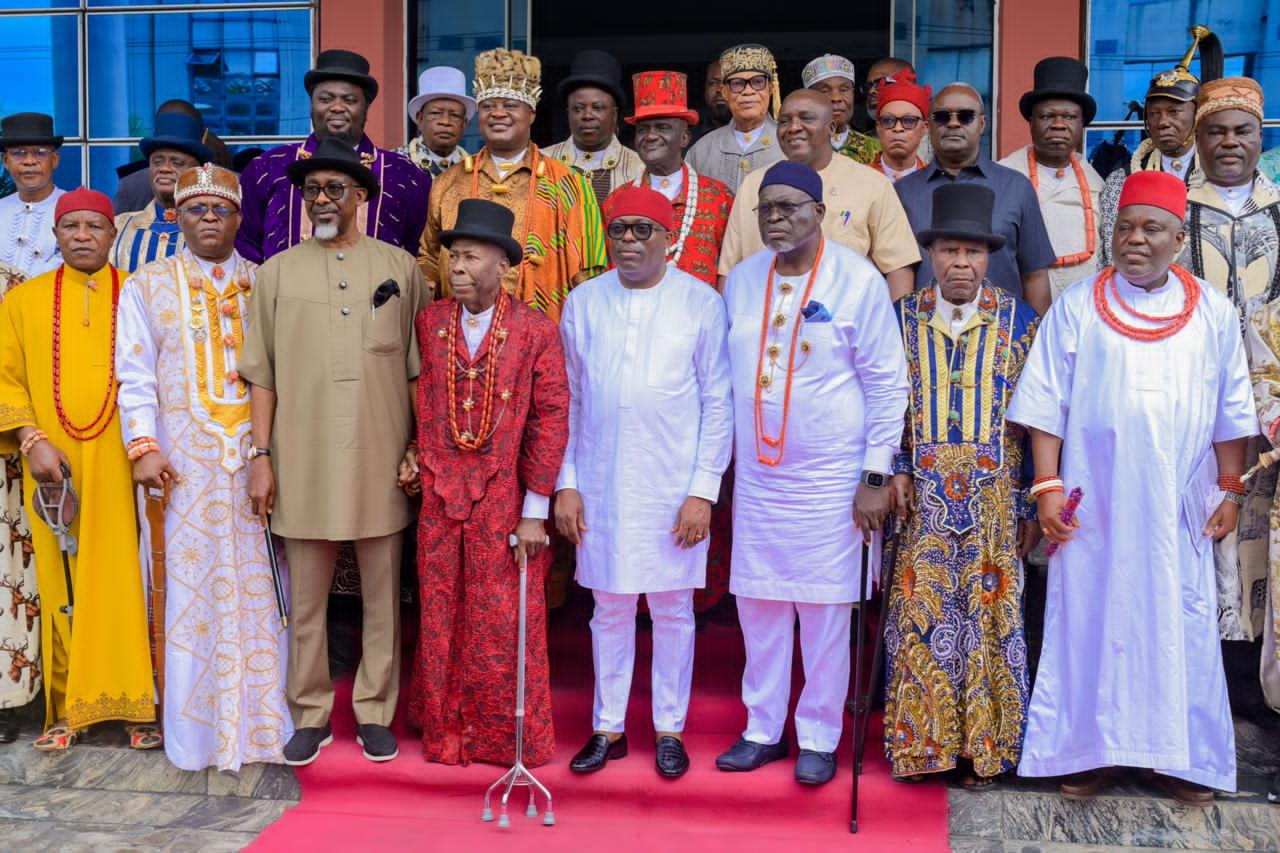
Governor of Rivers State, Sir Siminalayi Fubara, has charged traditional rulers in the State to maintain neutrality, ensure fairness and uphold peace in their domains as the country enters the active political season ahead of the 2027 general elections.
In a statement by Chief Press Secretary to the governor,Onwuka Nzeshi, Fubara gave the charge on Wednesday while declaring open the 126th, 127th and 128th Combined Quarterly Meeting of the Rivers State Traditional Rulers Council, in Port Harcourt.
The Governor said the primary function of traditional rulers is to administer justice and ensure fairness, saying their conduct must not lead to division and unmanageable crises.
“Let me therefore, request, if that is the right word to use, that please, as we are entering into this political season actively, everyone should ensure that your conduct promotes peace in your place. Your actions should not be what would lead to the division and multiple crisis that we cannot manage as a government.
“I think with that, we can all live as one and we can also continue to make this progress that we are trying with all our mind, our body and our soul, to ensure that we deliver to our dear state,” he said.
Governor Fubara urged them to abide by the oath and constitution they swore to before ascending their respective stools, in the interest of the stability and progress Rivers State.
He enjoined the royal fathers to set aside individual sentiments and place the interest of Rivers State above personal considerations, noting that this principle has guided his own day-to-day governance of the State.
“I want to enjoin everyone to keep aside issues of individual sentiments and ensure that the interest of our state supercedes what ever thing that we have in our mind. This is not just what I’m saying here, it is what I’ve also practiced and displayed in my day to day life in the governance of our dear state,” he said.
On the appeal for improved welfare for the traditional rulers, Governor Fubara clarified that the delay in actualising some of the requests they made in the past, was not from the Government but from the inability of the Council to put its house in order.
Governor Fubara explained that the issue of stipends paid to the traditional rulers by the Local Government Councils, was a statutory benefit provided for in the constitution and not what a state governor can change by mere verbal pronouncements. He assured that he remains a man of his word and will fulfill his promises to the traditional rulers before leaving office, next year.
He reaffirmed his respect for the traditional institution as custodians of culture and the closest link to the people, thanking them for their prayers and support. He urged them to ensure that the combined quarterly meeting featured fruitful deliberations that will strengthen peace and development in Rivers State.
Earlier, the Chairman of the Rivers State Council of Traditional Rulers and Paramount Ruler of Apara Kingdom, His Royal Majesty Eze Chike Amadi Worlu Wodo, expressed profound gratitude to the state government for its efforts in maintaining a cordial relationship with the traditional institution.
Eze Wodo highlighted the importance of traditional rulers in conflict resolution, noting that their closeness to the people places them in a strategic position to mediate in disputes involving chieftaincy matters, family disputes and land ownership in their respective communities.
The royal father drew the attention of the state government to some challenges affecting the performance of the traditional institution, particularly the lack of official utility vehicles and logistical support needed to discharge its responsibilities effectively. He also appealed for improved monthly stipends and better welfare provisions to reflect prevailing economic realities.
By Our Correspondent with AP Report
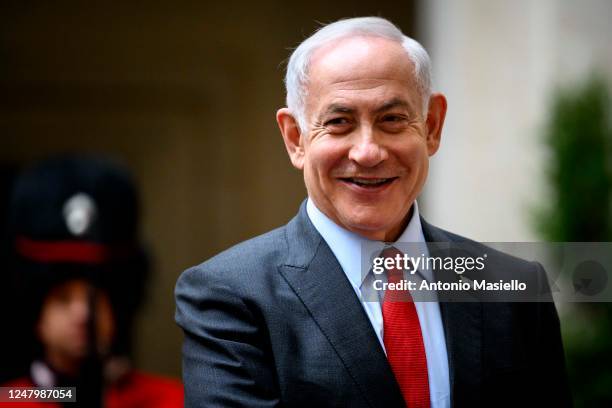
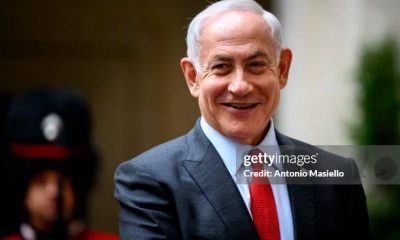
Tension builds up as Israelis watched as election results took shape on Wednesday after many voters delivered a rebuke to Prime Minister Benjamin Netanyahu ’s far-right government, with the highest turnout in over a quarter-century. Exit polls suggested there was no clear winner and that weeks of negotiating could lie ahead.
Arab-led parties appear to have made a historic showing, but it’s not clear if opponents of the government, who exit polls suggested will have a majority in the next parliament, would form a coalition with them. Issues around the Palestinians and their descendants remain incredibly sensitive in Israel.
Netanyahu was defiant early Wednesday as he seeks to remain the country’s longest-serving prime minister. He dismissed the idea of a partnership with Arab parties, whose constituents make up 20 percent of Israel’s population, as treasonous.
“We must establish a strong, right-wing, nationalist government,” Netanyahu said. “We must not endanger Israel and establish a government that relies on anti-Zionist Arab parties.”
His top challenger, centrist former military chief Gadi Eisenkot , has left the door open to partnering with Arab parties under certain conditions, including their recognition of Israel as a Jewish state and of Hamas as an extremist group. Some likely partners, however, have ruled that out. Whether they will change their minds to force Netanyahu from office remains to be seen.
With 60% of votes counted, Netanyahu’s Likud party has 21.4 percent and Eisenkot’s Yashar party has 16.2%. Either would need to form a coalition. The count from Israel’s Central Elections Committee does not indicate how many seats each will have in parliament, the 120-seat Knesset.
Likud’s share so far was lower than in the previous election in 2022, when it received 23.4 percent.
The results suggest that Netanyahu’s opponents were unable to capitalize on the anger and grief sparked by the Hamas-led October 7, 2023, attack and three years of war to decisively unseat him.
One loser, however, was far-right national security minister Itamar Ben-Gvir , who for many Israelis represented the worst strain of Netanyahu’s government, openly taunting Palestinian detainees and asserting that many in Gaza are “not even people.”
Election turnout was at 77.7 percent of eligible voters, the highest since 1999. Final results are expected in the coming days, including from hundreds of thousands of absentee ballots yet to be counted. Those include military personnel, diplomats and others.
Voting reflected many Israelis’ unease over Netanyahu’s alliance with the far-right and anger over draft exemptions for the significant ultra-Orthodox Jewish population.
Exit polls by major Israeli TV stations suggested Netanyahu’s governing coalition shrank but that Likud would remain the largest party and best placed to be asked to form a government by Israel’s president, Isaac Herzog. The president, however, isn’t required to go with the party having the most seats.
The exit polls suggested that Netanyahu’s bloc and Eisenkot’s each won about 51 seats, and Arab parties won about 18. That sets the stage for weeks of political negotiating before a prime minister is declared, or another round of elections is called.
The easiest path to a parliamentary majority would involve Eisenkot partnering with Arab-led parties, but that could prove politically difficult. In a speech early Wednesday that focused on national unity, Eisenkot pledged to form a government and promised “a new era, an era of hope.”
Confronted with Arab parties’ strong election showing, Israelis are now facing a debate as strong as their coffee.
“We have no future here if we do not stop being afraid. And if we do not stop the racism. We must no longer accept Netanyahu’s racist division between Jewish votes and Arab votes,” the leader of the Democrats party, Yair Golan, said on X. His party supports bringing Israel’s Arab-led parties into the coalition.
Israel’s Arab citizens are descendants of Palestinians who remained in the state after its creation in 1948. They often face discrimination and are viewed with wariness because of their solidarity with the Palestinian cause. That suspicion intensified after October 7, even though Palestinian citizens were also among those killed and abducted .
Netanyahu had warned that Arab parties could make or break the election, saying they were heading to the polls in “unprecedented numbers.” He won’t work with the Arab-led parties, and they have also ruled that out.
The mood was joyful at the headquarters of the United Arab List, the lone Arab party to ever join a governing coalition, briefly, in 2021.
“We are here, we are not on the sidelines,” party leader Mansour Abbas declared.
If no one can put together a majority coalition, new elections could be held early next year. Israel held five elections between April 2019 and November 2022 because of a similar stalemate. Whether thousands of Israelis living abroad would again fly back home to vote , and whether Arab voters would again surge to the polls, is unclear.
Minority governments are possible, but they must rely on cooperation from parties outside the government to pass legislation.
Attitudes over a polarising Netanyahu will shape days ahead
The race was widely seen as a referendum on Netanyahu’s nearly unbroken 17-year rule. Israelis were divided even before the deadliest attack in the country’s history. The resulting wars , along with settler violence in the occupied West Bank, have stoked worldwide outrage , straining ties with Israel’s closest allies and fueling a rise in antisemitism.
Netanyahu’s supporters think he is protecting Israel’s security and Jewish identity in the face of international pressure and liberal elites at home.
His detractors say Netanyahu, beset by an ongoing corruption trial , dragged out the war in Gaza and its hostage crisis for political reasons. They say he is undermining Israel’s independent judiciary. And they accuse his government of allowing ultra-Orthodox religious Jews to avoid military conscription .
Eisenkot is viewed by supporters as a capable leader with sterling security credentials. His son and two nephews were killed in Gaza, and his backers believe that he feels deeply the pain that still courses through Israel. Parties that likely would support him have vowed to improve Israel’s international standing and work to conscript ultra-Orthodox men while bolstering the independence of the judiciary.
Uncategorized
Senator Barau’s Bill to Transform NILDS into West African University Scales First Reading in Senate
By George Mgbeleke
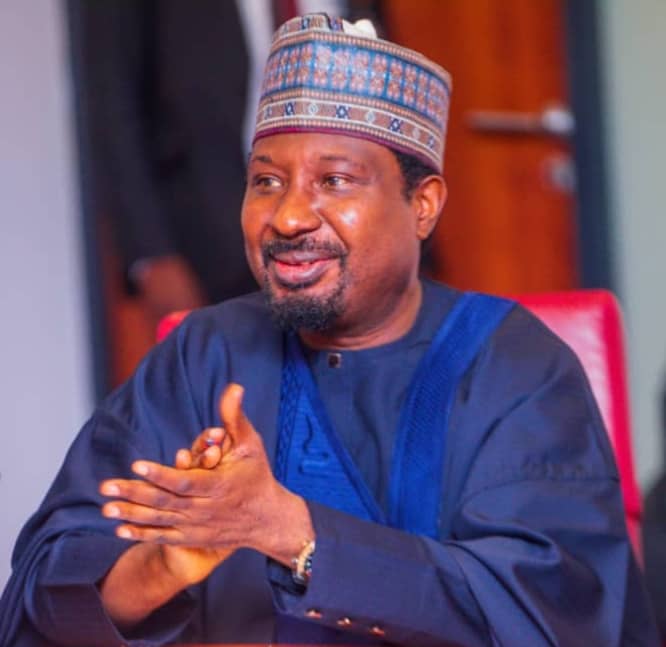
Forty-eight hours after announcing his intention to sponsor a bill to transform the National Institute for Legislative and Democratic Studies (NILDS) into a full-fledged university serving Nigeria and the West African sub-region, the Deputy President of the Senate, Senator Barau I. Jibrin, has taken the first legislative step towards actualising the proposal.
The bill, titled West African University of Legislative Studies (Establishment) Bill, 2026 (SB. 1087), scaled first reading during plenary at the Senate on Wednesday.
Senator Barau, who is also the First Deputy Speaker of the ECOWAS Parliament, had announced his intention to sponsor the legislation on Monday while representing the President of the Senate, Senator Godswill Obot Akpabio, GCON, at the 10th Convocation Ceremony of the NILDS–University of Benin (UNIBEN) Postgraduate Programmes in Abuja.
At the ceremony, the Deputy President of the Senate disclosed that he had commenced discussions with the Director-General of NILDS, Professor Abubakar Sulaiman, on modalities for the proposed conversion of the institute into a full-fledged university.
In a statement issued by his Special Adviser on Media and Publicity, Ismail Mudashir, Senator Barau proposed that the institution, upon conversion, be named the West African University of Legislative Studies (WAULS).
The Deputy President of the Senate, who also chairs the Senate Committee on the Review of the 1999 Constitution, said the proposed university would leverage NILDS’ existing infrastructure and institutional capacity to strengthen legislative practice, democratic governance, and regional integration.
“Now, let me quickly add that I have, on several occasions, discussed with the Director-General that, going by the quality of infrastructure this great institute has acquired over the years, there is a need for it to be transformed into a full-fledged university.
“I even told him that, as the First Deputy Speaker of the ECOWAS Parliament, Nigeria has always played a fatherly role within the ECOWAS community. Going by the structure of this great institute, it can serve not only Nigeria but the entire West African sub-region.
“The university should be named the West African Institute of Legislative Studies so that we can bring in legislators not only from Nigeria but also from all ECOWAS member states to study here. This would be a way of extending our role in uniting the people of West Africa,” he said.
Senator Barau noted that the location of the ECOWAS Parliament, ECOWAS Commission, and ECOWAS Court of Justice in Nigeria makes the country strategically positioned to host a regional institution dedicated to legislative capacity building and democratic development.
He said the proposed university would provide a platform for legislators and other stakeholders across West Africa to acquire specialised knowledge and skills in legislative practice, democratic governance, and institutional development.
The Deputy President of the Senate expressed optimism that the National Assembly would pass the proposed legislation and that President Bola Ahmed Tinubu would assent to it.

2027:Fubara Tasks Royal Fathers On Political Neutrality, Fairness *Wants Them To Remain Fathers To all Custodian of Culture,Tradition
By George Mgbeleke Governor of Rivers State, Sir Siminalayi Fubara, has charged traditional rulers in the State to maintain neutrality,...

Edo Pensioners Hail Okpebholo Over Contributory Pension Scheme
By Peter Joseph, Benin Edo State Retirees have lauded Governor Monday Okpebholo for approving their return to the Defined Benefits...


ADC Accuses Sokoto Govt Of Booking All Hotels To Frustrate Saturday Flag-Off Campaign
By Mohammed Abubakar The African Democratic Congress (ADC) has accused the Sokoto State Government of instructing hotels in Sokoto to...

Israelis Await Final Election Results As Netanyahu Remains Calm
By Our Correspondent with AP Report Tension builds up as Israelis watched as election results took shape on Wednesday after...

Africa Ebola Outbreak Passes 10,000 Cases, DRC of Congo Tops List
By Our Correspondent With AFP Report Africa’s latest outbreak of Ebola has passed 10,000 confirmed cases, the vast majority of...


2027: PDP Chairmen forum raises alarm over escalating threats,attacks, killings in Ebonyi By Our Correspondent
By Our Correspondent Barely 90 days to 2027 election, the forum of state chairmen of the People’s Democratic Party (PDP),...


Justice Mohammed’s Panel:Only survival of 37 Dead illegal Suspected Miners alleges lossing two bottles of gold,N1.350m in NSCDC Custody
By Uthman Baba-Naseer,Minna A Survivor of the death, in the custody of the Nigeria Security and Civil Defence Corp,(NSCDC) in...

Senate demands security deployment as bandits kill 80 in Taraba
By George Mgbeleke The Senate on Wednesday called for urgent deployment of security personnel to Taraba State after bandits killed...
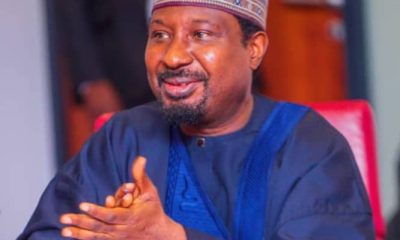

Senator Barau’s Bill to Transform NILDS into West African University Scales First Reading in Senate
By George Mgbeleke Forty-eight hours after announcing his intention to sponsor a bill to transform the National Institute for Legislative...
Breaking news Lawmakers Abandon Legislative Duties for Campaigns as Senate Struggles for Quorum
Abdullateef Bamgbose The Senate struggled to form a quorum on Tuesday and Wednesday as a significant number of lawmakers stayed...
-
 Politics1 year ago
Gov Okpebholo moves to end Cultism *Threatens action against leading cult groups *Vows to demolish more cult houses in Edo State
-

 Politics1 year ago
ASUU-NDU protest against FG loans, unpaid salaries,Non-Implementation of agreements …..says loans is generational slavery
-

 Business & Economy1 year ago
PC-NCG Issues Disclaimer on Purported Nigerian Coast Guard National Orientation Exercise In Anambra State
-
 Entertainment2 years ago
Jubilation galore as Parishioners of CKC Kurudu celebrate their cultural heritage ….FG should exploit our Cultural heritage to unite Nigerians-Rev Fr Dim
-

 Sports8 months ago
Bayelsa-born ex-football star’s son, Opuama donates spike shoes to Athletics Association
-

 General News2 years ago
Reps hold public hearing on FMC Ugwuaji Awkunanaw
-
 Law & Crime1 year ago
Legal practitioner raises alarm over threat to his life by CSP Muhammed Abdulkareem
-
 General News2 years ago
Celebration galore as UDA Successfully Elected New Exco ……I will digitalize processes that will raise UDA to greater height -Comr. Okejiri