
General News
HURIWA Condemns Multiple Toll Gates on Keffi–Lafia–Makurdi Highway, Demands Immediate Suspension


By George Mgbeleke
The Human Rights Writers Association of Nigeria (HURIWA) strongly condemns the Federal Government’s imposition of multiple toll gates on the Keffi–Lafia–Makurdi highway, describing the policy as an unjust financial burden on already impoverished citizens, commercial transport operators, traders and businesses across Nasarawa and Benue states.
HURIWA considers the tolling arrangement particularly insensitive at a time when Nigerians are struggling with rising transportation costs, high food prices, declining purchasing power and an increasingly unbearable cost of living. Rather than easing the burden on citizens who depend on this critical economic corridor, the Federal Government has introduced a system that forces motorists to pay repeatedly for using the same highway.
In a statement signed by national Coordinator,Comrade Emmanuel Nnadozie Onwubiko,the association demands the immediate suspension of toll collection along the corridor pending a comprehensive review of the policy, the condition of the road, the number of toll plazas, the payment arrangements and the transparency of the revenue management system.
FOUR TOLL GATES ON ONE CORRIDOR: AN UNNECESSARY BURDEN
The Federal Government commenced toll operations on February 4, 2025, along the 227.2-kilometre Abuja–Keffi–Akwanga–Lafia–Makurdi highway. The tolling arrangement covers four principal locations: Keffi, including Garaku, Akwanga, Lafia and Makurdi.
Under the published fee structure, saloon cars pay N500 at each toll point, SUVs and jeeps pay N800, minibuses and light buses pay N1,000, while trucks, buses and multi-axle vehicles pay N1,600. Although certain categories of vehicles enjoy exemptions or discounts, the cumulative cost remains a major concern for ordinary motorists and commercial operators.
A saloon car travelling through all four toll points could pay N2,000 for a one-way journey and N4,000 for a return trip, assuming payment is required at every plaza in both directions. For heavier vehicles, the financial burden is considerably higher.
These are not insignificant amounts in an economy where commercial drivers must contend with fuel costs, vehicle maintenance, spare parts, levies and other operational expenses. The consequences are eventually transferred to passengers and consumers through higher transport fares and increased prices of goods.
HURIWA questions the rationale for subjecting road users to four separate toll collections along a single highway, particularly when motorists have not been provided with sufficient evidence that the arrangement offers value commensurate with the charges imposed.
A ROAD THAT DEVELOPED DEFECTS BEFORE TOLL COLLECTION
Even more troubling are concerns about the quality and durability of the highway itself.
Reports and complaints from road users indicate that sections of the road began showing signs of deterioration, including peeling surfaces, before toll collection commenced. There have also been complaints about poorly constructed culverts and drainage structures at several locations, with some reportedly failing during the road’s first year of use and leaving sections impassable for weeks.
If these concerns are substantiated, they raise serious questions about construction quality, supervision, contractual compliance and the adequacy of maintenance arrangements.
HURIWA insists that Nigerians should not be compelled to pay premium charges for infrastructure whose durability and maintenance standards remain questionable. A tolling regime must not become a mechanism for collecting money from citizens while fundamental defects in the infrastructure remain unresolved.
The Federal Government and the relevant project authorities must publish verifiable information on the road’s construction standards, defect-liability arrangements, maintenance obligations and the measures taken to address reported failures.
The public deserves answers about who is responsible for repairing defective sections and whether the cost of correcting construction deficiencies is being improperly shifted to road users.
CASHLESS TOLLING WITHOUT ADEQUATE FACILITATION
HURIWA is also concerned about the implementation of the cashless tolling system, which reportedly relies on point-of-sale terminals, ATM cards and preloaded electronic cards, with a minimum preloaded value of N10,000.
A cashless payment system may have administrative advantages, but it must not be implemented in a manner that creates avoidable hardship, long queues and severe traffic congestion.
Motorists have complained about delays arising from payment difficulties, inadequate access to the required payment instruments and the burden of making multiple payments at separate toll points. Legislative concerns, including calls for a unified payment arrangement, cash alternatives or temporary suspension pending the resolution of operational problems, have also emerged.
HURIWA is disturbed that these concerns have not resulted in a satisfactory and publicly demonstrated resolution.
A government that introduces a new revenue-generating arrangement has a responsibility to ensure that the system works efficiently before imposing it on millions of road users. Citizens should not lose productive hours in traffic because the authorities failed to anticipate predictable operational challenges.
The association therefore calls for a transparent, integrated payment system that eliminates unnecessary repeated transactions, provides accessible alternatives for motorists and prevents toll plazas from becoming permanent bottlenecks.
A STRATEGIC FOOD CORRIDOR MUST NOT BECOME A TAX TRAP
The Keffi–Lafia–Makurdi highway is more than a transport route. It is a strategic economic corridor connecting communities, markets, farms and distribution centres across Nasarawa and Benue states, two important food-producing states in North-Central Nigeria.
Farmers, agricultural traders, transporters and wholesalers depend on this route to move food and other essential commodities to markets across the country.
Any policy that increases the cost of moving agricultural produce along this corridor threatens the sustainability of businesses and places additional pressure on food prices. The consequences are not limited to motorists in Nasarawa and Benue; they extend to households across Nigeria that depend on produce transported through the region.
HURIWA is particularly concerned that repeated toll payments, alongside existing taxes, levies and other operating costs, could undermine small businesses, reduce commercial transport margins and weaken the livelihoods of traders and transport workers.
The association maintains that infrastructure policy must support economic productivity rather than impose additional obstacles on the movement of food and essential goods.
The Federal Government must explain why a corridor of such national importance requires multiple toll points instead of a more efficient, transparent and affordable arrangement that recognises the economic realities of the communities and businesses that depend on it.
CITIZENS MUST NOT BE MADE TO PAY REPEATEDLY WITHOUT ACCOUNTABILITY
The Federal Government has defended the tolling arrangement as part of a public-private partnership framework intended to support road maintenance and recover financing obligations associated with the project, including a China Exim Bank loan.
HURIWA recognises that major road infrastructure requires sustainable financing and regular maintenance. However, the existence of a financing obligation does not automatically justify every tolling arrangement or excuse the government from its duty to protect citizens from disproportionate financial burdens.
Where public infrastructure is tolled, the authorities must demonstrate that the charges are reasonable, the collection system is efficient, the road meets acceptable standards and the proceeds are managed transparently.
HURIWA therefore demands full disclosure of the concession or tolling agreement, the approved revenue-sharing framework, the applicable maintenance obligations and the mechanisms for auditing collections and expenditure.
The government must also explain how the tolling arrangement accounts for the road’s reported defects and what safeguards prevent motorists from paying repeatedly without corresponding improvements in road quality and service delivery.
Citizens must not be left to shoulder the burden of public borrowing, questionable construction outcomes and inefficient toll administration without access to information or meaningful avenues for redress.
OUR DEMANDS
In the interest of public welfare, economic justice and accountability, HURIWA calls on the Federal Government and the Federal Ministry of Works to:
Immediately suspend toll collection along the Keffi–Akwanga–Lafia–Makurdi corridor pending an independent review of the policy and its implementation.
Review the number and distribution of toll plazas, with a view to eliminating unnecessary multiple payments along the same highway and adopting a fairer, more affordable collection structure.
Publish the relevant concession, financing and tolling agreements, including the obligations of the concessionaire, revenue-sharing arrangements and the responsibilities of the government and contractors.
Commission an independent technical audit of the highway, focusing on reported pavement deterioration, defective culverts, drainage failures and other construction or maintenance concerns.
Resolve traffic congestion and payment difficulties by providing an efficient, integrated payment platform and accessible alternatives for motorists who cannot use electronic payment methods.
Engage transport unions, traders, farmers, affected communities and state legislatures before taking further decisions on tolling arrangements that directly affect livelihoods and the cost of essential commodities.
Establish a transparent toll-revenue accountability mechanism that allows the public to understand how much is collected, how the money is spent and what improvements road users can expect in return.
GOVERNMENT MUST CHOOSE PUBLIC WELFARE OVER REVENUE COLLECTION
HURIWA warns that public infrastructure should never become an instrument for deepening poverty or punishing citizens for using an essential transport corridor.
The Federal Government cannot celebrate the construction or rehabilitation of a major highway while ignoring legitimate complaints about its condition, the cost of accessing it and the hardship created by the collection system.
The people of Nasarawa and Benue states deserve particular consideration because their farms, markets, businesses and transport networks contribute to the nation’s food supply and wider economic activity. Their strategic contribution should attract policies that facilitate commerce and reduce logistical costs, not arrangements that multiply financial pressure on already struggling households and enterprises.
HURIWA is not opposed to responsible infrastructure financing. It is opposed to tolling policies that lack sufficient transparency, impose disproportionate cumulative charges and fail to address credible complaints about road quality and operational efficiency.
We therefore call on President Bola Ahmed Tinubu to direct an urgent review of the tolling regime and suspend collections until the concerns of motorists, commercial operators and affected communities have been satisfactorily addressed.
The Federal Government must demonstrate that the public interest comes before revenue collection. Until it does so, the multiple toll gates on the Keffi–Lafia–Makurdi highway will remain a troubling symbol of a policy that places the financial burden of infrastructure on citizens without adequately demonstrating fairness, efficiency and accountability.
General News
Umahi Chairs ECOWAS C’ttee On Abidjan-Lagos Corridor Highway Devt Project Meeting In Lomé …Projects Tinubu’s Regional Infrastructure Vision
By Tony Okoh, Abuja
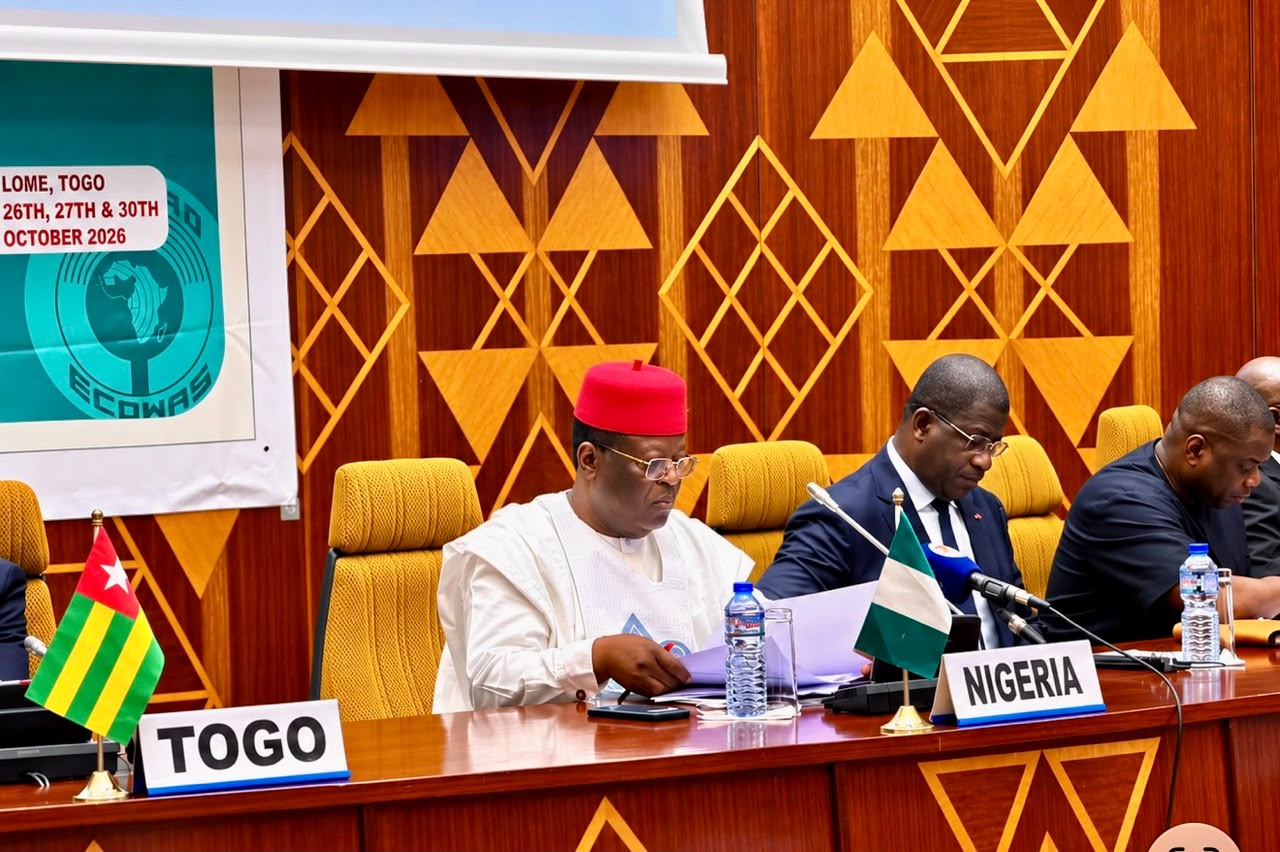
Nigeria’s Minister of Works Senator David Nweze Umahi, on Friday, Chaired the meeting of the 23rd Ministerial Steering Committee on Abidjan-Lagos Corridor Highway Development Project in Lomé, Togo in his capacity as chairman of that committee.
In a statement signed and made available to newsmen by Francis Nwaze, Senior Special Assistant on Media to the Minister of Works on Friday.
According to the statement, the meeting brings together key stakeholders from participating countries and development partners to review progress on one of West Africa’s most significant regional infrastructure projects, aimed at improving connectivity, facilitating trade, strengthening economic cooperation and promoting shared prosperity across the region.
As Chairman of the Steering Committee, Sen. Umahi is providing leadership at a critical stage of the project, which is expected to strengthen transportation links among countries along the Abidjan-Lagos corridor and improve the movement of people, goods and services across national borders.
The statement further revealed that ahead of the ministerial meeting, the 23rd Technical Meeting of the Committee of Experts, comprising the project directors and engineers, was held on October 26 and 27, 2026.
The experts reviewed progress across all project components and discussed strategies for advancing the technical studies required for the successful delivery of the highway.
Their deliberations also covered the project’s right-of-way, a critical requirement for construction activities; the continued operationalisation of the Abidjan-Lagos Corridor Management Authority (ALCoMA); and progress in mobilising investment financing by the African Development Bank, AfDB, the project’s Mandatory Lead Arranger, MLA. The experts further assessed complementary projects and activities being undertaken by other development partners to support the integrated development of the corridor.
At the ministerial level, the Steering Committee is expected to receive, consider and adopt the report and recommendations of the 23rd Technical Meeting of the Committee of Experts. This will provide an opportunity for the ministers to review the technical team’s findings, deliberate on outstanding issues and agree on the next steps required to move the project forward.
The African Development Bank will also present an update, in its capacity as Mandatory Lead Arranger, on the status of investment financing mobilisation for the project. The Steering Committee will deliberate on the presentation and provide feedback on the progress made and the actions required to advance the financing process.
In addition, the ALCoMA Board of Directors will present the reports and recommendations of its first and second board meetings for consideration by the steering committee.
The ministers will deliberate on the submissions and consider and approve relevant resolutions where necessary to strengthen coordination, improve implementation and ensure sustained progress on the project.
The Federal Ministry of Works, led by Senator Umahi, has been the vanguard of President Tinubu administration’s
infrastructure development campaign which the government sees as a strategic tool for unlocking economic opportunities and improving connectivity.
The Abidjan-Lagos Corridor Highway Development Project is a major regional undertaking designed to strengthen links between West African economies. Its successful implementation is expected to support trade, ease cross-border transportation and deepen economic integration among participating countries.
By David Owei, Bayelsa
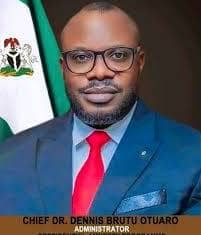
The National Chairman of the Presidential Amnesty Programme (PAP) Phase Two, Ibena Rufus Salvation, has dismissed reports suggesting that the programme’s administrator, Dr Dennis Brutu Otuaro, is under pressure, describing him as focused on his official responsibilities and ongoing mobilisation efforts in support of President Bola Tinubu’s re-election.
Salvation, in a reaction to an online report, rejected the suggestion that Otuaro was facing pressure over a Freedom of Information (FOI) request submitted by a blogger seeking information about the programme’s overseas scholarship beneficiaries and related expenditure.
According to Salvation, the PAP administrator was not under any pressure but remained occupied with his duties and political mobilisation activities in support of Tinubu’s re-election bid.
He maintained that Otuaro was concentrating on his responsibilities rather than being distracted by reports suggesting otherwise.
“Otuaro is not under any pressure, but busy working and mobilising for President Ahmed Bola Tinubu’s re-election,” Salvation said.
He also criticised what he described as attempts to blackmail the PAP administrator, calling on those responsible for circulating such claims to desist from using reports he considered false and unverified to attract public attention, particularly on social media platforms.
“Stop the sheep blackmail. Stop using fake, unverified stories to get attention on social media,” he said.
Salvation maintained that reports suggesting otherwise did not reflect his assessment of the PAP administrator’s current activities and commitments.
By our Correspondent
In an effort to curtail frther spread of Ebola in parts of ghe country,Federal Government has evacuated Nigeria’s Ebola index case to Switzerland for further medical care, while warning that the patient’s clinical improvement should not be interpreted as confirmation that she is no longer infectious.
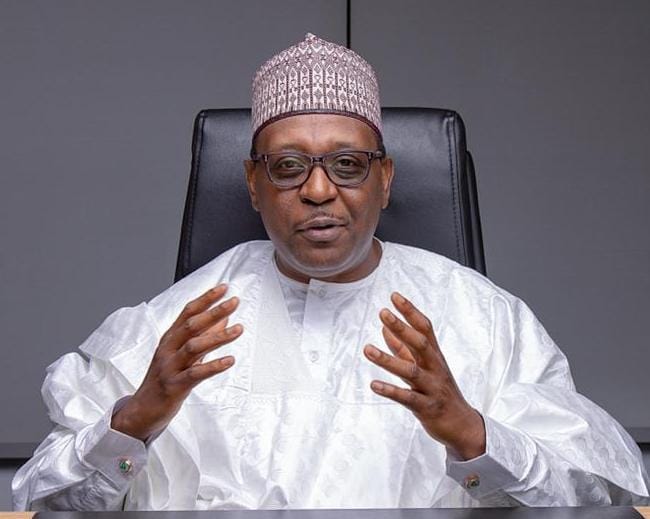
The Minister of Health and Social Welfare, Prof. Muhammad Ali Pate, who spoke to newsmen in Abuja, said the patient’s condition had improved, with laboratory results approaching baseline levels, but stressed that public health precautions and containment measures remained in place.
Pate explained that an improvement in a patient’s clinical condition does not automatically mean the risk of transmitting the virus has ended.
“Clinical improvement does not necessarily mean that a patient is no longer infectious,” the minister said, emphasising the need for continued vigilance as health authorities sustain efforts to contain the outbreak.
“The patient was reportedly stable, conscious and able to communicate before the evacuation. Her spouse, who has remained asymptomatic, was also evacuated to Switzerland’, Pate said.
The evacuation forms part of the ongoing medical management of the case, as Nigerian health authorities continue surveillance and other public health interventions to prevent further spread of the virus.
The government has maintained that containment efforts remain active, with relevant agencies monitoring contacts and implementing measures aimed at identifying potential infections and limiting transmission.
Health authorities have also continued to stress the importance of adhering to established public health protocols, noting that the patient’s improving condition does not remove the need for precautionary measures.
The government’s position underscores the distinction between a patient showing signs of recovery and the determination of whether the person still poses an infection risk, which must be guided by appropriate clinical and laboratory assessments.
Nigeria is sustaining its response measures as health officials continue to monitor the situation and work to prevent further


HURIWA Condemns Multiple Toll Gates on Keffi–Lafia–Makurdi Highway, Demands Immediate Suspension
By George Mgbeleke The Human Rights Writers Association of Nigeria (HURIWA) strongly condemns the Federal Government’s imposition of multiple toll...

Okpoama Kingdom, Twon Brass women back President Tinubu for second term
By David Owei,Bayelsa The women of Okpoama Kingdom and Twon Brass in Brass Local Government Area of Bayelsa State have...


APC’s Plot to stop Obi from holding Townhall Meeting in Enugu Fails As Residents Stormed venue in their numbers
By Peter Udeh,Enugu The Enugu State chapter of the All Progressives Congress, APC, has reacted to the controversy that trailed...

Americans Vote In 2026 Midterm Elections Today
By Agency Report Millions of Americans are heading to the polls on Tuesday, 3 November, for the 2026 US midterm...

INEC Vows To Remove Barriers Facing Voters With Disabilities In Gombe
By Abubakar Mohammed, Gombe Less than 70 days to January 16,2027 presidential election,the Independent National Electoral Commission (INEC) has pledged...
HURIWA Condemns Political Violence, Demands Security Task Force Ahead of 2027 Elections
By George Mgbeleke Popular civil society body, the Human Rights Writers Association of Nigeria (HURIWA) condemns the growing wave of...

NIDDEMOG caution Sen. Dickson, Gov. Diri, supporters against heating up Bayelsa polity, -seeks peaceful political campaign in Bayelsà
By David Owei,Bayelsa The Niger Delta Development Monitoring Group (NIDDEMOG) has called on the Bayelsa State Governor, Senator Douye Diri...


NDDC Takes Journalists on Media Inspection of 600-Metre Otuogori Bridge Project In Bayelsa
By David Owei, Yenagoa Niger Delta Development Commission ,NDDC, officials took journalists on Monday to inspect the ongoing construction of...

Unguarded Statements by Mr George Turnah MON: A Dishonourable Approach
By Festus Daumiebi Sunday The recent unguarded statements by Mr. George Turnah MON against the person of Governor of Bayelsa...
Unguarded Statements by Mr George Turnah MON: A Dishonourable Approach
By Festus Daumiebi Sunday The recent unguarded statements by Mr. George Turnah MON against the person of Governor of Bayelsa...
-
 Politics1 year ago
Gov Okpebholo moves to end Cultism *Threatens action against leading cult groups *Vows to demolish more cult houses in Edo State
-
 Politics1 year ago
ASUU-NDU protest against FG loans, unpaid salaries,Non-Implementation of agreements …..says loans is generational slavery
-
 Business & Economy1 year ago
PC-NCG Issues Disclaimer on Purported Nigerian Coast Guard National Orientation Exercise In Anambra State
-
 Entertainment2 years ago
Jubilation galore as Parishioners of CKC Kurudu celebrate their cultural heritage ….FG should exploit our Cultural heritage to unite Nigerians-Rev Fr Dim
-

 Sports9 months ago
Bayelsa-born ex-football star’s son, Opuama donates spike shoes to Athletics Association
-

 General News2 years ago
Reps hold public hearing on FMC Ugwuaji Awkunanaw
-
 Law & Crime1 year ago
Legal practitioner raises alarm over threat to his life by CSP Muhammed Abdulkareem
-
 General News2 years ago
Celebration galore as UDA Successfully Elected New Exco ……I will digitalize processes that will raise UDA to greater height -Comr. Okejiri