
Uncategorized
Blue Economy: Sen Imasuen Tasks Littoral States To Harness Marine Potentials, Lauds Bayelsa Model


By David Owei
The Chairman, Senate Committee on Ethics, Privileges and Public Petitions and Senator representing Edo South Senatorial District, Senator Neda Imasuen, has called on governments of littoral states in Africa to show considerable interest in harnessing and developing the blue economy potential in their domains.
Senator Imasuen made the call on Tuesday when a delegation of the Africa Blue Economy Roundtable (ABER), led by its Founder and Convener, Dr. Piriye Kiyaramo, visited him in his office at the Nigerian Senate.
The Senator assured the delegation of his commitment to champion blue economy discourse at the Senate with a view to facilitating engagement with relevant Senate Committees including Marine Transport, Local Content, Judiciary, Human Rights and Legal Matters, NDDC, Science & Technology and Environment, among others. He also accepted to serve as a Patron of ABER.
He noted that with proper planning, the pristine beaches of the Niger Delta could be developed to attract luxury beachfront hotels and other coastal and marine tourism facilities, as is obtainable in America and other Western cities. He commended the Convener and Founder of ABER for the thoughtful initiative and pledged his commitment to Africa’s blue economy advancement.
The Senator also commended the Governor of Bayelsa State, Senator Douye Diri, for his passion for the blue economy, noting that he was the first governor to create a Ministry of Marine and Blue Economy. He called on other littoral states to emulate Governor Diri’s efforts towards developing the blue economy in their respective states.
He further observed that Nigeria’s 853km coastline, with Edo State’s proximity to the Atlantic through its riverine corridor, holds immense opportunities for jobs, food security and climate resilience that remain largely untapped. According to him, littoral states must move beyond oil and deliberately invest in sustainable fisheries, aquaculture, marine transport, blue tourism and mangrove blue carbon.
Commending ABER for its Pan-African push for a Connected, Competitive and Community-Owned Blue Economy, the Senator said the National Assembly is open to legislative frameworks that protect artisanal fishers, enforce the 5-nautical-mile Artisanal Exclusive Zone and ensure women processors own cold chain infrastructure.
Earlier, Dr. Kiyaramo introduced ABER as a flagship initiative of BRACED Tourism Promotion & Development Initiative with presence in the five regions of the African Union plus the Diaspora, with offices in New Jersey and California, USA, and a Liaison Bureau in Abuja.
He decried the Blue Justice Gap in the Gulf of Guinea, noting that over 70% of artisanal fishers go to sea without safety gear. He lamented that West Africa loses $2.3 billion annually to Illegal, Unreported and Unregulated (IUU) fishing, and that over 90% of fisherfolk lack access to legal aid or reporting channels.
Also speaking, the Director of Policy and Advocacy in ABER Women’s Forum, Dr. Mrs. Ezeadili Appolonia Obiageri, and the Director of Communication & Public Affairs, Hajiya Medina Dauda Nadabo, commended Senator Imasuen for his brilliance, towering profile and performance in the National Assembly.

By Emmanuel oko,Asaba
A total of 175 cases of inmates at the Sapele Custodial Centre have been reviewed by the Chief Judge of Delta State, Hon. Justice Tessy Diai, with no inmate discharged or granted bail.
The Chief Judge, who made the disclosure at the Sapele Custodial Centre during the Fourth Quarter Jail Delivery exercise, said 194 cases of inmates were on the main list.
She noted that out of the 194 cases, 53 cases had already been disposed of before the visit, leaving 143 on the main list, in addition to 33 cases on her supplementary list.
Justice Diai said the low number of releases may be due to the number of inmates that have already been convicted.
The Chief Judge commended the Directorate of Public Prosecutions (DPP) and the courts for working hard to ensure that trials are done within the timeline, stressing that if any inmate has a case to answer, the DPP would notify the lower courts.
In his welcome address, the Officer-in-Charge of Sapele Custodial Centre, Mr. O. M. Ugo (DCC), thanked the Chief Judge for her regular visits to custodial centres in the State.
He said such visits have helped to check overcrowding in facilities, especially in Sapele.
Ugo disclosed that Sapele Custodial Centre has a capacity of 293 inmates, but as at today, it holds 318 inmates, consisting of 315 males and 3 females indicating overcrowding by 25 inmates.
Giving a further breakdown, he said 147 are convicted inmates while 171 are unconvicted inmates awaiting trial.
He thanked Justice Diai for her sustained commitment to decongestion and speedy administration of Justice
Uncategorized
UBEC : Sultan Foundation Partner To Tackle Out-Of-School Children Challenge -MoU targets grassroots mobilisation, school enrolment,
By Abubakar Yaro,Kebbi.
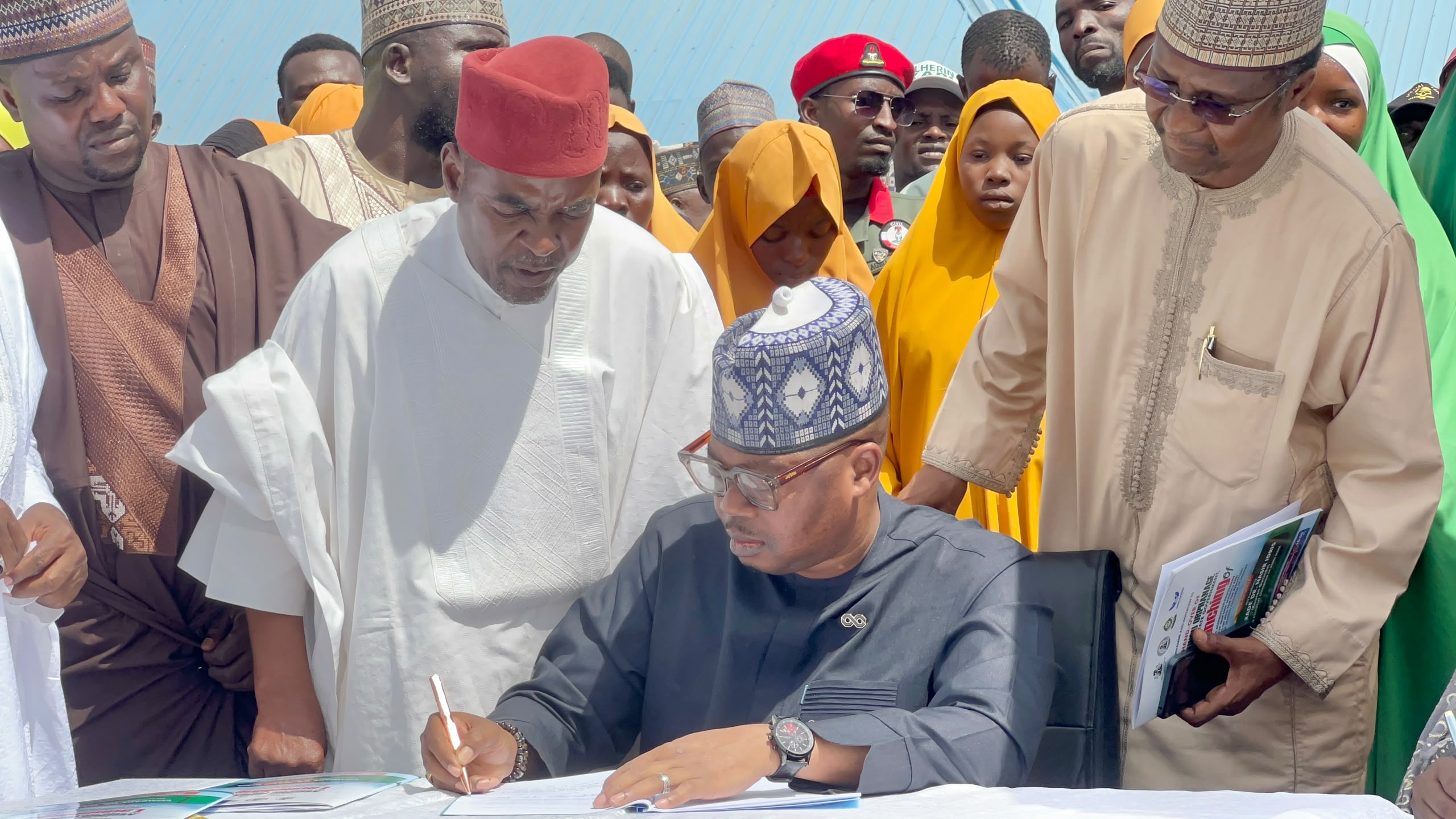
The Universal Basic Education Commission (UBEC) has entered into a strategic partnership with the Sultan Foundation for Peace and Development to mobilise traditional institutions, religious leaders, parents and community stakeholders towards tackling Nigeria’s growing out-of-school children challenge.
The partnership, formalised through a Memorandum of Understanding (MoU) signed in Argungu, Kebbi State, is designed to strengthen grassroots participation in basic education and improve school enrolment, attendance and retention across the country.
The initiative, known as the Advancing Basic Education Partnership Programme (AGE), seeks to leverage the influence of traditional rulers and religious institutions to encourage parents and communities to prioritise formal education, particularly for girls and children from disadvantaged backgrounds.
The agreement was signed by the Sultan of Sokoto, His Eminence, Alhaji Muhammad Sa’ad Abubakar III, on behalf of the Sultan Foundation for Peace and Development, while UBEC’s Deputy Executive Secretary, Dr. Abdulrazaq Akinyemi, signed on behalf of the Executive Secretary, Dr. Aisha Garba.
The partnership aligns with the Federal Government’s Renewed Hope Agenda under President Bola Ahmed Tinubu and reflects efforts to address barriers preventing millions of Nigerian children from accessing basic education.
Under the arrangement, both organisations will collaborate to identify out-of-school children, intensify community sensitisation, promote school enrolment and strengthen mechanisms for monitoring attendance and retention.
A major component of the programme is the integration of Qur’anic and non-formal education pathways into broader basic education strategies, with a view to creating opportunities for children whose educational experiences have largely remained outside the conventional school system.
The initiative will also encourage traditional rulers, religious leaders and community stakeholders to engage parents on the importance of educating their children and ensuring that enrolled pupils remain in school.
As part of efforts to address the economic challenges confronting vulnerable households, UBEC is also implementing interventions that include the provision of educational materials and scholarship opportunities for children from disadvantaged backgrounds.
The measures are intended to reduce the financial and social barriers that often prevent children from enrolling in or completing basic education.
The programme will commence with pilot implementation in Adamawa, Katsina, Sokoto and Osun States, with plans for possible expansion to other parts of the country following an assessment of its implementation and impact.
Speaking on the significance of the partnership, the organisations emphasised the importance of collective responsibility in addressing the out-of-school children crisis, noting that government interventions alone cannot achieve sustainable results without the active participation of parents, communities and traditional institutions.
The involvement of the Sultan Foundation is expected to strengthen community ownership of the initiative, particularly through the traditional and religious leadership structures that play influential roles in shaping public attitudes towards education.
The partnership comes amid continuing national concerns over the number of Nigerian children who are either out of school or unable to complete basic education, with girls and children in vulnerable communities facing additional challenges.
For UBEC, the collaboration represents an effort to move beyond policy commitments by taking education advocacy directly to households and communities where decisions about children’s schooling are made.
Ultimately, the success of the initiative will depend on effective coordination, sustained community engagement and measurable improvements in school enrolment, attendance and retention.
The partnership reinforces the principle that educating Nigerian children is not the responsibility of government alone, but a shared obligation involving traditional institutions, religious leaders, parents and the wider society.
Uncategorized
KIPPF Hails Uba Sani’s 24-Hour C of O Processing, Describes Reform as Landmark Achievement
By Abdullateef Bamgbose
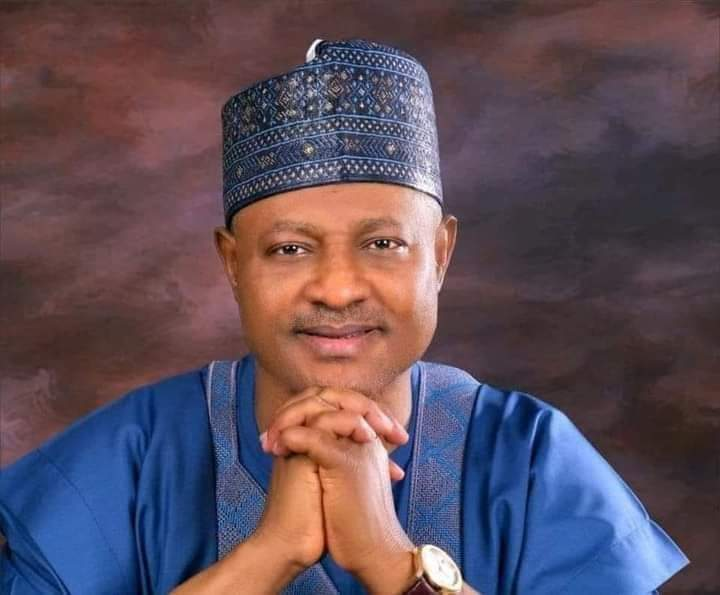
The Kaduna Investment & Public Policy Forum (KIPPF) has commended Governor Uba Sani for introducing a 24-hour processing and execution timeline for Certificates of Occupancy (C of Os), describing the initiative as a major breakthrough in land administration and one of Nigeria’s significant ease-of-doing-business reforms.
The Forum said the initiative had established a new standard for transparency, administrative efficiency and investor confidence, noting that the processing and execution of land title documents within 24 hours, once all statutory requirements have been fulfilled, marked a significant departure from the bureaucratic delays traditionally associated with land documentation.
Speaking at a press conference in Zaria on Wednesday, the Forum’s Director, Engineer Usman Nasir, said Governor Sani’s intervention demonstrated a clear commitment to removing administrative bottlenecks, strengthening property rights and positioning Kaduna State as a more attractive destination for investors, real estate developers and businesses.
Nasir also commended the Director-General of Kaduna Geographic Information Services (KADGIS), Dr Bashir Ibrahim Garba, for providing details of the streamlined procedure and explaining the institutional safeguards introduced to ensure that certificates are processed accurately and efficiently.
It would be recalled that the KADGIS Director-General had recently provided further clarification on the development.
According to Garba, following the acceptance of the grant of Right of Occupancy, perfection of deeds in cases of assignment and payment of all requisite fees, the Certificate of Occupancy is generated at KADGIS.
He explained that the draft certificate undergoes thorough quality checks to eliminate errors commonly found in C of Os issued before May 29, 2023, before it is printed and forwarded to the governor for execution.
Garba said the governor promptly executes and returns the document to KADGIS within 24 hours, after which it undergoes scanning, registration and recording at the Deed Registry before being forwarded to the Conveyance Unit of Customer Service for collection by the owner.
The Forum described the quality-control component as particularly significant, stressing that the reform was not merely about speed but also about accuracy, transparency, accountability and the integrity of land ownership records.
It said predictable and timely access to land documentation would strengthen investor confidence, reduce unnecessary transaction costs, discourage opportunities for bureaucratic exploitation and accelerate property development across Kaduna State.
The Forum added that the reform would particularly benefit businesses and property developers who require reliable land documentation to secure financing, complete transactions and undertake long-term investments.
KIPPF called on other state governments to study Kaduna’s land administration reforms and adopt similarly transparent, technology-driven procedures that would make property ownership and investment less cumbersome for citizens.
The Forum maintained that efficient land administration was a critical pillar of economic development, adding that Governor Sani’s initiative deserved national attention as Nigeria seeks to improve its business environment, attract investment and unlock the economic value of land.


2027 Poll and The Vote Peddlers of Nigeria
By Emmanuel Nnadozie Onwubiko There is one disturbing political practice that the current administration in Nigeria appears to have popularised...


Group Rejects Court’s Judgement Voiding Mark-Led ADC Exco , Atiku’s 2027 Presidential Race,Petition Int Community
By Timothy Obasi, Abuja Unhappy with the judgment by Justice Peter Lifu on the Sen.David Mark’s led National leadership of...

175 cases reviewed, no discharge as Delta Chief Judge visits Sapele Custodial Centre
By Emmanuel oko,Asaba A total of 175 cases of inmates at the Sapele Custodial Centre have been reviewed by the...

UBEC : Sultan Foundation Partner To Tackle Out-Of-School Children Challenge -MoU targets grassroots mobilisation, school enrolment,
By Abubakar Yaro,Kebbi. The Universal Basic Education Commission (UBEC) has entered into a strategic partnership with the Sultan Foundation for...

KIPPF Hails Uba Sani’s 24-Hour C of O Processing, Describes Reform as Landmark Achievement
By Abdullateef Bamgbose The Kaduna Investment & Public Policy Forum (KIPPF) has commended Governor Uba Sani for introducing a 24-hour...


Abia Assembly Passes State Police Bill, Government Clarifies
By Tony Nwafor Contrary to insinuation in some quarter that Abia state Assembly was yet to pass State Police Bill,Abia...

2027: Atiku Urges Kebbi Electorals To Protect Their Voters
By Abubakar Yaro, KEBBI Ahead of 2027 election,Presidential Candidate of the African Democratic Congress (ADC), Alhaji Atiku Abubakar, has called...


Blue Economy: Sen Imasuen Tasks Littoral States To Harness Marine Potentials, Lauds Bayelsa Model
By David Owei The Chairman, Senate Committee on Ethics, Privileges and Public Petitions and Senator representing Edo South Senatorial District,...


Court nullifies David Mark-led ADC leadership, invalidates Atiku’s 2027 presidential ticket
By Godwin Okafor,Abuja Less than 70 days to the upcoming 2027 election the Federal High Court in Abuja has nullified...

LIFU JUDGMENT: APC Wants to Set Nigeria On Fire — Says Sokoto Rally Has Sent Ruling Party Into Panic
By George Mgbeleke The African Democratic Congress (ADC) has described today’s judgment by Justice Peter Lifu of the Federal High...
-

 Politics1 year ago
Gov Okpebholo moves to end Cultism *Threatens action against leading cult groups *Vows to demolish more cult houses in Edo State
-
 Politics1 year ago
ASUU-NDU protest against FG loans, unpaid salaries,Non-Implementation of agreements …..says loans is generational slavery
-

 Business & Economy1 year ago
PC-NCG Issues Disclaimer on Purported Nigerian Coast Guard National Orientation Exercise In Anambra State
-

 Entertainment2 years ago
Jubilation galore as Parishioners of CKC Kurudu celebrate their cultural heritage ….FG should exploit our Cultural heritage to unite Nigerians-Rev Fr Dim
-

 Sports9 months ago
Bayelsa-born ex-football star’s son, Opuama donates spike shoes to Athletics Association
-

 General News2 years ago
Reps hold public hearing on FMC Ugwuaji Awkunanaw
-

 Law & Crime1 year ago
Legal practitioner raises alarm over threat to his life by CSP Muhammed Abdulkareem
-

 General News2 years ago
Celebration galore as UDA Successfully Elected New Exco ……I will digitalize processes that will raise UDA to greater height -Comr. Okejiri