
Uncategorized
ELECTIONEERING CAMPAIGNS AND SUBTLE DICTATORSHIP

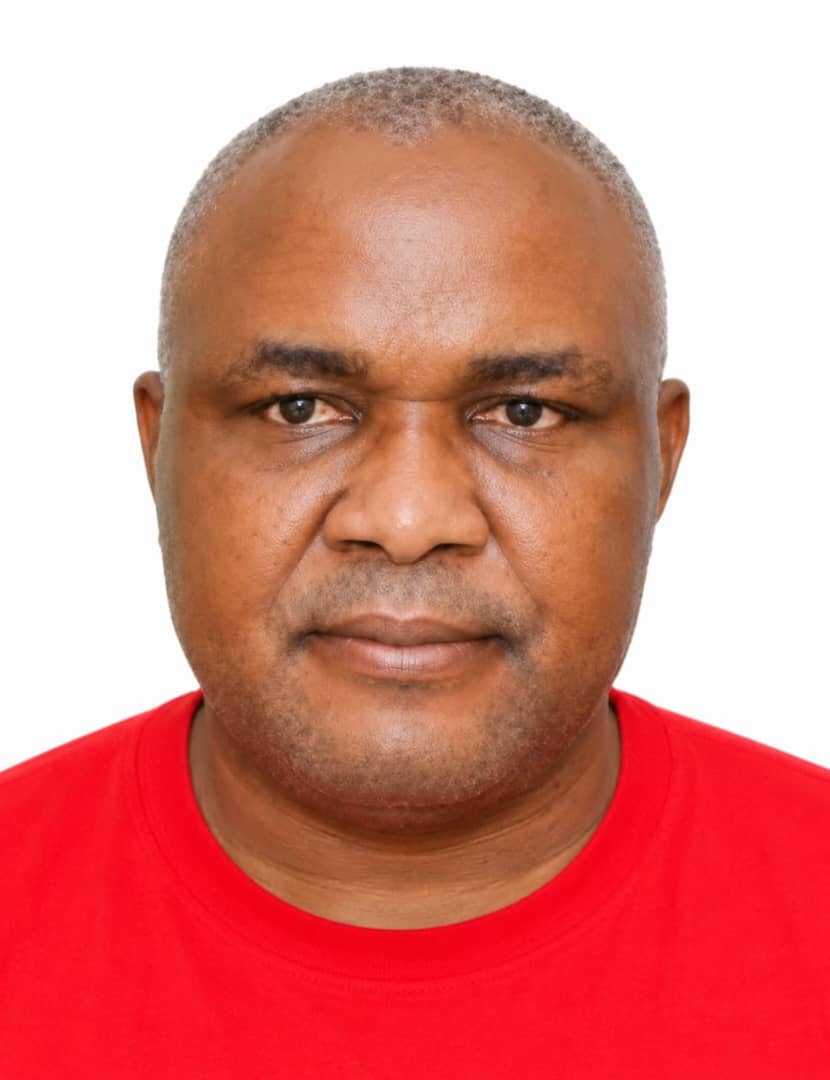
By Emmanuel Nnadozie Onwubiko
As preparations intensify for the January 16, 2027 presidential election, political parties and various interest groups are traversing different parts of Nigeria, canvassing for public support and seeking the commitment of eligible voters ahead of the forthcoming general elections. These campaigns are particularly important for the presidential, National Assembly and governorship elections. The second phase of the elections, involving governorship and State House of Assembly contests, is scheduled for February 6, 2027.
There are, however, growing concerns over a disturbing combination of violent confrontations, political intimidation and subtle authoritarian practices involving hotels and other privately owned event centres in the Federal Capital Territory and across the 36 states of the federation. These developments are increasingly constituting serious obstacles to the democratic process and undermining the possibility of peaceful, free and fair campaign activities by accredited political parties and their candidates.
Perhaps the most disturbing dimension of these developments is the perceived failure of the security institutions to demonstrate sufficient independence, professionalism and impartiality in addressing election-related violence, particularly attacks allegedly coordinated against opposition politicians and their supporters.
Although the Nigeria Police Force and the Department of State Services (DSS) operate within the executive arm of government, their statutory responsibilities must be discharged in accordance with the law, without political interference or improper influence. The fact that the heads of these institutions are appointed through constitutionally recognised executive processes does not diminish their obligation to uphold the law impartially.
These security institutions derive their authority from established legal frameworks that prescribe their responsibilities and regulate the conduct of their personnel. Their fundamental obligations include maintaining law and order, protecting the lives and property of citizens, safeguarding national security and stability, and preserving Nigeria’s territorial integrity.
The apparent absence of sufficient political will on the part of the incumbent president, who is also seeking re-election, to guarantee the independence and impartiality of security institutions has become a matter of serious public concern. Allegations of political desperation to retain power beyond the 2027 election have further intensified these concerns.
The consequences are potentially dangerous. When political actors and their supporters begin to believe that individuals who engage in violence against opposition politicians will enjoy political protection, the rule of law becomes seriously compromised. Such an atmosphere can embolden armed political thugs and undermine the confidence of citizens in democratic institutions.
Those entrusted with the leadership of security agencies must therefore demonstrate institutional courage, comply with due process and refuse to execute unlawful directives. They must not permit themselves to become instruments for actualising the political ambitions or personal interests of individuals occupying positions of power.
A 2022 human rights report on Nigeria published by the United States Department of State provides useful background on the institutional responsibilities of the country’s security agencies. The report states:
NIGERIA 2022 HUMAN RIGHTS REPORT – UNITED STATES DEPARTMENT OF STATE
“The Nigeria Police Force, which reports to the Ministry of Police and is overseen by the Police Service Commission, is the primary civilian law enforcement agency and enjoys broad jurisdiction throughout the country. The Ministry of Interior also conducts security and law enforcement activities. The Department of State Services, which reports to the national security advisor in the Office of the President, is responsible for counterintelligence, internal security, counterterrorism, and surveillance, as well as protection of senior government officials. The Nigerian Armed Forces, which reports to the minister of defense, also shares domestic security responsibilities in the case of insufficient capacity and staffing of domestic law enforcement agencies or as ordered by the president. Many states, in response to increased violence, insecurity, and criminality that exceeded the response capacity of government security forces, utilized local ‘security’ vigilante forces. These local forces usually reported to the state governor. Civilian authorities did not always maintain effective control over the security services. There were reports members of the security forces committed numerous abuses.”
The report reinforces the importance of effective civilian oversight, institutional accountability and the protection of citizens from abuses by security personnel.
Similarly, the Nigerian Constitution establishes the protection of citizens as a fundamental responsibility of government. Section 14(2)(b) of the Constitution of the Federal Republic of Nigeria 1999 (as amended) provides that the security and welfare of the people shall be the primary purpose of government.
This constitutional obligation must inform the conduct of security agencies throughout the electioneering period. Political parties and their candidates are entitled to campaign peacefully, without intimidation, discrimination or violence. Their supporters must also enjoy the protection of the law, irrespective of their political affiliations.
It is therefore deeply disappointing that the Nigeria Police Force, the Department of State Services, the Nigeria Security and Civil Defence Corps and, where constitutionally and legally appropriate, other security institutions have not sufficiently demonstrated their capacity to prevent or effectively respond to the growing incidents of politically motivated violence.
CONVOY OF OPPOSITION LEADER PETER OBI ATTACKED DAYS AFTER OM OYELE SOWORE INCIDENT IN EKITI
The convoy of Nigerian opposition politician and presidential hopeful Peter Obi, the presidential candidate of the Nigeria Democratic Congress (NDC) and former governor of Anambra State, reportedly came under attack in Cross River State. The police subsequently announced the arrest of a suspect in connection with the incident.
The attack reportedly occurred on Wednesday, shortly after Obi and his entourage visited the palace of the Obong of Calabar, the traditional ruler of the city, while travelling to a town hall meeting organised by his party.
According to media reports, the attackers, armed with machetes and sticks, hurled stones and other objects at the vehicles, smashing windscreens and causing panic among supporters, traders and other residents in the vicinity.
Following widespread public condemnation of the incident, the Cross River State Police Command announced the arrest of a 27-year-old suspect identified as Victor Edet Yellow Duke. The police also indicated that investigations were ongoing.
The incident is particularly disturbing because it followed another reported attack involving the presidential hopeful of the African Action Congress (AAC), Omoyele Sowore, in Ekiti State.
International media reports have linked the increasing political tension to preparations for the 2027 general elections, in which President Bola Ahmed Tinubu is seeking a second term under the platform of the ruling All Progressives Congress (APC).
Meanwhile, prominent opposition figures, including former Vice President Atiku Abubakar and Peter Obi, have presented competing political proposals addressing insecurity, economic hardship and governance challenges.
Nigeria has a troubling history of election-related violence, including attacks on political supporters, intimidation of candidates and clashes between rival political groups. The forthcoming elections must not become another opportunity for the normalisation of political violence.
Beyond the violence allegedly targeting opposition politicians, another disturbing development is the apparent unwillingness of some state governments and public authorities to guarantee a level playing field for all political parties.
Some state administrations and public authorities have been accused of introducing policies and taking administrative decisions that could restrict opposition parties’ access to public spaces and privately owned facilities for lawful political activities.
In Anambra and Abia states, as well as the Federal Capital Territory under the administration of Minister Nyesom Wike, concerns have been raised about financial requirements and restrictions affecting political campaign activities. Among the allegations is the demand for as much as N150 million for a single campaign billboard.
The FCT Minister has also been accused, although these allegations require independent verification, of directing hotels and event centres not to make their facilities available for political town hall meetings and campaign activities organised by parties other than the ruling APC.
If substantiated, such practices would raise serious questions about the protection of political freedoms, the rights of private businesses to operate independently and the government’s obligation to facilitate an environment in which all political parties can participate in the democratic process.
SOKOTO GOVERNMENT SEALS OFF ADC CAMPAIGN OFFICE
The Sokoto State Government appears to have taken the controversy surrounding opposition political activities a step further by announcing the sealing of an office belonging to the African Democratic Congress (ADC).
The Commissioner for Lands and Housing, Barrister Nasiru Dantsoho, who announced the decision last Monday, explained that the government acted to protect lives and property following a disturbance involving party supporters and alleged miscreants.
According to Dantsoho, the government reviewed the available documentation relating to the property and discovered that it originally belonged to the defunct Savannah Bank. He maintained that there had been no officially documented change of ownership.
The commissioner further disclosed that the state government had written to the Nigeria Deposit Insurance Corporation (NDIC), which he described as the custodian of the property, seeking clarification regarding its current ownership. However, he said the government had yet to receive a response.
He stated:
“Following a review of the certificate of occupancy and other relevant documents, we discovered that this property belongs to the Savannah Bank, and that ownership has not changed as of today.
“We have written to the NDIC, the custodian of this building, to clarify its present ownership, but we are yet to receive a response.”
The commissioner explained that the government decided to seal the premises pending clarification from the NDIC, insisting that the measure was necessary to prevent further disturbances and safeguard lives and property.
He also appealed to anyone claiming ownership of the building to submit the relevant documents for verification and proper documentation, after which the property could be released to its rightful owner.
Dantsoho maintained, however, that the premises would remain under the control of the state government until the ownership dispute was resolved. He warned that anyone attempting to forcefully gain access to the sealed premises would face appropriate legal consequences, including prosecution.
This development comes amid heightened political tension in Sokoto State following allegations of attacks involving ADC supporters and operatives of a state-owned security outfit.
The controversy has also extended to the Department of State Services, following allegations by the ADC that armed political thugs were being sponsored by the security agency.
The DSS has challenged the presidential candidate of the ADC and former Vice President, Atiku Abubakar, to provide credible and conclusive evidence supporting the allegation.
It must be acknowledged that the current Director-General of the DSS, Mr Oluwatosin Adeola Ajayi, appointed by President Tinubu on August 26, 2024, has undertaken certain initiatives which the agency has presented as evidence of its commitment to due process, discipline and professionalism.
The Director-General has reportedly ordered an investigation into the allegations made by the ADC. This is a welcome step, but it should not be the end of the matter.
An independent, impartial and credible investigation is necessary to establish the veracity or otherwise of the allegations against the DSS and its personnel. Equally important is the obligation of the agency to demonstrate transparency and accountability in addressing concerns raised by political parties and members of the public.
No security institution should be above scrutiny, particularly during an election period when public confidence in its impartiality is indispensable.
NDC ACCUSES APC OF PRESSURING ABUJA HOTELS TO DENY IT CAMPAIGN VENUES
Another disturbing manifestation of what opposition parties describe as subtle authoritarianism is the allegation by the Nigeria Democratic Congress that the ruling All Progressives Congress has been pressuring hotels in Abuja to deny the opposition party access to their facilities.
In a statement issued on Thursday, the NDC National Publicity Secretary, Osa Director, alleged that attempts to constrict the democratic space and silence opposition voices were becoming increasingly pronounced.
Director claimed that Rockview Hotel had cancelled the party’s bookings on two occasions after initially agreeing to provide facilities for its meetings.
According to him, the first incident occurred in June 2026, when the hotel allegedly withdrew its approval for the party’s second National Executive Committee meeting at the last minute.
“The NDC has not just been a target of violent attacks by agents of the ruling and ruinous APC, it has become a soft target of discrimination by hoteliers and the hospitality industry in Abuja,” the statement read.
The party further alleged:
“On two occasions, Rockview Hotel in Abuja, after agreeing to the use of their facilities for our meetings without genuine excuse, cancelled the grant at the last minute of negotiation.
“The first time it happened was when, at the last minute, they rejected our request to hold our 2nd NEC meeting in June 2026.
“Only recently, they refused our utilisation of their facilities for a meeting, saying it was an order from above.
“Similarly, the BON Hotel, Wuse, Abuja, bluntly refused our usage of their facilities for a meeting despite meeting all conditions placed on our path.”
Director also alleged that the party’s recent unveiling of its National Campaign Council was almost disrupted after the host hotel requested a refund of the payment already made, indicating that it was no longer willing to provide the venue.
He claimed that the hotel eventually allowed the event to proceed after the party insisted on using the facility for which it had already paid.
The NDC spokesperson maintained that Nigerians deserved better and that the party remained committed to serving the country with patriotism and dedication.
“This is not democracy. The APC should allow all parties to campaign without let or hindrance and give Nigerians the opportunity to make their choice on who governs them,” he stated.
He also appealed to Nigerians and supporters of democratic governance to call out Rockview Hotel and BON Hotel over what the party described as anti-democratic conduct.
These allegations deserve serious examination. Although private hospitality businesses have legitimate commercial interests and are entitled to make independent business decisions, no business should be subjected to political intimidation or coercion. Equally, political parties must be able to access commercial facilities on lawful and non-discriminatory terms.
If hotels are being pressured by political actors or public officials to deny facilities to opposition parties, the implications for democratic participation would be profoundly troubling.
THE JUDICIARY AND THE DANGER OF EXECUTIVE INTERFERENCE
The administration of President Tinubu has also faced allegations of excessive use of executive authority and interference with the independence of other arms of government, particularly the judiciary.
At the heart of this concern is the constitutional doctrine of separation of powers, which is embedded in Sections 4, 5 and 6 of the Constitution of the Federal Republic of Nigeria 1999 (as amended).
This doctrine establishes the legislative, executive and judicial arms of government as distinct institutions with constitutionally defined responsibilities. Its central purpose is to prevent the concentration of governmental authority in one institution or individual and to ensure that each arm operates within its constitutionally prescribed boundaries.
However, allegations of political interference in judicial proceedings, particularly disputes involving opposition political parties, have raised questions about whether this constitutional safeguard is being adequately respected.
There are concerns that certain judicial proceedings before the Federal High Court, particularly its Abuja Division, have become entangled in controversial disputes over the leadership and internal organisational structures of major opposition parties.
Critics contend that such proceedings could weaken opposition parties, disrupt their organisational structures and undermine their capacity to participate effectively in the forthcoming elections.
Of particular concern are allegations that some judicial decisions are being exploited to create political instability within opposition parties, thereby diminishing their capacity to challenge the ruling APC and President Bola Ahmed Tinubu.
These are serious allegations which must be approached with caution and supported by verifiable evidence. Nevertheless, the broader constitutional question remains important: should judicial proceedings be allowed to become instruments for destabilising political parties, particularly at a critical moment in the electoral process?
One particularly controversial development concerns the reported decision of a Federal High Court judge to set aside the processes leading to the emergence of the ADC’s leadership and the nomination of former Vice President Atiku Abubakar as its presidential candidate.
The timing and implications of this decision have generated considerable controversy, particularly because the presidential election is approaching.
NIGERIAN COURT CONTROVERSIALLY VOIDS CANDIDACY OF OPPOSITION ADC’S ATIKU FOR 2027 ELECTION
The Federal High Court reportedly delivered a judgment on Thursday nullifying the processes through which the leadership of the African Democratic Congress emerged, as well as the nomination of former Vice President Atiku Abubakar as the party’s presidential candidate for the January 2027 election.
The suit was reportedly instituted by Nafiu Bala Gombe, a former national deputy chairman of the ADC, who challenged the legitimacy of the process that produced the party’s leadership, arguing that its officials had not been elected through a national convention.
The court reportedly set aside the processes leading to the emergence of the party’s executive leadership and the subsequent nomination of Atiku Abubakar as its presidential candidate.
The ADC rejected the decision, describing it as a politically motivated attempt to weaken the opposition following the party’s campaign activities in Sokoto State. The party indicated that it would challenge the judgment at the Court of Appeal.
The party’s spokesperson, Bolaji Abdullahi, was quoted as saying:
“We have seen this script before. When they are scared that the opposition is gathering steam, they use their judges in the courts to influence legally indefensible judgments.”
The controversial judgment reportedly came days after President Bola Tinubu formally launched his re-election campaign in Kaduna State, where he sought to convince voters that his administration’s economic reforms were beginning to yield results despite persistent economic hardship and the rising cost of living.
According to Reuters, Nigeria has experienced only one electoral defeat of an incumbent president since the return to democratic rule in 1999. That historic development occurred in 2015, when former President Goodluck Jonathan conceded defeat to the late Muhammadu Buhari following the consolidation of opposition political forces.
Atiku Abubakar, who served as vice president between 1999 and 2007, was the runner-up in the previous presidential election. His emergence as the ADC presidential candidate in May was expected to mark his seventh attempt at securing the presidency.
Together with Peter Obi, who finished third in the last presidential election, Atiku had been regarded as one of the leading opposition figures capable of mounting a significant challenge against the incumbent president.
The reported court decision therefore raises important questions about the relationship between electoral justice, internal party democracy and the constitutional protection of political participation.
There is also an important legal question concerning the extent to which the courts may intervene in the internal affairs of political parties, particularly in light of the relevant provisions of the Electoral Act 2026 and existing judicial authorities.
The Supreme Court has, in various decisions, addressed the limits of judicial intervention in the internal affairs of political parties. The precise legal implications of those decisions, however, must be examined alongside the applicable statutory provisions and the particular circumstances of each case.
It is essential that the judiciary remain independent, impartial and conscious of the potential consequences of its decisions for democratic stability.
ELECTORAL ACT 2026 LIMITS COURTS FROM ENTERTAINING SUITS ON INTERNAL PARTY AFFAIRS
For many years, disgruntled politicians have frequently approached the courts to resolve internal political party disputes, ranging from leadership disagreements to disagreements over the nomination of candidates.
Political analysts have argued that this litigation-prone culture has, on several occasions, influenced electoral outcomes and destabilised the democratic process.
The Electoral Act 2026 reportedly introduces provisions intended to restrict judicial interference in the internal affairs of political parties.
Specifically, Section 83(5) of the Electoral Act 2026 states:
“No court in Nigeria shall entertain jurisdiction over any suit or matter about the internal affairs of a political party.”
Subsection 6 further provides that where an action is instituted in violation of the Act, no interim or interlocutory injunction shall be entertained. Instead, the court is required to reserve its ruling until the final judgment and accord the matter accelerated hearing.
The legislation also introduces financial penalties intended to discourage frivolous litigation against political parties.
Section 83(6)(b) reportedly provides for a minimum cost of N10 million against the lawyer who instituted the suit and the plaintiff or applicant. It also provides for the recovery of expenses incurred by the electoral commission, including solicitors’ fees, where the commission is joined as a party.
Furthermore, Section 88(4) expressly provides that nothing in the relevant section empowers the courts to stop the conduct of party primaries or general elections pending the determination of a suit.
The provision states:
“Nothing in this section shall empower the courts to stop the holding of primaries or general elections under this Act pending the determination of a suit.”
These provisions raise an important question: why are courts, particularly the Abuja Division of the Federal High Court, continuing to feature prominently in politically consequential disputes involving opposition political parties?
The answer may lie partly in institutional weaknesses, the susceptibility of public institutions to political pressure and the failure to enforce sufficiently strong accountability mechanisms within the judicial system.
The judiciary must be conscious of its constitutional responsibility to protect the rule of law rather than become entangled in political struggles.
The National Judicial Council (NJC), a constitutionally established institution responsible for important aspects of judicial administration and discipline, also has a significant role to play in safeguarding judicial integrity.
Where credible evidence of misconduct, professional impropriety or abuse of judicial authority emerges, the NJC must demonstrate the willingness and institutional capacity to investigate such allegations and take appropriate disciplinary action.
The credibility of the judiciary depends not merely on the existence of constitutional provisions but also on the willingness of judicial institutions to enforce ethical standards and protect the independence of the courts.
It would be dangerous for Nigerians to lose confidence in the judiciary because of the perception that judicial decisions are being used to advance partisan political interests.
CONCLUSION: NIGERIA MUST ARREST THE DRIFT TOWARDS AUTHORITARIANISM
Conclusively, the growing perception among sections of the Nigerian public that the country is experiencing an emerging form of authoritarianism is a development that deserves serious national attention.
The concern is that the three arms of government may not be exercising their constitutionally prescribed responsibilities with sufficient independence, thereby creating an atmosphere in which executive authority becomes excessively dominant.
This concern is fundamentally connected to the weakening of the doctrine of separation of powers, which is one of the pillars upon which Nigeria’s constitutional democracy rests.
A legal scholar, Osi Chinenyenwa Ugonna, has provided a concise examination of the doctrine of separation of powers and its significance for democratic governance. One important lesson that can be drawn from this scholarly contribution is that the failure to enforce the separation of governmental powers can facilitate authoritarianism and undermine the constitutional freedoms guaranteed to citizens.
The scholar correctly observes that the doctrine of separation of powers is a fundamental principle of democratic governance designed to prevent the concentration of power in a single branch of government.
By allocating governmental responsibilities among the legislative, executive and judicial branches, the doctrine promotes accountability, institutional efficiency and the protection of individual rights.
The Constitution of the Federal Republic of Nigeria 1999 (as amended) embodies this doctrine by defining the respective powers and responsibilities of the three arms of government in Sections 4, 5 and 6.
However, as Ugonna further observes:
“Despite the constitutional framework supporting this principle, practical challenges such as political interference, institutional conflicts, and abuse of power continue to affect its effective implementation.”
This observation captures one of the fundamental challenges confronting Nigeria’s democratic development.
Unless the president conducts himself primarily as a statesman rather than as a partisan political actor desperate to retain power, the country may struggle to establish the atmosphere of freedom, fairness and institutional independence required for credible elections.
The president must ensure that security agencies discharge their statutory responsibilities without political interference and provide equal protection to all citizens, irrespective of their political affiliations.
The security institutions must also understand that their constitutional and statutory obligations are owed to the Nigerian state and its citizens, not to the political interests of the incumbent administration.
If the president and other political officeholders begin to perceive governmental authority as an instrument for securing political survival at all costs, the consequences for national stability and security could be devastating.
Nigeria must not allow the democratic space to shrink under the weight of political intimidation, institutional compromise and the excessive concentration of governmental authority.
The country must urgently arrest the dangerous drift towards political intolerance, institutional decay and authoritarianism.
Political campaigns must be conducted in a peaceful, lawful and democratic environment. Opposition politicians must be allowed to canvass for votes without intimidation, violence or discriminatory restrictions. Equally, the security agencies, the judiciary and other public institutions must demonstrate that their allegiance is to the Constitution and the Nigerian people.
As I write on November 7, 2026, millions of Nigerians are increasingly concerned that the failure of security institutions to guarantee equal protection for all political actors could trigger a much bigger political conflagration as the presidential election approaches.
The warning signs are already visible. Nigeria cannot afford to ignore them.
A stitch in time saves nine.
EMMANUEL NNADOZIE ONWUBIKO is the founder of the Human Rights Writers Association of Nigeria (HURIWA) and a former National Commissioner of the National Human Rights Commission of Nigeria.
Uncategorized
IPOB Hails Bishop Onah, Says his courageous intervention reinforces its longstanding position on Britain’s colonial legacy
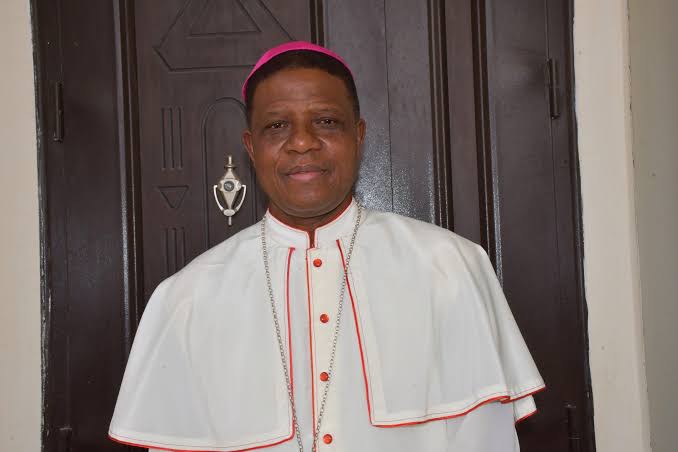
By Anthony Okoye, Anambra
The Indigenous People of Biafra (IPOB), under the supreme leadership of Onyendu Mazi Nnamdi Kanu, on Tuesday issued an urgent and resolute statement in response to the declarations of Bishop Godfrey Onah, saying that his courageous intervention reinforces its longstanding position that Britain’s enduring colonial legacy and subsequent diplomatic posture have profoundly contributed to the structural imbalances.
It also cited historic injustices inflicted upon Biafra and its people, including the continuing persecution of its leader, Mazi Nnamdi Kanu.
The group in a statement by its media and publicity, Secretary, Emma Powerful said that the veil has completely fallen, and the architecture of oppression is laid bare:
The statement read in part, “The Shadow of British Legacy, Legal Subversion, and Algorithmic Warfare: We blame Britain alone for complicity in the criminal abduction of Onyendu in Kenya and his extraordinary rendition to Nigeria, the blatant disregard for United Nations calls for Mazi Nnamdi Kanu’s release, the brazen disobedience of appellate court discharges, the legally impossible conviction on repealed laws, and the reliance on harsh legal measures.
“These actions reflect a direct continuity of British geopolitical strategies born out of the 1967 civil war era—where foreign economic interests prioritized state survival over justice.
“Furthermore, Britain’s complicity extends into digital and media warfare: a simple search for “Nnamdi Kanu” on global search engines like Google reveals an overwhelming dominance of biased, anti-Nnamdi Kanu propaganda generated by the British Broadcasting Corporation (BBC) and Western allies, systematically burying the truth, silencing the atrocities against Biafrans, and shaping a false public narrative to justify his unlawful treatment.
“The Sokoto Transfer and the Failed Political Mind Games: The political maneuvering surrounding Onyendu’s trial, sentencing, and subsequent transfer to Sokoto Prison was a calculated Yoruba led-APC ploy to deliver our leader to the Caliphate as an ethnic trophy in a desperate bid to secure Northern votes against candidates like Alhaji Atiku Abubakar.”
IPOB however stressed that the strategy has backfired spectacularly, noting that discerning Fulani leaders and the Northern populace are deeply incensed, openly rejecting being used as props in such childish, desperate political mind games while the economy and nation collapse.
While exposing Judicial Compromise and the Omotosho Precedent, IPOB said that though respected figures like Bishop Onah have rightly diagnosed the historic scale of foreign exploitation, that blockade, and military violence have kept the South-East region and by implication entire Nigeria subjugated.
It urged the public to recognize the biased judicial narrative.
The group added, “Justice Omotosho’s courtroom claims that Onyendu “hates the North with a passion” are deliberate distortions. Any person intimate with Mazi Nnamdi Kanu’s broadcasts will testify that he does not hate any ethnic group; he fights strictly against a corrupt, neo-colonial structure designed to trade the blood and resources of the masses for elite political survival.
“Our Stand: The courage demonstrated by Bishop Onah represents just the tip of the iceberg in terms of the overwhelming groundswell of support for the peaceful emancipation of Biafra, championed tirelessly by Onyendu Mazi Nnamdi Kanu.
“To make matters worse, despite Onyendu holding British citizenship, the British government has chosen a path of active media suppression, diplomatic silence, and inaction, effectively looking away while his fundamental rights are ignored. No amount of search engine manipulation, judicial blackmail, political horse-trading, or international collusion will stop the ultimate triumph of justice.”

By George Mgbeleke
The Senate on Tuesday at plenary declared a donation of N100 million to Nigeria’s Under-17 women’s national football team, the Flamingos, following their historic victory at the FIFA U-17 Women’s World Cup in Rabat, Morocco.
The Senate President announced the donation while presiding over a motion moved by Sen. Abdul Ningi ( ADC Bauchi Central) on the need to congratulate the team on its achievement.
Ningi described the victory as historic, noting that the young players had achieved what several other Nigerian national teams had struggled to accomplish.
He said the team’s triumph was particularly remarkable, given the limited expectations surrounding the players before the competition.
The senator expressed concern that the achievement had not received adequate publicity and national recognition, adding that the players deserved to be celebrated for bringing honour to Nigeria and Africa.
He also expressed concern that the team did not receive sufficient official recognition upon its arrival in the country.
Seconding the motion,
Sen. Adams Oshiomhole (APC Edo North) commended the team for defeating Japan in the final, describing the victory as evidence of the potential and determination of Nigerian youths.
Oshiomhole urged Nigerians to appreciate the country’s achievements rather than constantly focus on its challenges.
He also appealed to the Senate leadership to make a donation to the team to support the players’ educational needs alongside their sporting careers.
The Senate thereafter adopted Ningi’s prayers congratulating President Bola Tinubu for his support for sports development, Nigerians on the historic victory, and the leadership of the National Sports Commission, particularly its Chairman, Shehu Dikko.
It also urged the federal government to provide adequate compensation and rewards for the players in recognition of their achievement.
Senate President, Godswill Akpabio, in his remarks, said the victory was a significant achievement for Nigeria and Africa, particularly as the Flamingos defeated football nations, including Brazil and Japan.
Akpabio urged the federal government to adequately reward the players and called on the Nigeria Football Federation (NFF) to sustain the team and continue developing the players for future competitions.
The Senate President also appealed to wealthy and sports-loving Nigerians to support the players and encourage other young people to participate in sports.
He noted that the N100 million donation by the National Assembly was intended to recognise the players’ achievement and encourage them to continue bringing honour to the country.
“I want to commend the Flamingos, the Under-17 youth team of Nigeria, for defeating major countries such as Brazil and Japan to win the Under-17 World Cup for Africa for the first time and for Nigeria.
“We also urged, and we pray that the federal government will recognise these children accordingly and give them adequate rewards.
“The Nigerian Football Federation, under its leadership, should see the need to keep these children together and develop them further,” Akpabio said.
He congratulated the players, the Senate Committee on Sports and all Nigerians on the historic victory.
Uncategorized
Senate Alerts Aviation Administrators of Impending Air Disaster * Summons NCAA, NAMA, FAAN other relevant stakeholders for an emergency meeting …..As Ningi recounts 2½-hour ordeal ..
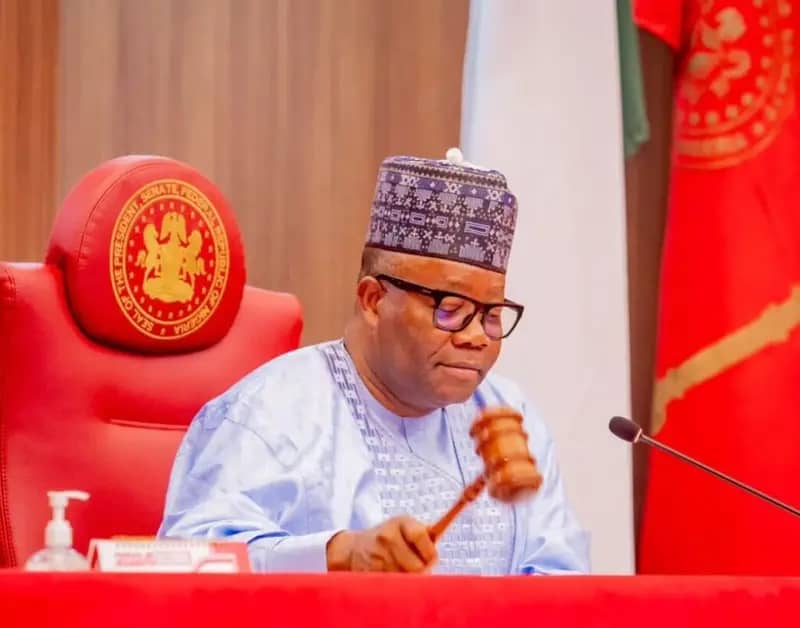
By George Mgbeleke
The Senate has raised serious concerns over the growing practice of suspending commercial aircraft landings and restricting airport operations to accommodate movements of Very Important Personalities (VIPs), warning that the practice could trigger an avoidable aviation disaster if urgent measures are not taken.
The upper chamber expressed concern that commercial aircraft, some of which have already taken off and are approaching their destinations, are sometimes forced to remain airborne for extended periods because of VIP movements and security-related restrictions.
Lawmakers warned that keeping passenger aircraft in holding patterns for up to an hour or longer could expose passengers and crew members to unnecessary risks, including fuel depletion, adverse weather conditions, air traffic congestion and other operational emergencies.
The concerns formed the basis of an urgent motion moved by Senator Jibrin Isa, Kogi East which subsequently called for improved coordination among aviation regulatory agencies and security authorities to prevent commercial aircraft from being exposed to avoidable risks.
The Senate acknowledged the importance of security arrangements for the President and other designated public officials but insisted that such privileges must not be exercised at the expense of passenger safety.
As part of its resolutions, the Senate urged the Nigerian Civil Aviation Authority (NCAA), Nigerian Airspace Management Agency (NAMA) and Federal Airports Authority of Nigeria (FAAN) to ensure proper advance coordination and notification of planned airspace restrictions to airline operators.
It further directed that where such restrictions are unavoidable, aircraft yet to depart should be held on the ground, while departure schedules and flight sequencing should be adjusted accordingly, rather than allowing aircraft to take off only to be kept circling in the air.
The Senate also mandated its Committee on Aviation to engage the relevant aviation authorities to ensure strict compliance and report back to the chamber within two weeks.
Contributing to the debate, Senator Dike Plang, representing Plateau Central, drew from his professional experience in the aviation industry to explain the dangers associated with poor flight scheduling and airspace management.
Plang disclosed that he worked with Kabo Air in 1996 as a station manager in Kano and Saudi Arabia, where he received training in ground operations.
He explained that aviation operations depend heavily on accurate timing and coordination, stressing that airlines and airport authorities should be adequately informed about planned VIP movements before commercial flights are cleared for departure.
According to him, it amounts to poor operational management to allow an aircraft to take off for a particular destination when authorities already know that another movement will prevent it from landing at the scheduled time.
He maintained that flight departures and arrivals must be properly coordinated to avoid unnecessary delays and potential emergencies.
The senator also noted that although aircraft are required to carry sufficient fuel to reach alternative airports in emergencies, such provisions should not become an excuse for poor planning by aviation authorities.
He warned that the growing number of private and government aircraft operating within the country’s airspace makes effective coordination even more important.
Plang called on the NCAA and FAAN to take decisive steps towards ensuring proper management of airport operations and airspace usage.
Senator Abdul Ningi, representing Bauchi Central, expressed frustration over what he described as the persistent failure of aviation authorities to protect the interests of ordinary air travellers.
Ningi declared that Nigeria was increasingly operating like a lawless country, arguing that passengers had become accustomed to unexplained flight delays and disruptions associated with VIP movements.
Recounting a personal experience, the senator disclosed that he recently boarded a flight from Kano that was scheduled to last approximately 40 minutes but ended up spending about two and a half hours in the air because of VIP-related restrictions.
He said the experience was particularly disturbing because passengers were left frustrated and angry, with many directing their complaints at the government and the National Assembly.
Ningi argued that responsibility should not rest solely with the NCAA, NAMA and FAAN, insisting that the National Assembly must also accept responsibility for failing to adequately supervise the agencies.
He criticised the aviation regulators, alleging that their effectiveness was more visible in official statements and on paper than in the actual experiences of passengers.
The senator also condemned the disparity in the treatment of airlines and passengers, observing that travellers could be denied boarding for arriving just a minute late, while airlines could keep passengers waiting for five or seven hours without adequate explanations or apologies.
Expressing concern over the approaching harmattan season, Ningi warned that poor coordination and prolonged delays could increase the risk of an aviation emergency.
He therefore called for the heads of NCAA, NAMA and FAAN to appear before the Senate Committee on Aviation, insisting that the leadership of the Senate should also be involved in the engagement.
Senate President Godswill Akpabio whose contribution centred on his personal experience as an air traveller, narrated how passengers were once stranded inside a bus for approximately three hours because of VIP movements.
Akpabio disclosed that passengers had already been transported from the airport terminal towards their aircraft when the bus was suddenly stopped, leaving them sweating inside for hours.
He said that, being a former governor himself, he had to conceal his identity and avoid eye contact with other passengers who were expressing anger and raining abuses on government officials over the delay.
He also raised concerns about what he described as poor coordination between airport authorities and the Presidency during presidential movements.
According to him, airports and airspace are sometimes restricted long before the President actually departs, resulting in prolonged disruptions to commercial flight operations.
He suggested that the President might not even be aware of the extent of the disruption caused to other travellers by the security arrangements.
In describing the vulnerability of air travellers, he reportedly referred to an aircraft as a “flying coffin”, stressing that passengers and crew members remain exposed to danger until the aircraft safely lands.
He further explained that commercial aircraft are expected to carry adequate reserve fuel to enable them to divert to alternative airports when landing at their intended destinations becomes impossible.
However, he raised concerns about allegations that some airline operators compromise on fuel requirements in an attempt to maximise passenger capacity.
Senate President Godswill Akpabio also recalled an aviation disaster allegedly linked to fuel exhaustion following a prolonged inability to land because of VIP-related restrictions.
He argued that the circumstances surrounding such incidents must be carefully examined to prevent a recurrence.
While acknowledging the need for presidential security, he maintained that airport closures should be properly timed and coordinated, rather than imposed unnecessarily long before the movement takes place.
He also called for all relevant authorities to sit together and develop a workable arrangement that protects both VIP security and the safety of commercial passengers.
In a further contribution, Senator Neda Emasuen, representing Edo South, introduced an amendment seeking to strengthen the Senate’s position on the management of commercial aircraft during unavoidable airspace restrictions.
Emasuen urged the NCAA, NAMA, FAAN and other relevant authorities to ensure that aircraft operators make adequate arrangements for alternative airports where emergency diversion becomes necessary.
His position was that commercial aircraft that have already taken off should not be left circling in the air indefinitely while waiting for restricted airspace to reopen.
Instead, such aircraft should be directed to suitable alternative airports where they can land safely and await clearance to continue their journeys.
The amendment, which was seconded by Senator Kaka Shehu Lawan, representing Borno Central, was incorporated into the Senate’s deliberations.
The proposal reinforces the need for aviation authorities and airline operators to prioritise safe diversion procedures whenever the intended destination becomes temporarily inaccessible.
Ruling on the matter, Senate President Godswill Akpabio described the situation as a serious safety concern that required immediate collective intervention.
He warned that failure to address the problem could result in what he described as an “avoidable accident that is waiting to happen if nothing is done.”
Akpabio observed that the matter would be better resolved through a coordinated meeting involving all relevant stakeholders rather than relying solely on general directives.
He consequently directed the Chairman of the Senate Committee on Aviation to immediately convene a meeting with the relevant aviation authorities to examine the situation and agree on practical solutions.
The Senate President also called for clarification on the number of VIP movements for which airports and airspace are routinely restricted.
He observed that, apart from the President, the Senate was not aware of any other category of VIPs entitled to such extensive airport restrictions, adding that Nigerians deserved to know if the practice had been extended to other public officials.
During the deliberations, however, a senator pointed out that the Vice-President was also entitled to similar privileges under the relevant presidential security arrangements.
Akpabio stressed the need for the proposed engagement to establish clear operational guidelines and ensure that VIP movements no longer create unnecessary risks for commercial aviation.
Senate Seeks Lasting Solution
At the end of deliberations, the Senate called for an urgent meeting involving the NCAA, NAMA, FAAN and other relevant stakeholders to address the challenges surrounding VIP movements and commercial flight operations.
The proposed engagement is expected to examine advance notification of airspace restrictions, improved flight scheduling, ground delays for aircraft yet to depart and the diversion of aircraft already airborne when necessary.
The Senate’s intervention has brought renewed attention to the balance between official security requirements and the fundamental responsibility of aviation authorities to protect the lives of passengers and crew members.
For millions of Nigerians who depend on air transportation, the central question remains whether government officials’ movements should continue to disrupt commercial flight schedules and expose passengers to unnecessary uncertainty.
The Senate has now called for a coordinated solution, warning that the consequences of failing to address the situation could be disastrous.

Mele Kyari refutes alleged unaccounted N210trillion … .. Says nothing missed under him … .As Senate admits his clean bill of health submissions
By George Mgbeleke Former Group Managing Director and Chief Executive Officer ( GCEO) of the Nigerian National Petroleum Company Limited...

IPOB Hails Bishop Onah, Says his courageous intervention reinforces its longstanding position on Britain’s colonial legacy
By Anthony Okoye, Anambra The Indigenous People of Biafra (IPOB), under the supreme leadership of Onyendu Mazi Nnamdi Kanu, on...


Senate donates N100m to Nigeria’s U-17 women’s team, Flamingos
By George Mgbeleke The Senate on Tuesday at plenary declared a donation of N100 million to Nigeria’s Under-17 women’s national...

Senate Alerts Aviation Administrators of Impending Air Disaster * Summons NCAA, NAMA, FAAN other relevant stakeholders for an emergency meeting …..As Ningi recounts 2½-hour ordeal ..
By George Mgbeleke The Senate has raised serious concerns over the growing practice of suspending commercial aircraft landings and restricting...

INEC Chairman Charges Election Tribunal Members to Avoid Technicalities …Insisting”,Let Truth of the Ballot Prevail”
By George Mgbeleke The Chairman of the Independent National Electoral Commission (INEC), Prof. Joash Amupitan, has charged members of the...

HURIWA Tells Otti : Pay 4,700 Teachers Now, -Stop Using Probation To Deny Them Salaries
By George Mgbeleke The Human Rights Writers Association of Nigeria (HURIWA) has cautioned Abia State Governor, Alex Otti, against allowing...


Orelope-Adefulire Receives Global Recognition Award for SDGs in Cairo, Egypt
By Out Correspondent The Senior Special Assistant to the President on Sustainable Development Goals (SSAP-SDGs), Princess Adejoke Orelope-Adefulire, OFR, has...

Bayelsa Starlets Extend Winning Run with Victory Over Triple VFR Academy
By David Owei,Bayelsa Bayelsa Starlets Academy, affiliated to FC Barcelona of Spain, continued their impressive run in the N-Youth...

Abuja Supreme Lions Club President Pledges Free Cataract Surgeries For Less Privileged
By Our Correspondent The new President of the Abuja Supreme Lions Club, District 404 A2, Lion Nengi Linda Chizoba, has...

Tinubu’s Visit to A’Ibom: PDP Stakeholder Augustine Udoh harps on Ibom Deep Seaport implementation - says Nigeria needs sincere leaders
By Our Akwa Ibom Correspondent Stakeholder of the People Democratic Party in Akwa Ibom, Engr Augustine Udoh has expressed...
-
 Politics1 year ago
Gov Okpebholo moves to end Cultism *Threatens action against leading cult groups *Vows to demolish more cult houses in Edo State
-
 Politics1 year ago
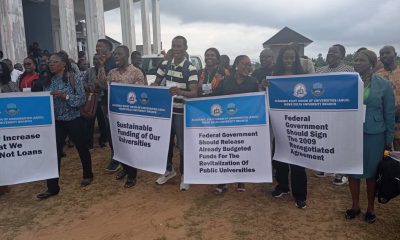
ASUU-NDU protest against FG loans, unpaid salaries,Non-Implementation of agreements …..says loans is generational slavery
-
 Business & Economy1 year ago
PC-NCG Issues Disclaimer on Purported Nigerian Coast Guard National Orientation Exercise In Anambra State
-
 Entertainment2 years ago
Jubilation galore as Parishioners of CKC Kurudu celebrate their cultural heritage ….FG should exploit our Cultural heritage to unite Nigerians-Rev Fr Dim
-

 Sports9 months ago
Bayelsa-born ex-football star’s son, Opuama donates spike shoes to Athletics Association
-

 General News2 years ago
Reps hold public hearing on FMC Ugwuaji Awkunanaw
-
 Law & Crime1 year ago
Legal practitioner raises alarm over threat to his life by CSP Muhammed Abdulkareem
-
 General News2 years ago
Celebration galore as UDA Successfully Elected New Exco ……I will digitalize processes that will raise UDA to greater height -Comr. Okejiri