
Uncategorized
19 killed as bandits launch midnight attack in Plateau community

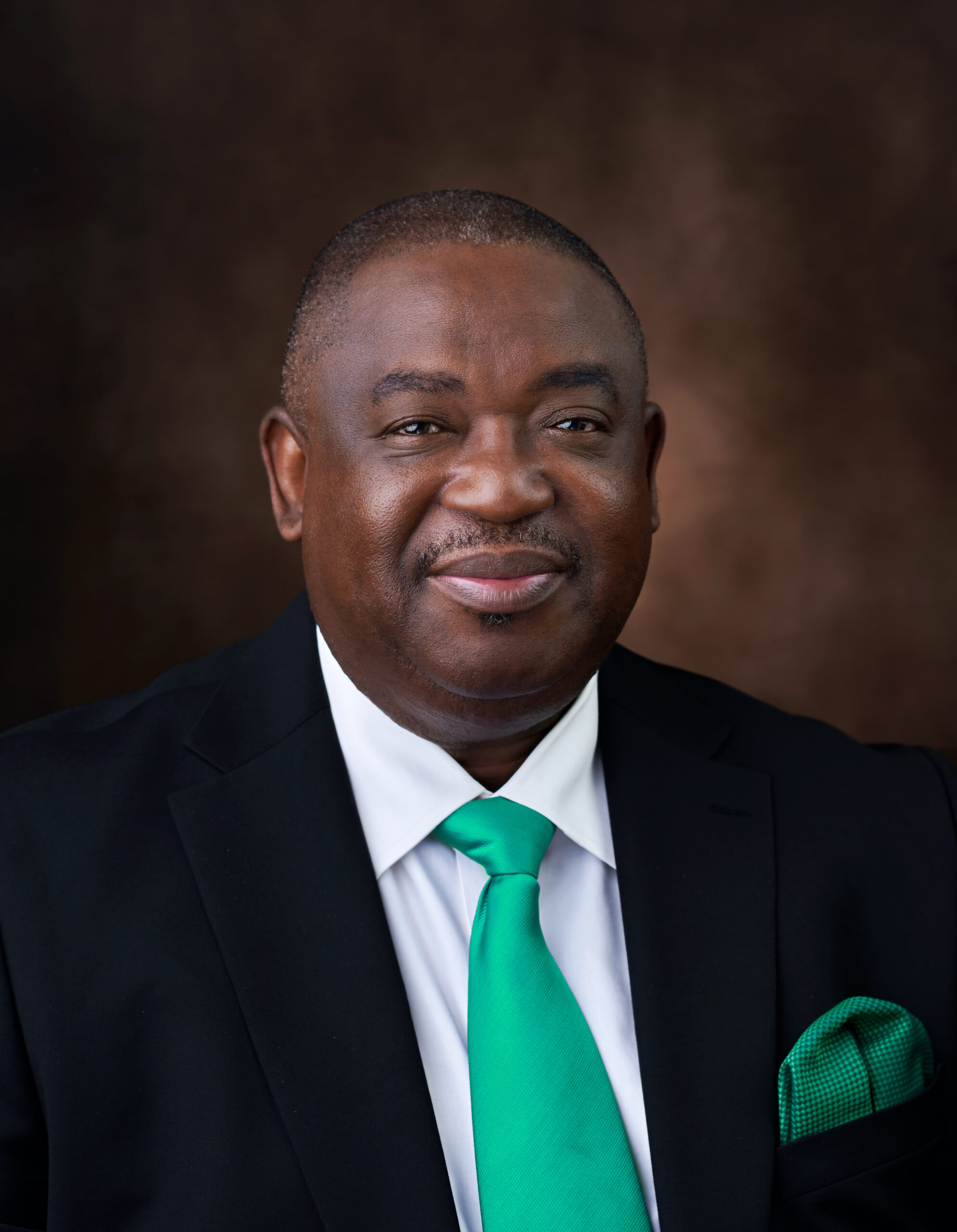
By John Yohanna , Jos
Tragedy struck as 19 people were confirmed dead, after armed bandits stormed the Tafi-Gana community in Jebbu Miango, Bassa Local Government Area of Plateau State in midnight attack, Daily Champion gathered.
The assailants invaded the community at about 11:30pm on Wednesday and began operation till early hours of Thursday morning.
A resident, Moses Monday who spoke to Daily Champion said 16 bodies were recovered directly from the scene of the attack, while three more wounded victims passed away after being rushed to the hospital.
“This is evil. I can confirm that 16 bodies have so far been recovered at the spot, with an additional three who died after they were taken to the hospital. These evil men will not rest,” Monday said.
Another resident, Nuhu Fidelis, confirmed that the violence targeted Tafi-Gana, locally known as Cando Zrreci, describing the assailants as Islamist jihadist terrorists who struck the predominantly Christian farming village.
“Yes, in the early morning of today, Thursday. Last night, 25th November, 2026, a Christian neighbouring village, Tafi-Gana (Cando Zrreci) in Jebbu Miango, Bassa LGA, Plateau State, was attacked again by Islamist jihadist terrorists. Many innocent people lost their lives,” Fidelis stated.
“We are tired of burying our people. These are farmers, women and children who did nothing to anyone. How long will this continue? We are calling on the government to rise up and save us,” a grieving villager who lost a relative lamented.
A mother who escaped the gunfire with her family warned that the community is on the brink of being wiped out if troops are not permanently stationed there.
“We ran into the bush with our children in the night. We heard gunshots everywhere. We are begging the security agents to come and stay with us. If they do not come now, there will be no village left,” she pleaded.
Meanwhile, In a statement issued on Thursday, the Irigwe Development Association and the traditional council of Rigwe land confirmed the attack on Tafi-Gana, a hamlet of Kyie Ihwien near Jebbu Miango.
The statement noted that eyewitnesses identified the gunmen as individuals of Fulani extraction wielding assault rifles and other dangerous weapons, leaving 16 people dead by dawn and four others hospitalized with severe injuries.
However, the Plateau State Government decried the deadly attack that resulted to fatalities and leaving families devastated as well as the entire community in deep anguish.
The commissioner ministry of information and communication, Rt. Hon. Joyce Ramnap, in a statement issued on Thursday said governor Caleb Mutfwang has given directive to security operatives to take strategic action for the protection of lives and property across the affected area.
”So far, relative calm has been established and government will continue to work closely with security agencies, traditional institutions and other relevant stakeholders to strengthen security and pursue lasting peace across the State.
”The Government of Plateau State shares in their grief and extends its heartfelt condolences to the bereaved families and the entire Miango community over this tragic loss.
”The Government is appealing to citizens against reprisals, inflammatory statements and the spread of unverified information capable of escalating tensions”, Ramnap appealed.
She also encouraged residents to cooperate with security agencies and provide credible information that could assist ongoing investigations and security operations.
The incident occurred barely two weeks after President Bola Ahmed Tinubu promised during the All Progressives Congress (APC) North Central Zonal rally in Jos to rebuild violence-ravaged Plateau communities and restore lasting peace.
Uncategorized
FG injects ₦276bn into tertiary education, targets full teacher certification by 2028 …Alausa unveils massive investments in schools, digital learning, student financing,Teacher Dev.
By Joshua Caleb,Abuja
In a bid to improve learning in our schools, the Federal Government has committed ₦276 billion to revitalising tertiary education and teacher development, while over 80,000 teachers are currently undergoing certification as part of an ambitious plan to transform Nigeria’s education sector.
Dr. Maruf Tunji Alausa, Minister of Education, disclosed that the Federal Government has earmarked ₦55 billion for medical education infrastructure, ₦150 billion for tertiary institution revitalisation, ₦32 billion for needs-assessment projects in public colleges of education and released ₦39 billion to 166 public tertiary institutions under the Needs Assessment programme. He added that more than 80,000 teachers are currently undergoing certification and licensing through the Teachers Registration Council of Nigeria (TRCN), with a target of achieving 75 per cent certification by the end of 2027 and certifying all senior secondary school teachers by 2028.
Other key interventions include the installation of 34 solar mini-grids in tertiary institutions, plans to extend independent solar power to all federal tertiary institutions by 2028, zero-rated access to approved educational platforms, over ₦11 billion invested in digital skills development and the integration of more than 40,000 geo-located schools into digital education management systems to improve planning, monitoring and school safety. The Minister urged members of the National Council on Education to ensure their deliberations produce measurable results, stressing that infrastructure development must be complemented by teacher welfare, professionalism, accountability and quality learning. He also praised public schools visited in Borno State, saying several compare favourably with private institutions.
The Minister spoke during the Ministerial Session of the 70th National Council on Education (NCE) in Maiduguri, Borno State, where he reaffirmed the Federal Government’s commitment to transforming education through strategic reforms and investments designed to expand access, strengthen teacher professionalism, promote digital learning, advance technical and vocational education and improve learning outcomes under President Bola Ahmed Tinubu’s Renewed Hope Agenda.
According to a statement issued by the Minister’s Special Adviser on Media and Communications, Ikharo Attah, the Federal Government is implementing the $532 million HOPE for Basic Education Programme, expanding the Adolescent Girls’ Learning and Empowerment Project from 18 to 21 states, and strengthening inclusive and alternative learning opportunities for displaced and disadvantaged children.
The statement added that reforms through the Joint Admissions and Matriculation Board (JAMB) and the Nigerian Education Loan Fund (NELFUND) have resulted in about 2.65 million processed applications and approximately ₦379 billion disbursed to students. It also revealed that the Federal Government’s Technical and Vocational Education and Training (TVET) programme has attracted more than 2.8 million applications.
Dr. Alausa commended Borno State for increasing school enrolment from about 770,000 learners in 2018 to nearly 1.8 million, attributing the achievement to purposeful leadership, improved security and sustained investment in education infrastructure. He thanked Governor Babagana Umara Zulum and the people of Borno State for hosting the council meeting.
Governor Babagana Umara Zulum applauded the Federal Government’s education reforms, particularly efforts aimed at expanding access, motivating teachers and closing the gap between graduates’ skills and labour market demands. He said stronger collaboration between education and industry, especially through TVET, would improve employability and tackle unemployment. He also praised the student loan initiative and reaffirmed his administration’s commitment to expanding schools, technical institutions and incentives for hardworking teachers.
Zulum disclosed that Borno State is establishing 27 high-skilled colleges, with 15 already completed and the remaining expected before the end of the year. He said the colleges would promote skills acquisition and link non-formal education with formal learning through literacy, numeracy, digital education and related programmes. He stressed the need for sustained teacher recruitment, improved welfare and stable leadership to strengthen human capital development.
The Minister of State for Education, Prof. Suwaiba Said Ahmad, commended the Borno State Government for its hospitality and praised Governor Zulum’s investment in modern school infrastructure. She said such investments, particularly in conflict-affected communities, restore hope, dignity and educational opportunities to children whose schooling had been disrupted. She also acknowledged the support of education administrators, agencies, vice-chancellors, provosts, rectors, development partners and civil society organisations.
Earlier, Borno State Commissioner for Education, Science, Technology and Innovation, Engr. Lawan Abba Wakilbe, described the council meeting as a landmark event, recalling that the state previously hosted it in 1971 and 1985. He expressed optimism that the theme, “Infrastructure Development and Teacher Motivation for Improved Learning Outcomes,” would produce practical recommendations to strengthen education nationwide.
Wakilbe said Borno State has intensified investment in education infrastructure, teacher recruitment and capacity building, revealing that the state now has over 1.8 million learners, 5,792 usable classrooms and 129 functional senior secondary schools, up from 34 in 2019.
The 70th National Council on Education brought together ministers, commissioners, permanent secretaries, heads of education agencies and other stakeholders to deliberate on policies and strategies aimed at improving education delivery, infrastructure, teacher motivation and learning outcomes across Nigeria.
Politics
INEC Chairman Declares War on Election Violence Perpetrators, sponsors -Says “No Ambition is Worth a Single Nigerian Blood” -“We Will Protect You-Before,During and After”-Ribadu
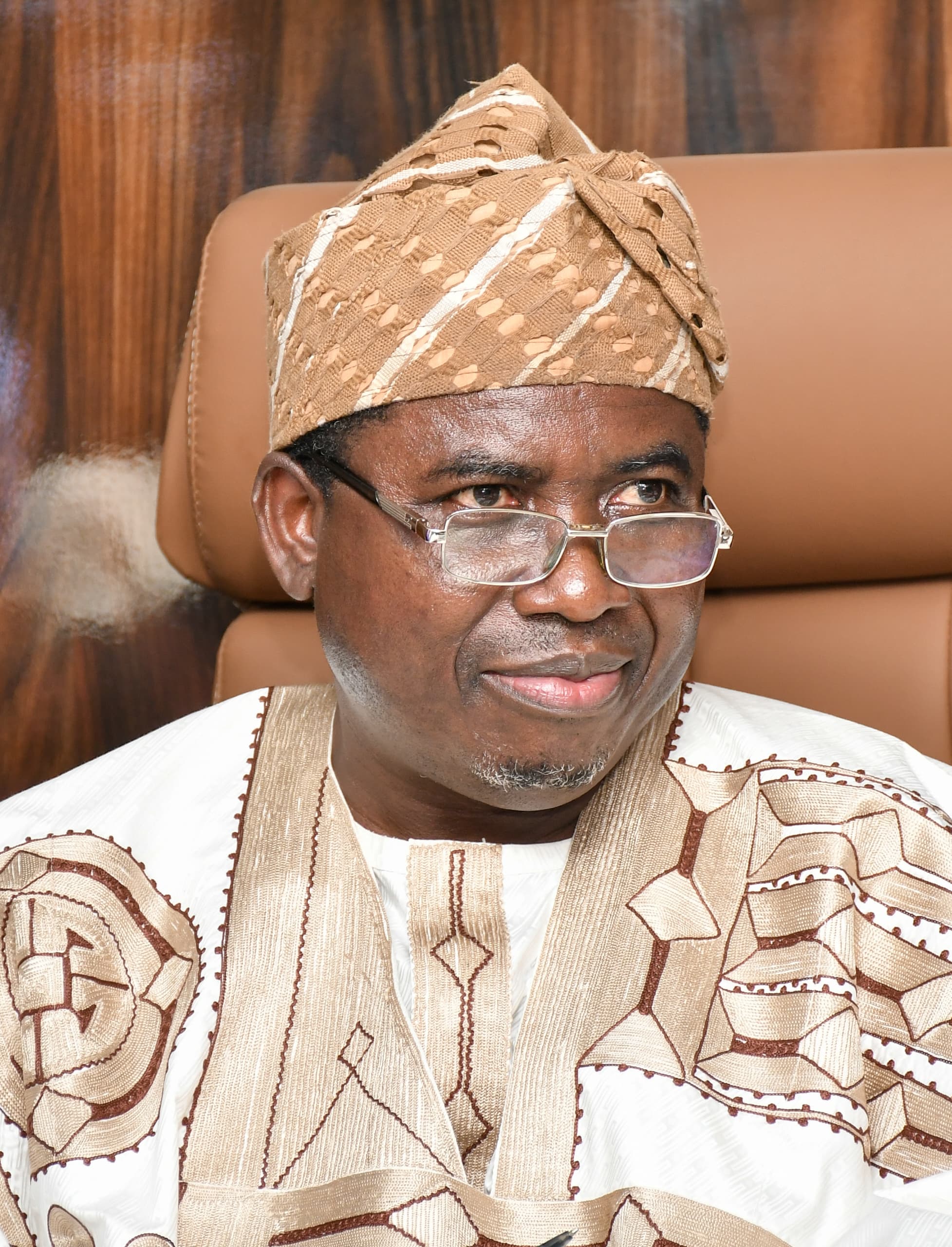
By George Mgbeleke, Abuja
Barely 50 days to the 2027 General Election, INEC Chairman Professor Joash O. Amupitan, SAN, stood before Nigeria’s entire security high command on Thursday and delivered a blunt warning: the ballot must not be silenced by bullets.
The stage was the INEC-ONSA Strategic Election Security Conference in Abuja, a gathering that brought together the National Security Adviser, Mallam Nuhu Ribadu, the Minister of Defence, Service Chiefs, the Inspector-General of Police, DSS, NIA, NSCDC and every Resident Electoral Commissioner in the country.
Amupitan did not mince words. He called the conference not a ceremony, but an operational war-room — a final audit of threats, coordination and preparedness before Nigerians go to the polls.
The countdown is now real. On Saturday, 16th January 2027, Nigerians will vote for President and National Assembly members across 177,299 polling units. Three weeks later, on 6th February, they will return to elect governors and state lawmakers.
For a democracy of over 100 million verified voters, Amupitan said, INEC and security agencies are two pillars holding up one roof. When one falters, democracy suffers. When both stand together, the people’s will becomes unassailable.
His central message was simple: elections and security are not parallel tracks. They are two sides of the same coin. The Constitution and the Electoral Act 2026 provide the law, but only security gives that law room to breathe.
He described security as the first mile and the last mile of election logistics — from protecting ballot papers leaving the Central Bank to protecting results at a ward collation centre at 2 a.m.
At the heart of that protection is ICCES, the Inter-Agency Consultative Committee on Election Security. Born after the violence of 2011, it brings INEC, Police, Military, DSS, NSCDC and other agencies under one roof, with the Police as lead agency on the ground.
But Amupitan admitted a painful truth: synergy in Abuja does not automatically mean safety in a remote village. Too often, lapses happen at the grassroots, where communication breaks down and polling officials are left exposed.
To close that gap, he unveiled the ICCES Tentacles framework — pushing coordination down to every state, every Local Government Area and every ward, so that RECs, Commissioners of Police, DPOs, DSS commanders and INEC Electoral Officers know each other by name and share real-time communication.
Then came the fire. Since campaigns opened in August 2026, Amupitan said, Nigeria has witnessed a disturbing escalation of attacks on convoys, town halls, party offices and supporters in Lagos, Edo, Ekiti, Enugu, Ebonyi, Delta, Cross River, Oyo and Benue.
INEC, he declared, condemns that violence in the strongest, clearest and most unequivocal terms. Every citizen, party and candidate has a right to campaign peacefully in every ward in Nigeria without fear of ambush, arson or intimidation.
He reserved his harshest condemnation for attacks on INEC staff. Party zealots, he said, have besieged facilities, threatened electoral officers and subjected INEC leadership to coordinated hostility at home and abroad.
“INEC officials are non-partisan public servants discharging a sacred constitutional mandate,” he said. “When you attack our personnel, you are not assaulting individuals — you are attempting to coerce an independent referee and subvert democracy. We will neither be intimidated nor blackmailed.”
He also put party leaders on notice: signing peace accords in Abuja while financing thuggery in the states is a contradiction Nigeria can no longer afford. Leaders must own the conduct of their candidates, campaign councils and youth wings.
The stakes, he warned, go beyond politics. Violence suppresses voters, especially women, youth, the elderly, IDPs and the 232,658 Persons With Disabilities on the register. It scares away the 1.41 million ad hoc staff — mostly NYSC members — needed to run 177,299 polling units. And it poisons the post-election atmosphere, priming losers to reject credible results.
Beyond Nigeria, he said, West Africa is watching. With more than half of ECOWAS population and economic weight, a credible Nigerian election anchors regional stability. A chaotic one would send shockwaves across trade corridors, trigger displacement and embolden anti-democratic forces from the Sahel to the Gulf of Guinea.
The threat, he added, is no longer just guns and thugs. It is also deepfakes, voice cloning, AI-generated disinformation and fake result broadcasts that can spark panic within minutes. Information integrity, he said, is now frontline election security.
But Amupitan insisted deterrence is now backed by law. Under the Electoral Act 2026, campaign violence, hate speech and use of thugs attract up to ₦5 million fine or 12 months imprisonment for individuals, and up to ₦10 million for parties. INEC, under Section 148, is ready to prosecute — if police provide watertight evidence, video exhibits and witness statements.
After condemning the violence, Amupitan turned the mirror on the security agencies themselves — and it was uncomfortable. He listed the cracks inside ICCES that have haunted past elections.
First, he said, ICCES still has no proper legal backing. It was created as an ad-hoc arrangement, not by law. That leaves coordination to goodwill, not obligation — and goodwill, he warned, disappears under pressure.
Second is the old disease: lack of synergy. Intelligence is siloed. A threat known to the DSS in Abuja may never reach the DPO on the ground in time to save a polling unit. Elections, he said, are too stretched for agencies to duplicate efforts in safe zones while danger zones cry for help.
Third, and most bluntly, is the supremacy tussle. Amupitan called it the greatest enemy of synergy. “There is no room for professional ego when the stability of the Federal Republic is at stake,” he said. The Police must lead with inclusivity, and sister agencies must support with professional humility.
He then demanded clear roles, once and for all: Police as lead and civil interface, DSS as predictive intelligence, NSCDC protecting critical infrastructure and perimeters, Armed Forces as outer-layer deterrent against large-scale armed threats, and the ONSA providing general coordination.
He also attacked the “Tower of Babel” problem — different agencies on different radio frequencies, different command structures, different pictures of the same election. His solution: a Unified Command and Control Centre where all agencies share one common tactical picture in real-time.
He flagged a legal contradiction that has tied the hands of policemen at polling units. While the 2026 Regulations empower security agents to prevent violence, another provision says they can only arrest on the instruction of the Presiding Officer. “This dichotomy has hampered efficiency,” he said, calling for it to be fixed in the new Code of Conduct and legal framework for ICCES.
Despite the challenges, Amupitan said the system has worked before. ICCES has produced red, amber and green security maps, joint operational orders, codes of conduct, and harmonised deployment plans that helped deliver peaceful elections in the past. The task now is to make that success routine, not accidental.
He also reminded the hall of the logistics mountain ahead: over 1.41 million ad hoc personnel, 57,000 newly procured BVAS machines calibrated to 850 voters per machine, and sensitive materials that must move under armed escort from CBN branches to Registration Area Centres and riverine jetties — with special protection for IDPs, women and Persons With Disabilities.
And then he set the test date. In just three days — Saturday, 28th November 2026 — INEC will run a nationwide mock accreditation and result transmission exercise across all 36 states and the FCT.
That mock, he said, is not just about BVAS and IReV. IReV will now automatically block arithmetic inconsistencies and over-voting. The mock is also a full-scale rehearsal for security: test your communication lines, test your rapid-response times, find the blind spots now — while there is still time to fix them.
In his closing, Amupitan returned to the moral core of the conference. “Neither INEC nor any security agency belongs to a political party, faction or candidate,” he declared. “Our sole allegiance is to the Constitution, the Electoral Act 2026, and the sovereign right of every citizen to vote in peace and have that vote counted accurately.”
He ended with a charge that drew applause from the hall: professionalism, strict neutrality, proportionality in the use of force, and seamless collaboration must be the watchwords until the final result is declared in February 2027.
“If we hold the line together — with courage, discipline and integrity — no sponsor of violence or anti-democratic force can derail Nigeria’s march toward a peaceful, free, fair and credible election.”
Responding to INEC chairman’s warning, National Security Adviser, Mallam Nuhu Ribadu said he did not come with a long lecture. He came with friendship, assurance, and a warning.
He began by appreciating the National Commissioners of INEC, many of whom, he said, he has known for a long time. Some of them, he smiled, are his friends.
Then he went straight to the promise that defined his speech.
“I want to assure you that, as Nigerians, we are committed to having free and fair elections,” he said. “The administration of President Bola Ahmed Tinubu, a democrat, is committed to providing the security necessary for peaceful, transparent and credible elections. There is no doubt about that.”
For Ribadu, the duty of government is simple and total. “The duty of government and the security agencies is to protect voters, electoral officials and the wider population before, during and after the election.”
“We protect you. We protect the voters. We protect politicians. And even after the election, we make sure there is no violence. So far, so good.”
He said the Tinubu government has done fairly well so far, compared with what Nigerians witnessed in the past, and he urged Nigerians to be proud of the progress.
“I think we are beginning to mature in the conduct of elections in Nigeria. Those improvements are being acknowledged. Things are getting better.”
Ribadu was emphatic on two principles: independence and impartiality.
“I think constitutional independence must be protected and respected, especially now that we have a professor of law heading INEC. Security agencies will discharge their responsibilities impartially and in accordance with the law.”
He said political parties, candidates, observers, the media and citizens must be free to undertake their lawful activities without intimidation or undue interference.
He reserved special praise for the media. “To the media, we have to thank you. You are critical stakeholders. You are the ones who make this possible. You do not belong to the government, but the role you are playing is as important as that of all of us. In fact, it is even more important.”
Transparency, he said, is not optional. “Transparency and accountability are essential to public confidence in elections. All institutions with electoral responsibilities must discharge their duties professionally and openly, in accordance with the law. It must not just be done; it must also be seen to have been done properly.”
Ribadu pointed to a sign of hope: the growing number of registered voters. “It appears that what we are witnessing is an increase in the number of registered voters. There are other indications that perhaps people are beginning to believe that this process will work. It has to continue like this.”
But he did not hide the danger. He said recent incidents of election-related violence underscore the need for early preparation and preventive action — especially now, in the days of social media and artificial intelligence, things Nigeria has never known before.
“Social media is a big problem. It creates false narratives and misinformation, causing problems among people. One individual, sitting somewhere in a village, could say something that triggers trouble. Often, these are lies. This is the modern form of misinformation that people come to believe.”
His solution: rethink early-warning mechanisms, assess emerging threats, address potential flashpoints, and be proactive.
“We in the security sector will be working day and night, looking at these issues honestly and with the fear of God. We will do things properly and correctly, assessing the situation every single day. I can give you that assurance.”
Ribadu insisted on protection for all, irrespective of political affiliation. He pleaded for fairness. “Politicians will say things. Please, be fair to all. Give others a chance. There are honest people in this country. It does not mean that everybody is bad. That is not true. Please have confidence in that.”
He also warned about desperation. Politicians, he said, are fighting for power. Sometimes they become desperate. “There is almost nothing they may not do.”
As he concluded, he gave a challenge to every stakeholder: translate deliberations into practical actions. Let electoral officials uphold integrity. Let security agencies prevent violence. Let political actors conduct themselves peacefully. Let civil society, observers and the media continue to promote accountability.
“We intend to stand by him [the INEC Chairman], support him and protect him to ensure that the process succeeds,” Ribadu said.
“Our collective responsibility is to ensure that Nigerians can exercise their democratic rights freely, without fear or intimidation, and that their choices are respected. Our duty is to protect all Nigerians and their democratic interests.”
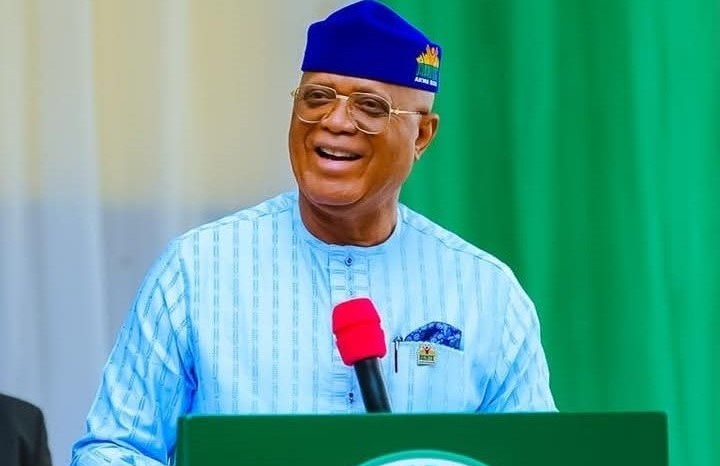
By Obasi Akpan , Uyo
The Senior Staff Association of Nigeria Polytechnics (SSANIP), Akwa Ibom State Polytechnic Chapter, has expressed worry that career of members could be stalled if urgent measures are not implemented to enforce their advancement.
They called for the elevation of administrative staff of the institution to Salary Grade Level 15, in line with the directive by the National Board for Technical Education (NBTE).
The union also urged the Akwa Ibom State Government to approve the implementation of the promotion, describing it as necessary morale – booster for staff welfare and career advancement.
The resolutions obtained by our Correspondent were contained in a communiqué issued at the end of a two day capacity building workshop organised by SSANIP for the month of November at the Polytechnic Library Conference Hall, Ikot Osurua, Ikot Ekpene local government area.
With the theme, “Strategic Leadership and Administrative Excellence in a Cutting Edge System”, the workshop focused on digital transformation, workplace productivity, professional ethics and career development.
Participants also resolved to embrace digital workflows and information technology tools to improve administrative efficiency, while encouraging the union leadership to organise periodic training programmes to keep staff abreast of emerging technological trends.
A major highlight of the workshop was the launch of the SSANIP Secretariat project, an initiative expected to provide a permanent base for the union and strengthen its administrative coordination and members’ welfare.
The Acting Rector of the Polytechnic, Dr. Akanimoh E. Jonah, represented by the former Dean of the School of Business and Management, Dr. James J. Etim-Ekikor, commended the union for prioritising staff development and workplace productivity.
The Chairman of the Akwa Ibom State Civil Service Commission, Mrs. Ekerebong Umoh, represented by the Secretary of the Akwa Ibom State Independent Electoral Commission, Dr. Uduak Udo, delivered the keynote address and urged participants to implement the lessons from the workshop.
The communiqué further stressed the need for continuous staff training, adherence to professional ethics, accountability and punctuality, noting that administrative excellence must begin with leadership.
Participants also pledged their support for the completion and commissioning of the newly launched SSANIP Secretariat, while recommending a phased approach to workplace digitalisation to protect existing processes and security.
The union expressed appreciation to the Speaker of the Akwa Ibom State House of Assembly, Rt. Hon. Udeme Otong, the Acting Rector, Dr. Akanimoh Jonah, and other government officials, institutional management and stakeholders for their support.
FG injects ₦276bn into tertiary education, targets full teacher certification by 2028 …Alausa unveils massive investments in schools, digital learning, student financing,Teacher Dev.
By Joshua Caleb,Abuja In a bid to improve learning in our schools, the Federal Government has committed ₦276 billion to...

19 killed as bandits launch midnight attack in Plateau community
By John Yohanna , Jos Tragedy struck as 19 people were confirmed dead, after armed bandits stormed the Tafi-Gana community...

2027: After Clerics, Barau Mobilises 3,405 Traditional Rulers in Kano for Tinubu, Abba, Other APC Candidates
By Yusuf Abubakar,Kano As part of his ongoing engagement with stakeholders across Kano North Senatorial District, the Deputy President of...

INEC Chairman Declares War on Election Violence Perpetrators, sponsors -Says “No Ambition is Worth a Single Nigerian Blood” -“We Will Protect You-Before,During and After”-Ribadu
By George Mgbeleke, Abuja Barely 50 days to the 2027 General Election, INEC Chairman Professor Joash O. Amupitan, SAN, stood...

Akwa Poly SSANIP Demands Promotion Of Administrative Staff To Level 15
By Obasi Akpan , Uyo The Senior Staff Association of Nigeria Polytechnics (SSANIP), Akwa Ibom State Polytechnic Chapter, has expressed...

Okpebholo Denies Involvement In Alleged Violent Attack On NDC Members
By Joseph Iyamu, Benin Edo State Governor, Senator Monday Okpebholo has said that nobody in the state government, the state...

THE UBA SANI I KNOW: A CHILD OF DESTINY, POLITICAL LOYALTY AND THE KADUNA DEVELOPMENT STORY
By Abdullateef Bamgbose There are political relationships that survive the test of time, and there are others that collapse under...

ADC-PCC Condemns Deadly Attacks On NDC in Edo,Delta, …Calls For Arrest, Prosecution of Perpetrators
By George Mgbeleke The African Democratic Congress Presidential Campaign Council (ADC-PCC) has strongly condemned the unprovoked and deadly attacks on...


HURIWA Gives EFCC 7 Working Days to Clarify Status of Okowa’s Investigation, Demands Public Update on Yahaya Bello’s Case
By George Mgbeleke The Human Rights Writers Association of Nigeria (HURIWA) has formally submitted a Freedom of Information (FOI) request...


Bayelsa West APC Rally: Deputy Gov Akpe, Lokpobiri, Others Drum Support for Tinubu 2027
By David Owei The Deputy Governor of Bayelsa State, Dr Peter Akpe, Minister of State for Petroleum Resources (Oil), Senator...
-
 Politics2 years ago
Gov Okpebholo moves to end Cultism *Threatens action against leading cult groups *Vows to demolish more cult houses in Edo State
-
 Politics1 year ago
ASUU-NDU protest against FG loans, unpaid salaries,Non-Implementation of agreements …..says loans is generational slavery
-

 Business & Economy1 year ago
PC-NCG Issues Disclaimer on Purported Nigerian Coast Guard National Orientation Exercise In Anambra State
-
 Entertainment2 years ago
Jubilation galore as Parishioners of CKC Kurudu celebrate their cultural heritage ….FG should exploit our Cultural heritage to unite Nigerians-Rev Fr Dim
-

 Sports9 months ago
Bayelsa-born ex-football star’s son, Opuama donates spike shoes to Athletics Association
-

 General News2 years ago
Reps hold public hearing on FMC Ugwuaji Awkunanaw
-

 General News2 years ago
Celebration galore as UDA Successfully Elected New Exco ……I will digitalize processes that will raise UDA to greater height -Comr. Okejiri
-
 Law & Crime1 year ago
Legal practitioner raises alarm over threat to his life by CSP Muhammed Abdulkareem