
Uncategorized
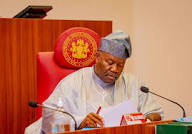
SARAKI ON AKPABIO’S TOUCH OF INSTITUTIONAL INTEGRITY

By Ken Harries
It is often said, “There is no morality in politics”. In other words, in politics, anything goes. Unfortunately, many people who have found themselves in positions of authority have adopted this line of thought, thereby desecrating the sacredness of leadership, because it is ordained by God. But to the President of the tenth Senate and Chairman of the National Assembly, Senator Godswill Akpabio, GCON, “Leadership cannot just go along to get along. Leadership must meet the moral challenge of the day.” These are the words of the revered gospeller, refined politician and leader, Jesse Jackson.
At the celebration of Democracy Day on June 12, 2025, the 8th Assembly President of the Senate, Senator Bukola Saraki, made a rare commendation to the leadership of the 10th Senate led by Senate President Godswill Akpabio, GCON. Saraki, in a paper titled “The National Assembly and Nigeria’s Democracy in the Last 26 Years”, thanked Akpabio for restoring his portrait in the Senate Gallery after four years of its absence.
We are all aware of the no love lost that existed between Saraki and his successor, Senator Ahmad Lawan, whom he outsmarted in 2015 to emerge as the Senate President against the wishes of the ruling All Progressives Congress (APC) at the time. Consequently, the Saraki-led National Assembly maintained a cat and dog relationship throughout its tenure with the Executive led by then President Muhammadu Buhari.
Hence, when Senator Lawan eventually became the Senate President during the 9th Assembly, the no love lost between him and Senator Lawan was reignited. Senator Saraki had then been swept off the National Assembly courtesy of the “Otoge Revolution” in the Kwara politics, which was hitherto controlled by the Saraki dynasty. At this time, the APC had put its house in order and had a smooth sail on electing its principal officers, while the likes of Saraki, who had defected to the opposition Peoples Democratic Party (PDP), lost their return bid to the Senate.
One of the actions taken by the Lawan’s leadership was to take down Saraki’s official portrait, where other Senate Presidents’ portraits are mounted at the Gallery of the Senate at the National Assembly, possibly to revenge the ‘injustice’ Saraki and his group meted out to him. Throughout the four years of Lawan’s Senate Presidency, Saraki’s portrait was missing in the gallery.
But one man known for institutional integrity and playing “politics without bitterness” changed the narrative, which got Senator Saraki celebrating and, for once, acknowledging the eclectic and transformational leadership of the uncommon Senate President, Senator Godswill Akpabio. Apart from commending his ‘good friend’ Senator Akpabio for having his portrait remounted among his colleagues, he appreciated the 10th National Assembly, led by Akpabio, for its courage in inviting him to present a paper at the joint session of the National Assembly.
According to Saraki, “If it were in another time, they would have been looking at the body language of the President, and my invite would have gotten missing. Just like my portrait”
The former Senate President noted that “Just as my portrait was missing for four years in the Senate Gallery created for all former presiding officers, it was brought in just recently,” Saraki said. “I thank my good friend, Senator Godswill Akpabio, for that.”
But certainly, that is not the character of Senator Akpabio’s leadership. He is an inspirational, inclusive, rational, humane, and compassionate leader. And like a former US President, John Quincy Adams once said, “If your actions inspire others to dream more, learn more, so more and become more, you are a leader”. Senator Godswill Akpabio is truly a leader because he exudes all these qualities.
By restoring Senator Saraki’s portrait and even going ahead to invite him as part of those to make presentations at the Democracy Day celebration is indicative of the fact that Senate President Akpabio is receptive to criticism and tolerant of opposition, no matter how vitriolic it may be. He does not believe in taking a pound of flesh when the opportunity presents itself, nor does he use his exalted position to pay opponents in their coin.
In the wake of the suspension of Senator Natasha Akpoti-Uduaghan from the Senate, Senator Saraki, despite being a former Senate President, never spared Senate President Akpabio any benefit of the doubt but joined in the fray, convicting and condemning Akpabio without trial. But Akpabio, a man imbued with institutional integrity and respect for individual right of opinion, never allowed this to becloud his sense of judgement in relating with those who stood the law on its head in casting aspersions on him.
Senate President Akpabio is like Mahatma Gandhi, who said, ” I suppose leadership at one time meant muscles, but today it means getting along with people”. He is the most gregarious leader we have around today. He knows how to enliven any environment or opportunity he finds himself in. He relates excellently with whoever comes his way. A detribalised and non-sectional leader, Akpabio’s doors are open to human beings of all shades; he does not discriminate, just like he shares with all and sundry.
Today, he has redefined leadership in the parliament, engaging the executive objectively and purposefully without bickering or fighting; representing the people through implementable laws that are development-promoting and smacked of human kindness and compassion. This is the spirit of a leader whose primary concern is to bring smiles to the faces of the common and not pains or sadness.
Mr Ken Harries is a US based development communication strategist







By George Mgbeleke
The Human Rights Writers Association of Nigeria (HURIWA) says the Nigerian Correctional Service must immediately stop the alleged degrading treatment of detained businessman, Mr Ufoma Joseph Immanuel, who is currently receiving medical treatment in a Lagos hospital.
HURIWA condemns the reported decision by correctional officials to handcuff Immanuel’s legs to his hospital bed, describing the action as excessive, degrading and unacceptable, particularly against a detainee undergoing treatment.
HURIWA says it earlier intervened after the Correctional Service failed to promptly enforce a Federal High Court order directing that Immanuel be taken to a standard medical facility.
Following that intervention, the Correctional Service eventually moved Immanuel to hospital, where he has now spent one week receiving treatment.
HURIWA says it is deeply disturbed that the same correctional authorities are now allegedly restricting his movement, preventing family visits and placing him in physical restraints while he remains under medical care.
HURIWA investigator, Femi Ajala, visited the hospital and interviewed members of Immanuel’s family. The family confirmed that correctional officials have maintained a heavy security presence around the detainee.
HURIWA says the family initially accepted the security arrangements because their immediate priority was to ensure that Immanuel received the medical treatment ordered by the court.
HURIWA says the situation has now become unacceptable.
The association says Immanuel is reportedly being confined to his hospital room and prevented from moving around despite medical advice that he should be allowed appropriate movement during treatment.
HURIWA says it is particularly alarmed that his sister was reportedly informed that no visitors would be allowed to see him, while Immanuel was subsequently found handcuffed to his hospital bed.
HURIWA demands that the handcuffs be removed immediately.
HURIWA also demands that Immanuel be allowed reasonable movement in accordance with the advice of his doctors and that his immediate family members, particularly his sisters, be granted reasonable access to him.
HURIWA calls on the Comptroller-General of the Nigerian Correctional Service to immediately investigate the conduct of the officers assigned to the hospital and explain the legal and medical basis for handcuffing a hospitalised detainee to his bed.
HURIWA equally calls on the Minister of Interior to intervene immediately and ensure that the Correctional Service obeys the court order and respects Immanuel’s fundamental rights while he remains in custody.
HURIWA says the presence of armed correctional officers must not be allowed to undermine medical treatment, family contact or the dignity of a hospitalised detainee.
HURIWA further demands that Immanuel be allowed appropriate privacy during consultations with his doctors and that custodial officers do not unnecessarily interfere with the doctor-patient relationship.
HURIWA stresses that this intervention has nothing to do with determining Immanuel’s guilt or innocence in the criminal proceedings before the courts. The courts will determine that matter.
HURIWA says its concern is the conduct of the Correctional Service and the treatment of a detainee who is currently in hospital under a court-directed medical arrangement.
HURIWA says detention does not cancel human dignity.
HURIWA says custody does not authorise degrading treatment.
HURIWA says a hospital bed must not become a place of unnecessary restraint and punishment.
HURIWA therefore demands, with immediate effect:
Removal of the handcuffs from Immanuel’s hospital bed;
Freedom of movement consistent with medical advice;
Reasonable access for his immediate family members;
Respect for doctor-patient confidentiality; and
Full compliance with the relevant court order.
HURIWA warns that continued restrictions that have no clear lawful or medical justification would amount to a serious human rights concern requiring the intervention of relevant constitutional and human rights institutions.
HURIWA will continue to monitor the situation and hold the appropriate authorities accountable for the welfare and fundamental rights of Mr Ufoma Joseph Immanuel.
By George Mgbeleke
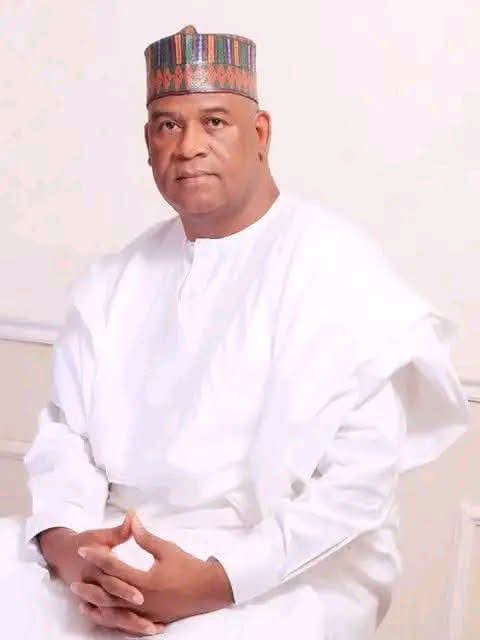
The Northern Senators Forum has received with profound sadness the news of the passing of Distinguished Senator Bello Mandiya, former Senator representing Katsina South Senatorial District in the Ninth National Assembly, who died at the age of 62.
His death is a painful loss to his family, the people of Katsina State, the people of Katsina South and the nation at large. Senator Mandiya lived a life devoted to public service, and his passing has deprived Nigeria of a committed administrator and legislator whose contributions will remain part of the political history of Katsina State and the Ninth Senate.
Before his election to the Senate in 2019, he served as Chief of Staff to the former Governor of Katsina State, His Excellency Aminu Bello Masari, His years in Katsina politics reflected his qualities of loyalty, political maturity, patience and commitment to public service. He was a team player who understood the importance of consultation, dialogue and building consensus even when political interests differed.
As a member of the Ninth Senate, Senator Mandiya distinguished himself as a diligent and responsible legislator. He was a dependable colleague and bridge-builder who consistently promoted cooperation among senators and advocated policies that would strengthen national development. He believed strongly in the unity, stability and progress of Nigeria and approached public service with the understanding that political office must ultimately be used to improve the lives of the people.
The Northern Senators Forum extends its deepest condolences to Senator Mandiya’s immediate family, the government and people of Katsina State, the people of Katsina South, his political associates and his former colleagues in the National Assembly .We pray that Almighty Allah forgives his shortcomings, accepts his good deeds and grants him Aljannatul Firdaus, while granting his family and loved ones the strength to bear this irreparable loss.
By Our Correspondent
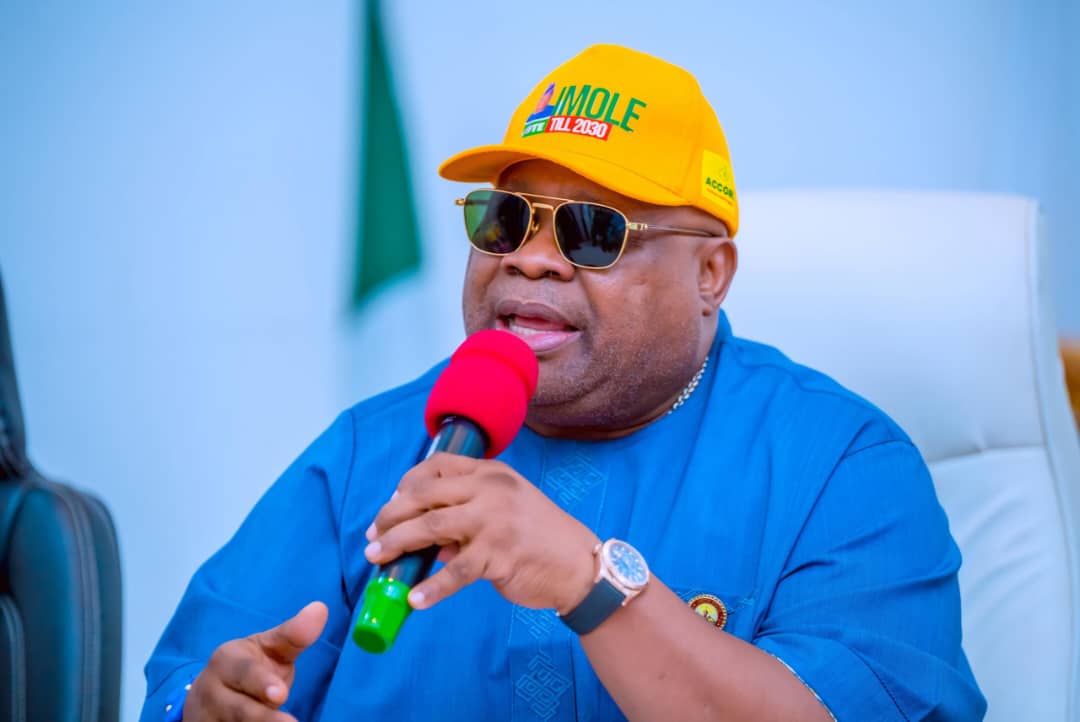
In dramatic twice the All Progressives Congress (APC) has filed an application seeking to withdraw the petition challenging the victory of Governor Ademola Adeleke.
The withdrawal came amid conflicting positions within the party’s legal team over whether the
APC had authorised the petition challenging the outcome of the August 15 governorship election.
Daily Champion reports that the APC, and the Peoples Democratic Party, PDP, challenged the outcome of the August 15, 2026, Osun Gubernatorial elections.
The APC’s petition, marked EPT/OS/GOV/01/2026, which was filed by its governorship candidate, Bola Oyebamiji, listed Adeleke, the Accord, and the Independent National Electoral Commission, INEC, as respondents in the petition challenging the election outcome.
Meanwhile, a Notice of Motion to Withdraw Petition dated September 8, 2026, filed by a counsel for APC, Barrister Oluseyi Oyagbile, before the Osun State Governorship Election Petition Tribunal, indicated the petitioners’ decision to discontinue the case.
The document seeks an order of the tribunal permitting the petitioners to withdraw the election petition.
However, an APC legal team led by Abiodun Layonu, SAN, had earlier disowned the petition, insisting that the party and its candidate had decided not to challenge Adeleke’s victory at the tribunal.
Also, the APC campaign council distanced itself from reports claiming that its governorship candidate, Oyebamiji (AMBO), filed a petition challenging the outcome of the August 15, 2026 governorship election at the Election Petition Tribunal.
A statement made available by the campaign spokesperson, said, “We state categorically that neither the All Progressives Congress ( APC) nor its governorship candidate, Asiwaju Munirudeen Bola Oyebamiji (AMBO) filed any petition at the tribunal challenging the outcome of the August 15 governorship election.
“The purported claim is therefore completely untrue and should be regarded as nothing more than a rumour being circulated by individuals seeking to mislead members of the public and create unnecessary tension.
“We urge members of the public, supporters of our great party and the media to discountenance the claim and refrain from giving credibility to unverified information designed to cause confusion.
“The APC and Asiwaju Munirudeen Bola Oyebamiji remain committed to lawful and democratic processes and will continue to act responsibly in the interest of peace, stability and the good people of Osun State.
“We urge the public to rely only on official statements from the APC and the Campaign Council on matters concerning the party, its candidate and the outcome of the August 15 governorship election.”

HURIWA Mourns Bello Mandiya, Hourns a Dependable Ally of Human Rights
By George Mgbeleke The Human Rights Writers Association of Nigeria (HURIWA) mourns the death of former Senator representing Katsina South...

HURIWA DEMANDS IMMEDIATE REMOVAL OF HANDCUFFS FROM Ufoma Joseph Immanuel
By George Mgbeleke The Human Rights Writers Association of Nigeria (HURIWA) says the Nigerian Correctional Service must immediately stop the...
Northern Senator Forum Mourns Senator Bello Mandiya
By George Mgbeleke The Northern Senators Forum has received with profound sadness the news of the passing of Distinguished Senator...
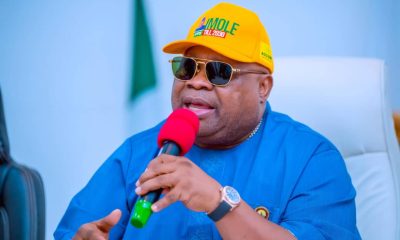

APC withdraws petition challenging Gov.Adeleke’s Victory
By Our Correspondent In dramatic twice the All Progressives Congress (APC) has filed an application seeking to withdraw the petition...

NUJ FCT Raises N5.01m Trust Fund for Late Chairman’s Children …265 members raised N5.01m to secure education, welfare of Osadebamwen’s three children
By Our Correspondent In a bid to ensure a good welfare package for its departed members and their families, the...

APC chieftain demands probe, prosecution of Atiku over $40M, SIEMENS, SPV allegations
By Our Correspondent A chieftain of the All Progressives Congress (APC), Ntufam Hilliard Eta, has called on the nation’s anti-corruption...
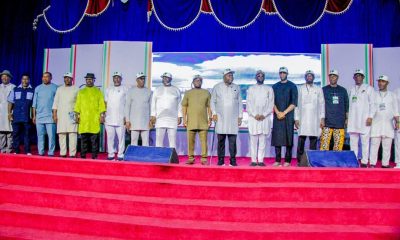

Nigerian Politics Becoming Less Violent, Says Gov Diri As CBM Holds Bayelsa Retreat
By David Owei Governor of Bayelsa State, Senator Douye Diri, has observed that the political arena in Nigeria was shifting...
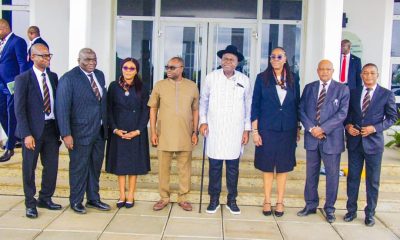

Gov Diri Seeks Increase In Law Students Quota At NDU
By David Owei Governor of Bayelsa State, Senator Douye Diri, has appealed to the Council of Legal Education to increase...


Nembe Spill: HOMEF demands cleanup, compensation, accountability
By David Owei The Health of Mother Earth Foundation (HOMEF) on Tuesday demanded urgent cleanup, compensation and accountability over an...

NCDMB to Feature Nwabuikwu’s The Pain and The Promise In Book Reading Session
By David Owei The Nigerian Content Development and Monitoring Board (NCDMB) will host the fifth edition of its Book Reading...
-
 Politics1 year ago
Gov Okpebholo moves to end Cultism *Threatens action against leading cult groups *Vows to demolish more cult houses in Edo State
-
 Politics1 year ago
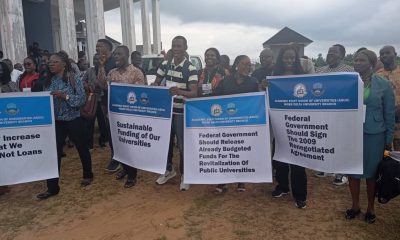
ASUU-NDU protest against FG loans, unpaid salaries,Non-Implementation of agreements …..says loans is generational slavery
-
 Business & Economy1 year ago
PC-NCG Issues Disclaimer on Purported Nigerian Coast Guard National Orientation Exercise In Anambra State
-
 Entertainment2 years ago
Jubilation galore as Parishioners of CKC Kurudu celebrate their cultural heritage ….FG should exploit our Cultural heritage to unite Nigerians-Rev Fr Dim
-

 Sports7 months ago
Bayelsa-born ex-football star’s son, Opuama donates spike shoes to Athletics Association
-

 General News2 years ago
Reps hold public hearing on FMC Ugwuaji Awkunanaw
-
 Law & Crime1 year ago
Legal practitioner raises alarm over threat to his life by CSP Muhammed Abdulkareem
-
 General News2 years ago
Celebration galore as UDA Successfully Elected New Exco ……I will digitalize processes that will raise UDA to greater height -Comr. Okejiri