
Law & Crime
Ekpa’s conviction long anticipated, lesson against fraud, violence – IPOB lead counsel, Ejiofor

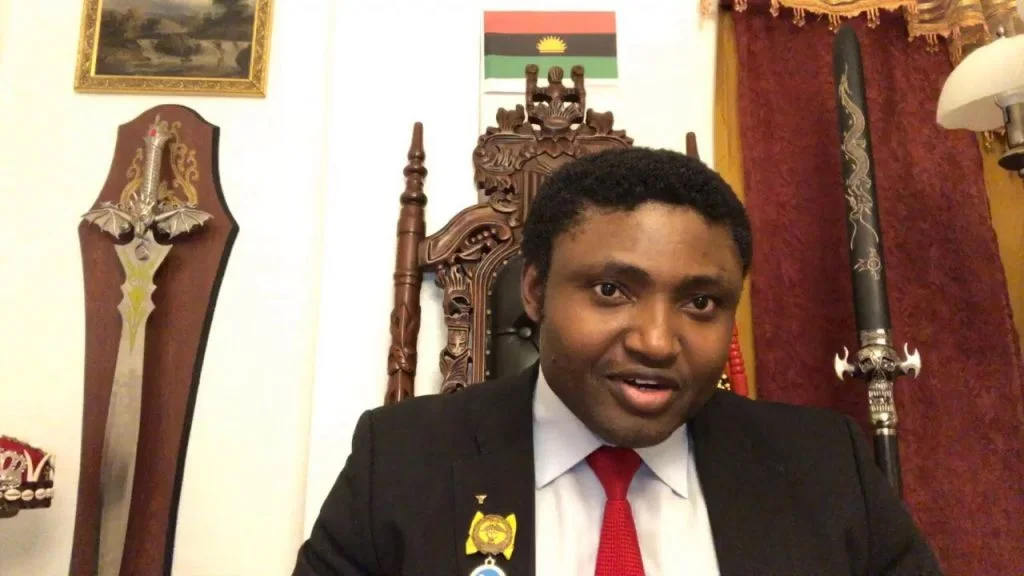
Barely 24 hours after the conviction of Simon Ekpa in Finland, lead counsel to the Indigenous People of Biafra (IPOB), Sir Ifeanyi Ejiofor, has described the conviction of Ekpa by a District Court in Finland on Monday as a long-anticipated development, given the gravity of his offenses.
Ejiofor who is a human rights lawyer in statement said Ekpa’s conviction is lesson against fraud,violence and misguided statement, warning those who believe in his evil preaching to desist.
He stated Simon Ekpa’s conviction in a country that upholds human rights and the rule of law, sends a signal that no amount of lies, propaganda, or fraudulent appeals to “self-determination” can protect a criminal enterprise built on violence, fraud, and deception.
Ejiofor stated that no legitimate struggle for liberation can ever be founded on deceit, fraud, or violence,especially against one’s own people.
“I have long understood the weight of his infractions, the inherent weakness of his defence, and the inevitable collapse of the fraudulent empire he built on lies, violence, and exploitation.Those who still glorify Ekpa or follow in his footsteps are not freedom fighters they are merchants of death. The future of Ala-Igbo must never again be entrusted to impostors who exploit the pain of their people for personal gain,” he declared.
According to Ejiofor, from the very beginning when Simon Ekpa attempted to usurp the authority of the Directorate of State (DOS) of IPOB his intentions were clear. He was openly and covertly supported by individuals and groups whose sole mission was to derail the genuine quest for self-determination, sow confusion, and turn Ala-Igbo into a theatre of violence, bloodshed, and blackmail.
“For a time, they succeeded. Ekpa’s deadly declarations, recklessly disseminated across media platforms, were embraced hook, line, and sinker by vulnerable and misguided individuals,” Ejiofor said.
He further explained that Ekpa’s so-called “foot soldiers,” whenever arrested, never mentioned his name or that of his fictitious Biafra Liberation Army (BLA). Instead, they falsely claimed to be IPOB members, thereby tarnishing the image of a globally recognized, peaceful movement.
This deception, Ejiofor stated, gave the Nigerian state an excuse to brutalize innocent agitators and criminalize IPOB’s legitimate efforts.
“Throughout this dangerous era, I consistently raised my voice across all available platforms, including mainstream media urging our people to reject Simon Ekpa and his poisonous preachings.
For doing so, I was attacked, vilified, and branded a saboteur simply because I chose to speak the truth,”
“Ekpa built a criminal enterprise on deceit harvesting money from gullible followers, while feeding them fabricated lies about warships, fighter jets, and supposed dates for Biafra’s independence that never came to pass.My public stance put a target on my back, marked by threats from Ekpa and his misled followers.”he said.
Ejiofor decried the irony that, even after each of Ekpa’s failed prophecies, many continued to applaud and fund him, while he lived comfortably abroad and young people at home paid the price with their lives.
He lamented that educated elites who should have known better either defended him or remained silent out of fear or complicity.
He emphasized that IPOB’s leadership, under the Directorate of State, repeatedly condemned Ekpa’s actions and distanced the organization from his violent tactics. Yet, certain individuals continued to offer him covert support ,some of whom are now the loudest in calling for his prosecution.
“Their silence at critical moments, remains a betrayal that history will not forget.”Ejiofor said.
Ejiofor said Simon Ekpa’s conviction in a country that upholds human rights and the rule of law, sends a powerful message that no amount of lies, propaganda, or fraudulent appeals to “self-determination” can protect a criminal enterprise built on violence, fraud, and deception.
“It is now imperative that our people begin to think critically and ask hard questions.
No rational mind should have believed Ekpa’s outrageous claims about stationed warships and combat-ready jets in Igbo land. His entire project was an elaborate scam, carefully designed to defraud the very people he claimed to liberate,” he said.
Ejiofor also refuted claims circulating among Ekpa’s followers that his conviction somehow upheld his “right to self-determination.”
“That narrative is utterly false. The court never upheld any such right. His trial and conviction were not about any legitimate political aspiration they were about fraud, deception, and sponsoring violence against the very people he pretended to defend. That is the height of criminality,”
“The chickens have come home to roost. But what about the thousands of lives lost due to Ekpa’s poisonous preachings?Many of his misled followers remain in detention without trial. Others were killed extrajudicially. Their families continue to suffer in silence.
Not one of the lawyers who secretly collaborated with Ekpa had the courage to publicly defend these victims or pursue their release.Instead, they abandoned them, while Ekpa thrived abroad,” Ejiofor lamented.
He called for deep reflection and a collective rejection of fraud, blackmail, and criminality as tools of agitation.
“It is time to take stock.Time to reject deceit, emotional manipulation, and false messiahs.Time to recommit ourselves to truth, justice, and a peaceful struggle for self-determination.Ekpa may be convicted today—but the scars of his deceit and the destruction he left behind will take years to erase








Law & Crime
Death of 37 Miners:NSCDC deployes Commandant Abdul Hamid Salisu Kabara to head Minna Commandant

By Uthman Baba Naseer,Minna
Following the Thursday,death of 37 suspected illegal miners at the detention facility of the Niger State Command, of the Nigeria Security and Civil Defence Corps (NSCDC), in Minna,a newly deployed Commandant of the Corps has assumed duty in Minna. He is Commandant Abdul Hamid Salisu Kabara.
The Commandant has served the Command as the Deputy Commandant in-charge of administration in Niger State Command, until his elevation to the rank of the Commandant of the Corps before he was redeployed to the Corps headquarters in Abuja.
The deployment of the new Commandant was contained in a press statement signed by the Command Public Relation Officer (DCPRO) Abubakar Mohammed Rabiu Muti DSC
He succeeded Commandant Suberu Siyaka Aniviye who was placed on suspension along with twenty one other officers of the Command as a result of the death of the 37 suspected illegal miners in the custody of the Command.
Commandant Suberu Aniviye’s suspension was announced by the Minister of Interior Hon. Oubunmi Tunji-Ojo in a press statement.
The assumption of office of Salisu Kabara comes at a particularly trying moment for the Command, as result of the sad and unfortunate deaths of some persons arrested in connection with suspected illegal mining activities in the State.
Commandant Salisu Kabara expressed deep sadness over the loss of lives and extended his heartfelt sympathy to the families of the deceased and everyone affected by the unfortunate incident.
He stressed that, while the Corps remains committed to its statutory responsibilities of arrest, investigation, enforcement and the fight against illegal mining, the sanctity of human life must remain paramount.
“At a moment like this, beyond arrests, investigations, enforcement and the fight against illegal mining, we must remember one fundamental truth: every human life matters
“The loss of any human life is painful, and our thoughts and prayers are with the families who are mourning at this difficult time” he lamented.
Noting that the responsibility of protecting society and enforcing the law must go hand in hand with the responsibility to uphold the dignity, safety and welfare of persons in custody.
“At this painful moment, the Commandant prays that Almighty Allah forgives the shortcomings of the deceased, grants them eternal rest and gives their families, relatives and loved ones the strength, patience and fortitude to bear this irreparable loss” he prayed.
Law & Crime
NBA wants prompt,thorough Investigation into death of Over 30 detainees at NSCDC Facility

By Uthman Baba-Naseer,Minna
The Nigerian Bar Association (NBA), Minna Branch, has called for a prompt, thorough, transparent and independent investigation into the reported deaths of several persons detained at a facility of the Nigeria Security and Civil Defence Corps (NSCDC) in Minna, Niger State.
The NBA, in a statement issued by its chairman Minna branch Ibrahim Muhammad Ndamitso Esq, expressed profound sadness and concern over the incident, saying the loss of lives in custody was a matter of utmost seriousness.
Ndamitso said while the exact circumstances surrounding the incident, including the number and identities of the deceased and the immediate causes of their deaths, were yet to be conclusively established, the reports raised serious concerns about the conditions under which the affected persons were detained.
He extended its condolences to the families, relatives and loved ones of those who reportedly lost their lives, praying for the peaceful repose of the deceased and strength for their bereaved families.
The NBA Chairman stressed that the deprivation of liberty does not remove a person’s fundamental human dignity, noting that persons in custody remain entitled to humane treatment and protection of their fundamental rights under the Constitution and other applicable laws.
He particularly emphasised the constitutional right to dignity of the human person, which prohibits torture and inhuman or degrading treatment, adding that authorities responsible for custodial facilities have a corresponding duty to protect the lives, health, safety and dignity of detainees.
The Branch Chairman called on the relevant authorities to establish the exact number and identities of those who died, as well as the condition and whereabouts of other persons detained at the facility, subject to legal and privacy safeguards.
It also demanded appropriate forensic and medical examinations, including autopsies where necessary, to establish the immediate and underlying causes of death.
Ibrahim Muhammad Ndamitso further urged authorities to investigate the conditions at the facility, including ventilation, sanitation, food and water supply, medical attention, accommodation, security and the general welfare of detainees.
The NBA Chairman said the investigation should also establish the legal basis for the arrest and detention of the affected persons, the duration of their detention and whether constitutional and statutory safeguards were observed.
It called for the preservation of all relevant evidence, including custody registers, arrest and medical records, CCTV footage where available, officers’ duty records and other materials that could assist the investigation.
He further urged authorities to hold accountable, in accordance with the law, anyone found to have acted unlawfully, negligently or in breach of established custodial standards.
He also called for an immediate review of custodial facilities across Niger State to prevent a recurrence and urged authorities to ensure that the families of the deceased were treated with dignity, kept informed and provided with all lawful assistance required to establish the circumstances surrounding the deaths.
Ndamitso cautioned against detaining anyone merely on the basis of a label or allegation without complying with the law.
It specifically said describing the affected persons as “illegal miners” could not, in itself, dispense with constitutional and statutory safeguards governing arrest, detention and the treatment of persons in custody.
The Chairman acknowledged the legitimate responsibility of law-enforcement and security agencies to combat illegal mining and other criminal activities in Niger State, but stressed that enforcement must be carried out within the limits of the Constitution and other applicable laws.
“The fight against crime cannot be divorced from the obligation to protect human life and dignity,” the NBA Chairman said.
He also appealed to members of the public to remain calm and avoid actions capable of undermining the investigation or disrupting public order.
The Minna Branch Chairman said it remained ready, within the limits of its mandate, to support lawful efforts aimed at establishing the facts, protecting fundamental rights, securing justice for the deceased and their families, and ensuring appropriate remedial measures where necessary.
He reiterated that human life is sacred and that while liberty may lawfully be restrained, human dignity must never be extinguished.
Law & Crime
NBA wants prompt,thorough Investigation into allged deaths Over 30 detainees at NSCDC Facility
By Uthman Baba-Naseer,Minna
The Nigerian Bar Association (NBA), Minna Branch, has called for a prompt, thorough, transparent and independent investigation into the reported deaths of several persons detained at a facility of the Nigeria Security and Civil Defence Corps (NSCDC) in Minna, Niger State.
The NBA, in a statement issued by its chairman Minna branch Ibrahim Muhammad Ndamitso Esq, expressed profound sadness and concern over the incident, saying the loss of lives in custody was a matter of utmost seriousness.
Ndamitso said while the exact circumstances surrounding the incident, including the number and identities of the deceased and the immediate causes of their deaths, were yet to be conclusively established, the reports raised serious concerns about the conditions under which the affected persons were detained.
He extended its condolences to the families, relatives and loved ones of those who reportedly lost their lives, praying for the peaceful repose of the deceased and strength for their bereaved families.
The NBA Chairman stressed that the deprivation of liberty does not remove a person’s fundamental human dignity, noting that persons in custody remain entitled to humane treatment and protection of their fundamental rights under the Constitution and other applicable laws.
He particularly emphasised the constitutional right to dignity of the human person, which prohibits torture and inhuman or degrading treatment, adding that authorities responsible for custodial facilities have a corresponding duty to protect the lives, health, safety and dignity of detainees.
The Branch Chairman called on the relevant authorities to establish the exact number and identities of those who died, as well as the condition and whereabouts of other persons detained at the facility, subject to legal and privacy safeguards.
It also demanded appropriate forensic and medical examinations, including autopsies where necessary, to establish the immediate and underlying causes of death.
Ibrahim Muhammad Ndamitso further urged authorities to investigate the conditions at the facility, including ventilation, sanitation, food and water supply, medical attention, accommodation, security and the general welfare of detainees.
The NBA Chairman said the investigation should also establish the legal basis for the arrest and detention of the affected persons, the duration of their detention and whether constitutional and statutory safeguards were observed.
It called for the preservation of all relevant evidence, including custody registers, arrest and medical records, CCTV footage where available, officers’ duty records and other materials that could assist the investigation.
He further urged authorities to hold accountable, in accordance with the law, anyone found to have acted unlawfully, negligently or in breach of established custodial standards.
He also called for an immediate review of custodial facilities across Niger State to prevent a recurrence and urged authorities to ensure that the families of the deceased were treated with dignity, kept informed and provided with all lawful assistance required to establish the circumstances surrounding the deaths.
Ndamitso cautioned against detaining anyone merely on the basis of a label or allegation without complying with the law.
It specifically said describing the affected persons as “illegal miners” could not, in itself, dispense with constitutional and statutory safeguards governing arrest, detention and the treatment of persons in custody.
The Chairman acknowledged the legitimate responsibility of law-enforcement and security agencies to combat illegal mining and other criminal activities in Niger State, but stressed that enforcement must be carried out within the limits of the Constitution and other applicable laws.
“The fight against crime cannot be divorced from the obligation to protect human life and dignity,” the NBA Chairman said.
He also appealed to members of the public to remain calm and avoid actions capable of undermining the investigation or disrupting public order.
The Minna Branch Chairman said it remained ready, within the limits of its mandate, to support lawful efforts aimed at establishing the facts, protecting fundamental rights, securing justice for the deceased and their families, and ensuring appropriate remedial measures where necessary.
He reiterated that human life is sacred and that while liberty may lawfully be restrained, human dignity must wants prompt,thorough Investigation into allged deaths Over 30 detainees at NSCDC Facility
By Uthman Baba-Naseer,Minna
The Nigerian Bar Association (NBA), Minna Branch, has called for a prompt, thorough, transparent and independent investigation into the reported deaths of several persons detained at a facility of the Nigeria Security and Civil Defence Corps (NSCDC) in Minna, Niger State.
The NBA, in a statement issued by its chairman Minna branch Ibrahim Muhammad Ndamitso Esq, expressed profound sadness and concern over the incident, saying the loss of lives in custody was a matter of utmost seriousness.
Ndamitso said while the exact circumstances surrounding the incident, including the number and identities of the deceased and the immediate causes of their deaths, were yet to be conclusively established, the reports raised serious concerns about the conditions under which the affected persons were detained.
He extended its condolences to the families, relatives and loved ones of those who reportedly lost their lives, praying for the peaceful repose of the deceased and strength for their bereaved families.
The NBA Chairman stressed that the deprivation of liberty does not remove a person’s fundamental human dignity, noting that persons in custody remain entitled to humane treatment and protection of their fundamental rights under the Constitution and other applicable laws.
He particularly emphasised the constitutional right to dignity of the human person, which prohibits torture and inhuman or degrading treatment, adding that authorities responsible for custodial facilities have a corresponding duty to protect the lives, health, safety and dignity of detainees.
The Branch Chairman called on the relevant authorities to establish the exact number and identities of those who died, as well as the condition and whereabouts of other persons detained at the facility, subject to legal and privacy safeguards.
It also demanded appropriate forensic and medical examinations, including autopsies where necessary, to establish the immediate and underlying causes of death.
Ibrahim Muhammad Ndamitso further urged authorities to investigate the conditions at the facility, including ventilation, sanitation, food and water supply, medical attention, accommodation, security and the general welfare of detainees.
The NBA Chairman said the investigation should also establish the legal basis for the arrest and detention of the affected persons, the duration of their detention and whether constitutional and statutory safeguards were observed.
It called for the preservation of all relevant evidence, including custody registers, arrest and medical records, CCTV footage where available, officers’ duty records and other materials that could assist the investigation.
He further urged authorities to hold accountable, in accordance with the law, anyone found to have acted unlawfully, negligently or in breach of established custodial standards.
He also called for an immediate review of custodial facilities across Niger State to prevent a recurrence and urged authorities to ensure that the families of the deceased were treated with dignity, kept informed and provided with all lawful assistance required to establish the circumstances surrounding the deaths.
Ndamitso cautioned against detaining anyone merely on the basis of a label or allegation without complying with the law.
It specifically said describing the affected persons as “illegal miners” could not, in itself, dispense with constitutional and statutory safeguards governing arrest, detention and the treatment of persons in custody.
The Chairman acknowledged the legitimate responsibility of law-enforcement and security agencies to combat illegal mining and other criminal activities in Niger State, but stressed that enforcement must be carried out within the limits of the Constitution and other applicable laws.
“The fight against crime cannot be divorced from the obligation to protect human life and dignity,” the NBA Chairman said.
He also appealed to members of the public to remain calm and avoid actions capable of undermining the investigation or disrupting public order.
The Minna Branch Chairman said it remained ready, within the limits of its mandate, to support lawful efforts aimed at establishing the facts, protecting fundamental rights, securing justice for the deceased and their families, and ensuring appropriate remedial measures where necessary.
He reiterated that human life is sacred and that while liberty may lawfully be restrained, human dignity must


Turnah: Bayelsa APC Cannot Deliver Tinubu Without Rainbow Coalition …PDP chairman challenges Ogoriba’s claim, cites 2023 voting figures
By Our Correspondent As 2027 election draws close,the chairman of the peoples democratic party (PDP) in Bayelsa state, high chief...

Gombe, Kano, Bauchi, Delta Bye-Elections Offer Vital Lessons for General Election — INEC Chairman
By Our Correspondent As preparations gather momentum ahead of the 2027 General Election, the Independent National Electoral Commission (INEC) has...


Jonathan, Diri, Others Eulogise Former Bayelsa Military Administrator Edor Obi at Father’s Funeral
By David Owei Former President of Nigeria, Dr. Goodluck Jonathan, and Bayelsa State Governor, Senator Douye Diri, have praised the...


Death of 37 Miners:NSCDC deployes Commandant Abdul Hamid Salisu Kabara to head Minna Commandant
By Uthman Baba Naseer,Minna Following the Thursday,death of 37 suspected illegal miners at the detention facility of the Niger State...


Hajj 2027: CSO begs Saudi Arabia over additional slots for Nigeria
By our correspondent A civil society organisation, CSO, the Independent Hajj Reporters, IHR, has appealed to the Saudi Arabian Ministry...
Ethics and the Indiscretion of AI
By Emmanuel Nnadozie Onwubiko What Is Ethics? To begin this reflection, the best way to proceed is to first understand...
Review Monetization Policy , NASS pleads with FG ….assures over 14, 000 Staff of World Class Medical Centre
By our Correspondent The National Assembly Thursday through its Clerk , Kamoru Ogunlana Esq, appealed to the Federal Government to...
Accept defeat, stop campaign of calumny, Ekiti APC Reps candidate tells Ojuawo
By our Correspondent The All Progressives Congress, APC, House of Representatives candidate for Ekiti South Federal Constituency, Engr. Toyin Okoro,...
37 Dead in Custody: Nigerian Lives Are Not Disposable-ADC Tells Tinubu,FG -Demands Full, Transparent Investigation
By George Mgbeleke The African Democratic Congress (ADC) has called for an immediate, independent and transparent investigation into the deaths...
Jonathan Urges Civil Service Reform, Calls for Unified Federal-State Salary Structure
By David Owei,Bayelsa Former President, Doctor Goodluck Jonathan, has called for the harmonization of structures and salaries across the Federal...
-

 Politics1 year ago
Gov Okpebholo moves to end Cultism *Threatens action against leading cult groups *Vows to demolish more cult houses in Edo State
-
 Politics1 year ago
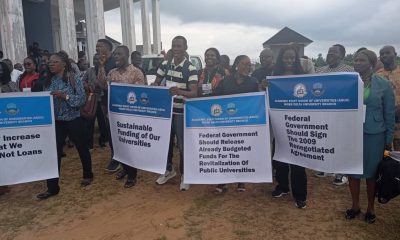
ASUU-NDU protest against FG loans, unpaid salaries,Non-Implementation of agreements …..says loans is generational slavery
-

 Business & Economy1 year ago
PC-NCG Issues Disclaimer on Purported Nigerian Coast Guard National Orientation Exercise In Anambra State
-
 Entertainment2 years ago
Jubilation galore as Parishioners of CKC Kurudu celebrate their cultural heritage ….FG should exploit our Cultural heritage to unite Nigerians-Rev Fr Dim
-

 Sports7 months ago
Bayelsa-born ex-football star’s son, Opuama donates spike shoes to Athletics Association
-

 General News2 years ago
Reps hold public hearing on FMC Ugwuaji Awkunanaw
-

 Law & Crime1 year ago
Legal practitioner raises alarm over threat to his life by CSP Muhammed Abdulkareem
-

 General News2 years ago
Celebration galore as UDA Successfully Elected New Exco ……I will digitalize processes that will raise UDA to greater height -Comr. Okejiri