
Law & Crime
Clean up Prisons from deeply- rooted Criminality,Drug Trafficking- HURIWA tasks Interor Minister

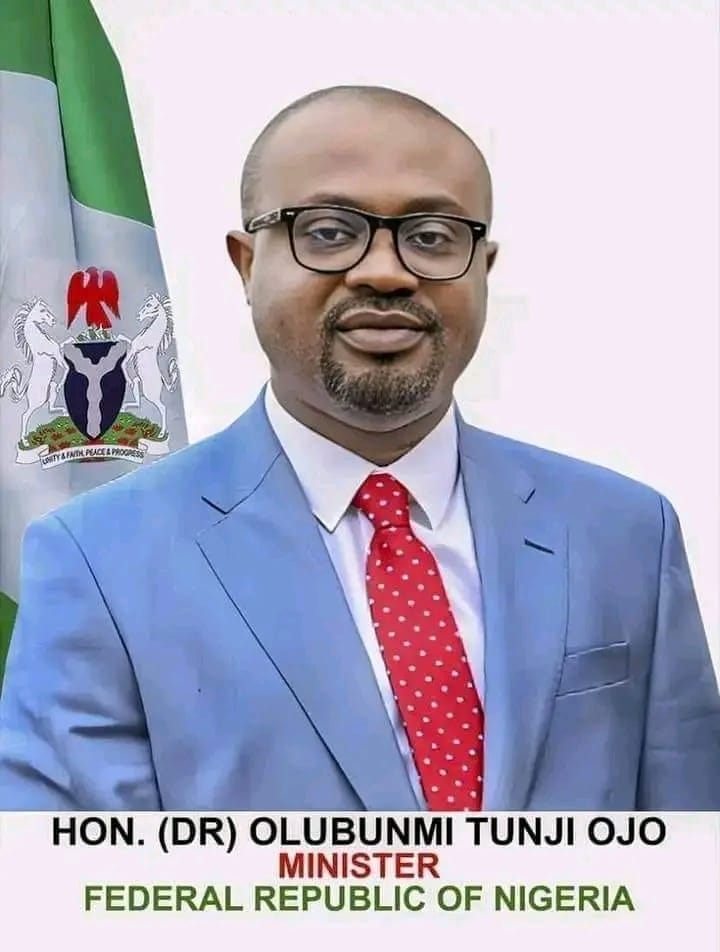
By George Mgbeleke
HUMAN RIGHTS WRITERS ASSOCIATION OF NIGERIA (HURIWA) has expressed shock and concern that months after the scandal broke out that Transgender Socialite Bobrisky, sentenced to 6-months in jail over Naira abuse lived in a special flat outside the prison facility which was found doubtful by an investigative panel constituted by the ministry of Interior, the authority has failed to clean up the Correctional facilities of all kinds of organised crimes including trafficking and selling of hard drugs and sex.
HURIWA recalled that the investigative panel reported that Bobrisky, real name Mr. Idriss Okeneye was allowed other privileges including frequent visits from family and friends, had a furnished single cell, a fridge and even a phone. The panel was instituted after a bribery allegation was made against Bobrisky by the Social media influencer Mr. Martins Otse, widely known as VeryDarkMan, who said officials of the Correctional Centre had been bribed to drop money laundering charges against Bobrisky, who vehemently denied the bribery allegation.
HURIWA said the federal ministry of Interior has since moved on and allowed the status quo to be maintained in the Correctional facilities across Nigeria said to be characterised by all kinds of organised criminality which include sex and drug trafficking, financial inducement of prison officials, aiding and abetting crimes including kidnapping, armed robbery and advanced fees fraud committed by inmates from right inside the Correctional facilities aided by rogue officials.
The Rights group in a media statement endorsed by the National Coordinator Comrade Emmanuel Nnadozie Onwubiko said the minister of Interior Mr. Olubunmi Tunji-Ojo seems preoccupied with overseeing only the Nigerian Immigration Service and should be directed by President Bola Ahmed Tinubu to pay greater attention towards sanitising the Correctional facilities of organised criminality because permitting these deeply rooted dangerous criminal activities to continue in the Correctional facilities amounted to grave threats to national security. HURIWA argued that it is too dangerous to allow terrorists, bandits and drug traffickers to continue to flourish in their businesses of the underworld from inside of Correctional facilities maintained by the taxpayers.
“The Federal government needs to investigate if these crimes have direct nexus to the frequent cases of prison breaks that Nigeria has witnessed in the past few years with hundreds of escaped hardened criminals, terrorists and murderers who escaped during prison breaks in Kuje, Abuja, Lokoja, Owerri, Ogbomosho and several other Correctional Centres are still roaming the streets without being recaptured by the security agents.
“These crimes going on inside of the Correctional facilities in the Country have gained notoriety for a long time,” just as HURIWA asserted that confronting the hydra-headed monster and ‘cutting off the head of this cobra’ is of extreme importance to minimise the occurrences of sophisticated and bloody crimes/terrorism which cause the violent deaths of innocent citizens.
HURIWA recalled that last week, the famous Journalist and activist Agba Jalingo had described Nigerian detention centres and prisons as hubs of extortion and illicit activities, alleging that access to basic rights in custody depends largely on money.
Speaking in a joint interview on Arise TV’s Perspectives programme alongside Media Room Hub publisher, Azuka Ogujiuba, Jalingo recounted his multiple experiences of arrest and imprisonment, including six months at Calabar prison during the administration of former Cross River State governor, Ben Ayade, and nine days at Kuje prison in Abuja.
He alleged that “there is no detention centre in Nigeria that you don’t pay,” adding that the claim that bail is free is false. “One of the biggest lies in Nigeria is that bail is free. Or that visit to prison is free. It is a lie. None of them is free. If you don’t pay money, you will not see your relative in prison,” Jalingo said.
According to him, extortion is systemic, ranging from minor payments to large sums. “In Calabar, they collect as little as N50. If you bring them N10,000, N20,000, any amount of money you give them, they collect. That is the truth of the matter. Even in Kuje, that is supposedly the best prison in West Africa, as it were, they still collect money from you.”
He further claimed that with enough money, detainees and inmates could access a range of prohibited items and privileges. “People stay in jail and do all kinds of things. There are those in jail with phones; they live large in prison. They have everything that they want. The only thing I did not see in jail is human parts and guns. Every other thing you want, including cocaine, it is in jail. If you want to have sex, you will have it. With the right amount of money, everything can be arranged.”
HURIWA said these allegations made by someone with an insider’s knowledge has been offered official seal with the most recent confirmation by the authority of the Nigeria Police Force that the Police Command in Enugu State had arrested a personnel of the Nigeria Correctional Service over alleged involvement in kidnapping-related transactions.
Security sources confirmed the story to Zagazola, a renowned security analyst, saying the suspect, identified as Mr. Ezu Ugochukwu, 41, also known as Sheyi, was attached to the Enugu Correctional Centre.
According to the sources , his arrest followed credible intelligence and confessions made by a suspect earlier apprehended in connection with a kidnapping case.
“Preliminary investigation revealed that the officer was in possession of the ATM card of the suspect while in prison custody, as well as those of other inmates.
HURIWA has therefore asked the minister of Interior to approach the Chairman, Chief Executive Officer of the National Drugs Law Enforcement Agency and the Director General of the Department of State Services (DSS) to jointly assist the federal ministry of Interior by embarking on the comprehensive uprooting of these organised criminality being masterminded by inmates and in most cases with the active connivance and conspiratorial partnership of officials of these Correctional facilities.






By Our Correspondent
Barely three weeks after the Independent National Electoral Commission (INEC) declared governor Adeleke of Accord party winner of Osun election, the All Progressives Congress, (APC) and the Peoples Democratic Party, (PDP) have challenged the outcome of the August 15, 2026, Osun Gubernatorial elections incumbent governor’s victory as Tribunal displays two Petitions
The petitions were confirmed in a notice sighted by our correspondent at the tribunal secretariat in Osogbo on Monday, formally commencing the legal process arising from the August 15 governorship election.
The development followed confirmation by the secretary of the tribunal, Pefe Belemore, that petitions challenging the election outcome had been filed.
According to Belemore, “The necessary notices would be displayed on the tribunal’s notice board before noon on Monday.”
At the opening of the tribunal earlier in the day, Belemore was present in the courtroom alongside other officials of the secretariat as preparations were made for the commencement of proceedings.
The APC and PDP are challenging the outcome of the election, which returned Adeleke as governor for another term in office.
The display of the petitions is expected to pave the way for the service of legal processes on the parties involved and subsequent proceedings before the tribunal.
The APC’s petition, marked EPT/OS/GOV/01/2026, was filed by its governorship candidate, Bola Oyebamiji.
Oyebamiji listed Adeleke, the Accord and the Independent National Electoral Commission, INEC, as respondents in the petition challenging the election outcome.
The PDP’s petition, marked EPT/OS/GOV/02/2026, was filed by Adebayo Olugbenga Adedamola against Adeleke, INEC and the Accord.
Law & Crime
IPC-SPJ Hub Condemns Attack on Kano Journalists, …. Tasks Security Agecies on Protection during Political Rallies

By David Owei
The Safety and Protection of Journalists (SPJ) Hub of the International Press Centre (IPC) condemns the attack on journalists who were returning from covering the All Progressives Congress (APC) rally at the Sani Abacha Stadium in Kano on Saturday, 5th September 2026.
Reports reaching the Hub states that, “a vehicle conveying four Radio Nigeria Pyramid FM staff, a journalist from Guarantee Radio and another from Daily Trust, was attacked by hoodlums, who repeatedly hit the vehicle, leaving the driver to sustain injuries, while some of the journalists were hit by broken glass from the damaged vehicle.”
“The incident happened after the APC had held the Tinubu Support Group rally at the Sani Abacha Stadium in Kano,” the report further revealed.
The Executive Director of IPC, Mr. Lanre Arogundade in a statement described the unfortunate incident, as a serious concern and threat to press freedom, considering the damage on a Radio Nigeria, Pyramid FM vehicle.
Mr. Arogundade noted that, “the campaigns and rally just recently started, and journalists should not be subject to any form of attack at this time, when political activities are gradually increasing ahead of the general elections.”
The Hub is therefore calling on all security agencies to at this time be intentional about safeguarding journalists, especially those deployed to the field to cover political activities, especially during large gatherings where journalists are exposed to potential risks.
The Hub is also admonishing media organisations and journalists covering elections to always conduct security scan and safety consciousness in coverage of electoral issues.

By George Mgbeleke
The Human Rights Writers Association of Nigeria (HURIWA) has demanded the immediate suspension of officials in charge of the National Cash Transfer Office and ordered a full-scale investigation into the N33.75 billion cash transfer that the Auditor-General for the Federation and states have failed to properly account for.
HURIWA in a statement by its national coordinator, Comrade Emmanuel Nnadozie Onwubiko emphasized that Nigerians cannot continue to watch helplessly as billions of naira meant for poor and vulnerable citizens disappear into unverifiable transactions.
The group called on the Economic and Financial Crimes Commission (EFCC) to launch a vigorous forensic investigation, trace every naira, and recover any amounts determined to have been wrongly paid, diverted, or misapplied.
The Auditor-General’s findings revealed a significant breakdown in financial controls governing one of the Federal Government’s most sensitive social intervention programs, as payments to 3,295,207 households across 35 states in 2023 could not be authenticated.
HURIWA demands explanations for incomplete beneficiary details on payment vouchers and the unavailability of necessary Remita statements for reconciliation purposes. Disturbingly, auditors were reportedly obstructed by National Cash Transfer Office staff from accessing these records.
HURIWA insists on a thorough investigation to follow the money from government accounts to the final recipients, stating that no official should use bureaucracy to shield themselves as unverified billions remain in limbo. The organization urges the EFCC to verify each payment and identify genuine vulnerable Nigerians among the beneficiaries. Misallocated funds must be recovered, and those responsible held accountable.
Moreover, HURIWA stresses that this situation extends beyond the N33.75 billion, highlighting additional discrepancies totaling N36.74 billion and stressing the need for a comprehensive audit of the entire National Cash Transfer Programme.
HURIWA challenges President Bola Ahmed Tinubu to uphold public accountability and restore faith in government poverty-alleviation efforts. The organization insists that political connections should not shield individuals from accountability and demands prompt action.
HURIWA demands the Federal Government:
1. Suspend officials of the National Cash Transfer Office pending investigation.
2. Direct the EFCC to conduct a full forensic probe into the N33.75 billion and related transactions.
3. Trace every naira and identify persons/entities that received funds.
4. Recover misallocated funds and return them to the Treasury.
5. Publish credible disbursement records.
6. Investigate and prosecute those obstructing auditors.
7. Conduct a full audit of the social intervention programme and publish findings.
8. Prosecute culpable individuals following investigations and due process.
HURIWA urges that the funds meant for vulnerable citizens must reach them and calls for immediate action to restore public trust in government operations.
Find the money. Recover the money. Name those responsible. Prosecute the culpable. Return Nigerians’ money to the Treasury.**
That is the minimum accountability Nigerians deserve.

HURIWA Mourns Bello Mandiya, Hourns a Dependable Ally of Human Rights
By George Mgbeleke The Human Rights Writers Association of Nigeria (HURIWA) mourns the death of former Senator representing Katsina South...


HURIWA DEMANDS IMMEDIATE REMOVAL OF HANDCUFFS FROM Ufoma Joseph Immanuel
By George Mgbeleke The Human Rights Writers Association of Nigeria (HURIWA) says the Nigerian Correctional Service must immediately stop the...
Northern Senator Forum Mourns Senator Bello Mandiya
By George Mgbeleke The Northern Senators Forum has received with profound sadness the news of the passing of Distinguished Senator...

APC withdraws petition challenging Gov.Adeleke’s Victory
By Our Correspondent In dramatic twice the All Progressives Congress (APC) has filed an application seeking to withdraw the petition...

NUJ FCT Raises N5.01m Trust Fund for Late Chairman’s Children …265 members raised N5.01m to secure education, welfare of Osadebamwen’s three children
By Our Correspondent In a bid to ensure a good welfare package for its departed members and their families, the...

APC chieftain demands probe, prosecution of Atiku over $40M, SIEMENS, SPV allegations
By Our Correspondent A chieftain of the All Progressives Congress (APC), Ntufam Hilliard Eta, has called on the nation’s anti-corruption...
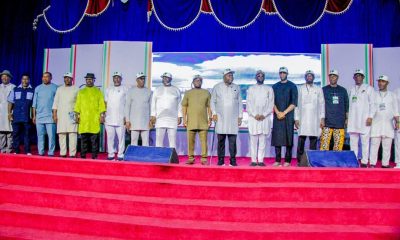

Nigerian Politics Becoming Less Violent, Says Gov Diri As CBM Holds Bayelsa Retreat
By David Owei Governor of Bayelsa State, Senator Douye Diri, has observed that the political arena in Nigeria was shifting...
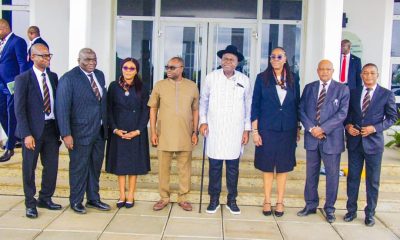

Gov Diri Seeks Increase In Law Students Quota At NDU
By David Owei Governor of Bayelsa State, Senator Douye Diri, has appealed to the Council of Legal Education to increase...


Nembe Spill: HOMEF demands cleanup, compensation, accountability
By David Owei The Health of Mother Earth Foundation (HOMEF) on Tuesday demanded urgent cleanup, compensation and accountability over an...

NCDMB to Feature Nwabuikwu’s The Pain and The Promise In Book Reading Session
By David Owei The Nigerian Content Development and Monitoring Board (NCDMB) will host the fifth edition of its Book Reading...
-
 Politics1 year ago
Gov Okpebholo moves to end Cultism *Threatens action against leading cult groups *Vows to demolish more cult houses in Edo State
-
 Politics1 year ago
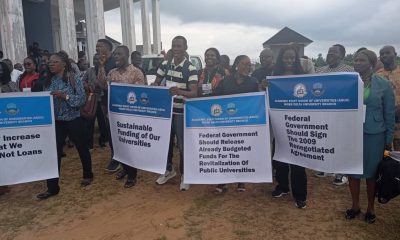
ASUU-NDU protest against FG loans, unpaid salaries,Non-Implementation of agreements …..says loans is generational slavery
-
 Business & Economy1 year ago
PC-NCG Issues Disclaimer on Purported Nigerian Coast Guard National Orientation Exercise In Anambra State
-
 Entertainment2 years ago
Jubilation galore as Parishioners of CKC Kurudu celebrate their cultural heritage ….FG should exploit our Cultural heritage to unite Nigerians-Rev Fr Dim
-

 Sports7 months ago
Bayelsa-born ex-football star’s son, Opuama donates spike shoes to Athletics Association
-

 General News2 years ago
Reps hold public hearing on FMC Ugwuaji Awkunanaw
-
 Law & Crime1 year ago
Legal practitioner raises alarm over threat to his life by CSP Muhammed Abdulkareem
-
 General News2 years ago
Celebration galore as UDA Successfully Elected New Exco ……I will digitalize processes that will raise UDA to greater height -Comr. Okejiri