
Politics
Electoral Act : Senate Seeks Burden of Proof on INEC


Electoral Act : Senate Seeks Burden of Proof on INEC
By Our Correspondent
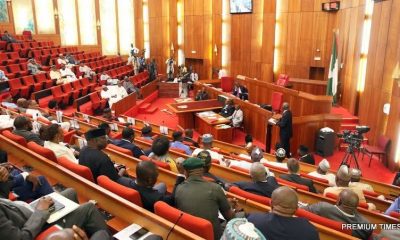
As the nation is gradually settling set for 2027 general elections , the Senate Wednesday at plenary , sought for shift of burden of proof on electoral litigations from litigants to the Independent National Electoral Commission ( INEC) , being organiser and supervisor of the elections .
The current legal position in the Nigerian electoral litigation maintains that the petitioner, who challenges an election result, bears the initial and primary burden of proof in line with the Evidence Act , which says ” he who asserts, must prove ” .
Consequently, while debate on general principles of the bill seeking for repeal of the 2022 Electoral Act and enactment of the 2025 Act , many of the Senators including the President of the Senate , Godswill Akpabio , posited that onus of proof in such litigations , should be placed on INEC .
Major contributors to the debate, Senator Seriake Dickson ( Bayelsa West) , who first made the submission in his contribution said burden of proof must shift to INEC to make it more credible and transparent in the sensitive duty of electoral conduct and supervision
He said : ” If there is one major achievement we must secure in this 10th Senate under your leadership, it should be meaningful electoral reform.
” We have the opportunity to modernize our system: authorise INEC to deploy more technology and back that authorisation with adequate funding.
“Our political parties are among the greatest challenges to our democracy; we must find ways to regulate and control party behaviour so democratic norms are strengthened.
“Critically, the burden of proof in electoral disputes must be reformed. Electoral matters are sui generis and require special treatment.
“The current rule — that the challenger must prove alleged irregularities — unfairly handicaps the process.
“INEC conducts elections, appoints ad – hoc officials, collates and announces results; it should therefore bear the primary burden of proving that elections were conducted peacefully and in accordance with the law. We should reflect this change in the Electoral Act”.
Dickson ‘s view was strongly supported by the President of the Senate , Godswill Akpabio by saying INEC must be held responsible for electoral litigations.
” I agree with Senator Dickson and other Senators who have called for shifting of burden of proof in electoral litigations from litigants to INEC being the organiser and supervisor of elections .
“INEC obviously must be held responsible because it is in the one responsible for conduct of the election , logistics for the elections and in the best pisition to carry the burden of proof in litigations “, he said .
Aside from the burden of proof in electoral litigations , other issues like eligible delegates at party primaries and defections of elected political office holders from party that sponsored them for election to another after assuming offices , were also raised by some Senators .
Senator Abdul Ningi ( Bauchi Central) in particular during his contribution, urged his colleagues to remember inclusion of all elected political office holders as eligible delegates for party primaries while Senator Muntari Dandutse ( Katsina South), called for provision in the proposed Act, that will make defectors to loose their oppositions .
Doing so according to him , will strengthen multi party democracy in Nigeria and make it to restore its dignity in the international community .





Politics
2027: HURIWA Knocks Tinubu for Blaming Opposition for Hunger, Ignoring Terrorists’ Captives

George Mgbeleke
The Human Rights Writers Association of Nigeria (HURIWA) has condemned President Bola Tinubu for blaming opposition parties for hunger and poverty while Nigerians continue to face deadly attacks, mass kidnappings and a crippling cost-of-living crisis.
HURIWA says Tinubu’s campaign flag-off in Kaduna exposed a disturbing disconnect between the President’s re-election ambitions and the urgent realities confronting millions of Nigerians who struggle daily to survive economic hardship and widespread insecurity.
In a statement signed by HURIWA national coodinator,Comrade Emmanuel Nnadozie Onwubiko,the association challenges Tinubu to explain why he chose to trade blame with political opponents instead of presenting Nigerians with a clear, time-bound and measurable plan to defeat terrorists, dismantle kidnapping networks and rescue citizens languishing in captivity.
HURIWA says the President’s decision to launch his re-election campaign in the North offered him an opportunity to confront the security emergency ravaging the region. Instead, the association argues, Tinubu used the occasion to blame previous political leaders for hunger and poverty without adequately addressing the immediate fears of citizens living under constant threats of violence.
HURIWA demands answers on abducted Nigerians
The association asks the President to explain what concrete measures his administration will deploy to rescue Nigerians reportedly held captive by terrorists and kidnappers in Borno, Kwara, Niger and other affected states.
HURIWA says Nigerians cannot afford another campaign season filled with promises while families continue to wait desperately for the return of abducted relatives and communities remain vulnerable to armed attacks.
It demands specific security targets, clear rescue strategies, stronger intelligence operations and accountability for security failures. HURIWA insists that the government must measure its performance by the lives it protects, the captives it rescues and the communities it makes safe.
The association warns that political rallies and displays of party strength cannot substitute for the constitutional responsibility to protect lives and property.
HURIWA: Tinubu must own the economic crisis
HURIWA also rejects Tinubu’s attempt to shift responsibility for hunger and poverty onto previous administrations and opposition parties.
At the Kaduna rally, the President declared: “They created the hunger. They created the poverty. We are trying to eradicate it.”
HURIWA says the statement amounts to an attempt to escape accountability for the consequences of the policies his administration has implemented since assuming office in May 2023.
The association argues that whatever economic difficulties Tinubu inherited, his government must answer for the effects of its own decisions, including petrol subsidy removal, exchange-rate reforms and the repeated increases in the cost of essential goods and services.
HURIWA says Nigerians now contend with soaring food prices, expensive transportation, rising electricity costs and unaffordable medicines, while small businesses struggle to absorb higher operating expenses.
It questions how the Federal Government has utilised the savings from petrol subsidy removal and demands a transparent account of the funds, the projects they have financed and the tangible benefits delivered to ordinary citizens.
HURIWA says the government cannot continually invoke economic reforms as justification for hardship without demonstrating when and how those reforms will improve household incomes, reduce poverty and restore purchasing power.
The association insists that improved public finances and investor confidence, which the administration cites as achievements, must translate into measurable improvements in the lives of Nigerians.
HURIWA challenges APC to accept responsibility
HURIWA says the APC cannot absolve itself of responsibility for Nigeria’s economic and security challenges after governing the country since 2015.
The association argues that the administrations of former President Muhammadu Buhari and Tinubu must answer for their respective policy decisions and records rather than blame political opponents for the consequences Nigerians experience today.
It challenges Tinubu to explain what his government has achieved to reduce poverty, protect vulnerable households, improve access to healthcare and restore economic opportunities for millions of citizens.
HURIWA says the President must stop treating legitimate complaints about hunger as political attacks and recognise them as urgent demands for accountability from citizens whose livelihoods have come under severe pressure.
The association maintains that Nigerians do not need political finger-pointing. They need affordable food, accessible healthcare, reliable electricity, reasonably priced transportation and security that allows farmers, traders, workers and businesses to operate without fear.
Security and welfare must come before campaign rhetoric
HURIWA demands that Tinubu prioritise the rescue of abducted Nigerians, intensify operations against terrorists and kidnappers, strengthen intelligence coordination and ensure that security agencies account for operational failures.
It also calls on the Federal Government to publish transparent information on the deployment of subsidy savings and strengthen targeted interventions for households bearing the heaviest burden of economic reforms.
HURIWA says the President must explain how his administration intends to reverse the decline in purchasing power, contain the rising cost of essential goods and services, and prevent further loss of lives to armed groups.
The association warns that Nigerians will scrutinise the administration’s record on security, economic welfare and public accountability as the 2027 presidential election approaches.
HURIWA insists that a re-election campaign must not become an escape route from responsibility. Tinubu must confront the insecurity and economic hardship facing Nigerians, account for his government’s decisions and present credible solutions rather than blame his political rivals.
By Our Correspondent
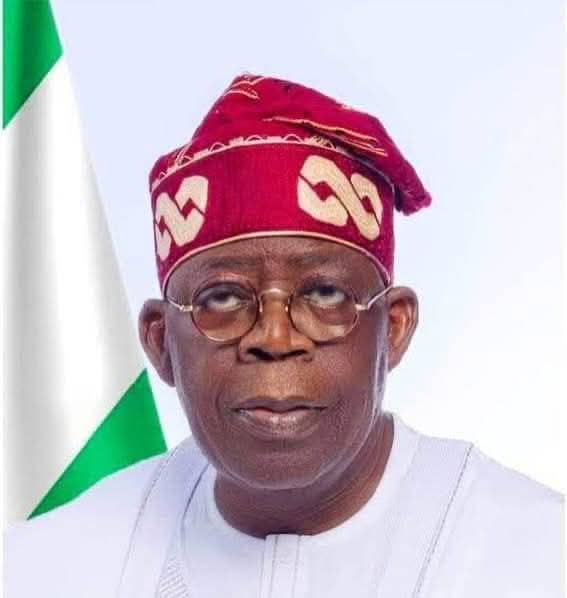
The All Progressives Congress,( APC) has flagged off its campaign for the 2027 general elections on Saturday in Kaduna, with President Bola Tinubu seeking a second term on the strength of his administration’s record.
President Tinubu the declaration at the Murtala Muhammed Square, Kaduna, saying that it was a great honour to return to the historic city where Nigeria’s early leaders converged before independence.
Tinubu thanked Kaduna voters for the victory they gave him in 2023, saying he had come to thank them and seek their mandate for a second term to fulfil his promises of prosperity, continuity and progress.
He dismissed opposition talk about hunger, saying “Who created it? They did. We are trying to eradicate it,” noting that his administration and APC governors now pay salaries regularly and are developing their states.
The President urged supporters to get their Permanent Voter Cards, (PVCs), and come out en masse on January 16, 2027 to re-elect APC at all levels. “Fuel subsidy is in our past. No more corruption, no more falsification of invoices, no more smuggling. We are ushering in a new era,” he said.
Vice President Kashim Shettima said Nigerians elected Tinubu in 2023 not because he was richest or best speaker, but because the alternative was calamity, and he urged Kaduna people to renew APC’s mandate.
Shettima listed gains in Kaduna, including Federal University of Applied Sciences, Kachia, Federal University of Education, Zaria, vocational institutes in Rigachikun, Soba and Samaru Kataf with over 4,000 graduates, and NELFUND support for students.
He said Tinubu has identified with the North for years, recalling how he gave political succour to former Vice President Atiku Abubakar in 2007, supported Nuhu Ribadu in 2011 and stood behind late President Muhammadu Buhari in 2015 and 2019, describing Tinubu as a man of honour.
Director-General of APC Presidential Campaign Council, Senator Abdulaziz Yari, said Kaduna is the spiritual centre of Northern politics and that all northern governors were present to show support.
Yari said Tinubu’s economic record, from exchange rate reforms to subsidy removal and trade balance, shows improvement, adding that APC will campaign with its records in infrastructure, health, education and cash transfers.
Yari declared, “Northern Nigeria is 101 per cent for you, Asiwaju Bola Ahmed Tinubu, by God’s grace.”
Governor Uba Sani, who welcomed guests, paid tribute to Tinubu and First Lady Senator Oluremi Tinubu for their love for Kaduna and the North, saying Renewed Hope Agenda has brought massive interventions in transport, education, healthcare, agriculture and security.
Sani recalled that Tinubu defied security advice to travel to Birnin Gwari in December 2022, and has now fulfilled his promises, with N117 billion released for the 123km Kaduna-Birnin Gwari road abandoned for over 40 years, and restoration of security on the corridor.
He also cited ongoing Zaria-Soba-Pambegua road, the $865 million Kaduna Metropolitan Red Line with $300 million already mobilized, N84 billion NELFUND benefit to North-West students, and 95 percent completion of N740 billion Abuja-Kaduna-Kano expressway.
Sani challenged the “so-called Northern candidate” to show track record of 200km of road while in office, noting that over 1,000km of roads have been constructed in the North under Tinubu and Shettima.
He warned supporters to be vigilant, alleging opposition has upgraded its campaign “from Facebook and Twitter to AI.”
Politics
APC Flags Off 2027 Campaign In Kaduna, Tinubu Seeks Renewed Mandate. From Cyril Mbah, Abuja. The All Progressives Congress, APC, on Saturday flagged off its campaign for the 2027 general elections in Kaduna, with President Bola Tinubu seeking a second term on the strength of his administration’s record. Speaking at the Murtala Muhammed Square, Kaduna, President Tinubu said it was a great honour to return to the historic city where Nigeria’s early leaders converged before independence. Tinubu thanked Kaduna voters for the victory they gave him in 2023, saying he had come to thank them and seek their mandate for a second term to fulfil his promises of prosperity, continuity and progress. He dismissed opposition talk about hunger, saying “Who created it? They did. We are trying to eradicate it,” noting that his administration and APC governors now pay salaries regularly and are developing their states. The President urged supporters to get their Permanent Voter Cards, (PVCs), and come out en masse on January 16, 2027 to re-elect APC at all levels. “Fuel subsidy is in our past. No more corruption, no more falsification of invoices, no more smuggling. We are ushering in a new era,” he said. Vice President Kashim Shettima said Nigerians elected Tinubu in 2023 not because he was richest or best speaker, but because the alternative was calamity, and he urged Kaduna people to renew APC’s mandate. Shettima listed gains in Kaduna, including Federal University of Applied Sciences, Kachia, Federal University of Education, Zaria, vocational institutes in Rigachikun, Soba and Samaru Kataf with over 4,000 graduates, and NELFUND support for students. He said Tinubu has identified with the North for years, recalling how he gave political succour to former Vice President Atiku Abubakar in 2007, supported Nuhu Ribadu in 2011 and stood behind late President Muhammadu Buhari in 2015 and 2019, describing Tinubu as a man of honour. Director-General of APC Presidential Campaign Council, Senator Abdulaziz Yari, said Kaduna is the spiritual centre of Northern politics and that all northern governors were present to show support. Yari said Tinubu’s economic record, from exchange rate reforms to subsidy removal and trade balance, shows improvement, adding that APC will campaign with its records in infrastructure, health, education and cash transfers. Yari declared, “Northern Nigeria is 101 per cent for you, Asiwaju Bola Ahmed Tinubu, by God’s grace.” Governor Uba Sani, who welcomed guests, paid tribute to Tinubu and First Lady Senator Oluremi Tinubu for their love for Kaduna and the North, saying Renewed Hope Agenda has brought massive interventions in transport, education, healthcare, agriculture and security. Sani recalled that Tinubu defied security advice to travel to Birnin Gwari in December 2022, and has now fulfilled his promises, with N117 billion released for the 123km Kaduna-Birnin Gwari road abandoned for over 40 years, and restoration of security on the corridor. He also cited ongoing Zaria-Soba-Pambegua road, the $865 million Kaduna Metropolitan Red Line with $300 million already mobilized, N84 billion NELFUND benefit to North-West students, and 95 percent completion of N740 billion Abuja-Kaduna-Kano expressway. Sani challenged the “so-called Northern candidate” to show track record of 200km of road while in office, noting that over 1,000km of roads have been constructed in the North under Tinubu and Shettima. He warned supporters to be vigilant, alleging opposition has upgraded its campaign “from Facebook and Twitter to AI.”
By our correspondent
As the 2027 election draws close, the All Progressive Congressive,(APC) on Saturday flagged off its campaign for the 2027 general elections in Kaduna, with President Bola Tinubu seeking a second term on the strength of his administration’s record.
The President who made this declaration at the Murtala Muhammed Square, Kaduna, President said it was a great honour to return to the historic city where Nigeria’s early leaders converged before independence.
Tinubu thanked Kaduna voters for the victory they gave him in 2023, saying he had come to thank them and seek their mandate for a second term to fulfil his promises of prosperity, continuity and progress.
He dismissed opposition talk about hunger, saying “Who created it? They did. We are trying to eradicate it,” noting that his administration and APC governors now pay salaries regularly and are developing their states.
!
The President urged supporters to get their Permanent Voter Cards, (PVCs), and come out en masse on January 16, 2027 to re-elect APC at all levels. “Fuel subsidy is in our past. No more corruption, no more falsification of invoices, no more smuggling. We are ushering in a new era,” he said.
Vice President Kashim Shettima said Nigerians elected Tinubu in 2023 not because he was richest or best speaker, but because the alternative was calamity, and he urged Kaduna people to renew APC’s mandate.
Shettima listed gains in Kaduna, including Federal University of Applied Sciences, Kachia, Federal University of Education, Zaria, vocational institutes in Rigachikun, Soba and Samaru Kataf with over 4,000 graduates, and NELFUND support for students.
He said Tinubu has identified with the North for years, recalling how he gave political succour to former Vice President Atiku Abubakar in 2007, supported Nuhu Ribadu in 2011 and stood behind late President Muhammadu Buhari in 2015 and 2019, describing Tinubu as a man of honour.
Director-General of APC Presidential Campaign Council, Senator Abdulaziz Yari, said Kaduna is the spiritual centre of Northern politics and that all northern governors were present to show support.
Yari said Tinubu’s economic record, from exchange rate reforms to subsidy removal and trade balance, shows improvement, adding that APC will campaign with its records in infrastructure, health, education and cash transfers.
Yari declared, “Northern Nigeria is 101 per cent for you, Asiwaju Bola Ahmed Tinubu, by God’s grace.”
Governor Uba Sani, who welcomed guests, paid tribute to Tinubu and First Lady Senator Oluremi Tinubu for their love for Kaduna and the North, saying Renewed Hope Agenda has brought massive interventions in transport, education, healthcare, agriculture and security.
Sani recalled that Tinubu defied security advice to travel to Birnin Gwari in December 2022, and has now fulfilled his promises, with N117 billion released for the 123km Kaduna-Birnin Gwari road abandoned for over 40 years, and restoration of security on the corridor.
He also cited ongoing Zaria-Soba-Pambegua road, the $865 million Kaduna Metropolitan Red Line with $300 million already mobilized, N84 billion NELFUND benefit to North-West students, and 95 percent completion of N740 billion Abuja-Kaduna-Kano expressway.
Sani challenged the “so-called Northern candidate” to show track record of 200km of road while in office, noting that over 1,000km of roads have been constructed in the North under Tinubu and Shettima.
He warned supporters to be vigilant, alleging opposition has upgraded its campaign “from Facebook and Twitter to AI.” Flags Off 2027 Campaign In Kaduna, Tinubu Seeks Renewed Mandate.
F


2027: HURIWA Knocks Tinubu for Blaming Opposition for Hunger, Ignoring Terrorists’ Captives
George Mgbeleke The Human Rights Writers Association of Nigeria (HURIWA) has condemned President Bola Tinubu for blaming opposition parties for...
Stop cursing your leaders, pray for them, Islamic cleric tells Nigerians
By our correspondent An Islamic scholar and Chief Imam of Nagazi-Uvete Jumu’ah Mosque, Okene, Imam Murtadha Gusau, has warned Nigerians...

NASS Receives Proposals for New LGAs as Lagos Seeks 37, Akwa Ibom Missing in the List
By Our Correspondent The National Assembly has allegedly received proposals for the creation of additional local government areas (LGAs) across...
HURIWA Demands Immediate Withdrawal of Nutritionists’ Council Bill, Warns Against Criminalising Nigeria’s Indigenous Food Heritage
By George Mgbeleke The Human Rights Writers Association of Nigeria (HURIWA) unequivocally endorses the position of the Centre for African...

President Tinubu Flags Off 2027 Campaign In Kaduna, Seeks Renewed Mandate
By Our Correspondent The All Progressives Congress,( APC) has flagged off its campaign for the 2027 general elections on Saturday...
APC Flags Off 2027 Campaign In Kaduna, Tinubu Seeks Renewed Mandate. From Cyril Mbah, Abuja. The All Progressives Congress, APC, on Saturday flagged off its campaign for the 2027 general elections in Kaduna, with President Bola Tinubu seeking a second term on the strength of his administration’s record. Speaking at the Murtala Muhammed Square, Kaduna, President Tinubu said it was a great honour to return to the historic city where Nigeria’s early leaders converged before independence. Tinubu thanked Kaduna voters for the victory they gave him in 2023, saying he had come to thank them and seek their mandate for a second term to fulfil his promises of prosperity, continuity and progress. He dismissed opposition talk about hunger, saying “Who created it? They did. We are trying to eradicate it,” noting that his administration and APC governors now pay salaries regularly and are developing their states. The President urged supporters to get their Permanent Voter Cards, (PVCs), and come out en masse on January 16, 2027 to re-elect APC at all levels. “Fuel subsidy is in our past. No more corruption, no more falsification of invoices, no more smuggling. We are ushering in a new era,” he said. Vice President Kashim Shettima said Nigerians elected Tinubu in 2023 not because he was richest or best speaker, but because the alternative was calamity, and he urged Kaduna people to renew APC’s mandate. Shettima listed gains in Kaduna, including Federal University of Applied Sciences, Kachia, Federal University of Education, Zaria, vocational institutes in Rigachikun, Soba and Samaru Kataf with over 4,000 graduates, and NELFUND support for students. He said Tinubu has identified with the North for years, recalling how he gave political succour to former Vice President Atiku Abubakar in 2007, supported Nuhu Ribadu in 2011 and stood behind late President Muhammadu Buhari in 2015 and 2019, describing Tinubu as a man of honour. Director-General of APC Presidential Campaign Council, Senator Abdulaziz Yari, said Kaduna is the spiritual centre of Northern politics and that all northern governors were present to show support. Yari said Tinubu’s economic record, from exchange rate reforms to subsidy removal and trade balance, shows improvement, adding that APC will campaign with its records in infrastructure, health, education and cash transfers. Yari declared, “Northern Nigeria is 101 per cent for you, Asiwaju Bola Ahmed Tinubu, by God’s grace.” Governor Uba Sani, who welcomed guests, paid tribute to Tinubu and First Lady Senator Oluremi Tinubu for their love for Kaduna and the North, saying Renewed Hope Agenda has brought massive interventions in transport, education, healthcare, agriculture and security. Sani recalled that Tinubu defied security advice to travel to Birnin Gwari in December 2022, and has now fulfilled his promises, with N117 billion released for the 123km Kaduna-Birnin Gwari road abandoned for over 40 years, and restoration of security on the corridor. He also cited ongoing Zaria-Soba-Pambegua road, the $865 million Kaduna Metropolitan Red Line with $300 million already mobilized, N84 billion NELFUND benefit to North-West students, and 95 percent completion of N740 billion Abuja-Kaduna-Kano expressway. Sani challenged the “so-called Northern candidate” to show track record of 200km of road while in office, noting that over 1,000km of roads have been constructed in the North under Tinubu and Shettima. He warned supporters to be vigilant, alleging opposition has upgraded its campaign “from Facebook and Twitter to AI.”
By our correspondent As the 2027 election draws close, the All Progressive Congressive,(APC) on Saturday flagged off its campaign for...

Gov Fubara Inspects Creek Road Market, Assures Completion by January 2027
By George Mgbeleke Rivers State Governor, Sir Siminalayi Fubara, has expressed satisfaction with the pace and quality of work at...


Shouts of Joy Rock the World As Pastor Chris Opens Final Healing Streams Edition for 2026
By Our Correspondent Hundreds of millions participate in the global healing crusade as Pastor Chris ministers to the sick in...

Abuja land: Jordan Nyesom-Wike never admitted receiving $2.1m from anyone -Onoja
By Our Correspondent A Senior Advocate of Nigeria (SAN), Dr James Ogwu Onoja has warned social media commentators and bloggers...

Panel on death of 37dead illegal Miners: Commissioner alleges NSCDC goes beyond its official role of engagement
By Uthman Baba -Naseer,Minna The Commissioner for Homeland Security in Niger State Mr. Maurice Bello Magaji has alleged that the...
-
 Politics1 year ago
Gov Okpebholo moves to end Cultism *Threatens action against leading cult groups *Vows to demolish more cult houses in Edo State
-
 Politics1 year ago
ASUU-NDU protest against FG loans, unpaid salaries,Non-Implementation of agreements …..says loans is generational slavery
-
 Business & Economy1 year ago
PC-NCG Issues Disclaimer on Purported Nigerian Coast Guard National Orientation Exercise In Anambra State
-
 Entertainment2 years ago
Jubilation galore as Parishioners of CKC Kurudu celebrate their cultural heritage ….FG should exploit our Cultural heritage to unite Nigerians-Rev Fr Dim
-

 Sports8 months ago
Bayelsa-born ex-football star’s son, Opuama donates spike shoes to Athletics Association
-

 General News2 years ago
Reps hold public hearing on FMC Ugwuaji Awkunanaw
-
 Law & Crime1 year ago
Legal practitioner raises alarm over threat to his life by CSP Muhammed Abdulkareem
-
 General News2 years ago
Celebration galore as UDA Successfully Elected New Exco ……I will digitalize processes that will raise UDA to greater height -Comr. Okejiri