
Opinion
FOR GOVERNOR MUTFWANG, PEACE IS GOVERNANCE

By Emmanuel Nnadozie Onwubiko
Pope Leo XIV at his inauguration greeted the faithful and the world invoking peace and pledging to work for a united Church faithful to Jesus and to the Gospel.
Pope Leo XIV greeted the city of Rome and the world with these words at his first appearance as the Successor of Peter from the Central Loggia of St Peter’s Basilica:
Dear brothers and sisters, these are the first words spoken by the risen Christ, the Good Shepherd who laid down His life for God’s flock. I would like this greeting of peace to resound in your hearts, in your families, among all people, wherever they may be, in every nation and throughout the world. Peace be with you!
It is the peace of the risen Christ. A peace that is unarmed and disarming, humble and persevering. A peace that comes from God, the God who loves us all, unconditionally.
We can still hear the faint yet ever courageous voice of Pope Francis as he blessed Rome, the Pope who blessed Rome, who gave his blessing to the world, the whole world, on the morning of Easter. Allow me to extend that same blessing: God loves us, God loves you all, and evil will not prevail! All of us are in God’s hands. So, let us move forward, without fear, together, hand in hand with God and with one another other! We are followers of Christ. Christ goes before us. The world needs his light. Humanity needs him as the bridge that can lead us to God and his love. Help us, one and all, to build bridges through dialogue and encounter, joining together as one people, always at peace. Thank you, Pope Francis! (Source: The Vatican). These lovely words offers us an insight into the very strategic place of peace and dialogue in the governance of any entity.
In a political climate often marred by inconsistency and opportunism, Governor Caleb Manasseh Mutfwang of Plateau State stands out as a leader whose commitment to peace and security continues to command respect and inspire hope. Since assuming office in May 2023, his administration has anchored governance on a central principle; that the protection of lives and property is not merely a constitutional obligation but the foundation of social and economic renewal.
This essay is not an exercise in praise-singing. It is a sober reflection on leadership grounded in principle. The challenges facing Plateau, and indeed Nigeria, are enormous. Yet, in the midst of cynicism, it is vital to identify and amplify those who, with visible results, strive to lead differently; and to remind them of the temptations that have undone many before them.
Governor Mutfwang understands that without peace, no society can attract investment, nurture innovation, or generate sustainable prosperity. His approach has been deliberate, people-centred, and unpretentious. At his inauguration, he vowed that under his leadership, security would go beyond rhetoric to action — and that he would be firm, fair, and just to all, regardless of political, ethnic, or religious identity.
Barely weeks after being declared Governor-Elect by the Independent National Electoral Commission (INEC), his resolve was severely tested. His hometown, Mangu, and the Deputy Governor’s local government area, Riyom, came under sustained attacks aimed at destabilizing the state. Instead of resorting to blame games (the default posture of many politicians) Governor Mutfwang chose empathy and action. He visited internally displaced persons (IDPs) in Riyom, Barkin-Ladi, Mangu, and Bokkos, many of whom had languished in camps for nearly two decades. His presence rekindled hope in communities long abandoned by power. For the first time in years, displaced families felt that leadership had rediscovered its humanity.
More crucially, Governor Mutfwang demonstrated the courage to redefine Plateau’s security crisis. While others continued to hide behind the convenient label of “herder-farmer clashes,” he called the violence what it truly is; a genocide against defenceless rural populations. That clarity of language and conviction of purpose resonated across Nigeria. Security analysts and civil society observers have since echoed his view, acknowledging that the pattern and coordination of attacks reveal something far graver than mere communal conflict.
Determined to secure his state, Governor Mutfwang embarked on strategic engagements with the nation’s security hierarchy. In Abuja, he met with the Chief of Defence Staff, the service chiefs, the Inspector-General of Police, the Department of State Services (DSS), the National Emergency Management Agency (NEMA), and President Bola Ahmed Tinubu. His mission was clear: to present the true picture of the humanitarian crisis on the Plateau and secure tangible commitments to end it. The outcome was remarkable. For the first time in many years, Nigeria’s top security chiefs visited Plateau, and their coordinated intervention helped avert further bloodshed in several threatened communities.
These efforts yielded measurable results. The establishment of new Police Mobile Force squadrons in Gashish, Bassa, and the well-equipped MOPOL 81 in Kwall has enhanced community protection. Security presence in Bassa, Riyom, and Jos South has become a deterrent to the armed marauders who once terrorized those areas with impunity.
This is not to say the security architecture is flawless. The nightmares of guns, arson, abduction and displacement are not yet behind us. But the fact that new units now exist, are operational, and are visibly deployed is itself a break with prior neglect. It is a product not of wish, but of political pressure, institutional persuasion, and the governor’s insistence that external security bodies see Plateau as a test, not as a fringe or lost territory.
No governor can wait for Abuja to solve everything. At the state level, Governor Mutfwang revived and modernized Operation Rainbow, a once-dormant security outfit created under former Governor Jonah Jang. The initiative began with the recruitment, training, and equipping of 600 trusted youths from vulnerable communities in Mangu, Barkin-Ladi, Riyom, Bokkos, and Jos South. Their intelligence efforts have already prevented several planned attacks. Plans are also underway to recruit another 1,450 young men and women across the 17 local government areas to strengthen grassroots vigilance.
To improve logistics and rapid response, the administration repaired dozens of grounded patrol vehicles and procured new Hilux vans and motorcycles. In partnership with local governments, 17 new Hilux vehicles were handed over to Operation Rainbow. The government also established a functional Security and Information Centre with a toll-free emergency line, enabling citizens to report threats and suspicious activities. Complementing this is the Plateau Special Activities Centre, equipped with surveillance technology to monitor security developments across the state.
Beyond physical security, the Mutfwang administration is determined to restore the dignity of displaced persons. In 2024, he inaugurated a Resettlement Committee tasked with facilitating the safe return of IDPs to their ancestral homes; guided by the principle that no community should be resettled without guaranteed safety. By May 2025, he established a Fact-Finding Committee to identify affected communities, assess destruction, trace attack routes, unmask perpetrators, and propose long-term justice and reconciliation measures.
Recognizing that sustainable peace depends on dialogue, Governor Mutfwang also established a State Inter-Religious Advisory Committee comprising faith leaders and community representatives. The committee has since evolved into a vital platform for early warning, interfaith understanding, and conflict prevention across Plateau’s diverse communities.
Security may be the central pillar of his administration, but it does not stand alone. Governance requires strong institutions. In that regard, Governor Mutfwang is laying solid foundations. He appointed retired Brigadier-General Gakji Shipi as Special Adviser on Security and Homeland Safety; a strategic move that reflects seriousness rather than patronage. In 2024, he swore in new permanent secretaries to strengthen the civil service around merit, transparency, and competence. By August 2025, he expanded his advisory team to include senior aides focused on community relations across ethnic lines, signaling inclusiveness and grassroots engagement.
Here it is necessary (painful, perhaps, but necessary) to pivot from praise to counsel. Among the greatest trials for any politician in Nigeria is the pressure to decamp to the ruling party. In our contemporary political ecology, defections are normalized; loyalty is treated as optional; ideology is secondary to alignment with executive favour.
Governor Mutfwang’s leadership has shown a rare consistency in an era defined by political expediency. His loyalty to the Peoples Democratic Party (PDP), the platform that gave him victory, remains firm. While many peers have defected to the ruling All Progressives Congress (APC) in search of political shelter or to evade scrutiny, Mutfwang has resisted such temptation. His steadfastness stands as a refreshing contrast to the unprincipled defections that continue to erode Nigeria’s democracy.
If he were to abandon the PDP, he would inevitably dilute the moral and political capital that defines him. He would risk being seen as just another political opportunist who traded principle for convenience. The people of Plateau, who view him as a symbol of stability and sincerity, would see such a move as betrayal.
Governor Mutfwang must, therefore, stay the course. Remaining in the PDP is not merely about partisanship; it is about integrity; about affirming that character still matters in leadership. Plateau does not need another political drifter; it needs a statesman who values service above self-interest. His refusal to compromise his ideals will not only preserve his credibility but also elevate him among Nigeria’s most principled leaders.
History has rarely been kind to defectors. Those who fled to the ruling party to escape scrutiny often ended up diminished and distrusted. They lost both the respect of their people and the moral authority that once defined them. Governor Mutfwang must not join that crowd of political lepers. His enduring legacy should be that of a man who chose the harder right over the easier wrong.
The future of Plateau lies with leaders who understand that peace is not achieved by speeches or slogans but by sustained investment in justice, empathy, and human security. Governor Mutfwang’s record reflects this understanding. Through his actions, he has shown that leadership, at its best, is about courage; the courage to speak truth to power, to stand by one’s convictions, and to place humanity above politics.
As he continues to rebuild trust among communities, resettle displaced families, and restore Plateau’s image as the Home of Peace and Tourism, Governor Mutfwang must remain focused. His administration has already laid the groundwork for a new Plateau; one defined not by violence but by unity, not by fear but by hope. If he sustains this momentum and resists political blackmail, he will not only transform Plateau but also emerge as one of Nigeria’s most respected leaders.
The rewards of perseverance are immense: a Plateau where farmers no longer fear raids, where displaced families return with dignity, where children learn in safety, and where businesses thrive. Such a Plateau would stand as a model for the Middle Belt, and for Nigeria at large.
In the end, Caleb Mutfwang will not be judged by how comfortably he stayed in office, but by how profoundly he transformed the meaning of governance in a land long scarred by neglect and violence.
This is the moment for principled politics; for integrity, consistency, and courage.
And let me hazard a prediction: if Governor Mutfwang remains steadfast, history will record that the turning point for Plateau came not through force or theatrics, but through unwavering fidelity to justice, security, and the common good.
The people of Plateau deserve peace. Nigeria needs examples of integrity in power. Governor Caleb Manasseh Mutfwang must continue to embody both; for in an era of opportunism, consistency is the greatest form of courage.
* EMMANUEL NNADOZIE ONWUBIKO is the founder of the HUMAN RIGHTS WRITERS ASSOCIATION OF NIGERIA (HURIWA) and a former NATIONAL COMMISSIONER OF THE NATIONAL HUMAN RIGHTS COMMISSION OF NIGERIA.

Apparently disturbed by the ravaging attacks of bandits in some parts of the country, Progressive Governors’ Forum have resolved to strengthen local security towards preventing possible attacks that could truncate the development in their states.
The governors stated that strengthening community-based security initiatives and better intelligence gathering from the grassroots were identified as major antidote to gunmen attacks across the country.
The communique issued by the governors on Saturday after a two-day meeting in Lagos where security, economy, and social welfare issues were reviewed with the aim to address hurdles that may affect growth and development in the country.
The communique was read by the chairman of the Forum, Governor Hope Nzodimma of Imo State.
Governors in attendance attendance included: Kebbi, Dr. Nasir Idris, Edo, Senator Monday Okpebholo, Ogun, Dapo Abiodun, Ekiti, Biodun Oyebanji, Ondo, Lucky Aiyedatiwa, Sokoto, Ahmad Aliyu, Akwa-Ibom, Pastor Umo Eno, Delta, Sheriff Oborevwori, Enugu, Peter Mbah, Kaduna, Uba Sani and Katsina, Dikko Umar.
The host Governor, Mr Babajide Sanwo-Olu said, “The engagement provided an opportunity to review the nation’s current trajectory, deepen coordination among progressive governors, and reaffirm the Forum’s unwavering support for the Renewed Hope agenda of His Excellency President Bola Ahmed Tinubu GCFR.
According to the governors on platform of the All Progressives Congress (APC), the decision to embark on strengthening local security architecture was taking after a review of the security situation across the country particularly as it affects each states.
The Forum reviewed the security situation across the country and expressed appreciation for the improved coordination between federal, state and local security structures, as well as the courage and sacrifices of security agencies and community volunteers.
The Forum commended the President for the ongoing re-engineering in the security architecture of the country.
Governors reiterated that safety of lives and property remains a non-negotiable obligation of government.
The PGF resolved to continue strengthening community-based security initiatives, intelligence gathering, conflict-prevention mechanisms and support for victims of violence and disaster.
The Forum underscored the importance of social cohesion, inter-faith harmony and inter-ethnic understanding, and urged all leaders to use their voices and platforms to promote unity, moderation and respect, while isolating criminality and hate speech in all its forms.
“The meeting served as an important platform for aligning state-level priorities with national reforms, reinforcing the centrality of citizens, citizens’ welfare in governance, and consolidating the Forum’s shared vision of people focused and development-driven leadership at all levels of government.
“The Forum undertook a broad review of the political, economic, and social environment in the country.
“Governors reaffirmed that the ultimate purpose of every reform must be to improve the lives of Nigerians, protect their dignity, and expand opportunities for all, rural and urban, youth and elderly, women and men, workers, entrepreneurs, and vulnerable groups alike.
“The Forum noted ongoing efforts at food security, power sector improvement, transport and infrastructure upgrades, social investment, and support for productive enterprises, and pledged to align state policies to maximise the benefits of these reforms for citizens in every ward and in our communities.
The Progressive Governors Forum resolved to intensify state-level interventions in areas such as food production and distribution, support to small and medium-scale enterprises, youth employment, social protection for the poorest and most vulnerable, and targeted relief for workers and low-income households.
“We, the Progressive Governors, are committed to working closely with federal institutions, the National Economic Council and local governments to ensure that things keep improving, that no group is left behind, and that the gains of reforms continue to translate into visible improvement in the quality of life of the people.”
Opinion
Setting the Record Straight on the Defamation Case Involving Senator Natasha Akpoti-Uduaghan
By Jackson Udom
On 5 December 2025, Senator Natasha Akpoti-Uduaghan again resorted to social media to claim incorrectly and misleadingly that His Excellency, the President of the Senate, Distinguished Senator Godswill Akpabio, had only just filed a multi-billion-naira defamation suit against her over her unfounded allegations of sexual misconduct.
These allegations, as the public is well aware, have never been supported by a single shred of evidence before the Senate Committee or before any competent authority.
For the avoidance of doubt, the facts are clear, verifiable, and already before the court.
Following Senator Akpoti-Uduaghan’s grave and unsubstantiated accusations capable of inflicting severe reputational damage, Senator Akpabio exercised his constitutional right to seek legal redress. The suit was filed over three months ago. Its progress was temporarily delayed by routine administrative processes and the normal judicial procedures.
Upon the resumption of judicial activities on the file, several attempts were made by the court’s bailiff to personally serve Senator Akpoti-Uduaghan with the originating processes. Each attempt failed due to her deliberate evasion of service, as deposed to under oath in the bailiff’s affidavit now before the court. Only after these repeated evasions did the court, in November this year granted the application for substituted service.
Her claim that the matter was “just filed” is therefore false, misleading, and intended to distort public understanding of the case.
We reiterate that legal disputes are resolved in courtrooms, not through orchestrated narratives and staged outrage on social-media platforms. The online applause Senator Akpoti-Uduaghan habitually seeks cannot replace credible evidence, legal procedure, or judicial scrutiny.
This behaviour is consistent with her pattern during her six-month Senate suspension, an entirely lawful disciplinary measure she sought to delegitimise through digital agitation, only to ultimately serve the suspension in full.
It is time for Senator Akpoti-Uduaghan to present the “evidence” she claims to possess before a court of competent jurisdiction, rather than relying on sensationalised commentary designed solely to attract sympathy and obscure the facts.
The law is guided by proof, procedure, and due process, not sentiment, not emotion, and certainly not social-media theatrics. She is advised to properly instruct her lawyers, file her defence, and finally provide the evidence she purports to have for the baseless allegations she has peddled over this matter.
This is that her golden opportunity. The public, the media, and the legal community now await her defence to the unsubstantiated accusations capable .
Udom is Special Assistant To President Of The Senate On Media.
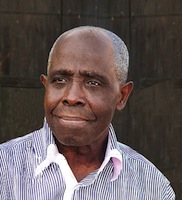
Prof (Mazi) Okoro Ojiaku,a native of Imo state and the author of the Book on “Before Nigeria was” described an Igboman as an adventurist and competitive in nature which pinches him with other ethnic groups in Nigeria.
In this interview with the Publisher of Daily Echoes Media, Ignatius Okorocha, Prof Ojiaku dived into the genealogy of the country known as Nigeria.
He speaks on other issues of national importance.
Excerpts:
Prof can you tell us the import of your book on “Before Nigeria was”
Well,good to tell you that I am from Imo State and I am the author of the “Book Before Nigeria was” which is now the subject of our discussion.
Actually, I started with a question ” Why are we (Nigerians) the way we are today.That was the initial interest I had and it was in the cause of the research that I discovered that the question could be the other way round, “how did Nigeria become the way it is and it was on that note that I started with ‘Ecology’ that is the study of an environment and human behaviour in this country, which is the subject of my research. That is how Nigeria became what it is today was conditioned by the environment in which the various communities live in, comprising; the Igbo,the Yoruba,the Kanuri and the Hausa.
In the case of the Fulani, I discovered that they were included into the society and they came into the society and because of their adventure into the society alot of things started going different ways.That is, if they had not entered Nigeria the way they did, possibly the other three ethnic groups would have gotten themselves together and Nigeria would have become a different country today.
What other things in your book do you think can attract Nigerians to long to read this book?
There are two things that differentiate this book from other books. One of them is the meaning of the word Nigeria. South of River Niger and Benue is not Nigeria.What is Nigeria is not Nigeria by Lord Lugard and his virtual wife. Anybody North of Benue, North of Niger is a Nigerian but the interpretation dies not include Anybody South of any of those Rivers. That is one.
The second is the word Nigeria actually is an insult to the people who are called Nigerians because they are not what Nigeria means. Since they are not what Nigeria means,the question is what does Nigeria mean by the people who founded and coined the country, that is Mrs Lugard Niger-Aria. We, are not in Niger-aria, we are in Niger and Benue aria. So, there is no need saying that we are in Nigeria because you are in Niger-aria. A person who is in Niger-aria can be a Nigerian but a person who is in Niger/Benue-aria can not get a Nigeria. And I insisted that the word Nigeria should not apply to people in the South and secondly that Nigeria has to find a name for itself, possibly something like Nock-aria, that is area in the North. The North civilization which was about 500 BC and existed in this country called Nigeria. So, if all of us are going to be Nigerians it is Nock- aria not Nigeria.
The title of the book is before Nigeria was. The Ecology of the Igbos, the Yoruba, the Kanuri. These are the , major ethnic groups that make up Nigeria and are really the major ethnic groups in Nigeria. Fulani are not.
Talking about the Igbo ethnic group,we discovered that there is this perceived level of hatred mated on the Igbos by other ethnic groups in Nigeria. Why is it so?
The Igbos are not hated rather they are misunderstood and the major characteristics of an Igboman tend to frighten others, especially because of their competitive nature, their resilience,and their adventurism, these are the things that others have not been able to understand and whenever they come across the Igbo people, these particular features tend to disturb them. So, there is resentment against the Igbos because of these qualities.
Like I said before, the seemingly hatred against the Igboman is born out of his characteristics nature. His right is built around competition and it is one of the major principles that really instill into his psychic-the struggle to survive by competition. You don’t expect things to come to you.You have to work for it and consequently,it became part of their lives to go anywhere and survive because, if you have to survive not just in your own environment, but you can survive in anyother environment and when they go to a different environment where the people are not competitive they do the best they can to survive. An Igboman will go to a place empty handed and by the time he lives he has accumulated a lot. An Igboman is one person in Nigeria that can go anywhere and make the place his home permanently, build industries, establish and stay there as his home and the natives find a way of resenting him. The question is ‘Why? It is not because an Igboman is antagonistic, no it is because of his competitive nature aside other tribes don’t know how to handle competition, it frightens them and it worries them.
Don’t you think that this perceived antagonistic behaviour of other tribes in Nigeria against the Igbos may have been as a result of the civil war between Nigeria and Biafra?
You see Nigeria felt that she has defeated the Igbos in 1970 and destroyed everything they had. Do you know that in 1970 an average Igboman did not have upto N20 but from 1975 on, the Igbos began to resurrect. The question is why? How did they do it. The Igboman was the last…but 10years after the civil war he came to be the first. What held other people back, was it the Igbos. The Igboman was not in politics, he had no money, he had no power, he had no control because he was ostracised he sought of started working on himself. He was able to come back to life and Nigeria became very very disturbed by it because this somebody they thought they have finished but he is now back to life.Those people who were his destroyers are now still looking for a way to live.
Again looking at power equation in Nigeria by way of rotational presidency, it does appear that the Igbo have been shortchanged. Prior to the emergence of Bola Ahmed Tinubu,it was expected that an Igboman would emerge as the president of Nigeria. And having lost that opportunity in 2023 that power may likely move to North after Tinubu. When will an Igboman ascend the seat of presidency in Nigeria?
There are two answers to it. In my own view I don’t think the Igboman should try to ask Nigerians to make a leader.I think Nigeria has to come and beg an Igboman to be his president because without the igbos Nigeria will never succeed. The only true Nigerian in Nigeria is an Igbo. That is he lives anywhere,anyhow, with anybody under any condition. An Igboman goes to Kaduna and becomes a Kaduna man, he goes to Abeokuta, he builds a house and becomes an Abeokuta man. He goes to Kafanchan builds a house and ,ives there. In otherwords he can go to any part of Nigeria and resides there as his own. Therefore he is the only one person who qualifies as a Nigerian. The other people are sort of fake Nigerians. They are more interested in what they can get rather than what they can give.
President Bola Ahmed Tinubu recently accorded amnesty to some convicts in various Prisons in the country but our brother Nnamdi Kanu was not included among such people. What do you think could be the reason for denying Kanu prerogative of mercy by the Federal government?
Actually in my own view Kanu’s incarceration is not particular to Kanu it is the incarceration of the Igbos in politics. The average Igboman in Nigeria today is incarcerated because a Fulani person can not be incarcerated in Nigeria as Kanu has been, a Yorubaman can not be incarcerated for so long as Kanu has been neither a Jukun or even anybody from the North but this is one person whose own community is unable to bring out after so many years inspite of court judgement.
The question is why?
There are two reasons. The first is lack of unity of purpose among the igbos. The second is because of the Igboman’s personal ambition. This is because he doesn’t talk as a group. He is for self. They said it is the golebility of an Igboman. He can easily be deceived. Whatever position he holds he can easily be bought over but a Fulani can not be. A Yorubaman can not be bought over but if he is bought over,he can easily decieve you to the point that he can never be deceived or bought over.
The second in my view is that a person like Peter Obi should not be bothering himself with Nigerian leadership struggle. Nigeria has to beg Obi to be its leader because as long as Obi is fighting for Nigeria, they will take it forgranted that he owes them an obligation. They are the people who owe him an obligation because they know that his leadership can bring them out of life.

ADC may join local contractors, Pensioners – Condemns Federal Government’s scandalous debts to both.
By George Mgbeleke The African Democratic Congress (ADC) on Sunday said it is prepared to join the ongoing protests by...


Wike -led PDP Pledges Support for NWC …Vows Unity …As Ohuabunwa says Party must unite, adhere to Laws
By Our Correspondent Senator Mao Ohuabunwa, Chairman of the factional Board of Trustees (BoT) of the Nyesom Wike-led PDP, has...


Prioritize welfare and security of Nierians not 2027 politics, LP Reps tell Tinubu, APC
By Our Correspondent The Labour Party Caucus in the House of Representatives has expressed disappointment and concern that the ruling...

Xmas : IPOB assures Igbos of hitch-free Xmas celebration, begs them to return en masse
By Our Correspondent Indigenous People of Biafra (IPOB), Sunday, begged Ndigbo living within Nigeria and in Diaspora who plan to...

Niger Delta bishops visit Rivers’ DSS director, over security concerns
By Magnus Chukwudi, Port Harcourt The Niger Delta Indigenous Bishops and Ministers’ Forum, NDIBAMF, last Friday paid a courtesy visit...

Insecurity: APC Govs meet in Lagos, resolve to forestall banditry attacks
Apparently disturbed by the ravaging attacks of bandits in some parts of the country, Progressive Governors’ Forum have resolved to...

Police foils cult clash in Anambra, arrest two recover firearm, live ammunition
By Our Correspondent Anambra State Police Command has foiled a planned cult clash in Enugwu Ukwu, Njikoka Local Government Area...


Setting the Record Straight on the Defamation Case Involving Senator Natasha Akpoti-Uduaghan
By Jackson Udom On 5 December 2025, Senator Natasha Akpoti-Uduaghan again resorted to social media to claim incorrectly and misleadingly...

Group condemns release of convicted terrorists by Zamfara Govt demands transparency
By Our Correspondent The North‑Central Writers Advocacy Group (NCWAG), a Nigerian civic accountability and advocacy collective, said it is “profoundly...

Insecurity: CSO urges Govt, Stakeholders to provide needed help to PWDS
By Joshua Kingsley Kenneth For over two months Nigerians have been awashed with the threat by the United States President,...
-
 Business & Economy4 months ago
PC-NCG Issues Disclaimer on Purported Nigerian Coast Guard National Orientation Exercise In Anambra State
-
 Entertainment1 year ago
Jubilation galore as Parishioners of CKC Kurudu celebrate their cultural heritage ….FG should exploit our Cultural heritage to unite Nigerians-Rev Fr Dim
-
 Law & Crime6 months ago
ICPC pledges to collaborate with FIDA to end Sex for Marks in tertiary institutions
-
 General News1 year ago
Celebration galore as UDA Successfully Elected New Exco ……I will digitalize processes that will raise UDA to greater height -Comr. Okejiri
-

 General News2 years ago
Reps hold public hearing on FMC Ugwuaji Awkunanaw
-
 Law & Crime5 months ago
Legal practitioner raises alarm over threat to his life by CSP Muhammed Abdulkareem
-

 General News1 year ago
Kugbo Hill Tragedy: Trailer Crushes Car, Kills Four and Injures Several Others in Abuja
-
 Politics3 months ago
ASUU-NDU protest against FG loans, unpaid salaries,Non-Implementation of agreements …..says loans is generational slavery