
Politics
Amupitan meets Senate, Charts Electoral Reforms,Voter Education tops priorities

By Our Correspondent
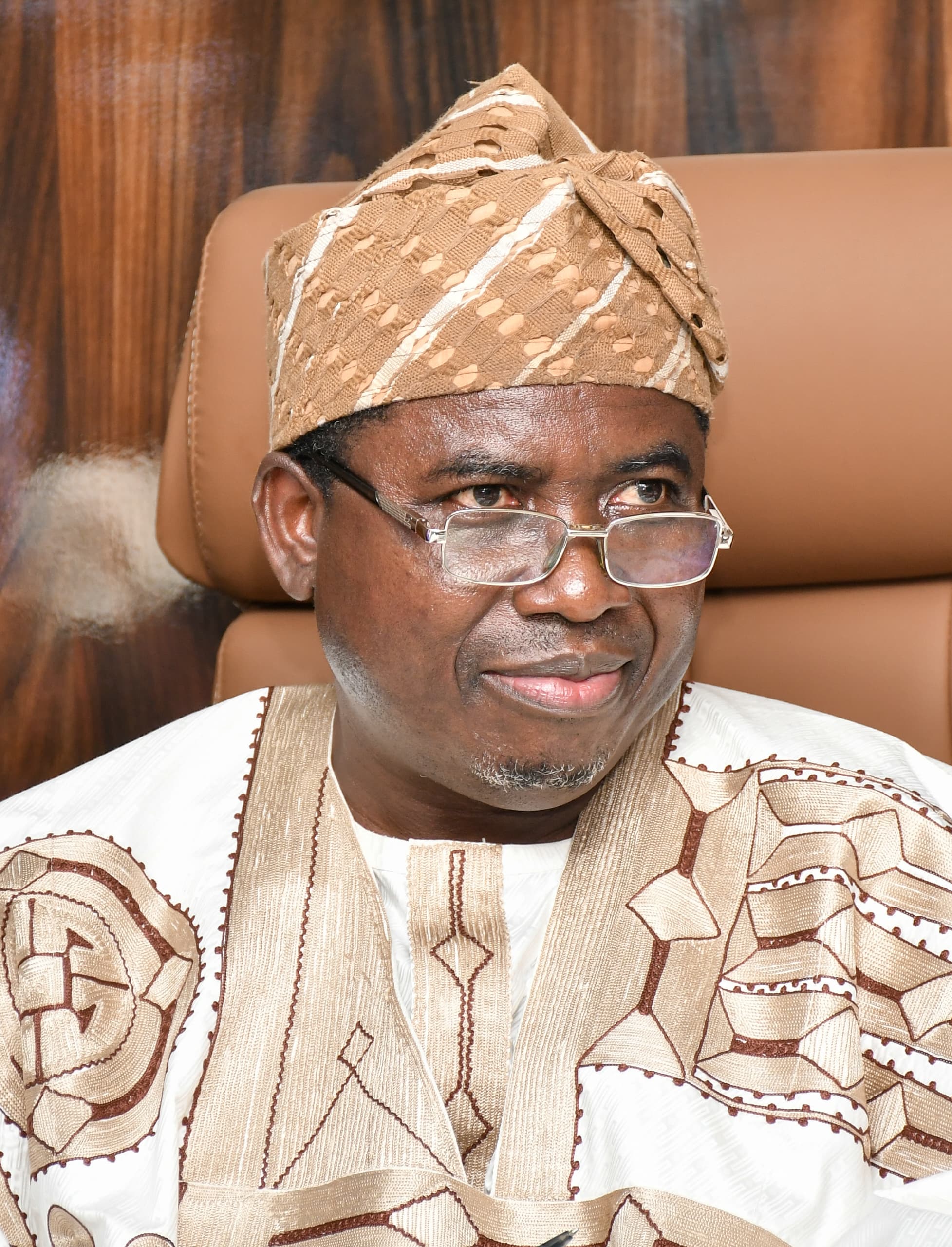
The Chairman of the Independent National Electoral Commission (INEC), Professor Joash Amupitan has declared that achieving meaningful electoral reforms is a core priority for him while outlining key priorities aimed at strengthening Nigeria’s electoral system.
Prof Amupitan at his maiden interactive meeting on Tuesday with the Senate Committee on Electoral Matters, added that infrastructure development and voter education are among the priorities.
The INEC Boss stated that supporting the National Assembly in achieving meaningful electoral reforms remains a core priority of his leadership.
He further emphasized the need to strengthen existing infrastructure and deploy technology in a manner that enhances transparency, credibility, and inclusiveness in the electoral process.
He acknowledged the challenges associated with public perception and expectations, emphasizing the importance of adhering to constitutionalism, due process, and institutional boundaries in the conduct of elections.
Prof. Amupitan acknowledged the Senate Committee on Electoral Matters as a critical pillar in Nigeria’s democratic architecture, noting that its legislative and oversight responsibilities directly impact the stability and credibility of the nation’s electoral system.
He expressed appreciation to the Senate for the rigorous confirmation process that preceded his appointment, describing the engagement as a demonstration of institutional collaboration anchored on constitutional principles.
The INEC Chairman recalled that the Commission was immediately confronted with the conduct of the Anambra state Governorship Election of 8th November on the early days of his tenure.
According to him, “The election was successfully concluded in a single day, a notable departure from previous experiences, and this was as a result of effective inter-agency cooperation and the support of the National Assembly and other stakeholders.
“The exercise provided valuable lessons and insights into areas requiring further improvement, particularly in logistics and operational efficiency.”
Emphasizing that Nigeria’s electoral system operates within a tripartite framework comprising the Constitution, the Electoral Act, and INEC’s Regulations and Guidelines, the INEC Chairman noted that while the Commission is empowered to conduct elections and issue regulations, these responsibilities must remain consistent with the provisions of the Constitution and the laws enacted by the National Assembly.
He commended the legislature for granting INEC the opportunity to contribute to the ongoing process of constitutional and electoral amendments.
Prof Amupitan also identified voter education as a critical mandate that will receive increased attention under his leadership, noting that informed participation by citizens is essential to the integrity and credibility of elections. He emphasized the central role of logistics in electoral success and observed that preparations for forthcoming elections, including the FCT Area Council Election and other off-cycle elections scheduled for 2026, are closely linked to the timely conclusion of electoral reforms by the National Assembly.
Earlier in his remarks, the Chairman of the Senate Committee on Electoral Matters, Senator Simon Bako Lalong, described the interactive session as a significant milestone in efforts to strengthen Nigeria’s democratic institutions.
He reaffirmed the central role of INEC in shaping public confidence in governance and stressed that credible elections remain fundamental to democratic legitimacy.
Senator Lalong congratulated the INEC Chairman on his appointment and noted that he assumed office at a time of heightened public expectations and evolving challenges, including technological innovation, voter education, electoral security, logistics and public trust. He assured the Commission of the Committee’s readiness to provide legislative support, constructive oversight and policy guidance to enable INEC to effectively discharge its constitutional mandate.
He stressed that the interactive session was designed to promote frank dialogue and institutional collaboration rather than ceremonial engagement. While reaffirming the Committee’s commitment to electoral reforms through legislation and budgetary support, Senator Lalong further stressed that oversight does not amount to interference, noting that respect for INEC’s constitutional independence remains a guiding principle.
By George Mgbeleke
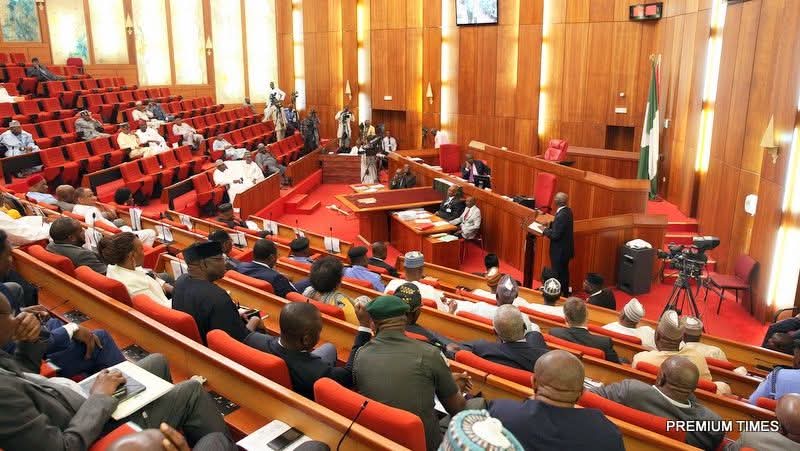
There was rowdy session in the Senate on Wednesday, as Senate rejected a motion seeking to summon the Minister of the Federal Capital Territory (FCT), Nyesom Wike, over worsening waste management, sewage failures and the alleged unlawful revocation and conversion of designated green areas in Abuja.
The motion, titled “Urgent Need for Intervention in Waste Management, Sewage Services, Protection of Designated Green Areas, and Investigation into the Alleged Unlawful Seizure of Land Belonging to Bwari General Hospital, FCT,” was sponsored by Senator Ireti Kingibe (LP, FCT), alongside Senators Wadada Ahmed Aliyu, Mohammed Muntari Dandutse, Neda Imasuen, Aminu Iya Abass, Ibrahim Dakwambo and Orji Uzor Kalu.
Presenting the motion under Orders 41 and 51, which allows for urgent matters of importance to be raised without prior notice, Kingibe said the situation in the nation’s capital had reached “crisis proportions,” noting that “municipal waste collection across several districts of the FCT has not been carried out for several weeks, leading to massive accumulation of solid waste in residential, commercial and public spaces.”
She told the chamber that workers and contractors under the Abuja Environmental Protection Board, AEPB and other FCT agencies had “not been paid for about nine months,” a development she said had triggered industrial action and “the collapse of essential municipal services.”
According to her, “former waste management contractors were not paid between March and October 2025,” and although new contracts were awarded in mid-November 2025, “only 50 per cent of the former unpaid contractors were retained, while 50 per cent new ones were introduced.”
Kingibe added that the newly engaged contractors had formally written the FCT Minister, stating that “they cannot commence operations without a 30 per cent mobilisation fee,” further worsening delays in waste collection and sewage management.
She warned that “sewage blockages and accumulated waste have been building up for nearly eight months and have now reached crisis proportions,” stressing that blocked and overflowing sewage systems “expose residents to waterborne diseases, environmental contamination and severe sanitation risks.”
Beyond sanitation, the senator accused the FCT Administration of undermining the Abuja Master Plan through what she described as the systematic conversion of designated green areas.
“Green areas under the Abuja Master Plan, intended as service corridors for sewage, water and electricity infrastructure, as well as environmental buffers, are being built on through illegal revocations, forced evictions and reallocations,” she said.
Kingibe further alleged that “even where the reallocation of land is the subject of ongoing litigation, the FCT Minister has proceeded to demolish and reallocate such lands in total disregard of subsisting court processes.”
She cited the University of Abuja as a major victim, saying, “about 7,000 hectares of the university’s original 11,000 hectares have been taken over, reallocated or subjected to unauthorised use, leaving the institution with insufficient land to fulfil its statutory mandate.”
Recalling previous Senate intervention, she said, “Barely a year ago, this Senate was compelled to call the Honourable Minister of the FCT to order over similar issues, yet these practices persist.”
However, the Senate called for the motion to be dropped for not complying with the rules of the Red Chamber. Raising the issue, Senate President Godswill Akpabio said Kingibe had informed him, in compliance of the rules of the Senate, of a motion on rising solid waste in the FCT and ots attendant health risks but didn’t mention other issues – the inclusion of land revocation.
He noted that the order she cited only permits her to speak on a particular topic, adding that she ought to have raised a substantive motion to talk about everything she spoke of in her debate.
Similarly, Senator Tahir Monguno (APC Borno North), who had initially supported the motion and called for a summon of the FCT Minister, later withdrew his support. Also, the Deputy Senate President, Barau Jibrin, dismissed the allegations against Wike as baseless, saying evidence of his work is clear for all to see.
“There are now developments in the FCT. The current minister changed the face of Abuja. He’s doing extremely very well. You cannot solve all problems at the same time, if there are other areas that needed to be done, we should engage our committee to interact with the minister so that he could do more,” he said.
Senate Leader, Opeyemi Bamidele, also called for the withdrawal of the motion, calling for a substantive motion on notice.
After the debates, Akpabio urged Kingibe to withdraw the motion and bring a motion on notice instead to which she complied.
“I will re-present it as substantive motion on waste management,” she said.
Politics
Amupitan meets Senate, Charts Electoral Reforms,Voter Education tops priorities Ignatius Okorocha,Abuja The Chairman of the Independent National Electoral Commission (INEC), Professor Joash Amupitan has declared that achieving meaningful electoral reforms is a core priority for him while outlining key priorities aimed at strengthening Nigeria’s electoral system. Prof Amupitan at his maiden interactive meeting on Tuesday with the Senate Committee on Electoral Matters, added that infrastructure development and voter education are among the priorities. The INEC Boss stated that supporting the National Assembly in achieving meaningful electoral reforms remains a core priority of his leadership. He further emphasized the need to strengthen existing infrastructure and deploy technology in a manner that enhances transparency, credibility, and inclusiveness in the electoral process. He acknowledged the challenges associated with public perception and expectations, emphasizing the importance of adhering to constitutionalism, due process, and institutional boundaries in the conduct of elections. Prof. Amupitan acknowledged the Senate Committee on Electoral Matters as a critical pillar in Nigeria’s democratic architecture, noting that its legislative and oversight responsibilities directly impact the stability and credibility of the nation’s electoral system. He expressed appreciation to the Senate for the rigorous confirmation process that preceded his appointment, describing the engagement as a demonstration of institutional collaboration anchored on constitutional principles. The INEC Chairman recalled that the Commission was immediately confronted with the conduct of the Anambra state Governorship Election of 8th November on the early days of his tenure. According to him, “The election was successfully concluded in a single day, a notable departure from previous experiences, and this was as a result of effective inter-agency cooperation and the support of the National Assembly and other stakeholders. “The exercise provided valuable lessons and insights into areas requiring further improvement, particularly in logistics and operational efficiency.” Emphasizing that Nigeria’s electoral system operates within a tripartite framework comprising the Constitution, the Electoral Act, and INEC’s Regulations and Guidelines, the INEC Chairman noted that while the Commission is empowered to conduct elections and issue regulations, these responsibilities must remain consistent with the provisions of the Constitution and the laws enacted by the National Assembly. He commended the legislature for granting INEC the opportunity to contribute to the ongoing process of constitutional and electoral amendments. Prof Amupitan also identified voter education as a critical mandate that will receive increased attention under his leadership, noting that informed participation by citizens is essential to the integrity and credibility of elections. He emphasized the central role of logistics in electoral success and observed that preparations for forthcoming elections, including the FCT Area Council Election and other off-cycle elections scheduled for 2026, are closely linked to the timely conclusion of electoral reforms by the National Assembly. Earlier in his remarks, the Chairman of the Senate Committee on Electoral Matters, Senator Simon Bako Lalong, described the interactive session as a significant milestone in efforts to strengthen Nigeria’s democratic institutions. He reaffirmed the central role of INEC in shaping public confidence in governance and stressed that credible elections remain fundamental to democratic legitimacy. Senator Lalong congratulated the INEC Chairman on his appointment and noted that he assumed office at a time of heightened public expectations and evolving challenges, including technological innovation, voter education, electoral security, logistics and public trust. He assured the Commission of the Committee’s readiness to provide legislative support, constructive oversight and policy guidance to enable INEC to effectively discharge its constitutional mandate. He stressed that the interactive session was designed to promote frank dialogue and institutional collaboration rather than ceremonial engagement. While reaffirming the Committee’s commitment to electoral reforms through legislation and budgetary support, Senator Lalong further stressed that oversight does not amount to interference, noting that respect for INEC’s constitutional independence remains a guiding principle.
By Our Correspondent
The Chairman of the Independent National Electoral Commission (INEC), Professor Joash Amupitan has declared that achieving meaningful electoral reforms is a core priority for him while outlining key priorities aimed at strengthening Nigeria’s electoral system.
Prof Amupitan at his maiden interactive meeting on Tuesday with the Senate Committee on Electoral Matters, added that infrastructure development and voter education are among the priorities.
The INEC Boss stated that supporting the National Assembly in achieving meaningful electoral reforms remains a core priority of his leadership.
He further emphasized the need to strengthen existing infrastructure and deploy technology in a manner that enhances transparency, credibility, and inclusiveness in the electoral process.
He acknowledged the challenges associated with public perception and expectations, emphasizing the importance of adhering to constitutionalism, due process, and institutional boundaries in the conduct of elections.
Prof. Amupitan acknowledged the Senate Committee on Electoral Matters as a critical pillar in Nigeria’s democratic architecture, noting that its legislative and oversight responsibilities directly impact the stability and credibility of the nation’s electoral system.
He expressed appreciation to the Senate for the rigorous confirmation process that preceded his appointment, describing the engagement as a demonstration of institutional collaboration anchored on constitutional principles.
The INEC Chairman recalled that the Commission was immediately confronted with the conduct of the Anambra state Governorship Election of 8th November on the early days of his tenure.
According to him, “The election was successfully concluded in a single day, a notable departure from previous experiences, and this was as a result of effective inter-agency cooperation and the support of the National Assembly and other stakeholders.
“The exercise provided valuable lessons and insights into areas requiring further improvement, particularly in logistics and operational efficiency.”
Emphasizing that Nigeria’s electoral system operates within a tripartite framework comprising the Constitution, the Electoral Act, and INEC’s Regulations and Guidelines, the INEC Chairman noted that while the Commission is empowered to conduct elections and issue regulations, these responsibilities must remain consistent with the provisions of the Constitution and the laws enacted by the National Assembly.
He commended the legislature for granting INEC the opportunity to contribute to the ongoing process of constitutional and electoral amendments.
Prof Amupitan also identified voter education as a critical mandate that will receive increased attention under his leadership, noting that informed participation by citizens is essential to the integrity and credibility of elections. He emphasized the central role of logistics in electoral success and observed that preparations for forthcoming elections, including the FCT Area Council Election and other off-cycle elections scheduled for 2026, are closely linked to the timely conclusion of electoral reforms by the National Assembly.
Earlier in his remarks, the Chairman of the Senate Committee on Electoral Matters, Senator Simon Bako Lalong, described the interactive session as a significant milestone in efforts to strengthen Nigeria’s democratic institutions.
He reaffirmed the central role of INEC in shaping public confidence in governance and stressed that credible elections remain fundamental to democratic legitimacy.
Senator Lalong congratulated the INEC Chairman on his appointment and noted that he assumed office at a time of heightened public expectations and evolving challenges, including technological innovation, voter education, electoral security, logistics and public trust. He assured the Commission of the Committee’s readiness to provide legislative support, constructive oversight and policy guidance to enable INEC to effectively discharge its constitutional mandate.
He stressed that the interactive session was designed to promote frank dialogue and institutional collaboration rather than ceremonial engagement. While reaffirming the Committee’s commitment to electoral reforms through legislation and budgetary support, Senator Lalong further stressed that oversight does not amount to interference, noting that respect for INEC’s constitutional independence remains a guiding principle.
Politics
PC-NCG Commends SEC 47 Participants on Recommendations on Blue Economy Development: Urges FG to Establish Coast Guard

By David Owei.
Chief Executive and Accounting Officer of the Nigerian Coast Guard Provisionary Committee (PC-NCG), Captain Noah Ichaba has praised participants of Senior Executive Course 47 (SEC 47) of the National Institute for Policy and Strategic Studies (NIPSS) for their exceptional presentation and thoughtful policy analysis on Blue Economy and Sustainable Development in Nigeria, which was presented to the President at the Presidential Villa, Abuja recently.
In a statement issued by the Director of Communications & Public Affairs, Dr. Piriye Kiyaramo on Tuesday in Abuja, Capt. Ichaba noted that with the presentation of recommendations blue economy development and opportunities, after a comprehensive study on the subject matter by participants of SEC 47, he highlighted the urgent need for the Federal Government to expedite action on the planned establishment of the Nigerian Coast Guard, which its bill is currently before the 10th National Assembly.
Capt. Ichaba, who applauded the Federal Government’s commitment to tapping into Nigeria’s maritime potential, described it as a “positive plan.”
However, he emphasized that intentions alone are not enough, urging the government to take concrete actions to remove obstacles and bridge the gap between plans and outcomes, by backing PC-NCG’s proposal for the establishment of the Nigerian Coast Guard which would be a more effective approach.
“Put differently, good intentions must be paired with conscious, effective action and awareness of their real situational impact, so as to bring the desired outcome of converting Nigeria’s Maritime Potential into a major driver of economic diversification, job creation and long-term prosperity via planned discipline and intentional policy refinement”, so that actions leading to achieving the expected result will not be diverted, derailed or misguided, thereby causing unwelcomed expectation.
“PC-NCG humbly wishes to submit that matters regarding “safe and stable maritime environment, implementation of policy recommendations, guidelines and laws affecting maritime business activities/transactions and engagements, strategic plan for arresting escaping maritime revenues, blocking revenue wastages and leakages, creating direct and indirect jobs for millions of Nigerians, using modern information communication technology and innovation to achieve flourishing maritime experience, among many others, government should consider aligning her intention with immediate effective action. There should be no further delay in establishing Coast Guard in Nigeria, which truly will be a helpful outcome and of putting “a square peg in a square hole.”
“It should be noted “fears of institutional interest, overlapping, duplication, operational conflicts in duties, functions and services been advocated against the creation of Coast Guard are imaginations of the human-mind and are not of administrative necessity and national interest, which the Federal Government is determined to achieve thru converting the maritime potentials into a driver that will turn our economic fortunes around in a prosperous and sustainable manner, with increasing opportunities.
“The truth remains that, “all expressed fears cannot be genuinely and godly substantiated by those behind such, because legislative and administrative mechanisms makes it apt for re-alignment and relinquishing of a fraction of duty hitherto performed by one Agency to another Agency whenever such becomes expedient.
“Coast Guard as a fully functional Maritime Law Enforcement Agency is different from a Defence or Regulatory Agency, with different organizational name and occupational nomenclature. Moreso, the ‘Harmonized Standard Operating Procedure’ had outlined smooth functional order between the MDAs and the over one hundred and twenty-nine distinctive specialities that exist within the maritime industry
“The soon to be established Agency and rightly designated Statutory Establishment, that is expected to enforce federal government’s policy and international regulations relating to the plan that was unveiled on December 10, 2025 is the Coast Guard, because, maritime law enforcement and such other array of duties are Coast Guard’s primary, secondary and tertiary responsibilities, services and protocols to carry out.
“Coast Guard is the first and foremost Maritime Law Enforcement Agency, a Security, Safety and Protection Provider for the open maritime commercial activities, transactions and engagements that will ensure the tranquility of the physical locations, installations, facilities, persons and legitimate interests where maritime market and commercial undertakings take place.
“Coast Guard is the Agency that will maintain active presence in all of its jurisdiction 24/7 and in upholding Nigeria’s Maritime Sovereignty and prosperity, through enforcement of all her maritime laws. Coast Guard is to patrol, detect, intercept, disrupt, secure, guard, protect, prevent, enforce, preserve, generate, create, respond, search, rescue, represent, invest, reinvigorate, strengthen, coordinate and collaborates for the achievement of rapid national economic growth, enhanced jurisdictional security, reduced sea crimes, uphold safety of lives, improve Nigeria’s international prestige and developmental strides.
“Coast Guard is the key agency for safeguarding the marine environment and ensuring sustainable opportunities and developments. Coast Guard will work with international partners on global maritime challenges and serves as an armed service that can support naval operations during wartime or national security crises.
“Coast Guard will address threats to the marine and blue economy through a multi-faceted strategy that emphasizes technological innovation, interagency and international cooperation, and a persistent operational presence to ensure safety, security, environmental stewardship, stability and prosperity of the maritime domain.
“There is, therefore, no doubt as to the rightful place, role, service, protocol and desirability of Coast Guard in Nigeria’s maritime domain to implement governments’ policies.
Coast Guard’s operational existence will not invite overlap, duplication, friction, wastage, leakage, and such likes, as it will operate purely within its scheme of service and dual operational orders.
“As a matter of fact, Nigeria is already far behind because of the absence of Coast Guard Agency and had fallen short of the expectation of existing maritime laws, as she has been needlessly spending to have a voice instead of earning the same as a right. Operating a maritime body without a Coast Guard as its life wire over the years had led to loss funds, material, and opportunities worth over hundreds of billions of dollars and trillions of naira.
“This is where the present Federal Government’s plan, as unveiled is worth the full support of Nigerians, Nigeria’s offshore and onshore partners, friends and well-wishers, so that the administration of President Bola Ahmed Tinubu could be credited for establishing Coast Guard in Nigeria, and for that to form the performance score card of the government of All Progressive Congress (APC), the ruling Party,” Capt. Ichaba emphasized.

Drama, as Senate rejects Kingibe’s motion on poor waste management in FCT
By George Mgbeleke There was rowdy session in the Senate on Wednesday, as Senate rejected a motion seeking to summon...

Amupitan meets Senate, Charts Electoral Reforms,Voter Education tops priorities
By Our Correspondent The Chairman of the Independent National Electoral Commission (INEC), Professor Joash Amupitan has declared that achieving meaningful...
Amupitan meets Senate, Charts Electoral Reforms,Voter Education tops priorities Ignatius Okorocha,Abuja The Chairman of the Independent National Electoral Commission (INEC), Professor Joash Amupitan has declared that achieving meaningful electoral reforms is a core priority for him while outlining key priorities aimed at strengthening Nigeria’s electoral system. Prof Amupitan at his maiden interactive meeting on Tuesday with the Senate Committee on Electoral Matters, added that infrastructure development and voter education are among the priorities. The INEC Boss stated that supporting the National Assembly in achieving meaningful electoral reforms remains a core priority of his leadership. He further emphasized the need to strengthen existing infrastructure and deploy technology in a manner that enhances transparency, credibility, and inclusiveness in the electoral process. He acknowledged the challenges associated with public perception and expectations, emphasizing the importance of adhering to constitutionalism, due process, and institutional boundaries in the conduct of elections. Prof. Amupitan acknowledged the Senate Committee on Electoral Matters as a critical pillar in Nigeria’s democratic architecture, noting that its legislative and oversight responsibilities directly impact the stability and credibility of the nation’s electoral system. He expressed appreciation to the Senate for the rigorous confirmation process that preceded his appointment, describing the engagement as a demonstration of institutional collaboration anchored on constitutional principles. The INEC Chairman recalled that the Commission was immediately confronted with the conduct of the Anambra state Governorship Election of 8th November on the early days of his tenure. According to him, “The election was successfully concluded in a single day, a notable departure from previous experiences, and this was as a result of effective inter-agency cooperation and the support of the National Assembly and other stakeholders. “The exercise provided valuable lessons and insights into areas requiring further improvement, particularly in logistics and operational efficiency.” Emphasizing that Nigeria’s electoral system operates within a tripartite framework comprising the Constitution, the Electoral Act, and INEC’s Regulations and Guidelines, the INEC Chairman noted that while the Commission is empowered to conduct elections and issue regulations, these responsibilities must remain consistent with the provisions of the Constitution and the laws enacted by the National Assembly. He commended the legislature for granting INEC the opportunity to contribute to the ongoing process of constitutional and electoral amendments. Prof Amupitan also identified voter education as a critical mandate that will receive increased attention under his leadership, noting that informed participation by citizens is essential to the integrity and credibility of elections. He emphasized the central role of logistics in electoral success and observed that preparations for forthcoming elections, including the FCT Area Council Election and other off-cycle elections scheduled for 2026, are closely linked to the timely conclusion of electoral reforms by the National Assembly. Earlier in his remarks, the Chairman of the Senate Committee on Electoral Matters, Senator Simon Bako Lalong, described the interactive session as a significant milestone in efforts to strengthen Nigeria’s democratic institutions. He reaffirmed the central role of INEC in shaping public confidence in governance and stressed that credible elections remain fundamental to democratic legitimacy. Senator Lalong congratulated the INEC Chairman on his appointment and noted that he assumed office at a time of heightened public expectations and evolving challenges, including technological innovation, voter education, electoral security, logistics and public trust. He assured the Commission of the Committee’s readiness to provide legislative support, constructive oversight and policy guidance to enable INEC to effectively discharge its constitutional mandate. He stressed that the interactive session was designed to promote frank dialogue and institutional collaboration rather than ceremonial engagement. While reaffirming the Committee’s commitment to electoral reforms through legislation and budgetary support, Senator Lalong further stressed that oversight does not amount to interference, noting that respect for INEC’s constitutional independence remains a guiding principle.
By Our Correspondent The Chairman of the Independent National Electoral Commission (INEC), Professor Joash Amupitan has declared that achieving meaningful...

Tinubu Transmits N43.56trn Appropriation Repeal Bill To Senate
By George Mgbeleke Ahead of 2026 Budget presentation,President Bola Tinubu has transmitted the Appropriation, Repeal and Re-enactment Bill 2 of...
2026 Budget : Senate reduces oil price benchmark to $60 per barrel …sustains other projections in MTEF document
By Our Correspondent Ahead of 2026 budget presentation by President Bola Ahmed Tinubu to the two chambers of National Assembly,...


Insecurity: NLC begins nationwide protest today …..warns against attack on protesters, workers …..says attack on protest, an attack on very engine of Nigeria
By George Mgbeleke Worried by incessant spats of banditry attacks, kidnapping and killings in parts of the country, the Nigeria...


PC-NCG Commends SEC 47 Participants on Recommendations on Blue Economy Development: Urges FG to Establish Coast Guard
By David Owei. Chief Executive and Accounting Officer of the Nigerian Coast Guard Provisionary Committee (PC-NCG), Captain Noah Ichaba has...


Niger state FIDA Vows to launch an offensive onslaught digital violence against girl-child and women
By Uthman-Baba Naseer,Minna The International Federation of Women Lawyers,(FIDA), in Niger State has vowed to launch an offensive onslaught against...

NDDC Honours Ewhrudjakpo, Halts Projects Commissioning *Lokpobiri, PANDEF Eulogise Late Bayelsa Dep Gov
By David Owei, Bayelsa The Niger Delta Development Commission (NDDC) has suspended its planned inauguration of completed projects in the...

Akpabio, Health Rumours and Peddlers of Fake News
By Anietie Ekong Over the weekend the internet was abuzz with the “news” that the President of the Senate, Senator...
-

 Business & Economy4 months ago
PC-NCG Issues Disclaimer on Purported Nigerian Coast Guard National Orientation Exercise In Anambra State
-
 Entertainment1 year ago
Jubilation galore as Parishioners of CKC Kurudu celebrate their cultural heritage ….FG should exploit our Cultural heritage to unite Nigerians-Rev Fr Dim
-
 Politics4 months ago
ASUU-NDU protest against FG loans, unpaid salaries,Non-Implementation of agreements …..says loans is generational slavery
-

 General News1 year ago
Celebration galore as UDA Successfully Elected New Exco ……I will digitalize processes that will raise UDA to greater height -Comr. Okejiri
-

 Law & Crime6 months ago
ICPC pledges to collaborate with FIDA to end Sex for Marks in tertiary institutions
-

 General News2 years ago
Reps hold public hearing on FMC Ugwuaji Awkunanaw
-
 Law & Crime5 months ago
Legal practitioner raises alarm over threat to his life by CSP Muhammed Abdulkareem
-

 General News1 year ago
Kugbo Hill Tragedy: Trailer Crushes Car, Kills Four and Injures Several Others in Abuja