
Business & Economy
Senate Okays ₦140bn SEDC Budget Proposal, Demands Accountability, Security Results, Erosion Control

Senate Okays ₦140bn SEDC Budget Proposal, Demands Accountability, Security Results, Erosion Control
By George Mgbeleke
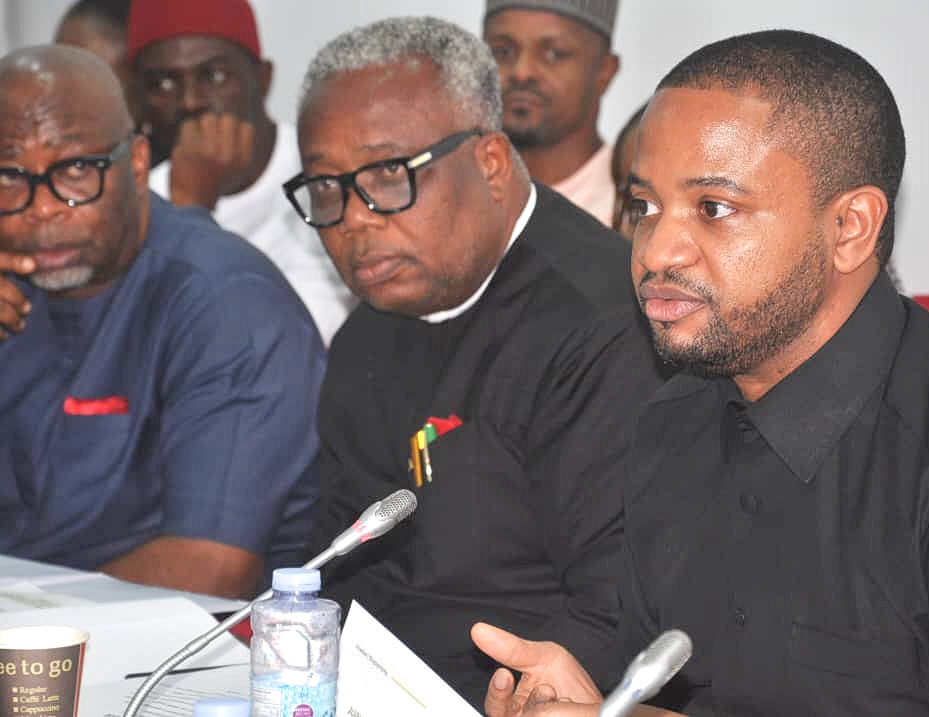
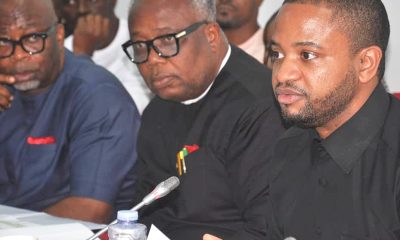
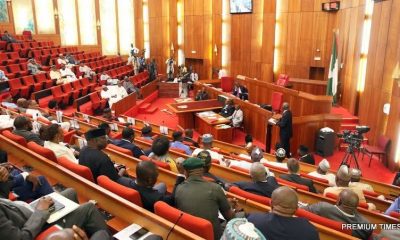
The Senate has endorsed the proposed ₦140 billion 2026 budget of the South East Development Commission (SEDC), while issuing strong warnings on fiscal discipline, measurable security outcomes and urgent ecological intervention across the region.
The budget was presented by the Managing Director/Chief Executive Officer of SEDC, Mr. Mark Okoye, who outlined a development-driven financial plan anchored on infrastructure renewal, industrialisation, private sector-led growth and regional integration.
Budget Breakdown
Of the ₦140 billion proposal:
₦106.745 billion (76.25%) is allocated to capital expenditure
₦25.955 billion (18.54%) to recurrent expenditure (excluding personnel)
₦7.3 billion (5.21%) to personnel costs
The Commission stated that the 2026 budget is structured around five strategic pillars: infrastructure development, economic empowerment, environmental sustainability, social development, and security/peacebuilding.
Strategic Economic Vision
In his presentation, the MD unveiled a long-term roadmap to build a $200 billion South East economy by 2035. Central to this vision is the establishment of a proposed South East Investment Corporation (SEIC), projected to drive a $150 billion capital base and position the region as Africa’s preferred investment destination.
He disclosed that the Commission is targeting a $1 billion regional investment threshold and intends to structure major infrastructure projects to attract international financing rather than rely solely on federal allocations.
Although the 2025 fiscal year recorded zero capital releases, Okoye explained that the Commission utilised the period to prepare feasibility studies and “bankable documents” to drive large-scale projects, including a proposed regional gas pipeline network estimated to cost between $1.5 billion and $2 billion.
Key Allocations in the 2026 Proposal
Notable provisions include:
Community Social Development Programme – ₦3.3 billion
South East Venture Capital Fund – ₦3.5 billion
Youth Entrepreneurship Programme – ₦2.5 billion
Grassroot Recreation Infrastructure – ₦7 billion
Headquarters and Zonal Offices Setup – ₦2.9 billion
Operational Vehicles – ₦4.1 billion
Climate Sustainability and Green Economy – ₦500 million
Regional Security Programme – ₦2.5 billion
M.I. Okpara Fellowship (Leadership Development) – ₦660 million
Senate Raises Security, Erosion Concerns
While commending the clarity and ambition of the proposal, lawmakers raised concerns about spending priorities and measurable impact.
Senator Tony Nwoye stressed that without security, development efforts would not yield meaningful results. He demanded clarity on how the ₦2.5 billion Regional Security Programme would translate into visible improvements, especially in areas severely affected by insecurity. He also sought details on collaboration mechanisms with existing security agencies.
On the ₦3.5 billion South East Venture Capital Fund, Nwoye warned against politicisation, insisting it must operate strictly on merit to support genuine innovators in commercial hubs such as Onitsha, Aba and Nnewi.
Environmental sustainability drew sharp criticism, with lawmakers describing the ₦500 million allocation as grossly inadequate for a region battling thousands of erosion sites, often referred to as Nigeria’s erosion epicentre. Senators urged the Commission to prioritise life-threatening ecological challenges.
Calls for Fiscal Discipline
Senator Kenneth Eze urged the Commission to treat public funds with the discipline of a private enterprise. While praising the Managing Director’s strong presentation, he cautioned against spreading limited resources across too many projects, warning that such an approach could lead to abandoned initiatives.
He advised management to match projects strictly with available resources and focus on realistic, measurable outcomes rather than excessive stakeholder engagements and conferences.
Senator Ezenwa Onyewuchi raised concerns over personnel allocations and sought assurances that staff salaries were being paid promptly, warning that unpaid remuneration could undermine morale and damage the Commission’s public image. He also called for transparency in recruitment processes.
Lawmakers Express Support, Seek Coordination
Senator Victor Umeh described the proposal as visionary and aligned with the historic economic revival model of the South East, expressing confidence in the management team once funds are released.
Senator Emmanuel Nwachukwu emphasised the need for inter-state coordination, particularly in rail connectivity, gas pipelines and industrial park development, stressing that gas infrastructure remains critical to reviving struggling industries in the region.
Senator Anthony Ani noted that the flagship programmes collectively cover all key sectors necessary for regional transformation, urging detailed implementation to ensure tangible results.
Senator Osita Ngwu expressed “absolute confidence” in the leadership of the Commission, acknowledging that foundational institutional work is often the most demanding phase.
Kalu: “We Will Be Ruthless in Oversight”
Chairman of the Senate Committee and former Abia State Governor, Orji Uzor Kalu, commended the management for presenting what he described as a “bankable document” capable of attracting global financing institutions.
He emphasised that the Commission was established as a development institution, not a political platform, and reiterated that it was entrusted to the region by President Bola Ahmed Tinubu.
“Our rules are simple compliance, oversight and feedback. This Committee will be ruthless in oversight. We will not look at anybody’s face. This Commission must not be a place for siphoning money. It must rekindle hope and drive economic development,” Kalu said.
He encouraged transparency, collective leadership among executive directors and readiness for oversight visits. He also defended the preparatory feasibility studies, describing them as essential groundwork for attracting institutions such as the World Bank and Afreximbank and for integrating projects into national borrowing frameworks.
Path Forward
Despite losing a full fiscal year to non-release of capital funds, the Senate acknowledged that the Commission used the period to lay structural and strategic foundations.
With legislative backing now secured alongside strong cautions on accountability, security performance and ecological urgency the ₦140 billion 2026 budget proposal moves forward under close parliamentary scrutiny, as expectations rise for visible development outcomes across the South East.




Business & Economy
Senate Okays ₦140bn SEDC 2026 budget Proposal, Demands Accountability, Security Results, Erosion Control
By George Mgbeleke
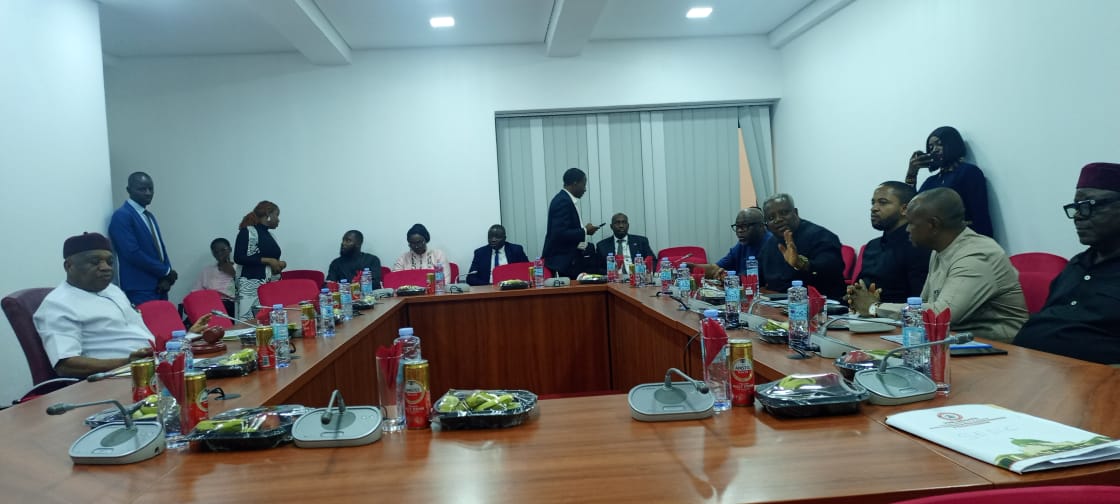
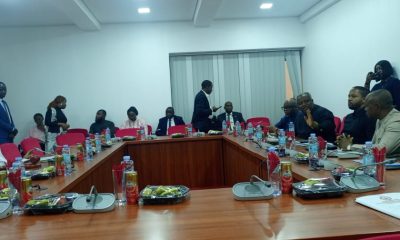
In a bid to accelerate the infrastructural development of South-East geopolitical zone,Senate on Tuesday endorsed the proposed ₦140 billion 2026 budget of the South East Development Commission (SEDC), while issuing strong warnings on fiscal discipline, measurable security outcomes and urgent ecological intervention across the region.
The budget was presented by the Managing Director/Chief Executive Officer of SEDC, Mr. Mark Okoye, who outlined a development-driven financial plan anchored on infrastructure renewal, industrialisation, private sector-led growth and regional integration.
Budget Breakdown
Of the ₦140 billion proposal:
₦106.745 billion (76.25%) is allocated to capital expenditure
₦25.955 billion (18.54%) to recurrent expenditure (excluding personnel)
₦7.3 billion (5.21%) to personnel costs
The Commission stated that the 2026 budget is structured around five strategic pillars: infrastructure development, economic empowerment, environmental sustainability, social development, and security/peacebuilding.
Strategic Economic Vision
In his presentation, the MD unveiled a long-term roadmap to build a $200 billion South East economy by 2035. Central to this vision is the establishment of a proposed South East Investment Corporation (SEIC), projected to drive a $150 billion capital base and position the region as Africa’s preferred investment destination.
He disclosed that the Commission is targeting a $1 billion regional investment threshold and intends to structure major infrastructure projects to attract international financing rather than rely solely on federal allocations.
Although the 2025 fiscal year recorded zero capital releases, Okoye explained that the Commission utilised the period to prepare feasibility studies and “bankable documents” to drive large-scale projects, including a proposed regional gas pipeline network estimated to cost between $1.5 billion and $2 billion.
Key Allocations in the 2026 Proposal
Notable provisions include:
Community Social Development Programme – ₦3.3 billion
South East Venture Capital Fund – ₦3.5 billion
Youth Entrepreneurship Programme – ₦2.5 billion
Grassroot Recreation Infrastructure – ₦7 billion
Headquarters and Zonal Offices Setup – ₦2.9 billion
Operational Vehicles – ₦4.1 billion
Climate Sustainability and Green Economy – ₦500 million
Regional Security Programme – ₦2.5 billion
M.I. Okpara Fellowship (Leadership Development) – ₦660 million
Senate Raises Security, Erosion Concerns
While commending the clarity and ambition of the proposal, lawmakers raised concerns about spending priorities and measurable impact.
Senator Tony Nwoye stressed that without security, development efforts would not yield meaningful results. He demanded clarity on how the ₦2.5 billion Regional Security Programme would translate into visible improvements, especially in areas severely affected by insecurity. He also sought details on collaboration mechanisms with existing security agencies.
On the ₦3.5 billion South East Venture Capital Fund, Nwoye warned against politicisation, insisting it must operate strictly on merit to support genuine innovators in commercial hubs such as Onitsha, Aba and Nnewi.
Environmental sustainability drew sharp criticism, with lawmakers describing the ₦500 million allocation as grossly inadequate for a region battling thousands of erosion sites, often referred to as Nigeria’s erosion epicentre. Senators urged the Commission to prioritise life-threatening ecological challenges.
Calls for Fiscal Discipline
Senator Kenneth Eze urged the Commission to treat public funds with the discipline of a private enterprise. While praising the Managing Director’s strong presentation, he cautioned against spreading limited resources across too many projects, warning that such an approach could lead to abandoned initiatives.
He advised management to match projects strictly with available resources and focus on realistic, measurable outcomes rather than excessive stakeholder engagements and conferences.
Senator Ezenwa Onyewuchi raised concerns over personnel allocations and sought assurances that staff salaries were being paid promptly, warning that unpaid remuneration could undermine morale and damage the Commission’s public image. He also called for transparency in recruitment processes.
Lawmakers Express Support, Seek Coordination
Senator Victor Umeh described the proposal as visionary and aligned with the historic economic revival model of the South East, expressing confidence in the management team once funds are released.
Senator Emmanuel Nwachukwu emphasised the need for inter-state coordination, particularly in rail connectivity, gas pipelines and industrial park development, stressing that gas infrastructure remains critical to reviving struggling industries in the region.
Senator Anthony Ani noted that the flagship programmes collectively cover all key sectors necessary for regional transformation, urging detailed implementation to ensure tangible results.
Senator Osita Ngwu expressed “absolute confidence” in the leadership of the Commission, acknowledging that foundational institutional work is often the most demanding phase.
Kalu: “We Will Be Ruthless in Oversight”
Chairman of the Senate Committee and former Abia State Governor, Orji Uzor Kalu, commended the management for presenting what he described as a “bankable document” capable of attracting global financing institutions.
He emphasised that the Commission was established as a development institution, not a political platform, and reiterated that it was entrusted to the region by President Bola Ahmed Tinubu.
“Our rules are simple compliance, oversight and feedback. This Committee will be ruthless in oversight. We will not look at anybody’s face. This Commission must not be a place for siphoning money. It must rekindle hope and drive economic development,” Kalu said.
He encouraged transparency, collective leadership among executive directors and readiness for oversight visits. He also defended the preparatory feasibility studies, describing them as essential groundwork for attracting institutions such as the World Bank and Afreximbank and for integrating projects into national borrowing frameworks.
Path Forward
Despite losing a full fiscal year to non-release of capital funds, the Senate acknowledged that the Commission used the period to lay structural and strategic foundations.
With legislative backing now secured alongside strong cautions on accountability, security performance and ecological urgency the ₦140 billion 2026 budget proposal moves forward under close parliamentary scrutiny, as expectations rise for visible development outcomes across the South East.
Business & Economy
Senate Tackles Economy Team on unrealistic budgets assumptions , implementation failures …Upload your cash plans by Monday-Finance Minister tells MDAs
By George Mgbeleke
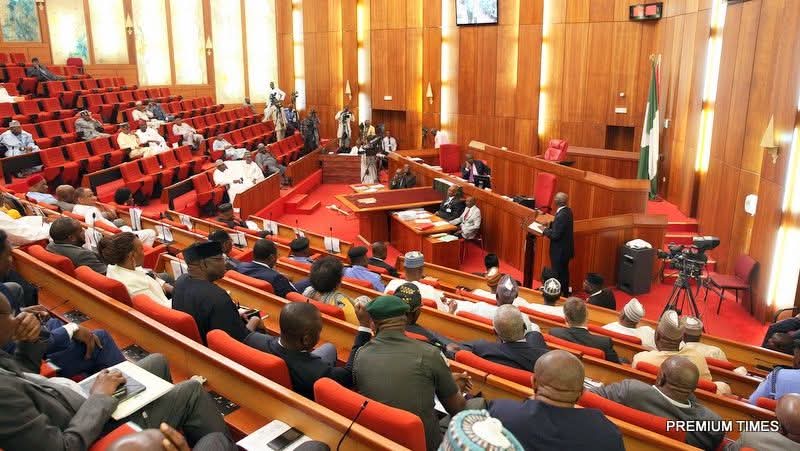
The Senate on Thursday tackled economic team of the federal government on poor annual budgets implementation largely characterised by zero or little releases of capital votes to the various Ministries , Departments and Agencies ( MDAs).
This is even as Minister of State assured Ministries, Departments and Agencies of government (MDAs) of further releases of the capital budget, saying”implementation shall be completed before 31st March 2026.”
The Committee led by Senator Solomon Olamilekan Adeola (Ogun West) , raised the issue during critical interactive session it had with the economic team on realistic implementation of the N58.472trillion 2026 budget and conclusion of the capital component of 2024 and 2025 budgets by March 31, 2026.
First to be put on spot by the committee among the economic team, was the Minister of Finance and Coordinating Minister of the Economy, Mr Wale Edun whose response that the capital component of 2024 and 2025 budgets , are still being funded , was not satisfactory .
In his response,Chairman of Nigeria Revenue Service ( NRS ) , Dr Zacch Adedeji however came to his rescue by declaring to the committee members that unrealistic budget assumptions cannot translate into realistic budget implementation .
“Budget funding must come from realistic projections. Efficiency is not about the size of the budget but about how much can actually be implemented.
” If you think you have ten units and spend accordingly, that is manageable. But if you assume you have one hundred and spend based on that assumption, you may run into serious problems if the funds do not materialize”, he said .
But Senator Adeola , reminded the NRS boss that budget documents originated from the Executive which NRS is part of .
“This document before us originated from the executive. The projections and challenges came from the executive arm, not the legislature. The gap between projected and realized oil revenue is wide.
“For example, how do we explain 18 percent performance in one year and projections of 36.5 percent the next year when actual performance is still below expectations?
“So the question is: Do we reduce the N58.472trillion 2026 budget, or do we proceed and make adjustments? Debt financing is already high. If certain assets were disposed of and used to reduce debt, two things would happen: the overall debt stock would reduce, and future borrowing costs could also decline”, he said .
However , the Minister of State for Finance , Dr. Doris Nkiruka Uzoka-Anite, in her response to full implementation of the 30% capital component of the 2025 budget and 2024 budget assured the committee that the implementation shall be completed before 31st March 2026.
She said : “Regarding the 2025 budget, funding processes are beginning. Payments for outstanding 2024 capital projects start today.
“The financial management system is back online. For 2025, MDAs have been asked to upload their cash plans by Monday, after which payments will commence. We are ready to start, but the MDAs must complete their documentation requirements”.
The committee thereafter went into closed door session with the Economic team which lasted for about two hours .
The Minister of Budget and Economic Planning , Senator Atiku Bagudu and the Accountant General of the Federation , Shamsedeen Babatunde Ogunjimi , also attended the session. .
Business & Economy
Budget : AGF under fire as Senators lambast him over zero capital allocation to MDAs … Non payment of executed contracts …Centralized payment System
By George Mgbeleke
In a bid to put the record straight on the delays in disbursement of funds to Ministries, Departments and Agencies of government,(MDAs) in the previous fiscal year,the Accountant General of the Federation ( AGF) , Dr Shamseideen Ogunjimi was thoroughly grilled by the Senate Committee on Finance during budget defence session on Thursday .
In his opening remarks , Chairman of the Committee , Senator Sani Musa ( Niger East) , raised questions at the AGF , on poor releases of funds to MDAs , statutory bodies and what they termed , frustrating Centralized Payment System for contractors .
Musa pointedly told the AGF that the attitude of his office to the committee , is unfriendly and must change for the good of all .
” We are not going to take your budget until when we are satisfied that your office is ready to do things that will make things work for Nigerians through expected assurances from you .
” One of the issues that must be urgently resolved is the envelope budgeting system being used by the federal government on yearly basis but not producing desired results , requiring alternative model like performance based one “, he said .
In his comments , Senator Danjuma Goje ( Gombe Central) , told the AGF that the Senate and by extension, Nigerians generally , are embarrassed by poor budget implementation being experienced since 2024.
” Here at the National Assembly , we have never seen contractors bombarding us on weekly basis for intervention on non payment of executed contracts .
” Impression given to us and Nigerians by government is that with removal of subsidy and harmonization of forex market , more revenue or more money , where is the money now? Why are contractors owed ? And why was it zero allocation for capital votes of most of the MDAs in 2025?”, he queried.
He added that the situation at hand in the country as far as poor budget implementation is concerned , is very embarrassing and baffling .
Senator Muntari Dandutse ( Katsina South ) in his comments , wondered why N28triilion was reportedly generated by revenue agencies and yet 85% of contractors are being owed and zero allocation for most of the MDAs in 2025 capital component budget , asking ” what happened to the N28trillion “.
” Even the introduced Centralized Payment System is not helping matter at all . The system is very compromised and seriously affecting the integrity of government “, he said .
Other Senators like Abdul Ningi ( Bauchi Central ) , Asuquo Ekpenyong ( Cross River South) , Adams Oshiomhole ( Edo North ) ,Aminu Abbas ( Adamawa Central ) and Patrick Ndubueze ( Imo North), who admonished the AGF to tell President Bola Tinubu to look inward in guarding against sabotage ; also made punchy remarks .
However in his response , the AGF said indiscriminate contracts award made by many of the MDAs without availability of fund , created the mess at hand which according to him , brought up directive banning MDAs from contracts award without availability of funds .
He explained to the lawmakers that though challenges being faced with operation of Centralized Payment System, were not envisaged , but said that they are being addressed for seamless operation
” Yes, as the Accountant General of the Federation , my office is expected to disburse fund to relevant agencies at appropriate time but that can only be done if the fund is available because I must have the fund before I can disburse.
” I also want to remind us that ‘Ways and Means’ used in the past for such funding is no more for the good of the Nation’s economy “, he said .
For further critical engagement with the AGF, the committee thereafter went into closed door session with him .

Edo Attack: APC Proving to be a Terrorists organization * ADC to Report Attacks to ECOWAS Court of Human Rights
By George Mgbeleke The African Democratic Congress (ADC) has strongly condemned what it described as a gun attack and assassination...

Bayelsa Chief Judge Swears In New Deputy Gov *Commissioner, 18 Perm Secs Also Take Oath *Gov Diri Charges Akpe, New Appointees To Serve With Integrity
By David Owei, Bayelsa The Chief Judge of Bayelsa State, Justice Matilda Ayemieye, on Wednesday, swore in Dr. Peter Akpe...

Niger state CJ orders transfer of 12 awaiting trial inmates to Newbussa to face their trial.
BY UTHMAN BABA- NASEER,MINNA The Chief Judge of Niger State, Justice Halima Ibrahim Abdulmalik, has ordered the transfer of twelve...

South-South Govs Back President Tinubu’s Executive Order On Oil Revenue Remittance
By David Owei,Bayelsa The South-South Governors Forum (SSGF) has described President Bola Tinubu’s Executive Order mandating the direct remittance of...

Gov.Diri to Perform Prosperity Cup Season 8 Kick-off … As FC Barcelona Technical Crew give Thumbs Up to Prosperity Cup Organizers
By David Owei,Bayelsa All is now set for the kick-off of Season eight of Nigeria’s biggest grassroots football spectacle,...

Senate Okays ₦140bn SEDC Budget Proposal, Demands Accountability, Security Results, Erosion Control
Senate Okays ₦140bn SEDC Budget Proposal, Demands Accountability, Security Results, Erosion Control By George Mgbeleke The Senate has endorsed the...

Senate decries lack of schools, water, other amenities in border communities
By Our Correspondent The Senate Committee on State and Local Government Affairs, has decried lack of infrastructure and basic social...
ADC demands investigation over alleged N10bn FG’s ransom to terrorists for release of Paprir school abduction
By George Mgbeleke The African Democratic Congress (ADC) has called on the Federal Government to urgently clarify reports alleging that...

Senate Okays ₦140bn SEDC 2026 budget Proposal, Demands Accountability, Security Results, Erosion Control
By George Mgbeleke In a bid to accelerate the infrastructural development of South-East geopolitical zone,Senate on Tuesday endorsed the proposed...
Senate decries lack of schools, water, other amenities in Border communities
By Abdul-Ganiyy Akanbi The Senate Committee on State and Local Government Affairs, has decried lack of infrastructure and basic social...
-
 Politics6 months ago
ASUU-NDU protest against FG loans, unpaid salaries,Non-Implementation of agreements …..says loans is generational slavery
-
 Politics10 months ago
Gov Okpebholo moves to end Cultism *Threatens action against leading cult groups *Vows to demolish more cult houses in Edo State
-

 Business & Economy6 months ago
PC-NCG Issues Disclaimer on Purported Nigerian Coast Guard National Orientation Exercise In Anambra State
-
 Entertainment2 years ago
Jubilation galore as Parishioners of CKC Kurudu celebrate their cultural heritage ….FG should exploit our Cultural heritage to unite Nigerians-Rev Fr Dim
-

 General News2 years ago
Reps hold public hearing on FMC Ugwuaji Awkunanaw
-
 General News2 years ago
Celebration galore as UDA Successfully Elected New Exco ……I will digitalize processes that will raise UDA to greater height -Comr. Okejiri
-
 Law & Crime9 months ago
ICPC pledges to collaborate with FIDA to end Sex for Marks in tertiary institutions
-
 Law & Crime8 months ago
Legal practitioner raises alarm over threat to his life by CSP Muhammed Abdulkareem