
Politics
Opposition Party Leaders reject Electoral Act 2026 …Insist On Real Time Electronic Transmission Of Results


By George Mgbeleke
Major Opposition parties have called for a fresh amendment to the Electoral Act 2026, with a view to adopting real time electronic transmission of election results from the polling units to INEC’s iREV in the 2027
ADC logo
Recall that President Bola Tinubu signed the amended bill into law last week, as passed by the two chambers of the National Assembly.

NNPP logo
The lawmakers had approved manual transfer of results by Returning Officers with Form EC8A where there is poor or no network signal at the polling units.
But the opposition parties, at a media conference in Abuja on Wednesday, demanded that the National Assembly immediately commence a fresh amendment to the Act, “to remove all obnoxious provisions.”
According to them, the Act must reflect “only the will and aspiration of Nigerians for free, fair, transparent and credible electoral process in our country,” stressing that nothing short of this will be acceptable to Nigerians.
In a joint address read by the National Chairman of the New Nigeria Peoples Party (NNPP), Ajuji Ahmed, the position parties called on “all lovers of democracy to join us in this journey to save the world’s largest black democracy from this growing civilian dictatorship of President Bola Tinubu.”
Ahmed said, “We consider several provisions of the Electoral Act 2026 signed into law with such contemptuous haste by President Tinubu as a major offensive by the APC administration to subvert the will of the people in the 2027 general elections.
“This joint briefing and other collaborative efforts that would follow are therefore designed by the opposition parties to save our democracy, and more importantly, to save our country from political crisis that may follow if the will of the people is subverted yet again.
“We therefore state unequivocally that the new Electoral Act is anti-democratic, and its implementation will undermine electoral transparency and sanctity of the ballot which are fundamental to free, fair and credible elections and the bedrock of participatory democracy.
“This obnoxious Electoral Act, 2026 is without doubt enacted to undermine democracy in Nigeria and it is part of the on-going design by the Tinubu-led APC to disorganise and weaken opposition, corrupt the electoral system, compromise democratic institutions and foist a totalitarian one-party rule on Nigeria.
“Indeed, we find it quite ironic, that the same APC that strongly agitated for electronic voting only a few years ago, is now opposed to the use of technology for mere transmission of results. The game at hand is very clear.
“Therefore, we, as patriotic leaders, standing shoulder to shoulder with Nigerians, reject the new Electoral Act.”
They also called on civil society groups to join in the task of saving democracy and the nation, stating, “This is the time to stand up and be counted.”
“We hereby wish to assure Nigerians that the opposition stand in unity and shall meet the ongoing shenanigans with equal resolve.
“We urge the people not to be deterred or be discouraged. We are committed to defending our democracy and we are prepared to defend your votes and ensure that every vote counts.
“We hear you loud and clear. We know your desire for a government that cares for you, a government that listens to you, and a government that protects you. We will not let you down,” Ahmed said.
The opposition leaders also rejected provisions in the Electoral Act which prescribed direct primaries and consensus options as the only means by political parties to elect candidates for elections.
The political leaders were led by the National Chairman of the African Democratic Congress (ADC), Senator David Mark.
Also at the conference were former Vice President Atiku Abubakar; presidential candidate of the Labour Party in the 2023 election, Mr Peter Obi; former Transportation Minister, Rotimi Amaechi; and ADC National Secretary, Rauf Aregbesola.
Others include former ADC National Chairman, Ralph Nwosu; former Cross River State Governor, Liyel Imoke; National Chairman of the New Nigeria Peoples Party (NNPP), Ajuji Ahmed; ANPP chieftain, Buba Galadima among many others.




By David Owei,Bayelsa
The Bayelsa State Governor, Senator Douye Diri, has commended individuals and institutions including the six presidential candidates and the Conference of Ijaw Traditional Rulers and Elders (CITRE) for their efforts towards actualising a peaceful and seamless transition of leadership in the Ijaw National Congress (INC).
He gave the commendation during a stakeholders meeting at the weekend in Government House, Yenagoa, where all the candidates gunning for the INC presidency agreed to withdraw all subsisting litigations concerning the Ijaw National Congress election.
Senator Diri, who was represented by his deputy, Dr Peter Akpe, also expressed gratitude to the Chairman of the Pan Niger Delta Forum (PANDEF), Ambassador Godknows Bolade Igali, the Chairman and members of the INC National Electoral Committee and other stakeholders who contributed to the resolution reached at the meeting.
Drawing an analogy from the scriptures, particularly First Kings Chapter 3, he likened the unanimous agreement of the candidates to withdraw all pending court cases to the decision of the true mother of the disputed baby who pleaded with King Solomon not to cut the child into two.
According to the Bayelsa helmsman, the resolution reflects the enthusiasm, love and patriotic fervour in all the presidential candidates to move Ijaw nation forward.
Speaking to newsmen shortly after the meeting, the candidates including High Chief MacDonald Igbadiwe who secured the injunction from a Port Harcourt High Court stopping the INC Elections billed for last weekend, confirmed the agreement and pledged commitment towards the peaceful emergence of the next President of the apex Ijaw socio-cultural organization.
Also speaking, the President of Ijaw National Congress, Professor Benjamin Okaba , expressed delight at the outcome of the meeting, pointing out that the resolution would enable the National Executive Council of the INC and other critical stakeholders to settle all grey areas within the 30-day window given by the convention.
He said: “Today is a culmination of several efforts being made by myself and some members of the INC Exco to ensure that the transition moves on smoothly, and we will get to the appropriate destination.
“The meeting which was convened by His Excellency, the Governor of Bayelsa State in his capacity as the Governor General of the Ijaw nation was very productive. All the six presidential candidates were in attendance and have agreed to withdraw all court cases.
‘I want to assure you that we are going to explore the 30-day window given to us by the Convention to ensure that the election holds. All appropriate organs of the INC will start work immediately, while we monitor the processes of the withdrawal.’
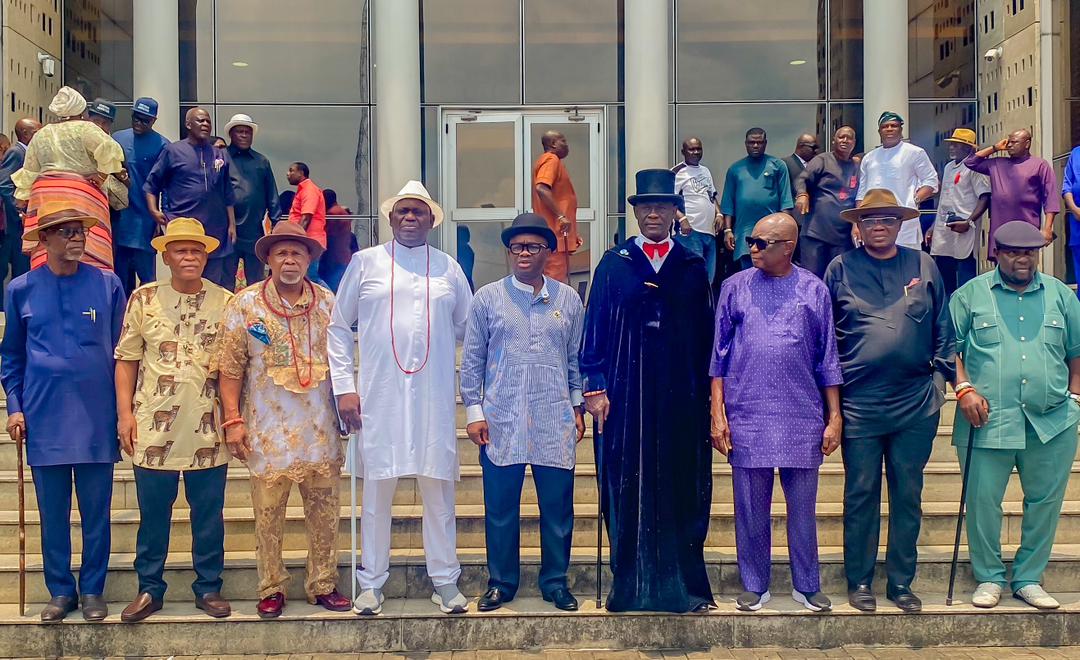
In attendance at the meeting were all the INC presidential candidates, the Chairman of PANDEF, Ambassador Godknows Igali, the Commissioner for Ijaw National Affairs, Chief Godspower Oporomor, his Information counterpart, Mrs Ebiuwou Koku-Obiyai, the Chairman of Bayelsa State Traditional Rulers and CITRE, His Royal Majesty King Bubaraye Dakolo, the Chairman, INC Electoral Committee, Retired Supreme Court Justice Francis Tabai, his vice and the Pere of Tarakiri Clan, Dr Seiyifa Koroye, among others.
By Amb. Anderson Osiebe.
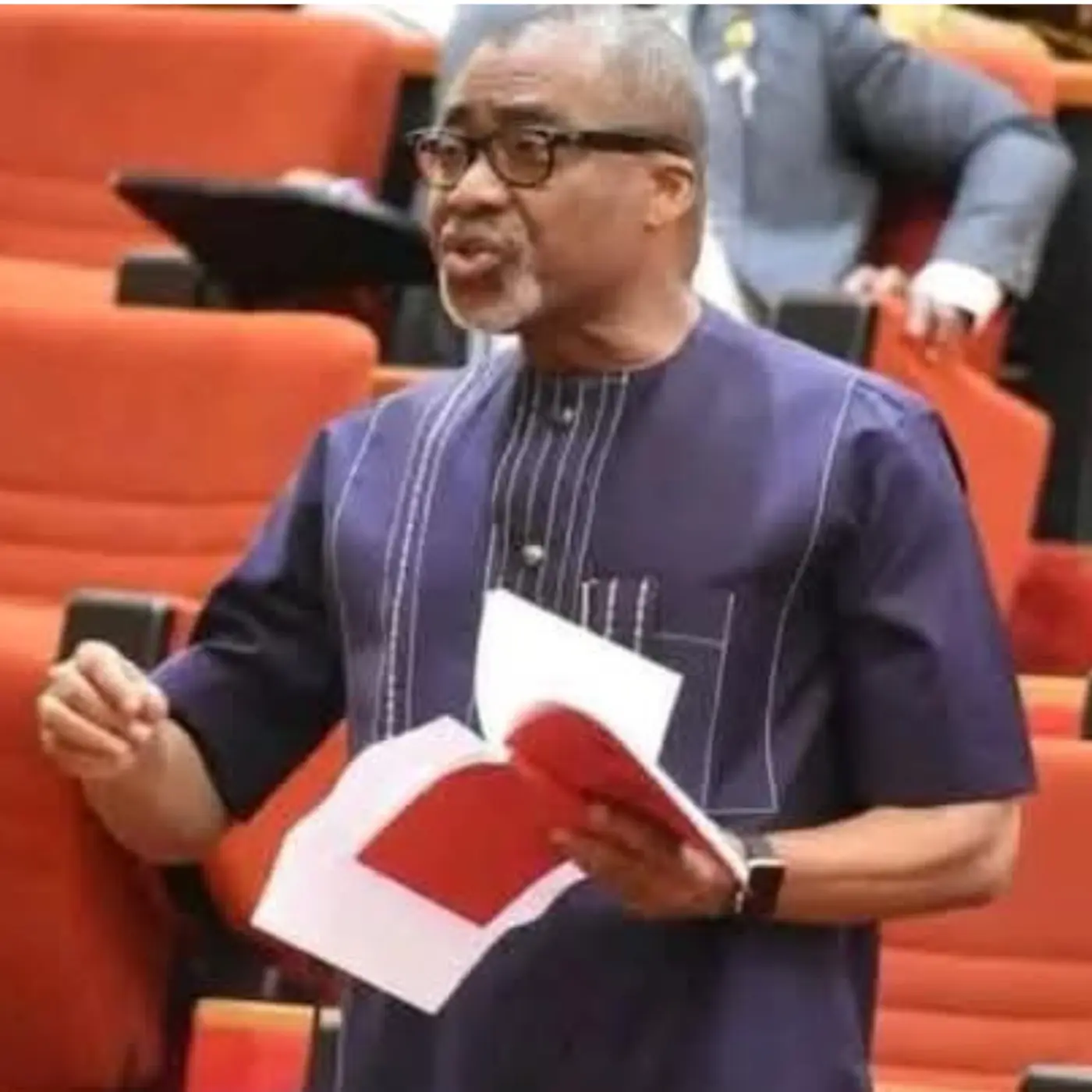
Nigeria’s political landscape has once again been stirred by controversy following the criticism trailing the recent defection of Enyinnaya Abaribe to another political party outside the ruling All Progressives Congress (APC).
The backlash has raised fundamental questions about political tolerance, democratic fairness, and the apparent double standards in the reactions of the ruling party when lawmakers switch political allegiances.
For years, Nigeria’s political arena has witnessed a steady flow of opposition lawmakers defecting to the APC. In many cases, these defections were celebrated by the ruling party, welcomed with fanfare, and presented as proof of the APC’s growing political dominance.
Governors, senators, members of the House of Representatives, and even entire political structures have crossed over to the ruling party with little resistance.
However, the reaction to Senator Abaribe’s defection appears to tell a different story.
Senator Abaribe, a prominent figure known for his outspoken positions in the National Assembly, recently chose to align himself with another political platform (ADC) outside the APC. Rather than being treated as a routine democratic choice, his move has reportedly attracted criticism and discomfort from some voices within the ruling party.
Observers say this reaction highlights a troubling inconsistency in Nigeria’s political culture.
In a democratic system, freedom of association remains a core constitutional right. Political actors are expected to freely join or leave parties based on ideological alignment, political strategy, or the interests of their constituents.
Yet, critics argue that in Nigeria, defections are often celebrated only when they strengthen the ruling party but condemned when they weaken it.
Analysts note that the APC has historically benefited from high-profile defections since coming to power in 2015. Lawmakers from opposition parties have frequently moved to the ruling party without facing serious institutional or moral backlash from APC leaders.
These movements were often framed as evidence that the ruling party offered a better platform for governance and national development.
However, the criticism and attacks directed at Abaribe’s departure raises concerns about whether political actors are genuinely committed to democratic principles or merely supportive of defections when they serve their political advantage.
Political commentators say democracy must be consistent. If defections are considered legitimate when opposition lawmakers join the ruling party, the same principle should apply when a lawmaker decides to move in the opposite direction.
Nigeria’s constitution recognizes the right of politicians to associate freely with political parties. While provisions exist concerning defection, particularly in relation to legislative seats, these clauses are often interpreted differently depending on the political interests involved.
Many Nigerians therefore view the controversy around Abaribe’s move as more political than constitutional.
Supporters of the senator argue that his decision reflects the independence that elected representatives should exercise in a democratic system. They insist that lawmakers should not be intimidated or pressured into remaining in political parties that no longer align with their convictions or the interests of their constituents.
Beyond the individual case of Senator Abaribe, the issue highlights a deeper challenge within Nigeria’s political system: the culture of opportunistic politics.
Frequent defections, often without clear ideological differences between parties, have weakened the credibility of Nigeria’s multiparty democracy. Critics say political parties must move beyond mere platforms for electoral convenience and develop clear policy identities that guide political affiliation.
For many Nigerians, the controversy surrounding Abaribe’s defection ultimately exposes the hypocrisy that sometimes defines political reactions in the country.
As Nigeria approaches the next electoral cycle, the handling of political defections may serve as a test of the country’s democratic maturity. True democratic culture requires tolerance, consistency, and respect for political freedoms, regardless of who benefits from them.
If defections are welcomed when they strengthen the ruling party but condemned when they empower alternative platforms, observers warn that such inconsistency could undermine public trust in the political system.
For now, Senator Abaribe’s political move has once again placed the spotlight on the delicate balance between political strategy and democratic principle in Nigeria’s evolving democracy.
Amb. Anderson Osiebe, Executive Director, HallowMace Foundation, Public Policy Expert and an Administrator writes from Abuja – Nigeria.
Politics
2027 Presidential Election: Why the presidency must remain in the South, before returning to the North
By: Amb. Anderson Osiebe
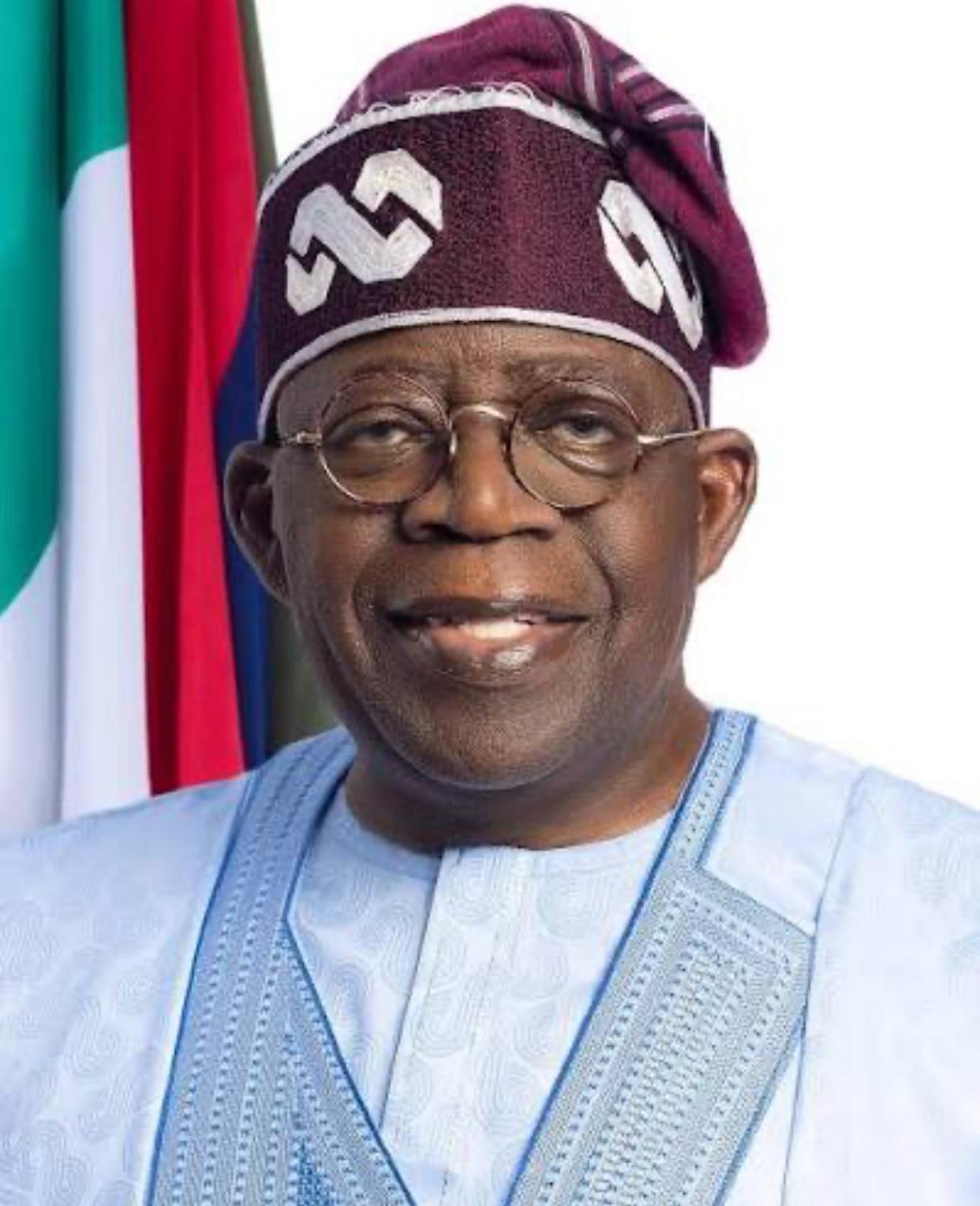
As Nigeria gradually approaches the 2027 general elections, conversations around power rotation have resurfaced with renewed intensity.
At the heart of this debate lies a fundamental question: Should the presidency remain in the South in 2027, before returning to the North, in the spirit of unity, equity, justice and national stability?
Nigeria is a delicate federation, diverse in ethnicity, religion and political history. Since the return to democracy in 1999, an informal but politically sensitive understanding has guided the distribution of presidential power between the North and the South.
This unwritten rotational principle has helped calm tensions, reduce suspicion, and foster a sense of belonging among Nigeria’s federating units.
From 1999 to 2007, the presidency was held by Olusegun Obasanjo (South-West). It shifted to the North with Umaru Musa Yar’Adua in 2007, before returning to the South under Goodluck Jonathan.
Power moved back to the North in 2015 with Muhammadu Buhari, who completed eight years in office. In 2023, the pendulum swung again to the South with the emergence of Bola Ahmed Tinubu.
So, if this has been the arrangement, why North in 2027?
Against this backdrop, proponents of equity like me, argue that 2027 should consolidate the South’s turn in the interest of fairness. If the North completed eight uninterrupted years from 2015 to 2023, justice demands that the South be allowed the same political stability and opportunity.
Beyond arithmetic fairness, the argument is also about national cohesion. Nigeria has endured deep political mistrust, sectional agitation and identity-driven tensions.
Abruptly truncating the Southern tenure in 2027 could reignite feelings of marginalisation and undermine the fragile trust the rotation principle seeks to protect.
Supporters also maintain that political stability strengthens economic confidence.
Investors and development partners prefer predictability too.
Sustaining zoning arrangements reduces electoral volatility and signals continuity.
However, the broader message is not about permanent entitlement, it is about balance.
After a completed Southern tenure, power can then justifiably rotate back to the North, reinforcing the spirit of give-and-take that sustains multi-ethnic democracies.
Ultimately, Nigeria’s democracy must rise above winner-takes-all politics. The survival of the republic depends not only on ballots cast, but on perceived fairness in the sharing of power.
In 2027, the test will not just be about who wins, but whether Nigeria chooses unity over division, equity over expediency, and peace over provocation.
This is where I stand.
Amb. Anderson Osiebe, Executive Director, HallowMace Foundation Africa, Public Policy Expert and an Administrator writes from Abuja – Nigeria.

Group Clarifies EFCC Petition Withdrawal in Controversy Involving VeryDarkMan, Ifeanyi Udezue
BY Abdul-Ganiyy Akanbi The Igbo Community Assembly Abuja has called for responsible public discourse and adherence to due for the...


Bayelsà arraigns suspected killers of 42 years old Estate Agent,Richard Ekpebu on Monday
By David Owei,Bayelsa The Bayelsà State Government will on Monday arraign the alleged killers of the 42 years old Estate...


Correctional Centre Registers Team for Prosperity Cup 2026
By David Owei,Bayelsa The 2026 edition of the Bayelsa Governor’s Football Tournament, also called the Prosperity Cup, has taken on...
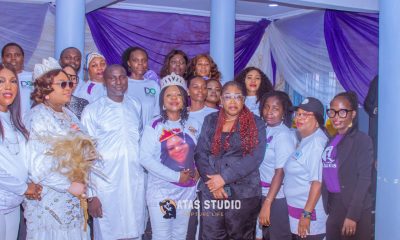

Advocacy groups, Persons with Disabilities, others celebrates International Women’s Day in Bayelsa ..seeks quick passage of Persons with Disabilities Bill
By David Owei,Bayelsa Gender Rights Advocacy group, Do Foundation, others celebrate the International Women’s Day 2026, women living with disabilities...

INC ELECTION: Governor Diri Commends Candidates, CITRE, Other Institutions
By David Owei,Bayelsa The Bayelsa State Governor, Senator Douye Diri, has commended individuals and institutions including the six presidential candidates...


Gov.Fubara Inspects Agba-Ndele Rd Project,Lauds Completion of Bridge, ….Sets May deadline for inauguration
By George Mgbeleke Governor of Rivers State, Sir Siminalayi Fubara, has expressed delight over the completion of the Agba-Ndele Bridge...

Double Standards in Nigerian Politics? The Controversy Over Senator Abaribe’s Defection.
By Amb. Anderson Osiebe. Nigeria’s political landscape has once again been stirred by controversy following the criticism trailing the recent...

2027 Presidential Election: Why the presidency must remain in the South, before returning to the North
By: Amb. Anderson Osiebe As Nigeria gradually approaches the 2027 general elections, conversations around power rotation have resurfaced with renewed...

Insecirity: Senate urges establishment of military base in Benue’s Kwande communities
By George Mgbeleke In a bid to end incessant killings in Benue and other parts of the country,the Senate on...

Igali bids farewell to Joana, former Sports Ministry staff, now Women Affairs Commissioner*
By David Owei,Bayelsa The Ministry of Sports Development, Bayelsa State, under the able leadership of Honourable Daniel Igali, has sent...
-
 Politics10 months ago
Gov Okpebholo moves to end Cultism *Threatens action against leading cult groups *Vows to demolish more cult houses in Edo State
-

 Politics7 months ago
ASUU-NDU protest against FG loans, unpaid salaries,Non-Implementation of agreements …..says loans is generational slavery
-
 Business & Economy7 months ago
PC-NCG Issues Disclaimer on Purported Nigerian Coast Guard National Orientation Exercise In Anambra State
-
 Entertainment2 years ago
Jubilation galore as Parishioners of CKC Kurudu celebrate their cultural heritage ….FG should exploit our Cultural heritage to unite Nigerians-Rev Fr Dim
-

 General News2 years ago
Reps hold public hearing on FMC Ugwuaji Awkunanaw
-

 General News2 years ago
Celebration galore as UDA Successfully Elected New Exco ……I will digitalize processes that will raise UDA to greater height -Comr. Okejiri
-

 Law & Crime9 months ago
ICPC pledges to collaborate with FIDA to end Sex for Marks in tertiary institutions
-
 Law & Crime8 months ago
Legal practitioner raises alarm over threat to his life by CSP Muhammed Abdulkareem