
Uncategorized
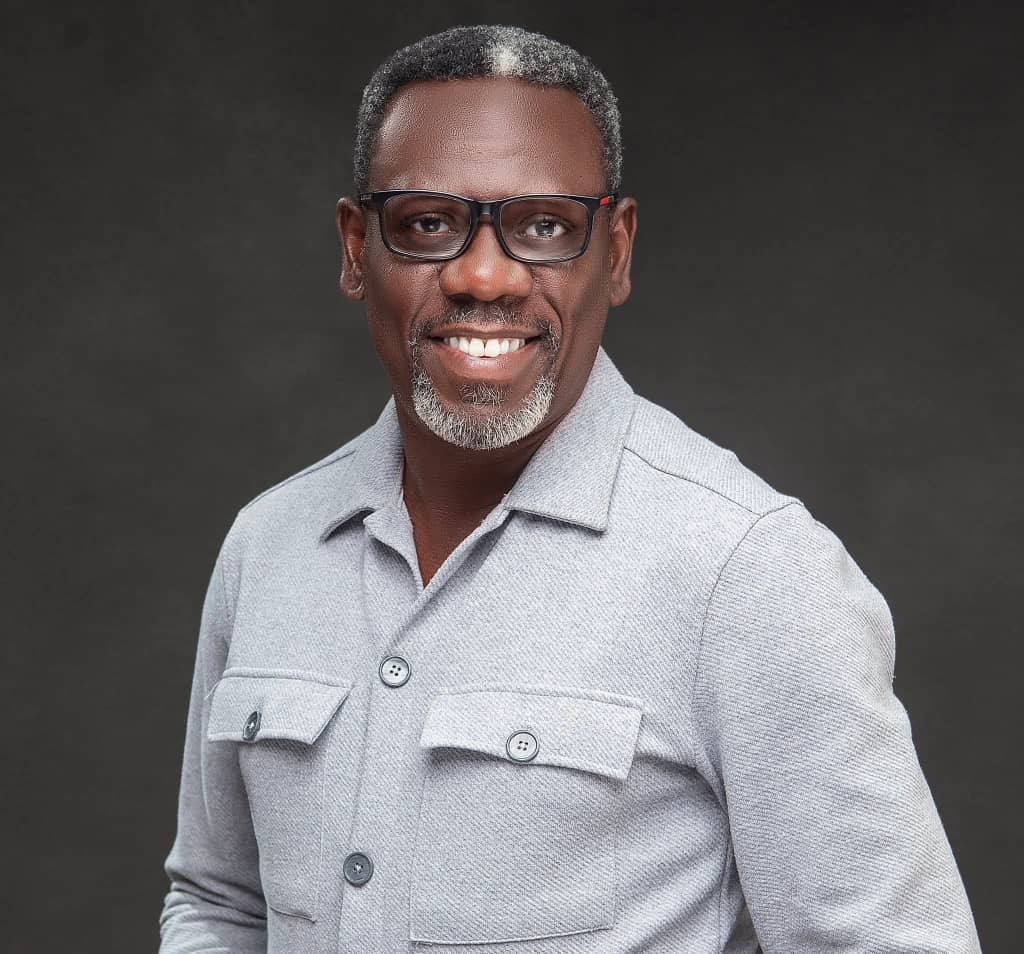
Prosperity Cup Organizers Congratulate Arise News Reporter, Ovieteme George

By David Owei
Organizers of Nigeria’s biggest grassroots football spectacle, the Bayelsa Governor’s Football Tournament, tagged the Prosperity Cup, have congratulated Arise T.V. News reporter, Ovieteme George on his Broadcasting Organisation of Nigeria (BON) award as Best Reporter of the Year.
Director General of the tournament, Mr. Ono Akpe in a congratulatory message on behalf of the Central Organizing Committee (COC), said the award reflects the invaluable contributions of Mr. Ovieteme George in projecting the Niger Delta region and Bayelsa State in particular.
The statement describes Mr George as Nigeria’s finest journalist whose passion for his job has continued to impact Arise Television, maintaining that the latest award speaks volumes of Mr George’s commitment to national development.
According to the statement, Ovieteme George has made Arise News T.V. a delight to watch with constant reporting of the problems bedevilling the people of the Niger Delta region to the world, stating that he has brought the station to wield a strong impact on national affairs by reawakening and advancing social and political consciousness among Niger Deltans.
Mr Akpe commended the celebrant for his immense contribution to the growth and development of the Prosperity Cup since the commencement of the tournament.
”We congratulate you on your award, this award reflects your unwavering commitment to your job, we will continue to identify with you. You have made Arise News one of the most sought-after television stations in the country” he stated.
We pray that God would continue to guide Ovieteme George in the discharge of his public-spirited responsibilities, and together with your Arise TV team in Yenagoa, strive for sustained delivery of greater service to the station.









Uncategorized
Turnah: Bayelsa APC Cannot Deliver Tinubu Without Rainbow Coalition …PDP chairman challenges Ogoriba’s claim, cites 2023 voting figures

By Our Correspondent
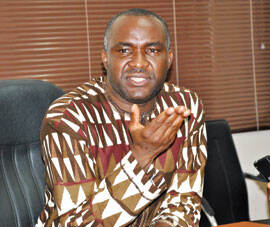
As 2027 election draws close,the chairman of the peoples democratic party (PDP) in Bayelsa state, high chief Alabh George Turnah, has challenged the claim by the state chairman of the All progressives congress (APC), Warman Weri Ogoriba, that the party has sufficient structures and grassroots support to deliver president Bola Ahmed Tinubu in the state in the 2027 presidential election without the support of the emerging rainbow coalition.
Ogoriba had maintained that the Bayelsa APC was firmly rooted across the state’s eight local government areas and political wards and possessed the organisation, membership and grassroots networks required to campaign for Tinubu and other APC candidates in the 2027 elections.
But Turnah, in a statement issued by his senior special assistant on media and communication, Kelvin Loveday-Egbo, described the APC chairman’s position as a political assertion that should be tested against the state’s previous voting patterns and prevailing political alignments.
He argued that the APC could not simply dismiss the significance of the PDP and the rainbow coalition while simultaneously claiming that it had already secured the support required to determine the presidential outcome in Bayelsa.
According to Turnah, the 2023 presidential election figures cited by the PDP showed that the party polled 65,145 votes in Bayelsa, while the Labour Party (LP) recorded 45,645 votes and the APC 40,417 votes.
He said the figures demonstrated the importance of broad based political mobilisation, arguing that the combined PDP and LP votes in 2023 were substantially higher than the APC’s tally.
“Those numbers are not propaganda they are figures from the last presidential election, therefore, when the APC says it has everything required to determine the presidential outcome in Bayelsa state, we should ask a simple question: what does the voting record actually tell us, Turnah said.
The PDP chairman also referred to the performance of the labour party’s presidential candidate in the 2023 election, Peter Obi, arguing that his performance in Bayelsa showed the potential impact of voter mobilisation beyond established party structures.
Turnah said the political landscape had since changed, particularly with the emergence of the Nigerian democratic congress (NDC), which he linked to former Bayelsa state governor, senator Henry Seriake Dickson.
He argued that the evolving political alliances ahead of 2027 made it premature for the APC to dismiss the Rainbow Coalition or the potential contribution of opposition political structures to the presidential contest.
Turnah further claimed that governor Douye Diri’s movement into the APC had created discontent among some members of the party who had previously built the APC structure in Bayelsa,he also cited the reported departure of former governor Timipre Sylva from the APC as another factor in the state’s changing political landscape.
He said the political developments underscored the need for the APC to engage rather than dismiss other political forces ahead of the 2027 election.
“The support of the PDP and the rainbow coalition is not a peripheral matter; it is central and indispensable if president Tinubu is to win Bayelsa state, he described the Rainbow coalition, associated with FCT minister and former Rivers state governor Nyesom Wike, as a political arrangement whose relevance in his view could not be wished away.
Turnah maintained that the PDP’s longstanding political presence in Bayelsa also remained a factor that could influence the political calculations ahead of the 2027 presidential election,he, however, stressed that the PDP would continue to operate independently and make decisions in accordance with the direction of the party.
“The PDP in Bayelsa will continue to build its structures engage its members and participate in elections in accordance with the decisions of the party,nobody should mistake our political independence for an inability to participate in broader political conversations,” he said.
Turnah urged the Bayelsa APC to approach the 2027 presidential contest with what he described as political realism, rather than relying solely on claims about party structures and grassroots strength.
He said the outcome of the election would ultimately depend on voters, adding that political parties should focus their engagement on issues affecting Bayelsans, including infrastructure employment ,economic opportunities, security, education, healthcare and poverty reduction.
“The 2027 election is still ahead the political debate at this time should therefore focus on issues that matter to Bayelsans, including development, infrastructure employment, economic opportunity, poverty eradication security, education and healthcare,” he said.
Turnah added that the PDP would continue to place the interests of Bayelsans at the centre of its political engagement, stressing that the electorate would ultimately determine the outcome of the election.
Uncategorized
Gombe, Kano, Bauchi, Delta Bye-Elections Offer Vital Lessons for General Election — INEC Chairman
By Our Correspondent
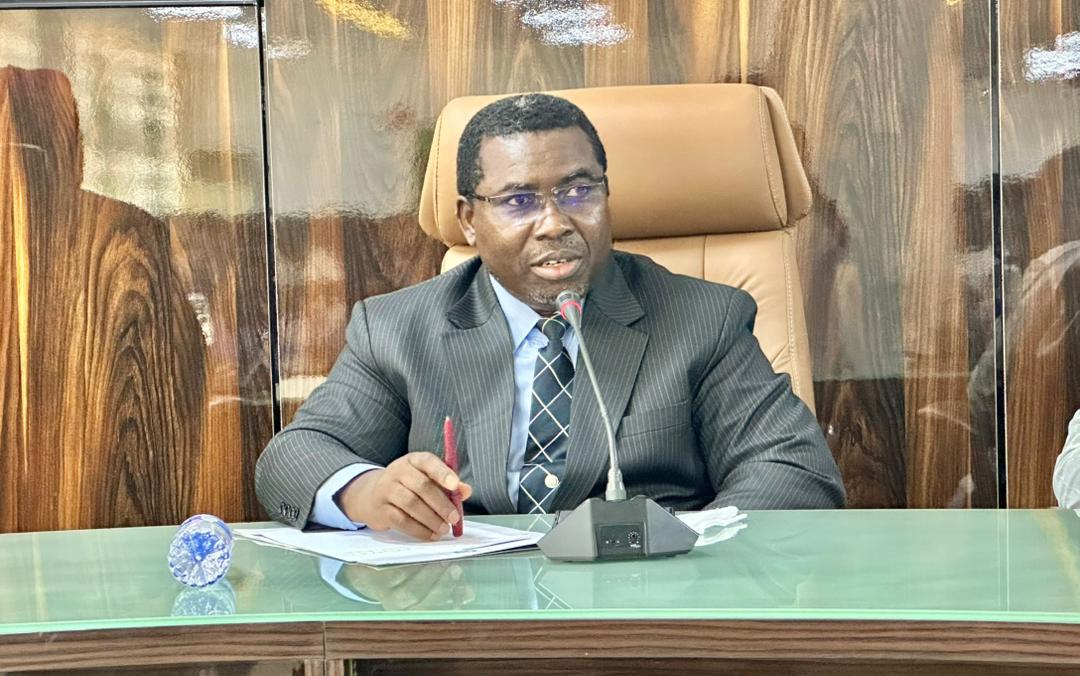
As preparations gather momentum ahead of the 2027 General Election, the Independent National Electoral Commission (INEC) has described the bye-elections across Gombe, Kano, Bauchi, and Delta states as crucial operational benchmarks for testing the nation’s electoral infrastructure.
Speaking on Saturday while personally presiding over operations at the Commission’s National Situation Room at its Headquarters in Abuja, the INEC Chairman, Prof. Joash Amupitan, SAN, emphasised that no electoral contest should be dismissed as trivial or routine.
In a statement by CPS/Media Adviser to the INEC Chairman,Adedayo Oketola, the Commission conducted four key legislative bye-elections in the Gombe/Kwami/Funakaye Federal Constituency in Gombe State, Dawakin Kudu State Constituency in Kano State, Sakwa and Disina State Constituencies in Bauchi State and Udu State Constituency in Delta State.
Amupitan, who asserted that every off-cycle poll served as an important dress rehearsal for nationwide elections, said, “These four bye-elections provide indispensable operational lessons for the Commission as we systematically chart our roadmap toward the 2027 General Election.”
“We must resist the temptation to view any exercise as merely an ordinary bye-election. Every election is a critical component of our broader preparations for the 2027 General Election, allowing us to continuously audit our logistics framework, stress-test our technological deployment, and evaluate administrative field readiness.”
The INEC Chairman, accompanied by National Commissioners and senior management officials, monitored the bye-elections as operational reports arrived from the field.
Amupitan reassured Nigerians of the Commission’s resolve to uphold electoral integrity, noting that operational bottlenecks encountered before polling were swiftly identified and resolved.
“Our primary mandate in the Situation Room is monitoring and proactive crisis resolution,” the Chairman added. “Whatever administrative or field challenges arose in before the day of the elections, the Commission was able to nip them in the bud effectively. We remain committed to refining our processes so that every subsequent exercise reflects higher standards of efficiency and public confidence.”
He thanked everyone present in the situation room, especially the technical team, for ensuring the Commission was able to monitor the multi-state exercise seamlessly and assess the field performance without any hitch
By Emmanuel Nnadozie Onwubiko
What Is Ethics?
To begin this reflection, the best way to proceed is to first understand the philosophical concept of ethics, which is generally defined as the set of moral principles that helps each of us determine what is right or wrong in our actions.
Furthermore, ethics, according to moral philosophers, serves as what can commonly be described as our individual moral handbook—a framework that guides us on how to treat others and make decisions in our daily lives.
For the avoidance of doubt, ethics, as the moral governor of our actions as human beings, comprises the principles that help determine whether we are being truthful, choosing fairness over selfishness, and acting justly. Ethics therefore shapes the kind of person each of us ultimately becomes, as judged by our actions.
Whether you realise it or not, ethics quietly guides our actions and influences how we treat others. From small choices, such as returning extra change, to major decisions, such as standing up for what is right, ethics is always at work behind the scenes.
This writer has gone to some length to define ethics because those moral principles have become particularly relevant at a time when members of the human race are discussing the future of humanity in an era in which Artificial Intelligence (AI) has emerged as one of the fastest-growing areas of scientific and technological development.
We will consider some of the approaches that have been offered to the scientific community concerning the responsible development of AI, including perspectives attributed to the Holy Father, Pope Leo XIV, and one of the world’s most prominent monarchs, King Charles III of the United Kingdom.
Since succeeding the late Pope Francis as the Vicar of Christ on Earth, Pope Leo XIV has articulated guidelines on how humanity should approach and regulate the development of Artificial Intelligence. His theological, scholarly and philosophical reflections have included discussions about how ethical principles should guide technological advancement and protect human dignity.
According to Vatican News, the Pope has emphasised the importance of ensuring that technological progress remains directed towards the common good of humanity. His reflections raise fundamental questions about whether scientific inventions should merely advance human capabilities or whether they must also be governed by moral principles that protect human dignity, social justice and the natural environment.
‘Gravely Immoral’ to Subjugate a Nation
Pope Leo XIV, in his reflections on Catholic social teaching, identified principles concerning the common good and the dignity of every human person.
The common good can be understood as the social expression of the dignity recognised in every person. The Pope has also emphasised the importance of respecting the right of peoples to exist, preserve their identities and contribute their unique qualities to the family of nations.
From this perspective, any attempt to eliminate or subjugate a nation raises profound moral questions and conflicts with the principles of human dignity and the common good.
Technology Must Not Be in the Hands of a Few
The Pope has also emphasised the importance of the universal destination of goods. In this context, he has highlighted the need to ensure that technological advancement does not become concentrated in the hands of a small number of individuals or corporations, thereby widening the gap between those included in the digital revolution and those excluded from it.
The principle of subsidiarity similarly requires societies to avoid excessive centralisation and paternalistic approaches to social life, while encouraging shared responsibility.
Solidarity, another important principle of Catholic social teaching, is both a principle and a virtue. It challenges indifference and requires societies to consider not only those living today but also future generations.
Closely following the broader ethical questions surrounding technological advancement, King Charles III of the United Kingdom has also expressed concern about the potential dangers of Artificial Intelligence if the technology falls into the wrong hands.
The King warned AI executives about the “existential dangers” posed by the technology being misused.
He made the comments at a summit convened at Dumfries House in Ayrshire to discuss how technology can be used to benefit society.
Those gathered at the meeting reportedly included Kanishka Narayan, the UK’s AI Minister, the Pope’s adviser, and representatives from major AI companies such as Nvidia, OpenAI and Anthropic.
The King’s intervention came amid a series of warnings from people within the technology industry about the rapidly evolving capabilities of advanced, or “frontier”, AI models and the need for regulation to ensure that such technologies remain under appropriate safeguards.
“Those who have created these technologies are now increasingly warning that AI risks developing darker capacities—perhaps even to take life,” the King told executives.
He said there appeared to be an “urgency” in adequately considering the existential dangers of such technologies falling into the wrong hands and being used in potentially catastrophic ways.
“The task before you is not merely to advance technology, but to ensure that it remains firmly in the service of humanity, community and the natural world,” he told the gathering.
The summit was convened to consider whether a “shared set of principles” could be developed to help guide the future application of AI.
‘Keep Engineering’
Jensen Huang, chief executive of Nvidia, was among the leading technology executives attending the summit.
Nvidia is a major player in AI infrastructure, supplying chips to leading AI developers, including OpenAI and Meta.
Huang told the gathering that he believed safety was “paramount”, adding that companies should hold back a product and “keep engineering” if it was not sufficiently safe.
The Nvidia chief executive also highlighted the potential value of open models—systems that give users direct access to the underlying technology—as a way of ensuring that people and countries are not left behind.
He said such systems must also be protected so that “researchers, universities, start-ups and countries” can develop applications that “none of us would have imagined alone”.
“Let us lead with responsible optimism, build AI safely and securely, open it to more people, expand our ambition and solve the problems that matter to the world,” Huang said.
Meanwhile, Sir Demis Hassabis, co-founder of the British AI research laboratory DeepMind, which was later acquired by Google, offered a more cautious assessment of the pace of technological development.
He said artificial general intelligence—systems that could potentially equal or surpass humans across multiple tasks—could be only a few years away and could have an impact many times greater than that of the Industrial Revolution.
A Wave of Warnings
If you think you have heard the most alarming warnings about the unbridled and insufficiently regulated evolution of Artificial Intelligence, then the debate is far from over.
Sir Demis Hassabis acknowledged that the chance of something going wrong was “definitely non-zero”. However, he advocated what he described as “a sensible middle way”, arguing that humanity could address the risks if collectively given the space and time necessary to mitigate them.
“The future is not yet written,” he told the King’s delegates.
Sarah Friar, OpenAI’s chief financial officer, said AI had the potential to solve some of society’s “hardest problems”, but acknowledged that its growing capabilities raised questions about safety and how to ensure that the technology always serves people.
“We need to address those questions together,” she said, adding that no single company or government could address them alone.
The wider debate over AI has intensified, with discussions about its potential power, social consequences and regulation increasingly dominating public discourse, technology forums and social media.
However, some critical observers have argued that the focus on hypothetical future risks could distract attention from more immediate concerns surrounding AI, including its environmental impact, energy consumption, employment consequences, privacy implications and potential use in surveillance and misinformation.
The BBC has reported on concerns among people working in the field about the speed of technological advancement and what it could mean for humanity.
Anthropic scientist Evan Hubinger has also expressed concerns about the possibility of human extinction resulting from AI, assigning a significant probability to such an outcome in his personal assessment.
AI industry leaders have similarly weighed in on the debate. OpenAI’s Sam Altman has acknowledged that people are right to be concerned about AI risks while arguing that AI companies must work to ensure that the technology is developed safely.
Ironically, critics argue that AI companies cannot simply be relied upon to regulate themselves.
Some political figures and technology critics have therefore called for stronger government oversight, while others have dismissed some AI safety concerns as exaggerated.
The central question, however, remains the same: how can humanity encourage technological innovation while ensuring that innovation does not undermine human dignity, safety and the common good?
The Moral Responsibility of AI Development
To be on the safe side, there is an immediate necessity for the advancement of AI to be adequately regulated, bearing in mind the critical need to safeguard humanity.
The concerns raised by religious leaders, political figures, scientists and technology executives demonstrate that AI is no longer merely a question of technological innovation. It is increasingly a question of ethics.
Artificial Intelligence should therefore be developed within common ethical frameworks that emphasise the common good of humanity. Its development should not become a race driven exclusively by commercial interests among technology companies.
The fundamental question should be whether AI ultimately serves humanity or whether humanity becomes increasingly subordinate to the technological systems it creates.
Technology must remain a servant of humanity and not become its master.
The ethical responsibility of our generation is therefore to ensure that scientific advancement is accompanied by moral responsibility. The extraordinary power of Artificial Intelligence requires extraordinary responsibility from those who design it, regulate it, finance it and deploy it.
The future of AI should not be determined solely by what technology makes possible. It should also be determined by what humanity considers morally acceptable.
Emmanuel Nnadozie Onwubiko is the founder of the Human Rights Writers Association of Nigeria and a former National Commissioner of the National Human Rights Commission of Nigeria.


Turnah: Bayelsa APC Cannot Deliver Tinubu Without Rainbow Coalition …PDP chairman challenges Ogoriba’s claim, cites 2023 voting figures
By Our Correspondent As 2027 election draws close,the chairman of the peoples democratic party (PDP) in Bayelsa state, high chief...

Gombe, Kano, Bauchi, Delta Bye-Elections Offer Vital Lessons for General Election — INEC Chairman
By Our Correspondent As preparations gather momentum ahead of the 2027 General Election, the Independent National Electoral Commission (INEC) has...


Jonathan, Diri, Others Eulogise Former Bayelsa Military Administrator Edor Obi at Father’s Funeral
By David Owei Former President of Nigeria, Dr. Goodluck Jonathan, and Bayelsa State Governor, Senator Douye Diri, have praised the...


Death of 37 Miners:NSCDC deployes Commandant Abdul Hamid Salisu Kabara to head Minna Commandant
By Uthman Baba Naseer,Minna Following the Thursday,death of 37 suspected illegal miners at the detention facility of the Niger State...


Hajj 2027: CSO begs Saudi Arabia over additional slots for Nigeria
By our correspondent A civil society organisation, CSO, the Independent Hajj Reporters, IHR, has appealed to the Saudi Arabian Ministry...
Ethics and the Indiscretion of AI
By Emmanuel Nnadozie Onwubiko What Is Ethics? To begin this reflection, the best way to proceed is to first understand...
Review Monetization Policy , NASS pleads with FG ….assures over 14, 000 Staff of World Class Medical Centre
By our Correspondent The National Assembly Thursday through its Clerk , Kamoru Ogunlana Esq, appealed to the Federal Government to...
Accept defeat, stop campaign of calumny, Ekiti APC Reps candidate tells Ojuawo
By our Correspondent The All Progressives Congress, APC, House of Representatives candidate for Ekiti South Federal Constituency, Engr. Toyin Okoro,...
37 Dead in Custody: Nigerian Lives Are Not Disposable-ADC Tells Tinubu,FG -Demands Full, Transparent Investigation
By George Mgbeleke The African Democratic Congress (ADC) has called for an immediate, independent and transparent investigation into the deaths...
Jonathan Urges Civil Service Reform, Calls for Unified Federal-State Salary Structure
By David Owei,Bayelsa Former President, Doctor Goodluck Jonathan, has called for the harmonization of structures and salaries across the Federal...
-
 Politics1 year ago
Gov Okpebholo moves to end Cultism *Threatens action against leading cult groups *Vows to demolish more cult houses in Edo State
-

 Politics1 year ago
ASUU-NDU protest against FG loans, unpaid salaries,Non-Implementation of agreements …..says loans is generational slavery
-

 Business & Economy1 year ago
PC-NCG Issues Disclaimer on Purported Nigerian Coast Guard National Orientation Exercise In Anambra State
-
 Entertainment2 years ago
Jubilation galore as Parishioners of CKC Kurudu celebrate their cultural heritage ….FG should exploit our Cultural heritage to unite Nigerians-Rev Fr Dim
-

 Sports7 months ago
Bayelsa-born ex-football star’s son, Opuama donates spike shoes to Athletics Association
-

 General News2 years ago
Reps hold public hearing on FMC Ugwuaji Awkunanaw
-
 Law & Crime1 year ago
Legal practitioner raises alarm over threat to his life by CSP Muhammed Abdulkareem
-

 General News2 years ago
Celebration galore as UDA Successfully Elected New Exco ……I will digitalize processes that will raise UDA to greater height -Comr. Okejiri