
Opinion
HURIWA to 375 election judges: Don’t turn courts into victory markets for politicians, 2027 won’t be business as usual


By George Mgbeleke
The Human Rights Writers Association of Nigeria (HURIWA) has issued a strong warning to the Independent National Electoral Commission (INEC) and the 375 judges inaugurated to handle election petitions ahead of the 2027 general elections, insisting that Nigerians will no longer accept a democracy in which politicians lose elections at the ballot box but allegedly purchase victories through questionable court judgments.
HURIWA in a statement by its National Coordinator,Comrade Emmanuel Nnadozie Onwubiko said the 2027 elections must produce winners determined by the votes of citizens, not by the financial war chests of desperate politicians, judicial manipulation or alleged backroom arrangements between litigants and compromised judicial officers.
The association declared that Nigeria cannot continue to operate an electoral system in which the courts are perceived as the final destination for politicians seeking to overturn the choices of voters.
It warned that the 2027 post-election season would be a defining moment for the Nigerian judiciary, adding that judges who compromise their oath of office for financial inducements should expect unprecedented public scrutiny and accountability.
Reacting to the inauguration of 375 judges for election petition tribunals, HURIWA said the judicial officers must understand that they are being entrusted with the future of Nigeria’s democracy and not the political survival of powerful individuals.
The association warned that any judge who converts the courtroom into a marketplace for electoral victories would be betraying the Constitution and undermining the sovereignty of the Nigerian people.
No judge should sell the mandate of Nigerians
HURIWA said it had received disturbing concerns about alleged attempts by some politicians to influence election-related judicial proceedings through financial inducements.
It warned that the days when judicial corruption could be concealed behind complicated legal arguments and controversial judgments must come to an end.
The association said Nigerians and political stakeholders would be far more vigilant in monitoring the conduct of election tribunal judges in 2027.
It stressed that judicial officers must not mistake the constitutional protection of their offices for immunity from public accountability.
HURIWA called on the Economic and Financial Crimes Commission (EFCC) and the Independent Corrupt Practices and Other Related Offences Commission (ICPC) to intensify vigilance around credible allegations of financial inducement, suspicious transactions and attempts to compromise election petition proceedings.
It also urged the Code of Conduct Bureau to strengthen scrutiny of the asset declarations of judges handling election disputes and ensure that relevant information is accessible in accordance with the law.
According to HURIWA, unexplained wealth and suspicious financial dealings involving judicial officers must not be ignored, particularly during a politically sensitive election cycle.
INEC must not export its failures to the courts
HURIWA challenged INEC to ensure that the 2027 elections are so credible that the commission does not leave behind a trail of avoidable controversies, disputed results and endless litigation.
It said the commission must resist political pressure, eliminate operational weaknesses and ensure that results accurately reflect the choices made by voters at polling units.
The association argued that election tribunals should exist to resolve genuine disputes, not routinely determine who governs Nigeria after electoral institutions have failed to protect the people’s mandate.
HURIWA specifically challenged INEC Chairman, Professor Joash Amupitan, to demonstrate institutional independence and ensure that the 2027 elections are not remembered as another exercise in which political influence and litigation overshadowed the ballot.
375 judges face a test of public confidence
The warning followed the inauguration of 375 judges on Monday at the Body of Benchers Complex in Abuja to serve on election petition tribunals ahead of the 2027 general elections.
The President of the Court of Appeal, Justice Monica Dongban-Mensem, disclosed that 138 of the judges were returning members with previous tribunal experience, while 237 were newly nominated.
She said the credibility of democracy depended not only on the conduct of elections but also on impartial, effective and timely mechanisms for resolving electoral disputes.
HURIWA recalled that Section 285(1) and (2) of the 1999 Constitution, as amended, empowers the President of the Court of Appeal to constitute election petition tribunals for disputes arising from National and State Houses of Assembly and governorship elections.
The association also noted that Section 134(3)(a) and (b) of the Electoral Act 2026 provides timelines for constituting the tribunals and opening their registries.
HURIWA said the 375 judges must appreciate that the credibility of their decisions would have consequences far beyond the immediate political fortunes of election contestants.
It warned that Nigeria is approaching a critical democratic test and that no amount of legal sophistication should be used to disguise injustice or legitimise electoral fraud.
The association said the ultimate responsibility of every tribunal judge is to defend the Constitution, uphold the evidence and protect the mandate freely given by the Nigerian people.
HURIWA’s position is clear: Let the people’s votes count. No politician must buy what the people have refused to give, and no judge must sell what the people have decided.
Opinion
HURIWA Urges National Assembly to Halt Tinubu’s Borrowing Spree, Warns of Debt Enslavement of Future Generations
By George Mgbeleke
The Human Rights Writers Association of Nigeria (HURIWA) has called on the National Assembly to urgently intervene and stop what it described as Nigeria’s dangerous slide into debt dependence, warning that the country risks mortgaging the future of generations yet unborn.
HURIWA in a statement signed by its national cordinator Comrade Emmanuel Nnadozie Onwubiko,urged President Bola Ahmed Tinubu to halt further external borrowing and listen to the warning by former President Olusegun Obasanjo that excessive debt destroys generations.
The rights group said the latest World Bank International Debt Report 2026, which puts Nigeria’s external debt at $145.02 billion as of December 2025, provides fresh evidence of the growing burden of foreign obligations on the country.
According to the report, Nigeria’s external debt increased from $83.21 billion in 2015 to $145.02 billion in 2025, representing an increase of approximately $61.8 billion within 10 years.
HURIWA described the development as deeply concerning, particularly at a time when millions of Nigerians are struggling with rising living costs, unemployment, poverty and declining purchasing power.
The association noted that the World Bank report also revealed that Nigeria’s external debt comprised $62.4 billion in public and publicly guaranteed debt, $54.476 billion in private nonguaranteed debt and $28.139 billion in short-term obligations.
It expressed concern over the rising cost of servicing external obligations, noting that Nigeria’s debt-service-to-exports ratio increased by 9.6 per cent in 2025, while debt service relative to gross national income rose by 6.9 per cent.
HURIWA said these figures raise serious questions about the sustainability of the country’s borrowing strategy and the proportion of national resources that will continue to be diverted towards debt repayment instead of critical public services.
The association particularly expressed concern over Nigeria’s $2.3 billion sovereign bond issuance in 2025, which comprised a 10-year bond carrying an interest rate of 8.625 per cent and a 20-year bond at 9.125 per cent.
It said the high interest rates charged by private international creditors should serve as a warning against excessive dependence on expensive foreign financing.
HURIWA also drew attention to the World Bank’s disclosure that Nigeria entered into a $5 billion Total Return Swap transaction in 2026, with a three-year maturity and a collateralisation ratio of approximately 133 per cent.
Under the arrangement, Nigeria reportedly pledged domestic securities worth about $6.7 billion as collateral for the $5 billion financing.
The association warned that such financing arrangements could expose the country to collateral, margin-call, refinancing and transparency risks.
It therefore called on the Federal Government to provide comprehensive details of the transaction, including the securities pledged, repayment obligations, maturity terms and other conditions attached to the agreement.
HURIWA said the World Bank’s warning about the need for transparency in such transactions should not be ignored, particularly because undisclosed financial exposures could complicate the assessment of Nigeria’s actual debt position.
The association said former President Olusegun Obasanjo’s recent criticism of excessive borrowing deserves serious consideration.
Obasanjo had described debt as worse than leprosy, warning that it destroys generations.
He made the remarks while speaking at a symposium in Abeokuta, Ogun State, where he disagreed with President Tinubu’s position that borrowing should not be considered a problem if the government could repay the loans.
Tinubu had defended his administration’s borrowing plans, arguing that long-term loans were necessary to finance infrastructure, improve electricity supply, upgrade ports and support his ambition of building a $1 trillion economy by 2030.
However, HURIWA maintained that infrastructure development must not become a justification for endless borrowing without transparent assessments of the economic returns, repayment capacity and long-term consequences.
The association challenged the Federal Government to demonstrate how previous borrowings had translated into measurable improvements in the living conditions of ordinary Nigerians.
It also questioned the wisdom of seeking additional foreign loans at a time when the government claims to have increased revenue following the removal of the petrol subsidy.
HURIWA noted that the Nigeria Labour Congress had also raised concerns over the Federal Government’s request to the National Assembly for approval to borrow $20.5 billion and €1.45 billion.
The association called on lawmakers to exercise their constitutional oversight responsibilities and thoroughly scrutinise all fresh borrowing requests before granting approval.
It urged the National Assembly to demand a comprehensive account of existing loans, their utilisation, repayment schedules and the economic benefits delivered by projects financed through previous borrowings.
HURIWA further called for an independent assessment of Nigeria’s debt exposure, including contingent liabilities and complex financing arrangements that may not be immediately reflected in conventional debt figures.
The association insisted that Nigeria must begin to build an economy that relies more on productive capacity, industrial development, exports, agriculture and efficient revenue generation rather than continuous foreign borrowing.
It warned that future generations should not be condemned to servicing debts accumulated by successive administrations without corresponding development benefits.
HURIWA therefore called on President Tinubu to listen to the voice of reason, heed Obasanjo’s warning and place an immediate halt on further external borrowing until the country’s existing debt obligations and borrowing strategy have been subjected to a transparent and independent review.
7th November, 2026
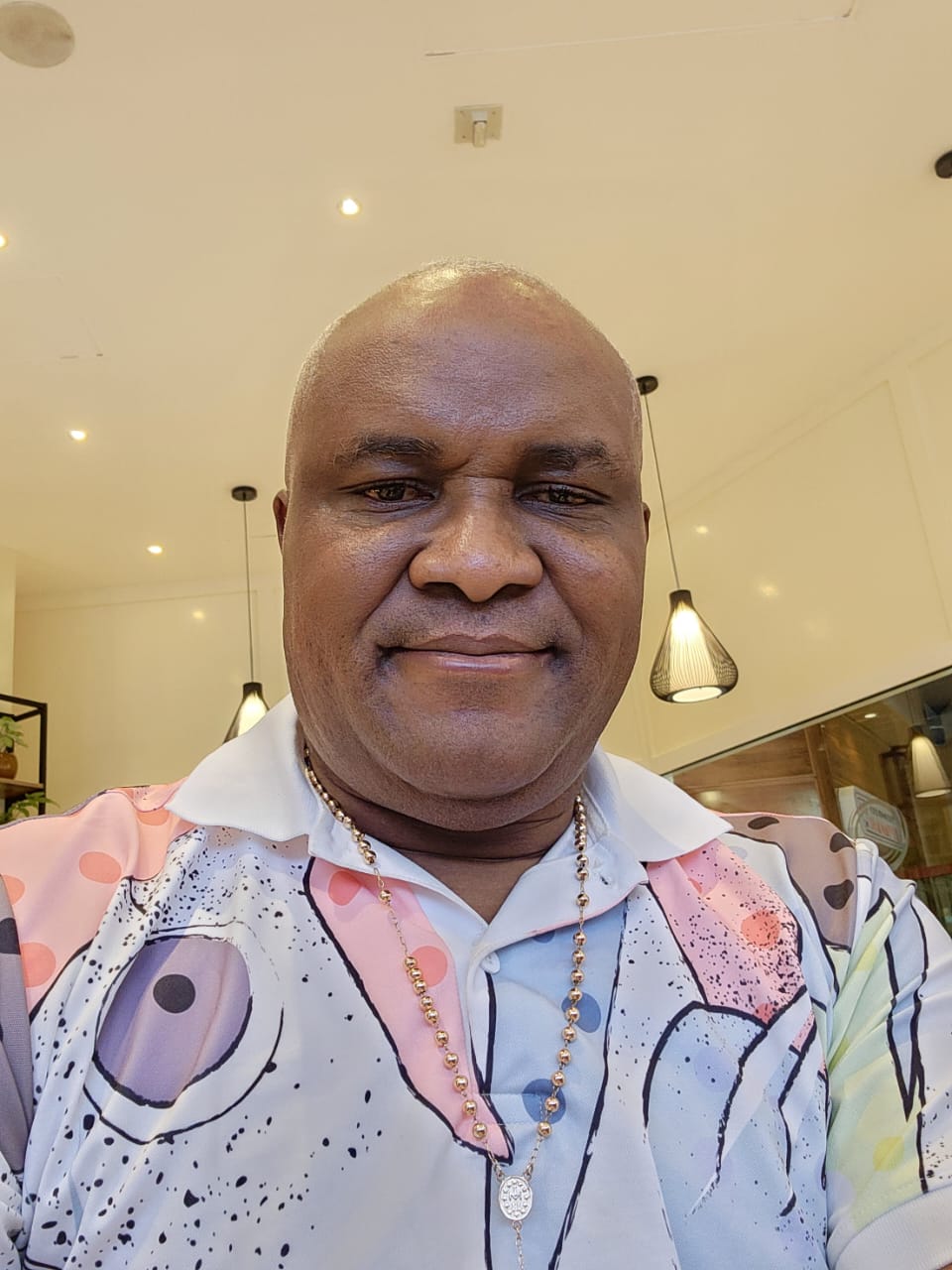
By Emmanuel Nnadozie Onwubiko
There is one disturbing political practice that the current administration in Nigeria appears to have popularised and normalised, particularly as the 2027 general elections draw closer: the peddling of votes and the persistent claims by individuals and political groups that they have already secured specific blocs of voters for the incumbent President, Bola Ahmed Tinubu.
Since the beginning of the year, and with unprecedented intensity as political mobilisation gathers momentum, Nigeria’s public spaces have been inundated with claims by various interest groups within the ruling All Progressives Congress (APC) about the millions of votes they have supposedly secured for the incumbent President and the party’s presidential candidate.
Across the country, political office holders have continued to make extraordinary electoral promises. The Governor of Edo State, for instance, who secured fewer than 130,000 votes in his election victory over the Peoples Democratic Party (PDP), has reportedly promised to deliver 2.5 million votes in Edo State for President Tinubu in the January 2027 presidential election.
Similarly, the APC Governors’ Forum, particularly governors from the Northern region, where the incumbent President is expected to face considerable electoral challenges, has featured prominently in media reports about promises to deliver millions of votes for him.
These declarations have understandably generated questions among discerning Nigerians. How can political office holders confidently claim to have secured millions of votes before citizens have even exercised their constitutional right to vote? On what basis are these extraordinary electoral figures being projected?
Interestingly, the reported political calculations are not limited to the ruling party. Rotimi Chibuike Amaechi, a former two-term Governor of Rivers State and former Federal Minister, has also been quoted in the media as predicting that the presidential candidate of the African Democratic Congress (ADC), former Vice-President Atiku Abubakar, would secure the overwhelming majority of Northern votes, estimated at close to 40 million. His argument, as reported, is that Atiku’s Northern background gives him a significant electoral advantage in the forthcoming presidential contest.
However, Amaechi’s prediction does not approach the extraordinary certainty displayed by several political interest groups within the APC, which appear to have clinically calculated and confidently announced millions of votes supposedly already secured for their presidential candidate.
The situation becomes even more troubling when heads of Federal Government agencies and other public office holders, whose statutory responsibilities require them to serve the Nigerian public without partisan discrimination, begin making political promises involving millions of votes for the incumbent President. Reports that some of these officials have pledged to deliver approximately 10 million votes for President Tinubu raise serious questions about the politicisation of public institutions.
If you ask me, I would describe what is happening as vote peddling. How else can these extraordinary political declarations be explained, other than as an attempt to turn the electorate into a commodity that can be negotiated, traded and delivered to political candidates?
The situation becomes even more disturbing when considered alongside reports that the Federal Government has commenced payments of N50,000 to selected Nigerians under an intervention programme intended to alleviate the suffocating cost-of-living crisis.
While social intervention programmes are legitimate instruments of public policy, serious questions arise when beneficiaries are reportedly required to provide sensitive personal information, including banking and voter-related details. Nigerians deserve clear explanations about the purpose for which such information is collected, the legal authority under which it is obtained, how it is protected and whether it could potentially be accessed or misused for partisan political purposes.
There is a legitimate public-interest concern that personal information collected under the guise of social assistance could be exploited for purposes unrelated to the programme. Speculation has also emerged about the possible misuse or cloning of voter information to manipulate electoral outcomes. These are serious allegations that must not be treated as established facts without evidence. Nevertheless, they deserve independent investigation by the appropriate authorities.
If these concerns are substantiated, the relevant institutions must act decisively to protect citizens’ personal information and safeguard the integrity of the electoral process. No Nigerian should be required to surrender fundamental rights or sensitive personal information as the price of accessing legitimate government assistance.
The most fundamental question arising from these developments is this: if political parties and interest groups can supposedly procure millions of votes long before election day, what exactly is the purpose of conducting elections?
If votes can be purchased, negotiated or politically allocated before citizens arrive at polling stations, why should Nigerians continue to invest faith in the electoral process?
The uncomfortable truth is that vote peddling diminishes the dignity of elections and undermines the integrity, legitimacy and credibility of constitutional democracy.
I therefore join political scientists, democracy advocates and other concerned Nigerians in asking a fundamental question: Why do we care about elections?
The universal democratic principle is that democracy cannot meaningfully exist without credible elections. Although democracy requires much more than the periodic conduct of elections, no country can legitimately claim to operate a democratic system without genuine, transparent, free and fair electoral processes.
Credible elections provide the foundation for democratic legitimacy. Political scientists have consistently argued that elections give citizens the opportunity to hold their leaders accountable by voting them out of office or renewing their mandate when they have performed satisfactorily. They also provide a peaceful mechanism for transferring political power and resolving political competition without violence.
Furthermore, credible elections contribute to better governance by connecting citizens’ interests with the decisions of those entrusted with public authority. They allow voters to choose representatives who reflect their aspirations and provide a foundation for responsive government and sustainable national development.
It is universally recognised that citizens possess an inalienable and constitutionally grounded right to participate in the government and public affairs of their countries. This includes the right to vote and to be elected in periodic elections without discrimination.
The will of the people, expressed through their ballots, constitutes the foundation of legitimate democratic authority. The Nigerian Constitution recognises this principle in Section 14(2)(a), which provides that sovereignty belongs to the people of Nigeria, from whom government derives all its powers and authority.
This constitutional principle means that political office holders do not own governmental authority. They exercise power on behalf of the Nigerian people and must periodically submit themselves to the electorate for the renewal of their mandates.
Interestingly, these democratic principles are also enshrined in Article 21 of the Universal Declaration of Human Rights (UDHR) and Article 25 of the International Covenant on Civil and Political Rights (ICCPR), alongside other international human rights instruments.
These provisions affirm the principle that elections belong to the people and constitute an essential feature of genuine democracy.
This is precisely why it is demeaning and dangerous for governors, ministers, political appointees and other public officials to engage in the peddling of votes during electioneering campaigns. Such conduct is not merely an affront to democratic ethics; depending on the circumstances and evidence, it may also constitute an electoral offence under Nigerian law.
The practice makes a mockery of democratic governance and must be confronted by the relevant government institutions. Nigerian citizens, in particular, must speak out against these dangerous tendencies and reject practices that threaten the sanctity of the forthcoming elections.
The following are some of the reported incidents and public declarations illustrating the growing culture of vote peddling in Nigeria.
THE POLITICAL SCENARIOS: WHO HAS ALREADY SECURED THE VOTES?
1. Tinubu’s daughter rallies market leaders for her father’s re-election
Towards the end of October 2026, reports emerged that President Bola Tinubu’s daughter and self-styled Iyaloja-General of Nigeria, Folasade Tinubu-Ojo, had launched a political support movement to mobilise market women, traders and other informal-sector workers for her father’s re-election in 2027.
The movement, known as the Iyaloja General Movement for Renewed Hope Initiatives, was reportedly inaugurated at Eagle Square, Abuja, with its leadership announcing a target of 10 million votes for the All Progressives Congress in the 2027 general elections.
Speaking at the event, Tinubu-Ojo reportedly said the movement would sensitise market leaders and members of the informal sector about the forthcoming elections and encourage them to support the President’s re-election.
Although political mobilisation is a legitimate feature of democratic competition, the declaration of a predetermined 10-million-vote target raises questions about the extent to which ordinary citizens are being regarded as independent voters rather than electoral assets controlled by political organisations.
2. Heads of Federal Government agencies pledge 10 million votes for Tinubu
Earlier, in September 2026, reports emerged that an organisation known as the Forum of Chief Executive Officers of Federal Parastatals and Agencies had pledged to mobilise 10 million votes for President Bola Tinubu in the 2027 presidential election.
The announcement was contained in a statement issued by Biodun Ajiboye, chairman of the forum’s Media and Publicity Committee.
This development is particularly troubling because the leadership of Federal Government agencies is expected to uphold public-sector neutrality and discharge statutory responsibilities in the interests of all Nigerians.
Public institutions must not be transformed into partisan mobilisation platforms. The use of official positions, public resources or institutional influence to secure electoral advantages for political candidates would represent a serious departure from the principles of impartial public administration.
3. Bago promises Tinubu two million votes in 2027
Like several APC governors, Niger State Governor Mohammed Bago has reportedly promised to deliver two million votes out of the state’s approximately 2.9 million registered voters for President Tinubu in the 2027 presidential election.
Bago reportedly made the declaration while inaugurating a 525-member campaign council for the state.
He expressed confidence that the target would be achieved through grassroots mobilisation extending from local communities to the state headquarters.
The obvious question is how such a substantial electoral commitment can be made in advance of an election in a democratic society where citizens are constitutionally entitled to exercise their voting rights freely and independently.
No governor, political party or political association owns the votes of the people. The electorate, not political office holders, determines the outcome of elections.
VOTE BUYING AND THE DECLINE OF NIGERIA’S DEMOCRATIC CULTURE
A commentator on Nigerian electoral corruption once observed that the 2022 party primaries and gubernatorial elections brought the reality of vote buying into particularly sharp focus.
According to media reports, delegates participating in the primaries of the major political parties were offered thousands of dollars to induce them to support particular candidates.
In a research paper published in 2017 examining patterns of vote buying in Nasarawa State, an author reportedly concluded that vote buying and selling had become important determinants of electoral outcomes in party primaries. The findings were also considered reflective of a wider problem within Nigeria’s electoral system.
Vote buying has been part of Nigeria’s electoral history, particularly since the restoration of democratic governance in 1999. However, the practice appears to have assumed increasingly visible and sophisticated dimensions in recent electoral contests.
It is also widely argued that the increased deployment of technology in election administration has reduced some opportunities for the traditional manipulation of ballot papers and election results, thereby encouraging political actors to explore alternative methods of influencing electoral outcomes through material and financial inducements.
However, technological advancement does not automatically guarantee electoral integrity. Election technology can itself be compromised through administrative failures, deliberate interference or the manipulation of electoral procedures.
The 2023 presidential election remains an important example in the ongoing debate about electoral transparency in Nigeria. The controversy surrounding the failure to upload presidential election results to the Independent National Electoral Commission’s IReV portal in real time generated widespread criticism and questions about the credibility of the process.
The lesson is that technology must be supported by transparency, accountability, institutional independence and strict adherence to electoral laws. Otherwise, the introduction of digital systems may fail to achieve its intended democratic objectives.
There is another school of thought which argues that the growing use of technology has reduced opportunities for the manual manipulation of election results, while encouraging political actors to concentrate more heavily on directly inducing voters at polling units.
Whatever the explanation, the fundamental problem remains the same: the deliberate subversion of the free will of the electorate.
VOTE BUYING AND INSECURITY: MAJOR THREATS TO CREDIBLE 2027 POLLS
The Human Rights Writers Association of Nigeria (HURIWA) has also warned that vote buying and insecurity constitute major threats to the credibility of the 2027 general elections.
The organisation raised these concerns during its 18th National Lecture in Abuja, themed Achieving Free and Fair Elections in Nigeria 2027, where security experts, academics and civil society leaders examined the conditions necessary for credible elections.
Speaking at the event, HURIWA’s National Coordinator, Comrade Emmanuel Onwubiko, described vote buying as an increasingly entrenched electoral menace capable of distorting the genuine will of the electorate.
According to him, transparent, free and fair elections are indispensable to producing leaders capable of addressing Nigeria’s numerous socioeconomic and developmental challenges.
He observed that Nigerian votes were increasingly being treated as commodities to be negotiated, bought and sold.
Onwubiko also expressed concern about the apparent failure of government institutions to address the problem with the urgency it deserves. He warned that continued institutional inaction could allow vote-buying networks to become as organised and profitable as kidnapping syndicates.
He drew a parallel with the early development of kidnapping in Nigeria, when inadequate government intervention allowed the criminal enterprise to expand into a sophisticated and highly profitable industry.
HURIWA therefore warned that unless systematic and sustained measures were adopted to dismantle vote-buying networks, the practice could develop into an organised commercial enterprise in which syndicates specialise in selling electoral support to political aspirants.
Onwubiko further cited research suggesting that widespread poverty and economic hardship have contributed significantly to the expansion of electoral inducement, leaving economically vulnerable citizens susceptible to financial offers from politicians.
He called on the Independent National Electoral Commission (INEC), the Economic and Financial Crimes Commission (EFCC), the Independent Corrupt Practices and Other Related Offences Commission (ICPC), the Nigeria Police Force and other relevant security agencies to intensify their efforts to combat electoral corruption.
He particularly urged the EFCC and the police to become more proactive in investigating, arresting and prosecuting individuals involved in vote buying and selling.
The issue of election security also featured prominently during the lecture.
The Minister of Defence, General Christopher Musa, reportedly warned that insecurity across different parts of the country remained a significant threat to the successful conduct of free and fair elections in 2027.
Represented by his Senior Special Assistant on Legal and Public Service Matters, Barrister Aliu Anas, the Minister emphasised the relationship between national security and electoral integrity.
He noted that insurgency, banditry, communal conflicts and digital disinformation could undermine the electoral process if not effectively addressed.
The Minister also disclosed that the Federal Government had prioritised election security and was working with INEC, the Nigeria Police Force, intelligence agencies and other relevant institutions to create a secure environment for the forthcoming elections.
He stressed that safeguarding the electoral process required collective responsibility involving government institutions, communities and individual citizens.
Particular concern was expressed about informants who provide intelligence and logistical assistance to criminal groups, thereby frustrating security operations.
Citizens, he argued, must support security agencies by providing useful information capable of preventing attacks and disrupting criminal networks.
Delivering the keynote lecture, political analyst and public affairs commentator Professor Okey Ikechukwu shifted attention to what he described as the opposition’s failure to develop effective strategies for challenging the ruling party.
He argued that although concerns about electoral transparency were legitimate, opposition parties had not sufficiently developed the political structures and grassroots networks necessary to compete effectively for power.
Ikechukwu maintained that political victories are secured through organisation, strategic planning and sustained engagement with the electorate, rather than emotional appeals alone.
He criticised opposition leaders for spending much of the period following the 2023 elections complaining about the outcome instead of examining the factors that contributed to their defeat and preparing more effectively for the next electoral contest.
He also observed that internal divisions, leadership disputes and the absence of coherent political strategies could significantly weaken the opposition’s prospects in 2027.
His argument raises an important point: while electoral institutions must guarantee transparency and fairness, opposition political parties also have a responsibility to organise themselves, develop credible programmes and establish meaningful connections with voters.
Nevertheless, the failure of opposition parties to organise effectively cannot excuse electoral malpractice or diminish the responsibility of government institutions to protect the integrity of elections.
VOTE PEDDLING: WHAT DOES THE LAW SAY?
One of the fundamental challenges confronting Nigeria is not necessarily the absence of laws but the apparent lack of political will to enforce existing legal provisions effectively.
The persistent failure to investigate and prosecute electoral offenders creates an environment in which political actors may conclude that the financial inducement of voters carries little risk of punishment.
As a civil society advocate, I recently participated in a meeting convened by the Chairman of the Independent National Electoral Commission, Professor Joash Amupitan, during which several issues relating to the forthcoming elections were discussed.
I directly asked the INEC Chairman why the Commission had not been more successful in ensuring that individuals who openly engage in vote buying are brought to justice.
His response was disappointing.
Professor Amupitan explained that the responsibility for prosecuting electoral offenders, including individuals involved in vote buying, principally rests with law enforcement agencies such as the Nigeria Police Force, the EFCC and the ICPC, rather than INEC.
He nevertheless acknowledged that vote buying remains one of the greatest challenges confronting Nigeria’s electoral process and emphasised the need for strict enforcement of the law to eradicate the practice.
While the Chairman’s explanation may reflect the division of institutional responsibilities, it does not absolve INEC of its responsibility to monitor, document and report electoral offences and to work collaboratively with the relevant enforcement agencies.
Nigeria has an established legal framework prohibiting electoral bribery and the inducement of voters.
Specifically, Section 121 of the Electoral Act 2022 criminalises the provision, giving, lending or offering of money or other valuable consideration, directly or indirectly, to influence a person’s vote or induce a person to vote or refrain from voting.
The law also criminalises the receipt of such inducements. Persons found guilty may face the penalties prescribed by the Act, including imprisonment or fines.
The legal prohibition is therefore clear. The challenge is the persistent gap between the existence of these provisions and their effective enforcement.
A democratic society cannot successfully combat electoral corruption when individuals who engage in vote buying are allowed to operate without meaningful consequences.
WHY HAS VOTE BUYING NOT BEEN ERADICATED?
An analysis published by DUBAWA identified several factors that have contributed to the persistence of vote buying in Nigeria. I subscribe to many of these explanations because they reflect the institutional and socioeconomic realities confronting the country.
1. Weak law enforcement
One of the greatest obstacles to eradicating vote buying is the weakness of enforcement mechanisms.
Election observer organisations have repeatedly documented incidents of vote buying across Nigerian elections. However, successful prosecutions and convictions remain relatively limited when compared with the scale of reported offences.
Weak accountability, inadequate investigations and delays in prosecution reduce the deterrent effect of existing electoral laws and contribute to a culture of impunity.
When electoral offenders believe that they can buy votes without facing legal consequences, the practice becomes increasingly attractive to those seeking political power.
2. Poverty and economic hardship
Nigeria’s prolonged economic difficulties have made millions of citizens vulnerable to electoral inducements.
For individuals struggling with rising food prices, unemployment, inflation and declining purchasing power, immediate financial assistance may appear more valuable than political promises whose benefits are uncertain.
This is one of the most disturbing dimensions of vote buying. Economic hardship creates an environment in which the constitutional right to vote freely can be undermined by the desperate need to survive.
However, poverty must never be used to justify the exploitation of vulnerable citizens by politicians. Rather, it should strengthen the argument for responsible governance, economic inclusion and effective social protection.
3. Difficulties in gathering evidence
Vote buying frequently occurs discreetly and through intermediaries.
Transactions may take place away from polling stations, through political agents or after voters have provided evidence that they have voted for a particular candidate.
These methods make it difficult for electoral officials and law enforcement agencies to obtain sufficient admissible evidence for successful prosecution.
Consequently, enforcement agencies must develop stronger intelligence-gathering mechanisms and investigative strategies capable of identifying and dismantling organised vote-buying networks.
4. New and indirect methods of electoral inducement
Political actors have increasingly adopted sophisticated methods of influencing voters.
Instead of openly distributing cash, inducements may be disguised as welfare assistance, food distribution, transportation support, gifts or other forms of material assistance.
Although legitimate social intervention programmes must not automatically be classified as vote buying, the timing, purpose, conditions attached to benefits and the involvement of political actors must be carefully examined.
Where government assistance is deliberately designed or distributed to influence electoral choices, it raises serious questions about electoral integrity and the possible violation of applicable laws.
The evolution of these methods creates additional challenges for investigators, electoral authorities and civil society organisations.
Source: DUBAWA (dubawa.org).
CONCLUSION: NIGERIA MUST END THE COMMERCIALISATION OF VOTES
Nigeria has no choice but to confront and eradicate vote buying if the country genuinely intends to sanitise its increasingly troubled electoral system and establish constitutional democracy on a foundation of integrity, accountability and public trust.
The uncomfortable truth is that political aspirants who spend hundreds of millions or billions of naira purchasing electoral support cannot reasonably be presumed to be motivated entirely by altruistic or patriotic considerations.
Those who invest enormous financial resources in buying their way into political office raise legitimate questions about their intentions and the expectations they attach to their political investments.
Politics must never become a commercial enterprise in which public office is treated as an investment opportunity and the national treasury as a source of private returns.
When political aspirants regard the acquisition of public office as a financial investment, there is a serious danger that the first priority after assuming power will be recovering the money spent during electioneering campaigns rather than serving the people.
Such a mentality creates fertile ground for corruption, abuse of public office, misappropriation of public resources and the systematic betrayal of citizens’ democratic expectations.
Those who organise the procurement of votes for presidential candidates and other political aspirants must therefore understand that they are contributing to a dangerous culture that undermines the foundations of democratic governance.
The most troubling dimension of this practice is the possibility that political leaders themselves may fail to demonstrate the moral and institutional commitment necessary to eradicate it.
If the occupant of the highest political office in Nigeria does not demonstrate an unequivocal commitment to condemning and combating electoral corruption, it becomes increasingly difficult to expect law enforcement institutions to act impartially, particularly when allegations involve political actors associated with the incumbent administration.
The President appoints the leadership of several important Federal institutions, including security and law enforcement agencies. Although these institutions are bound by law and must exercise their statutory responsibilities independently and impartially, the political environment in which they operate can significantly influence their effectiveness.
No law enforcement agency should look the other way because an alleged electoral offender is politically connected to the ruling party or enjoys the protection of a powerful political office holder.
The police, EFCC, ICPC and other relevant institutions must demonstrate that electoral laws apply equally to everyone, irrespective of political affiliation, social standing or proximity to the corridors of power.
The 2027 general elections must not become another exercise in which the political elite determine electoral outcomes through financial inducements, political intimidation and the manipulation of vulnerable citizens.
Nigerians must reclaim their democratic rights. Their votes are not the personal property of governors, ministers, political appointees, wealthy businessmen or political godfathers. Every eligible voter must remain free to make an independent electoral choice without coercion, intimidation or financial inducement.
The future of Nigeria’s democracy depends on whether its citizens and institutions are prepared to defend this fundamental principle.
I therefore urge Nigerians to speak out whenever they encounter electoral malpractice, report suspicious activities to the appropriate authorities and continuously demand accountability from those entrusted with public power.
The fight against vote buying must be sustained, systematic and uncompromising.
Nigeria cannot build a credible democracy on the commercialisation of votes. The electorate must remain sovereign, elections must remain genuine expressions of the people’s will, and public office must be understood as a responsibility to serve rather than an opportunity to steal.
The time has come to clean up the Augean stable of Nigeria’s electoral system before the damage becomes irreversible.
EMMANUEL NNADOZIE ONWUBIKO is the Founder of the Human Rights Writers Association of Nigeria (HURIWA) and a former National Commissioner of the National Human Rights Commission of Nigeria.
By George Mgbeleke
Popular civil society body, the Human Rights Writers Association of Nigeria (HURIWA) condemns the growing wave of political violence, attacks on campaign teams and alleged sponsorship of armed political thugs ahead of the 2027 general elections, warning that such acts threaten Nigeria’s democracy and electoral stability.
HURIWA in a statement signed by its national coordintor,Comrade Emmanuel Nnadozie Onwubiko, rejects the use of violence, intimidation and armed groups to disrupt political activities.
The association insists that every political party, candidate and supporter deserves protection and the freedom to participate in the electoral process without fear.
The Rights organisation HURIWA condemns the reported attack on Nigeria Democratic Congress (NDC) members in Enugu State, the assault on APC supporters travelling to a campaign event in Katsina State, and the disruption of Governor Alex Otti’s re-election campaign inauguration in Abia State.
In Enugu, suspected armed political thugs reportedly attacked an NDC ward meeting in Obuofia, Nkanu West Local Government Area, leaving several party members injured.
The NDC identified eight members who it said sustained gunshot injuries during the attack.
The Enugu State Police Command also confirmed that armed hoodlums disrupted the meeting and injured attendees.
HURIWA condemns the attack and demands a thorough investigation, the arrest of those responsible and their prosecution in accordance with the law.
The association maintains that political meetings and peaceful association constitute fundamental rights that security agencies must protect, regardless of party affiliation.
HURIWA also condemns the reported attack on APC supporters in Malumfashi Local Government Area of Katsina State as they travelled to Funtua for the flag-off of Governor Dikko Radda’s re-election campaign.
Suspected hoodlums reportedly hurled stones and other objects at vehicles conveying the supporters, shattering windscreens and windows and leaving some people with minor injuries.
HURIWA demands that the police identify the attackers, establish their motives and political affiliations through credible investigations, and bring anyone found culpable to justice.
The association condemns the disruption of Governor Alex Otti’s re-election campaign inauguration at Umuahia Township Stadium in Abia State, where competing political groups reportedly caused disorder during the proceedings, including a church service.
HURIWA warns political parties and their supporters against turning campaign grounds into arenas of violence, intimidation and disorder. The association insists that political loyalty must never override respect for human life, public order and democratic freedoms.
HURIWA equally condemns the reported assault on human rights activist and African Action Congress presidential aspirant, Omoyele Sowore, and members of his team in Ado-Ekiti, Ekiti State.
Sowore alleges that a mobile phone stolen during the attack has been traced to the Ekiti State Governor’s Lodge.
He has demanded that the police and the Department of State Services release CCTV footage from Tawakalitu Restaurant, where the incident reportedly occurred.
HURIWA demands a transparent, impartial and comprehensive investigation into the attack. The association urges the police and DSS to establish the whereabouts of the phone, examine relevant evidence and identify everyone responsible for the assault.
HURIWA cautions against treating allegations against named individuals as established facts without credible evidence.
The association insists that investigators must pursue the case professionally and hold accountable anyone whose involvement they establish.
HURIWA Demands Joint Security Task Force
HURIWA calls on the National Security Adviser to establish a joint security task force to protect political parties, candidates, campaign officials, supporters and other participants in the 2027 electoral process.
The association demands a task force comprising professional, patriotic and non-partisan security personnel capable of preventing attacks, responding swiftly to threats and securing political activities across the country.
HURIWA urges the police, DSS and other relevant security agencies to introduce a coordinated security framework for campaign rallies, ward meetings, campaign tours and other political engagements.
The association demands stronger intelligence gathering, effective early-warning mechanisms and prompt investigations into politically motivated violence. HURIWA also calls for the prosecution of anyone found to have sponsored, financed, armed or coordinated political attacks, regardless of political status or connections.
HURIWA Warns Against Escalating Political Violence
HURIWA warns that the failure of security agencies to confront political violence could embolden armed groups, deepen political intolerance and undermine public confidence in the 2027 elections.
The association demands immediate preventive action rather than a reactive response after attacks have occurred. HURIWA insists that every political party and candidate must enjoy equal protection under the law.
HURIWA also urges political parties to discipline violent supporters, reject the use of armed thugs and cooperate with security agencies to identify perpetrators.
The association stresses that credible elections require more than transparent voting and accurate results. HURIWA says the electoral process must guarantee the freedom of political parties to organise, mobilise supporters and campaign without threats to their lives.
HURIWA warns that Nigeria must not allow political thuggery, armed intimidation and organised violence to overwhelm democratic institutions.
HURIWA demands that security agencies wake up to their constitutional responsibilities before organised armed groups and anti-democratic elements exploit their failure to enforce the law. The association insists that every Nigerian must enjoy the freedom to participate in politics without fear of assault, intimidation or death.
HURIWA calls on the Federal Government, security agencies, political parties and civil society organisations to work together to guarantee peaceful political competition, accountability and respect for democratic freedoms ahead of the 2027 general elections.

Tinubu’s Visit to A’Ibom: PDP Stakeholder Augustine Udoh harps on Ibom Deep Seaport implementation - says Nigeria needs sincere leaders
By Our Akwa Ibom Correspondent Stakeholder of the People Democratic Party in Akwa Ibom, Engr Augustine Udoh has expressed...


HURIWA to 375 election judges: Don’t turn courts into victory markets for politicians, 2027 won’t be business as usual
By George Mgbeleke The Human Rights Writers Association of Nigeria (HURIWA) has issued a strong warning to the Independent National...

ADC factional Leader steps up action for 2027 polls, orders collation of membership registers nationwide
By Jeo Okorie,Abuja Not deterred by the inability of the Independent National Electoral(INEC) to register its candidates for forthcoming 2027,the...


Perfect Start in Yenagoa: Ibomo’s 29th-Minute Goal Gives Bayelsa United 1-0 Win
By David Owei,Bayelsa Godswill Ibomo’s 29th-minute strike handed former Aiteo Cup champions, Bayelsa United, a hard-fought 1-0 victory over visiting...

Ewu Throne Dispute : Court Grants Isesele Leave To Seek Mandamus Against Edo Govt
By Samuel Edward,Benin The protracted dispute over the traditional stool of Ewu Kingdom in Edo State has taken another significant...

2027 polls: APGA backs Tinubu, Nwifuru Re- Election in Ebonyi
By Tony Nwagor,Abakaliki Less than 70 days to 2027 general election,the All Progressives Grand Alliance (APGA) in Ebonyi State has...

Benue CP Takes Security Engagement To Grassroots,Seek Stronger Community Partnership In Buruku,Tarka
By Moses Jacob, Benue The Commissioner of Police, Benue State Command, CP Cletus Nwadiogbu has continued his familiarisation tour of...


Adeniyi Celebrates Flamingos’ Historic FIFA U-17 Women’s World Cup Triumph*
By David Owei The Comptroller-General of the Nigeria Customs Service (NCS) and President of the Nigeria Wrestling Federation (NWF), Bashir...

Two Fatal Waterway Accidents Recorded In Bayelsa, Police Officer, Female Passenger Die
By David Owei,Bayelsa The Bayelsa State Police Command has confirmed two separate fatal waterway accidents in the state, resulting in...
HURIWA Challenges Tinubu Over Deepening Electricity Crisis, Questions Political Appointments in Power Sector
By George Mgbeleke Demands explanation for failure to honour 24-hour electricity campaign promise; asks why merit and technical competence have...
-
 Politics1 year ago
Gov Okpebholo moves to end Cultism *Threatens action against leading cult groups *Vows to demolish more cult houses in Edo State
-
 Politics1 year ago
ASUU-NDU protest against FG loans, unpaid salaries,Non-Implementation of agreements …..says loans is generational slavery
-
 Business & Economy1 year ago
PC-NCG Issues Disclaimer on Purported Nigerian Coast Guard National Orientation Exercise In Anambra State
-
 Entertainment2 years ago
Jubilation galore as Parishioners of CKC Kurudu celebrate their cultural heritage ….FG should exploit our Cultural heritage to unite Nigerians-Rev Fr Dim
-

 Sports9 months ago
Bayelsa-born ex-football star’s son, Opuama donates spike shoes to Athletics Association
-

 General News2 years ago
Reps hold public hearing on FMC Ugwuaji Awkunanaw
-
 Law & Crime1 year ago
Legal practitioner raises alarm over threat to his life by CSP Muhammed Abdulkareem
-
 General News2 years ago
Celebration galore as UDA Successfully Elected New Exco ……I will digitalize processes that will raise UDA to greater height -Comr. Okejiri