
Law & Crime
NDLEA’s 974 convictions show strength, but intelligence reforms remain essential

By Emmanuel Nnadozie Onwubiko
Perhaps, since the re-emergence of democracy in 1999, the National Drugs Law Enforcement Agency (NDLEA) has made momentous history for Nigeria and indeed Africa as the government’s funded public institution in the area of counter-narcotics that dedicates a huge chunk of human, material and financial resources towards manpower trainings and this Agency is unarguably the number one Agency in the area of the massive scope of successful prosecutions of drug offenders in all of Africa.
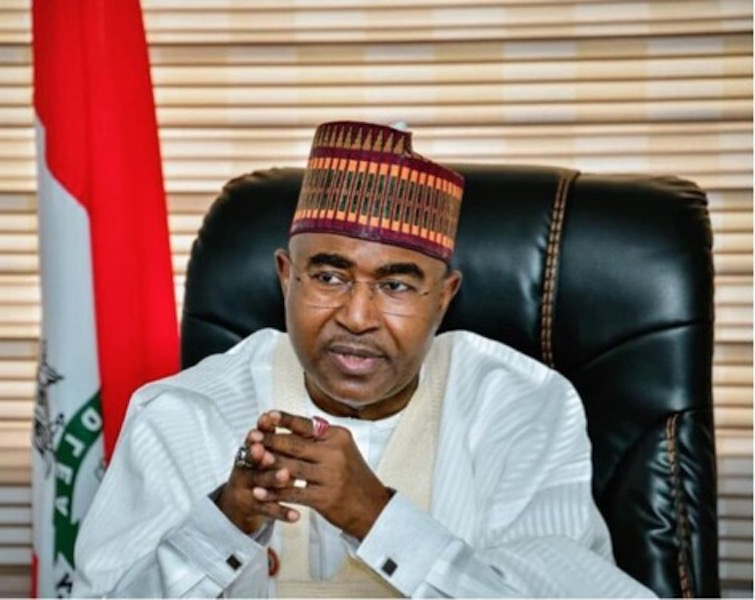
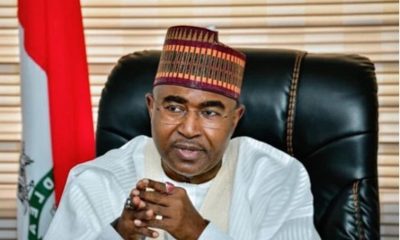
The evidence is very clear, unambiguous and empirical. This feat is made possible because of the charismatic leadership acumen of the Chief Executive Officer: Brigadier General Mohamed Buba Marwa (rtd) whose dedicated professional management team has left nothing missing to ensure effective, efficient and result oriented prosecutorial milestones since the last 5 years that General Marwa came on board.
There is therefore no wonder that the current President of the Federal Republic of Nigeria Asiwaju Bola Ahmed Tinubu has recently reappointed him for a second five year tenure because one phenomenally good turn deserved another.
The recent disclosure that the National Drug Law Enforcement Agency (NDLEA) secured 974 drug-related convictions within the first quarter of 2026 marks a significant milestone in Nigeria’s long-standing battle against illicit narcotics. Even more striking is the cumulative 254-year sentence handed down to 11 major drug kingpins—an outcome that underscores a renewed prosecutorial vigour and growing institutional coordination within the country’s anti-drug architecture.
At first glance, these figures signal a system gaining traction, one that is gradually overcoming the entrenched weaknesses that have historically undermined criminal prosecutions in Nigeria. Yet, beyond the impressive statistics lies a deeper and more consequential question: does this surge in convictions represent a sustainable shift in prosecutorial strength, or is it a high-water mark that must now be consolidated through more robust intelligence systems and investigative reforms?
The NDLEA’s performance within this three-month period suggests an agency that is becoming increasingly adept at translating arrests into convictions—a transition that cannot be overstated in significance. For decades, Nigeria’s law enforcement institutions have often excelled at apprehending suspects but faltered at securing convictions, largely due to weak evidence, poor case preparation, and procedural lapses.
The steady rise in monthly convictions—from 265 in January to 316 in February, and 393 in March—indicates more than heightened operational tempo. It reflects a maturing system where investigations are more tightly aligned with prosecutorial requirements, and where legal officers are better equipped to present compelling cases in court. The commendation by NDLEA Chairman, Buba Marwa, of the judiciary’s “swift and decisive adjudication” further underscores a growing synergy across the criminal justice chain.
Equally significant is the shift towards targeting high-value offenders. The conviction and sentencing of major traffickers, including the widely reported case of Adegbite Solomon, signal a departure from the traditional focus on low-level couriers. This evolution aligns with global best practices, which prioritise dismantling entire networks rather than merely disrupting their peripheral actors. It suggests a more strategic orientation—one that seeks not just to punish, but to incapacitate organised drug enterprises.
Several underlying factors appear to be driving this prosecutorial momentum. One is the strengthening of internal legal capacity within the NDLEA. Investments in training, case management, and legal coordination have likely contributed to more coherent and evidence-based prosecutions. By ensuring that investigations are conducted with courtroom requirements in mind, the agency reduces the risk of cases collapsing under legal scrutiny.
Another key factor is improved inter-agency collaboration. Drug trafficking is a complex crime that intersects with financial systems, border control, and international networks. The successful prosecution of high-profile offenders, coupled with asset forfeiture and licence revocations, suggests that the NDLEA is increasingly leveraging intelligence from financial regulators, immigration services, and foreign partners. This integrated approach enhances both the depth and credibility of evidence presented in court.
Deterrence also plays a central role. Lengthy prison sentences—particularly for repeat offenders—send a clear message that the cost of engaging in drug trafficking is rising. In a criminal economy driven by risk-reward calculations, the certainty and severity of punishment can alter behaviour and discourage participation. The symbolic weight of a 254-year cumulative sentence for a handful of kingpins is therefore not merely punitive; it is strategic.
The Intelligence Imperative
Despite these gains, the sustainability of NDLEA’s prosecutorial success ultimately rests on one critical pillar: intelligence. Convictions are the end product of a process that begins with information—accurate, timely, and actionable intelligence that can withstand the rigours of judicial scrutiny.
Nigeria’s drug trade has evolved into a sophisticated and adaptive enterprise. Traffickers now operate through transnational networks, utilise encrypted communication platforms, and deploy complex financial arrangements to obscure their activities. Traditional policing methods, which rely heavily on physical surveillance and routine interceptions, are increasingly insufficient in this context.
Without a commensurate upgrade in intelligence capabilities, the current surge in convictions risks losing momentum. The challenge, therefore, is to transition from reactive enforcement—where arrests are made after offences occur—to proactive, intelligence-led operations that anticipate, disrupt, and dismantle networks before they fully materialise.
To sustain and deepen its prosecutorial gains, the NDLEA must embrace a more sophisticated intelligence architecture. This begins with the integration of financial intelligence into drug enforcement strategies. Drug trafficking is fundamentally a profit-driven enterprise, and financial trails often provide the most compelling evidence in court. By working closely with financial intelligence units and regulatory bodies, the agency can uncover money laundering schemes, trace illicit funds, and build cases that are both comprehensive and difficult to challenge.
Technology must also become a central pillar of operations. The digitalisation of criminal networks demands a corresponding digital response. Investments in data analytics, cyber surveillance, and digital forensics can enable the NDLEA to decode communication patterns, track logistical movements, and map the structure of criminal organisations. Such capabilities not only enhance investigations but also strengthen the evidentiary foundation of prosecutions.
At the same time, human intelligence remains indispensable. Informants, undercover agents, and community networks provide insights that cannot be captured through technology alone. However, the effectiveness of human intelligence depends on trust and protection. Establishing robust informant protection programmes is therefore essential to encourage cooperation and safeguard those who provide critical information.
Inter-agency and international collaboration must also be deepened. Drug trafficking networks operate across borders, exploiting gaps in enforcement and jurisdiction. By strengthening partnerships with global law enforcement agencies and enhancing domestic coordination with customs, police, and immigration services, the NDLEA can close these gaps and create a more unified response.
Strengthening the Prosecution Chain
While intelligence gathering is crucial, its value is realised only when it translates into successful prosecutions. This requires continuous capacity building for legal officers, particularly in handling complex cases involving digital and financial evidence. Specialised prosecution units within the NDLEA could further improve efficiency, ensuring that expertise is concentrated and consistently applied.
Witness protection is another critical area. Many cases falter due to intimidation or reluctance of witnesses to testify. A credible and well-funded witness protection framework would enhance the willingness of individuals to come forward, thereby strengthening the evidentiary base of prosecutions.
Judicial reforms can also support prosecutorial effectiveness. Fast-track courts dedicated to drug-related offences could reduce delays and maintain the momentum of cases, while specialised training for judges on emerging trends in narcotics crimes would improve the quality of adjudication.
The Role of Communities and Prevention
No enforcement strategy can succeed in isolation from the society it seeks to protect. Communities often serve as the first line of observation, detecting unusual activities and patterns that may indicate drug trafficking. By fostering public trust and encouraging citizen participation, the NDLEA can expand its intelligence base and enhance early detection.
Public education campaigns should therefore go beyond highlighting the dangers of drug abuse to emphasise the role of citizens in combating trafficking. When communities see themselves as stakeholders in the fight against drugs, they become active partners rather than passive observers.
At the same time, enforcement must be balanced with prevention. The demand for illicit drugs sustains the supply chain, and without addressing addiction and substance abuse, enforcement efforts may achieve only limited success. I can attest to the fact that in this area, the NDLEA has done so well by investing substantially in the setting up of treatment centres across the country to try to salvage youngsters engaging in drug addiction. NDLEA should be supported in this area by the private sector leaders like the banks and big time industrialists. Rehabilitation programmes, education, and social interventions are essential components of a comprehensive strategy. It is precisely why we are impressed that General Marwa has invested a great deal of funds in the prevention of drug addiction. These mechanisms deserve to be supported by all and sundry.
The NDLEA’s achievement of 974 convictions in three months is both commendable and instructive. It demonstrates what is possible when institutional coordination, legal capacity, and operational focus converge. Yet, it also highlights the work that remains to be done.
Sustaining this level of performance requires more than operational intensity; it demands institutional resilience and strategic foresight. Intelligence must become the backbone of enforcement, guiding operations and strengthening prosecutions. Technology, collaboration, and community engagement must be harnessed to create a system that is both proactive and adaptive.
Ultimately, prosecutorial prowess is not defined solely by the number of convictions secured, but by the ability to dismantle criminal networks, deter future offences, and uphold the rule of law. If the NDLEA can build on its current momentum and embed intelligence at the core of its operations, Nigeria may well be on the path to not just containing, but decisively disrupting the drug trade.
In that transition—from momentum to mastery—lies the true measure of success.
*EMMANUEL NNADOZIE ONWUBIKO is the founder of the HUMAN RIGHTS WRITERS ASSOCIATION OF NIGERIA (HURIWA) and was NATIONAL COMMISSIONER OF THE NATIONAL HUMAN RIGHTS COMMISSION OF NIGERIA.








By Our Correspondent
Barely three weeks after the Independent National Electoral Commission (INEC) declared governor Adeleke of Accord party winner of Osun election, the All Progressives Congress, (APC) and the Peoples Democratic Party, (PDP) have challenged the outcome of the August 15, 2026, Osun Gubernatorial elections incumbent governor’s victory as Tribunal displays two Petitions
The petitions were confirmed in a notice sighted by our correspondent at the tribunal secretariat in Osogbo on Monday, formally commencing the legal process arising from the August 15 governorship election.
The development followed confirmation by the secretary of the tribunal, Pefe Belemore, that petitions challenging the election outcome had been filed.
According to Belemore, “The necessary notices would be displayed on the tribunal’s notice board before noon on Monday.”
At the opening of the tribunal earlier in the day, Belemore was present in the courtroom alongside other officials of the secretariat as preparations were made for the commencement of proceedings.
The APC and PDP are challenging the outcome of the election, which returned Adeleke as governor for another term in office.
The display of the petitions is expected to pave the way for the service of legal processes on the parties involved and subsequent proceedings before the tribunal.
The APC’s petition, marked EPT/OS/GOV/01/2026, was filed by its governorship candidate, Bola Oyebamiji.
Oyebamiji listed Adeleke, the Accord and the Independent National Electoral Commission, INEC, as respondents in the petition challenging the election outcome.
The PDP’s petition, marked EPT/OS/GOV/02/2026, was filed by Adebayo Olugbenga Adedamola against Adeleke, INEC and the Accord.
Law & Crime
IPC-SPJ Hub Condemns Attack on Kano Journalists, …. Tasks Security Agecies on Protection during Political Rallies

By David Owei
The Safety and Protection of Journalists (SPJ) Hub of the International Press Centre (IPC) condemns the attack on journalists who were returning from covering the All Progressives Congress (APC) rally at the Sani Abacha Stadium in Kano on Saturday, 5th September 2026.
Reports reaching the Hub states that, “a vehicle conveying four Radio Nigeria Pyramid FM staff, a journalist from Guarantee Radio and another from Daily Trust, was attacked by hoodlums, who repeatedly hit the vehicle, leaving the driver to sustain injuries, while some of the journalists were hit by broken glass from the damaged vehicle.”
“The incident happened after the APC had held the Tinubu Support Group rally at the Sani Abacha Stadium in Kano,” the report further revealed.
The Executive Director of IPC, Mr. Lanre Arogundade in a statement described the unfortunate incident, as a serious concern and threat to press freedom, considering the damage on a Radio Nigeria, Pyramid FM vehicle.
Mr. Arogundade noted that, “the campaigns and rally just recently started, and journalists should not be subject to any form of attack at this time, when political activities are gradually increasing ahead of the general elections.”
The Hub is therefore calling on all security agencies to at this time be intentional about safeguarding journalists, especially those deployed to the field to cover political activities, especially during large gatherings where journalists are exposed to potential risks.
The Hub is also admonishing media organisations and journalists covering elections to always conduct security scan and safety consciousness in coverage of electoral issues.

By George Mgbeleke
The Human Rights Writers Association of Nigeria (HURIWA) has demanded the immediate suspension of officials in charge of the National Cash Transfer Office and ordered a full-scale investigation into the N33.75 billion cash transfer that the Auditor-General for the Federation and states have failed to properly account for.
HURIWA in a statement by its national coordinator, Comrade Emmanuel Nnadozie Onwubiko emphasized that Nigerians cannot continue to watch helplessly as billions of naira meant for poor and vulnerable citizens disappear into unverifiable transactions.
The group called on the Economic and Financial Crimes Commission (EFCC) to launch a vigorous forensic investigation, trace every naira, and recover any amounts determined to have been wrongly paid, diverted, or misapplied.
The Auditor-General’s findings revealed a significant breakdown in financial controls governing one of the Federal Government’s most sensitive social intervention programs, as payments to 3,295,207 households across 35 states in 2023 could not be authenticated.
HURIWA demands explanations for incomplete beneficiary details on payment vouchers and the unavailability of necessary Remita statements for reconciliation purposes. Disturbingly, auditors were reportedly obstructed by National Cash Transfer Office staff from accessing these records.
HURIWA insists on a thorough investigation to follow the money from government accounts to the final recipients, stating that no official should use bureaucracy to shield themselves as unverified billions remain in limbo. The organization urges the EFCC to verify each payment and identify genuine vulnerable Nigerians among the beneficiaries. Misallocated funds must be recovered, and those responsible held accountable.
Moreover, HURIWA stresses that this situation extends beyond the N33.75 billion, highlighting additional discrepancies totaling N36.74 billion and stressing the need for a comprehensive audit of the entire National Cash Transfer Programme.
HURIWA challenges President Bola Ahmed Tinubu to uphold public accountability and restore faith in government poverty-alleviation efforts. The organization insists that political connections should not shield individuals from accountability and demands prompt action.
HURIWA demands the Federal Government:
1. Suspend officials of the National Cash Transfer Office pending investigation.
2. Direct the EFCC to conduct a full forensic probe into the N33.75 billion and related transactions.
3. Trace every naira and identify persons/entities that received funds.
4. Recover misallocated funds and return them to the Treasury.
5. Publish credible disbursement records.
6. Investigate and prosecute those obstructing auditors.
7. Conduct a full audit of the social intervention programme and publish findings.
8. Prosecute culpable individuals following investigations and due process.
HURIWA urges that the funds meant for vulnerable citizens must reach them and calls for immediate action to restore public trust in government operations.
Find the money. Recover the money. Name those responsible. Prosecute the culpable. Return Nigerians’ money to the Treasury.**
That is the minimum accountability Nigerians deserve.


HURIWA Mourns Bello Mandiya, Hourns a Dependable Ally of Human Rights
By George Mgbeleke The Human Rights Writers Association of Nigeria (HURIWA) mourns the death of former Senator representing Katsina South...


HURIWA DEMANDS IMMEDIATE REMOVAL OF HANDCUFFS FROM Ufoma Joseph Immanuel
By George Mgbeleke The Human Rights Writers Association of Nigeria (HURIWA) says the Nigerian Correctional Service must immediately stop the...
Northern Senator Forum Mourns Senator Bello Mandiya
By George Mgbeleke The Northern Senators Forum has received with profound sadness the news of the passing of Distinguished Senator...
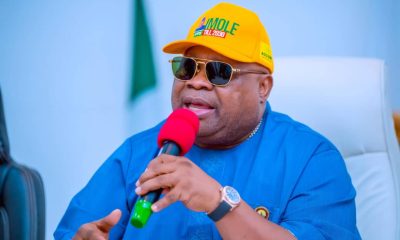

APC withdraws petition challenging Gov.Adeleke’s Victory
By Our Correspondent In dramatic twice the All Progressives Congress (APC) has filed an application seeking to withdraw the petition...


NUJ FCT Raises N5.01m Trust Fund for Late Chairman’s Children …265 members raised N5.01m to secure education, welfare of Osadebamwen’s three children
By Our Correspondent In a bid to ensure a good welfare package for its departed members and their families, the...


APC chieftain demands probe, prosecution of Atiku over $40M, SIEMENS, SPV allegations
By Our Correspondent A chieftain of the All Progressives Congress (APC), Ntufam Hilliard Eta, has called on the nation’s anti-corruption...
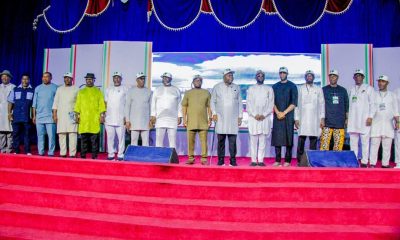

Nigerian Politics Becoming Less Violent, Says Gov Diri As CBM Holds Bayelsa Retreat
By David Owei Governor of Bayelsa State, Senator Douye Diri, has observed that the political arena in Nigeria was shifting...
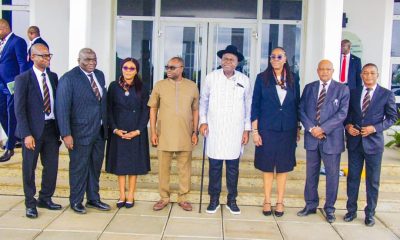

Gov Diri Seeks Increase In Law Students Quota At NDU
By David Owei Governor of Bayelsa State, Senator Douye Diri, has appealed to the Council of Legal Education to increase...


Nembe Spill: HOMEF demands cleanup, compensation, accountability
By David Owei The Health of Mother Earth Foundation (HOMEF) on Tuesday demanded urgent cleanup, compensation and accountability over an...


NCDMB to Feature Nwabuikwu’s The Pain and The Promise In Book Reading Session
By David Owei The Nigerian Content Development and Monitoring Board (NCDMB) will host the fifth edition of its Book Reading...
-

 Politics1 year ago
Gov Okpebholo moves to end Cultism *Threatens action against leading cult groups *Vows to demolish more cult houses in Edo State
-
 Politics1 year ago
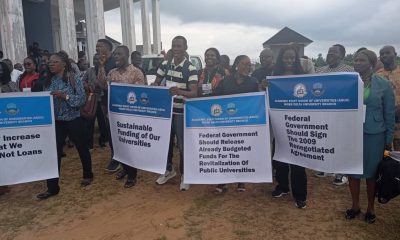
ASUU-NDU protest against FG loans, unpaid salaries,Non-Implementation of agreements …..says loans is generational slavery
-
 Business & Economy1 year ago
PC-NCG Issues Disclaimer on Purported Nigerian Coast Guard National Orientation Exercise In Anambra State
-
 Entertainment2 years ago
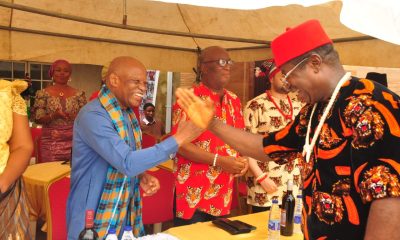
Jubilation galore as Parishioners of CKC Kurudu celebrate their cultural heritage ….FG should exploit our Cultural heritage to unite Nigerians-Rev Fr Dim
-

 Sports7 months ago
Bayelsa-born ex-football star’s son, Opuama donates spike shoes to Athletics Association
-

 General News2 years ago
Reps hold public hearing on FMC Ugwuaji Awkunanaw
-
 Law & Crime1 year ago
Legal practitioner raises alarm over threat to his life by CSP Muhammed Abdulkareem
-

 General News2 years ago
Celebration galore as UDA Successfully Elected New Exco ……I will digitalize processes that will raise UDA to greater height -Comr. Okejiri