
Law & Crime
NDLEA’s 974 convictions show strength, but intelligence reforms remain essential

By Emmanuel Nnadozie Onwubiko
Perhaps, since the re-emergence of democracy in 1999, the National Drugs Law Enforcement Agency (NDLEA) has made momentous history for Nigeria and indeed Africa as the government’s funded public institution in the area of counter-narcotics that dedicates a huge chunk of human, material and financial resources towards manpower trainings and this Agency is unarguably the number one Agency in the area of the massive scope of successful prosecutions of drug offenders in all of Africa.
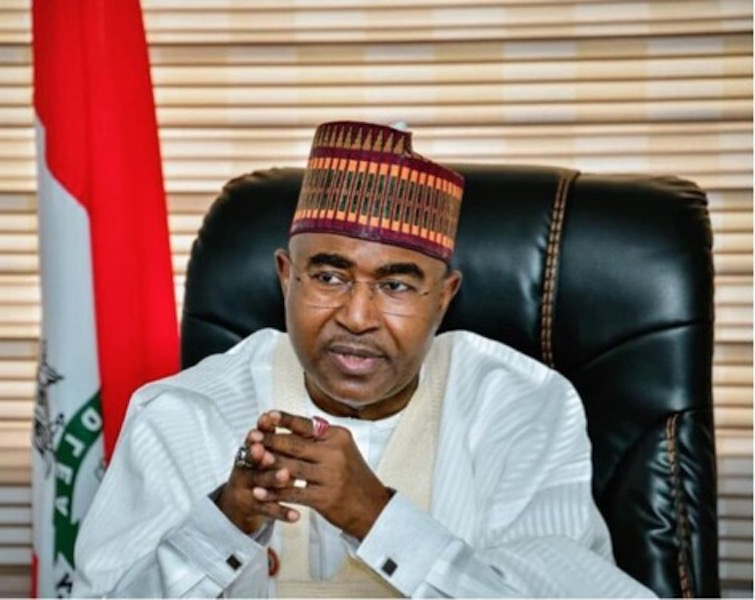
The evidence is very clear, unambiguous and empirical. This feat is made possible because of the charismatic leadership acumen of the Chief Executive Officer: Brigadier General Mohamed Buba Marwa (rtd) whose dedicated professional management team has left nothing missing to ensure effective, efficient and result oriented prosecutorial milestones since the last 5 years that General Marwa came on board.
There is therefore no wonder that the current President of the Federal Republic of Nigeria Asiwaju Bola Ahmed Tinubu has recently reappointed him for a second five year tenure because one phenomenally good turn deserved another.
The recent disclosure that the National Drug Law Enforcement Agency (NDLEA) secured 974 drug-related convictions within the first quarter of 2026 marks a significant milestone in Nigeria’s long-standing battle against illicit narcotics. Even more striking is the cumulative 254-year sentence handed down to 11 major drug kingpins—an outcome that underscores a renewed prosecutorial vigour and growing institutional coordination within the country’s anti-drug architecture.
At first glance, these figures signal a system gaining traction, one that is gradually overcoming the entrenched weaknesses that have historically undermined criminal prosecutions in Nigeria. Yet, beyond the impressive statistics lies a deeper and more consequential question: does this surge in convictions represent a sustainable shift in prosecutorial strength, or is it a high-water mark that must now be consolidated through more robust intelligence systems and investigative reforms?
The NDLEA’s performance within this three-month period suggests an agency that is becoming increasingly adept at translating arrests into convictions—a transition that cannot be overstated in significance. For decades, Nigeria’s law enforcement institutions have often excelled at apprehending suspects but faltered at securing convictions, largely due to weak evidence, poor case preparation, and procedural lapses.
The steady rise in monthly convictions—from 265 in January to 316 in February, and 393 in March—indicates more than heightened operational tempo. It reflects a maturing system where investigations are more tightly aligned with prosecutorial requirements, and where legal officers are better equipped to present compelling cases in court. The commendation by NDLEA Chairman, Buba Marwa, of the judiciary’s “swift and decisive adjudication” further underscores a growing synergy across the criminal justice chain.
Equally significant is the shift towards targeting high-value offenders. The conviction and sentencing of major traffickers, including the widely reported case of Adegbite Solomon, signal a departure from the traditional focus on low-level couriers. This evolution aligns with global best practices, which prioritise dismantling entire networks rather than merely disrupting their peripheral actors. It suggests a more strategic orientation—one that seeks not just to punish, but to incapacitate organised drug enterprises.
Several underlying factors appear to be driving this prosecutorial momentum. One is the strengthening of internal legal capacity within the NDLEA. Investments in training, case management, and legal coordination have likely contributed to more coherent and evidence-based prosecutions. By ensuring that investigations are conducted with courtroom requirements in mind, the agency reduces the risk of cases collapsing under legal scrutiny.
Another key factor is improved inter-agency collaboration. Drug trafficking is a complex crime that intersects with financial systems, border control, and international networks. The successful prosecution of high-profile offenders, coupled with asset forfeiture and licence revocations, suggests that the NDLEA is increasingly leveraging intelligence from financial regulators, immigration services, and foreign partners. This integrated approach enhances both the depth and credibility of evidence presented in court.
Deterrence also plays a central role. Lengthy prison sentences—particularly for repeat offenders—send a clear message that the cost of engaging in drug trafficking is rising. In a criminal economy driven by risk-reward calculations, the certainty and severity of punishment can alter behaviour and discourage participation. The symbolic weight of a 254-year cumulative sentence for a handful of kingpins is therefore not merely punitive; it is strategic.
The Intelligence Imperative
Despite these gains, the sustainability of NDLEA’s prosecutorial success ultimately rests on one critical pillar: intelligence. Convictions are the end product of a process that begins with information—accurate, timely, and actionable intelligence that can withstand the rigours of judicial scrutiny.
Nigeria’s drug trade has evolved into a sophisticated and adaptive enterprise. Traffickers now operate through transnational networks, utilise encrypted communication platforms, and deploy complex financial arrangements to obscure their activities. Traditional policing methods, which rely heavily on physical surveillance and routine interceptions, are increasingly insufficient in this context.
Without a commensurate upgrade in intelligence capabilities, the current surge in convictions risks losing momentum. The challenge, therefore, is to transition from reactive enforcement—where arrests are made after offences occur—to proactive, intelligence-led operations that anticipate, disrupt, and dismantle networks before they fully materialise.
To sustain and deepen its prosecutorial gains, the NDLEA must embrace a more sophisticated intelligence architecture. This begins with the integration of financial intelligence into drug enforcement strategies. Drug trafficking is fundamentally a profit-driven enterprise, and financial trails often provide the most compelling evidence in court. By working closely with financial intelligence units and regulatory bodies, the agency can uncover money laundering schemes, trace illicit funds, and build cases that are both comprehensive and difficult to challenge.
Technology must also become a central pillar of operations. The digitalisation of criminal networks demands a corresponding digital response. Investments in data analytics, cyber surveillance, and digital forensics can enable the NDLEA to decode communication patterns, track logistical movements, and map the structure of criminal organisations. Such capabilities not only enhance investigations but also strengthen the evidentiary foundation of prosecutions.
At the same time, human intelligence remains indispensable. Informants, undercover agents, and community networks provide insights that cannot be captured through technology alone. However, the effectiveness of human intelligence depends on trust and protection. Establishing robust informant protection programmes is therefore essential to encourage cooperation and safeguard those who provide critical information.
Inter-agency and international collaboration must also be deepened. Drug trafficking networks operate across borders, exploiting gaps in enforcement and jurisdiction. By strengthening partnerships with global law enforcement agencies and enhancing domestic coordination with customs, police, and immigration services, the NDLEA can close these gaps and create a more unified response.
Strengthening the Prosecution Chain
While intelligence gathering is crucial, its value is realised only when it translates into successful prosecutions. This requires continuous capacity building for legal officers, particularly in handling complex cases involving digital and financial evidence. Specialised prosecution units within the NDLEA could further improve efficiency, ensuring that expertise is concentrated and consistently applied.
Witness protection is another critical area. Many cases falter due to intimidation or reluctance of witnesses to testify. A credible and well-funded witness protection framework would enhance the willingness of individuals to come forward, thereby strengthening the evidentiary base of prosecutions.
Judicial reforms can also support prosecutorial effectiveness. Fast-track courts dedicated to drug-related offences could reduce delays and maintain the momentum of cases, while specialised training for judges on emerging trends in narcotics crimes would improve the quality of adjudication.
The Role of Communities and Prevention
No enforcement strategy can succeed in isolation from the society it seeks to protect. Communities often serve as the first line of observation, detecting unusual activities and patterns that may indicate drug trafficking. By fostering public trust and encouraging citizen participation, the NDLEA can expand its intelligence base and enhance early detection.
Public education campaigns should therefore go beyond highlighting the dangers of drug abuse to emphasise the role of citizens in combating trafficking. When communities see themselves as stakeholders in the fight against drugs, they become active partners rather than passive observers.
At the same time, enforcement must be balanced with prevention. The demand for illicit drugs sustains the supply chain, and without addressing addiction and substance abuse, enforcement efforts may achieve only limited success. I can attest to the fact that in this area, the NDLEA has done so well by investing substantially in the setting up of treatment centres across the country to try to salvage youngsters engaging in drug addiction. NDLEA should be supported in this area by the private sector leaders like the banks and big time industrialists. Rehabilitation programmes, education, and social interventions are essential components of a comprehensive strategy. It is precisely why we are impressed that General Marwa has invested a great deal of funds in the prevention of drug addiction. These mechanisms deserve to be supported by all and sundry.
The NDLEA’s achievement of 974 convictions in three months is both commendable and instructive. It demonstrates what is possible when institutional coordination, legal capacity, and operational focus converge. Yet, it also highlights the work that remains to be done.
Sustaining this level of performance requires more than operational intensity; it demands institutional resilience and strategic foresight. Intelligence must become the backbone of enforcement, guiding operations and strengthening prosecutions. Technology, collaboration, and community engagement must be harnessed to create a system that is both proactive and adaptive.
Ultimately, prosecutorial prowess is not defined solely by the number of convictions secured, but by the ability to dismantle criminal networks, deter future offences, and uphold the rule of law. If the NDLEA can build on its current momentum and embed intelligence at the core of its operations, Nigeria may well be on the path to not just containing, but decisively disrupting the drug trade.
In that transition—from momentum to mastery—lies the true measure of success.
*EMMANUEL NNADOZIE ONWUBIKO is the founder of the HUMAN RIGHTS WRITERS ASSOCIATION OF NIGERIA (HURIWA) and was NATIONAL COMMISSIONER OF THE NATIONAL HUMAN RIGHTS COMMISSION OF NIGERIA.







By Our Correspondent
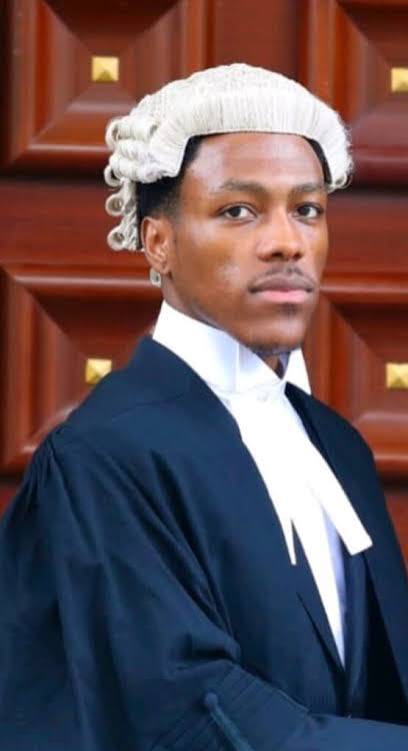
A Senior Advocate of Nigeria (SAN), Dr James Ogwu Onoja has warned social media commentators and bloggers to stop dishing out false narratives in a $2.1 million civil suit instituted against Barrister Jordan Nyesom Wike by one Safwan Garba in respect of Abuja land matter.
The lawyer warned that any commentator and blogger who continued the false narration in respect of court proceedings in the matter, would be susceptible to both criminal and civil actions for malicious falsehood, cyberbullying, slander and libel.
The reaction of Onoja SAN, lead counsel to Jordan Nyesom Wike was provoked by an interview granted by I. G Wuru, a lawyer to Safwan Garba, where he reportedly insinuated that Jordan Nyesom Wike admitted receiving the disputed $2.1 million from the plaintiff.
Social media commentators, especially Martins Vincent Otse known as Very Darkman (VDM) and bloggers were said to have been feasting on the falsehood, spreading it to unsuspecting members of the public.
In a statement on Friday in Abuja, Ogwu Onoja SAN, in setting the record straight, explained that his client (Jordan Nyesom Wike) never at any time admitted receiving any money from Safwan Garba as alleged by lawyer Wuru.
He warned that those who have made publications, conclusions, insinuations and casted aspersions that have drawn attention subject of the court case should take down that such publications, statements and conclusions as same are palpably unfounded
The statement read: “Our attention has been drawn to stories on series of blogs, comments and conclusions on social media by mischief makers and promoters of falsehood, attributed to the media briefing and interview granted by I.G. Waru, Esq., the lawyer to Safwan Garba, in respect of the suit he instituted against Jordan Wike presently pending at the High Court of the Federal Capital Territory, Abuja in Suit No: FCT/HC/CV/008/2026 and the court proceedings in relation thereto.
‘In the unverified reports, blog posts and commentaries as stated above, it was aired most maliciously that Jordan Wike admitted receiving $2.1 million for Abuja property. This particular story circulated by Sahara Reporters and Very Darkman (VDM) is most reprehensible.
“It is also sad that other media platforms such as Port Harcourt Specials, The Cable, Ogoni Times, Magic FM Aba, Information Nigeria, Kalabari TV, Sorosoye Gossip, Edo Updates and many more, on a daily basis continue to peddle this falsehood thereby tarnishing the reputation and image of Jordan Wike.
“This haze of lies and malicious fabrication appears to be an orchestrated media campaign intended to whip up sentiments, compromise the mind of the public and intimidate the judge.
“For the records, Jordan Wike in his defence before the court stated in an unequivocal terms that he has never met Safwan Garba G.Y. or any of his agents at any time. He maintained this line of defence while giving evidence in court on the 28th and 30th September, 2026.
“One therefore wonders why a lawyer would grant interviews to misrepresent what transpired in stop false narrative weeks after the court proceedings.
“It is baffling that this interview by I.G. Waru was granted this week at the Federal High Court, Abuja close to a month of the court proceedings at the FCT High Court and is clearly the source of defamatory comments, unfounded claims and unproven conclusions being made on social media by ignorant members of the public.
“As lawyers to Mr. Jordan Wike, we hitherto refrained from making any statement since the matter is subjudice. However, after taking a critical look at the daily name calling of this young man and the barrage of lies and misrepresentation by gullible people who believe anything without verifying the facts, it therefore becomes most cogent and imperative to clear the air on these poignant issues.
“Safwan Garba G.Y, instituted this action in court but it appears he is not contented with letting the court determine the matter. It is our opinion that in view of the pending proceedings in court, it behoves the lawyers representing both parties to maintain proper professional posture rather than resort to underhand measures using the media to craft false narratives intended to paint a different picture from what has so far transpired in court in order to mislead the public.
“One key point to note is that, contrary to the news making the rounds regarding the petition to the EFCC, we as lawyers to Jordan Nyesom-Wike exhibited the said letter to unearth the inconsistencies in the stories and claims of Safwan Garba G.Y and his lawyers.
“This is because Safwan Garba G.Y kept that vital documents away from the court by not referring to same in his pleadings. He also failed to follow up with the EFCC having realized that the lies he told in the said letter were too conspicuous even for the blind to see.
“In view of the above, we urge the general public to disregard the vicious and barefaced lies of Safwan Garba G.Y. and flagrant misrepresentation of his lawyer, I.G. Waru, Esq. whose conduct is apart from being contemptuous is copiously unethical.
“Any member of the public, bloggers or media houses who continue to propagate this blatant falsehood against the person of Jordan Nyesom-Wike will be susceptible to both criminal and civil actions for malicious falsehood, cyberbullying, slander and libel.
“Those who have made publications, conclusions, insinuations and casted aspersions that have drawn attention subject of this piece should take down with alacrity such publications, statements and conclusions as same are palpably unfounded.
“The general public is to take note and be guided accordingly.”
Law & Crime
Panel on death of 37dead illegal Miners: Commissioner alleges NSCDC goes beyond its official role of engagement
By Uthman Baba -Naseer,Minna
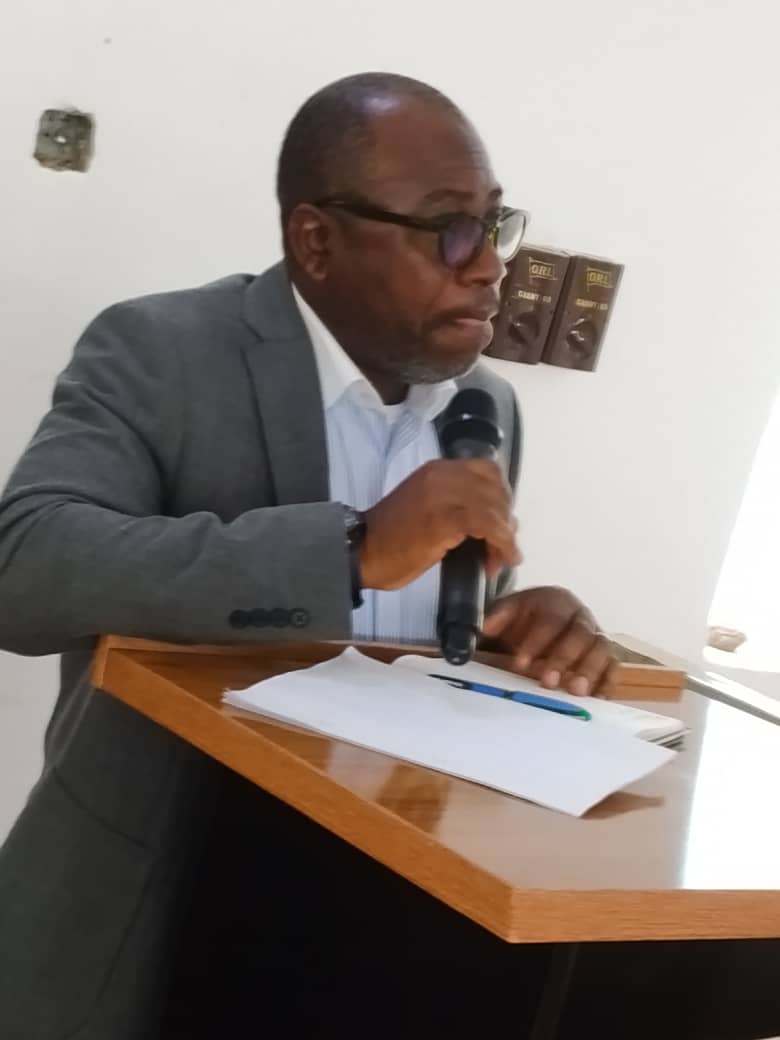
The Commissioner for Homeland Security in Niger State Mr. Maurice Bello Magaji has alleged that the operatives of Nigeria Security and Civil Defence Corps (NSCDC) are going beyond their official responsibility in their role of engagement.
He told the Justice Mohammed Mohammed Judicial Commission of Inquiry investigating the death of 37 suspected illegal miners in the custody of NSCDC that their mode of official conduct is uncivil and they should be more professional in the discharge of their duty.
According to the Commissioner, the men of the NSCDC needed more orientation in their mode of operation as security outfit stating that the revelations from the survivors of the NSCDC causality to “ our committee is so embarrassing and they needed more orientations in their official conducts”
“ My Lord. The information we received from the survivors in our committee as regards to the manner and the way the NSCDC carried out their operations could best be described as unprofessional and they need to be called to order” Maurice Magaji told the Commission.
He told the Commission that the excess of the NSCDC in their operational conduct does not portray the operatives of the NSCDC as security outfit warning that they should operate within the ambit of the law that established them.
“ The NSCDC was established under an enabling Act. But they operate outside the Act and the law establishing them. They should operate in accordance with the Act that established them. Their excesses in their operational conduct is unprofessional” he added.
Maurice Magaji who testified as the Commissioner for Home Security and the secretary Niger State committee of Investigation on the matter informed the commission the response of their committee to the incident and the stage of their investigation, challenging the mode of arrest and operation of the civil defence corps in the state.
He confirmed that on the 17th,of September,2026 he received a phone call from the suspended Commandant of the NSCDC in Niger State,Siayaka Zubeiru Aniriviye on the death of the 37 suspected illegal miners in the custody of the Command.
He stated that upon the receipt of the report,” I put a call to my boss,the governor, on the report I got from the suspended Commandant of the NSCDC.
“ The governor then directed that their bodies should be evacuated to the hospital,the suspended Commandant then told me that he needed some logistics to transport them to the hospital.
“ I then contacted my permanent secretary and raised some funds for transporting them to the hospital, “ the Commissioner told the Commission.
Head of civil defence operations Deputy Commander of Corps John Abraham narrated to Justice Mohammed Mohammed nine member commission of inquiry how they carried out the operation which led to the arrest of the 69 miners on the directives of the suspended commandant of the Corp Siaka Subairu Aniviye.
He maintained that after the arrest they handed over the suspects to the department of intelligence and investigation for further action.
Area Commander Mokwa Assistant commander of Corp Adebayo Tajuddeen and ASC Mamman Ibrahim testified in relation to the arrest, investigation and detention of Emmanuel Emeka who was detained six days and died alongside the suspected illegal miners.
They testified how they illegally arrested the boy, collected money for his detention and court warrant and as well clarified on the whereabouts of 1.4 Million Naira allegedly recovered from the 12 Million Naira in question.
However Wilfred Ugwu, the employer of late Emmanuel who reported him to the civil defence also
testified on their relationship with Emmanuel and how he accused Emmanuel of siphoning his business money to the tune of 12 Million Naira.
By Our Correspondent
A Senior Advocate of Nigeria (SAN), Dr James Ogwu Onoja has warned social media commentators and bloggers to stop dishing out false narratives in a $2.1 million civil suit instituted against Barrister Jordan Nyesom Wike by one Safwan Garba in respect of Abuja land matter.
The lawyer warned that any commentator and blogger who continued the false narration in respect of court proceedings in the matter, would be susceptible to both criminal and civil actions for malicious falsehood, cyberbullying, slander and libel.
The reaction of Onoja SAN, lead counsel to Jordan Nyesom Wike was provoked by an interview granted by I. G Wuru, a lawyer to Safwan Garba, where he reportedly insinuated that Jordan Nyesom Wike admitted receiving the disputed $2.1 million from the plaintiff.
Social media commentators, especially Martins Vincent Otse known as Very Darkman (VDM) and bloggers were said to have been feasting on the falsehood, spreading it to unsuspecting members of the public.
In a statement on Friday in Abuja, Ogwu Onoja SAN, in setting the record straight, explained that his client (Jordan Nyesom Wike) never at any time admitted receiving any money from Safwan Garba as alleged by lawyer Wuru.
He warned that those who have made publications, conclusions, insinuations and casted aspersions that have drawn attention subject of the court case should take down that such publications, statements and conclusions as same are palpably unfounded
The statement read: “Our attention has been drawn to stories on series of blogs, comments and conclusions on social media by mischief makers and promoters of falsehood, attributed to the media briefing and interview granted by I.G. Waru, Esq., the lawyer to Safwan Garba, in respect of the suit he instituted against Jordan Wike presently pending at the High Court of the Federal Capital Territory, Abuja in Suit No: FCT/HC/CV/008/2026 and the court proceedings in relation thereto.
‘In the unverified reports, blog posts and commentaries as stated above, it was aired most maliciously that Jordan Wike admitted receiving $2.1 million for Abuja property. This particular story circulated by Sahara Reporters and Very Darkman (VDM) is most reprehensible.
“It is also sad that other media platforms such as Port Harcourt Specials, The Cable, Ogoni Times, Magic FM Aba, Information Nigeria, Kalabari TV, Sorosoye Gossip, Edo Updates and many more, on a daily basis continue to peddle this falsehood thereby tarnishing the reputation and image of Jordan Wike.
“This haze of lies and malicious fabrication appears to be an orchestrated media campaign intended to whip up sentiments, compromise the mind of the public and intimidate the judge.
“For the records, Jordan Wike in his defence before the court stated in an unequivocal terms that he has never met Safwan Garba G.Y. or any of his agents at any time. He maintained this line of defence while giving evidence in court on the 28th and 30th September, 2026.
“One therefore wonders why a lawyer would grant interviews to misrepresent what transpired in stop false narrative weeks after the court proceedings.
“It is baffling that this interview by I.G. Waru was granted this week at the Federal High Court, Abuja close to a month of the court proceedings at the FCT High Court and is clearly the source of defamatory comments, unfounded claims and unproven conclusions being made on social media by ignorant members of the public.
“As lawyers to Mr. Jordan Wike, we hitherto refrained from making any statement since the matter is subjudice. However, after taking a critical look at the daily name calling of this young man and the barrage of lies and misrepresentation by gullible people who believe anything without verifying the facts, it therefore becomes most cogent and imperative to clear the air on these poignant issues.
“Safwan Garba G.Y, instituted this action in court but it appears he is not contented with letting the court determine the matter. It is our opinion that in view of the pending proceedings in court, it behoves the lawyers representing both parties to maintain proper professional posture rather than resort to underhand measures using the media to craft false narratives intended to paint a different picture from what has so far transpired in court in order to mislead the public.
“One key point to note is that, contrary to the news making the rounds regarding the petition to the EFCC, we as lawyers to Jordan Nyesom-Wike exhibited the said letter to unearth the inconsistencies in the stories and claims of Safwan Garba G.Y and his lawyers.
“This is because Safwan Garba G.Y kept that vital documents away from the court by not referring to same in his pleadings. He also failed to follow up with the EFCC having realized that the lies he told in the said letter were too conspicuous even for the blind to see.
“In view of the above, we urge the general public to disregard the vicious and barefaced lies of Safwan Garba G.Y. and flagrant misrepresentation of his lawyer, I.G. Waru, Esq. whose conduct is apart from being contemptuous is copiously unethical.
“Any member of the public, bloggers or media houses who continue to propagate this blatant falsehood against the person of Jordan Nyesom-Wike will be susceptible to both criminal and civil actions for malicious falsehood, cyberbullying, slander and libel.
“Those who have made publications, conclusions, insinuations and casted aspersions that have drawn attention subject of this piece should take down with alacrity such publications, statements and conclusions as same are palpably unfounded.
“The general public is to take note and be guided accordingly.”


Gov Fubara Inspects Creek Road Market, Assures Completion by January 2027
By George Mgbeleke Rivers State Governor, Sir Siminalayi Fubara, has expressed satisfaction with the pace and quality of work at...


Shouts of Joy Rock the World As Postor Chris Opens Final Healing Streams Edition for 2026
By Our Correspondent Hundreds of millions participate in the global healing crusade as Pastor Chris ministers to the sick in...


Abuja land: Jordan Nyesom-Wike never admitted receiving $2.1m from anyone -Onoja
By Our Correspondent A Senior Advocate of Nigeria (SAN), Dr James Ogwu Onoja has warned social media commentators and bloggers...

Panel on death of 37dead illegal Miners: Commissioner alleges NSCDC goes beyond its official role of engagement
By Uthman Baba -Naseer,Minna The Commissioner for Homeland Security in Niger State Mr. Maurice Bello Magaji has alleged that the...
Abuja land: Jordan Nyesom-Wike never admitted receiving $2.1m from anyone -Onoja
By Our Correspondent A Senior Advocate of Nigeria (SAN), Dr James Ogwu Onoja has warned social media commentators and bloggers...

Sea Incursion: Senate Demands Urgent Shoreline Protection As Ayetoro Community Faces Extinction
By our correspondent Senate on Thursday called for immediate and comprehensive shoreline protection to save Ayetoro community in Ilaje Local...


FG, labour meeting over fuel price, minimum wage, tax relief, others, deadlock, as NLC orders affiliates to be on alert.
By Our Correspondent The meeting between the federal government and organised labour, convened at the ministry of labour in Abuja,...

Ebola: No evidence of community spread in Nigeria — FG
By Our Correspondent In a bid to state the true situation of Ebola spread in the country,Federal Government has declared...


Benue Massacre: Death Toll Hits 113 ..As Senate demands FG’s Intervention
By George Mgbeleke The Senate has condemned the killing of 113 persons, including six mobile police officers, in a series...

Lagos-Calabar Coastal Highway: My Disagreement With Umahi – Diri *Says Duke A Jester, So-Called National Champion Without Base
By David Owei Governor of Bayelsa State, Senator Douye Diri, on Thursday, revealed his disagreement with the Minister of Works,...
-

 Politics1 year ago
Gov Okpebholo moves to end Cultism *Threatens action against leading cult groups *Vows to demolish more cult houses in Edo State
-
 Politics1 year ago
ASUU-NDU protest against FG loans, unpaid salaries,Non-Implementation of agreements …..says loans is generational slavery
-

 Business & Economy1 year ago
PC-NCG Issues Disclaimer on Purported Nigerian Coast Guard National Orientation Exercise In Anambra State
-
 Entertainment2 years ago
Jubilation galore as Parishioners of CKC Kurudu celebrate their cultural heritage ….FG should exploit our Cultural heritage to unite Nigerians-Rev Fr Dim
-

 Sports8 months ago
Bayelsa-born ex-football star’s son, Opuama donates spike shoes to Athletics Association
-

 General News2 years ago
Reps hold public hearing on FMC Ugwuaji Awkunanaw
-
 Law & Crime1 year ago
Legal practitioner raises alarm over threat to his life by CSP Muhammed Abdulkareem
-

 General News2 years ago
Celebration galore as UDA Successfully Elected New Exco ……I will digitalize processes that will raise UDA to greater height -Comr. Okejiri