
Business & Economy
Tinubu jerks up proposed 2025 budget from N49.7trillion to N54.2trillion …As NASS promises to pass the budget before the end of February

George Mgbeleke,Abuja
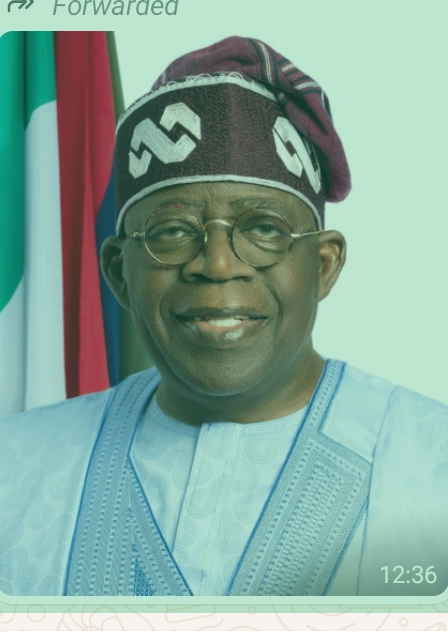
President Bola Tinubu has increased the proposed total budget size for 2025 from N49.7teillion he presented to the joint session of the National Assembly on December 18, 2024 to N54.2trillion .
President Tinubu announced an increase in the proposed budget size through separate letters forwarded to both the Senate and the House of Representatives .
The President in the letter read during plenary in the Senate by Senator Godswill Akpabio , said the increase arose from N1.4trilliion additional revenues made by the Federal Inland Revenue Service ( FIRS ) , N1.2trillion made by the Nigeria Customs Service , N1.8trilliion generated by some other Government Owned Agencies .
The President of the Senate consequently directed the request to the Senate Committee on Appropriations for expeditious consideration and declared that the budget consideration , would be concluded and passed before the end of this month.
President Tinubu’s letter to the President of the Senate on the breakdown of the additional revenue to the 2025 budget reads as follows,”I am writing to inform you of the availability of additional revenue amounting to N4,530,479,970,637 and to propose its allocation within the 2025 Appropriation Bill to enhance the budget’s responsiveness to the nation’s most pressing priorities and aspirations.
(1)Additional Revenue Breakdown:
This additional revenue, sourced from key agencies, represents a pivotal opportunity to address Nigeria’s critical challenges and advance its development agenda:
Government-Owned Enterprises (GOES): N1,823,879,970,637
Federal Inland Revenue Service (FIRS): N1,497,600,000,000
(2) Federal Government’s 52% share of the increase in revenue from N22.1 trillion to N25.1 trillion_
Nigerian Customs Service (NCS): N1,209,000,000,000
(Federal Government’s 52% share of the increase in revenue from N6.5 trillion to N9.0 trillion)
With this additional revenue, the 2025 Appropriation Bill’s total budget size will increase from N49.7 trillion to N54.2 trillion, demonstrating our commitment to inclusive growth and security.
(3) Proposed Allocation of Additional Revenue:
I propose that these funds be allocated to the following transformative expenditure areas:
i. Solid Minerals Sector-N1 trillion. To support economic diversification by unlocking the potential of Nigeria’s vast solid mineral resources, which remain an untapped revenue stream and a vital pillar of non-oil growth.
Re-capitalization of the Bank of Agriculture (BoA) N1.5 trillion: To transform Nigeria’s agricultural landscape, ensure food security, and empower small holder farmers and agribusinesses.
Re-capitalization of the Bank of Industry (Bol) N500 billion To provide critical support to small and medium enterprises (SMEs), drive local manufacturing, and reduce dependence on imports
iv Critical Infrastructure Projects (RHID Fund) – N1.5 trillion. Allocated as follows:
a Irrigation Development (through River Basin Development Authorities): N380 billion.
b. Transportation Infrastructure (roads and rail): N700 billion (300 billion for the construction and rehabilitation of critical roads and 400 billion for light rail network development in urban centers),
c. Border Communities Infrastructure: N50 billion,
d. Military Barracks Accommodation: N250 billion, and
e. Military Aviation: N120 billion.
(4) Justifications for Allocations:
i. Solid Minerals Sector – N1 trillion
a Economic Resilience: Reduces reliance on volatile oil sector by creating alternative revenue streams.
b. Regional Equity. Encourages development in resource-rich, underserved areas, boosting rural economies.
c. Value Addition: Supports processing and export of minerals, increasing foreign exchange earnings.
ii. Bank of Agriculture Recapitalization – N1.5 trillion
a. Food Security: Empowers smallholder farmers and agribusinesses, improving access to affordable credit.
b. Economic Growth: Enhances agricultural productivity and supports agro-industrial value chains.
c. Export Competitiveness: Promotes the export of high-value crops, reducing pressure on the Naira.
Bank of Industry Recapitalization – N500 billion
a. SME Empowerment. Provides affordable financing for innovation and entrepreneurship.
b. Job Creation: Drives industrial growth and supports local manufacturing, reducing unemployment
c. Revenue Growth: Expands the tax base through industrial expansion.
iv. Critical Infrastructure (RHID Fund) – N1.5 trillion
a. Irrigation Development: N380 billion will strengthen Nigeria’s capacity for year-round agricultural production, ensuring water security and boosting food supply.
b. Transportation Infrastructure: N700 billion will modernize Nigeria’s road and rail networks, reducing costs, enhancing connectivity, and supporting economic activity.
c. Border Communities Infrastructure: N50 billion will improve living standards and enhance the security of border regions, fostering stability and cross-border trade.
d. Military Barracks Accommodation: N250 billion will provide modern and expanded housing for personnel, boosting morale and operational readiness
e. Military Aviation: N120 billion will modernize Nigeria’s aviation capabilities, ensuring the military remains responsive to emerging security challenges.
(4). A Philosophical Case for Military Expenditure:
The foundation of a thriving nation lies in its ability to protect its citizens. No infrastructure, no innovation, and no progress can be enjoyed or sustained without security. The government has a constitutional obligation to secure lives and property, and military expenditure is not merely a fiscal decision-it is a moral imperative. By investing in our armed forces, we affirm our resolve to end terrorism, safeguard the dignity of our people, and create conditions for economic prosperity. This budget reflects not only our commitment to securing Nigeria today but to building a future where every citizen can live and thrive without fear.
)5)Broader Justification:
This allocation framework underscores the Administration’s dedication to fostering inclusive growth, addressing security challenges, and building resilience into Nigeria’s economic fabric. These investments will:
i. Promote Stability By addressing critical infrastructure deficits, especially in underserved regions, and strengthening national security
ii. Diversify Revenue: By investing in agriculture, solid minerals, and manufacturing. reducing over-reliance on oil revenues.
iii. Catalyze Economic Growth: By enhancing infrastructure, supporting SMEs, and unlocking Nigeria’s vast economic potential.
Tinubu finally requested the Senate for Integration of the additional revenue to the,2025 appropriation Bill.
“I urge the National Assembly to adopt and integrate these proposals into the 2025 Appropriation Bill, reflecting our shared commitment to national development. Kindly let me know if additional information or clarification is required,” he said.
By Jacob Moses,Abuja
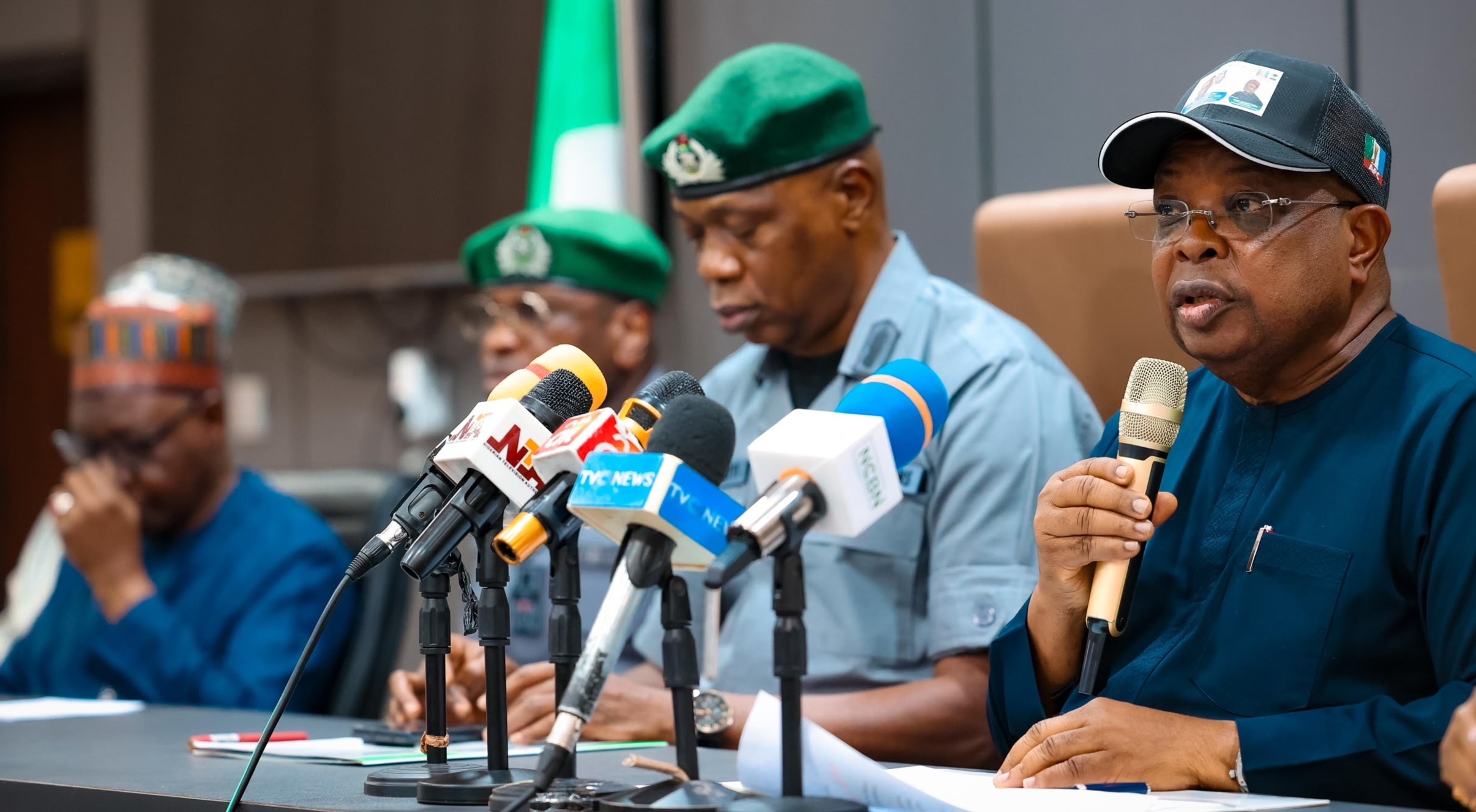
The federal government, through the Ministry of Power under the Minister Joseph Tegbe, has secured the release of transmission equipment that have been stranded at the nation’s ports fortwenty years.
Announcing the development at a media briefing in Lagos, Tegbe said the first 44 containers were released from the ENL Terminal and another 54 from the APMT and Sun & Moon Terminals, bringing the total to 98 of over 300 containers held.
The minister explained that the equipment, which includes high-capacity transformers, cables and switchgear, was procured to expand the transmission network and relieve overloaded substations.
Its detention stalled projects, kept existing substations under heavy strain, exposed valuable assets to deterioration and accumulated charges on the cargoes.
He noted that the cost is felt daily by businesses spending more on alternative power, families enduring interruptions and public institutions struggling to maintain essential services.
The release is in response to President Bola Ahmed Tinubu’s directive that the cargoes be cleared immediately, and the Minister and the Comptroller-General of Customs swung into action, working tirelessly to secure it.
Tegbe credited the president for the breakthrough and thanked the Ministers of Finance and of Marine and Blue Economy, the Comptroller-General of Customs, and officials of the Ministry of Power and its agencies.
Speaking at the event, the Comptroller-General of Customs, Bashir Adeniyi, said the release follows the president’s directive for immediate clearance and for agencies to resolve outstanding charges and administrative bottlenecks without delay.
Customs has begun steps to clear the containers, working with the Ministry of Power, the Nigerian Ports Authority and terminal operators.
He pledged to work hand in hand with the Minister until all the containers are cleared, and appealed to terminal operators to give Nigeria the support required for an important national quest.
Upon inspection, most of the equipment was found to be useful and viable. When evacuated, it will be verified, tested and refurbished where necessary, then deployed to project sites to complete stalled installations, relieve overloaded substations and strengthen constrained transmission corridors.
As these projects enter service, they are expected to deliver fewer interruptions from overloading, better voltage performance and a stronger network to carry electricity to homes, businesses and essential services.
Tegbe assured Nigerians that the Ministry would follow the recovery through to installation and commissioning and provide updates on the remaining containers, expressing confidence that they would be released without further delay.
Business & Economy
Coastal Highway Will Unlock Blue Economy Corridor-Sen.Imasuen … As ABER Pushes for Nigeria Senate Blue Economy Caucus
By David Owei
The Chairman, Senate Committee on Ethics, Privileges and Public Petitions, Senator Neda Imasuen (Edo South), has described the Lagos-Calabar Coastal Highway as a game-changer that will unlock Nigeria’s Blue Economy corridor and create new opportunities for littoral communities.
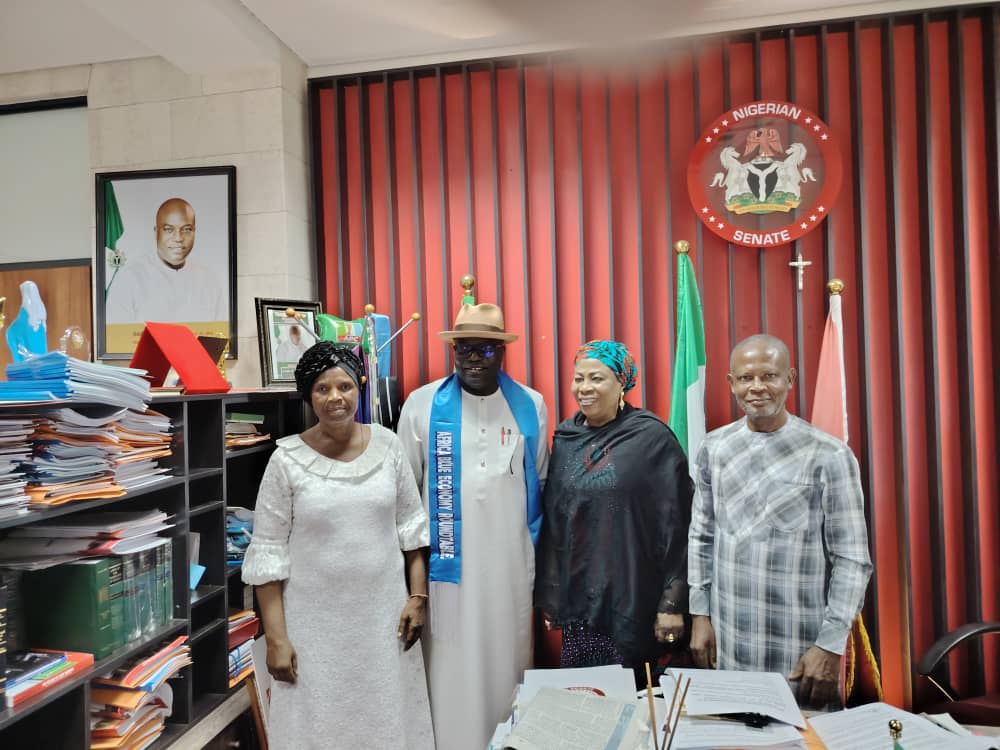
Senator Imasuen made the remark on Wednesday in Abuja when the Founder and Convener of the Africa Blue Economy Roundtable (ABER), Dr. Piriye Kiyaramo, led a delegation on a courtesy visit to his office at the National Assembly.
He commended ABER’s advocacy for a community-owned Blue Economy and pledged to study its proposal for the establishment of a Nigeria Senate Blue Economy Caucus (NSBEC).
Presenting the proposal, Dr. Kiyaramo said that despite Nigeria’s 853km coastline, over 3 million artisanal fisherfolk and an estimated $70 billion annual Blue Economy potential, the country still lacks a dedicated parliamentary mechanism to legislate, coordinate, budget and provide oversight for the sector.
“We lose $2.3 billion annually to illegal, unreported and unregulated (IUU) fishing. We lose mangroves and young lives at sea. Without law, there is no Blue Economy; there is only blue anarchy,” he said.
Dr. Kiyaramo noted that the proposed Caucus is modelled after the East African Legislative Assembly (EALA), which governs Lake Victoria for seven countries.
“If EALA can govern Lake Victoria, the Nigerian Senate can govern the Gulf of Guinea front,” he stated.
He said the NSBEC is anchored on ABER’s vision of a connected, competitive and community-owned Blue Economy where no fisherfolk is left behind.
According to him, the Caucus, when established, could canvass for the Domestication of the AU Blue Economy Strategy, the Lomé Charter, ILO Convention C188 and the FAO Port State Measures Agreement; Legislation and enforcement of the 5-nautical-mile Artisanal Exclusive Zone;
Allocation of at least 10% of marine revenue to artisanal infrastructure; and Rallying South-South States to establish Ministries of Marine and Blue Economy, emulating the Bayelsa model.
Proposed Structure
Kiyaramo recommended a 23-member Caucus comprising two Senators each from Akwa Ibom, Bayelsa, Cross River, Delta, Edo and Rivers (12), plus Lagos, Ondo and Ogun (6), three non-littoral experts, and two ex-officio members from the Federal Ministry of Marine and Blue Economy and ABER as Technical Secretariat. Senator Imasuen is proposed as Chairman and Patron, with a minimum 35% women representation.
Four Standing Sub-Committees are proposed: Fisheries, Aquaculture and Blue Food Security; Blue Tourism, Marine Transport and Coastal Infrastructure; Blue Justice, Human Rights and Gender – to work with the International Human Rights Protection Service (IHRPS Forum) West Africa Envoy to track violations, provide legal aid, ensure women’s cold-chain ownership and enforce Free, Prior and Informed Consent (FPIC); and Blue Carbon, Mangroves and Climate Resilience – with 70% of benefits accruing to coastal communities.
The Caucus is also expected to initiate three landmark Bills: the National Blue Economy Act, the Artisanal Fisheries Protection and 5nm Enforcement Act, and the Blue Carbon and Mangrove Protection Act, while partnering with EALA, the ECOWAS Parliament and the Directorate of Technical Cooperation in Africa (DTCA).
90-Day Action Plan
Dr. Kiyaramo further proposed a 90-day take-off plan including inauguration by the Senate President, engagement with the South-South Governors Forum, a Public Hearing on the Blue Justice Gap and unveiling of 100 Bankable Blue Deals, and a Senate Motion on ILO C188 ratification and 5nm enforcement.
“The Caucus will harmonize blue laws, redirect IUU losses to community jobs and position Nigeria to lead the ECOWAS Blue Parliamentary Network,” he said.
“Like EALA governs Lake Victoria for seven countries, NSBEC can govern the Gulf of Guinea for Nigeria. History will not remember us for the oil we extracted, but for the ocean we preserved.”
The high point of the visit was the decoration of Senator Neda Imasuen as Patron of the Africa Blue Economy Roundtable by H.E. Dr. Mrs. Ezeadili Appolonia Obiageri. Hajiya Medina Dauda Nadabo, Director of Communication and Public Affairs of ABER, was part of the Convener’s entourage.
Signed:
Medina Dauda Nadabo Director Communications Public Affairs.
Business & Economy
570% Fuel Price Increase: Take Cue From Us -ADC Tells Voters — Says Cost of Living Remains Central in January Elections
By George Mgbeleke
The African Democratic Congress (ADC) has said that the outcome of the recent United States midterm elections, in which Americans voted to replace the ruling Republican Party in Congress amidst a nearly 37 per cent increase in fuel prices in several states, points the way for Nigerian voters grappling with a 570 per cent increase in petrol prices since President Bola Tinubu removed fuel subsidies in May 2023.
Earlier, the opposition party had urged Nigerians to emulate the Americans in the immediate aftermath of the US midterm elections, in which the ruling Republican Party suffered a crushing defeat. But as the shockwaves of the election continue to reverberate across the world, the party has now claimed that the outcome of the US election confirms its own position that the cost of living and affordability have become major issues in determining electoral outcomes, urging Nigerians to take a cue from this as the country heads to the polls in January.
“The lesson from America is simple: governments must answer to the people for their economic decisions. In January, the cost of living must be at the centre of Nigeria’s democratic choice,” the party said in a statement issued by its National Publicity Secretary, Mallam Bolaji Abdullahi, on Saturday.
“On Tuesday, American voters were responding to fuel-price increases of about 37 per cent. Nigerians have experienced a far steeper increase, with average petrol prices rising from N238.11 per litre in May 2023 to N1,596.25 by May 2026, translating to about a 570 per cent increase.”
The party explained that an increase of 570 per cent in petrol prices is not just an economic statistic, but the reason transportation has become unaffordable, food prices have risen and small businesses are struggling to survive.
“Every Nigerian household is paying the price for the APC and Tinubu’s failed policies,” the statement said, adding that while the government has continued to ask Nigerians to make sacrifices for a better future, more than three years later, the government has failed to show how the removal of subsidies could possibly benefit ordinary citizens.
“As January 16 approaches, Nigerians deserve clear answers about how fuel, electricity, food and transportation would be made affordable. The APC and President Tinubu clearly do not have answers. It is for the same reason that Americans voted against the ruling Republican Party, and it is for the same reason that Nigerians should reject the ruling APC in January,” the party said.

Lifu Judgement : ADC Guber Candidates Forum Seeks Int. Community’s Intervention
By Grorge Abuja As the awaits the outcome of Justice Peter Lifu’s judgment invalidating Sen. David Mark led leadership of...

UNN Confirms Death of Four Graduates at An Off-Campus Party
By John Nwafor The management of the University of Nigeria, Nsukka (UNN), has declared a three-day mourning period following the...

Niger Police Assures FUT Minna of Enhanced Security
BY UTHMAN BABA-NASEER,MINNA The Niger State Police Command has assured the management of the Federal University of Technology (FUT), Minna,...
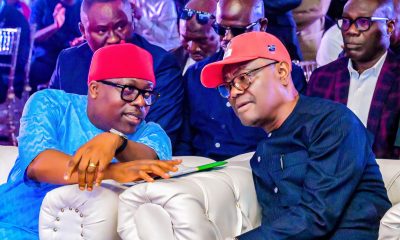

Fubaa: Rivers Caoable of deliverying znassive Votes fir Tinubu,Chinda, Others Charges APC, Rainbow Coalition to embrace team work
By George Mgbeleke Governor of Rivers State, Sir Siminalayi Fubara, has declared that the State is capable of delivering massive...

Suspected cultists kill rival member in Bayelsa, hid his mutilated corpse in a sack
By David Owei,Bayelsa There was a sense of horror in Yenagoa, the Bayelsà following the suspected cultists killing of a...

HURIWA Condemns Detention of FIJ Journalist, Calls on Tinubu to Protect Press Freedom
By George Mgbeleke Association seeks Daniel Ojukwu’s release on bail, urges police to focus on insecurity and calls for safeguards...

2027: Where Are the Trillions? Tinubu’s Loans,FAAC Windfall and Nigeria’s Economic Reality
By Abdullateef Bamgbose As the 2027 presidential campaign gathers momentum, political discourse appears to be drifting towards personality attacks, name-calling...


HURIWA Demands Probe on Alleged N4m Medical Admission Racket in UNN,UNIZIK – Wants NUC, JAMB, Education Ministers to explain silence; -Urges ICPC to Investigate Allegation
By George Mgbeleke The Human Rights Writers Association of Nigeria (HURIWA) has raised the alarm over disturbing allegations of an...
APC Repackages 2023 Promises in New 2027 Manifestor-ADC — Says manifesto reads like that of a new party.
By Our Correspondent The African Democratic Congress (ADC) has described the newly released 2027 manifesto of President Bola Ahmed Tinubu...


ABER Congratulates Safari Gateway Ltd On Winning Best Safari Tour Operator World Tours Operator At World Tourism Awarld 2026
By David Owei,Bzylse Just as the World Tourism Forum Institute (WTFI) concluded it’s World Tourism Awards 2026 in Brussels under...
-
 Politics2 years ago
Gov Okpebholo moves to end Cultism *Threatens action against leading cult groups *Vows to demolish more cult houses in Edo State
-
 Politics1 year ago
ASUU-NDU protest against FG loans, unpaid salaries,Non-Implementation of agreements …..says loans is generational slavery
-
 Business & Economy1 year ago
PC-NCG Issues Disclaimer on Purported Nigerian Coast Guard National Orientation Exercise In Anambra State
-
 Entertainment2 years ago
Jubilation galore as Parishioners of CKC Kurudu celebrate their cultural heritage ….FG should exploit our Cultural heritage to unite Nigerians-Rev Fr Dim
-

 Sports9 months ago
Bayelsa-born ex-football star’s son, Opuama donates spike shoes to Athletics Association
-

 General News2 years ago
Reps hold public hearing on FMC Ugwuaji Awkunanaw
-
 Law & Crime1 year ago
Legal practitioner raises alarm over threat to his life by CSP Muhammed Abdulkareem
-
 General News2 years ago
Celebration galore as UDA Successfully Elected New Exco ……I will digitalize processes that will raise UDA to greater height -Comr. Okejiri