
Oil & Gas
NCDMB Rallies NNPC, oil producers to boost in-country manufacturing of line pipes

By David Owei, Bayelsa
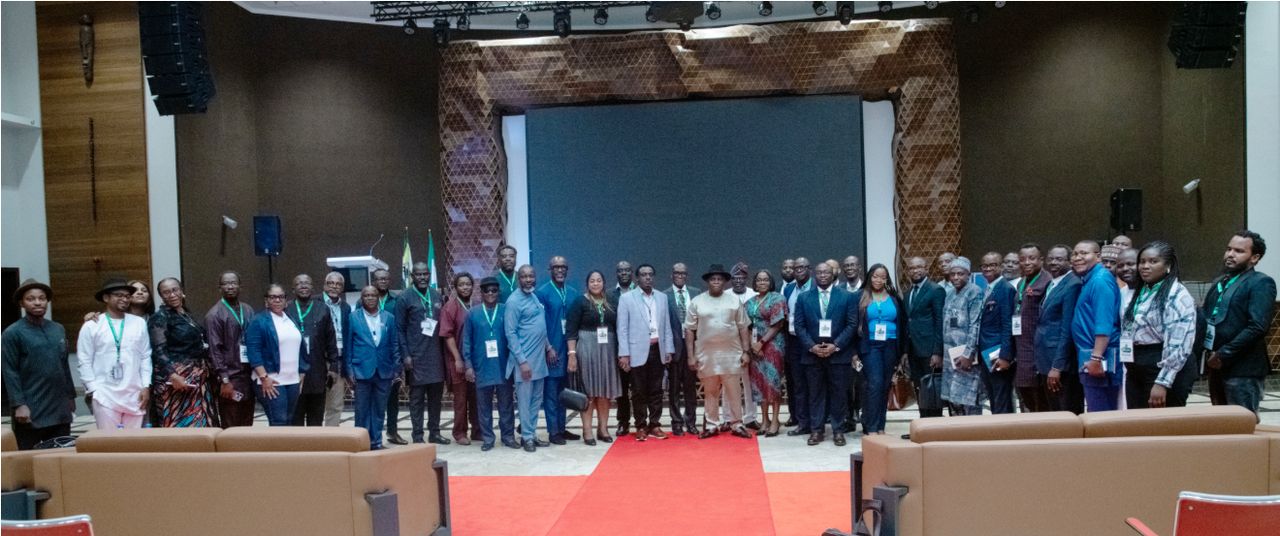
The Nigerian Content Development and Monitoring Board (NCDMB) on Thursday achieved a much-needed consensus among critical oil and gas industry stakeholders and manufacturers to ramp up in-country production and utilisation of line pipes in oil and gas operations, as part of the strategy deepen local content, and conserve foreign exchange and create jobs.
The Oil Producers Trade Section (OPTS), comprising all international oil companies, and their indigenous counterparts under the aegis of the Independent Petroleum Producers Group (IPPG) met with the leading pipe manufacturing companies and pipe coaters as well as the NNPC Upstream Investment Management Services (NUIMS) at the instance of the NCDMB to take stock of progress made since 2011.
In Opening Remarks at the one-day “Stakeholders Workshop on Manufacturing of Line Pipes in Nigeria: Processes, Challenges, and Opportunities,” which held at the Nigerian Content Tower (NCT), Yenagoa, the Executive Secretary of the NCDMB, Engr. Felix Omatsola Ogbe, described line pipes as “a major driver in oil and gas industry operations,” adding, “without line pipes you cannot evacuate products.”
He said the Nigerian Oil and Gas Industry Content Development (NOGICD) Act, 2010, envisages 100 per cent in-country manufacture of line pipes (seamless and welded pipes) and that the Board, in conjunction with the OPTS, had agreed on an initiative in 2011 to work towards attainment of that target.
The NCDMB boss noted that a lot still has to be done and that status reports of projects on line pipes would have to be presented and discussed at the workshop so as to determine appropriate measures by all stakeholders to intensify efforts to overcome teething problems if any.
Engr. Ogbe, represented by the Director of Monitoring and Evaluation, Alhaji Abdulmalik Halilu, disclosed that in realisation of the potential of in-country manufacture of line pipes for retention of significant revenue and job creation, the Board had introduced different policies and remains determined to work with industry players for meaningful progress.
In setting the tone for the workshop presentations and deliberations, he posed six questions to which he sought answers from the participants: Should we continue to focus on making line pipes in Nigeria? Where are we on the ‘Made in Nigeria’ line pipes projects? Are there still opportunities for Made-in-Nigeria line pipes? What should be the main considerations for ‘Made-in-Nigeria’ line pipes (infrastructure imperatives, investment incentives, etc.)? Who should invest and who are the buyers? What policies would drive the delivery of ‘Made-in-Nigeria’ line pipes?
In his own remarks, the Director, Capacity Building, NCDMB, Dr. Ama Ikuru, explained that the Board and the entire oil and gas industry are focused on Made-in-Nigeria line pipes, because it is “the key to Nigeria’s industrial development and a critical requirement of the NOGICD Act, 2010, and the Presidential Executive Order on Local Content.”
He noted that Made-in-Nigeria line pipes are a “reputation driver for the NOGICD Act” and are “central to the attainment of the 70 per cent objective of NCDMB’s [Nigerian Content] 10-Year Strategic Road Map.” In addition, the initiative would reduce costs and eliminate mark-up by middlemen.
Dr. Ikuru pointed out that there are major oil discoveries across Africa as well as opportunities in Nigeria and other parts of the continent, supported by the African Continental Free Trade Area (AfCFTA). Line pipe opportunities in Africa highlighted include the Trans-Saharan Gas Pipeline, African Renaissance Pipeline and Transmed Gas Pipeline.
On interventions by the NCDMB toward establishment of pipe mills in the country, he said the Board, among other things, introduced the Equipment Component Manufacturing Initiative (ECMI) and issued guidelines on it, which “birthed issuance of the Nigerian Content Equipment Certificate (NCEC).”
The NCEC scheme of the Board is designed to promote and enforce the utilisation of locally manufactured goods, services, and equipment in the oil and gas industry.
Before presentations by key manufacturers of line pipes, representatives of the leading IOCs and Independents, all industry holders in attendance had to state their individual responses and viewpoints regarding the six posers earlier raised by the NCDMB Executive Secretary.
In unison, all declared that Nigeria should continue to focus on making line pipes in-country to meet the target of 100 per cent. Key manufacturers then proceeded to explain where they are in their respective projects, highlighting status reports as well as challenges (in some cases), and what should be main considerations.
The Managing Director, Brentex Petroleum Services Limited, Mr. Chidi Nzerem, disclosed that his company has made appreciable progress in developing an LSAW Line Pipe Mill in Calabar, Cross River State, but has faced difficulties in securing long-term funding from the banks after investing over US$64 million. To take the project to completion stage, an additional US$176 million would be required.
He pointed out that “Nigeria sits on oil and gas and there must be commitment to manufacture line pipes” to eliminate capital flight through importation of pipes. He assured stakeholders that “within the next 36 months, line pipes will start rolling out from the mill if the required funds become available.”
For another industry player, Frigate Pipe and Tubulars Limited, whose seamless pipe mill plant has progressed without hiccups, status report was that the bulk of the manufacturing line has been acquired and that installation of the facility would be completed within the next 24 months.
The Chief Financial Officer of the company, Mr. Bankole Olugbile, said industry demand for seamless line pipes in Nigeria is 120,000 metric tonnes per annum, which could be easily met, but he pointed out that “projects like this require long-term cheap funding.” He called for incentives, such as pioneer status, among others, from government.
From Yulong Steel Pipes Limited, a pioneer in the industry that had suspended production operations in Nigeria for five years after supply of 2,000 metric tonnes of line pipes to Dangote Refinery, Lekki, Lagos, was news of its reentry into the country. Its representative declared that the company is looking forward to business from Trans-Saharan Gas Pipeline and Shell Petroleum Development Company’s Bonga North, among others.
Pipe coating companies, including Solewant Group, Monarch Alloy, and Tenaris, also gave their respective status reports and highlighted what they expect from oil and gas industry operators.
International oil companies affirmed that there are opportunities for Made-in-Nigeria line pipes and expressed keenness to do business with manufacturers in the country. Mrs. Chioma Okpoechi, Supply Chain Manager (Production and Logistics) of Shell Petroleum Development Company, provided procurement data on line pipes from her company indicating that US$43 million was spent between 2019 and 2014.
According to her, “steadily our operational requirements are growing” and that US$115 million is to be spent in the next four years. Mrs. Okpoechi expressed hope that “this should encourage Made-in-Nigeria manufacturers,” although she cautioned that quality and timeliness of delivery cannot be compromised.
Assurances were also received from Exxon Mobil, which urged local manufacturers to strive for cost competitiveness and ensuring that they understand what the oil and gas industry upstream needs. TotalEnergies also gave assurance of support for local manufacture.
Seplat Energy Plc, a leading Independent operator from among the indigenous upstream players, represented by its Nigerian Content Development Manager, Mr. Simeon Ogari, declared “We are 100 per cent in support of Made-in-Nigeria line pipes,” stating that the company is “a product of local content.” Another leading indigenous oil company, First Exploration & Production (First E&P), represented by its Project Manager, Engr. Soyemi Ayodeji, also pledged total support.
In rounding off presentations and deliberations, Dr. Ikuru, reminded participants that responsibilities for advancement of the programme for Made-in-Nigeria line pipes needed to be assigned.
Manufacturers commended NCDMB for its practical role as business enabler, citing a number of the Board’s interventions that have facilitated the emergence of many big indigenous companies, but said the Board could do more by helping to eliminate illegal importation of coated line pipes, particularly by marginal field operators. Also that the Board should play a role in facilitating access of manufacturers to credit facilities from banks.
Dr. Ikuru acknowledged that the suggestions made were appropriate but advised that the manufacturers could employ whistleblowing as a way to bring such illegal importation to the knowledge of the Board and Government. “We’ll follow up,” he assured.
Also contributing, the Director, Project Certification and Authorisation Department (PICAD), of NCDMB, Engr. Abayomi Bamidele, said the Customs and Excise Department has a role to play, and that manufacturers and coaters of line pipes could team up and prepare a draft bill, which should be submitted to the National Assembly for a law to bring in the Customs Department to play a role.
The NCDMB and all stakeholders agreed that platforms like the Stakeholders Workshop should hold regularly, and that it would be desirable for similar platforms where financial institutions could participate, given the critical importance of funding.






By David Owei
The Health of Mother Earth Foundation (HOMEF) on Tuesday demanded urgent cleanup, compensation and accountability over an oil spill at Nembe Creek in Bayelsa.
The spill occurred on Aug. 22 during crude oil loading operations at Oil Mining Lease (OML) 29.
The operational mishap disrupted fishing activities and threatened the livelihoods of coastal communities.
The facility is operated by Nembe Exploration and Production Ltd., formerly Aiteo Eastern Exploration and Production Ltd., within Oil Mining Lease 29 (OML 29).
HOMEF made the call after a field visit to the affected area, where crude oil was observed in waterways and along mangrove banks.
The organisation said the pungent smell of crude was noticeable about two kilometres before reaching the community.
It added that residents reported tidal movements had spread the pollution through interconnected waterways and fishing settlements.
According to HOMEF, affected communities depend heavily on fishing for food and income.
Residents reportedly complained of damaged fishing nets, reduced fish catches and inability to use the waterways for fishing and domestic purposes.
They also reported the disappearance of aquatic resources following the pollution.
Vice-Chairlady of Nembe Creek women, Mrs Love Mark, said the spill had made fishing nets unusable.
“We cannot go out with our fishing nets and hooks for fishing again,” Mark said.
She said a fishing net now cost between N150,000 and N170,000, making replacement difficult for affected residents.
The Paramount Ruler of Nembe Creek communities, HRH Agent Waya, said repeated pollution had severely affected fishing livelihoods.
“Due to the destruction of aquatic life, there are no fish in the river,” Waya said.
He said fishermen could use two or three canoes and still return without any catch.
Following the incident, community women reportedly protested at the oil facility, demanding cleanup, damage assessment and support for affected residents.
The Joint Investigation Visit (JIV) concluded that the leak was due to operational failure.
HOMEF, however, said the volume of crude released and the full geographical extent of the pollution remained inconclusive as of Sept. 1.
The Executive Director of HOMEF, Dr Nnimmo Bassey, said identifying the cause of a spill should not end the accountability process.
Bassey said the latest incident occurred against the background of previous pollution incidents associated with OML 29.
He specifically cited the prolonged 2021 Santa Barbara Well 1 spill and wellhead blowout.
He emphasised that recurring spills should be treated as a systemic environmental governance concern rather than isolated incidents.
HOMEF urged Nembe Exploration and Production Ltd., the Bayelsa Government and relevant federal regulatory agencies to publish the complete JIV findings.
It said the findings should include the cause, estimated volume, geographical extent and communities affected by the spill.
The organisation also demanded an independent and comprehensive environmental assessment of affected waterways, mangroves, fishing grounds and settlements.
HOMEF called for immediate cleanup and ecological restoration, with clear timelines and transparent monitoring mechanisms.
It also demanded urgent relief for affected households, particularly fishing families whose livelihoods had been disrupted.
The organisation called for compensation for verified livelihood and economic losses, including damaged fishing equipment and lost fishing time.
It further urged authorities to include all affected communities and fishing camps in JIVs, damage assessments, cleanup and monitoring.
HOMEF called for sustained environmental and health monitoring of water, sediments, fish and other aquatic organisms.
It also urged the strengthening of spill prevention and emergency response systems around crude-loading facilities.
The foundation said authorities must address the wider legacy of pollution in OML 29 rather than treat each incident separately.
HOMEF also called for protection of community fishing livelihoods from the wider operational activities associated with crude loading.
It cited the impacts of navigational buoys and vessel movements on fishing grounds and equipment.
The organisation said communities should not continue to bear the environmental and economic costs of oil extraction amid limited accountability.
HOMEF urged authorities and the operator to move beyond emergency responses and strengthen pollution prevention and transparent investigations.
It also called for meaningful community participation, ecological restoration and livelihood recovery as integral parts of environmental governance in Nembe.
The foundation said the people of Nembe Creek deserved clean waterways, protected livelihoods and environmental justice.
Public Affairs officials at Nembe Exploration and Production have kept mum over the incident and declined to provide requisite updates on containment efforts.
By David Owei
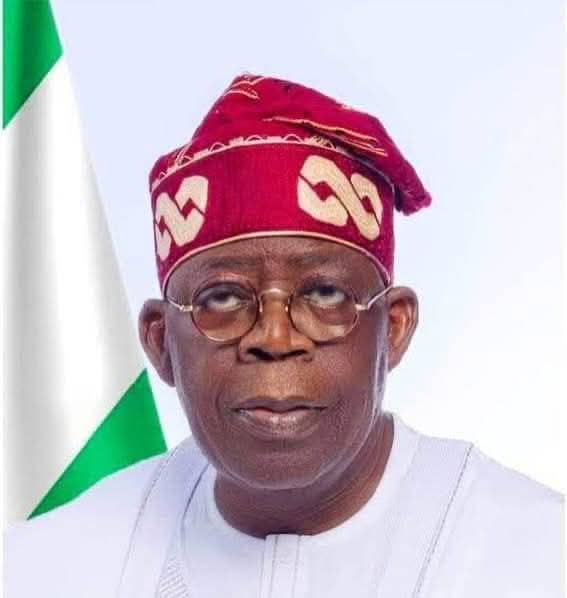
As Nigeria’s Niger Delta hits the highways of economic drive and evolvement, President Bola Tinubu will be in the region to flag off an investment and economic summit.
On September 15, the president is expected to declare open the Niger Delta Economic & Investment Summit 2026 in Port Harcourt, Rivers State.
The region is naturally the oil and gas bay of Nigeria and made of nine states that cut across the three geopolitical zones of southern Nigeria.
But the focus of the event is to look at the holistic economy of the region beyond just oil and gas to the development and growth of other potentials.
The event sets its attention on: Driving Investment, Innovation & Industrial Growth in the Niger Delta
The Niger Delta Economic and Investment Summit (NDEIS), aims to be a high-impact investment platform and will seek to address development challenges and unlock scalable, bankable, and sustainable opportunities in the Niger Delta Region.
Ambassador Ideare Ogan, Chairman of the Niger Delta Chambers of Commerce,Industry, Trade, Mines and Agriculture, (NDCCITMA), the host agency said the body is out to recreate the economic fortunes of the region beyond just oil and gas, and will use the event to make a statement about the economic robustness of the Niger Delta.
The Summit will position Nigeria’s most endowed region with mineral resources as an emerging multi-sector growth corridor with strong returns for forward-looking investors.
It will reposition the Niger Delta as a competitive hub for innovation, enterprise, and inclusive development
The Summit will convene government leaders, development partners, investors, industry experts, community leaders, and youth innovators to engage in focused dialogue on priority sectors such as energy transition, oil and gas value chain optimization, agriculture, blue economy, infrastructure, manufacturing, technology, environmental sustainability, and human capital development.
The Managing Director of Red Sapphire Consulting, Mr. Onoriode Akpe told Africa China Economy Magazine that the summit that has long been in the offing will reposition the region as the economic centrepiece of the country as it has been with oil and gas, but this time in a multi dimensional way.
Akpe said that the emphasis will be placed on inclusive growth, peacebuilding, climate resilience, and economic diversification, education industry development, manufacturing, service sector and ICT industry enhancement.
The Summit program will present keynote speakers, goodwill messages, technical session and structured plenary sessions, sector-specific investment forums, policy roundtables, and deal-making platforms that will address key issues on the economy of the region.
The Summit is expected to attract key development partners led by our benefactors, the Niger Delta Development Commission (NDDC).
The summit planned to be a world-class event, will align regional development priorities with national economic objectives and global investment trends.
The Steering Committee will provide strategic oversight, stakeholder coordination, and operational guidance to ensure the Summit achieves measurable outcomes, including policy commitments, investment deals, and actionable partnerships.
NDCCITMA sees the Summit beyond dialogue into deal execution. Investment-ready projects, public– private partnership (PPP) frameworks, The Summit will target B2G and B2B engagements that will enable investors and our members to structure partnerships that align profitability with long-term regional stability and impact.

By David Owei,Bayelsa
A civil society organisation in Rivers State on the aegis of LightHope Succor Worldwide Initiative has challenged reports alleging that 37 persons died after inhaling suspected toxic fumes at Okari Jetty in Okrika Mainland, Rivers State, describing the claim as unverified and urging media organisations to disregard it until credible evidence emerged.
The organisation, in a statement issued on Friday, said its preliminary enquiries failed to establish the occurrence of the alleged mass-casualty incident, which reportedly happened at the jetty on September 3, 2026.
According to LightHope, it sought clarification from senior authorities of the Nigeria Police Force, Nigerian Navy and Nigerian Army responsible for the area, and was informed that no such incident was recorded at Okari Jetty on the date in question.
The statement was apparently in response to a report making the rounds in some print and electronic media, claiming that not fewer than 37 suspected oil thieves had died after inhaling toxic substance in the course of stealing petroleum products from a pipeline taping point at the jetty.
One of the reports had alleged that the incident occurred at about midnight on Thursday, September 3, during an illegal operation to load petroleum products from a pipeline tapping point into waiting boats.
The organisation claimed that the youths inhaled the product while it was being pumped at high pressure, resulting in the deaths of at least 37 persons, while several others were allegedly still missing.
It also claimed that some corpses had been seen floating on the river but had yet to be recovered and called on the National Oil Spill Detection and Response Agency (NOSDRA) to conduct a Joint Investigation Visit to the alleged site.
It urged companies whose facilities were allegedly vandalised to strengthen security around their pipelines.
But LightHope said its preliminary investigation had been unable to independently establish the veracity of the reported fatalities.
It therefore called on the originators of the report to produce verifiable evidence capable of substantiating the claim, while urging media organisations to apply appropriate editorial checks before reproducing allegations involving the loss of human lives.
The group, however, cautioned that its position should not be interpreted as a denial of the serious environmental and security challenges associated with oil theft and pipeline vandalism in the Niger Delta.
Rather, it said, the issue was about accuracy, responsible advocacy and evidence-based reporting.
LightHope maintained that unverified reports of mass deaths could create unnecessary public anxiety and undermine credible efforts to address the region’s longstanding environmental and security challenges.
“The conflicting accounts have raised questions that could only be conclusively resolved through an independent investigation by relevant authorities”, it stated, insisting that the reported 37 deaths should not be presented as established fact without credible evidence.
The organisation reaffirmed its commitment to community welfare, environmental responsibility, public safety and credible advocacy in the Niger Delta.
However, security agencies in the state including the Nigeria Police and the Nigeria Security and Civil Defence Corps NSCDC have in separate reactions confirmed that some oil thieves actually lost their lives at a pipeline taping point at the Okrika Jetty where they had gone to “steal crude oil”.
According to Agabe Blessing, the Police Public Relations Officer (PPRO) of the Rivers Police command, though the command was yet to receive any official complaint on the incident as at Friday afternoon, investigation was on to ascertain the number of suspects who died in the incident.


HURIWA Mourns Bello Mandiya, Hourns a Dependable Ally of Human Rights
By George Mgbeleke The Human Rights Writers Association of Nigeria (HURIWA) mourns the death of former Senator representing Katsina South...


HURIWA DEMANDS IMMEDIATE REMOVAL OF HANDCUFFS FROM Ufoma Joseph Immanuel
By George Mgbeleke The Human Rights Writers Association of Nigeria (HURIWA) says the Nigerian Correctional Service must immediately stop the...
Northern Senator Forum Mourns Senator Bello Mandiya
By George Mgbeleke The Northern Senators Forum has received with profound sadness the news of the passing of Distinguished Senator...

APC withdraws petition challenging Gov.Adeleke’s Victory
By Our Correspondent In dramatic twice the All Progressives Congress (APC) has filed an application seeking to withdraw the petition...


NUJ FCT Raises N5.01m Trust Fund for Late Chairman’s Children …265 members raised N5.01m to secure education, welfare of Osadebamwen’s three children
By Our Correspondent In a bid to ensure a good welfare package for its departed members and their families, the...


APC chieftain demands probe, prosecution of Atiku over $40M, SIEMENS, SPV allegations
By Our Correspondent A chieftain of the All Progressives Congress (APC), Ntufam Hilliard Eta, has called on the nation’s anti-corruption...

Nigerian Politics Becoming Less Violent, Says Gov Diri As CBM Holds Bayelsa Retreat
By David Owei Governor of Bayelsa State, Senator Douye Diri, has observed that the political arena in Nigeria was shifting...


Gov Diri Seeks Increase In Law Students Quota At NDU
By David Owei Governor of Bayelsa State, Senator Douye Diri, has appealed to the Council of Legal Education to increase...


Nembe Spill: HOMEF demands cleanup, compensation, accountability
By David Owei The Health of Mother Earth Foundation (HOMEF) on Tuesday demanded urgent cleanup, compensation and accountability over an...


NCDMB to Feature Nwabuikwu’s The Pain and The Promise In Book Reading Session
By David Owei The Nigerian Content Development and Monitoring Board (NCDMB) will host the fifth edition of its Book Reading...
-

 Politics1 year ago
Gov Okpebholo moves to end Cultism *Threatens action against leading cult groups *Vows to demolish more cult houses in Edo State
-
 Politics1 year ago
ASUU-NDU protest against FG loans, unpaid salaries,Non-Implementation of agreements …..says loans is generational slavery
-
 Business & Economy1 year ago
PC-NCG Issues Disclaimer on Purported Nigerian Coast Guard National Orientation Exercise In Anambra State
-
 Entertainment2 years ago
Jubilation galore as Parishioners of CKC Kurudu celebrate their cultural heritage ….FG should exploit our Cultural heritage to unite Nigerians-Rev Fr Dim
-

 Sports7 months ago
Bayelsa-born ex-football star’s son, Opuama donates spike shoes to Athletics Association
-

 General News2 years ago
Reps hold public hearing on FMC Ugwuaji Awkunanaw
-

 Law & Crime1 year ago
Legal practitioner raises alarm over threat to his life by CSP Muhammed Abdulkareem
-

 General News2 years ago
Celebration galore as UDA Successfully Elected New Exco ……I will digitalize processes that will raise UDA to greater height -Comr. Okejiri