
Oil & Gas
NDDC State Offices: Symbol of Grassroots Development


By Ifeatu Agbu
A symbolic edifice for grassroots development was added to the skylines of Warri with the recent commissioning of a model state office of the Niger Delta Development Commission, NDDC, in the oil and gas hub of Delta State.
The new office complex is a significant milestone in NDDC’s drive to strengthen administrative presence and development delivery across the Niger Delta region.
Before now, the Commission had carried out its activities in Delta State from a rented building. It is, therefore, significant that it now has a permanent office address.
Moving into its own home represents a renewed move by NDDC to decentralise its operations, enhance service delivery, and reaffirm its core mission of transforming the oil-rich Delta into a region of shared prosperity and sustainable development.
The modern facility in Warri has been aptly described as a symbol of progress and institutional renewal, designed to enhance coordination and efficiency in implementing infrastructure, education, health, and empowerment initiatives within Delta State.
Indeed, the NDDC has state offices in the nine states of the Niger Delta region, but most of the offices are in rented buildings. The exceptions are Abia, Bayelsa, Cross River and Rivers states. Expectedly, the offices are meant to facilitate regional development. They serve as a bridge between the Commission’s headquarters in Port Harcourt and the local communities, ensuring that projects and programmes are tailored to meet specific state needs.
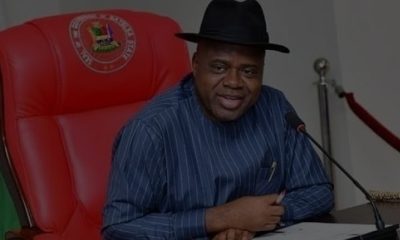
The Delta State Governor, Rt. Hon. Sheriff Oborevwori, who commissioned the Warri office complex, maintained that it is a symbol of “shared commitment to development, inclusion, and service delivery.”
According to him, “the project is a clear reflection of shared responsibility and purposeful governance, and actual progress happens when institutions work together to bring impact closer to the people.”
Oborevwori called on the NDDC to strengthen collaboration with the Delta State Government in addressing critical infrastructure gaps, particularly federal roads, while investing more in education and healthcare.
He advocated a strategic alliance between the NDDC and state governments to rehabilitate critical federal roads across the region.
The Governor expressed his readiness to partner with the NDDC on the Omadino-Warri-Escravos Road, disclosing that a joint meeting between the state government, Chevron, and the Commission is scheduled for early next month to outline the next steps.
The project, which the NDDC initiated over a decade ago, now stands as a testament to the government’s renewed commitment to grassroots development and collaboration in the region.
He affirmed that the office complex represented a reaffirmation of shared dedication to bringing development closer to the people.
Oborevwori commended the NDDC boss for his visionary leadership and commitment to development, stating that the new office would reinforce institutional stability and renewed purpose.
The governor further lauded President Bola Tinubu for his Renewed Hope Agenda, noting that it had strengthened state finances, fostered inclusivity, and restored public confidence in governance.
Governor Oborevwori commended the NDDC for its sustained collaboration with state governments, emphasising that synergy between development agencies and local administrations is vital for delivering the dividends of democracy.
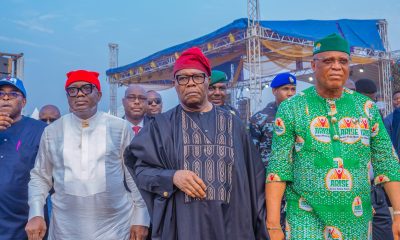
In his remarks, the Minister of Regional Development, Engr. Abubakar Momoh, stated that President Tinubu had directed the NDDC to complete all abandoned projects in the region.
He cited successes such as the restoration of electricity in Okitipupa in Ondo State after 15 years and the construction of key bridges and substations.
Momoh urged NDDC staff to maintain the new facilities and remain non-partisan while ensuring equitable service delivery to all Niger Delta communities.
Also speaking, the Chairman of the NDDC Governing Board, Mr. Chiedu Ebie, reaffirmed the Commission’s readiness to collaborate with Delta and other Niger Delta states to achieve sustainable development.
He averred: “Partnership remains the foundation of the commission’s success. The NDDC Board provides strategic guidance and direction to management in executing their daily responsibilities. A key example is the adoption of KPMG’s working document, which now guides our implementation processes and internal reforms.”
He noted that the Board had strengthened the NDDC governance system by adopting a new transparency framework developed with KPMG.
On his part, the NDDC Managing Director, Dr Samuel Ogbuku, said the new Delta State office in Delta signified the commission’s shift “from transaction to transformation,” adding that it would serve as a hub for improved service delivery.
He declared: “We are ambassadors of President Tinubu’s Renewed Hope Agenda. What you see here today is proof that we are inspired to deliver real results.”
The NDDC boss stated that the era of abandoned projects in the Niger Delta was over, stressing that the commission was now focused on completing all inherited projects across the region.
He reaffirmed the NDDC’s commitment to building strategic partnerships aimed at enhancing the quality of life for the people of the Niger Delta.
Ogbuku highlighted the gains from the collaboration between NDDC and the Nigeria Liquefied Natural Gas (NLNG) on ₦650 billion worth of infrastructure projects and assured that the NDDC was committed to timely project completion.
Addressing past failures, Ogbuku stated, “It’s not our fault that projects were abandoned in the past. It was political instability of the board of the NDDC that caused it.”
He also thanked President Tinubu, noting he has “funded the NDDC more than any President since the agency was created.”
Ogbuku also acknowledged the unwavering support of the National Assembly, noting: “The National Assembly has consistently supported us by ensuring the timely passage of our Appropriation Bill, which has enabled us to deliver on our mandate more effectively.”
He noted that the new office represents more than a physical structure; “it is a hub for innovation, transparency, and closer engagement with communities.”
Ogbuku stated: “Today, we celebrate the institutionalisation of the NDDC in Delta State, and we are pleased to see the people of Warri turn out in large numbers to witness this historic occasion. This marks the third state office we have commissioned, starting with Cross River State, followed by Bayelsa, and now Delta State.”
The NDDC Executive Director of Projects, Dr Victor Antai, gave the project brief and explained that the building was fitted with modern facilities. The new office complex is actually a prototype of the one in Rivers State, commissioned on Tuesday, July 12, 2016, by the then Acting Managing Director, Mrs. Ibim Semenitari.
On that occasion, she expressed relief that the NDDC staff in the Rivers State office could work in an elaborate environment deliberately textured for maximum output.
She stated: “As we commission the Rivers State office, we celebrate a significant milestone and our commitment to making a difference in the lives of the people of the Niger Delta region and our staff. We decided to ensure that we exit all rented accommodation at the headquarters and across all the states to enable us to conserve scarce resources, which we should be using to develop our communities.
“The NDDC is transforming the skyline of our host communities for the better. This edifice was designed and completed with the staff in mind. It has provisions for several facilities, including a large reception hall, conference/multi-purpose hall for 250 people, staff canteen, sick bay and offices for drivers on the ground floor. Each of its four floors has ample space for offices.
According to Semenitari, “the Rivers State Office would accommodate about 120 members of staff, with unique office suites for the State Representative and the Director of the state office. Additionally, it includes provisions for key Head Office Directorates. It is indeed a worker’s delight!
I saw that the workers of the Commission needed an office accommodation that would support their specific needs. We soon hit the ground running, tasking both the contractor and the project consultant with an exit date. I concluded that if we must demand absolute service from the Rivers State office workers to the Commission and, by implication, to the people, we must provide them with the tools.
In his goodwill message, the Chairman of the Senate Committee on NDDC, Senator Asuquo Ekpeyong, commended the NDDC Board and Management and urged them not to rest on their oars.
Speaking in a similar vein, the Chairman of the House Committee on NDDC, Hon. Erhiatake Ibori-Suenu, congratulated the NDDC management for significantly impacting the lives of Niger Deltans.
For Senator Ned Nwoko, the new office complex “reflects the renewed commitment to efficient service delivery, transparency, and people-centred governance in line with President Bola Ahmed Tinubu’s Renewed Hope Agenda.
He said: “The new NDDC State Office is more than just a physical structure; it symbolises a stronger and more responsive institution dedicated to driving sustainable development and improving the lives of our people across the Niger Delta.”
Sharing this sentiment, the Chairman of Uvwie Local Government Council, Chief Anthony Ofoni, affirmed that the NDDC’s new structure is a symbol of renewed collaboration between the Federal and State Governments aimed at attracting more development to the state, thereby improving the lives of people at the grassroots.




Oil & Gas
NCDMB, NLNG Commit US$9 Million to Endowment of Professorial Research Chairs in Six Nigerian Universities

By David Owei
The Nigerian Content Development and Monitoring Board (NCDMB) and the Nigeria LNG Limited (NLNG) have launched a US$9 million professorial chair endowment programme across six Nigerian universities to develop commercially viable solutions to industry challenges, strengthen local research capacity and advance technological innovation.
Under the Nigerian Content Research and Development (NC-R&D) Professorial Chair Endowment Programme, each university is to receive US$1.5 million to establish a specialised professorial chair focused on agreed industry research priorities. The initiative is being implemented in partnership with the NCDMB, under the supervision of its Planning, Research and Statistics Directorate.
The schools include the University of Ibadan, Oyo State, Rivers State University, Modibbo Adama University, Yola, Adamawa State, Aliko Dangote University of Science and Technology, Kano State, University of Nigeria, Nsukka, Enugu State, and Yakubu Gowon University, formerly the University of Abuja.
Speaking at the kick-off ceremony, NLNG’s Managing Director and Chief Executive Officer, Adeleye Falade, described the programme as an investment in Nigeria’s capacity to translate academic knowledge into practical solutions. His keynote address, titled “Reshaping Nigeria’s Future Through Innovation, Research and Capacity Development,” emphasised the importance of sustained collaboration between government, industry and academia.
“In the energy industry, we understand that technology and energy systems are evolving and the requirement for sustained research cannot be overemphasised,” Falade said.
He noted that the programme would support research into challenges central to the energy industry’s future, including improving operational efficiency, managing emissions, strengthening safety, maintaining critical infrastructure and making industrial processes more sustainable.
Beyond the research endowments, Falade outlined opportunities for a “triple helix” approach that brings government, industry and academia together through specialised programmes, sabbaticals, exchange opportunities, practical testing of research assumptions and the joint development of postgraduate curricula.
The six beneficiary universities will undertake research in distinct areas and the NLNG Research and Innovation Centre for Computer and Electrical Engineering (RICCEE) at Rivers State University is envisaged as the coordinating point for these collaborations among the universities. Falade said discussions were already under way with the university on implementation arrangements and commended its Vice-Chancellor, Professor Isaac Zeb-Obipi, for his role in advancing the proposed collaboration. We have already gotten indications of other partners like Google, Cisco and MTN who showing interest to support this initiative, he said.
Falade also highlighted the opportunities for younger researchers to deepen their expertise, investigate industry problems and learn from experienced academics and practitioners. He urged the beneficiary institutions to build on the endowments by strengthening research partnerships, attracting additional funding and pursuing the commercialisation of intellectual property.
“Expand the scope, reach for more grants and funding which can push the frontiers of knowledge and commercialisation of intellectual property,” he said.
Acknowledging NCDMB’s role in bringing the initiative to fruition, Falade called for sustained commitment to technology transfer and the development of home-grown solutions without compromising quality assurance or safety. He emphasised that the programme’s lasting value would lie in stronger institutions, research outcomes deployed in the field and the development of the next generation of Nigerian researchers and industry professionals.
In his remarks, the Executive Secretary of the NCDMB, Engr. Felix Omatsola Ogbe said the US$9 million endowment programme represents a strategic investment in the future of Nigeria’s research and innovation ecosystem.
The initiative, he said, complements the Board’s ongoing investments in research infrastructure, including the establishment of specialized R&D Centres of Excellence across six universities in the country.
He added that “taken together, these interventions demonstrate the Nigerian oil and gas industry’s commitment to creating an integrated research ecosystem that connects academic expertise, modern research infrastructure, industry requirements, and commercialization opportunities.”
Represented by the Senior Technical Adviser, Engr. Austin Uzoka, the Executive Secretary underscored that by supporting specialized professorial chairs in critical areas of the industry operations, NLNG and NCDMB is creating opportunities to bridge the longstanding gap between academic research and industrial application.
He further charged the universities to deliberately transition from research for publication to research for application, and from innovation as an academic pursuit to innovation as a driver of industrial transformation. According to him “the beneficiary universities must see this endowment as both an opportunity and a responsibility and they would be expected to deliver clearly defined research objectives, measurable outcomes, prudent resource utilization, effective stakeholder engagement, and sustained collaboration with industry partners.”
He further demanded that “these professorial chairs will generate commercially viable solutions, strengthen local technological capabilities, support industrial competitiveness, and contribute meaningfully to the long-term sustainability of Nigeria’s oil and gas industry.”
Details of the endowment indicates that the University of Ibadan will focus on natural gas processing, pollution control and environmental management, while Rivers State University will concentrate on digital engineering, intelligent energy systems, automation and asset integrity.
Modibbo Adama University will undertake research in energy transition and the environment. Aliko Dangote University of Science and Technology will focus on sustainable energy innovation and climate-resilient food systems.
The University of Nigeria, Nsukka, will specialise in green energy production and geoenvironmental engineering, while Yakubu Gowon University, formerly the University of Abuja, will focus on geoscience and satellite intelligence for resilient gas infrastructure.
Each university will work towards agreed research targets and commercialisation pathways, providing a framework for measuring progress and translating findings into practical applications. The institutions will also jointly host an information management hub to support knowledge sharing and exchange programmes.
The funding includes provision for minor civil works and infrastructure upgrades to transform identified spaces into fit-for-purpose research centres.
Proposed arrangements would enable industry professionals to contribute practical expertise in technical and non-technical disciplines while pursuing master’s and doctoral degrees. This would give students greater exposure to industry experience while strengthening the connection between postgraduate study and practical problem-solving.
The programme reinforces NLNG’s commitment to developing Nigerian capability and creating opportunities for local expertise to address industry needs, guided by its recently approved ‘NextGen Nigerian Content Strategy’ where NLNG plans to Sustain the gains
through focused delivery of previous commitments in alignment with NCDMB; Enable its business by facilitating deeper adoption Nigerian Content Development as a business principle and Accelerate growth by showing up and support the Nigerian Content transformation for posterity, in line with its vision of inspiring a sustainable future.
“Start Local, Go Global, Think Nigerian Content.”
Oil & Gas
Mele Kyari refutes alleged unaccounted N210trillion … .. Says nothing missed under him … .As Senate admits his clean bill of health submissions
By George Mgbeleke
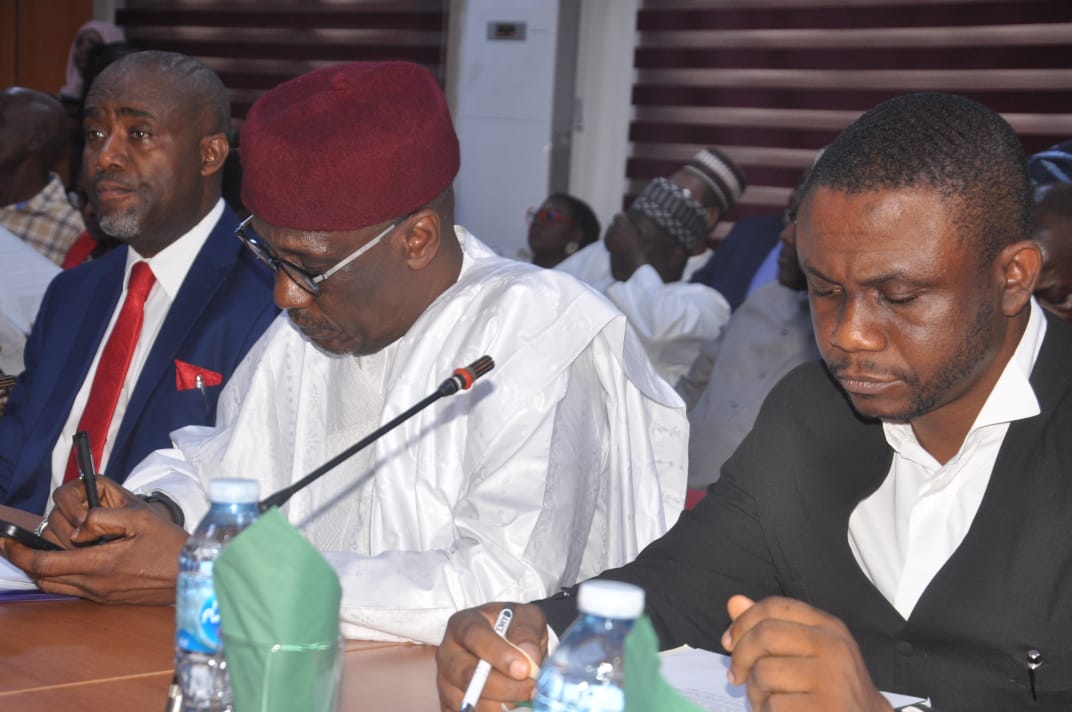
Former Group Managing Director and Chief Executive Officer ( GCEO) of the Nigerian National Petroleum Company Limited ( NNPCL), Mele Kyari refuted Tuesday alleged unaccounted N210trillion in the balance sheet of the National oil company as contained in the 2017 to 2023 Audit report .
Mele Kyari who made the rebuttal to the Senate Committee on Public Accounts declared that no such financial infraction happened under him as Chief Executive of NNPCL from 2019 to 2025 .
He said the alleged unaccounted figures arose from accounting entries which have nothing to do with financial loss .
“I wish to confirm that nothing was lost. It is simply not possible that such an amount could have been lost under my care and leadership.
“The matter relates to accounting entries, which have nothing to do with any financial loss.
“They are bookkeeping issues, and I believe the appropriate explanations have been provided in my report”, he said .
He also declared that the N5billion allegedly spent on change of name from NNPC to NNPCL , waa untrue as there was no spending like that under his watch just as he refuted queries raised in the audit report on registration and incorporation of NNPC Ltd.
He said : ” At the time of incorporation, the company was not owned by the Federation in the same manner.
“The Federation was therefore responsible for the payment relating to the incorporation of NNPC.
“However, NNPC made the payment on behalf of the Federation and subsequently charged it to the Federation’s revenue, which was reflected in what we referred to as the former NAPIMS account of NNPC.
“This was simply an accounting entry, involving approximately N2.99 billion.
“It was a payment made to government institutions responsible for providing the relevant services.
“I have also seen comments suggesting that N5 billion was paid for the naming of the company. That is not correct”.
He added by informing the Senator Ibrahim Dankwabo led committee that NNPCL under him was transformed from loss incurring corporation to a profit making company .
According to him , before his assumption of office as Group Managing Director of NNPC in 2019 , the national oil company had a huge loss of $803billion in 2018 operational year , which gradually turned to o profit making under him from 2019 .
” Mr Chairman, you may be aware from the financial records that the company recorded a loss of about $803billion in 2018.
“I took over in 2019, and we did everything possible to transform the company into a profitable organisation which made it to for the first time in its 44 years of existence, recording sustained profits”
Satisfied with the submissions of Kyari , the Committee through its Chairman said , , responses submitted to the queries shall be thoroughly studied for final decision on the audit report .
” We shall interrogate the figures submitted by the former GMD to know whether to Invite him again or not .
” For now , he has responded to the two issues relating to his leadership of NNPC during the period under review “, he said .
Oil & Gas
Gas Pipeline Host Communities Give NNPCL, PINL 14 Days Ultimatum Over Unpaid Surveillance Allowances.

By David Owei
Communities and stakeholders along the Eastern Gas Network (EGN) have given the Nigeria National Petroleum Petroleum Corporation Limited (NNPCL), and
Pipeline Infrastructure Nigeria Limited (PINL) a two-week ultimatum to settle outstanding payments to surveillance contractors and guards of the gas pipelines.

The communities also demanded for inclusion in all corporate social responsibility packages of both companies.
Speaking on behalf of the EGN host communities and stakeholders at a press conference in Port Harcourt, HRH, Eze Peter Wagbara, paramount ruler (Nye Nwe Ali) of Elele-Alimini Community in Rivers State said the communities are concerned that the surveillance contractors and guards are being owed backlog of their entitlements adding that this has adversely affected families that depend on the stipends for their survival.
He said the prolonged delay in the payment has created anxiety and dissatisfaction amongst members of the communities.
Wagbara warned that if the situation persists, it could undermine the goodwill existing among the communities, PINL and NNPCL.
“The surveillance guards have families and responsibilities. They depend on the timely payment of their earnings to meet basic needs, while community stakeholders have continued to support the programme and mobilise their people in the interest of pipeline security.
“The prolonged delay has understandably created anxiety, dissatisfaction, and uncertainty among our people. We are concerned that if this situation persists, it could undermine the goodwill and confidence that have been painstakingly built between the host PINL and NNPCL”.
The monarch emphasized that their ultimatum did not connote a withdrawal of their support for pipeline protection, but an appeal for the prompt fulfilment of the obligations that sustain their participation and commitment.
The communities therefore called on PINL and its client, NNPCL, to take immediate steps to reconcile all outstanding obligations and commence the reconciliation and payment of the full backlog owed to surveillance contractors, guards, and eligible community stakeholders along the Eastern Gas Pipeline Network.
They also demanded that both organisations should ensure that the payment of surveillance contractors, guards, and eligible stakeholders resumes promptly and is sustained in accordance with agreed contractual and administrative arrangements.
Wagbara added that Eastern Gas Pipeline host communities should be formally integrated into PINL and NNPCL scholarship, youth and women empowerment, and other community development programmes, based on transparent eligibility criteria.
The communities further requested that PINL and NNPCL should engage recognised traditional rulers and community stakeholders to communicate a clear payment schedule, address outstanding concerns, and establish a sustainable mechanism for resolving future disputes.
“We hereby give PINL and NNPCL a two-week grace period from the date of this public statement to resolve the outstanding payment issues and demonstrate concrete action towards the inclusion of our communities in relevant CSR programmes.
“We expect this period to result in meaningful progress, including the settlement of the backlog, the resumption of regular payments, and the formal inclusion of our communities’ in the relevant development initiatives, ” the communities stated.
They however noted that the operations of PINL has ushered in peace and security in their communities and along the gas lines, adding that their ultimatum was not intended to undermine the operations of PINL or NNPCL, nor was an attempt to discourage investment in their region.
They insisted that their demand was a necessary appeal for fairness, accountability, and the fulfilment of obligations to communities that have embraced the responsibility of protecting critical national infrastructure.
“Our communities have keyed into the vision of community-based pipeline surveillance. Our people understand the strategic importance of the Eastern Gas Pipeline Network to national energy security and economic development, and they have continued to contribute to its protection.
“We remain committed to peaceful engagement and constructive dialogue. However, the patience of our people must not be mistaken for an absence of legitimate concerns.

If you won’t Let us Campaign in The Stadium,We will Rally In Streets-ADC Tells Kaduna Govt.
By George Mgbeleke The African Democratic Congress (ADC) has condemned the Kaduna State Government’s refusal to grant the party access...

Senate Condemns Political Violence , Orders Probe of Sponsors ,Gives C’ttee One Week to Report
By George Mgbeleke,Abuja Alarmed at the rising incidences of violent attacks against opposition parties during rallies by political parties, the...

2027: Too late for the opposition to present consensus candidate – Kalu … ..Says Presidential poll will be Tinubu vs Tinubu
By Our Correspondent With less than two months to the January 16 , 2027 Presidential election , Senator Orji Uzor...


HURIWA Demands Tinubu Sack Presidential Aide Over Mosque Attack Contradiction, Apologise To Nigerians
By George Mgbeleke The Human Rights Writers Association of Nigeria (HURIWA) has condemned the conflicting accounts surrounding the reported stoning...

I am An Arms Delealer, Not A Defence Contractor — Kalu Clearifies , Denies IPOB Link *
By Our Correspondent, Abuj Senator Orji Uzor Kalu has doubled down on his controversial claim of being an arms dealer,...

2027 Poll IS TINUBU VERSUS TINUBU-Kalu Tells Opposition Parties
By George Mgbeleke, Abuja The Senate Press Corps honour turned into a political masterclass on Tuesday as Senator Orji Uzor...

Court affirms Toyin Okoro as APC candidate for Ekiti South I
By our correspondent The Federal High Court sitting in Abuja has dismissed the suit challenging the candidacy of Engr. Toyin...

2027: Re – direct campaigns to the Grassroots from City Merry Making – Kawu tells Northern APC Leaders
By George Mgbeleke With less than two months to 2027 general elections , Senator Kawu Sumaila has admonished leaders and...

POVERTY TAKES THE SHINE OFF THE 2027 POLL
By Emmanuel Nnadozie Onwubiko There is no doubt that the persistent weaponisation of poverty by Nigeria’s political class over the...

HURIWA condemns destruction in Anambra communities, urges Governor Soludo to focus on governance
By George Mgbeleke The Human Rights Writers Association of Nigeria (HURIWA) condemns the deadly communal violence between Umuoba Anam and...
-
 Politics2 years ago
Gov Okpebholo moves to end Cultism *Threatens action against leading cult groups *Vows to demolish more cult houses in Edo State
-
 Politics1 year ago
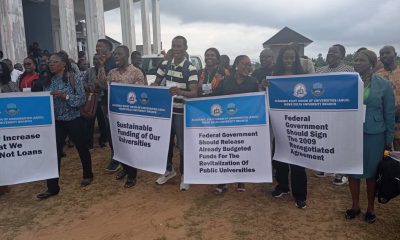
ASUU-NDU protest against FG loans, unpaid salaries,Non-Implementation of agreements …..says loans is generational slavery
-
 Business & Economy1 year ago
PC-NCG Issues Disclaimer on Purported Nigerian Coast Guard National Orientation Exercise In Anambra State
-
 Entertainment2 years ago
Jubilation galore as Parishioners of CKC Kurudu celebrate their cultural heritage ….FG should exploit our Cultural heritage to unite Nigerians-Rev Fr Dim
-

 Sports9 months ago
Bayelsa-born ex-football star’s son, Opuama donates spike shoes to Athletics Association
-

 General News2 years ago
Reps hold public hearing on FMC Ugwuaji Awkunanaw
-
 Law & Crime1 year ago
Legal practitioner raises alarm over threat to his life by CSP Muhammed Abdulkareem
-

 General News2 years ago
Celebration galore as UDA Successfully Elected New Exco ……I will digitalize processes that will raise UDA to greater height -Comr. Okejiri