
Business & Economy
Food security: FG charges colleges, research institutes to transit agric from theoretical to practical

By Abdul-Ganiyy Akanbi,Abuja
To ensure higher agricultural output and food security in the country, the federal government has charged colleges and research institutes to transit agriculture from being purely theoretical to practical and actively engaging in farming for food production.
The Senior Special Assistant, SSA to the President on Food Security, Barrister Yejide Ogundipe, who gave the charge at a quately meeting of Provosts of National Committees of Agricultural Research Institutes and Related Matters in Abuja, noted that academic institutions in Nigeria possess vast tracts of unused land that could be repurposed for food production and food processing hubs.
“These institutions can help curb the food crisis by involving undergraduates and youth from local communities in farming activities, while adopting modern agricultural practices and tools. This initiative will not only provide food for university residents and host communities but also cultivate a new generation of skilled agricultural practitioners,” she said.
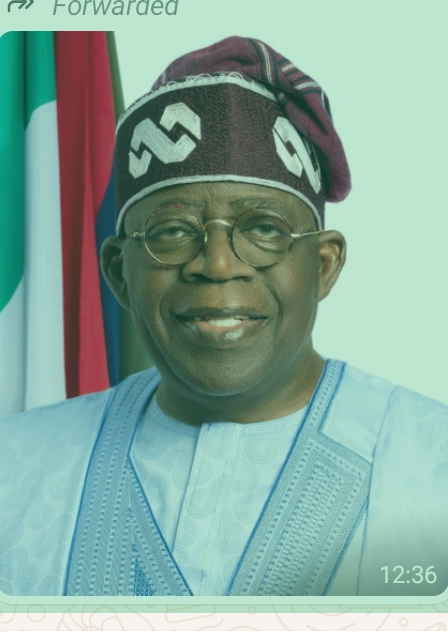
Highlighting the critical roles that research institutes and colleges of agriculture must play in advancing the Renewed Hope Agenda of President Bola Tinubu’s administration, the SSA emphasized that “the time for action is now”, adding that “food security is not merely a policy agenda—it is a national imperative.”
“We must leverage the knowledge and expertise within our research institutions and educational bodies to address the pressing challenges facing Nigeria’s agricultural sector.
“Through collaboration, innovation, and a shared commitment to progress, we can transform agriculture into a thriving and sustainable sector that guarantees food for every Nigerian.
Let us work together to turn our agricultural potential into reality,” she stressed.
Ogundipe, who lamented that despite agriculture’s critical role in Nigeria’s economy, the country still struggles to feed itself said President Tinubu, having recognised the urgent need for action made food security a core priority under his Renewed Hope Agenda, especially through the declaration of a state of emergency on food security on July 13, 2023; renaming the Ministry of Agriculture and Rural Development to the Ministry of Agriculture and Food Security, and creating the Office of the SSA on Food Security, “with a clear mandate to drive policy integration, promote sustainable food production and supply, and enhance stakeholder coordination in tackling food insecurity.”
She, however, maintained that ensuring food security is not the government’s responsibility alone, but requires a multi-sectoral approach, with significant contributions from various stakeholders, particularly the academia.
Earlier, the Executive Secretary of the Agricultural Research Council of Nigeria, ARCN, Garba Hamidu Sharubutu reaffirmed the Council’s commitment to working closely with the present administration to ensure that agricultural colleges receive the necessary resources to drive innovation and productivity in the sector.
According to Sharubutu, under President Tinubu’s leadership, food security has been prioritized through initiatives such as the declaration of a state of emergency on food security, the renaming of the Federal Ministry of Agriculture to the Federal Ministry of Agriculture and Food Security, and the creation of the SSA office on Food Security.
Also speaking, the President of the National Committee of Agricultural Research Institutes and Related Matters, Dr. Fadiyimu Akinyemi, said the country’s Colleges of Agriculture are fighting for survival due to lack of funding and institutional support, revealing that no state or federal agency provides direct intervention for them.
“Universities, polytechnics, and colleges of education receive intervention funds, but agricultural colleges get nothing. Who will explain why?” he questioned.
“Unlike other tertiary institutions, colleges of agriculture do not benefit from TETFund, commercial bank loans, or even private sponsorships—a glaring oversight in a country grappling with food security challenges.
“A rare opportunity for private funding arose in 2023 when an individual proposed a research center, but bureaucracy has stalled the initiative,” he stressed.
Akinyemi, who is the Provost of the Federal College of Agriculture, Akure, emphasized that while universities focus on theory, colleges of agriculture provide 70% practical training and are directly connected to farmers.
“Despite their hands-on approach, they remain underfunded, unrecognized, and institutionally invisible.
“Even technology doesn’t recognize us. Type ‘polytechnic,’ and it appears. Type ‘monotechnic,’ and it gets underlined in red,” he remarked, symbolizing the sector’s neglect.
He observed that though the Renewed Hope Agricultural Technology Adoption Program, RATA was launched to train young Nigerians in agriculture, political influence has marred the initiative, warning that such programs must avoid political influence and instead focus on supporting serious students.
The Provost proposed for direct funding of the best agricultural students to establish farms, ensuring real impact instead of wasted resources.






Business & Economy
2027 Anambra Budget:Soludo Proposes N893.4bn tagged Solution 2.0 to State Assembly
By Ben Nwankwo,Awka
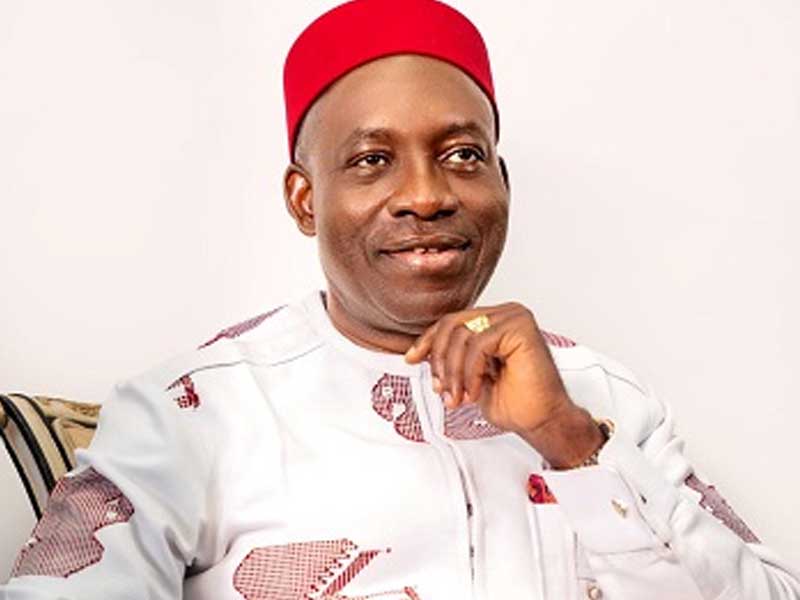
Anambra State Governor, Prof. Chukwuma Soludo on Tuesday presented the 2027 budget proposal , totaling ₦893,435,059,830 (eight hundred and ninety-three billion, four hundred and thirty-five million, fifty-nine thousand, eight hundred and thirty naira), budget code-named Solution 2.0 to the State House of Assembly.
Presenting the budget to the lawmakers at the State Assembly Complex in Awka, Soludo said the budget is geared towards unlocking New Axis for Sustainable Prosperity.
According to him, it represents a 16.58 percent increase compared to the 2026 fiscal estimate.
The Governor explained that the theme signals his administration’s intentionality toward expanding its development vision for the state.
He expressed gratitude to the state for the massive support rendered him during the last governorship election in the state and also acknowledged the indispensable partnership his administration has enjoyed with the legislature.
Reviewing his administration’s scorecard, Soludo cited significant advancements in security, healthcare delivery, sustainable infrastructure, youth empowerment, among others.
He highlighted the success of the state’s free education policy, which currently benefits nearly 500,000 Anambra children, and announced plans to recruit 5,000 new teachers to build upon the 8,115 teachers initially hired.
While assuring lawmakers and Citizens that any future borrowing , if necessary, will be strictly guided and economically justified, the Governor said, “The state under my watch has not borrowed from any commercial bank so far.”
Earlier in his remarks, the Speaker of the Anambra State House of Assembly, Rt. Hon. Somtochukwu Udeze, commended the Governor’s developmental strides across all sectors of the state’s economy.
He expressed appreciation for the upgrade of the Assembly complex, saying that the improvements have provided a much more conducive environment for conducting legislative business.
Highlighting the productivity of the current Assembly, Udeze added, “44 bills have been passed so far, 26 were executive bills.
“Several of these laws are poised to serve as legislative templates for other states.”
The³ Speaker who called for the continuation of the productive executive-legislative partnership, hatped on the importance of continuously respecting the boundaries between the different arms of government.
He expressed hope that the 2027 budget will address the pressing needs of the citizenry and make a deserving impact on the lives of the people of Anambra State

By Alex Okorier
In a bid to complete his projects for 2027 fiscal year,Governor, Alex Otti, has presented a proposed N1.23 trillion budget for the 2027 fiscal year to the State House of Assembly, with 80 per cent of the total expenditure allocated to capital projects.
Otti presented the appropriation bill on Thursday before the Speaker and members of the 8th Assembly, describing it as an ambitious but realistic financial plan designed to sustain the state’s development drive.
“Today, when I come to this hallowed assembly to lay the draft of the 2027 Appropriation Bill for the next fiscal year, a total budget estimate of N1.23 trillion shall be tabled before this Honourable House for consideration,” the governor said.
Giving a breakdown of the proposed revenue, Otti said N647.23 billion would come from internal and external sources, including internally generated revenue, statutory allocations from the Federation Account Allocation Committee, Value Added Tax, other federal revenue sources and capital receipts.
He said the remaining N552.67 billion would be sourced through concessional loans and strictly channelled into infrastructure projects with regenerative value.
“The balance of N552.67 billion shall be sourced through concessional loans and committed strictly to infrastructure projects with regenerative value,” he stated.
The governor projected Abia’s internally generated revenue at N199.8 billion for 2027, expressing confidence that the target would significantly strengthen the state’s fiscal position.
“The projected IGR output for the coming fiscal year is estimated at N199.8 billion, and if achieved as projected, will be enough to cover 180% of our recurrent expenditure, which puts us in a good fiscal position,” Otti said.
He disclosed that the proposed budget represented an 80 per cent increase over the current year’s estimates, while the state’s projected IGR marked a 648 per cent rise compared with 2023.
On expenditure priorities, Otti said the administration had maintained a strong emphasis on capital investment, allocating N960 billion, representing 80 per cent of the total budget, to capital expenditure, while 20 per cent would cover recurrent spending.
“We are devoting 80% of the entire budget, that is N960 billion in absolute numbers, to capital expenditure, leaving the remaining 20% for recurrent expenditure,” he said.
The governor also announced that education and healthcare would jointly receive 35 per cent of the proposed 2027 budget as part of the administration’s commitment to human capital development.
He said education would receive 20 per cent of the total budget, covering basic, secondary and tertiary institutions, while the health sector would get 15 per cent.
“This necessitates the commitment of 35% of the 2027 fiscal outlay to the education and health sectors, with basic, secondary and tertiary education receiving 20%, while the health sector gets 15%,” Otti stated.
Further outlining the sectoral priorities, the governor said the economic sector would receive 55 per cent of the proposed expenditure.
He listed agriculture, works, transportation, petroleum and solid mineral development, power and public utilities among the areas covered by the allocation.
Other areas include the Greater Aba Development Authority, land administration, arts, culture and the creative economy, digital capacity development, infrastructure and support for small and medium-scale enterprises.
#
Business & Economy
I am An Arms Delealer, Not A Defence Contractor — Kalu Clearifies , Denies IPOB Link *
By Our Correspondent, Abuj
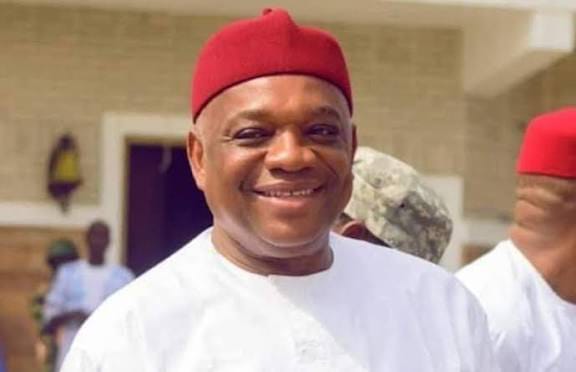
Senator Orji Uzor Kalu has doubled down on his controversial claim of being an arms dealer, but clarified that the business is strictly between countries and fully licensed.
Responding to questions from the Senate Press Corps, Kalu said he deliberately chose the word arms dealer over defence contractor because that is what the trade entails.
“I told Arise News that, yes, I am an arms dealer. I could have said I am a defence contractor, but I am not a defence contractor,” he said. “When one sells arms from one country to another country, if you have money, I will sell to you.”
He was emphatic that he does not sell to bandits, individuals or terrorists. “To sell arms all over the world means you have to be licensed. Not selling arms to bandits, not selling arms to any individual or terrorist. No, no, no.”
Kalu explained that international arms dealers operate under the close watch of intelligence agencies across the world, including the Mossad, CIA, MI6 and KGB, who track every movement of weapons from one country to another.
He dismissed reports in Abia linking him to supplying arms to IPOB as political mischief, saying such claims were being pushed by opponents ahead of elections.
“People like me are not afraid of anybody. I am sure APC is not afraid of any other party,” he said, adding that the ruling party is committed to playing the game fairly and will only defend itself if attacked.

NDLEA under Marwa: Five years of drug war milestones and the case for funding autonomy
By Emmanuel Nnadozie Onwubiko Nigeria’s war against illicit drugs has entered a more aggressive phase, with the National Drug Law...


HURIWA Faults Proposed Child Protection Agency, Urges Tinubu to Strengthen NHRC; NAPTIP Instead
By George Mgbeleke The Human Rights Writers Association of Nigeria (HURIWA) has questioned the proposed establishment of a National Child...

Kano Supreme Court Revelation: “Resign Now Or Be Impeached ” ADC Tells Tinubu
By George Mgbeleke The African Democratic Congress (ADC) has called on President Bola Ahmed Tinubu to immediately resign from office...
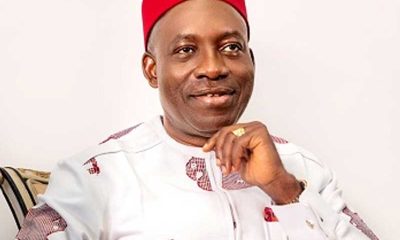

2027 Anambra Budget:Soludo Proposes N893.4bn tagged Solution 2.0 to State Assembly
By Ben Nwankwo,Awka Anambra State Governor, Prof. Chukwuma Soludo on Tuesday presented the 2027 budget proposal , totaling ₦893,435,059,830 (eight...
HURIWA Accuses Tinubu of Plotting One-Party State -Warns Against Using Punlic Wealth To Fund 2027 Polls By George Mgbeleke The Human Rights Writers Association of Nigeria (HURIWA) has accused President Bola Ahmed Tinubu of pursuing a dangerous political agenda aimed at foisting a de facto one-party state on Nigeria, warning that the reported mobilisation of enormous financial and logistical resources in support of his re-election project threatens the country’s democratic future. HURIWA in a statement signed by its national coordinator, Comrade Emmanuel Nnadozie Onwubiko, said the disturbing allegations surrounding the distribution of thousands of brand-new campaign buses by politically connected individuals, including Government Ekpemupolo, popularly known as Tompolo, and the Minister of State for Defence, Bello Matawalle, raise serious questions about the sources of funding, the political interests behind the donations and the possible use of public resources to advance partisan interests. The association expressed particular concern over reports that Tompolo had donated thousands of brand-new buses and that Matawalle had provided another 1,000 buses for political mobilisation. HURIWA said Nigerians deserve to know who is financing this massive political logistics operation, the circumstances surrounding the donations and whether any public funds or government-backed resources are being channelled into what increasingly appears to be an elaborate re-election machinery. The association warned that Nigeria must not be reduced to a political marketplace where access to public wealth, strategic government appointments and control of national institutions become instruments for purchasing political dominance and weakening opposition parties. HURIWA said the growing allegations of financial opacity surrounding the Nigerian National Petroleum Company Limited (NNPCL), particularly questions about the management of petroleum revenues and security-related expenditures, make an independent investigation into the sources of political financing imperative. The association questioned why Nigerians should continue to tolerate a situation in which enormous sums allegedly move through opaque financial arrangements while the country struggles with poverty, insecurity, unemployment and deteriorating public infrastructure. HURIWA insisted that allegations of trillions of naira being channelled through security-related expenditure and politically connected intermediaries must be subjected to independent scrutiny. It warned that public institutions must never become convenient conduits for creating undisclosed political war chests. The association maintained that the President has a constitutional obligation to protect the democratic process, guarantee political pluralism and ensure that public resources are not deployed to secure partisan electoral advantages. According to HURIWA, the disturbing impression created by the reported mobilisation of enormous campaign resources is that the 2027 presidential election could be reduced to a predetermined political coronation rather than a genuine contest in which Nigerians freely determine who governs them. It warned that a government that enjoys overwhelming control of public institutions, access to public resources and the machinery of state must exercise greater restraint, not deploy such advantages to suffocate political competition. DELTA CAMPAIGN ATTACK EXPOSES DANGERS OF POLITICAL VIOLENCE HURIWA also condemned the reported attack on the campaign team of former Deputy Senate President, Senator Ovie Omo-Agege, in Uduere, Ughelli North Local Government Area of Delta State, describing the allegation as another frightening indication of the dangers confronting Nigeria’s electoral environment. The Omo-Agege Campaign Organisation alleged that armed men opened fire on the campaign team on Monday, November 23, 2026, killing four people, including two aides identified as Moses Anaughe and Akima Efemena Umukoro, while four others sustained gunshot injuries. The organisation also claimed that Senator Omo-Agege narrowly escaped the attack, which it described as an assassination attempt. HURIWA said the reported killing of four people and the injury of four others during a political campaign, if established, represents a grave assault on democratic participation and the constitutional right of citizens to associate, assemble and campaign peacefully. The association called on the Inspector-General of Police to immediately take over the investigation, ensure the protection of witnesses and survivors, identify the perpetrators and investigate whether the attack was politically motivated. It warned that Nigeria cannot afford to enter the 2027 election season under an atmosphere in which political disagreements are settled with bullets, intimidation and assassination attempts. HURIWA demanded that the Federal Government demonstrate through concrete action that no political party, candidate or supporter is above the law and that violence will not be tolerated as an instrument of electoral competition. TINUBU MUST NOT TURN NIGERIA INTO A ONE-PARTY STATE HURIWA cautioned President Tinubu against allowing the enormous political and financial advantages associated with incumbency to undermine Nigeria’s multiparty democracy. The association said the deployment of public resources for partisan purposes, if established, would amount to a betrayal of public trust and an abuse of the enormous responsibilities entrusted to the President. It demanded transparency over the reported distribution of campaign buses, an independent examination of the sources of funding and a comprehensive audit of public expenditure connected with security-related financial operations where credible evidence points to possible diversion for partisan purposes. HURIWA also urged the Independent National Electoral Commission (INEC), the Economic and Financial Crimes Commission (EFCC), the Independent Corrupt Practices and Other Related Offences Commission (ICPC) and relevant security agencies to remain vigilant against the abuse of public institutions and resources during the electoral process. The association warned that Nigeria’s democracy cannot survive if the ruling party enjoys an unchecked financial advantage, opposition voices are intimidated, political violence goes unpunished and public institutions become instruments of partisan warfare. It stressed that President Tinubu must understand that winning an election through intimidation, financial manipulation, political corruption or the abuse of state power cannot confer genuine democratic legitimacy. HURIWA therefore called on the President to demonstrate his commitment to democracy by guaranteeing a level playing field, protecting opposition parties and ensuring that the 2027 general election is decided exclusively by the free will of Nigerian voters. Nigeria belongs to all its citizens, not the ruling party. No President has the constitutional right to convert the country’s democratic institutions and public wealth into personal electoral machinery.
By George Mgbeleke The Human Rights Writers Association of Nigeria (HURIWA) has accused President Bola Ahmed Tinubu of pursuing a...
HURIWA Accuses Tinubu of Plotting One-Party State -Warns Against Using Punlic Wealth To Fund 2027 Polls By George Mgbeleke The Human Rights Writers Association of Nigeria (HURIWA) has accused President Bola Ahmed Tinubu of pursuing a dangerous political agenda aimed at foisting a de facto one-party state on Nigeria, warning that the reported mobilisation of enormous financial and logistical resources in support of his re-election project threatens the country’s democratic future. HURIWA in a statement signed by its national coordinator, Comrade Emmanuel Nnadozie Onwubiko, said the disturbing allegations surrounding the distribution of thousands of brand-new campaign buses by politically connected individuals, including Government Ekpemupolo, popularly known as Tompolo, and the Minister of State for Defence, Bello Matawalle, raise serious questions about the sources of funding, the political interests behind the donations and the possible use of public resources to advance partisan interests. The association expressed particular concern over reports that Tompolo had donated thousands of brand-new buses and that Matawalle had provided another 1,000 buses for political mobilisation. HURIWA said Nigerians deserve to know who is financing this massive political logistics operation, the circumstances surrounding the donations and whether any public funds or government-backed resources are being channelled into what increasingly appears to be an elaborate re-election machinery. The association warned that Nigeria must not be reduced to a political marketplace where access to public wealth, strategic government appointments and control of national institutions become instruments for purchasing political dominance and weakening opposition parties. HURIWA said the growing allegations of financial opacity surrounding the Nigerian National Petroleum Company Limited (NNPCL), particularly questions about the management of petroleum revenues and security-related expenditures, make an independent investigation into the sources of political financing imperative. The association questioned why Nigerians should continue to tolerate a situation in which enormous sums allegedly move through opaque financial arrangements while the country struggles with poverty, insecurity, unemployment and deteriorating public infrastructure. HURIWA insisted that allegations of trillions of naira being channelled through security-related expenditure and politically connected intermediaries must be subjected to independent scrutiny. It warned that public institutions must never become convenient conduits for creating undisclosed political war chests. The association maintained that the President has a constitutional obligation to protect the democratic process, guarantee political pluralism and ensure that public resources are not deployed to secure partisan electoral advantages. According to HURIWA, the disturbing impression created by the reported mobilisation of enormous campaign resources is that the 2027 presidential election could be reduced to a predetermined political coronation rather than a genuine contest in which Nigerians freely determine who governs them. It warned that a government that enjoys overwhelming control of public institutions, access to public resources and the machinery of state must exercise greater restraint, not deploy such advantages to suffocate political competition. DELTA CAMPAIGN ATTACK EXPOSES DANGERS OF POLITICAL VIOLENCE HURIWA also condemned the reported attack on the campaign team of former Deputy Senate President, Senator Ovie Omo-Agege, in Uduere, Ughelli North Local Government Area of Delta State, describing the allegation as another frightening indication of the dangers confronting Nigeria’s electoral environment. The Omo-Agege Campaign Organisation alleged that armed men opened fire on the campaign team on Monday, November 23, 2026, killing four people, including two aides identified as Moses Anaughe and Akima Efemena Umukoro, while four others sustained gunshot injuries. The organisation also claimed that Senator Omo-Agege narrowly escaped the attack, which it described as an assassination attempt. HURIWA said the reported killing of four people and the injury of four others during a political campaign, if established, represents a grave assault on democratic participation and the constitutional right of citizens to associate, assemble and campaign peacefully. The association called on the Inspector-General of Police to immediately take over the investigation, ensure the protection of witnesses and survivors, identify the perpetrators and investigate whether the attack was politically motivated. It warned that Nigeria cannot afford to enter the 2027 election season under an atmosphere in which political disagreements are settled with bullets, intimidation and assassination attempts. HURIWA demanded that the Federal Government demonstrate through concrete action that no political party, candidate or supporter is above the law and that violence will not be tolerated as an instrument of electoral competition. TINUBU MUST NOT TURN NIGERIA INTO A ONE-PARTY STATE HURIWA cautioned President Tinubu against allowing the enormous political and financial advantages associated with incumbency to undermine Nigeria’s multiparty democracy. The association said the deployment of public resources for partisan purposes, if established, would amount to a betrayal of public trust and an abuse of the enormous responsibilities entrusted to the President. It demanded transparency over the reported distribution of campaign buses, an independent examination of the sources of funding and a comprehensive audit of public expenditure connected with security-related financial operations where credible evidence points to possible diversion for partisan purposes. HURIWA also urged the Independent National Electoral Commission (INEC), the Economic and Financial Crimes Commission (EFCC), the Independent Corrupt Practices and Other Related Offences Commission (ICPC) and relevant security agencies to remain vigilant against the abuse of public institutions and resources during the electoral process. The association warned that Nigeria’s democracy cannot survive if the ruling party enjoys an unchecked financial advantage, opposition voices are intimidated, political violence goes unpunished and public institutions become instruments of partisan warfare. It stressed that President Tinubu must understand that winning an election through intimidation, financial manipulation, political corruption or the abuse of state power cannot confer genuine democratic legitimacy. HURIWA therefore called on the President to demonstrate his commitment to democracy by guaranteeing a level playing field, protecting opposition parties and ensuring that the 2027 general election is decided exclusively by the free will of Nigerian voters. Nigeria belongs to all its citizens, not the ruling party. No President has the constitutional right to convert the country’s democratic institutions and public wealth into personal electoral machinery
By George Mgbeleke The Human Rights Writers Association of Nigeria (HURIWA) has accused President Bola Ahmed Tinubu of pursuing a...

INEC unveils tougher safeguards as 57,000 BVAS arrive for 2027 polls …as Amupitan promises protection for election officers
By Our Correspondent The independent national electoral commission (INEC) has announced fresh technological, operational and security measures aimed at strengthening...

Boat Tragedy: Gov Diri Appeals For FG’s Support To Complete Senatorial Roads
By David Owei,Bayelsa Governor of Bayelsa State, Senator Douye Diri, has made a fresh appeal to the Federal Government to...
HURIWA Condemns Owerri Kidnap,Demands DSS,Police Use Technology To Track Down Perpetrators
By George Mgbeleke The Human Rights Writers Association of Nigeria (HURIWA) has condemned the reported kidnapping of Chidozie Oparaugo in...

Lagos-Calabar Coastal Highway to Unlock Industrial Opportunities, Tourism – Minister
By Sunday Jacob, Abuja As the year 2026 draws to a close, Nigeria’s Minister of Works, Senator David Umahi, has...
-
 Politics2 years ago
Gov Okpebholo moves to end Cultism *Threatens action against leading cult groups *Vows to demolish more cult houses in Edo State
-
 Politics1 year ago
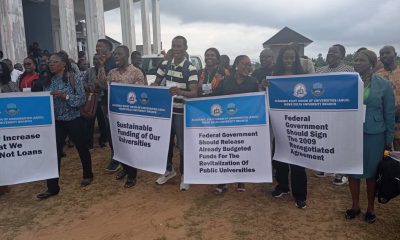
ASUU-NDU protest against FG loans, unpaid salaries,Non-Implementation of agreements …..says loans is generational slavery
-
 Business & Economy1 year ago
PC-NCG Issues Disclaimer on Purported Nigerian Coast Guard National Orientation Exercise In Anambra State
-
 Entertainment2 years ago
Jubilation galore as Parishioners of CKC Kurudu celebrate their cultural heritage ….FG should exploit our Cultural heritage to unite Nigerians-Rev Fr Dim
-

 Sports9 months ago
Bayelsa-born ex-football star’s son, Opuama donates spike shoes to Athletics Association
-

 General News2 years ago
Reps hold public hearing on FMC Ugwuaji Awkunanaw
-
 General News2 years ago
Celebration galore as UDA Successfully Elected New Exco ……I will digitalize processes that will raise UDA to greater height -Comr. Okejiri
-
 Law & Crime1 year ago
Legal practitioner raises alarm over threat to his life by CSP Muhammed Abdulkareem