
Opinion
NDLEA under Marwa: Five years of drug war milestones and the case for funding autonomy

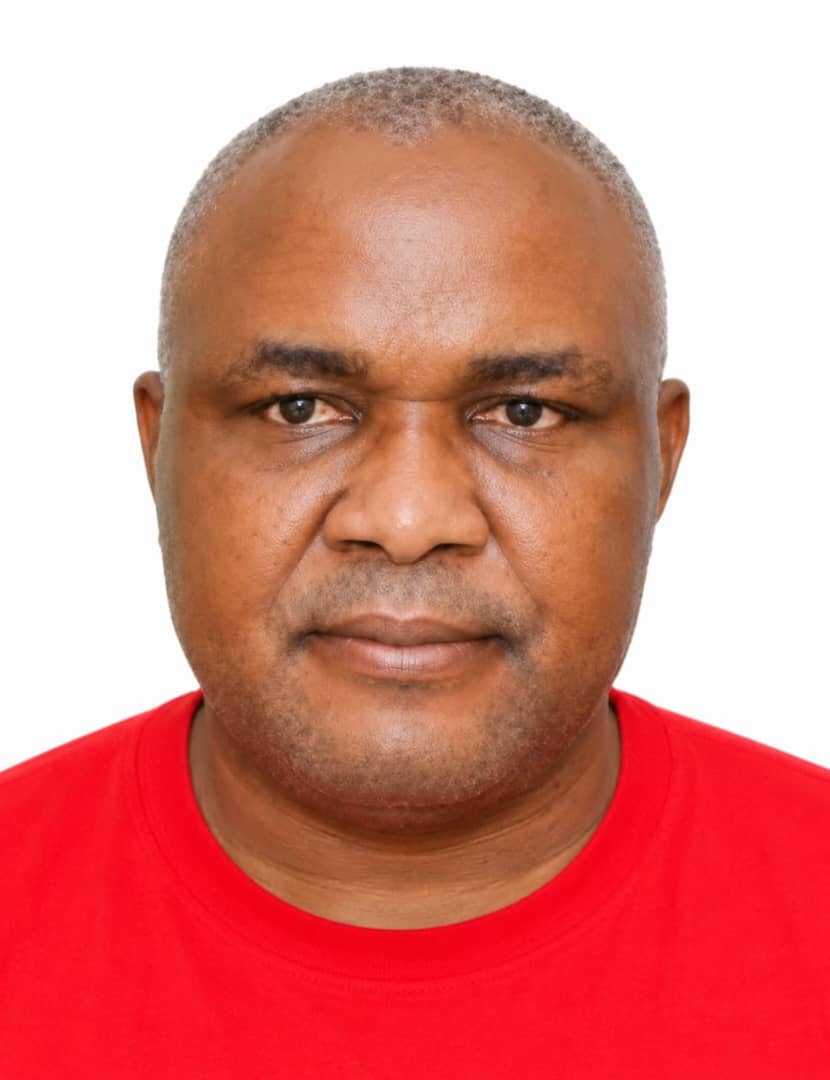
By Emmanuel Nnadozie Onwubiko
Nigeria’s war against illicit drugs has entered a more aggressive phase, with the National Drug Law Enforcement Agency (NDLEA) taking the battle to drug barons, international trafficking syndicates, clandestine laboratories and criminal financiers.
Since Brigadier-General Mohamed Buba Marwa (retd.) assumed leadership of the agency in January 2021, NDLEA has intensified intelligence-led operations, dismantled major drug networks, expanded arrests and prosecutions, and strengthened drug abuse prevention, counselling and rehabilitation programmes.
Since Brigadier-General Mohamed Buba Marwa (retd.) assumed leadership of the agency in January 2021, NDLEA has recorded significant operational milestones, strengthened intelligence-led enforcement, expanded drug abuse prevention and rehabilitation programmes, and increased its engagement with international law enforcement partners.
Yet the scale of these achievements raises an equally important question: how much more could the agency accomplish if its operational capacity, financial resources and institutional independence were strengthened to match the enormity of the drug threat confronting Nigeria?
The answer is important because drug trafficking is no longer simply a law enforcement problem. It is a national security challenge, a public health crisis, a threat to young people, a source of criminal financing and a danger to the integrity of communities, borders and institutions.
The NDLEA’s performance under Marwa has demonstrated that determined leadership, intelligence, professionalism and inter-agency cooperation can produce results. The next challenge is to ensure that the institution is not constrained by inadequate funding, infrastructural deficiencies or bureaucratic limitations as it confronts increasingly sophisticated criminal networks.
A record of arrests, convictions and seizures
One of the most significant milestones of the Marwa-led NDLEA is the scale of enforcement activity recorded within five years.
According to figures released by the agency in January 2026, NDLEA arrested 77,792 drug offenders between 2021 and 2025, including 128 identified drug barons, secured 14,225 convictions and seized 14,847,486.34 kilogrammes of assorted illicit substances.
The figures represent a considerable escalation in the agency’s offensive against drug trafficking and reflect a strategy that increasingly targets major operators rather than concentrating solely on couriers and low-level offenders.
The arrest of drug barons is particularly significant because trafficking networks are often sustained by financiers, suppliers, logistics operators, warehouse owners, distributors and international collaborators who remain insulated from the consequences of the trade.
By pursuing suspects believed to occupy influential positions within trafficking chains, NDLEA has sought to disrupt the organisational structures that sustain the illicit drug economy.
The convictions also indicate that enforcement operations are increasingly being translated into judicial outcomes, although the agency must continue to strengthen prosecution, evidence management and inter-agency collaboration to ensure that arrests produce lasting consequences.
These milestones demonstrate that Nigeria’s anti-drug campaign has moved beyond sporadic interdictions towards a sustained nationwide offensive against drug production, trafficking and distribution.
Taking the fight to international cartels
Perhaps one of the most compelling achievements of the NDLEA under Marwa has been its increasingly sophisticated engagement with international drug networks.
Nigeria’s geographical position, commercial activities, aviation connections, maritime traffic and porous land borders make the country vulnerable to trafficking operations involving multiple jurisdictions.
The agency’s operations have increasingly reflected the understanding that international drug cartels cannot be defeated by routine checkpoint searches or isolated seizures. They require intelligence gathering, surveillance, coordinated raids, forensic investigation, international cooperation and the ability to identify the individuals and organisations controlling the criminal trade.
In May 2026, NDLEA announced the dismantling of a Nigerian-Mexican methamphetamine production syndicate following coordinated operations in Ogun and Lagos states.
The operation led to the shutdown of an industrial-scale clandestine laboratory described by the agency as the largest methamphetamine laboratory discovered in Nigeria, alongside the arrest of the alleged cartel kingpin, three Mexican technical experts and six other local collaborators.
The operation demonstrated the capacity of Nigerian investigators to penetrate sophisticated production networks involving foreign expertise, local collaborators and concealed manufacturing facilities.
The significance of such operations goes beyond the quantity of drugs recovered. The destruction of a production facility, arrest of its operators and disruption of its supply chain potentially prevent the criminal organisation from continuing production, recruiting collaborators and distributing its products.
It also sends a message to international criminal organisations that Nigeria is not an uncontested operating environment for their illicit enterprises.
The agency’s achievements in dismantling such networks should therefore be viewed as strategic security successes, particularly at a time when drug trafficking increasingly intersects with money laundering, cybercrime, organised violence and other criminal activities.
From drug seizures to financial warfare
Another important shift in NDLEA’s strategy under Marwa has been the growing emphasis on dismantling the financial foundations of drug trafficking.
For years, the traditional measure of drug enforcement success was largely determined by the volume of narcotics seized and the number of suspects arrested. But criminal organisations are capable of replacing confiscated consignments and recruiting new couriers if their financial structures, assets and sources of funding remain intact.
The NDLEA has increasingly recognised that the war against drug barons cannot be won by arresting couriers while allowing the financiers and beneficiaries to retain their wealth.
This explains the agency’s growing emphasis on asset tracing, forfeiture, financial investigations and the recovery of proceeds of crime.
Marwa has repeatedly argued that drug trafficking must become a high-risk, low-profit enterprise. This approach requires investigators to follow the money, identify beneficial owners, uncover hidden assets and ensure that criminal wealth does not continue to finance trafficking operations.
The agency’s efforts to strengthen financial investigation capabilities, including training investigators in asset recovery and tracing proceeds of narcotics trafficking, represent an important evolution in Nigeria’s drug control strategy.
The objective should be to dismantle criminal enterprises from within by destroying their economic capacity, making it increasingly difficult for traffickers to finance production, recruit operatives, acquire equipment, bribe officials or establish new routes.
Drug prevention and rehabilitation
A credible drug control strategy cannot be built exclusively around arrests, raids and seizures. It must also address the demand that sustains trafficking.
NDLEA has expanded its War Against Drug Abuse campaign through sensitisation programmes in schools, workplaces, motor parks, religious institutions and communities.
The agency has also strengthened counselling, treatment and rehabilitation interventions for drug users, reflecting the understanding that substance abuse is not merely a criminal justice issue but also a public health challenge requiring professional care.
In its five-year performance report, NDLEA said 32,442 drug users received professional intervention, while 13,735 sensitisation activities were conducted nationwide.
These interventions are important because drug abuse can undermine educational attainment, family stability, productivity, mental wellbeing and the prospects of young people whose futures may be derailed by addiction.
The agency’s prevention and rehabilitation programmes should therefore be sustained and expanded, particularly in communities where substance abuse is increasingly associated with social vulnerability, unemployment, crime and insecurity.
Drug users requiring treatment must not be abandoned to the consequences of addiction. Nigeria needs a stronger network of treatment facilities, trained professionals, community-based support systems and reintegration programmes capable of helping recovering users rebuild their lives.
Institutional reforms and personnel development
The operational achievements of the NDLEA have also been accompanied by efforts to strengthen its personnel, internal structures and professional capacity.
Drug enforcement requires officers who are adequately trained, equipped, motivated and protected. Personnel operating in remote communities, border locations, airports, seaports, warehouses, clandestine laboratories and dangerous trafficking corridors face substantial risks.
Improved training, recruitment, promotion, welfare, operational equipment and accommodation are therefore not peripheral issues. They directly affect the agency’s effectiveness.
The United States International Narcotics Control Strategy Report has previously acknowledged that improved leadership, international cooperation and personnel development contributed to stronger drug interdiction capabilities in Nigeria.
The NDLEA has also pursued improvements in forensic capacity, surveillance, intelligence gathering, specialised operations and technology-driven investigations.
However, these investments require continuity. Training cannot be sustained without resources, equipment cannot be maintained without funding, and personnel cannot be expected to deliver exceptional operational results indefinitely under inadequate working conditions.
The welfare of officers is itself a strategic investment in the national drug war.
Why funding autonomy is now imperative
The NDLEA’s achievements have made a compelling case for stronger and more predictable funding.
The agency is expected to operate across Nigeria’s airports, seaports, land borders, urban centres, rural communities, forests and other difficult terrains. It must intercept drugs, investigate trafficking networks, prosecute offenders, conduct intelligence operations, collaborate with foreign agencies, destroy illicit plantations, provide prevention programmes and support treatment and rehabilitation.
These responsibilities require specialised vehicles, surveillance technology, laboratory equipment, forensic facilities, secure communications, intelligence infrastructure, operational logistics, personnel training and adequate welfare provisions.
They also require the ability to respond rapidly when credible intelligence identifies a major trafficking operation.
A drug cartel does not wait for the next budget cycle before moving its consignment, relocating its laboratory, changing its route or recruiting new operatives. The agency responsible for disrupting these activities must therefore possess sufficient operational flexibility to respond to threats in real time.
Marwa has previously acknowledged funding constraints affecting the implementation of the National Drug Control Master Plan. In January 2025, while defending the agency’s budget, he sought additional support for capital expenditure and drew attention to infrastructure challenges, including the need for barracks and improved accommodation for personnel.
The 2021–2025 National Drug Control Master Plan evaluation also identified inadequate domestic resources as a constraint on full implementation, with external technical and financial assistance helping to bridge some funding gaps.
Such dependence on supplementary support is not a sustainable foundation for an agency confronting a permanent and evolving national security threat.
The case for funding autonomy should therefore be treated as a matter of institutional capacity, not a request for unchecked spending powers.
A stronger funding framework could provide NDLEA with predictable operational resources, protected allocations for critical programmes, more reliable capital funding and greater flexibility to deploy resources against emerging threats.
It should also be accompanied by transparent reporting, independent audits, legislative oversight, performance benchmarks and strict accountability for expenditure.
Financial autonomy must never mean the absence of scrutiny. Rather, it should mean that the agency can plan and execute legitimate operations efficiently without being unnecessarily constrained by administrative delays, while remaining accountable to Nigerians.
A stronger NDLEA for a more dangerous drug economy
Nigeria’s drug problem is evolving. Traffickers are exploiting new routes, changing substances, adopting sophisticated concealment methods and increasingly operating through international networks.
Synthetic drugs, clandestine laboratories, precursor chemicals, digital communications, financial concealment and transnational criminal partnerships require a law enforcement response that is equally sophisticated.
The next phase of NDLEA’s work must involve deeper intelligence cooperation, stronger forensic laboratories, improved border surveillance, specialised financial investigators, expanded rehabilitation services and enhanced technological capacity.
The agency must also strengthen collaboration with the judiciary, prosecutors, customs authorities, immigration services, the police, financial intelligence institutions, health agencies and international partners.
These are not optional investments. They are necessary tools for a drug enforcement institution operating against criminal organisations with substantial financial resources and international connections.
The next milestone must be institutional strength
The achievements recorded under Marwa offer Nigeria an opportunity to consolidate its drug control strategy and build an institution capable of sustaining the gains beyond the tenure of any individual leadership.
The 2026–2030 National Drug Control Master Plan provides a framework for the next phase, but its success will depend heavily on political commitment, funding, implementation and coordination.
Nigeria should not celebrate the dismantling of drug cartels while leaving the institution responsible for confronting them struggling for the resources required to sustain its operations.
The NDLEA has demonstrated that when leadership is focused, personnel are motivated and intelligence is properly deployed, significant results are possible. The challenge now is to institutionalise those gains through stronger funding arrangements, modern infrastructure, professional development and operational independence backed by accountability.
The fight against illicit drugs is a long-term national security undertaking. It cannot be won through temporary enthusiasm, occasional budgetary support or episodic interventions.
If Nigeria expects the NDLEA to dismantle global drug cartels, disrupt criminal finances, protect its borders, safeguard its young people and reduce the devastating consequences of substance abuse, then the country must equip the agency to do so.
The milestones achieved under Marwa should not merely be celebrated as a record of past successes. They should become the foundation for a stronger, better-funded and more capable NDLEA—one able to confront the drug cartels of today and anticipate the threats of tomorrow.
The central message is: Marwa’s NDLEA has demonstrated what an adequately driven drug enforcement institution can achieve; Nigeria must now demonstrate that it is willing to adequately resource the institution to sustain and surpass those achievements.
EMMANUEL NNADOZIE ONWUBIKO is the founder of HUMAN RIGHTS WRITERS ASSOCIATION OF NIGERIA and was a NATIONAL COMMISSIONER OF THE NIGERIAN NATIONAL HUMAN RIGHTS COMMISSION.
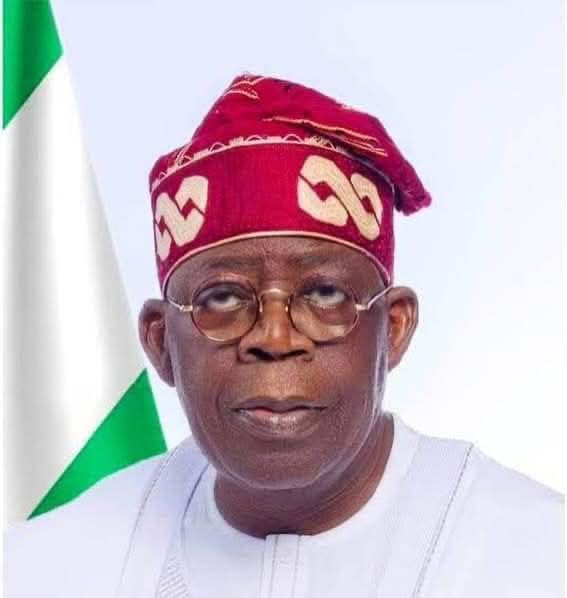
By Mallam Bolaji Abdullahi
I have tremendous respect for H.E. Babatunde Fashola. But I must respectfully disagree with him in his defence of President Tinubu’s reckless and insensitive removal of fuel subsidy during his Channels TV interview on Tuesday, 17th November.
As Governor Fashola would find, it is difficult to defend the Tinubu administration without feeling one’s credibility melting under the heat of the harsh reality that millions of Nigerians have struggled with every day for the last three years. It is like a piece of soap that diminishes itself each time it attempts to wash others clean.
Nevertheless, I would like to thank Governor Fashola for his remarkable candour. It is not every day that a man who sat in the Federal Executive Council for eight years comes forward to reveal, with such astonishing frankness, just how little of President Tinubu’s economic policy has been conceived and implemented in the interest of Nigeria and Nigerians.
In his eagerness to defend President Tinubu’s subsidy removal, H.E. Fashola may have revealed considerably more than he intended.
First, he told us that in removing fuel subsidy, President Tinubu was only acting on the directive of the World Bank! This has led millions of Nigerians to ask: Who is really running Nigeria? The President of Nigeria in Abuja or the World Bank in Washington, DC? Since when did the economic recommendations of an international financial institution become instructions that a sovereign government must obey, regardless of the suffering they could inflict on its citizens?
The World Bank has misled countries before, whether deliberately or inadvertently. Development literature is replete with such instances. Its recommendations are also ideological. This is why serious-minded countries listen to such institutions but ultimately do what they consider best for their countries and their people.
Secondly, he said President Tinubu was constrained by the Petroleum Industry Act (PIA), which prohibits government interference with the market prices of petroleum products. Pardon my biblical inference, but the natural question one must ask is this: Are laws made for Nigerians, or are Nigerians made for the laws?
As a legislative proposal, the PIA probably set a record as one of the longest-pending bills before its eventual passage into law in 2021. Perhaps it was because some of its provisions were thought to be injurious to the well-being of Nigerians that it was kept in abeyance for so long. Laws are made to promote the well-being of the people. Therefore, any law that detracts from this objective and, instead of improving their well-being, actually compounds their misery, must be considered repugnant to society and must be reviewed.
But I have read the PIA. And I think Fashola and others who have tried to defend the Tinubu government on the fuel subsidy removal are only using the law as a pretext for the reckless action or, as we now know, thanks to Fashola, their willingness to abdicate their patriotic duty in order to carry out the directives of their masters in Washington, whose agenda may actually be at variance with the overall national interest of Nigeria.
What they conveniently ignore is that the same PIA makes provision for the Domestic Crude Supply Obligation (DCSO), which provides a window for implementing the very idea of production subsidy that the ADC and our presidential candidate, Alhaji Atiku Abubakar, are proposing.
The question then is: Why has this administration failed to enforce that aspect of the law and use it as a lever to support local refineries so they can deliver cheaper fuel to Nigerians?
Governor Fashola also spoke about the economic crisis in which the Buhari administration had found itself, reminding us that the administration was spending nearly 90% of its revenue servicing debt. This, he said, made fuel subsidy removal inevitable if the economy was to survive. Fair enough. But the inescapable question is: What has changed in that regard since Tinubu removed the subsidy?
According to the Federal Government’s own budget implementation figures, Nigeria spent N4.63 trillion servicing debt in the first quarter of 2026, against revenue of N5.08 trillion. That is approximately 91% of government revenue. Meanwhile, our total public debt has risen from N87.38 trillion in June 2023 to N166.79 trillion in June 2026. Budget implementation remains chaotic, with capital releases hovering around 20% to 24%.
We must therefore ask: After more than three years of painful sacrifice, what exactly have Nigerians gained from this fuel subsidy removal?
I heard Governor Fashola mention prompt payment of salaries and NELFUND. So much for so little, I must say. How can we possibly justify the economic misery of 66% of the population (144 million people) with salary payments to just 1.5% of the entire population? Especially given that even the new minimum wage of N70,000 can no longer guarantee the minimum basic necessities of fuel, food and transportation, no thanks to Tinubu’s twin whammy of subsidy removal and currency devaluation. Granted, NELFUND has benefited some people, even though I still see it as more of a political gambit than a well-thought-out higher education policy. But does it justify this debilitating suffering that has made life a living hell for the majority of citizens?
And then there is Fashola’s big question: Where will the money come from? But this is the wrong question to ask in light of the mindless profligacy that we have seen advertised in the last three years.
The right question is: Why does this government always seem able to find money for its own comfort and luxuries, buying new yachts and jets for the presidential fleet, but cannot find the money to make life a little better for the people?
How does this government find money to expand the convoys of public officials, and for the First Lady and the First Son to throw money around and buy luxury vehicles for political supporters, but never enough to make life more affordable for ordinary Nigerians?
How come it is only when we talk about making life better for Nigerians that government officials ask where the money will come from? There is money for expensive official vehicles, presidential facilities and an ever-expanding cost of governance. But when Nigerians demand affordable petrol, transportation and food, suddenly, we are asked: Where will the money come from?
We reject the idea that economic management must always begin with taking more from those who have the least. As a party, the ADC and our presidential candidate believe that government must always begin by cutting waste, reducing its own excesses and putting the welfare of Nigerians first.
The difference is simple: This government is asking Nigerians to sacrifice for the comfort of government. The ADC believes that government should sacrifice for the comfort of Nigerians.
And to Fashola’s argument about the World Bank, let us say this: International institutions are entitled to offer recommendations. They are not elected to govern Nigeria. The President is.
President Tinubu was elected to serve Nigerians, not the World Bank. If his policies have failed Nigerians, he must answer for those failures. He cannot claim the authority to govern and then outsource responsibility for the consequences.
– Mallam Bolaji Abdullahi is the National Publicity Secretary of the African Democratic Congress (ADC). He writes from Abuja.
https://x.com/bolajiadc/status/2123680780102648058?a=VmWCr8Tz4b2z5yp1rU4&s=46
By Emmanuel Nnadozie Onwubiko
There is no doubt that the persistent weaponisation of poverty by Nigeria’s political class over the past few decades, particularly since 2015, is one of the fundamental reasons for the steady erosion of electoral credibility in the country. A government elected by the people of Nigeria ought, first and foremost, to confront the debilitating mass hunger, extreme poverty and primitive deprivation confronting the overwhelming majority of its citizens.
The essence and fundamental responsibility of any government should be the eradication, rather than the mere alleviation, of poverty; the guarantee of national and food security; and the constitutional protection and promotion of the welfare and well-being of the people.
The Preamble to the Constitution of the Federal Republic of Nigeria recognises the sovereignty of the people, from whom government derives its legitimacy and authority. Furthermore, Section 14 of the Constitution unequivocally establishes that the security and welfare of the people shall be the primary purpose of government. It also guarantees the participation of the people in their government.
The uncomfortable truth, however, is that since the restoration of civilian democratic governance in 1999, following the annulment of the historic June 12, 1993 presidential election won by the late Chief Moshood Kashimawo Olawale Abiola of the Social Democratic Party, successive administrations have, in many respects, pursued economic policies that have produced mass poverty rather than widespread prosperity.
It is therefore logical to argue that the continued weaponisation of poverty undermines the credibility and integrity of elections. Given the alarming poverty statistics and the worsening economic circumstances confronting millions of Nigerians, the 2027 presidential election risks being severely compromised by the economic desperation of voters who may be blackmailed into surrendering their democratic rights in exchange for immediate relief, perhaps a bag of rice and a few thousand naira.
Poverty does not merely deprive citizens of their purchasing power; it also threatens their human dignity, which is protected under Chapter IV of the Nigerian Constitution. Consequently, economically vulnerable voters who ought to exercise their democratic rights through protest votes against an anti-poor government may instead find themselves susceptible to electoral inducements, intimidation and even threats of physical violence.
The political circumstances are particularly troubling because the incumbent administration has access to the enormous resources of the Nigerian state. In a political environment where poverty has become an instrument of electoral manipulation, the ruling party enjoys a considerable structural advantage over opposition parties. It is, proverbially, the government that possesses both the knife and the yam. Through access to public resources, political patronage and state institutions, the party in power may possess greater capacity to outspend its opponents and influence electoral outcomes.
This is precisely why this writer believes that widespread poverty could rob the January 16 presidential poll of the credibility and integrity it desperately requires.
One of the leading voices in Nigeria’s organised civil society has previously attributed the country’s unenviable poverty status to leadership failure. It can also be argued that the failure of the Federal Government to demonstrate exemplary leadership, establish sound governance standards and ensure accountability among cabinet-level officials and key economic policy implementers has contributed significantly to the widespread poverty confronting millions of Nigerians.
Let us briefly examine what leadership failure has unleashed in Nigerian homes and public spaces, as explained by renowned human rights activist and development expert, Dr Otive Igbuzor.
Leadership failure responsible for Nigeria’s poverty capital rating
The African Centre for Leadership, Strategy and Development (Centre LSD) blamed leadership failure for Nigeria’s emergence as the world’s poverty capital, with approximately 87 million people living in extreme poverty, compared with India’s 73 million, according to the World Poverty Clock.
The founding Executive Director of Centre LSD, Dr Otive Igbuzor, made this observation during the organisation’s 22nd graduation ceremony, held in conjunction with the Konrad Adenauer Foundation in Abuja.
He described Nigeria’s 2018 ranking as the world’s poverty capital, ahead of India and China, as particularly unfortunate, given that both countries have significantly larger populations.
Igbuzor called on Nigerian authorities to learn from the experiences of India and China by adopting inclusive and pro-poor economic growth policies, implementing fiscal measures that promote wealth redistribution, generating employment, improving public service delivery and strengthening social protection mechanisms.
“It is important to note that the population of Nigeria in 2018 was estimated to be about 195.9 million, which is about 15 per cent of the population of India (1.353 billion) and 14 per cent of China (1.393 billion), yet it is competing with China and India in hosting the largest number of poor people in the world,” he said.
He maintained that Nigeria and Africa were at a crossroads because of leadership failure. Despite the country’s abundant human and natural resources, poverty, unemployment and inequality remained widespread.
He also observed the paradox that Nigerians continue to excel internationally in medicine, academia, technology and business while their home country struggles with poor governance and economic underperformance arising from ineffective political leadership.
Igbuzor explained that the desire to address this leadership deficit informed the establishment of the Centre LSD Leadership School, which seeks to develop visionary, strategic and transformative leaders across Nigeria and the African continent through a pro bono leadership development initiative.
He further stated:
“This is because we know that the progress, development and fortunes of organisations and nations depend on good leadership. Indeed, we were conscious of the fact that everything rises and falls on leadership.
“Leadership is one of the most important variables that affect the performance of any organisation, institution or nation. Study after study has shown that superior financial and organisational performance, as well as other forms of success, are linked to effective leadership. Scholars have opined that the success or failure of organisations and nations depends on leadership excellence and not managerial acumen.
“Across the world, there is evidence that inclusive economic growth and development are not products of chance—they are driven by leadership. Leaders set direction, create alignment, and inspire commitment. Nations that are prosperous today are those that had leaders who provided a clear vision, built strong institutions, and mobilised citizens towards productive engagement.”
The National Bureau of Statistics (NBS) has also reported that more than 130 million Nigerians experience multidimensional poverty.
It must be emphasised that Dr Igbuzor’s position is not new. The globally acclaimed novelist, writer and broadcaster, the late Professor Chinua Achebe, made a similar argument in his celebrated 1983 book, The Trouble with Nigeria. Achebe identified the absence of good leadership as the principal cause of Nigeria’s persistent underdevelopment, while also recognising the importance of responsible followership.
I readily borrow from Professor Achebe’s well-grounded political analysis to categorically assert that the failure of President Bola Ahmed Tinubu’s administration to confront poverty effectively, coupled with economic policies that have further impoverished millions of Nigerians, represents one of the most serious threats to the credibility of the forthcoming presidential election.
Rather than prioritising policies that restore purchasing power, generate employment and alleviate the suffering of ordinary citizens, the country continues to grapple with an alarming cost-of-living crisis. The weaponisation of poverty, whether deliberate or through the consequences of failed economic policies, is becoming an increasingly dangerous feature of Nigeria’s political environment.
Rising poverty could undermine credibility of 2027 elections: HURIWA warns
The Human Rights Writers Association of Nigeria (HURIWA), in January this year, warned that deepening poverty across the country could threaten the credibility of the 2027 general elections. The organisation consequently urged governments at all levels to prioritise economic policies capable of improving living standards and reducing hardship.
In a press statement issued on Sunday and signed by its National Coordinator, Comrade Emmanuel Onwubiko, the organisation said Nigeria’s political leadership had yet to demonstrate sufficient commitment to what it described as “pro-poor, pro-people and pro-growth” economic policies capable of lifting millions of Nigerians out of poverty.
“HURIWA is worried that economic choices being made today are not sufficiently focused on reducing poverty or strengthening the purchasing power of ordinary Nigerians. When large segments of the population are economically vulnerable, elections themselves risk being distorted.”
The organisation alleged that public resources and economic opportunities were increasingly concentrated among political allies and insiders, a development it said could widen inequality and undermine public confidence in governance.
HURIWA stated:
“The pattern we observe is one where political appointments and access to lucrative contracts appear to favour a narrow circle of political associates. This approach does little to address mass unemployment or rising living costs faced by the majority.”
The organisation also expressed concern over recent changes to campaign finance thresholds approved by the National Assembly, warning that increased campaign spending limits could make it more difficult for candidates without substantial financial backing to compete fairly.
“Raising campaign spending limits may unintentionally entrench the influence of money in politics and limit opportunities for credible candidates who lack wealthy godfathers,” the organisation said.
HURIWA linked its concerns to economic forecasts, including projections contained in the Nigeria Economic Outlook 2026 report published by PricewaterhouseCoopers (PwC).
According to the organisation, the report suggests that poverty levels could rise further if prevailing economic trends persist.
The human rights organisation expressed alarm over projections indicating that a significant proportion of Nigerians could remain trapped in poverty in 2026, describing the outlook as particularly disturbing as the country approaches another election cycle.
HURIWA also referenced warnings from international development partners, including the World Bank and the World Food Programme (WFP), concerning the scale of economic hardship and food insecurity in Nigeria and other parts of West and Central Africa.
“These reports consistently highlight weak income growth, high inflation and rising costs of living as major pressures on households,” HURIWA said. “Even where inflation shows signs of easing, essential expenses such as food, energy and transportation remain beyond the reach of many families.”
Quoting the PwC outlook, the organisation argued that most Nigerians were unlikely to experience sufficient income growth in the short term to offset rising prices. It further observed that structural challenges, including energy costs, logistics bottlenecks and exchange-rate pressures, continued to undermine household purchasing power.
HURIWA warned that widespread poverty could make voters increasingly vulnerable to electoral inducements, thereby threatening the integrity of democratic choice.
“When citizens are hungry and desperate, the integrity of the ballot is put at risk. Elections should be contests of ideas and performance, not of who can offer short-term relief to struggling voters.”
The organisation criticised what it described as the growing reliance on short-term palliatives and so-called “stomach infrastructure” by some political actors, arguing that such interventions cannot substitute for sustainable development.
“Temporary handouts cannot replace long-term investments in jobs, education, healthcare and social protection,” HURIWA said.
In its appeal for urgent action ahead of the 2027 elections, the organisation urged the Federal and state governments to reconsider their economic strategies and prioritise inclusive growth and poverty reduction.
HURIWA stressed that tackling poverty was not merely an economic imperative but also an essential requirement for protecting Nigeria’s democracy.
The Guardian newspaper also published a feature article highlighting how the escalating cost-of-living crisis is forcing Nigerian families to make increasingly difficult choices about food consumption. I dare say that the weaponisation of poverty has intensified, and the threats to the credibility of forthcoming elections have consequently become even more alarming.
Nigerian families stretch meals as protein prices rise
In a feature report, The Guardian examined how rising food prices are changing the dietary habits of Nigerian families, particularly their ability to afford nutritious sources of protein.
For some Nigerian households, the rising cost of food is not only changing what they eat but also how frequently they can afford nutritious meals. Chicken, fish, eggs and meat, once regular features of family diets, are increasingly competing with other essential expenses, exposing the connection between agricultural production costs and consumers’ ability to eat well.
In Egbeda, Lagos State, the adjustment has become part of everyday life for Funke Iyamu, a 41-year-old trader and mother of three. She explained that a chicken her family might previously have consumed within a week must now be divided into smaller portions to last considerably longer.
“Before, we used to buy chicken every Sunday. Now, if I buy one chicken, we have to cut it into 12 pieces to last two weeks,” she said.
Her experience illustrates a wider economic question: as the cost of producing and distributing animal protein rises, how much additional pressure can Nigerian households absorb before nutritious food becomes increasingly inaccessible?
The National Bureau of Statistics (NBS) reported that the average cost of maintaining a healthy diet in Nigeria reached N1,589 per adult per day in April 2026, representing a 4.74 per cent increase from N1,518 in April 2025.
Animal-source foods accounted for approximately 40 per cent of the total cost of the recommended dietary basket while providing about 13 per cent of its calories, making them the most expensive food group to satisfy within the recommended diet.
Agricultural development expert Olakunlehin John Oladapo, speaking to The Guardian, explained that rising production costs had left farmers with three difficult options: continue producing at a loss, abandon their farms or reduce their production capacity.
“Farmers have only three options: to continue production at a loss, to abandon the farm or to reduce the capacity of what is producing,” he said.
Oladapo identified animal feed as a major cost driver in livestock production, estimating that it accounts for between 70 and 80 per cent of production expenses. He attributed the pressure to rising maize and soybean meal prices, insufficient domestic production, foreign exchange constraints affecting imports and competition between human and livestock consumption of certain agricultural commodities.
The cost of milling animal feed, particularly where operators depend on generators, further increases production expenses. Other constraints include expensive financing, inadequate veterinary and agricultural extension services, poor-quality breeding stock and limited access to appropriate production technologies.
According to Oladapo, these pressures extend beyond individual farms. Reduced production affects feed manufacturers, transporters and farm workers, while farm closures can disrupt the supply of animal-source foods to markets.
Transportation losses compound the problem. Oladapo recounted incidents involving livestock transported over long distances, including one journey during which he said more than 80 per cent of day-old chicks died following prolonged traffic delays.
Such losses, where they occur, increase the financial burden on producers and traders, although the extent to which they affect retail prices depends on other market conditions.
Investigations also showed that the problem extends to the movement and preservation of food after production. Inadequate cold-storage facilities, unreliable electricity and inefficient distribution systems contribute to food losses, particularly in the case of perishable products. These additional expenses ultimately increase the cost of delivering food to consumers.
The implications are profound. When families can no longer afford adequate protein, the consequences extend beyond household budgets to public health, childhood development, productivity and the general well-being of the population.
This is the economic reality confronting millions of Nigerians as the country approaches another critical electoral cycle.
Conclusion: Poverty, political manipulation and the credibility of elections
As I reflect on the relationship between escalating poverty and the credibility of elections, my mind turns to the recent efforts of United States President Donald John Trump to promote a new financial initiative for American children through the Trump Accounts programme.
The initiative has attracted considerable attention because of the government’s proposed financial contributions to accounts established for eligible American children. Around July 6, President Trump announced that initial payments had commenced, with the government reportedly depositing $1,000 into more than 500,000 Trump Accounts.
Reuters reported that the programme was designed to give newborn Americans an opportunity to build wealth from an early age through investments in the stock market.
The report also highlighted the growing importance of the cost-of-living crisis as an electoral issue in the United States.
COST OF LIVING BECOMES AN ELECTION ISSUE
The rising cost of living has become a major concern for American voters heading into the November midterm elections.
Supporters of the Trump Accounts initiative argue that it will encourage long-term investment and financial literacy. Critics, however, contend that families with limited disposable income may struggle to make additional contributions and fully benefit from the programme.
The initiative provides an additional savings vehicle alongside existing tax-advantaged college savings and retirement accounts.
Contributions are automatically invested in a low-cost index fund designed to support long-term growth. Account holders gain control of their funds upon reaching the age of 18, when they can either withdraw the money or continue investing, subject to the applicable tax provisions.
President Trump has argued that the programme will provide children born without inherited wealth with an opportunity to acquire meaningful financial assets.
Several American companies have also pledged support through employer contributions and additional seed funding.
Participating companies reportedly include the payment giant Visa, technology company Dell and telecommunications firm Comcast. Semiconductor manufacturer Micron has pledged $250 million in support of the programme.
Republican Senator Ted Cruz of Texas, who participated in the programme’s launch, described its broader ambition in the following words:
“Trump Accounts are about making every child and every American a capitalist. Every one of our kids is now going to be an owner of the biggest producers in our country.”
The American experience provides an interesting point of comparison with Nigeria. However, the two countries operate within different institutional and political environments.
The United States has relatively stronger institutional safeguards, established democratic traditions and mechanisms of accountability that can provide checks against the abuse of public resources for partisan political purposes. Although American politics is certainly not immune to financial inducements, political patronage or electoral manipulation, the institutional environment provides avenues for scrutiny and accountability.
The Trump Accounts initiative, whatever its political implications, is a publicly announced financial programme whose merits and limitations can be debated. It should not automatically be equated with direct electoral bribery.
The fundamental difference I wish to emphasise is that a government should be judged by whether its policies sustainably improve the economic circumstances of its citizens, rather than whether it can offer temporary financial relief to secure political loyalty.
The outcome of the American midterm elections also demonstrates that voters can hold political parties accountable for economic conditions and the performance of their governments. However, the precise electoral consequences of the cost-of-living crisis must be distinguished from other factors influencing voting behaviour.
Nigeria must therefore rise above a political culture in which economic deprivation becomes an instrument for securing electoral loyalty.
Nigerians must collectively reject the mortgaging of their consciences in exchange for a few naira notes to elect or retain a government that has failed to deliver economic prosperity, social protection and responsible governance.
Consider the staggering economic implications of the cost-of-living crisis. At an estimated N2,000 per meal, multiplied by three meals daily, an individual would require approximately N6,000 every day to meet that basic food expenditure. Over four years, the amount would exceed N8.7 million, not N50 million, even before accounting for inflation and other household expenses.
This simple calculation demonstrates the enormity of the economic burden confronting ordinary Nigerians.
Why, then, should Nigerians who are victims of economic deprivation surrender their democratic rights for N50,000 or any other temporary electoral inducement allegedly being offered by political actors?
Why should a hungry electorate continue to reward political leadership that has failed to create the conditions for economic dignity, employment, food security and sustainable prosperity?
The forthcoming presidential election should not become another opportunity for the political class to exploit the desperation of the poor. It should instead be an opportunity for Nigerians to demand accountability, evaluate competing policy proposals and elect leaders who genuinely understand that governance is fundamentally about improving the lives of citizens.
The right to vote is not a commodity. It is a constitutional entitlement and a sacred democratic responsibility.
Nigerians must therefore reject electoral inducements, resist intimidation and refuse to sell their future for temporary relief. They must insist on a government that will confront hunger, poverty, unemployment and deprivation through sustainable economic policies rather than political propaganda and periodic handouts.
Ultimately, the credibility of the 2027 presidential election will depend not only on the conduct of the electoral umpire but also on the economic freedom, political independence and democratic choices of the Nigerian electorate.
A democracy in which citizens are too impoverished to exercise their electoral rights freely is a democracy in danger.
And a government that presides over widespread poverty while exploiting the desperation of the poor for political advantage cannot reasonably claim to have secured the genuine consent of the people.
EMMANUEL NNADOZIE ONWUBIKO is the Founder of the Human Rights Writers Association of Nigeria (HURIWA) and a former National Commissioner of the National Human Rights Commission of Nigeria.

NDLEA under Marwa: Five years of drug war milestones and the case for funding autonomy
By Emmanuel Nnadozie Onwubiko Nigeria’s war against illicit drugs has entered a more aggressive phase, with the National Drug Law...

HURIWA Faults Proposed Child Protection Agency, Urges Tinubu to Strengthen NHRC; NAPTIP Instead
By George Mgbeleke The Human Rights Writers Association of Nigeria (HURIWA) has questioned the proposed establishment of a National Child...

Kano Supreme Court Revelation: “Resign Now Or Be Impeached ” ADC Tells Tinubu
By George Mgbeleke The African Democratic Congress (ADC) has called on President Bola Ahmed Tinubu to immediately resign from office...

2027 Anambra Budget:Soludo Proposes N893.4bn tagged Solution 2.0 to State Assembly
By Ben Nwankwo,Awka Anambra State Governor, Prof. Chukwuma Soludo on Tuesday presented the 2027 budget proposal , totaling ₦893,435,059,830 (eight...
HURIWA Accuses Tinubu of Plotting One-Party State -Warns Against Using Punlic Wealth To Fund 2027 Polls By George Mgbeleke The Human Rights Writers Association of Nigeria (HURIWA) has accused President Bola Ahmed Tinubu of pursuing a dangerous political agenda aimed at foisting a de facto one-party state on Nigeria, warning that the reported mobilisation of enormous financial and logistical resources in support of his re-election project threatens the country’s democratic future. HURIWA in a statement signed by its national coordinator, Comrade Emmanuel Nnadozie Onwubiko, said the disturbing allegations surrounding the distribution of thousands of brand-new campaign buses by politically connected individuals, including Government Ekpemupolo, popularly known as Tompolo, and the Minister of State for Defence, Bello Matawalle, raise serious questions about the sources of funding, the political interests behind the donations and the possible use of public resources to advance partisan interests. The association expressed particular concern over reports that Tompolo had donated thousands of brand-new buses and that Matawalle had provided another 1,000 buses for political mobilisation. HURIWA said Nigerians deserve to know who is financing this massive political logistics operation, the circumstances surrounding the donations and whether any public funds or government-backed resources are being channelled into what increasingly appears to be an elaborate re-election machinery. The association warned that Nigeria must not be reduced to a political marketplace where access to public wealth, strategic government appointments and control of national institutions become instruments for purchasing political dominance and weakening opposition parties. HURIWA said the growing allegations of financial opacity surrounding the Nigerian National Petroleum Company Limited (NNPCL), particularly questions about the management of petroleum revenues and security-related expenditures, make an independent investigation into the sources of political financing imperative. The association questioned why Nigerians should continue to tolerate a situation in which enormous sums allegedly move through opaque financial arrangements while the country struggles with poverty, insecurity, unemployment and deteriorating public infrastructure. HURIWA insisted that allegations of trillions of naira being channelled through security-related expenditure and politically connected intermediaries must be subjected to independent scrutiny. It warned that public institutions must never become convenient conduits for creating undisclosed political war chests. The association maintained that the President has a constitutional obligation to protect the democratic process, guarantee political pluralism and ensure that public resources are not deployed to secure partisan electoral advantages. According to HURIWA, the disturbing impression created by the reported mobilisation of enormous campaign resources is that the 2027 presidential election could be reduced to a predetermined political coronation rather than a genuine contest in which Nigerians freely determine who governs them. It warned that a government that enjoys overwhelming control of public institutions, access to public resources and the machinery of state must exercise greater restraint, not deploy such advantages to suffocate political competition. DELTA CAMPAIGN ATTACK EXPOSES DANGERS OF POLITICAL VIOLENCE HURIWA also condemned the reported attack on the campaign team of former Deputy Senate President, Senator Ovie Omo-Agege, in Uduere, Ughelli North Local Government Area of Delta State, describing the allegation as another frightening indication of the dangers confronting Nigeria’s electoral environment. The Omo-Agege Campaign Organisation alleged that armed men opened fire on the campaign team on Monday, November 23, 2026, killing four people, including two aides identified as Moses Anaughe and Akima Efemena Umukoro, while four others sustained gunshot injuries. The organisation also claimed that Senator Omo-Agege narrowly escaped the attack, which it described as an assassination attempt. HURIWA said the reported killing of four people and the injury of four others during a political campaign, if established, represents a grave assault on democratic participation and the constitutional right of citizens to associate, assemble and campaign peacefully. The association called on the Inspector-General of Police to immediately take over the investigation, ensure the protection of witnesses and survivors, identify the perpetrators and investigate whether the attack was politically motivated. It warned that Nigeria cannot afford to enter the 2027 election season under an atmosphere in which political disagreements are settled with bullets, intimidation and assassination attempts. HURIWA demanded that the Federal Government demonstrate through concrete action that no political party, candidate or supporter is above the law and that violence will not be tolerated as an instrument of electoral competition. TINUBU MUST NOT TURN NIGERIA INTO A ONE-PARTY STATE HURIWA cautioned President Tinubu against allowing the enormous political and financial advantages associated with incumbency to undermine Nigeria’s multiparty democracy. The association said the deployment of public resources for partisan purposes, if established, would amount to a betrayal of public trust and an abuse of the enormous responsibilities entrusted to the President. It demanded transparency over the reported distribution of campaign buses, an independent examination of the sources of funding and a comprehensive audit of public expenditure connected with security-related financial operations where credible evidence points to possible diversion for partisan purposes. HURIWA also urged the Independent National Electoral Commission (INEC), the Economic and Financial Crimes Commission (EFCC), the Independent Corrupt Practices and Other Related Offences Commission (ICPC) and relevant security agencies to remain vigilant against the abuse of public institutions and resources during the electoral process. The association warned that Nigeria’s democracy cannot survive if the ruling party enjoys an unchecked financial advantage, opposition voices are intimidated, political violence goes unpunished and public institutions become instruments of partisan warfare. It stressed that President Tinubu must understand that winning an election through intimidation, financial manipulation, political corruption or the abuse of state power cannot confer genuine democratic legitimacy. HURIWA therefore called on the President to demonstrate his commitment to democracy by guaranteeing a level playing field, protecting opposition parties and ensuring that the 2027 general election is decided exclusively by the free will of Nigerian voters. Nigeria belongs to all its citizens, not the ruling party. No President has the constitutional right to convert the country’s democratic institutions and public wealth into personal electoral machinery.
By George Mgbeleke The Human Rights Writers Association of Nigeria (HURIWA) has accused President Bola Ahmed Tinubu of pursuing a...
HURIWA Accuses Tinubu of Plotting One-Party State -Warns Against Using Punlic Wealth To Fund 2027 Polls By George Mgbeleke The Human Rights Writers Association of Nigeria (HURIWA) has accused President Bola Ahmed Tinubu of pursuing a dangerous political agenda aimed at foisting a de facto one-party state on Nigeria, warning that the reported mobilisation of enormous financial and logistical resources in support of his re-election project threatens the country’s democratic future. HURIWA in a statement signed by its national coordinator, Comrade Emmanuel Nnadozie Onwubiko, said the disturbing allegations surrounding the distribution of thousands of brand-new campaign buses by politically connected individuals, including Government Ekpemupolo, popularly known as Tompolo, and the Minister of State for Defence, Bello Matawalle, raise serious questions about the sources of funding, the political interests behind the donations and the possible use of public resources to advance partisan interests. The association expressed particular concern over reports that Tompolo had donated thousands of brand-new buses and that Matawalle had provided another 1,000 buses for political mobilisation. HURIWA said Nigerians deserve to know who is financing this massive political logistics operation, the circumstances surrounding the donations and whether any public funds or government-backed resources are being channelled into what increasingly appears to be an elaborate re-election machinery. The association warned that Nigeria must not be reduced to a political marketplace where access to public wealth, strategic government appointments and control of national institutions become instruments for purchasing political dominance and weakening opposition parties. HURIWA said the growing allegations of financial opacity surrounding the Nigerian National Petroleum Company Limited (NNPCL), particularly questions about the management of petroleum revenues and security-related expenditures, make an independent investigation into the sources of political financing imperative. The association questioned why Nigerians should continue to tolerate a situation in which enormous sums allegedly move through opaque financial arrangements while the country struggles with poverty, insecurity, unemployment and deteriorating public infrastructure. HURIWA insisted that allegations of trillions of naira being channelled through security-related expenditure and politically connected intermediaries must be subjected to independent scrutiny. It warned that public institutions must never become convenient conduits for creating undisclosed political war chests. The association maintained that the President has a constitutional obligation to protect the democratic process, guarantee political pluralism and ensure that public resources are not deployed to secure partisan electoral advantages. According to HURIWA, the disturbing impression created by the reported mobilisation of enormous campaign resources is that the 2027 presidential election could be reduced to a predetermined political coronation rather than a genuine contest in which Nigerians freely determine who governs them. It warned that a government that enjoys overwhelming control of public institutions, access to public resources and the machinery of state must exercise greater restraint, not deploy such advantages to suffocate political competition. DELTA CAMPAIGN ATTACK EXPOSES DANGERS OF POLITICAL VIOLENCE HURIWA also condemned the reported attack on the campaign team of former Deputy Senate President, Senator Ovie Omo-Agege, in Uduere, Ughelli North Local Government Area of Delta State, describing the allegation as another frightening indication of the dangers confronting Nigeria’s electoral environment. The Omo-Agege Campaign Organisation alleged that armed men opened fire on the campaign team on Monday, November 23, 2026, killing four people, including two aides identified as Moses Anaughe and Akima Efemena Umukoro, while four others sustained gunshot injuries. The organisation also claimed that Senator Omo-Agege narrowly escaped the attack, which it described as an assassination attempt. HURIWA said the reported killing of four people and the injury of four others during a political campaign, if established, represents a grave assault on democratic participation and the constitutional right of citizens to associate, assemble and campaign peacefully. The association called on the Inspector-General of Police to immediately take over the investigation, ensure the protection of witnesses and survivors, identify the perpetrators and investigate whether the attack was politically motivated. It warned that Nigeria cannot afford to enter the 2027 election season under an atmosphere in which political disagreements are settled with bullets, intimidation and assassination attempts. HURIWA demanded that the Federal Government demonstrate through concrete action that no political party, candidate or supporter is above the law and that violence will not be tolerated as an instrument of electoral competition. TINUBU MUST NOT TURN NIGERIA INTO A ONE-PARTY STATE HURIWA cautioned President Tinubu against allowing the enormous political and financial advantages associated with incumbency to undermine Nigeria’s multiparty democracy. The association said the deployment of public resources for partisan purposes, if established, would amount to a betrayal of public trust and an abuse of the enormous responsibilities entrusted to the President. It demanded transparency over the reported distribution of campaign buses, an independent examination of the sources of funding and a comprehensive audit of public expenditure connected with security-related financial operations where credible evidence points to possible diversion for partisan purposes. HURIWA also urged the Independent National Electoral Commission (INEC), the Economic and Financial Crimes Commission (EFCC), the Independent Corrupt Practices and Other Related Offences Commission (ICPC) and relevant security agencies to remain vigilant against the abuse of public institutions and resources during the electoral process. The association warned that Nigeria’s democracy cannot survive if the ruling party enjoys an unchecked financial advantage, opposition voices are intimidated, political violence goes unpunished and public institutions become instruments of partisan warfare. It stressed that President Tinubu must understand that winning an election through intimidation, financial manipulation, political corruption or the abuse of state power cannot confer genuine democratic legitimacy. HURIWA therefore called on the President to demonstrate his commitment to democracy by guaranteeing a level playing field, protecting opposition parties and ensuring that the 2027 general election is decided exclusively by the free will of Nigerian voters. Nigeria belongs to all its citizens, not the ruling party. No President has the constitutional right to convert the country’s democratic institutions and public wealth into personal electoral machinery
By George Mgbeleke The Human Rights Writers Association of Nigeria (HURIWA) has accused President Bola Ahmed Tinubu of pursuing a...

INEC unveils tougher safeguards as 57,000 BVAS arrive for 2027 polls …as Amupitan promises protection for election officers
By Our Correspondent The independent national electoral commission (INEC) has announced fresh technological, operational and security measures aimed at strengthening...

Boat Tragedy: Gov Diri Appeals For FG’s Support To Complete Senatorial Roads
By David Owei,Bayelsa Governor of Bayelsa State, Senator Douye Diri, has made a fresh appeal to the Federal Government to...
HURIWA Condemns Owerri Kidnap,Demands DSS,Police Use Technology To Track Down Perpetrators
By George Mgbeleke The Human Rights Writers Association of Nigeria (HURIWA) has condemned the reported kidnapping of Chidozie Oparaugo in...
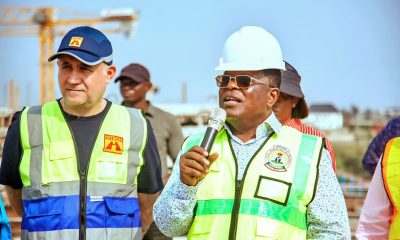

Lagos-Calabar Coastal Highway to Unlock Industrial Opportunities, Tourism – Minister
By Sunday Jacob, Abuja As the year 2026 draws to a close, Nigeria’s Minister of Works, Senator David Umahi, has...
-
 Politics2 years ago
Gov Okpebholo moves to end Cultism *Threatens action against leading cult groups *Vows to demolish more cult houses in Edo State
-
 Politics1 year ago
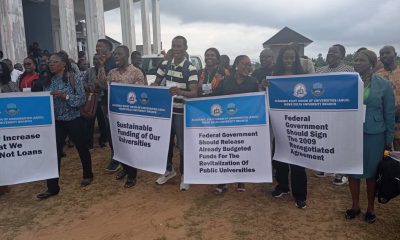
ASUU-NDU protest against FG loans, unpaid salaries,Non-Implementation of agreements …..says loans is generational slavery
-
 Business & Economy1 year ago
PC-NCG Issues Disclaimer on Purported Nigerian Coast Guard National Orientation Exercise In Anambra State
-
 Entertainment2 years ago
Jubilation galore as Parishioners of CKC Kurudu celebrate their cultural heritage ….FG should exploit our Cultural heritage to unite Nigerians-Rev Fr Dim
-

 Sports9 months ago
Bayelsa-born ex-football star’s son, Opuama donates spike shoes to Athletics Association
-

 General News2 years ago
Reps hold public hearing on FMC Ugwuaji Awkunanaw
-
 General News2 years ago
Celebration galore as UDA Successfully Elected New Exco ……I will digitalize processes that will raise UDA to greater height -Comr. Okejiri
-
 Law & Crime1 year ago
Legal practitioner raises alarm over threat to his life by CSP Muhammed Abdulkareem