
Politics
MAHMOOD: A HUMANE ASSESSMENT

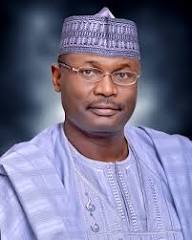
By: Emmanuel Nnadozie Onwubiko
“Be a good human being, a warm hearted, affectionate person. That is my fundamental belief.”
(-14th Dalai Lama)
“If you judge people, you have no time to love them.”
(-Mother Teresa)
Professor Mahmood Yakubu leaves the Independent National Electoral Commission after ten years at its helm; a decade that will be debated, dissected and, I suspect, ultimately judged kindly by history. President Bola Ahmed Tinubu has formally accepted Professor Yakubu’s departure and, in recognition of his service, conferred on him the national honour of Commander of the Order of the Niger. The handover to the most senior national commissioner, May Agbamuche-Mbu, marks the end of an era and the start of another fraught moment for Nigeria’s electoral architecture.
To assess Yakubu fairly we must do two things at once: catalogue the hard, demonstrable changes he put in place to modernise Nigeria’s elections, and then judge how those changes held up under the stress test of Nigeria’s deeply adversarial politics. On the first task (the one that will determine whether INEC is stronger on the morning after his exit than it was on the morning of his appointment), Yakubu’s record is substantial, concrete and, in many ways, transformative.
When Mahmood Yakubu arrived at INEC in November 2015, he inherited an electoral agency that had begun to recover public trust after the Attahiru Jega years. Over the next decade he pursued a program of institutionalising technology, stabilising processes and expanding access to the register; reforms that were not merely cosmetic but structural. The Bimodal Voter Accreditation System (BVAS) became a fixture at polling units; the machine records accredited voters, stores a picture of the EC8A (the polling unit result sheet) and was designed to reduce the kind of human tampering that has long hollowed out confidence in electoral outcomes. Complementing BVAS was the INEC Result Viewing portal (IReV); a public interface that allowed citizens, parties and observers to compare what was uploaded from polling units with what was being collated at state and national centres. Those two innovations (the biometric accreditation and the result-viewing portal), are not mere gadgets. They rewired the spine of the results chain and moved Nigeria from paper-only opacity toward a model of verifiable transmission.
Technology alone does not make an election free or credible; it makes verification possible. Yakubu’s INEC institutionalised procedures that, for the first time in decades, made it relatively easy for political actors and citizens to detect discrepancies between the result sheets at polling units and what appeared on official portals. This had a practical consequence: in the 2023 general elections several outcomes that would once have been unthinkable were validated on the ground and in the collation halls. The fact that results ran against the presumed preferences of political heavyweights (from presidential candidates to incumbent governors) is itself evidence that the mechanics of counting and transmission were functioning in ways that allowed voters’ choices to surface. Consider three state-level examples that mattered politically and symbolically.
In Lagos (the commercial hub that was, for decades, a political fief of Bola Tinubu), the Labour Party’s Peter Obi won the plurality of votes, a seismic outcome that spoke to the emergence of new urban coalitions and, importantly, to the ability of INEC’s systems to capture and publish polling unit returns for citizens and the media to scrutinise. That result, confirmed in the data and widely reported by credible international outlets, undercut the narrative that the commission could be bent to produce a foregone conclusion in even the most politically sensitive geographies.
In Osun State, the presidential tally favoured the Peoples Democratic Party’s candidate, an outcome that again cut across expectations and local party machines. And in the Federal Capital Territory, Abuja, the Labour Party’s dominance was decisive and visible on the result portals and official collations. These were not trivial or isolated quirks; they were systemic signs that votes were being counted and reported in ways that allowed the people’s will to be revealed, even when that will clashed with established power.
If one wishes to measure institutional independence by outcomes, look also to the rout of political heavyweights who assumed their influence could buy them seats. At least five outgoing governors who sought to move to the Senate after two terms were defeated by opponents; an outcome that would have been harder to engineer if the electoral market were rigged in favour of incumbency rent. The International Centre for Investigative Reporting recorded the defeats of prominent outgoing governors — Samuel Ortom (Benue), Ifeanyi Ugwuanyi (Enugu), Darius Ishaku (Taraba), Simon Lalong (Plateau) and Ben Ayade (Cross River) — and their losses were widely reported as evidence that the electorate and the electoral machinery combined to produce genuine upsets.
The list of losers includes not only governors but a string of sitting national assembly leaders and committee chairmen who were unseated; a political cleansing of sorts that reflected voters’ impatience and the capacity of the electoral process to enforce it. ICIR’s compilation of National Assembly members who lost their seats in 2023 reads like a catalogue of the vulnerable and the over-confident: minority leaders, long-standing committee chairs and seemingly secure incumbents found themselves out of office when results were tallied and verified. Those outcomes matter because they are measurable, verifiable instances where the electoral process functioned against the grain of personal power.
Bauchi State (Professor Yakubu’s birth state) offers another telling case. In 2023 the presidential vote there swung to the Peoples Democratic Party, handing the opposition a clear victory in the INEC chairman’s own homestead and reinforcing the larger pattern: the mechanics of counting, accreditation and result viewing allowed an opposition triumph in a competitive state where the ruling party expected to be strong. That is a powerful vindication for any electoral manager who sought above all to let the ballot do its work.
Beyond technology and headline-defying results, Yakubu worked to professionalise INEC’s back offices: improving voter registration logistics, expanding the Continuous Voter Registration portal, strengthening training for ad hoc staff and pushing for greater transparency in party primaries. He presided over the creation or consolidation of units within INEC aimed at research, legal affairs and election operations management; slow, bureaucratic work that rarely makes front pages but is essential if an electoral commission is to endure beyond electoral cycles. The Electoral Institute, an INEC initiative, and the commission’s investment in training and data management are part of that quieter, but critical, reform legacy.
All of this, however, must be tempered by honesty. A reformer’s legacy is not simply measured in new machines and portals, but in how the institution responds when things go wrong. The 2023 general election was not flawless. There were well-documented technical glitches with result transmission during the presidential contest; there were delays and disruptions in some states that opened space for suspicion; turnout was depressingly low relative to the number of registered voters, and communication from the commission to the public was sometimes clumsy. Critics (both domestic and international) documented lapses in planning and execution that frustrated expectations that the new technology would magically solve decades of logistical and political problems. Those criticisms are partly fair and partly the byproduct of unrealistic expectations, but they matter all the same.
Nevertheless, when the ledger is balanced, one must concede that Yakubu’s stewardship materially strengthened the capacity of the commission to record, transmit and publish election results. The simple truth is that over his two terms Nigeria saw the operational roll-out of innovations (BVAS and IReV among them), that converted what had been an opaque counting process into one that could be audited, interrogated and, often, verified by citizens and independent monitors. Where previously suspicion flourished because of lack of transparency, the new systems reduced opportunities for stealthy manipulation; though they did not eliminate them. The point is crucial: independence and procedural integrity were not magically guaranteed by technology, but technology made accountability possible in ways that were previously unimaginable.
The political context in which Yakubu worked should not be ignored. For eight years under President Muhammadu Buhari, public commitments and INEC’s own pronouncements suggested a relative absence of direct presidential interference in the commission’s operating space. Both the executive’s pledges and the facts of contested results that went against incumbent power contributed to an environment in which INEC could, more often than not, execute its mandate without executive fiat. Buhari’s public promise to respect INEC’s independence and the commission’s repeated insistence that it was not under external influence are on the record.
But that is now the past. The present and the future are different. As the transition occurs under President Bola Tinubu, there are deep and widely-expressed concerns in the civic and international communities about the stakes of the INEC leadership appointment ahead of the 2027 general elections. International IDEA, CDD-West Africa and other analysts have warned that the appointment to lead INEC in the run-up to another general election is among the highest political stakes a president can face; and that politicising the commission’s leadership risks eroding the very gains Yakubu helped secure. Those warnings are not partisan insinuations; they are sober analyses from electoral experts about institutional risk at moments of transition.
Let me be plain. The verdict that must guide public judgment is this: Professor Mahmood Yakubu performed very well, humanly speaking. He was not infallible; no administrator operating in Nigeria’s febrile politics could be. He made choices, some of which produced predictable controversy. But on balance he steered INEC toward modern systems, increased transparency, and a greater capacity to resist straightforward manipulation. The evidence is before us in the technical architecture he left behind and the election outcomes that proved, time and again, that votes could surprise the powerful. Those are not idle boastings; they are measurable improvements in how we count and report votes.
If Yakubu deserves praise, he also deserves constructive criticism. Technology is only as good as the contingency plans that sustain it. The commission must, in future, invest far more in redundancy, offline reconciliation protocols and independent audits of the transmission chain. Result-viewing portals must be backed by resilient data centres and clear, rapid public communication when outages occur; IReV’s temporary failures in 2023 became political fodder precisely because the commission had not explained contingencies early and plainly. Training for ad hoc staff must be deeper and earlier; the single largest vulnerability of any electoral operation is the human error that turns a local glitch into national suspicion.
More than operational fixes, however, Nigeria must attend to legal and institutional safeguards that protect INEC’s independence. The next chairperson must not be a political toady; the law must be defended, and civic institutions must be vigilant. We have had evidence these past two cycles that the electorate will punish apparent manipulation; but that is not a substitute for a robust legal firewall that makes manipulation both difficult and costly. International partners, professional domestic observers and Nigeria’s civic intelligentsia should redouble efforts to insist on transparent selection processes and to hold the executive to its obligations to protect the electoral commission’s neutrality.
Finally, Nigerians must not be complacent. A decade of reforms under Professor Yakubu advanced the cause of transparent elections; they are fragile gains. The appointment that follows his exit is the fulcrum upon which those gains will either be cemented into a durable institutional culture or hollowed out by partisanship. If the next occupant of the INEC chair is a partisan surrogate chosen for short-term political expediency, the consequences will be swift: public trust will slump, opposition will be delegitimised, and the bureaucratic scaffolding Yakubu left behind will be repurposed to serve partisan ends. That is not a speculative fear but an historical lesson. It is the duty of every citizen, civil society organisation, and professional body to insist on competence, independence and transparency in the next appointment.
Professor Mahmood Yakubu exits with a record of measurable reform; biometric accreditation widely used, a public result-viewing portal institutionalised, a more professionalised electoral institute and, above all, a string of electoral outcomes that testify to the practical possibility of free and fair contests in Nigeria today. Those achievements do not make Nigeria’s democracy invulnerable, but they have raised the bar for anyone who would try to subvert the will of the people. For that alone he deserves our thanks, our critique where merited, and our stern vigilance going forward.
Emmanuel Nnadozie Onwubiko is the founder of the HUMAN RIGHTS WRITERS ASSOCIATION OF NIGERIA (HURIWA) and a former NATIONAL COMMISSIONER OF THE NATIONAL HUMAN RIGHTS COMMISSION OF NIGERIA.




By Our Correspondent
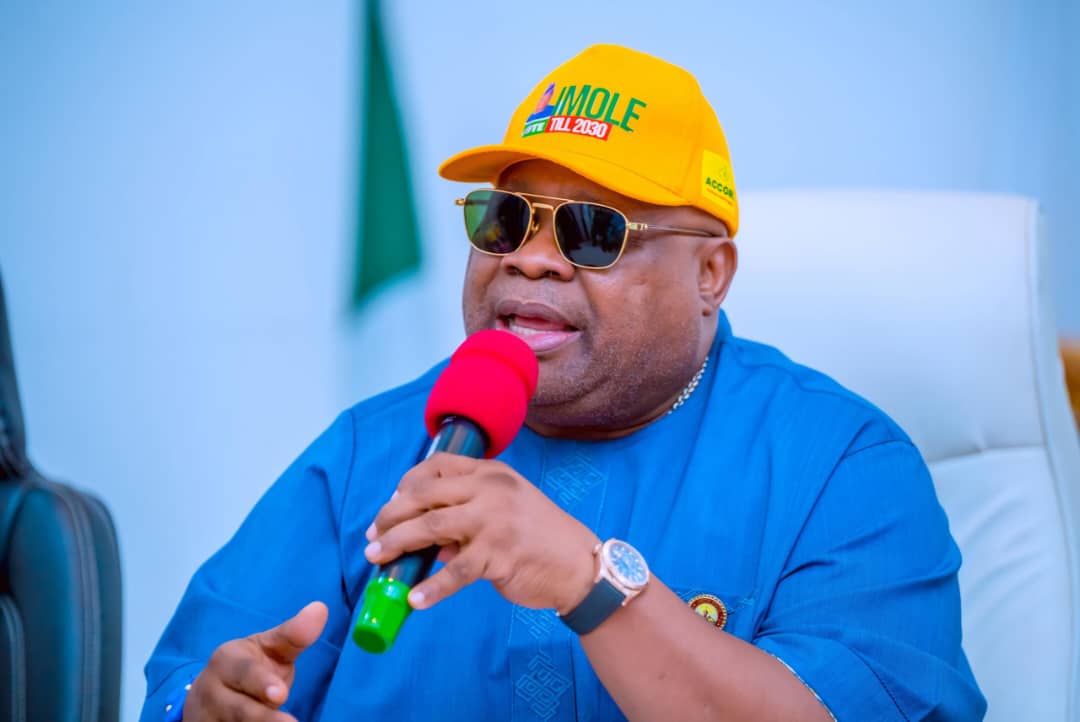
In dramatic twice the All Progressives Congress (APC) has filed an application seeking to withdraw the petition challenging the victory of Governor Ademola Adeleke.
The withdrawal came amid conflicting positions within the party’s legal team over whether the
APC had authorised the petition challenging the outcome of the August 15 governorship election.
Daily Champion reports that the APC, and the Peoples Democratic Party, PDP, challenged the outcome of the August 15, 2026, Osun Gubernatorial elections.
The APC’s petition, marked EPT/OS/GOV/01/2026, which was filed by its governorship candidate, Bola Oyebamiji, listed Adeleke, the Accord, and the Independent National Electoral Commission, INEC, as respondents in the petition challenging the election outcome.
Meanwhile, a Notice of Motion to Withdraw Petition dated September 8, 2026, filed by a counsel for APC, Barrister Oluseyi Oyagbile, before the Osun State Governorship Election Petition Tribunal, indicated the petitioners’ decision to discontinue the case.
The document seeks an order of the tribunal permitting the petitioners to withdraw the election petition.
However, an APC legal team led by Abiodun Layonu, SAN, had earlier disowned the petition, insisting that the party and its candidate had decided not to challenge Adeleke’s victory at the tribunal.
Also, the APC campaign council distanced itself from reports claiming that its governorship candidate, Oyebamiji (AMBO), filed a petition challenging the outcome of the August 15, 2026 governorship election at the Election Petition Tribunal.
A statement made available by the campaign spokesperson, said, “We state categorically that neither the All Progressives Congress ( APC) nor its governorship candidate, Asiwaju Munirudeen Bola Oyebamiji (AMBO) filed any petition at the tribunal challenging the outcome of the August 15 governorship election.
“The purported claim is therefore completely untrue and should be regarded as nothing more than a rumour being circulated by individuals seeking to mislead members of the public and create unnecessary tension.
“We urge members of the public, supporters of our great party and the media to discountenance the claim and refrain from giving credibility to unverified information designed to cause confusion.
“The APC and Asiwaju Munirudeen Bola Oyebamiji remain committed to lawful and democratic processes and will continue to act responsibly in the interest of peace, stability and the good people of Osun State.
“We urge the public to rely only on official statements from the APC and the Campaign Council on matters concerning the party, its candidate and the outcome of the August 15 governorship election.”
By Our Correspondent
A chieftain of the All Progressives Congress (APC), Ntufam Hilliard Eta, has called on the nation’s anti-corruption agencies to fully investigate allegations and petitions against former Vice-President Atiku Abubakar and prosecute him if evidence establishes any criminal offence.
Addressing journalists in Abuja on Tuesday at the APC National Secretariat, Eta said the call was driven by the principle of accountability, not political considerations.
He stressed that public office must never become a shield against scrutiny and that political ambition should not stop institutions from acting on credible allegations.
The APC chieftain said he was not asking for a conviction in the court of public opinion, but that the evidence be subjected to the process of court of law. “That distinction is fundamental,” he stated.
Eta referenced a petition reportedly received by the EFCC on September 1, 2026, calling for the reopening of financial-crime allegations against Atiku dating back to investigations conducted around 2005-2006.
He also cited renewed discussions around a 2010 United States Senate report on suspicious financial transactions.
Eta noted that while the report was not a criminal conviction, the allegations contained in it were serious enough to warrant examination by Nigerian authorities.
According to him, the first set of allegations concern the movement of more than US$40 million in suspect funds into the United States between 2000 and 2008 through offshore corporations linked to Jennifer Douglas, Atiku’s wife. The Senate report said about US$25 million was transferred into U.S. accounts opened by Douglas.
The second allegation concerns payments connected to Siemens AG. Eta said the Senate report stated that Douglas received at least US$1.7 million in alleged bribe payments, while an SEC civil complaint alleged US$2.8 million in bribe payments from Siemens.
He stressed that these were allegations contained in historical records, not convictions.
Third, Eta mentioned questions over approximately US$14 million transferred by offshore corporations to American University for consulting services related to the university’s establishment in Nigeria, as examined in the Senate report.
He also listed allegations of the use of Special Purpose Vehicles, SPVs, to divert public funds during Atiku’s tenure as Vice-President from 1999 to 2007. These resurfaced in 2023 following claims by Michael Achimugu and a petition by Festus Keyamo to the EFCC, ICPC and CCB.
Other allegations, he said, border on money laundering, criminal breach of trust, criminal misappropriation, conspiracy and possible violations of the Code of Conduct, as well as questions concerning accounts associated with Marine Float and other companies.
Eta argued that allowing allegations of this magnitude to become mere political ammunition during an election season is dangerous and he said the same standard of accountability must apply to government and opposition figures alike.
He therefore called on the EFCC and other competent authorities to examine every credible petition, obtain relevant records, invite appropriate persons and “follow the money” without fear or favour.
“A serious democracy asks: Was a crime committed? Is there admissible evidence? If yes, prosecution should follow. If no, the matter should be closed,” Eta said, adding, “No sacred cows. No political immunity. No selective justice. Just evidence, due process and the law.”
By David Owei
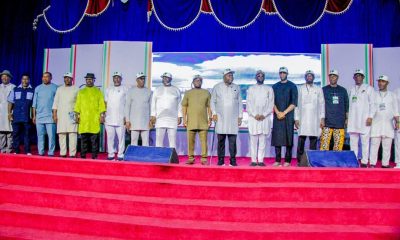
Governor of Bayelsa State, Senator Douye Diri, has observed that the political arena in Nigeria was shifting from violence and intimidation to knowledge-based politics.
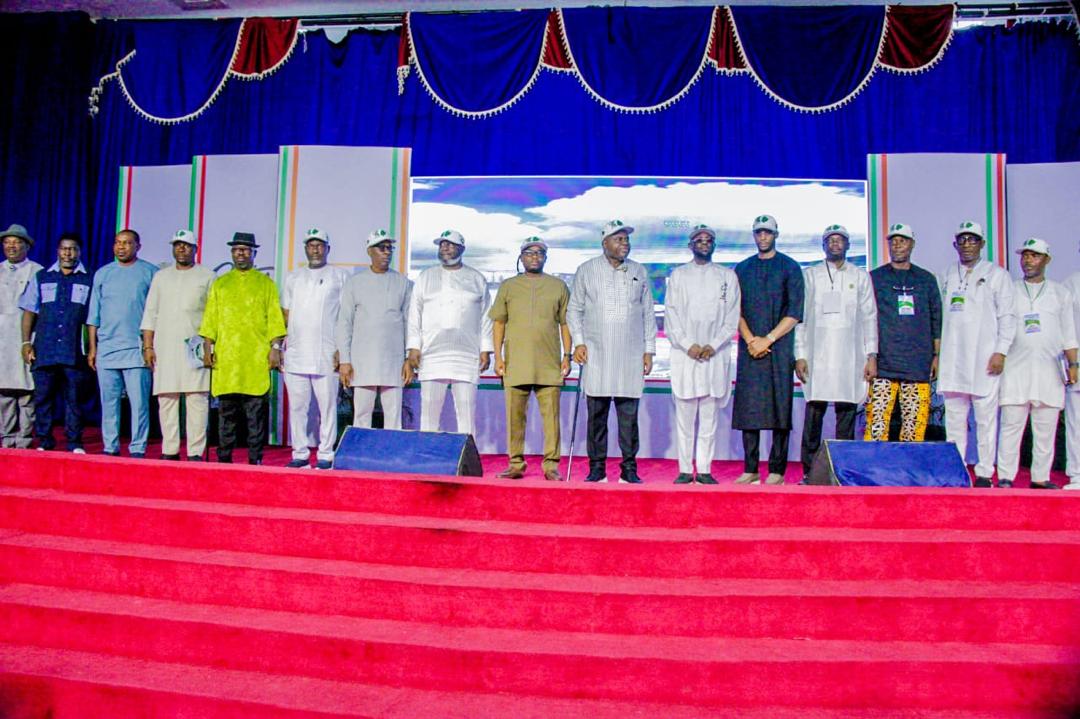
Speaking during the State Working Committee Retreat of the City Boy Movement (CBM) in Yenagoa, Governor Diri lauded the socio-political group for leading the paradigm shift, insisting that politics should never be about violence.
He noted that while the CBM had been vocal about the re-election of President Bola Tinubu in next year’s election, he urged its members to work with the structures of the All Progressives Congress (APC) in the state and at the national level.
The Bayelsa governor described the movement as strategic and advised it to go beyond social media advocacy to grassroots mobilisation.
Explaining why he pitched tents with the APC, Diri recalled how President Tinubu supported the state’s development by approving the construction of the second phase of the Nembe-Brass road and that he also granted waivers for the state’s imported gas turbines, stressing that the President deserved the support of the people of Bayelsa.
He also restated his position on a restructured Nigeria, saying democracy thrives only when there was justice and fairness, and that given his antecedence, Tinubu was the right man to restructure Nigeria.
His words: “The use of guns and intimidation is giving way to knowledge-based electoral process and I commend the City Boy Movement for this. We are not animals and we do not need to be flogged before we move. I am happy that gradually our politics is changing for the better.
“All of the various support groups must know that the party structure is the number one structure and I am happy that the City Boy Movement is working with the party.
“In this state, APC is a no-go area. Our chances of winning the 2027 election is very high.
“This is one good thing I have seen that a youth group coming together to strategise for an election. We all want our President to come back but it wild not happen by chance. We all have to play our roles not just on social media but at the grassroots. It is our duty to go from door to door.
“President Tinubu has supported the development of Bayelsa State and deserves the support of the people. He responded swiftly to the request for the second phase of the Nembe-Brass road and also gave us waivers for the gas turbines.
“I am an advocate of restructuring and President Tinubu is doing things that people had not succeeded in doing such as state policing. For us in Bayelsa, we want to control our resources and pay tax to the centre and I believe that if we must acheive that, this President is one we must follow. We have seen a President who is stable and capable. Let us allow him to complete his second term.”
In his remarks, Bayelsa State APC chairman, Hon. Warman Ogoriba, thanked Governor Diri for his support to the party, saying the APC decided to be strategic rather than joining issues with people or other parties.
Ogoriba said the APC parades the best candidates and that the party will mobilise to ensure victory for them in the 2027 elections.
In a welcome address, Bayelsa State Director of the City Boy Movement, High Chief Osomkime Blankson, said the retreat was to strategise for the re-election of President Tinubu as he deserved a second term by reason of his performance and achievements.
He expressed appreciation to the governor for his supportive leadership and commitment to peace and development of the state.
Also, the Director-General of the City Boy Movement, Mr. Francis Shoga, described Tinubu as a courageous leader who has taken painful but beneficial decisions and that the movement would take the achievements of his administration to the grassroots.
He thanked the people of Bayelsa for their support, expressing optimism that the state would contribute significantly to the potential 10 million youth votes of the movement for Tinubu.


HURIWA Mourns Bello Mandiya, Hourns a Dependable Ally of Human Rights
By George Mgbeleke The Human Rights Writers Association of Nigeria (HURIWA) mourns the death of former Senator representing Katsina South...


HURIWA DEMANDS IMMEDIATE REMOVAL OF HANDCUFFS FROM Ufoma Joseph Immanuel
By George Mgbeleke The Human Rights Writers Association of Nigeria (HURIWA) says the Nigerian Correctional Service must immediately stop the...
Northern Senator Forum Mourns Senator Bello Mandiya
By George Mgbeleke The Northern Senators Forum has received with profound sadness the news of the passing of Distinguished Senator...

APC withdraws petition challenging Gov.Adeleke’s Victory
By Our Correspondent In dramatic twice the All Progressives Congress (APC) has filed an application seeking to withdraw the petition...

NUJ FCT Raises N5.01m Trust Fund for Late Chairman’s Children …265 members raised N5.01m to secure education, welfare of Osadebamwen’s three children
By Our Correspondent In a bid to ensure a good welfare package for its departed members and their families, the...

APC chieftain demands probe, prosecution of Atiku over $40M, SIEMENS, SPV allegations
By Our Correspondent A chieftain of the All Progressives Congress (APC), Ntufam Hilliard Eta, has called on the nation’s anti-corruption...

Nigerian Politics Becoming Less Violent, Says Gov Diri As CBM Holds Bayelsa Retreat
By David Owei Governor of Bayelsa State, Senator Douye Diri, has observed that the political arena in Nigeria was shifting...

Gov Diri Seeks Increase In Law Students Quota At NDU
By David Owei Governor of Bayelsa State, Senator Douye Diri, has appealed to the Council of Legal Education to increase...


Nembe Spill: HOMEF demands cleanup, compensation, accountability
By David Owei The Health of Mother Earth Foundation (HOMEF) on Tuesday demanded urgent cleanup, compensation and accountability over an...


NCDMB to Feature Nwabuikwu’s The Pain and The Promise In Book Reading Session
By David Owei The Nigerian Content Development and Monitoring Board (NCDMB) will host the fifth edition of its Book Reading...
-
 Politics1 year ago
Gov Okpebholo moves to end Cultism *Threatens action against leading cult groups *Vows to demolish more cult houses in Edo State
-
 Politics1 year ago
ASUU-NDU protest against FG loans, unpaid salaries,Non-Implementation of agreements …..says loans is generational slavery
-
 Business & Economy1 year ago
PC-NCG Issues Disclaimer on Purported Nigerian Coast Guard National Orientation Exercise In Anambra State
-
 Entertainment2 years ago
Jubilation galore as Parishioners of CKC Kurudu celebrate their cultural heritage ….FG should exploit our Cultural heritage to unite Nigerians-Rev Fr Dim
-

 Sports7 months ago
Bayelsa-born ex-football star’s son, Opuama donates spike shoes to Athletics Association
-

 General News2 years ago
Reps hold public hearing on FMC Ugwuaji Awkunanaw
-
 Law & Crime1 year ago
Legal practitioner raises alarm over threat to his life by CSP Muhammed Abdulkareem
-
 General News2 years ago
Celebration galore as UDA Successfully Elected New Exco ……I will digitalize processes that will raise UDA to greater height -Comr. Okejiri