
Oil & Gas
Don’t Be Like SPDC, Diri Tells Renaissance Energy


By David Owei, Baylesa
Governor of Bayelsa State, Senator Douye Diri, has advised the management of Renaissance Africa Energy Company Limited that having acquired the assets of Shell Petroleum Development Company (SPDC), it should operate differently from the former owners of the oil firm.
The Bayelsa governor also urged the company to incorporate the interests of host state governments in its operations in order to reduce conflicts in host communities.
Senator Diri stated this on Wednesday when he received the management of Renaissance Africa Energy, including its chairman, Dr. Layi Fatona, Managing Director and Chief Executive Officer, Chief Tony Attah, and other officials in Government House, Yenagoa.
The governor explained that before SPDC divested its assets, host communities were short-changed because the proceeds that accrued to them were grossly inadequate and resulted in agitations by state governments for a better deal.
“When we heard that SPDC had divested, we advised that the new company carries the host states along because part of the issues with the previous operator were that they were seen more like buccaneers. They were like people who came to the communities to collect and in return gave nothing back.
“Of course, the other party that also enjoys the oil arrangement is the federal government. Even out of protests and agitations, what the Niger Delta states get is a paltry 13 per cent.
“There is nothing wrong if states are co-owners with you even if it is a little percentage and that is what l have been pushing for. l think it is not too late now that we have our own people there.
“If we are co-owners, there is even the tendency that we will protect it more just as we are doing with the 13 per cent. See what you can do to include the interest of Bayelsa State.”
Senator Diri, who expressed dissatisfaction with the Petroleum Industry Act (PIA), noted that, “under the act, the federal government and oil companies cut off the states and local governments and deal directly with the communities. Now we receive a lot of protests from the communities. It is only when trouble comes that they remember that there is a state government and a local government.
“But you have now come in. So please, do not be the buccaneers that people used to know about SPDC, Nigerian Agip Oil Company and all other oil companies that have operated on our land.”
The Bayelsa helmsman commended the management of the oil firm for acquiring SPDC, which had hitherto been dominated by foreigners for decades, saying that it was historical and something to be proud of.
“The good thing is that we have the same people that have been in the oil industry and have understudied and have been exposed to the intricacies. l hope that you are not going to make the same mistakes and that you are going to see the states and communities as part and parcel of your operations,” he said.
Diri assured of the state government’s commitment to partner with the company on energy security, adding that his administration was procuring a 60-megawatt gas turbine for independent power supply to the state.
He also appealed to the company to look in the issues of environmental pollution, stressing that as it had acquired the assets of SPDC, it should equally acquire the liabilities.
In his remarks, the Chairman of Renaissance Africa Energy Company Limited, Dr. Layi Fatona, said the delegation was in the state to introduce the company and its vision to the government having acquired SPDC’s assets.
He sought the state government’s collaboration in the area of energy security under the administration’s ASSURED Prosperity Agenda to help support Bayelsa’s development.
Also, the Managing Director/Chief Executive Officer, Chief Tony Attah, said the company recognised Bayelsa as being supportive to its predecessor (Shell) and commended Governor Diri for his visionary leadership.
Attah noted that the company intends to be Africa’s leader in energy security and facilitate industrialization using domestic gas for the interest of Nigeria, especially Bayelsa which has huge potential in gas.








Business & Economy
28 Companies get Permit to access flare gas, boost Nigeria’s Energy security …As NUPRC Paves Way for Cleaner Energy
By Our Correspondent
As part of efforts to boost the nation’s revenue earning,Nigerian Upstream Petroleum Regulatory Commission (NUPRC) ,
Chief Executive, Engr. Gbenga has said the issuance of the Permit to Access Flare Gas (PAFG) under the 2022 NGFCP signifies the transition from legacy challenges to market-driven solutions that unlock economic opportunities, strengthen energy security, reduce emissions and improve operational efficiency across the industry.
Speaking as the NUPRC issued Permits to Access Flare Gas to 28 successful awardees under the Nigerian Gas Flare Commercialisation Programme (NGFCP), the CCE said the move marks a pivotal shift from environmental liability to economic opportunity in Nigeria’s upstream petroleum sector.
In particular, the Commission awarded the permits to the winners at the official ceremony titled “Permit to Access Flare Gas Issuance” held on Friday, December 12, 2025, in Abuja.
The successful awardees are: Ace Energy Limited; Afagaf Company Limited; AGH Lero; Almina Resources Limited; Amazon Energy Limited; AUT Energy; Beluga Asiko; Bodej Investment Limited; Cainergy Limited; Cimcmonobuo Nigeria Limited; Dawcon Consortium; Dawnwatch Limited; Fargab Limited; Folstaj International Limited; Geospectra Energy Limited; Izzi Project Limited; and MMLet Energy Limited.
Others are: MSN Consortium; Newgaz Integrated Services Limited; NG Lyon Construction Limited; Oaks Cluster Energy; Seal Energy Limited; Tecnis EPS International Limited; Teobell International; Terms Energies; Zipora Gas; and Stelog Gas Company Limited.
The permit issuance marks a major milestone in NUPRC’s quest to utilise flare gas and move Nigeria towards achieving its net-zero target.
Engr. Komolafe stated that the permit aligns with the Presidential ambition and Nigeria’s carbon-reduction goals. He said the Commission is “pleased to announce that 28 awardees have fully executed the required suite of commercial agreements, which include the Connection Agreements, Milestone Development Agreements, and Gas Sales Agreements; and now qualify to receive the Permit to Access Flare Gas.
“These entities represent a strong blend of operational capability, financial readiness, and technological competence. To all our flare site awardees soon to become Permit Holders, I offer warm congratulations,” the CCE said.
He added that the award aligns with the vision of President Bola Ahmed Tinubu for the country to harness hydrocarbon resources, as reflected in the Executive Orders issued in 2024.
“Allow me to express deep appreciation to His Excellency, President Bola Ahmed Tinubu, GCFR. His reform-driven leadership and commitment to enabling the petroleum sector continues to shape the strategic direction of our work at NUPRC. The Presidential Executive Orders on NAG fiscal incentives and tax rebates, local content directives and cost efficiency demonstrate his emphasis on investment competitiveness for the sector,” he noted.
He explained that the NGFCP was redesigned after the enactment of the Petroleum Industry Act (PIA) and refined for transparency, commercial viability, and global competitiveness.
“From 300 initial expressions of interest, 139 applicants qualified for the RFP stage. Following a competitive and transparent evaluation process, 42 successful bidders were awarded 49 flare sites, an achievement widely recognized for its integrity and rigour,” the NUPRC boss said.
On the benefits of the award, Engr. Komolafe said the programme is expected to reduce carbon dioxide by six million tonnes yearly, attract US$2 billion in investments, and create over 100,000 jobs.
The NUPRC boss stated: “A total of 49 flare sites have been auctioned. Forty-two (42) bidders have been awarded the sites. Between 250 and 300 mmscfd of currently flared gas will be captured and commercialised, eliminating approximately six (6) million tonnes of carbon dioxide (CO₂) annually.
“The programme is expected to attract up to US$2 billion in investment. More than 100,000 direct and indirect jobs will be created. About one hundred and seventy thousand (170,000) metric tons of LPG will be produced annually, enabling clean energy access for approximately 1.4 million households. And nearly 3GW (gigawatts) of power generation potential will be unlocked.”
He disclosed that an NGFCP Forum and College of Awardees has been established to support project implementation and knowledge exchange.
He also revealed that the NUPRC has deepened engagement with international financiers and technology partners.
The CCE said it is important to note that although the issuance of this permit is significant, it only signals the start of the implementation phase.
He noted that while the competitive bid process may now be complete, the real work has just begun.
“Engineering, construction, financing, commissioning must begin in earnest. Be assured however, that the Commission remains fully committed to providing the needed regulatory support for the awardees and now Permit Holders to meet their timelines and obligations,” he added.
To ensure disciplined execution, the CCE said the Commission will closely monitor the implementation of milestone development agreements, conduct regular performance reviews, and proactively address emerging barriers.
This approach supports Nigeria’s broader ambition for a cleaner, more resilient energy system and enhances the competitiveness of the upstream petroleum sector.
Oil & Gas
OGFZA Secures $24B in Investments for Nigeria …As Stakeholders Back Calls For Exemption in New Tax Law
By Our Correspondent
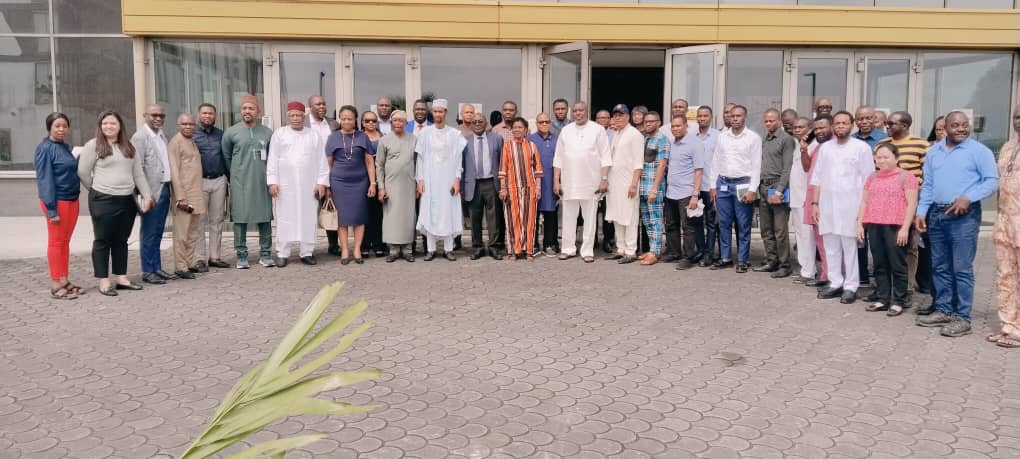
The Oil and Gas Free Zones Authority (OGFZA) has announced that it has attracted more than 24 billion dollars in investments into Nigeria, an achievement that underscores the strategic value of the nation’s free zones. The Authority also threw its weight behind calls for a 10-year exemption for operators in special economic and free zones from the new tax law provisions.
OGFZA’s Managing Director and Chief Executive Officer, Bamanga Usman Jada, made the disclosure during a town hall meeting with the Federal Inland Revenue Service (FIRS) and OGFZA licensees held on Thursday, 11 December 2025, at the Onne Oil and Gas Free Zone in Rivers State.
He argued that the proposed 10-year extension would provide operators with the “adaptation space” needed to transition and comply with evolving tax requirements, noting that Nigeria’s free zones have already generated hundreds of thousands of direct and indirect jobs across the country.
“Distinguished guests, I endorse the appeal presented last week by the Managing Director/CEO of the Nigeria Export Processing Zones Authority (NEPZA) during the stakeholder engagement organized by the Ministry of Industry, Trade and Investment. The request seeks a minimum ten-year exemption for operators in special economic zones and free zones from the new tax provisions, allowing sufficient time for adaptation.”
“Energy-oriented free zones have been pivotal in driving development in numerous nations, exemplified by the Jebel Ali Free Zone in Dubai and the Sohar Free Zone in Oman. These initiatives have drawn billions in investments, generated extensive employment opportunities, and positioned their economies as global leaders.”
“Similarly, OGFZA-regulated free zones in Nigeria have secured over $24 billion in investments, accommodated more than 200 enterprises, and created hundreds of thousands of direct and indirect jobs. This underscores the value of robust incentives and effective regulation in accelerating industrialization.”
“Accordingly, OGFZA supports the call for a ten-year extension of existing tax incentives, coupled with a phased implementation to mitigate potential disruptions.
“Many of our licensees, including prominent foreign investors, formulate strategies spanning 10, 15, or even 25 years, predicated on prevailing incentives. Granting this transitional period would reinforce the Renewed Hope Agenda and uphold policy consistency, a cornerstone for attracting sustained investment.”
“As the apex regulator of oil and gas free zones and administrator of the one-stop-shop framework, OGFZA remains integral to their enduring viability. Our efforts have been recognized through prestigious accolades, including the Best Federal Agency on Ease of Doing Business award from the Presidential Enabling Business Environment Council (PEBEC) in 2018, 2019, 2022, and 2024, as well as the Financial Times’ FDI Magazine designation as the best specialized free zone in 2018.”
The OGFZA helmsman commended the President of Nigeria, Bola Ahmed Tinubu for what he described as “his visionary leadership,” even as he thanked the Minister of Industry, Trade and Investment, Dr. Jumoke Oduwole, and the Minister of State, Senator John Enoh, for “their steadfast guidance and advocacy in supporting the sector.”
Under the leadership of President Bola Ahmed Tinubu, “exports from Nigeria’s oil and gas free zones have surged to 496,537,804 metric tons, generating substantial foreign exchange inflows. Our operators now supply markets in Brazil, the United States, France, India, the United Kingdom, the Republic of Korea, and beyond, aligning seamlessly with the President’s Renewed Hope Agenda.”
He reiterated OGFZA’s readiness to “sustain collaboration with FIRS, in accordance with our memorandum of understanding, to ensure the tax reforms are executed efficiently and equitably.”
Speaking at the event, Executive Chairman of FIRS, Dr. Zacch Adedeji argued that “the 2025 tax reforms mark a significant step in modernizing Nigeria’s fiscal frameworks.”
“For Export Processing and Free Trade Zones, the focus is not on taxation of income or profits of Zone entities, but on promoting transparency, accountability and proper reporting.
“By embracing compliance, collaboration and commitment to respecting obligations imposed by relevant tax laws, Free Trade zones can meaningfully contribute to national development, which is the very essence for implementing the Special Economic zones scheme,” he explained.
Represented by the Special Adviser on Tax Incentive Management, Dr. Cletus Adie, the FIRS boss condemned what he described as “continuous recalcitrant behaviours of some enterprises”, that have “motivated the deployment of a deliberate and structured administrative strategy that compels compliance by all enterprises, supported by section 72 (4) (f ) of the Nigerian Tax Administration Act. Accordingly, the need for the implementation of tax clearance certificate as a mandatory requirement for issuance of renewal of operating license has become crucial”, he stressed.
Stakeholders at the event unanimously called for the exemption for operators in special economic and free zones from the new tax law provisions, to enable them adjust.
Highlights of the event were special presentations, interactive, as well as question and answer session, among others.
By David Owei, Yenagoa.
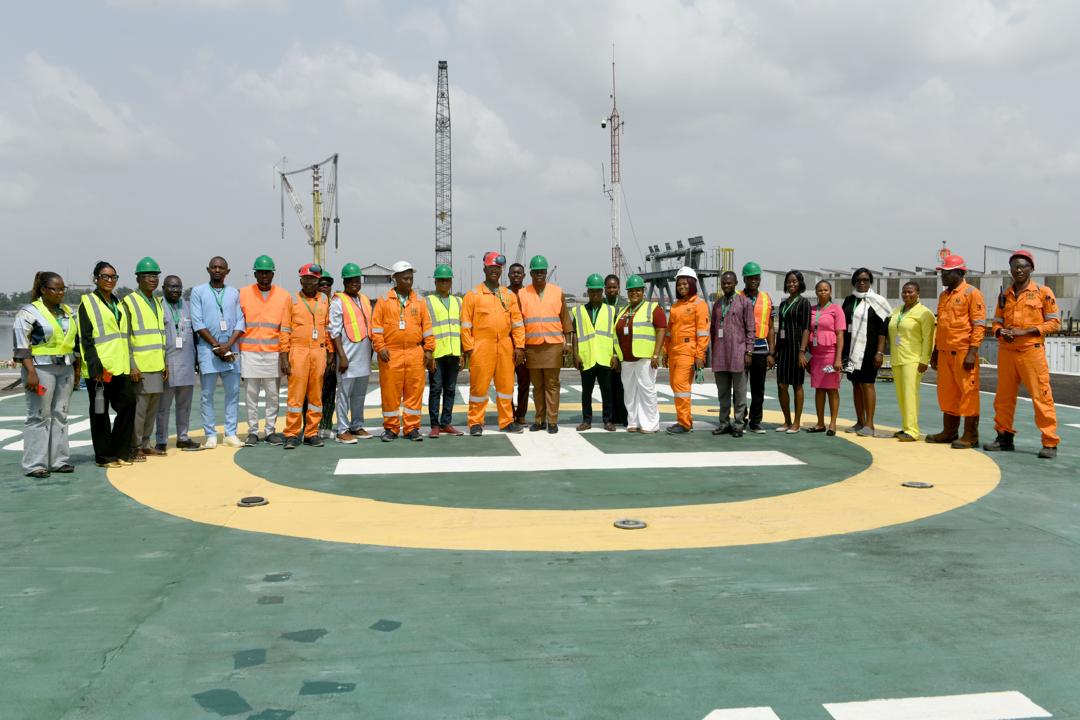
As the Federal Government intensifies efforts to attract new oil and gas investments, spur speedy development of fields and ensure reduction in the cost of production, Marconi.NG EPC Limited (Marconi), positioning itself as one the leading oil and gas service companies in West Africa, has pledged cost competitive and speedy delivery of projects and opportunities.The company made the commitment on Wednesday when officials of the Corporate Communications Division of the Nigerian Content Development and Monitoring Board (NCDMB) led select journalists on a tour of some Port Harcourt-based oil and gas companies.Marconi, which is a wholly Nigerian entity acquired the assets of Saipem Contracting Nigeria’s Rumuolumeni Yard in May 2025.
Speaking during the tour, the Chief Executive Officer of Marconi, Mr. Gian Fabio Del Cioppo explained that the company’s yard covers more than 1,000,000 square meters, includes a 330-meter jetty, and has the capacity to fabricate over 25,000 tons of heavy structures per year. He added that the facility is one the leading yard in the country with assets and organisational capability to execute fabrication and other services for complex capital EPC projects, both onshore and offshore.
He emphasised that the company possesses the equipment, technical capacity, legacy and human capabilities to deliver the highest quality of work in the industry at competitive costs and schedule, aligned with the Presidential Directives on Local Content and the provisions of the Nigerian Oil and Gas Industry Content Development (NOGICD) Act, 2010.He appealed to the Government and oil industry stakeholders to be steadfast with the implementation of the NOGICD Act, insisting that Marconi is well positioned to support national goals, while contributing significantly to job creation and economic growth. He underscored the benefits of local content to the economy and urged Government to resist pressures to roll back the progress that had been achieved in local content implementation in the last 15 years. Conducting the journalists round the facility, Nigerian Content Manager of Marconi, Dr. David Editang, explained that the new owners retained the services of local experts who operated the facility for decades prior to the acquisition of the facility.He noted that the facility has the capacity to fabricate, store and load out completed project structures through three of its jetties.
Recently, Marconi, marked the First Steel Cutting Ceremony for some subsea structures for one of the major offshore projects currently being executed in Nigeria. The facility also played a significant role in the execution and construction of several notable projects in the past including Egina, Usan, Akpo, Train 7, among many others.
The General Manager, Corporate Communications Division (CCD) of the NCDMB, Dr. Obinna Ezeobi, led other NCDMB personnel and a host of journalists on the facility tour.He noted that Marconi is now well positioned to operate across the the oil and gas value chain, from land, swamp and shallow waters to deep sea offshore.
Giving reasons for the tour, Dr. Ezeobi said, “As we showcase the companies, we are achieving our mandate as set out in Sections 67 and 70 (n) of the Nigerian Oil and Gas Industry Content Development (NOGICD) Act.” These Sections mandate the NCDMB to promote Nigerian Content through communication and stakeholder engagement and also outlines the Board’s functions which include capacity building. He explained that media practitioners are critical stakeholders in the implementation of the NOGICD Act.
According to him, “We want the media to better understand how the oil and gas industry works; we want to deepen our relationship, and to build the capacity of media stakeholders in reportage.”He also noted that the NCDMB had established sustainable relationships with media stakeholders in different parts of the Country, and organises annual engagements in Port Harcourt, Lagos and Abuja.

28 Companies get Permit to access flare gas, boost Nigeria’s Energy security …As NUPRC Paves Way for Cleaner Energy
By Our Correspondent As part of efforts to boost the nation’s revenue earning,Nigerian Upstream Petroleum Regulatory Commission (NUPRC) , Chief...


Alleged Corruption:Ngige remanded in Kuje prison as court hears EFCC’s fraud allegations
By Our Correspondent A Federal Capital Territory (FCT) High Court in Abuja has ordered the remand of former Minister of...

Finally ,governor Diri of Bayelsa State announces demise of his deputy, senator Lawrence Oborawharievwo Ewhrudjakpo,
By Our Correspondent The Bayelsa state government announces with deep regret and profound shock the sudden passing of the deputy...


Bago Swears In Commissioners, Council Chairmen, and Board Members, Charges Them to Deliver New Niger Agenda
BY UTHMAN BABA-NASEER,MINNA Niger State Governor, Mohammed Umaru Bago, has sworn in 30 commissioners, 25 elected council chairmen and their...


Niger Gov. Advocates for Single Term for State Governors in Nigeria
BY UTHMAN BABA-NASEER, MINNA Niger state Governor Mohammed Umar Bago has strongly advocated for a single term tenure for state...


EFCC acted in bad faith in charges against Peace Corps chiefs on contract issue
By Abdul-Ganiyy Akanbi The Peace Corps of Nigeria (PCN) has accused the Economic and Financial Crimes Commission ( EFCC) of...

OGFZA Secures $24B in Investments for Nigeria …As Stakeholders Back Calls For Exemption in New Tax Law
By Our Correspondent The Oil and Gas Free Zones Authority (OGFZA) has announced that it has attracted more than 24...


NCDMB, Media Team Visit Marconi.NG, As Firm Assures on Cost, Schedule Competitiveness
By David Owei, Yenagoa. As the Federal Government intensifies efforts to attract new oil and gas investments, spur speedy development...

Governor Adeleke Mourns SOJ Worldwide Publisher, Adesoji Omosebi ● Mulls Health Insurance Programme for Journalists
By David Owei . Osun State Governor, Senator Ademola Adeleke has expressed sadness over the death of Adesoji Omosebi, Publisher...

Security Will Improve Next Year-Lawan Assures Nigerians …Says Only APC, Tinubu Have the Trust of Nigerians in 2027
By George Mgbeleke President of the 9th Senate, Senator Ahmad Lawan, has expressed strong optimism that Nigeria’s security challenges will...
-
 Business & Economy4 months ago
PC-NCG Issues Disclaimer on Purported Nigerian Coast Guard National Orientation Exercise In Anambra State
-
 Entertainment1 year ago
Jubilation galore as Parishioners of CKC Kurudu celebrate their cultural heritage ….FG should exploit our Cultural heritage to unite Nigerians-Rev Fr Dim
-

 General News1 year ago
Celebration galore as UDA Successfully Elected New Exco ……I will digitalize processes that will raise UDA to greater height -Comr. Okejiri
-
 Law & Crime6 months ago
ICPC pledges to collaborate with FIDA to end Sex for Marks in tertiary institutions
-

 General News2 years ago
Reps hold public hearing on FMC Ugwuaji Awkunanaw
-
 Politics4 months ago
ASUU-NDU protest against FG loans, unpaid salaries,Non-Implementation of agreements …..says loans is generational slavery
-

 Law & Crime5 months ago
Legal practitioner raises alarm over threat to his life by CSP Muhammed Abdulkareem
-

 General News1 year ago
Kugbo Hill Tragedy: Trailer Crushes Car, Kills Four and Injures Several Others in Abuja