
Oil & Gas
Don’t Be Like SPDC, Diri Tells Renaissance Energy


By David Owei, Baylesa
Governor of Bayelsa State, Senator Douye Diri, has advised the management of Renaissance Africa Energy Company Limited that having acquired the assets of Shell Petroleum Development Company (SPDC), it should operate differently from the former owners of the oil firm.
The Bayelsa governor also urged the company to incorporate the interests of host state governments in its operations in order to reduce conflicts in host communities.
Senator Diri stated this on Wednesday when he received the management of Renaissance Africa Energy, including its chairman, Dr. Layi Fatona, Managing Director and Chief Executive Officer, Chief Tony Attah, and other officials in Government House, Yenagoa.
The governor explained that before SPDC divested its assets, host communities were short-changed because the proceeds that accrued to them were grossly inadequate and resulted in agitations by state governments for a better deal.
“When we heard that SPDC had divested, we advised that the new company carries the host states along because part of the issues with the previous operator were that they were seen more like buccaneers. They were like people who came to the communities to collect and in return gave nothing back.
“Of course, the other party that also enjoys the oil arrangement is the federal government. Even out of protests and agitations, what the Niger Delta states get is a paltry 13 per cent.
“There is nothing wrong if states are co-owners with you even if it is a little percentage and that is what l have been pushing for. l think it is not too late now that we have our own people there.
“If we are co-owners, there is even the tendency that we will protect it more just as we are doing with the 13 per cent. See what you can do to include the interest of Bayelsa State.”
Senator Diri, who expressed dissatisfaction with the Petroleum Industry Act (PIA), noted that, “under the act, the federal government and oil companies cut off the states and local governments and deal directly with the communities. Now we receive a lot of protests from the communities. It is only when trouble comes that they remember that there is a state government and a local government.
“But you have now come in. So please, do not be the buccaneers that people used to know about SPDC, Nigerian Agip Oil Company and all other oil companies that have operated on our land.”
The Bayelsa helmsman commended the management of the oil firm for acquiring SPDC, which had hitherto been dominated by foreigners for decades, saying that it was historical and something to be proud of.
“The good thing is that we have the same people that have been in the oil industry and have understudied and have been exposed to the intricacies. l hope that you are not going to make the same mistakes and that you are going to see the states and communities as part and parcel of your operations,” he said.
Diri assured of the state government’s commitment to partner with the company on energy security, adding that his administration was procuring a 60-megawatt gas turbine for independent power supply to the state.
He also appealed to the company to look in the issues of environmental pollution, stressing that as it had acquired the assets of SPDC, it should equally acquire the liabilities.
In his remarks, the Chairman of Renaissance Africa Energy Company Limited, Dr. Layi Fatona, said the delegation was in the state to introduce the company and its vision to the government having acquired SPDC’s assets.
He sought the state government’s collaboration in the area of energy security under the administration’s ASSURED Prosperity Agenda to help support Bayelsa’s development.
Also, the Managing Director/Chief Executive Officer, Chief Tony Attah, said the company recognised Bayelsa as being supportive to its predecessor (Shell) and commended Governor Diri for his visionary leadership.
Attah noted that the company intends to be Africa’s leader in energy security and facilitate industrialization using domestic gas for the interest of Nigeria, especially Bayelsa which has huge potential in gas.









Oil & Gas
Gas Pipeline Host Communities Give NNPCL, PINL 14 Days Ultimatum Over Unpaid Surveillance Allowances.

By David Owei
Communities and stakeholders along the Eastern Gas Network (EGN) have given the Nigeria National Petroleum Petroleum Corporation Limited (NNPCL), and
Pipeline Infrastructure Nigeria Limited (PINL) a two-week ultimatum to settle outstanding payments to surveillance contractors and guards of the gas pipelines.

The communities also demanded for inclusion in all corporate social responsibility packages of both companies.
Speaking on behalf of the EGN host communities and stakeholders at a press conference in Port Harcourt, HRH, Eze Peter Wagbara, paramount ruler (Nye Nwe Ali) of Elele-Alimini Community in Rivers State said the communities are concerned that the surveillance contractors and guards are being owed backlog of their entitlements adding that this has adversely affected families that depend on the stipends for their survival.
He said the prolonged delay in the payment has created anxiety and dissatisfaction amongst members of the communities.
Wagbara warned that if the situation persists, it could undermine the goodwill existing among the communities, PINL and NNPCL.
“The surveillance guards have families and responsibilities. They depend on the timely payment of their earnings to meet basic needs, while community stakeholders have continued to support the programme and mobilise their people in the interest of pipeline security.
“The prolonged delay has understandably created anxiety, dissatisfaction, and uncertainty among our people. We are concerned that if this situation persists, it could undermine the goodwill and confidence that have been painstakingly built between the host PINL and NNPCL”.
The monarch emphasized that their ultimatum did not connote a withdrawal of their support for pipeline protection, but an appeal for the prompt fulfilment of the obligations that sustain their participation and commitment.
The communities therefore called on PINL and its client, NNPCL, to take immediate steps to reconcile all outstanding obligations and commence the reconciliation and payment of the full backlog owed to surveillance contractors, guards, and eligible community stakeholders along the Eastern Gas Pipeline Network.
They also demanded that both organisations should ensure that the payment of surveillance contractors, guards, and eligible stakeholders resumes promptly and is sustained in accordance with agreed contractual and administrative arrangements.
Wagbara added that Eastern Gas Pipeline host communities should be formally integrated into PINL and NNPCL scholarship, youth and women empowerment, and other community development programmes, based on transparent eligibility criteria.
The communities further requested that PINL and NNPCL should engage recognised traditional rulers and community stakeholders to communicate a clear payment schedule, address outstanding concerns, and establish a sustainable mechanism for resolving future disputes.
“We hereby give PINL and NNPCL a two-week grace period from the date of this public statement to resolve the outstanding payment issues and demonstrate concrete action towards the inclusion of our communities in relevant CSR programmes.
“We expect this period to result in meaningful progress, including the settlement of the backlog, the resumption of regular payments, and the formal inclusion of our communities’ in the relevant development initiatives, ” the communities stated.
They however noted that the operations of PINL has ushered in peace and security in their communities and along the gas lines, adding that their ultimatum was not intended to undermine the operations of PINL or NNPCL, nor was an attempt to discourage investment in their region.
They insisted that their demand was a necessary appeal for fairness, accountability, and the fulfilment of obligations to communities that have embraced the responsibility of protecting critical national infrastructure.
“Our communities have keyed into the vision of community-based pipeline surveillance. Our people understand the strategic importance of the Eastern Gas Pipeline Network to national energy security and economic development, and they have continued to contribute to its protection.
“We remain committed to peaceful engagement and constructive dialogue. However, the patience of our people must not be mistaken for an absence of legitimate concerns.
By David Owei
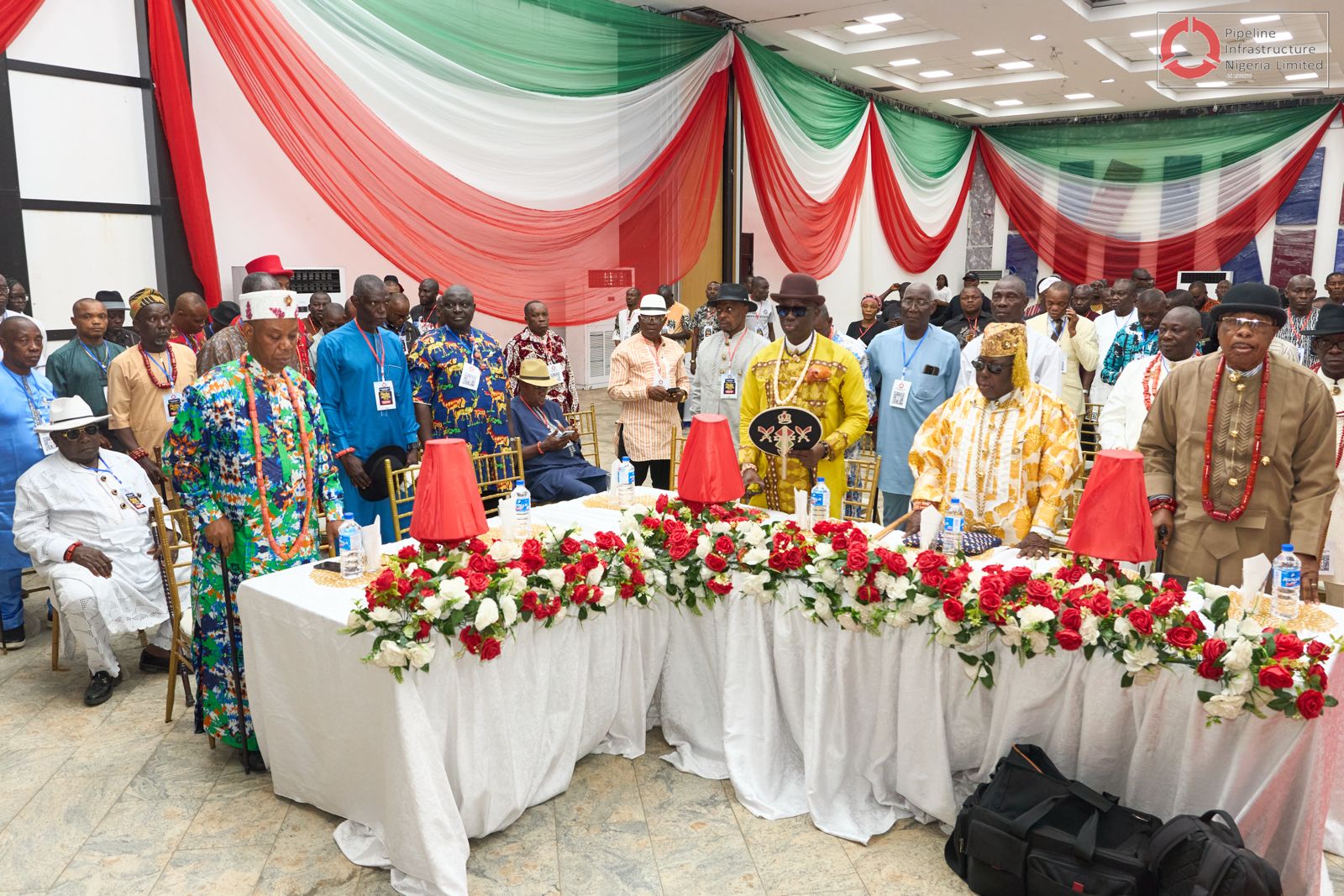
Stakeholders from oil and gas host communities in Bayelsa State including the Ijaw National Congress (IYC) Worldwide, have called for increased engagement between the Federal Government and the communities to ensure maximum security of the pipelines, and increased output for the country.
The stakeholders who spoke in Bayelsa State at the bi-monthly stakeholders forum with host communities convened by Pipeline Infrastructure Nigeria Limited (PINL), urged the Federal Government to copy the PINL model of regular engagement with host communities.
Comrade Famous Daunemigha, Second National Deputy President of the Ijaw Youth Council (IYC) Worldwide told journalists that since PINL started operations in the Eastern Corridor it has maintained regular meetings with host communities along the Trans Niger Pipeline (TNP) which he said has contributed greatly to the successes they have recorded in securing the lines.
He noted that the host communities are critical stakeholders and as such could not be ignored in the oil and gas value chain.
“PINL has done well, they are relating with all the critical stakeholders for over a period now. We can see there is ownership of the process. We all own it. We are now like partners in progress.
“The Nigerian government have also seen that when the people that own the pipeline, own the resources are part of the process of securing it, it’s easier for them to achieve peace. You can put 1,000 soldiers on the pipeline, you will not achieve it. But when the people are okay and happy with you, with the way PINL is doing, the people will be part of it, they will own it, leading to steady oil production, ” he said.
The Ijaw youth leader noted that the state is recording zero-infractions on the lines because they have owned the process courtesy of PINL’s regular engagement with the host communities.
“There is no infraction. It means that the people that owned the resources are ready to protect it. This is feedback to the Federal Government that; look at the model that are being used by PINL by engaging the host communities as the owners of the resources and their subsidiaries. They can use that model and apply to their own dealings with us as well. By so doing, Nigeria will have a steady revenue which will trickle down to all of us”, he added.
A community leader, HRH, David Oseni Oseni of Elebele Community, Bayelsa State, acknowledged the company’s role in safeguarding their environment.
He also warned youths tampering with oil and gas pipelines because of the negative impacts on the communities and environment.
The monarch said PINL’s engagement with host communities has become a game-changer in the surveillance activities.
“Oil spill is doing more damage to the environment. Our food, our crops, our aquacultures, the negative impact is coming back to us, not the Federal Government, not these multinational, but to us.
“If we destroy the pipes today and the negative impact come to the environment, your family, your mother, your parents, everybody will suffer. So please, it’s a take home message.
Since PINL have decided to integrate the traditional rulers and the leaders of various communities, there is a relative peace, and we must learn how to sustain it and prove on it, ” he stated.
For Hon. Living Meeting, the lawmaker representing Ekeremor Constituency 2
“What the PINL is doing is seemingly primarily benefitting the Federal Government, but of a truth, our communities tend to benefit more. At a point, our oil infrastructures were suffering a lot of sabotage, and the impact of the sabotage was always creating havoc on our communities.
“When the pipeline is tampered and oil leaks to the rivers, it becomes a problem for our local fishermen to survive. Our environment cannot thrive without its natural habitat. So, what the PINL has done has also benefited us by way of protecting the infrastructure so that the devastation that comes with the equipment failure and everything can be contained,” he said.
The lawmaker while commending the operational strategy of the company, called on stakeholders of the host communities to sustain their support for the company.
Earlier in his address, Dr. Akpos Mezeh, General Manager, Community and Government Relations of PINL in his brief, informed the stakeholders that the state recorded a long period of zero-infractions on the TNP, especially from the months of August.
He reminded the stakeholders of their critical in helping the federal government achieve its 2027-2030 benchmark for oil and gas production.
“NNPC Limited has set ambitious production targets of 2 million barrels per day by 2027 and 3 million barrels per day by 2030, alongside a target of 12 billion standard cubic feet of natural gas production per day by 2030.
“For these ambitions to become sustainable realities, the security and integrity of pipelines and other critical infrastructure will be fundamental. This is where the role of host communities becomes particularly important.
“The communities through which these assets pass are not passive observers. They are partners in protecting the infrastructure that supports our national economy. Every pipeline protected is an asset preserved. Every incident prevented is production protected. Every timely piece of intelligence shared can help prevent disruption”, he stressed.
Oil & Gas
As Oil companies , Niger Delta Community Ask: Who Will Clean Up their exploited Environment
By David Owei
For families in Bille Kingdom, the water around them is more than a stretch of creek.
It is their means of movement, a source of livelihood and being part of everyday life ,it’s about tourism,aquatic splendor ,picnic and recreation and exploration of natural ambience.
So when reports of gas leaks and other environmental problems begin to raise concerns about the safety of the waterways, the issue is no longer just about oil production.
It becomes a question of how people will live, work and provide for their families.
Now, as International Oil Companies (IOCs) are divesting from onshore oil assets, residents of the Rivers State community in particular in particular and Niger Delta in general are asking yet another difficult question: who will take responsibility for the environmental problems left behind?
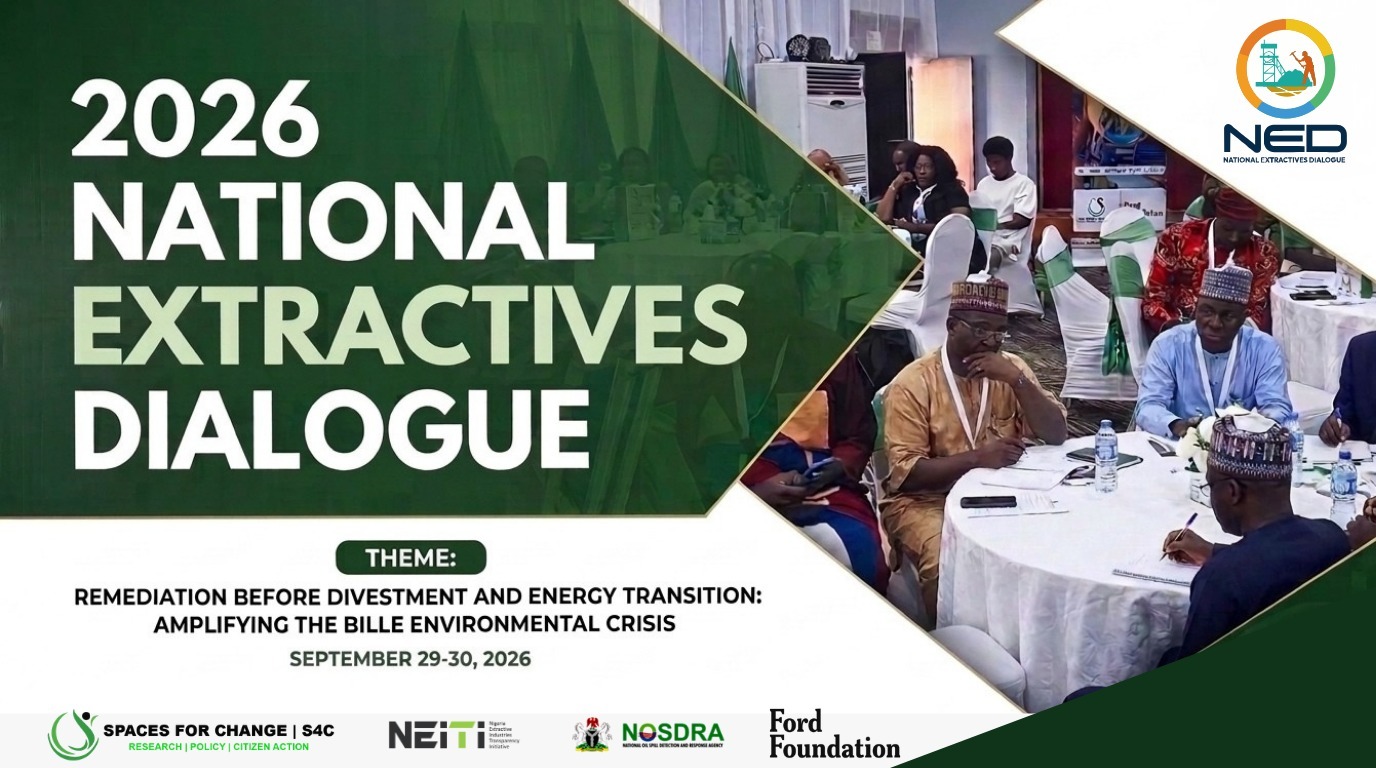
That question will take centre stage in Port Harcourt on September 29 and 30, when Spaces for Change (S4C), in partnership with the Nigeria Extractive Industries Transparency Initiative (NEITI) and the National Oil Spill Detection and Response Agency (NOSDRA), with support from the Ford Foundation, convenes the fifth National Extractives Dialogue.
The dialogue is themed “Remediation Before Divestment and Energy Transition: Amplifying the Bille Environmental Crisis.”
More than 150 stakeholders from the Niger Delta and beyond are expected to attend, including government officials, regulators, civil society organisations, host community representatives, academics and private-sector players.
Bille Kingdom, in Degema Local Government Area of Rivers State, hosts major oil assets including OML 18 and OML 24. The community is now at the centre of concerns over what happens to environmental liabilities as Nigeria’s oil industry undergoes major changes.
According to the organisers, reports from affected communities and preliminary field observations indicate persistent environmental challenges, including reported gas leaks affecting waterways, creeks, residential areas and agricultural livelihoods.
While technical assessments are still ongoing, residents are waiting for verified scientific findings and immediate relief measures, including access to clean water.
For people living in a riverine community, damage to waterways can quickly become a threat to livelihoods. Fishing, farming and transportation all depend on the health of the environment.
The organisers say this is why remediation must come before divestment and energy transition plans.
As IOCs transfer onshore assets to domestic operators, they argue that historical environmental liabilities must be properly identified and addressed so that communities are not left carrying the burden of decades of extractive activities.
The dialogue will provide residents of Bille and neighbouring communities an opportunity to engage directly with regulators, industry operators, security agencies and civil society organisations.
The press statement announcing the event was signed by Victoria Ibezim-Ohaeri, Executive Director of Spaces for Change (S4C).
For Bille residents, the issue is ultimately about more than who owns an oil asset.
It is about whether the water around their homes will be safe, whether their livelihoods can survive and whether the companies leaving will also leave behind a responsibility to restore the environment.
As Nigeria moves towards a new energy future, Bille is asking who will be responsible for the environmental cost of the old one.


Gov Fubara Inspects Creek Road Market, Assures Completion by January 2027
By George Mgbeleke Rivers State Governor, Sir Siminalayi Fubara, has expressed satisfaction with the pace and quality of work at...


Shouts of Joy Rock the World As Postor Chris Opens Final Healing Streams Edition for 2026
By Our Correspondent Hundreds of millions participate in the global healing crusade as Pastor Chris ministers to the sick in...


Abuja land: Jordan Nyesom-Wike never admitted receiving $2.1m from anyone -Onoja
By Our Correspondent A Senior Advocate of Nigeria (SAN), Dr James Ogwu Onoja has warned social media commentators and bloggers...

Panel on death of 37dead illegal Miners: Commissioner alleges NSCDC goes beyond its official role of engagement
By Uthman Baba -Naseer,Minna The Commissioner for Homeland Security in Niger State Mr. Maurice Bello Magaji has alleged that the...
Abuja land: Jordan Nyesom-Wike never admitted receiving $2.1m from anyone -Onoja
By Our Correspondent A Senior Advocate of Nigeria (SAN), Dr James Ogwu Onoja has warned social media commentators and bloggers...

Sea Incursion: Senate Demands Urgent Shoreline Protection As Ayetoro Community Faces Extinction
By our correspondent Senate on Thursday called for immediate and comprehensive shoreline protection to save Ayetoro community in Ilaje Local...


FG, labour meeting over fuel price, minimum wage, tax relief, others, deadlock, as NLC orders affiliates to be on alert.
By Our Correspondent The meeting between the federal government and organised labour, convened at the ministry of labour in Abuja,...

Ebola: No evidence of community spread in Nigeria — FG
By Our Correspondent In a bid to state the true situation of Ebola spread in the country,Federal Government has declared...


Benue Massacre: Death Toll Hits 113 ..As Senate demands FG’s Intervention
By George Mgbeleke The Senate has condemned the killing of 113 persons, including six mobile police officers, in a series...

Lagos-Calabar Coastal Highway: My Disagreement With Umahi – Diri *Says Duke A Jester, So-Called National Champion Without Base
By David Owei Governor of Bayelsa State, Senator Douye Diri, on Thursday, revealed his disagreement with the Minister of Works,...
-

 Politics1 year ago
Gov Okpebholo moves to end Cultism *Threatens action against leading cult groups *Vows to demolish more cult houses in Edo State
-
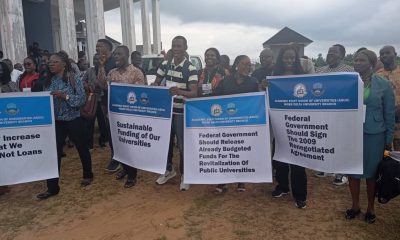
 Politics1 year ago
ASUU-NDU protest against FG loans, unpaid salaries,Non-Implementation of agreements …..says loans is generational slavery
-
 Business & Economy1 year ago
PC-NCG Issues Disclaimer on Purported Nigerian Coast Guard National Orientation Exercise In Anambra State
-
 Entertainment2 years ago
Jubilation galore as Parishioners of CKC Kurudu celebrate their cultural heritage ….FG should exploit our Cultural heritage to unite Nigerians-Rev Fr Dim
-

 Sports8 months ago
Bayelsa-born ex-football star’s son, Opuama donates spike shoes to Athletics Association
-

 General News2 years ago
Reps hold public hearing on FMC Ugwuaji Awkunanaw
-

 Law & Crime1 year ago
Legal practitioner raises alarm over threat to his life by CSP Muhammed Abdulkareem
-

 General News2 years ago
Celebration galore as UDA Successfully Elected New Exco ……I will digitalize processes that will raise UDA to greater height -Comr. Okejiri