
Politics
The Tax Reform Bills and Akpabio’s Brinkmanship

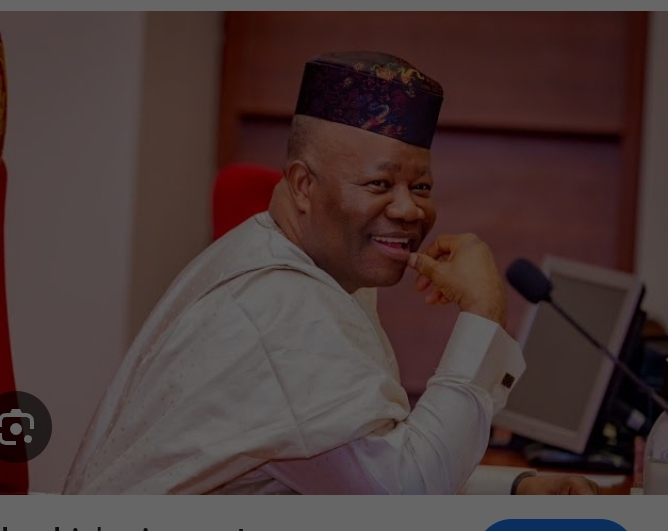
By Hon Eseme Eyiboh
The President of the 10th Senate, Senator Godswill Akpabio, GCON, is known for his mastery of brinkmanship in Nigerian politics. His ability to navigate complex political landscapes and negotiate contentious issues has earned him a reputation as a skilled and strategic leader. Hence, brinkmanship has been a hallmark of Akpabio’s legislative and political manoeuvres. Akpabio’s expertise in brinkmanship has contributed significantly to his success as Senate President, enabling him to effectively manage competing interests and drive legislative progress.
In his 26 years of active politicking and cognate governance, Senate President Akpabio has been able to etch his feet in the sands of history as one of Nigeria’s foremost transformative and dynamic leaders. From the state to the national level, he had garnered enough experience to navigate the tortuous path of the nation’s intriguing political landscape. Beginning as a commissioner in the state and later as governor for eight years, Akpabio demystified the difficulty most governors have in delivering on the derivatives of good governance. He set a standard which none of his successors have been able to match, thereby earning the sobriquet, Uncommon Transformer.
Having transitioned to national politics, Akpabio distinguished himself as the Senate Minority Leader, auditing and sifting through government proposals to the parliament, speaking and protecting the interests of the minority parties and the vulnerable citizenry. It must be acknowledged that it was in recognition of his performance and negotiation skills that he was made the minority leader against the ranking Rule in the Legislature. As minister, sitting in the Federal Executive Council and driving government policies at the highest level, Akpabio displayed uncanny governance wizardry and competence. His achievements at the Niger Delta Ministry are indelible, especially the completion of the uncompleted 20 years headquarters building of the Niger Delta Development Commission (NDDC) within his less than four years as minister. All these experiences culminated in his expertise in statecraft, which has become the hallmark of his excellence in managing human resources and issues of governance and national interest.
It is therefore not an accident that Akpabio, as Senate President, has become an integral part of the successes of President Bola Ahmed Tinubu’s administration, being driven by the Renewed Hope Agenda. As the chairman of the National Assembly and President of the Upper Chamber, Akpabio has brought experience, maturity, common sense and political sagacity to bear on the smooth running of the parliament and in initiating and sustaining a mutually responsible relationship with the Executive arm of government without compromising the independence of the legislature.
Akpabio has found a partner in President Bola Ahmed Tinubu, a skilled political strategist described by the Financial Times as ‘Nigeria’s wiliest politician’. Being one of the most prepared Nigeria’s presidents, Tinubu has clearly enunciated his reforms in the Renewed Hope Agenda. These bills are the fulcrum of the president’s reform agenda and when signed into law, they will escalate the intended goodwill and benefits to the nation’s economy. The Tax Reform Bills are therefore part of the foundation of his reform regime. And the president must be given credit for his vision and courage in initiating these bills. Of course, going by his antecedents, he is only replicating what he did in Lagos state as governor for eight years, transforming the Centre of Excellence through the instrumentality of tax revenue.
It is no longer news that the Senate last Wednesday adopted the harmonised version of the tax reform bills proposed by President Bola Tinubu. The legislative efforts mark a significant step in overhauling Nigeria’s tax administration and revenue generation framework, as part of Tinubu’s administration’s broader fiscal reform agenda. The tax reform bills include the Joint Revenue Board (Establishment) Bill, 2025 (SB.583); Nigeria Revenue Service (Establishment) Bill, 2025 (SB.584); Nigeria Tax Administration Bill, 2025 (SB. 585), and Nigeria Tax Bill, 2025 (SB. 586). These bills were transmitted to the National Assembly in November 2024.
When these bills were introduced, the nation was sharply divided along political, religious, and regional cleavages. These bills generated heated debates, particularly among lawmakers from different regions and interest. Northern lawmakers were vehement in their rejection of the proposal for 60% VAT revenue retention by generating states. The lawmakers were apprehensive and believed that the proposal would further impoverish their region. This was hotly contested and it indeed put the nation on edge. But after a careful negotiation, the benchmark was reduced to 30%, and the term “derivation” was replaced with “place of consumption”. They quietly put the agitation to rest. Again, the bills met a brick wall in the state governors, who, of course, wield so much power and they resolved to mobilise against it. The two chambers of the National Assembly were polarised and even the leadership of the Senate was at a point almost disagreed over the bills. But today, with Senator Akpabio’s tact and ingenuity in handling the affairs of the parliament, the bills are ready to be transmitted to the president for assent.
There is no doubt that Senate President Akpabio, conscious of the sensitive nature of the tax reform bills, the delicate thread of ethnicity, religious incongruity, and the natural human instinct to resist change, handled the precipitations that arose as a result of the introduction of the proposed legislations with prudence. He led from the front, and the bills were considered on their own merits, without pandering to party loyalty or executive interference, but with the sole interest of the generality of Nigerians. The process was diligent, transparent, and inclusive, with all the stakeholders given room to make inputs. No stage of the bill’s consideration was subdued; the public hearings were open and accessible. The contentious sections and clauses of the bills were carefully considered, sieved, and democratically amended or deleted to arrive at an acceptable bill that, when signed into law, would fast-track the socio-economic reforms of the Tinubu administration and catapult national development.
It is axiomatic that Akpabio’s brinksmanship necessitated this laudable and giant step forward. By the successful and peaceful passage of these bills without the anticipated national impasse, the Senate President has again demonstrated his ability to navigate key legislative priorities through consensus-building and general acceptability. Akpabio’s capacity to midwife, nurture, and sustain a mutually intelligible relationship with the executive branch, which the opposition and some naysayers unfortunately tagged “rubber stamp”, has instead espoused his capacity for strategic manoeuvring.
Akpabio, however, did not achieve this alone, it is with the studied cooperation of the distinguished colleague senators, who have always lined behind him and his leadership through thick and thin. Their solid support and contributions made the difference in the consideration and passage of these bills. As representatives of the people, they served as grassroots liaison officers that enlightened and advocated continuously to their constituents to buy into the import of the reform bills. In fact, without their cooperation, the journey of these bills would have been inchoate.
The House of Representatives under the leadership of the cerebral speaker, Rt. Hon. Tajudeen Abbas played a complementary role in consonance with its status as the second chamber of the national parliament. The vibrant and younger lawmakers were also instrumental in spreading the gospel of the tax reform bills to their constituents, making the job easier.
Most importantly, the state governors were indeed the game changers. To have stepped down from their initial antagonistic posture to embrace the amendments carried out by the Senate in fine tuning the bills, the governors helped in calming down frayed nerves in their various localities thereby setting the tone for a much more peaceful and smooth participation of other stakeholders in contributing purposefully. It was indeed a team work, with the proposed legislations competently initiated by Mr. President and ably coordinated by the Senate President and his colleagues with the understanding of the governors and other stakeholders.
As we await the transmission of the four tax reform bills to the president for his assent, credit must be given to Senate President Godswill Obot Akpabio for being the hub of legislative support, galvanising the much-desired reforms and balancing them with the demands of the people as expressed by their elected representatives. With two years to go in the life of President Tinubu’s administration, Akpabio’s unwavering contributions, firm, courageous, and passionate support cannot be underestimated as the nation anticipates reaping the benefits of the bold reforms of the Renewed Hope Agenda regime. It is time to give to Caesar what belongs to Caesar and God what belongs to God.






Politics
2027 : PDP Candidate re-connects Zanchita community with National grid after two years of darkness
By Uthman Baba-Naseer,Minna
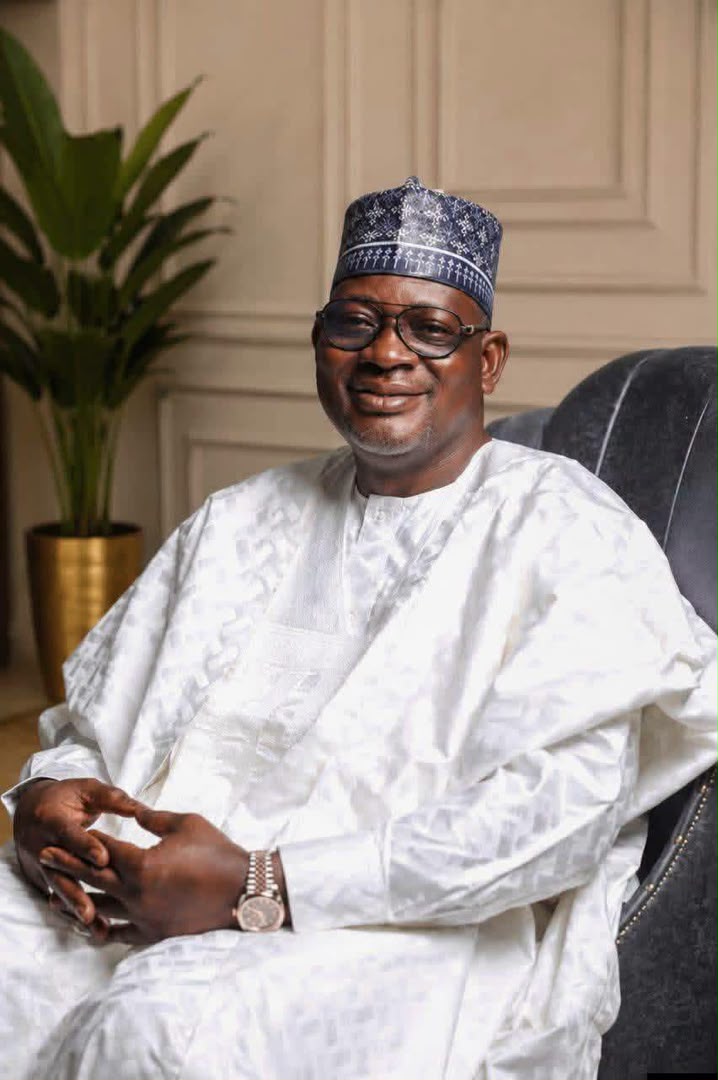
It was a celebration galore in Zanchita community in gbako local government area of Niger State,as former Chairman federal inland Revenue service (FIRS)and gubernatorial candidate of the people’s Democratic party PDP re-connect the community with National grid after two years of darkness.
The coming on board of the former Chairman of federal inland Revenue service to contest as the governor of Niger State was described as a round peg in a round hole by Nigerlites as he has been known as a philanthropist touching the life of less privileged and communities.
In there response youths in the community express their bitterness over the attitude of government officials who took away the damaged transformer in the community for the past two years living them to their faith without electricity, adding that the only primary school have been in delapidated condition for over five years without government attention.
They express disappointment over the non challant attitude of the government, state and National assembly members for not responding to their several requests for the past two years, and assured NAMI for their commitment and support.
Presenting the brand new transformer to the people of Zanchita community on behalf of the PDP governorship candidate, Dr Mohammed Shaba popularly known as (psychology) said the transformer provided for the community is part of NAMI humanitarian gesture to improve the soci- economics of the community.
Dr Shaba said the foundation is part of the humanitarian services rendered by the Niger South foundation under the chairmanship of Dr Mohammed Nami who always shows concern to the plight of the people.
He said the community can reciprocate their kind gesture in rendering prayers for the PDP Governorship candidate,Dr Mohammed Nami for God’s guidance and protection to succeed in his ambition as an opportunity to do more particularly for the rural dwellers.
In his response the village head of Zanchita,Ahmadu Mohammed Zanchita appreciated the kind gesture of Mamman NAMI for redeeming his pledge and prayed for protection and more blessings to enable him to provide succour to rural dwellers.
Politics
SPC 2026 Annual Wkshop: Journalists Deliberate on Legislative Oversight, Budget Integrity,Media Collaboration
By Our Correspondent
The 2026 Capacity-Building Workshop of the Senate Press Corps will focus on strengthening legislative oversight and media collaboration as mechanisms for safeguarding Nigeria’s national budget from unlawful insertions and other practices capable of undermining budgetary integrity.
In a statement signed by Chairman Senate Press Corps, Taiye Odewale on Friday, the workshop, scheduled to hold on Monday, September 28, will have as its theme: “Leveraging Legislative Oversight and Media Collaboration to Safeguard the National Budget from Unlawful Insertions.”
According to the statement, the theme of the workshop was carefully chosen in view of the critical role of effective legislative oversight, responsible journalism and public accountability in ensuring that the national budget reflects approved priorities and serves the broader interests of Nigerians.
The statement futher noted,”As part of efforts to provide participants with expert perspectives on the subject, the Minister of Budget and Economic Planning, Senator Abubakar Atiku Bagudu; Executive Director of the Civil Society Legislative Advocacy Centre (CISLAC), Auwal Rafsanjani; Director of BudgIT, Oluseun Onigbinde; and Publisher of Eagle Times Newspaper, Ikechukwu Chukwunyere, have been invited to make presentations on relevant aspects of the workshop theme.
“The workshop will also feature an intensive training session on the use of Artificial Intelligence (AI) tools, to be facilitated by London-based instructors from Mass Media TX Limited.”
According to the organisers, the AI session is designed to expose participants to emerging technologies and their practical applications in contemporary media and professional practice.
The event is also expected to bring together key stakeholders from the National Assembly and the National Assembly bureaucracy, with invitations extended to the President of the Senate, Senator Godswill Akpabio (GCON); Deputy President of the Senate, Senator Barau Jibrin (CFR) and Chairman, Senate Committee on Media and Public Affairs, Senator Yemi Adaramodu.
Others are, Chairman, Senate Committee on Appropriations, Senator Olamilekan Adeola; Chairman, Senate Committee on Finance, Senator Sani Musa; Chairman, Senate Committee on Petroleum (Downstream), Senator Kawu Sumaila; and the Clerk to the National Assembly, Barrister Kamoru Ogunlana.
The organisers said the participation of lawmakers, budget experts, civil society advocates, media professionals and technology instructors would provide a platform for robust discussions on budget transparency, legislative scrutiny and the role of the media in promoting accountability.
“The workshop is expected to examine practical approaches to strengthening the budget process, improving oversight mechanisms and enhancing collaboration between legislative institutions and the media in the public interest,” it noted.
The organisers expressed optimism that the capacity-building initiative would contribute to improved understanding of budgetary processes and promote stronger professional engagement around issues of transparency, accountability and responsible public expenditure.
The 2026 Capacity-Building Workshop will take place at Hearing Room 231 on Monday.
Politics
Diri Laments Oil Production Effects, Inaugurates 18-Member C’ttee For Cancer Treatment Centre
By David Wei,Bayelsa
Governor of Bayelsa State, Senator Douye Diri, has described as unfair and unacceptable the situation whereby communities in the state which bear the cost of the nation’s wealth are left without the care they need to remain healthy and productive.
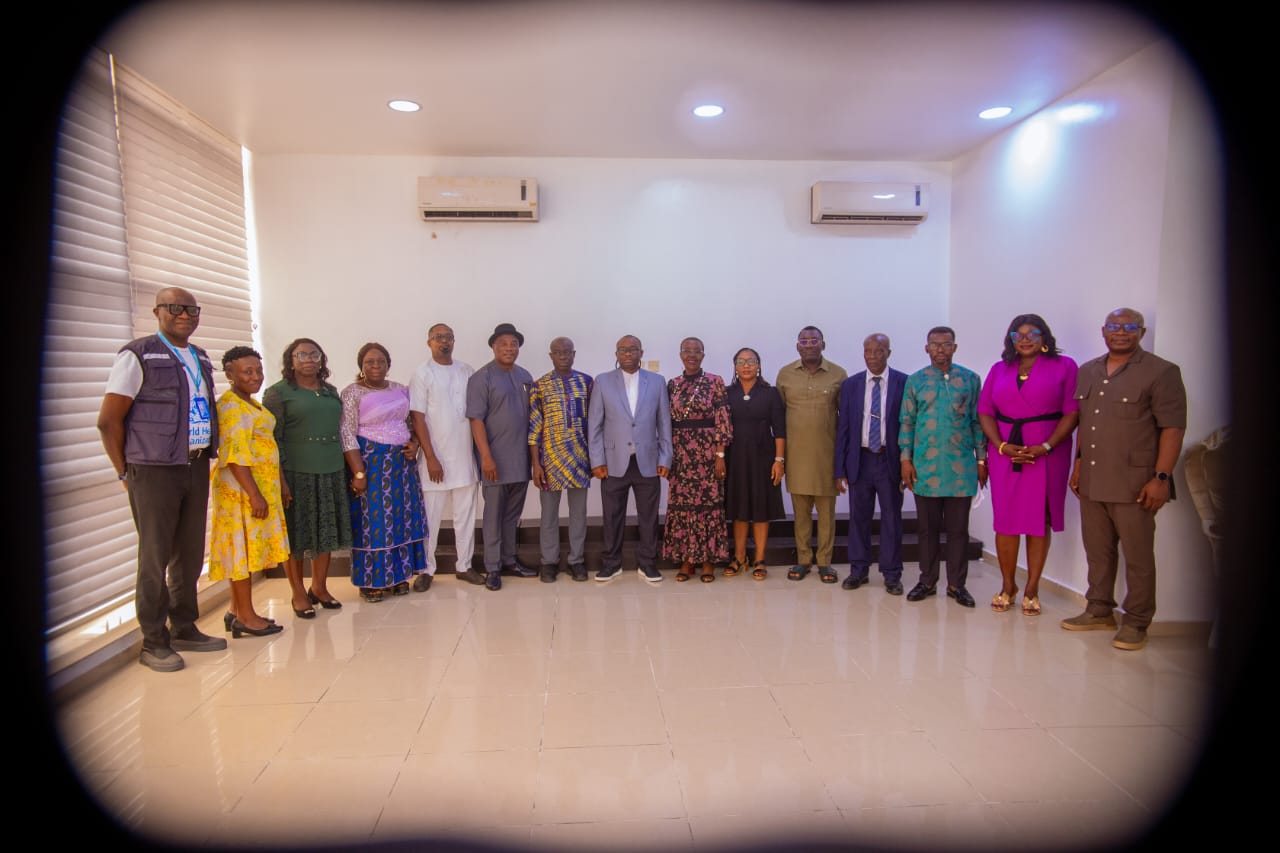
Governor Diri stated this at the weekend while inaugurating an 18-member steering committee for the establishment of the Bayelsa Cancer Treatment and Research Centre at Government House, Yenagoa.
Represented by his Deputy, Dr. Peter Akpe, the Bayelsa helmsman noted that cancer “is no longer a distant disease in communities around the state, due to decades of oil pollution with serious long-term health consequences on the people.”
According to him, breast, cervical and prostate cancers have become quite rampant among the populace, resulting in deaths even among young people in their most productive years, thus necessitating the establishment of the centre.
His words: “Let me begin with the plain truth: Cancer is no longer a distant disease in our communities. Almost every family in this hall has a story: a mother diagnosed too late; a brother who traveled to Lagos, Abuja or abroad and spent everything they owned on treatment.
“Breast, cervical and prostate cancers in particular are taking our people in their most productive years. Too many of these deaths are not because the disease cannot be treated, but because treatment was too far away, too expensive, or came too late.
“In Bayelsa, we carry an additional burden. Decades of oil pollution have left their mark on our land, our water, and we fear, on the health of our people. The Bayelsa State Oil and Environmental Commission Report of 2023 raised serious concerns about the long-term health consequences of that exposure.
“We will not accept a situation where our communities bear the cost of the nation’s wealth and are then left without the care they need. Therefore, a cancer treatment centre in Bayelsa State is not a luxury; it is a matter of health justice.”
Highlighting the terms of reference for the committee, Governor Diri charged the chairman and members to make an empirical assessment of the cancer burden in the state, as well as recommend the most suitable location for the centre, equipment, infrastructure, partnerships and financing options, amongst others.
He also charged them to plan for the requisite and competent manpower, maintenance, training, accessibility to the facility and steady supply of drugs and consumables, noting that they were chosen on account of their competence and years of experience.
In his acceptance speech on behalf of the steering committee, the Chairman and Commissioner for Health, Prof. Seiyefa Brisibe, expressed gratitude to the governor for finding them worthy to work for the establishment of a world-class cancer centre in Bayelsa.
Prof. Brisibe, noted that setting up of the committee underscores the unwavering commitment and seriousness the Douye Diri Administration attaches to the health and well-being of the people of the state.
He said the burden of cancer in the state is a reality with huge economic and health burden on families and could no longer be managed with half measures, which informed the careful selection of members with the required expertise.
According to him: “First of all, let me appreciate, with deepest gratitude, on behalf of the members of this steering committee, His Excellency the Governor of Bayelsa State, Senator Douye Diri, for his unwavering commitment to the health and well-being of all Bayelsans.
“It is visionary leadership and decisive mandate that have brought us to this inauguration today. The burden of cancer on communities is a reality that we can no longer afford to manage with half measures.
“Families in Bayelsa endure the excruciating financial, physical and emotional toll of travelling outside the state and often outside the country, just to access basic diagnostic and therapeutic cancer care. This will end with the mandate for the work we are about to begin.”
Members of the steering committee include Dr. Jones Stow, Prof. Jumbo Johnbull, Dr. Boboye Ifie, Dr. Oluwadare Marcus and Dr. James Omietimi.
Others are Dr. Ebikapaye Okoyen, Dr. Ngowari Torunana, Mrs. Beatrice Olomiete, Hon. Kingsley Kuku, Dr. Ibimonye Porbeni and Mr. Nimifagha Esindu.
Also to serve on the committee are Prof. Kelvin Kiridi, Dr. Timipa Peregha-West, Magdalene Alabinte, Prof. Beleudanyo Fente, Dr. Elizabeth Obiorah and Dr. Embeleakpo Apere.

2027 : PDP Candidate re-connects Zanchita community with National grid after two years of darkness
By Uthman Baba-Naseer,Minna It was a celebration galore in Zanchita community in gbako local government area of Niger State,as former...

Insecurity ,displacement alters distribution of Christian communities in Niger state to 3,417,636
By Uthman Baba -Naseer,Minna Niger state Christian leaders have disclosed that out of the Seven million, four hundred and seventy...

Death of 37 suspected illegal Miners:11 member of Judicial commission of inquiry set for inauguration on Tuesday by govrrnor Bago
BY UTHMAN BABA-NASEER,MINNA Sequel to the constitution of the Judicial commission of inquiry by the governor Mohammed Umar Bago, to...

Thanksgiving Service Heralds Bayelsa 30th Anniversary Celebration
By Dabid Owei Bayelsa State Government on Sunday held an inter-denominational thanksgiving service to kick-start activities marking the 30th anniversary...

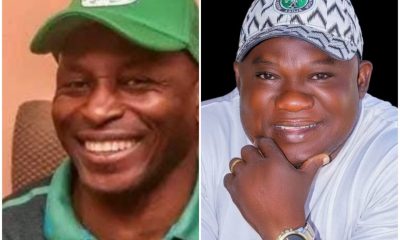
Former Speaker challenges substition of his name with Suleiman as winner of APC primary election at Minna Fed.High Court
By Uthman Baba-Naseer,Minna The Former Speaker of the Niger State House of Assembly,Rt Hon. Adamu Usman,has filed a lawsuit before...

SWAN President to Storm Bayelsa for 30th Anniversary Celebration, Igali Confirms*
By David Owei The President of the Sports Writers Association of Nigeria (SWAN), Benjamin Isaiah, has been confirmed among dignitaries...

Panic Grips Delta Residents as Deputy Director Dies After Alleged Assault
By Our Correspondent There is palpable tension among Delta residents following an alleged death of a deputy Director in Asaba,...

SPC 2026 Annual Wkshop: Journalists Deliberate on Legislative Oversight, Budget Integrity,Media Collaboration
By Our Correspondent The 2026 Capacity-Building Workshop of the Senate Press Corps will focus on strengthening legislative oversight and media...

The Day the Church ‘Blessed’ the Media
By Emmanuel Nnadozie Onwubiko For a media practitioner and a Catholic, Thursday, September 24, 2026, will remain a remarkable day....

As ‘Ọsọ Marwa’ Sweeps Across Nigeria’s Forests
By Emmanuel Nnadozie Onwubiko Today’s reflection is on a new and increasingly significant battlefront opened by the National Drug Law...
-
 Politics1 year ago
Gov Okpebholo moves to end Cultism *Threatens action against leading cult groups *Vows to demolish more cult houses in Edo State
-
 Politics1 year ago
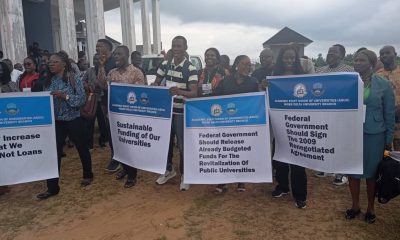
ASUU-NDU protest against FG loans, unpaid salaries,Non-Implementation of agreements …..says loans is generational slavery
-
 Business & Economy1 year ago
PC-NCG Issues Disclaimer on Purported Nigerian Coast Guard National Orientation Exercise In Anambra State
-
 Entertainment2 years ago
Jubilation galore as Parishioners of CKC Kurudu celebrate their cultural heritage ….FG should exploit our Cultural heritage to unite Nigerians-Rev Fr Dim
-

 Sports7 months ago
Bayelsa-born ex-football star’s son, Opuama donates spike shoes to Athletics Association
-

 General News2 years ago
Reps hold public hearing on FMC Ugwuaji Awkunanaw
-
 Law & Crime1 year ago
Legal practitioner raises alarm over threat to his life by CSP Muhammed Abdulkareem
-
 General News2 years ago
Celebration galore as UDA Successfully Elected New Exco ……I will digitalize processes that will raise UDA to greater height -Comr. Okejiri