
Politics
Peace Finally Returns to Rivers As Wike, Fubara Make First Public Outing After Reconciliation •Fubara addresses supporters, says no sacrifice is too big for peace •Residents react, fume at absence of Sim’s supporters

8By Our Correspondent
At last the two years political crisis in Rivers State, following the disagreement between the Minister of Federal Capital Territory, FCT, Nyesom Wike and Governor of the state, Sir Siminalayi Fubara, has finally come to an end, with peace returning to the state.
The reconciliation of the crisis that gave rise to the peace in the State was resolved on Thursday following a peace meeting brokered by President Bola Tinubu between Barr. Nyesom Wike and Governor Siminalayi Fubara at the Presidential Villa in Abuja.
After the closed door meeting with the President, both Wike and Fubara said they have reconciled their differences and have both agreed to work together as one political family, in the interest of the state.
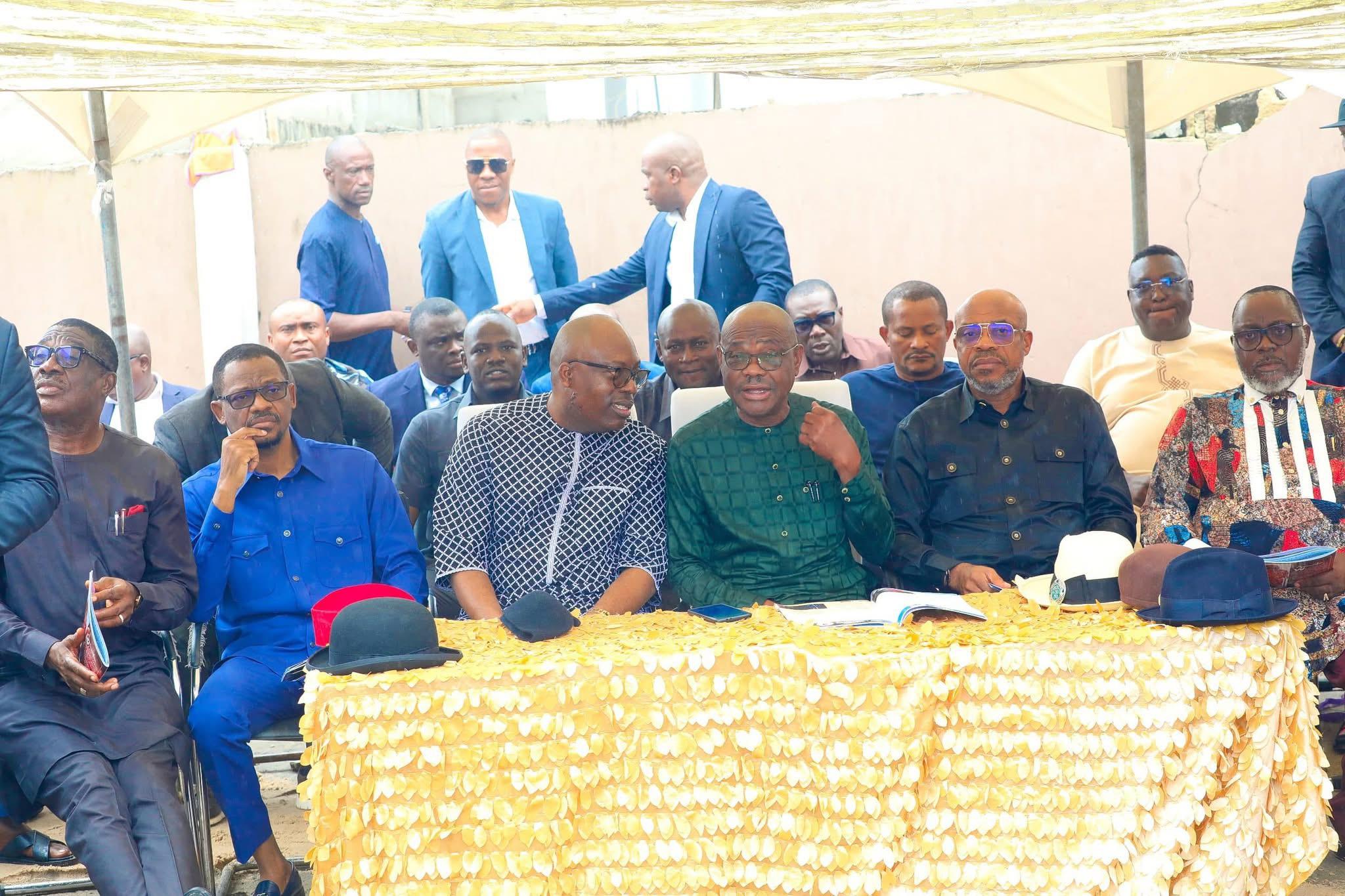
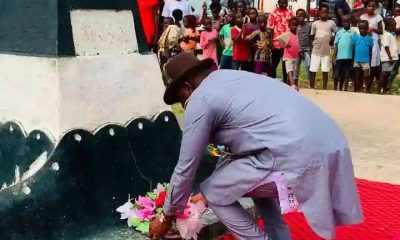
The two Rivers’ political leaders on Saturday showed signs of commitment to have truly buried their hatchets as they both attended their first public function together in almost two years, with Governor Fubara accompanying his godfather and predecessor, Wike, to the funeral service of his uncle, Elder Temple Omezurike Onuoha, at the weekend.
The FCT Minister, Nyesom Wike had, after after the peace meeting with the president said the Thursday resolution was final, adding that “every thing is over.”
Wike said, “We have agreed to work together with the governor, and the governor has agreed to work together with all of us.
“We are members of the same political family. Just like humans, sometimes you have disagreement and then you also have a time to settle your disagreement, and that has been finally concluded today.
“We have come to Mr. President, that this is what we have agreed. So, for me, everything is over and I enjoin everybody who believe to work with us to also work together with everybody.
Fubara also confirmed that the crisis between him and Wike has been resolved. He described the truce as divine intervention, very crucial moment and a turning point for Rivers State.
“It is very important that this day has come to be. What we need for the progress of Rivers State is peace, and by the special grace of God, this night, with help of Mr. President and the agreement of leaders of the state, peace has returned in Rivers State.
“We will do everything within our power to make sure that we sustain it this time around.”
Our Correspondent gathered that the attendance of both Governor Fubara and FCT Minister Wike, alongside the Speaker of the Rivers State House of Assembly, Rt. Hon. Martins Amaewhule, at the funeral service of Wike’s uncle in Port Harcourt at the weekend highlights their ongoing efforts towards a genuine reconciliation and return of peace to Rivers State.
In the wake of the service, Governor Fubara met with key stakeholders and supporters of the FCT Minister, reaffirming a shared commitment to unity and lasting peace within the state. He assured them, and indeed all citizens of Rivers, that the peace achieved is now firmly established.
Governor Fubara said, “Together, we will build a stronger and more united Rivers State.”
Addressing his supporters at the Simplified Movement Office in Port Harcourt, shortly after meeting with Wike’s loyalists, Governor Fubara reassured his supporters that every step he has taken, including the recent reconciliation with the FCT Minister, Nyesom Wike, was done with their collective interest in mind.
He acknowledged the anxiety and disappointment felt by many of his loyalists following the peace deal, but insisted that difficult times call for difficult decisions. But explained that at every stage, consultations were held with key stakeholders and trusted allies within his political family.
The Governor posited that even amid the political turbulence, no one can genuinely dismiss in a hurry, the pivotal role played, the risks taken and sacrifices made by the FCT Minister, Wike, in his emergence as governor of the State, therefore, declaring that for that reason, no sacrifice or concession is too big for him and anyone who genuinely believes in him to make for the peace, stability, and progress of Rivers State.
He admitted that the new political realities may be painful temporarily for some, especially those who have stood firmly with him through the turbulence, but emphasized that the larger goal remains the peace and stability of Rivers State.
According to him, “One thing is important: we have to be alive before we can be hopeful. So, the key is that we are alive and there is hope.
“On May 29, I did inform you that we are in the peace process; and that it is ongoing. I can confirm that some of the pictures you have been seeing on social and conventional media are the outcome of the peace process. I called for this meeting to address you formally so you can have first-hand information on the peace process.”
Governor Fubara also lamented the impact the political crisis has had on governance, pointing out that several development projects and programmes across the state have suffered delays. He, however, expressed optimism that with the reconciliation achieved, the pace of project implementation would soon pick up.
He reminded the people of the State that now is the time to prove their loyalty and trust in his leadership, even when immediate political rewards seem uncertain.
He said, “If you genuinely believe in this struggle, you will know that we have done what we need to do. At this point, if you want to be truthful to yourself, you will admit that the only solution is peace. I have said it repeatedly that there is no price too big to pay for peace in the State. I meant it. And I am still ready to follow through on it to the end.”
Reiterating his commitment to peace, Governor Fubara disclosed that President Bola Tinubu had personally intervened, giving a clear directive that both he and Wike must reconcile for the sake of Rivers State.
He said, “In one of the meetings with Mr President, he clearly said: ‘I want you and your Oga to settle’. Nobody can take away the role he played. Nobody here can say he or she does not know the risks he took, and sacrifices he made. And if today, there is need for us to settle, why shouldn’t we settle for the peace and progress of the State? It is the right thing to do. And I am committed to it.
“You cannot take away the fact that he may be feeling hurt. He is a human being. So, I know how it feels. And if he says, because of what I have gone through, these are things I want. Of course, I will give it to him so we can have peace. We have to make tough sacrifices and concessions for the peace of the State,” he added.
In a passionate appeal, the Governor urged all who believe in his leadership and vision to embrace peace and allow the state to recover and take a leap to the next level.
RIVERS PEOPLE REACTS
Meanwhile, Rivers residents and stakeholders have reacted differently to the reconciliation between the FCT Minister, Nyesom Wike and Governor Fubara, his successor and incumbent Governor who is currently suspended, alongside his Deputy, Professor Ngozi Odu and members of the Rivers State House of Assembly, following declaration of emergency rule in Rivers State by President Bola Tinubu on March 18, 2025, citing growing insecurity and tensions in the state, and appointed retired Vice Admiral Ibok-Ete Ibas as Sole Administrator of the state for an initial six months.
Before the declaration of State of Emergency in the state in March, 2025, the executive and the legislative arms of government in Rivers State have been engaged in a heated political crisis since 2023.
The crisis escalated on October 30th, 2023 after a failed impeachment attempt against the governor by 27 out of 31 lawmakers loyal to the FCT Minister, Nyesom Wike. This incident occured a day after the assembly chambers was hit with a dynamite explosion by yet to be identified arsonists.
Governor Fubara responded swiftly by demolishing the Assembly Complex citing a crack on the building following the incident, and ordered temporary relocation of legislative functions to government house. But the directive failed, as the 27 pro-Wike lawmakers led by the Speaker, Rt. Hon. Martin Amaewhule instead, decided to be operating from the Assembly quarters.
Four members of the Assembly loyal to Governor Fubara, who were suspended before the failed impeachment attempt on the governor, later reconvened, elected the Leader of the House, Edison Ehie as Speaker.
The crisis later metamorphosed to the controversial defection of the 27 pro-Wike lawmakers from the People’s Democratic Party, PDP, to the All Progressive Congress, APC, in December 2023, which led to their non-recognition by the government of Governor Fubara, and sticking to the remaining four members led by Edison Ehie, who eventually in December 2023, passed the much talked about N800 billion 2024 budget.
The Speaker of the pro-Fubara led lawmakers, Edison Ehie, later resigned, and was appointed Chief of Staff to the governor, while lawmaker representing Bonny Constituency, Victor Oko-Jumbo replaced him as speaker.
In December 2024, the 3-member Oko-Jumbo led pro-Fubara Assembly passed the N1.88trillion as 2025 Appropriation Bill, and was signed by the governor, in January 2025, but the budget was later nullified by the February 28, 2025 Supreme Court rulling which ordered Governor Fubara to re-present the budget.
The Apex Court also nullified the October 5th, 2024 local government election conducted by Governor Fubara, and recognized the Martin Amaewhule led 27 pro-Wike lawmakers as authentic members of the Rivers State House of Assembly.
Reacting to the recent reconciliation of the FCT Minister and Governor Fubara, a former Commissioner for Empowerment and Employment Generation in Rivers State, Dr Leloonu Nwibubasa, doubted the genuineness of the reconciliation, and expressed worries over the absence of Governor Fubara’s supporters, especially his Chief of Staff, and three other Assembly members that were seriously involved in the crisis.
The ex-commissioner said the truce between Wike and Fubara in Abuja on Thursday was not reconciliation but a surrender.
He described the development as vicious, alleging that Wike only succeeded in cowing the governor to submission.
He said, “What I see is not reconciliation. What I see is a surrender. In a reconciliation, parties come with their supporters and discussions are made, concessions are made. Where Governor Fubara walked alone to the Presidency without a single of his own supporters, not his deputy, not his Secretary to the State Government, not his Chief of Staff, not his factional Speaker, Victor Oko-Jumbo, and others.
“On the other hand, Wike went with his entire House of Assembly loyalists and elders and you say they went for reconciliation. No, I think Governor Sim was called to surrender and he did.
“And the composition of that visit to Mr President is a story itself and it tells you to what extent these very divisive and vicious Abuja politicians have gone to cow the governor into a surrender”
Nwibubasa expressed worries that with the development, Rivers State will return to the trenches. “What it behoves for Rivers people is clear, that the political structures, economic structures and realm of leadership of Rivers State have returned to the old order,” he added.
Also, a political pressure group, the Rivers Emancipation
Movement, REM, has accused Governor Fubara of betraying Rivers people who stood by him by not carrying them along in the peace process.
The group in a statement issued by it’s National President, Zoe Tamunotonye, at the weekend said the reconciliation was not in the interest of the people of the state. He stressed that any resolution that massaged the ego of a few selfish individuals and undermined the collective interest of Rivers people will not stand.
The statement reads in part, “This development marks the second Abuja- brokered reconciliation attempt. The first failed to yield any meaningful resolution or address the real causes of the political tension that has paralyzed governance and destabilised peace in Rivers State.
“REM unequivocally frowns at this so-called reconciliation in its entirety. It is nothing more than a hollow, self- serving political arrangement that prioritises the narrow interests of a few political actors while completely ignoring the collective pain, sacrifices, and aspirations of the Rivers people.
This is not reconciliation-it is a calculated collusion that will fail again.”
On his part, a Political Analyst and Professor of Politics and Governance at the state owned Ignatius Ajuru University of Education, IAUOE, Rumuolumeni Port Harcourt, Professor, Kenneth Nweke, described the reconciliation between Wike and Fubara as sigh of relief for Rivers State and her residents.
Nweke, who said all well meaning people of Rivers State should be appreciating God for the development, however warned that the reconciliation should not be at the detriment the people.
He said, “Its a sigh of relief. We applaud what happened on Thursday, but it should be handled with a lot of caution on the part of the two gladiators and their followers to understand that Rivers State means a lot to all of us and not a few people.
“What I mean is that, this sigh of relief we are heaving today, should not be at the detriment of the people of Rivers State.
“Of course if this is not handled well, that would mean that these gladiators will be on one side and the people of Rivers State will be on the other side, and that can also determine the position in 2027, because we will have over five million voters against a few gladiators. No one man, or few men determines what happens or should happen in a state as treasureable as Rivers State.”
The University Don, however hinted that the development might signal a quicker return of Governor Fubara, his deputy and members of the State House of Assembly from their initial six months suspension, ensure a smooth governance, and also set up a good relationship between the executive and the legislature, as well as the FCT Minister and his other supporters.





Politics
2027 : PDP Candidate re-connects Zanchita community with National grid after two years of darkness
By Uthman Baba-Naseer,Minna
It was a celebration galore in Zanchita community in gbako local government area of Niger State,as former Chairman federal inland Revenue service (FIRS)and gubernatorial candidate of the people’s Democratic party PDP re-connect the community with National grid after two years of darkness.
The coming on board of the former Chairman of federal inland Revenue service to contest as the governor of Niger State was described as a round peg in a round hole by Nigerlites as he has been known as a philanthropist touching the life of less privileged and communities.
In there response youths in the community express their bitterness over the attitude of government officials who took away the damaged transformer in the community for the past two years living them to their faith without electricity, adding that the only primary school have been in delapidated condition for over five years without government attention.
They express disappointment over the non challant attitude of the government, state and National assembly members for not responding to their several requests for the past two years, and assured NAMI for their commitment and support.
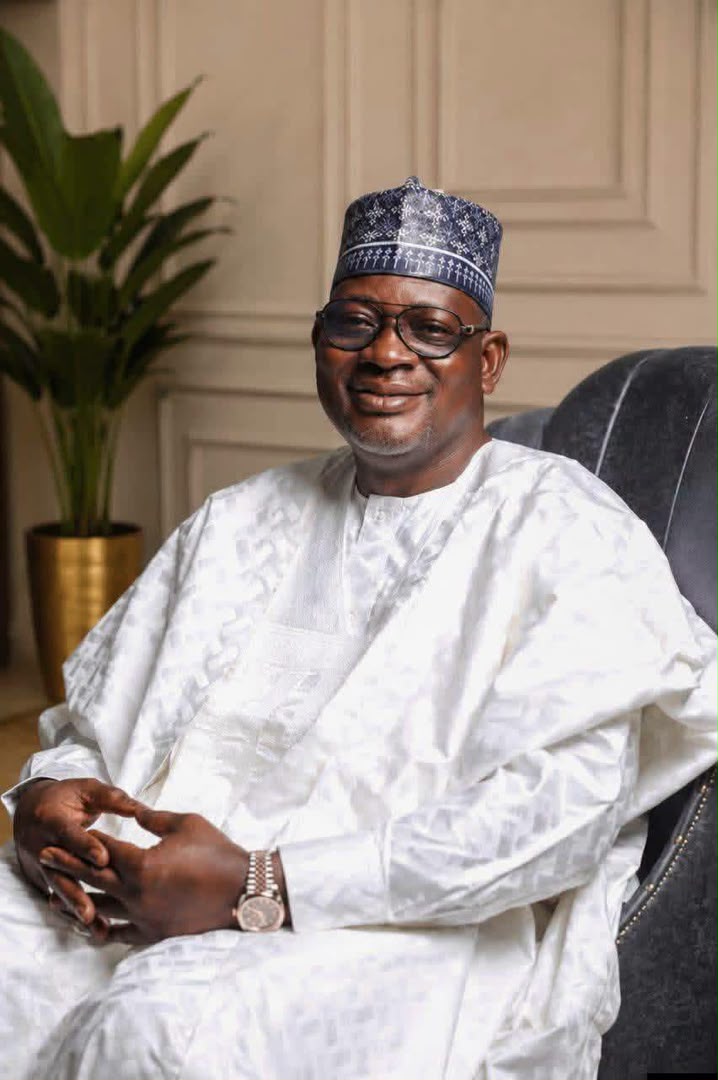
Presenting the brand new transformer to the people of Zanchita community on behalf of the PDP governorship candidate, Dr Mohammed Shaba popularly known as (psychology) said the transformer provided for the community is part of NAMI humanitarian gesture to improve the soci- economics of the community.
Dr Shaba said the foundation is part of the humanitarian services rendered by the Niger South foundation under the chairmanship of Dr Mohammed Nami who always shows concern to the plight of the people.
He said the community can reciprocate their kind gesture in rendering prayers for the PDP Governorship candidate,Dr Mohammed Nami for God’s guidance and protection to succeed in his ambition as an opportunity to do more particularly for the rural dwellers.
In his response the village head of Zanchita,Ahmadu Mohammed Zanchita appreciated the kind gesture of Mamman NAMI for redeeming his pledge and prayed for protection and more blessings to enable him to provide succour to rural dwellers.
Politics
SPC 2026 Annual Wkshop: Journalists Deliberate on Legislative Oversight, Budget Integrity,Media Collaboration
By Our Correspondent
The 2026 Capacity-Building Workshop of the Senate Press Corps will focus on strengthening legislative oversight and media collaboration as mechanisms for safeguarding Nigeria’s national budget from unlawful insertions and other practices capable of undermining budgetary integrity.
In a statement signed by Chairman Senate Press Corps, Taiye Odewale on Friday, the workshop, scheduled to hold on Monday, September 28, will have as its theme: “Leveraging Legislative Oversight and Media Collaboration to Safeguard the National Budget from Unlawful Insertions.”
According to the statement, the theme of the workshop was carefully chosen in view of the critical role of effective legislative oversight, responsible journalism and public accountability in ensuring that the national budget reflects approved priorities and serves the broader interests of Nigerians.
The statement futher noted,”As part of efforts to provide participants with expert perspectives on the subject, the Minister of Budget and Economic Planning, Senator Abubakar Atiku Bagudu; Executive Director of the Civil Society Legislative Advocacy Centre (CISLAC), Auwal Rafsanjani; Director of BudgIT, Oluseun Onigbinde; and Publisher of Eagle Times Newspaper, Ikechukwu Chukwunyere, have been invited to make presentations on relevant aspects of the workshop theme.
“The workshop will also feature an intensive training session on the use of Artificial Intelligence (AI) tools, to be facilitated by London-based instructors from Mass Media TX Limited.”
According to the organisers, the AI session is designed to expose participants to emerging technologies and their practical applications in contemporary media and professional practice.
The event is also expected to bring together key stakeholders from the National Assembly and the National Assembly bureaucracy, with invitations extended to the President of the Senate, Senator Godswill Akpabio (GCON); Deputy President of the Senate, Senator Barau Jibrin (CFR) and Chairman, Senate Committee on Media and Public Affairs, Senator Yemi Adaramodu.
Others are, Chairman, Senate Committee on Appropriations, Senator Olamilekan Adeola; Chairman, Senate Committee on Finance, Senator Sani Musa; Chairman, Senate Committee on Petroleum (Downstream), Senator Kawu Sumaila; and the Clerk to the National Assembly, Barrister Kamoru Ogunlana.
The organisers said the participation of lawmakers, budget experts, civil society advocates, media professionals and technology instructors would provide a platform for robust discussions on budget transparency, legislative scrutiny and the role of the media in promoting accountability.
“The workshop is expected to examine practical approaches to strengthening the budget process, improving oversight mechanisms and enhancing collaboration between legislative institutions and the media in the public interest,” it noted.
The organisers expressed optimism that the capacity-building initiative would contribute to improved understanding of budgetary processes and promote stronger professional engagement around issues of transparency, accountability and responsible public expenditure.
The 2026 Capacity-Building Workshop will take place at Hearing Room 231 on Monday.
Politics
Diri Laments Oil Production Effects, Inaugurates 18-Member C’ttee For Cancer Treatment Centre
By David Wei,Bayelsa
Governor of Bayelsa State, Senator Douye Diri, has described as unfair and unacceptable the situation whereby communities in the state which bear the cost of the nation’s wealth are left without the care they need to remain healthy and productive.
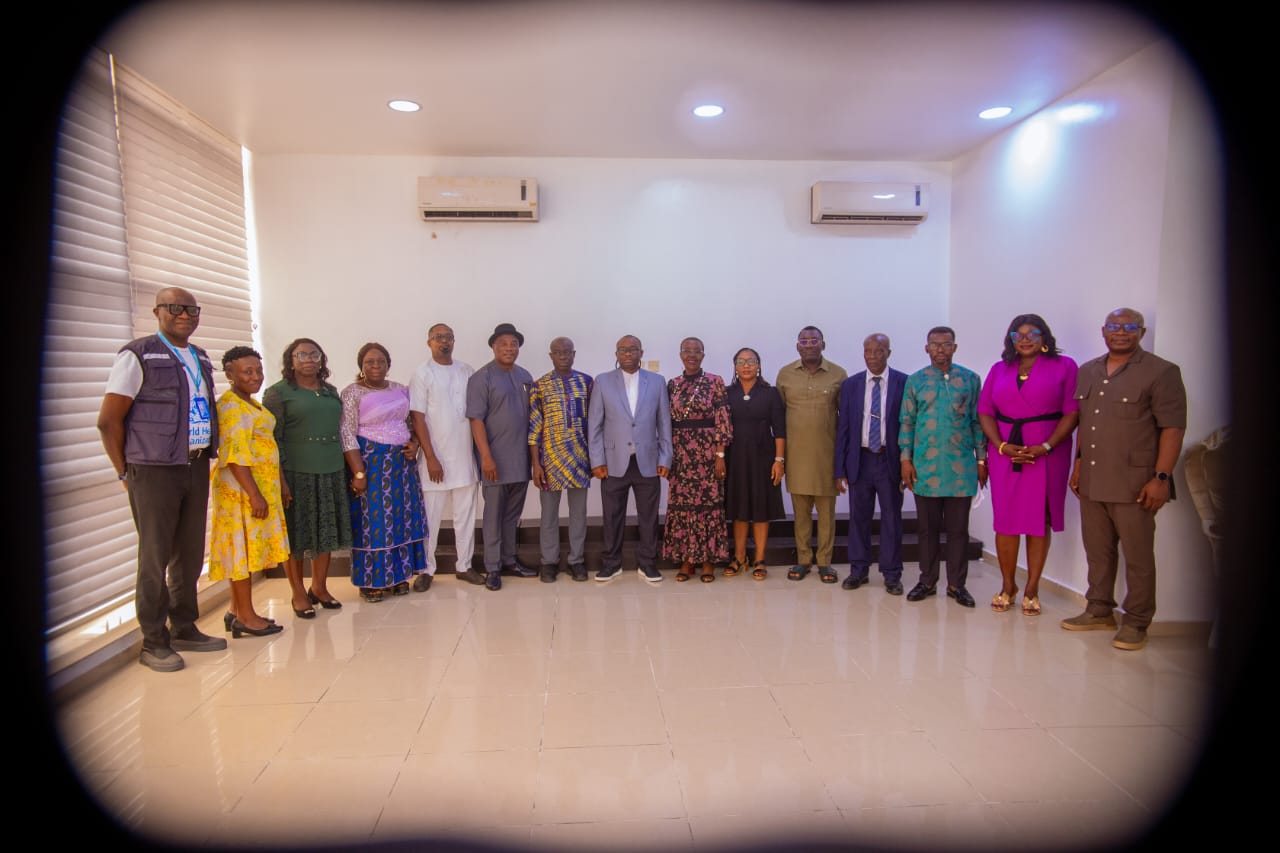
Governor Diri stated this at the weekend while inaugurating an 18-member steering committee for the establishment of the Bayelsa Cancer Treatment and Research Centre at Government House, Yenagoa.
Represented by his Deputy, Dr. Peter Akpe, the Bayelsa helmsman noted that cancer “is no longer a distant disease in communities around the state, due to decades of oil pollution with serious long-term health consequences on the people.”
According to him, breast, cervical and prostate cancers have become quite rampant among the populace, resulting in deaths even among young people in their most productive years, thus necessitating the establishment of the centre.
His words: “Let me begin with the plain truth: Cancer is no longer a distant disease in our communities. Almost every family in this hall has a story: a mother diagnosed too late; a brother who traveled to Lagos, Abuja or abroad and spent everything they owned on treatment.
“Breast, cervical and prostate cancers in particular are taking our people in their most productive years. Too many of these deaths are not because the disease cannot be treated, but because treatment was too far away, too expensive, or came too late.
“In Bayelsa, we carry an additional burden. Decades of oil pollution have left their mark on our land, our water, and we fear, on the health of our people. The Bayelsa State Oil and Environmental Commission Report of 2023 raised serious concerns about the long-term health consequences of that exposure.
“We will not accept a situation where our communities bear the cost of the nation’s wealth and are then left without the care they need. Therefore, a cancer treatment centre in Bayelsa State is not a luxury; it is a matter of health justice.”
Highlighting the terms of reference for the committee, Governor Diri charged the chairman and members to make an empirical assessment of the cancer burden in the state, as well as recommend the most suitable location for the centre, equipment, infrastructure, partnerships and financing options, amongst others.
He also charged them to plan for the requisite and competent manpower, maintenance, training, accessibility to the facility and steady supply of drugs and consumables, noting that they were chosen on account of their competence and years of experience.
In his acceptance speech on behalf of the steering committee, the Chairman and Commissioner for Health, Prof. Seiyefa Brisibe, expressed gratitude to the governor for finding them worthy to work for the establishment of a world-class cancer centre in Bayelsa.
Prof. Brisibe, noted that setting up of the committee underscores the unwavering commitment and seriousness the Douye Diri Administration attaches to the health and well-being of the people of the state.
He said the burden of cancer in the state is a reality with huge economic and health burden on families and could no longer be managed with half measures, which informed the careful selection of members with the required expertise.
According to him: “First of all, let me appreciate, with deepest gratitude, on behalf of the members of this steering committee, His Excellency the Governor of Bayelsa State, Senator Douye Diri, for his unwavering commitment to the health and well-being of all Bayelsans.
“It is visionary leadership and decisive mandate that have brought us to this inauguration today. The burden of cancer on communities is a reality that we can no longer afford to manage with half measures.
“Families in Bayelsa endure the excruciating financial, physical and emotional toll of travelling outside the state and often outside the country, just to access basic diagnostic and therapeutic cancer care. This will end with the mandate for the work we are about to begin.”
Members of the steering committee include Dr. Jones Stow, Prof. Jumbo Johnbull, Dr. Boboye Ifie, Dr. Oluwadare Marcus and Dr. James Omietimi.
Others are Dr. Ebikapaye Okoyen, Dr. Ngowari Torunana, Mrs. Beatrice Olomiete, Hon. Kingsley Kuku, Dr. Ibimonye Porbeni and Mr. Nimifagha Esindu.
Also to serve on the committee are Prof. Kelvin Kiridi, Dr. Timipa Peregha-West, Magdalene Alabinte, Prof. Beleudanyo Fente, Dr. Elizabeth Obiorah and Dr. Embeleakpo Apere.

2027 : PDP Candidate re-connects Zanchita community with National grid after two years of darkness
By Uthman Baba-Naseer,Minna It was a celebration galore in Zanchita community in gbako local government area of Niger State,as former...

Insecurity ,displacement alters distribution of Christian communities in Niger state to 3,417,636
By Uthman Baba -Naseer,Minna Niger state Christian leaders have disclosed that out of the Seven million, four hundred and seventy...

Death of 37 suspected illegal Miners:11 member of Judicial commission of inquiry set for inauguration on Tuesday by govrrnor Bago
BY UTHMAN BABA-NASEER,MINNA Sequel to the constitution of the Judicial commission of inquiry by the governor Mohammed Umar Bago, to...

Thanksgiving Service Heralds Bayelsa 30th Anniversary Celebration
By Dabid Owei Bayelsa State Government on Sunday held an inter-denominational thanksgiving service to kick-start activities marking the 30th anniversary...

Former Speaker challenges substition of his name with Suleiman as winner of APC primary election at Minna Fed.High Court
By Uthman Baba-Naseer,Minna The Former Speaker of the Niger State House of Assembly,Rt Hon. Adamu Usman,has filed a lawsuit before...

SWAN President to Storm Bayelsa for 30th Anniversary Celebration, Igali Confirms*
By David Owei The President of the Sports Writers Association of Nigeria (SWAN), Benjamin Isaiah, has been confirmed among dignitaries...

Panic Grips Delta Residents as Deputy Director Dies After Alleged Assault
By Our Correspondent There is palpable tension among Delta residents following an alleged death of a deputy Director in Asaba,...

SPC 2026 Annual Wkshop: Journalists Deliberate on Legislative Oversight, Budget Integrity,Media Collaboration
By Our Correspondent The 2026 Capacity-Building Workshop of the Senate Press Corps will focus on strengthening legislative oversight and media...

The Day the Church ‘Blessed’ the Media
By Emmanuel Nnadozie Onwubiko For a media practitioner and a Catholic, Thursday, September 24, 2026, will remain a remarkable day....

As ‘Ọsọ Marwa’ Sweeps Across Nigeria’s Forests
By Emmanuel Nnadozie Onwubiko Today’s reflection is on a new and increasingly significant battlefront opened by the National Drug Law...
-
 Politics1 year ago
Gov Okpebholo moves to end Cultism *Threatens action against leading cult groups *Vows to demolish more cult houses in Edo State
-
 Politics1 year ago
ASUU-NDU protest against FG loans, unpaid salaries,Non-Implementation of agreements …..says loans is generational slavery
-

 Business & Economy1 year ago
PC-NCG Issues Disclaimer on Purported Nigerian Coast Guard National Orientation Exercise In Anambra State
-
 Entertainment2 years ago
Jubilation galore as Parishioners of CKC Kurudu celebrate their cultural heritage ….FG should exploit our Cultural heritage to unite Nigerians-Rev Fr Dim
-

 Sports7 months ago
Bayelsa-born ex-football star’s son, Opuama donates spike shoes to Athletics Association
-

 General News2 years ago
Reps hold public hearing on FMC Ugwuaji Awkunanaw
-
 Law & Crime1 year ago
Legal practitioner raises alarm over threat to his life by CSP Muhammed Abdulkareem
-
 General News2 years ago
Celebration galore as UDA Successfully Elected New Exco ……I will digitalize processes that will raise UDA to greater height -Comr. Okejiri