
Business & Economy
Afriland building fire, product of systemic rot, negligence, corruption…NLC


By George Mgbeleke
Apparently disturbed by Thursday’s fire mishap that claimed the Iives of number of workers in commercial buildings in Lagos, the Nigeria Labour Congress (NLC) has condoles with the families of workers that lost their lives in the Afriland building fire disater in Lagos, describing the incident as products of systemic rot, institutional negligence and reckless disregard for safety rules and human dignity.
NLC, in a statement signed by its President, Joe Ajaero and the General Secretary, Emmanuel Ugboaja and made available to newsmen in Abuja on Friday, also said the fire was a fire of corruption, inefficiency and fall of institutions.
The statement reads in part: “The Nigeria Labour Congress (NLC) mourns with heavy hearts the needless loss of lives in the tragic fire outbreak that engulfed the United Bank for Africa (UBA) building called Afriland Building on Lagos Island, claiming the lives of at least six compatriots and leaving many others injured, hospitalized, and battling for survival.
“Our grief is further deepened by the fresh memory of another devastating inferno that only a few days earlier consumed a long stretch of buildings, shops, and warehouses in the same axis of Lagos Island, destroying livelihoods and goods valued in billions of Naira. This is while Nigerians are already struggling to survive the harshest economic conditions thus far in our history as a result of the neoliberal economic policies of the Government.
“These fires are totally not accidents of fate. They are products of systemic rot, institutional negligence, and the reckless disregard for safety rules and human dignity that have becomne the hallmark of governance in Nigeria.
“What we are witnessing is not merely fire; it is the fire of corruption, the fire of inefficiency, the fire of collapsed institutions, and the fire of state abandonment of its fundamental duty; the protection of lives and property.
“The case of the UBA, which may be a case of negligence by such a huge Bank to put safety measures in place to protect the lives of its customers and workers. In situations where the lives of workers are disregarded in pursuit of corporate profits, what you get is that basic safety precautions for workers are either downgraded or totally disregarded. Does the life of workers matter? They will normally quip!”







Business & Economy
Lesotho, Bayelsa Explore Economic Cooperation *Gov Diri Attends Country’s 60th Independence Celebration
By David Owei
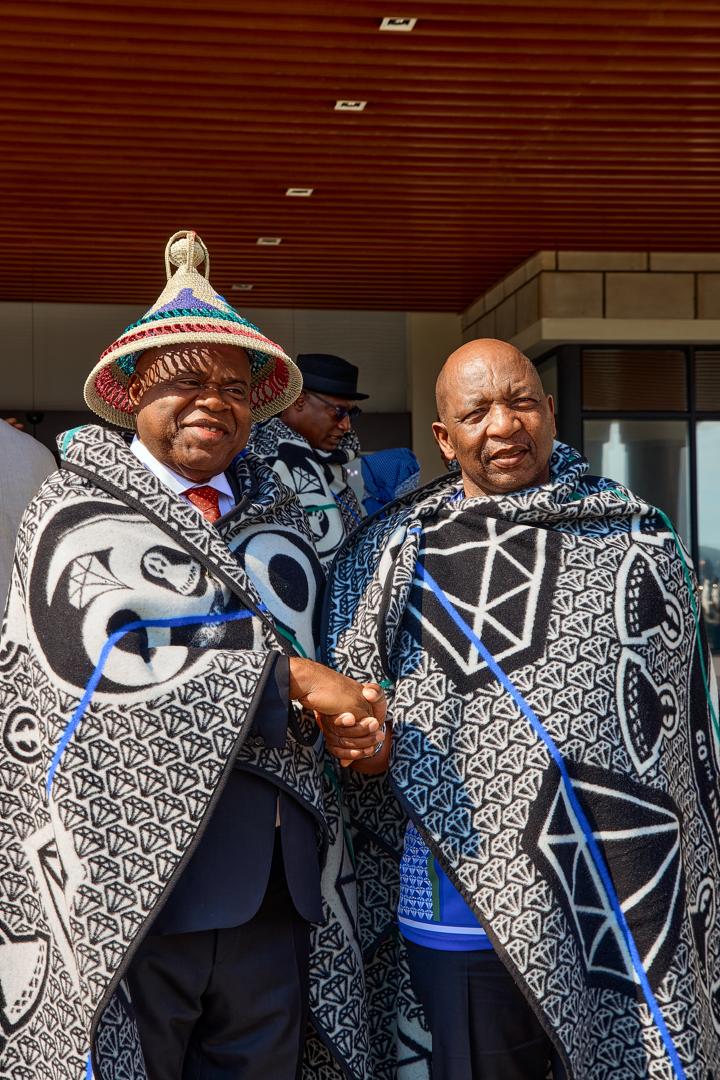
The government of Lesotho and Bayelsa State have held talks on areas of economic cooperation, including agriculture, oil and gas, tourism, cold water development and textile warehousing.
The bilateral meeting between the country’s Prime Minister, The Rt. Honourable Ntsokoane Samuel Matekane, and Governor of Bayelsa State, Senator Douye Diri, took place on Sunday at the State House in Maseru, the capital city.
Governor Diri, who recalled an earlier meeting with Matekane in Abuja, Nigeria, said Bayelsa was interested in exploring areas of economic benefits, particularly where it had comparative advantages.
He said the state was rich in crude oil and very large gas deposits, in addition to having the longest coastline in the country that places it at a strategic position in the Gulf of Guinea.
Lesotho is one of the world’s smallest, landlocked nations located in Southern Africa and it is rich in diamond and a leader in cold water production and export as well as in textile production.
Governor Diri said: “I think this meeting was divinely orchestrated. The meeting in Abuja had so many other presidents and leaders, but at the end of the day, we were attracted to Lesotho, and Lesotho was equally attracted to us.
“Bayelsa was the first place in Nigeria where oil and gas was found in commercial quantities in 1956 by the British during colonial rule. So, Nigeria became an oil-producing country because of Bayelsa.
“My state is in the southern part of Nigeria, in the coastal area, and it is bordered by the Atlantic Ocean and the Gulf of Guinea. We seek collaboration and partnership in oil and gas, on how to harness the vast resources in our coastal and maritime environment as well as in terms of tourism.”
Governor Diri also stated that Bayelsa was looking at exporting industrial starch from its cassava processing factory.
“Our cassava starch extraction factory is now functional and it was aimed for international exports. The local demand in Nigeria is so high. But our target is export.
“Rice production is another commodity that has possibility for collaboration. Bayelsa is a massive wetland and the entire state is a rice belt.“
On inter-African trade, Diri noted that countries on the continent do business more with those outside the region and that it was time for this to change.
“I think there is a very big opening that is going to be mutually beneficial to both Lesotho and Nigeria, particularly Bayelsa State, from what has come on the table here. I agree with you no less that inter-country trade has been more with countries outside of Africa.
“But if African countries have this kind of meetings, we can begin to change the direction as the possibilities are there. We have not been able to explore them.”
He said his administration was winding down and that both teams have to act fast to make the partnership a reality.
Also, the Director-General of the Bayelsa Investment Promotion Agency (BIPA), Patience Abah, in a presentation, said Bayelsa was following the general framework of the African Continental Free Trade Area (AfCFTA).
Abah stated the importance of the meeting and that agreements reached were just words on paper except the participating states take steps to actualise them.
“So, that is the spirit with which we are approaching this. His Excellency has spoken about our oil and gas potential. But beyond that, Bayelsa wishes to leverage also its coastal assets.
“We have two claims to fame that no other state in Nigeria can make. We have the longest coastline in the country of at least 203 kilometers. The other is we have proven gas reserves exceeding 18 trillion cubic feet. These are assets with which we can explore collaboration.
“We know Lesotho specialises and is a world leader in cold water production. But our ecosystem is different, with more of swampy terrain and fresh water. So, we can partner on resources like catfish, tilapia, shrimps, fish processing, and cold chain logistics networks to span not only the Southern African region but all the way down to West Africa as well.
“Using your expertise and terrain advantage, we can also partner on hydro energy as well as renewable and clean energy. Beyond that, we are also looking at your world-class garment manufacturing factory for export. Bayelsa can act as a strategic West African assembly point for warehousing and distribution of your finished textiles in the region and beyond.”
The Lesotho Prime Minister, Ntsokoane Matekane, in his remarks, said the country was interested in any economic relationship and investment that was mutually beneficial.
Ntsokoane, who was a reputable businessman and the country’s richest man before winning election in 2022, said African countries must first derive the benefits from their natural resources rather than relying on the imported finished products from them.
He said: “Africa has been home to a number of minerals and natural resources, but we always export everything we have. They get value outside and come back more expensive for us.
“Now, when you look at the trade between Lesotho and China or US and compare it with between Lesotho and Nigeria, it is a totally different story. So, it is very important for us to start these engagements to ensure that there is intra-trade between African countries.”
Ntsokoane stated that Lesotho was targeting 100 per cent renewable energy and export it to the Southern African region.
“We generate power using hydro because our terrain is a masterpiece. We experience eight to 12 times of snowfall in Lesotho, which is the highest source of water in the Southern African region. And, of course, the mountains and gorges are a huge potential for our hydropower. So, in partnership with Bayelsa State and other African countries, we can build a very strong base load in the mountain Kingdom of Lesotho.”
He also spoke about the possibility of setting up data centres for digitised businesses, taking advantage of Lesotho’s cool temperatures and abundant water supply from the mountains.
He further stated that the country depends on Nigeria’s expertise in the oil industry and that Bayelsa will be a strategic partner in that sector because of its history and experience in oil exploration activities.
After the meeting, the Bayelsa governor participated in the Diamond Independence Jubilee celebrations of the country at the National Stadium in Maseru.
The King of Eswatini and his wife and representatives of the government of Botswana, Zambia as well as heads of diplomatic missions and international organisations joined the King of Lesotho, David Mohato Seeiso, Letsie III, at the colourful ceremony.
Business & Economy
Senate Extends 2025 capital budget implementation to Dec. 31 …As Bill scales final passage
By George Mgbeleke
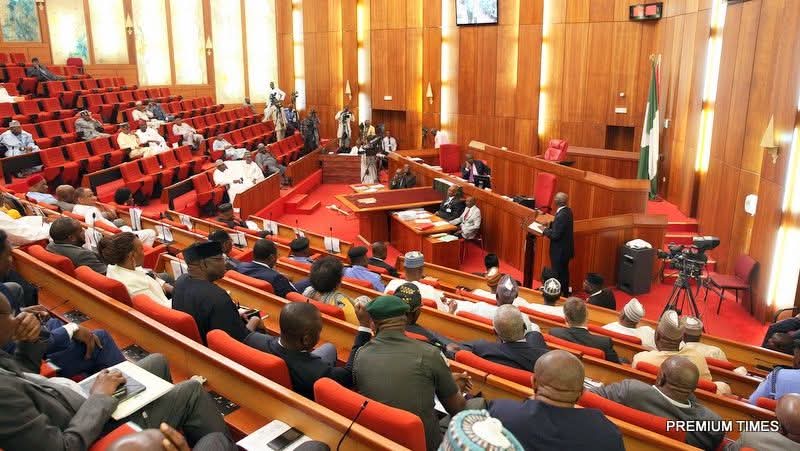
The Senate on Tuesday passed a bill extending the implementation of the capital component of the 2025 appropriation act from September. 30 to December. 31, 2026.
The bill, according to the Senate, seeks to provide additional time for Ministries, Departments and Agencies (MDAs) to complete all ongoing capital projects.
The bill, sponsored by the Leader of the Senate, Opeyemi Bamidele( Ekiti central), was read for the first time and subsequently considered for second reading after the suspension of the relevant senate rule.
Leading debate on the bill, Bamidele said the extension would provide the legal and administrative window required to fully implement projects for which funds had been appropriated and released.
He said capital budget implementation involved procurement, contract execution, mobilisation, certification of works and payment processes, among other procedures.
The Senate Leader said several infrastructure and development projects across the country were at various stages of completion and required additional time for implementation.
He said allowing the existing implementation deadline to lapse could create difficulties for MDAs in completing projects for which resources had already been appropriated and released.
He added that the extension would help prevent projects from becoming abandoned and ensure that appropriated resources were deployed for their approved purposes.
The Senate Leader stressed that the extension would not amount to a relaxation of accountability, fiscal responsibility or legislative oversight.
He said MDAs would remain required to comply with the Appropriation Act, financial regulations, procurement laws and other applicable statutes.
Contributing, the Deputy Senate President, Sen. Barau Jibrin, said the extension was important to prevent the proliferation of abandoned projects across the country.
He urged senators to support the bill, saying it would provide an opportunity for ongoing projects funded under the 2025 appropriation to be completed.
The Minority Leader, Abba Moro (Benue South) also supported the extension but urged senators to avoid unnecessary comparisons with previous administrations during debates on budget implementation.
Moro said the focus should remain on creating the necessary conditions for the government to implement its programmes and projects.
The bill was subsequently committed to the Committee of Supply, which considered and approved amendments to the relevant provisions.
The Senate thereafter passed the bill at third reading, extending the implementation of the capital component of the 2025 Appropriation Act to December 31, 2026.
The Senate President, Godswill Akpabio, thanked senators for their contributions, saying the extension would facilitate payment for contracts and completion of projects covered by the 2025 capital appropriation.
He urged relevant authorities to utilise the extended period to complete necessary contractual obligations and infrastructure projects for the benefit of Nigerians.
Business & Economy
Customs Intercepts 56 Containers With Goods Worth Over N5.53bn, Inaugurates Healthcare Centre In Rivers
By Our Correspondent
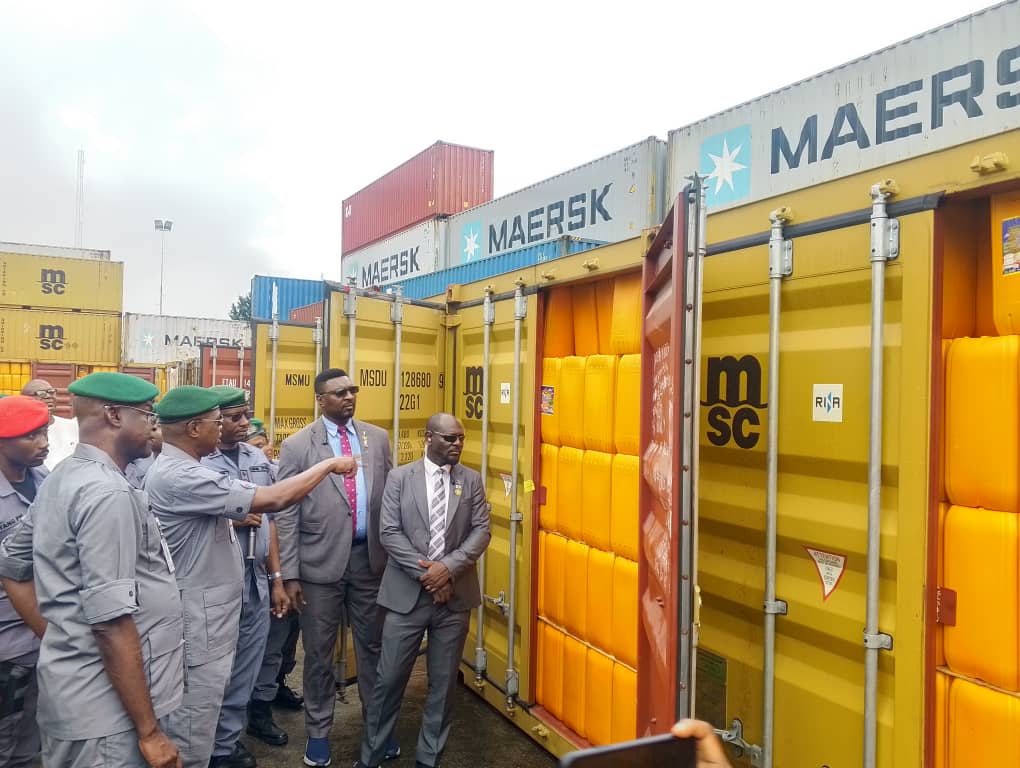
In its effort to stamp out smuggling and improve the revenue target of the country, the Nigeria Customs Service, (NCS) on Tuesday said it has intercepted 56 containers laden with banned vegetable oil, assorted used clothing and tomatoes paste with a Duty Paid Value of over N5.53 billion at the Onne Port, Rivers State.
The Service also handed over to Ebubu Community in Rivers State, a reconstructed and equiped Primary Healthcare Centre, built by the Port Harcourt Area II Customs Command, as part of its Corporate Social Responsibility drive.
The Comptroller-General of Customs, CGC Bashir Adewale Adeniyi, while briefing journalists in Port Harcourt on Tuesday said the 56 seized containers, comprising 45 containers of over 1.1 million litres of vegetable oil, nine containers of assorted used clothing and two containers of tomato paste, were falsely declared as plants, spare parts and machineries.
Adeniyi, who is also Chairman of the World Customs Organisation Council, said the interception followed an intelligence-driven review of cargoes destined for Free Trade Zones, which revealed flagrant abuse of incentives and waivers granted by the Federal Government to encourage local production.
He said each of the 45 containers of vegetable oil, branded “Deliceoux”, contained 1,050 jerry cans of 25 litres each, valued at N4.25 billion, while the nine 40-foot containers of used clothing and two 20-footer containers of tomato paste were valued at N1.04 billion and N232 million respectively, bringing the total to N5,530,080,000.
According to him, the Federal Government allows operators in free zones to import raw materials and machinery duty-free, and in some cases goods under import prohibition, but investigations showed the concessions were being diverted into the local market.
“This meeting is very important because we need to have a conversation on what we need to do to support our local industries. Our quest to facilitate trade and ensure prompt port clearance should not be exploited to damage the local economy and local production capacity. The remarkable thing about these containers is that they were declared as machinery and spare parts, but upon physical examination we discovered they were vegetable oil. The intention is clearly to introduce them into our local markets,” Adeniyi said.
He recalled that less than a month ago, the Cross River/Akwa Ibom Command seized two 40-footer containers of vegetable oil being diverted from the Calabar Free Trade Zone, while about 40 other containers had earlier been taken into the zone under questionable circumstances.
The Customs boss noted that the seized containers contravened Sections 55 and 233 of the NCS Act 2023, announcing initiation of court processes for condemnation and final forfeiture, prosecution of importers, agents and shipping companies involved, and a comprehensive audit of all containers transferred to Tinapa Free Trade Zone, with a suspension of further transfers until all previous transfers are accounted for.
He said the action was aimed at safeguarding the economy, protecting public health, supporting domestic production and ensuring compliance with import laws, noting that false declarations deprive government of revenue, expose local manufacturers and farmers to unfair competition and threaten jobs.
He commended the Customs Area Controller, Port Harcourt Area II Command, Onne, Comptroller Aliyu Alkali and his officers for the diligence that led to the seizures.
Shortly after, Adeniyi commissioned the reconstructed Ebubu Primary Healthcare Centre, built by the Onne Command, describing it as a milestone in the transformation of the NCS into a modern, professional and responsive institution.
He said the project was executed under the “Customs Care” initiative launched in Abuja on March 28, 2025, which has delivered interventions in education, healthcare, food security and environmental sustainability nationwide, earning the Service the Commonwealth Gold Award for Environmental and Corporate Social Responsibility.
“This event is significant because we are reaffirming that our responsibility extends beyond revenue collection and border security to making meaningful contributions to the communities where we serve. Customs Care provides a structured platform to respond to genuine community needs, complement government efforts and create sustainable social impact,” he said.
In his remarks, the Customs Area Controller, Port Harcourt Area II Command, Onne, Comptroller Aliyu Alkali, said the reconstruction of the health centre was part of the Command’s Corporate Social Responsibility projects and reflects the Service’s philosophy that its success is measured not only by revenue and enforcement statistics but by its positive impact on host communities.
Alkali said the facility, which had been abandoned and dilapidated, was rehabilitated to restore a critical community asset that will serve Ebubu and surrounding communities, particularly expectant mothers and children.
He attributed the successful completion of the project to the visionary leadership and personal commitment of the Comptroller-General, noting that the NCS under Adeniyi believes Customs is not only about revenue and enforcement but also about service to humanity, community engagement and national development, while appealing to authorities and the community to ensure the facility is adequately staffed, maintained and protected.
The Executive Secretary, Rivers State Primary Healthcare Management Board, Dr. Chituru Adele, represented by Dr. Tonye Lawson-Jack, Director of Medical Services, thanked the Customs Service for the intervention, describing it as crucial to the state and assured of proper maintenance of the facility.
Similarly, the Chairman of Eleme Local Government Area, Chief Obarilomate Ollor, represented by his Vice, Mrs. Virtue Eke, and the Paramount Ruler of Ebubu, Emere Godwin Chinwi, who represented the King of Eleme Kingdom, Emere Philip Obele, expressed gratitude to the NCS and pledged to take ownership of the facility and ensure its sustainability.
The event climaxed with the conferment of the chieftaincy title of “Emere Owun’se-Oboru Eta 1 of Ebubu, Eleme, meaning “The King that helped build and developed Ebubu people” on the Comptroller-General by the Ebubu clan for his intervention in reconstructing the world-class healthcare centre for their use.

Police parades 23 persons over alleged involvement in cult clashes in Bayelsà ….recovers Eight firearms, cutlasses, bottles of codine,two battle axes,20 cartridges
By David Owei The Bayelsà State Police Command led by Commissioner of Police, Mr. Ajao Saka Adewale has paraded twenty...
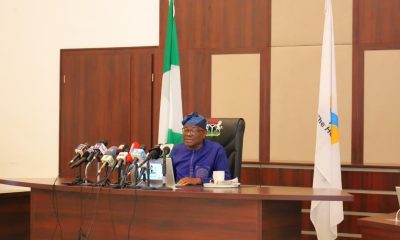

Wike orders ‘no work, no pay’ as FCT strike deepens, accuses NLC of politics … says teachers’ demands already resolved, directs area councils to enforce policy against striking
By Our Correspondent In an affort to force FCT workers on strike end the ongoing strike ,Minister of the Federal...
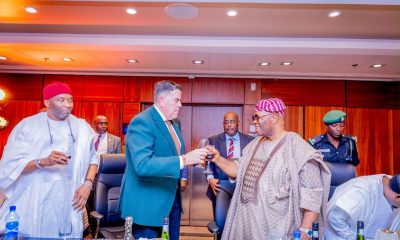

Milton Dick Elected President of the IPU Assembly
By Our Correspondent Mr Milton Dick, Speaker of Australia’s House of Representatives, has been elected as the President of the...
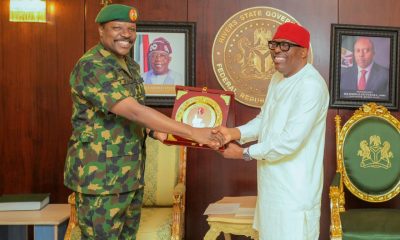

Fubara Reaffirms Partnership with Army -Lauds Establishment of New Brigade in Ahoada
By George Mgbeleke Governor of Rivers State, His Excellency, Sir Siminalayi Fubara, has assured the Nigerian Army of his administration’s...
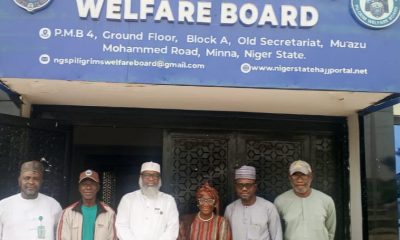

NSPWB Executive Sec.stresses Board’s readiness to support Christains, Muslim Pilgrims in Niger state
BY UTHMAN BABA-NASEER,MINNA The Executive Secretary of the Niger State Pilgrims’Welfare Board,(NSPWB) Muhammed Awwal Aliyu,has reiterated the Board’s preparedness to...

Niger CJ Seeks mutual understanding between the Bar and Bench to enhance speedy dispensation of criminal, Civil Justice
By Uthman Baba-Naseer,Minna The Chief Judge of Niger State,Justice Halima Ibrahim Abdulmalik, has stressed the need for continued cordial and...

$1trn economy: NBTI showcases 298 Nigerian innovators to global investors
By Our Correspondent The National Board for Technology Incubation (NBTI) has showcased 298 Nigerian innovators from the 36 states and...


HURIWA Demands Answers Over Corps Members’ Release, Says Authorities Must Clarify Ransom Claims
By George Mbgeleke The Human Rights Writers Association of Nigeria (HURIWA) demands an urgent explanation from the Federal Government, the...

Tinubu’s Petrol Discount is a Loan To Nigerians-ADC
By George Mgbeleke The African Democratic Congress (ADC) has described the Tinubu administration’s proposed petrol price intervention as a loan...
HURIWA Demands EFCC Prosecution of Okowa, Bello …. Condemns Parties’ Choice of Politicians Facing Corruption Allegations*
By George Mgbeleke The Human Rights Writers Association of Nigeria (HURIWA) has called on the Economic and Financial Crimes Commission...
-

 Politics1 year ago
Gov Okpebholo moves to end Cultism *Threatens action against leading cult groups *Vows to demolish more cult houses in Edo State
-
 Politics1 year ago
ASUU-NDU protest against FG loans, unpaid salaries,Non-Implementation of agreements …..says loans is generational slavery
-
 Business & Economy1 year ago
PC-NCG Issues Disclaimer on Purported Nigerian Coast Guard National Orientation Exercise In Anambra State
-
 Entertainment2 years ago
Jubilation galore as Parishioners of CKC Kurudu celebrate their cultural heritage ….FG should exploit our Cultural heritage to unite Nigerians-Rev Fr Dim
-

 Sports8 months ago
Bayelsa-born ex-football star’s son, Opuama donates spike shoes to Athletics Association
-

 General News2 years ago
Reps hold public hearing on FMC Ugwuaji Awkunanaw
-
 Law & Crime1 year ago
Legal practitioner raises alarm over threat to his life by CSP Muhammed Abdulkareem
-
 General News2 years ago
Celebration galore as UDA Successfully Elected New Exco ……I will digitalize processes that will raise UDA to greater height -Comr. Okejiri