
Politics
Senate Resumption: Between Recess Lapses and Legislative Hurdles Ahead

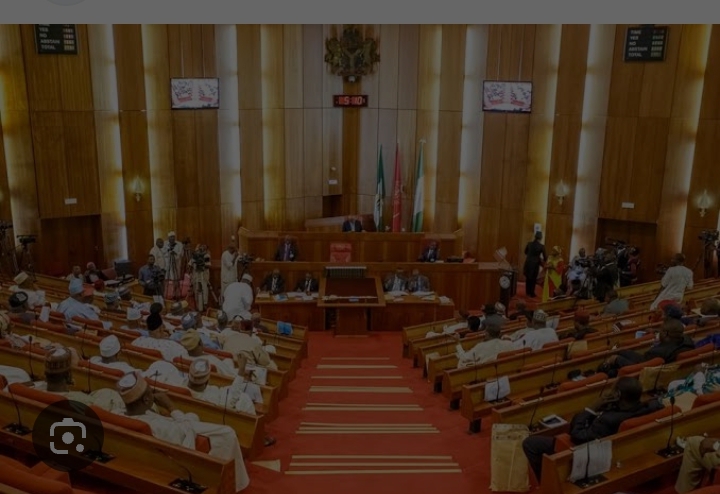
As Senate resumes on Tuesday, September 23, 2025, Nigerians will be watching closely to see how the upper chamber intends to steer the course of governance in the months ahead. The recess, traditionally described as a “working break” for lawmakers, is designed for committees to engage in oversight, investigative hearings, and public interactions with ministries, departments, and agencies (MDAs). Yet this year’s experience revealed a troubling disconnect between rhetoric and reality.
A Deserted Red Chamber
Before proceeding on recess in July, Senate President Godswill Akpabio had reassured Nigerians that the chamber would remain alive with committee activities. “The recess is not for rest but for work,” he declared, noting that the Constitution empowers lawmakers to provide oversight, monitor the implementation of laws, and interface with government agencies even when plenary is suspended.
But walking through the Red Chamber in those weeks told a different story. Committee rooms were locked, offices deserted, and the once vibrant building reduced to an echo chamber of silence. For parliamentary reporters, it was a sobering picture: a legislature that seemed to have gone on full holiday, despite public pronouncements to the contrary.
In stark contrast, the House of Representatives presented another face. Its members could be seen holding committee meetings, conducting public hearings, and engaging ministries in oversight discussions. The lower chamber gave off an impression of lawmakers still tethered to their mandate. As one House member put it during a recent interaction: “Recess should not mean retreat from responsibility. Nigerians expect us to work whether we sit in plenary or not.”
The comparison raises difficult questions for the Senate. Can it afford to project an image of inertia at a time when the nation grapples with economic hardship, security challenges, and deepening public distrust in governance?
A Heavy Agenda on Resumption
The recess lull is now behind. Upon resumption, senators are faced with weighty national issues that will test their legislative will and political discipline.
1. The Constitution Review Exercise
Constitution amendment has almost become a recurring decimal in Nigeria’s democratic journey. Since 1999, every Senate has initiated some form of review, yet the country still operates under the weight of unresolved contradictions in its federal structure. The Tenth Senate is expected to push forward with the latest round of amendments, with debates centering on electoral reforms, judicial restructuring, local government autonomy, and revenue allocation.
History has shown how contentious these issues can be. During the Seventh National Assembly, attempts to amend Section 9 of the Constitution collapsed after disagreements between the legislature and the executive under President Goodluck Jonathan. In 2018, the Eighth Assembly under Bukola Saraki succeeded in pushing through amendments on financial autonomy for state assemblies and the judiciary, but other critical proposals fell short of the two-thirds requirement across state legislatures.
Now, as the Tenth Senate resumes, Nigerians will be asking whether this review will move beyond rhetoric into substantive restructuring. The credibility of the exercise will rest not only on what changes are proposed, but also on the sincerity of senators to prioritize national interest over partisan divides.
2. The 2026 Federal Budget
Another immediate assignment is the 2026 budget presentation by President Bola Ahmed Tinubu. Early presentation has often been the missing piece in Nigeria’s budget cycle, leading to delays that undermine economic planning and project implementation.
If the President lays the budget before the National Assembly in September or early October, the Senate has a real chance to achieve timely passage by December—a practice the Ninth Assembly briefly institutionalized before political distractions set in. The process will involve first and second readings, committee scrutiny, and exhaustive defence sessions with MDAs.
The question, however, is whether supervising committees will display the seriousness required to interrogate fiscal assumptions, probe wasteful expenditure lines, and demand accountability from government agencies. Too often, budget defence sessions have been reduced to perfunctory rituals, with lawmakers either absent or inattentive. The coming weeks will determine if this cycle will be broken.
3. The Return of Natasha Akpoti-Uduaghan
Equally significant on the chamber’s agenda is the resumption of Senator Natasha Akpoti-Uduaghan of Kogi Central, whose six-month suspension has elapsed. Her return is bound to stir interest for multiple reasons.
First, the suspension itself had attracted criticism from civil society and gender rights groups, who saw it as an attempt to silence one of the few female voices in the Red Chamber. Second, her outspoken style and willingness to challenge entrenched interests mark her out as a senator who will not easily blend into the background. Her reinstatement will therefore test the Senate’s tolerance for dissent and its commitment to inclusivity.
In a country where women represent less than 5% of the National Assembly, Akpoti-Uduaghan’s return carries symbolic weight. It could also re-energize debates around gender bills, which were controversially voted down during the Ninth Assembly despite widespread advocacy.
Lessons From Past Recesses
Nigerians have long complained that lawmakers treat recesses as extended holidays. In 2017, then Senate President Bukola Saraki faced public backlash when pictures of senators traveling abroad during recess went viral, prompting criticism that oversight duties had been abandoned. Similarly, in 2022, the Ninth Senate came under fire for failing to hold MDAs accountable during the recess period, leading to delays in project execution.
Political observers argue that a legislature that spends months on recess without active oversight erodes public trust. As constitutional lawyer Jiti Ogunye once remarked, “Recess is no excuse for dormancy. The committees are the engine room of parliament, and when they go to sleep, governance suffers.”
The Senate, therefore, cannot afford to ignore these lessons. Its credibility is at stake, not just in passing laws, but in demonstrating that even outside plenary, it remains engaged with the problems of the people.
A Senate Under Public Scrutiny
The return from recess is not just a routine reopening; it is a test of the Tenth Senate’s seriousness. Nigerians are weary of promises unfulfilled and budgets that fail to translate into tangible impact. With inflation biting hard, unemployment high, and security challenges persisting, the public mood demands urgent and visible legislative action.
Moreover, the contrast with the House of Representatives has put the upper chamber on the defensive. While the House has been seen as more energetic in oversight and constituency engagement, the Senate risks being branded as aloof and disconnected. For an institution that prides itself as the “House of Elders,” such an image would be politically damaging.
The Road Ahead
As the gavel strikes on September 23, the Senate must confront three defining questions:
- Will it redeem its image after a visibly inactive recess?
- Can it deliver on constitution review in ways that strengthen democracy and federalism?
- Will it ensure a transparent, timely, and accountable budget process for 2026?
How the chamber answers these questions will shape its legacy and its relevance in the larger democratic project.
Editorial Verdict
The Tenth Senate stands at a crossroads. The deserted corridors during recess raised doubts about its commitment, but the agenda ahead provides an opportunity to reset the narrative. The Constitution review, the 2026 budget, and the return of Natasha Akpoti-Uduaghan are not just legislative items; they are tests of credibility, inclusivity, and governance.





By Our Correspondent
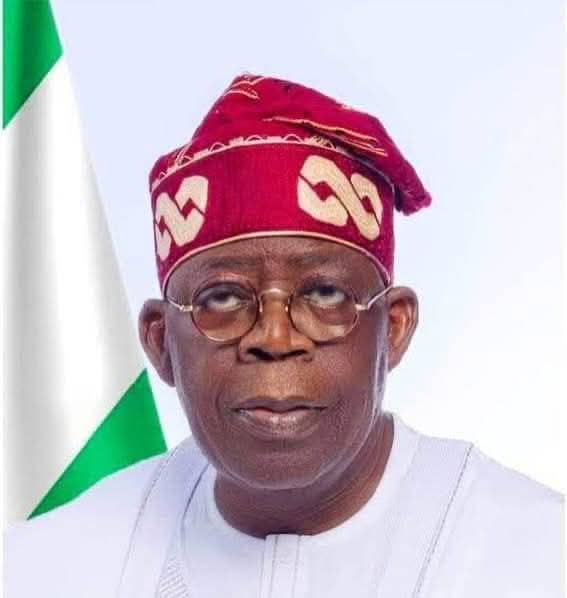
The All Progressives Congress,( APC) has flagged off its campaign for the 2027 general elections on Saturday in Kaduna, with President Bola Tinubu seeking a second term on the strength of his administration’s record.
President Tinubu the declaration at the Murtala Muhammed Square, Kaduna, saying that it was a great honour to return to the historic city where Nigeria’s early leaders converged before independence.
Tinubu thanked Kaduna voters for the victory they gave him in 2023, saying he had come to thank them and seek their mandate for a second term to fulfil his promises of prosperity, continuity and progress.
He dismissed opposition talk about hunger, saying “Who created it? They did. We are trying to eradicate it,” noting that his administration and APC governors now pay salaries regularly and are developing their states.
The President urged supporters to get their Permanent Voter Cards, (PVCs), and come out en masse on January 16, 2027 to re-elect APC at all levels. “Fuel subsidy is in our past. No more corruption, no more falsification of invoices, no more smuggling. We are ushering in a new era,” he said.
Vice President Kashim Shettima said Nigerians elected Tinubu in 2023 not because he was richest or best speaker, but because the alternative was calamity, and he urged Kaduna people to renew APC’s mandate.
Shettima listed gains in Kaduna, including Federal University of Applied Sciences, Kachia, Federal University of Education, Zaria, vocational institutes in Rigachikun, Soba and Samaru Kataf with over 4,000 graduates, and NELFUND support for students.
He said Tinubu has identified with the North for years, recalling how he gave political succour to former Vice President Atiku Abubakar in 2007, supported Nuhu Ribadu in 2011 and stood behind late President Muhammadu Buhari in 2015 and 2019, describing Tinubu as a man of honour.
Director-General of APC Presidential Campaign Council, Senator Abdulaziz Yari, said Kaduna is the spiritual centre of Northern politics and that all northern governors were present to show support.
Yari said Tinubu’s economic record, from exchange rate reforms to subsidy removal and trade balance, shows improvement, adding that APC will campaign with its records in infrastructure, health, education and cash transfers.
Yari declared, “Northern Nigeria is 101 per cent for you, Asiwaju Bola Ahmed Tinubu, by God’s grace.”
Governor Uba Sani, who welcomed guests, paid tribute to Tinubu and First Lady Senator Oluremi Tinubu for their love for Kaduna and the North, saying Renewed Hope Agenda has brought massive interventions in transport, education, healthcare, agriculture and security.
Sani recalled that Tinubu defied security advice to travel to Birnin Gwari in December 2022, and has now fulfilled his promises, with N117 billion released for the 123km Kaduna-Birnin Gwari road abandoned for over 40 years, and restoration of security on the corridor.
He also cited ongoing Zaria-Soba-Pambegua road, the $865 million Kaduna Metropolitan Red Line with $300 million already mobilized, N84 billion NELFUND benefit to North-West students, and 95 percent completion of N740 billion Abuja-Kaduna-Kano expressway.
Sani challenged the “so-called Northern candidate” to show track record of 200km of road while in office, noting that over 1,000km of roads have been constructed in the North under Tinubu and Shettima.
He warned supporters to be vigilant, alleging opposition has upgraded its campaign “from Facebook and Twitter to AI.”
Politics
APC Flags Off 2027 Campaign In Kaduna, Tinubu Seeks Renewed Mandate. From Cyril Mbah, Abuja. The All Progressives Congress, APC, on Saturday flagged off its campaign for the 2027 general elections in Kaduna, with President Bola Tinubu seeking a second term on the strength of his administration’s record. Speaking at the Murtala Muhammed Square, Kaduna, President Tinubu said it was a great honour to return to the historic city where Nigeria’s early leaders converged before independence. Tinubu thanked Kaduna voters for the victory they gave him in 2023, saying he had come to thank them and seek their mandate for a second term to fulfil his promises of prosperity, continuity and progress. He dismissed opposition talk about hunger, saying “Who created it? They did. We are trying to eradicate it,” noting that his administration and APC governors now pay salaries regularly and are developing their states. The President urged supporters to get their Permanent Voter Cards, (PVCs), and come out en masse on January 16, 2027 to re-elect APC at all levels. “Fuel subsidy is in our past. No more corruption, no more falsification of invoices, no more smuggling. We are ushering in a new era,” he said. Vice President Kashim Shettima said Nigerians elected Tinubu in 2023 not because he was richest or best speaker, but because the alternative was calamity, and he urged Kaduna people to renew APC’s mandate. Shettima listed gains in Kaduna, including Federal University of Applied Sciences, Kachia, Federal University of Education, Zaria, vocational institutes in Rigachikun, Soba and Samaru Kataf with over 4,000 graduates, and NELFUND support for students. He said Tinubu has identified with the North for years, recalling how he gave political succour to former Vice President Atiku Abubakar in 2007, supported Nuhu Ribadu in 2011 and stood behind late President Muhammadu Buhari in 2015 and 2019, describing Tinubu as a man of honour. Director-General of APC Presidential Campaign Council, Senator Abdulaziz Yari, said Kaduna is the spiritual centre of Northern politics and that all northern governors were present to show support. Yari said Tinubu’s economic record, from exchange rate reforms to subsidy removal and trade balance, shows improvement, adding that APC will campaign with its records in infrastructure, health, education and cash transfers. Yari declared, “Northern Nigeria is 101 per cent for you, Asiwaju Bola Ahmed Tinubu, by God’s grace.” Governor Uba Sani, who welcomed guests, paid tribute to Tinubu and First Lady Senator Oluremi Tinubu for their love for Kaduna and the North, saying Renewed Hope Agenda has brought massive interventions in transport, education, healthcare, agriculture and security. Sani recalled that Tinubu defied security advice to travel to Birnin Gwari in December 2022, and has now fulfilled his promises, with N117 billion released for the 123km Kaduna-Birnin Gwari road abandoned for over 40 years, and restoration of security on the corridor. He also cited ongoing Zaria-Soba-Pambegua road, the $865 million Kaduna Metropolitan Red Line with $300 million already mobilized, N84 billion NELFUND benefit to North-West students, and 95 percent completion of N740 billion Abuja-Kaduna-Kano expressway. Sani challenged the “so-called Northern candidate” to show track record of 200km of road while in office, noting that over 1,000km of roads have been constructed in the North under Tinubu and Shettima. He warned supporters to be vigilant, alleging opposition has upgraded its campaign “from Facebook and Twitter to AI.”
By our correspondent
As the 2027 election draws close, the All Progressive Congressive,(APC) on Saturday flagged off its campaign for the 2027 general elections in Kaduna, with President Bola Tinubu seeking a second term on the strength of his administration’s record.
The President who made this declaration at the Murtala Muhammed Square, Kaduna, President said it was a great honour to return to the historic city where Nigeria’s early leaders converged before independence.
Tinubu thanked Kaduna voters for the victory they gave him in 2023, saying he had come to thank them and seek their mandate for a second term to fulfil his promises of prosperity, continuity and progress.
He dismissed opposition talk about hunger, saying “Who created it? They did. We are trying to eradicate it,” noting that his administration and APC governors now pay salaries regularly and are developing their states.
!
The President urged supporters to get their Permanent Voter Cards, (PVCs), and come out en masse on January 16, 2027 to re-elect APC at all levels. “Fuel subsidy is in our past. No more corruption, no more falsification of invoices, no more smuggling. We are ushering in a new era,” he said.
Vice President Kashim Shettima said Nigerians elected Tinubu in 2023 not because he was richest or best speaker, but because the alternative was calamity, and he urged Kaduna people to renew APC’s mandate.
Shettima listed gains in Kaduna, including Federal University of Applied Sciences, Kachia, Federal University of Education, Zaria, vocational institutes in Rigachikun, Soba and Samaru Kataf with over 4,000 graduates, and NELFUND support for students.
He said Tinubu has identified with the North for years, recalling how he gave political succour to former Vice President Atiku Abubakar in 2007, supported Nuhu Ribadu in 2011 and stood behind late President Muhammadu Buhari in 2015 and 2019, describing Tinubu as a man of honour.
Director-General of APC Presidential Campaign Council, Senator Abdulaziz Yari, said Kaduna is the spiritual centre of Northern politics and that all northern governors were present to show support.
Yari said Tinubu’s economic record, from exchange rate reforms to subsidy removal and trade balance, shows improvement, adding that APC will campaign with its records in infrastructure, health, education and cash transfers.
Yari declared, “Northern Nigeria is 101 per cent for you, Asiwaju Bola Ahmed Tinubu, by God’s grace.”
Governor Uba Sani, who welcomed guests, paid tribute to Tinubu and First Lady Senator Oluremi Tinubu for their love for Kaduna and the North, saying Renewed Hope Agenda has brought massive interventions in transport, education, healthcare, agriculture and security.
Sani recalled that Tinubu defied security advice to travel to Birnin Gwari in December 2022, and has now fulfilled his promises, with N117 billion released for the 123km Kaduna-Birnin Gwari road abandoned for over 40 years, and restoration of security on the corridor.
He also cited ongoing Zaria-Soba-Pambegua road, the $865 million Kaduna Metropolitan Red Line with $300 million already mobilized, N84 billion NELFUND benefit to North-West students, and 95 percent completion of N740 billion Abuja-Kaduna-Kano expressway.
Sani challenged the “so-called Northern candidate” to show track record of 200km of road while in office, noting that over 1,000km of roads have been constructed in the North under Tinubu and Shettima.
He warned supporters to be vigilant, alleging opposition has upgraded its campaign “from Facebook and Twitter to AI.” Flags Off 2027 Campaign In Kaduna, Tinubu Seeks Renewed Mandate.
F
Politics
Sea Incursion: Senate Demands Urgent Shoreline Protection As Ayetoro Community Faces Extinction
By our correspondent
Senate on Thursday called for immediate and comprehensive shoreline protection to save Ayetoro community in Ilaje Local Government Area of Ondo State from being wiped out.
The call followed a motion moved on Thursday by Senator Dayo Faduyile (Ondo South) on the urgent need to save the historic coastal community from sea incursion.
Presenting the motion, Faduyile told the Senate that homes, livelihoods, cultural heritage and public infrastructure in Ayetoro are being progressively destroyed by ocean surges, with recent reports indicating that about 80 per cent of buildings in the community have been lost to the sea.
He said the destruction has devastated schools, healthcare facilities, places of worship and traditional institutions, displacing thousands and disrupting fishing and other economic activities.
“Continued destruction of homes and community infrastructure has displaced families, threatened access to safe water and healthcare and put the future of the historic community in grave uncertainty,” he said.
The lawmaker expressed concern that previous shoreline protection interventions have faced implementation challenges, including reported delays in earlier Niger Delta Development Commission (NDDC) contracts, necessitating verification of project status, expenditure and outstanding obligations.
He noted that the scale of the crisis exceeds the capacity of residents and requires urgent intervention by the Federal Government, Ondo State Government, relevant development agencies and international development partners.
Faduyile added that the Ondo State Oil Producing Areas Development Commission (OSOPADEC) has indicated that substantial financial resources are required to address the crisis, underscoring the need for adequate funding, sound engineering and sustainable protection measures.
He warned that further delay may result in additional loss of lives, property and livelihoods, while exposing vulnerable groups, particularly women, children and the elderly, to worsening humanitarian and environmental conditions.
The Senate, in its resolutions, called on the Federal Government, through the Federal Ministry of Environment, the NDDC and other relevant agencies, to work with the Ondo State Government and OSOPADEC to implement an adequately funded shoreline protection programme for Ayetoro.
It also called for a transparent review of all ongoing shoreline protection contracts for the community, including their funding status, outstanding obligations and completion timelines, and for necessary remedial action to be taken.
The upper chamber urged the Federal Government to explore budgetary provisions and climate adaptation financing to support sustainable coastal protection, including construction of embankment where technically appropriate, and restoration of essential community infrastructure.
It further urged the National Emergency Management Agency (NEMA) and other relevant authorities to provide immediate humanitarian assistance, safe water, healthcare and temporary shelter for residents whose homes and livelihoods are threatened.
The Senate mandated its Committees on Environment, Niger Delta Development, Ecology and Special Duties to liaise with relevant ministries and agencies on implementation and report back within four weeks.
It also mandated the Committee on Legislative Compliance to monitor implementation of its resolutions and report accordingly.
2027: HURIWA Knocks Tinubu for Blaming Opposition for Hunger, Ignoring Terrorists’ Captives
George Mgbeleke The Human Rights Writers Association of Nigeria (HURIWA) has condemned President Bola Tinubu for blaming opposition parties for...
Stop cursing your leaders, pray for them, Islamic cleric tells Nigerians
By our correspondent An Islamic scholar and Chief Imam of Nagazi-Uvete Jumu’ah Mosque, Okene, Imam Murtadha Gusau, has warned Nigerians...

NASS Receives Proposals for New LGAs as Lagos Seeks 37, Akwa Ibom Missing in the List
By Our Correspondent The National Assembly has allegedly received proposals for the creation of additional local government areas (LGAs) across...


HURIWA Demands Immediate Withdrawal of Nutritionists’ Council Bill, Warns Against Criminalising Nigeria’s Indigenous Food Heritage
By George Mgbeleke The Human Rights Writers Association of Nigeria (HURIWA) unequivocally endorses the position of the Centre for African...

President Tinubu Flags Off 2027 Campaign In Kaduna, Seeks Renewed Mandate
By Our Correspondent The All Progressives Congress,( APC) has flagged off its campaign for the 2027 general elections on Saturday...
APC Flags Off 2027 Campaign In Kaduna, Tinubu Seeks Renewed Mandate. From Cyril Mbah, Abuja. The All Progressives Congress, APC, on Saturday flagged off its campaign for the 2027 general elections in Kaduna, with President Bola Tinubu seeking a second term on the strength of his administration’s record. Speaking at the Murtala Muhammed Square, Kaduna, President Tinubu said it was a great honour to return to the historic city where Nigeria’s early leaders converged before independence. Tinubu thanked Kaduna voters for the victory they gave him in 2023, saying he had come to thank them and seek their mandate for a second term to fulfil his promises of prosperity, continuity and progress. He dismissed opposition talk about hunger, saying “Who created it? They did. We are trying to eradicate it,” noting that his administration and APC governors now pay salaries regularly and are developing their states. The President urged supporters to get their Permanent Voter Cards, (PVCs), and come out en masse on January 16, 2027 to re-elect APC at all levels. “Fuel subsidy is in our past. No more corruption, no more falsification of invoices, no more smuggling. We are ushering in a new era,” he said. Vice President Kashim Shettima said Nigerians elected Tinubu in 2023 not because he was richest or best speaker, but because the alternative was calamity, and he urged Kaduna people to renew APC’s mandate. Shettima listed gains in Kaduna, including Federal University of Applied Sciences, Kachia, Federal University of Education, Zaria, vocational institutes in Rigachikun, Soba and Samaru Kataf with over 4,000 graduates, and NELFUND support for students. He said Tinubu has identified with the North for years, recalling how he gave political succour to former Vice President Atiku Abubakar in 2007, supported Nuhu Ribadu in 2011 and stood behind late President Muhammadu Buhari in 2015 and 2019, describing Tinubu as a man of honour. Director-General of APC Presidential Campaign Council, Senator Abdulaziz Yari, said Kaduna is the spiritual centre of Northern politics and that all northern governors were present to show support. Yari said Tinubu’s economic record, from exchange rate reforms to subsidy removal and trade balance, shows improvement, adding that APC will campaign with its records in infrastructure, health, education and cash transfers. Yari declared, “Northern Nigeria is 101 per cent for you, Asiwaju Bola Ahmed Tinubu, by God’s grace.” Governor Uba Sani, who welcomed guests, paid tribute to Tinubu and First Lady Senator Oluremi Tinubu for their love for Kaduna and the North, saying Renewed Hope Agenda has brought massive interventions in transport, education, healthcare, agriculture and security. Sani recalled that Tinubu defied security advice to travel to Birnin Gwari in December 2022, and has now fulfilled his promises, with N117 billion released for the 123km Kaduna-Birnin Gwari road abandoned for over 40 years, and restoration of security on the corridor. He also cited ongoing Zaria-Soba-Pambegua road, the $865 million Kaduna Metropolitan Red Line with $300 million already mobilized, N84 billion NELFUND benefit to North-West students, and 95 percent completion of N740 billion Abuja-Kaduna-Kano expressway. Sani challenged the “so-called Northern candidate” to show track record of 200km of road while in office, noting that over 1,000km of roads have been constructed in the North under Tinubu and Shettima. He warned supporters to be vigilant, alleging opposition has upgraded its campaign “from Facebook and Twitter to AI.”
By our correspondent As the 2027 election draws close, the All Progressive Congressive,(APC) on Saturday flagged off its campaign for...

Gov Fubara Inspects Creek Road Market, Assures Completion by January 2027
By George Mgbeleke Rivers State Governor, Sir Siminalayi Fubara, has expressed satisfaction with the pace and quality of work at...


Shouts of Joy Rock the World As Pastor Chris Opens Final Healing Streams Edition for 2026
By Our Correspondent Hundreds of millions participate in the global healing crusade as Pastor Chris ministers to the sick in...

Abuja land: Jordan Nyesom-Wike never admitted receiving $2.1m from anyone -Onoja
By Our Correspondent A Senior Advocate of Nigeria (SAN), Dr James Ogwu Onoja has warned social media commentators and bloggers...

Panel on death of 37dead illegal Miners: Commissioner alleges NSCDC goes beyond its official role of engagement
By Uthman Baba -Naseer,Minna The Commissioner for Homeland Security in Niger State Mr. Maurice Bello Magaji has alleged that the...
-
 Politics1 year ago
Gov Okpebholo moves to end Cultism *Threatens action against leading cult groups *Vows to demolish more cult houses in Edo State
-
 Politics1 year ago
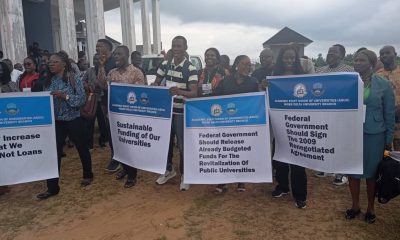
ASUU-NDU protest against FG loans, unpaid salaries,Non-Implementation of agreements …..says loans is generational slavery
-

 Business & Economy1 year ago
PC-NCG Issues Disclaimer on Purported Nigerian Coast Guard National Orientation Exercise In Anambra State
-
 Entertainment2 years ago
Jubilation galore as Parishioners of CKC Kurudu celebrate their cultural heritage ….FG should exploit our Cultural heritage to unite Nigerians-Rev Fr Dim
-

 Sports8 months ago
Bayelsa-born ex-football star’s son, Opuama donates spike shoes to Athletics Association
-

 General News2 years ago
Reps hold public hearing on FMC Ugwuaji Awkunanaw
-
 Law & Crime1 year ago
Legal practitioner raises alarm over threat to his life by CSP Muhammed Abdulkareem
-
 General News2 years ago
Celebration galore as UDA Successfully Elected New Exco ……I will digitalize processes that will raise UDA to greater height -Comr. Okejiri