
Politics
When Transparency Becomes Luxury: INEC and ₦1.5B FOI Controversy


By Chike Walter Duru
When the Independent National Electoral Commission (INEC) recently demanded a staggering ₦1.5 billion from a law firm for access to the national register of voters and polling units, many Nigerians were left bewildered. The request was made under the Freedom of Information (FOI) Act, 2011 – a law designed to make public records accessible, not to commercialize them. INEC’s justification, couched in legalese and bureaucratic arithmetic, raises a deeper question: Is Nigeria’s electoral umpire genuinely committed to transparency and accountability?
At the heart of this controversy is a simple statutory principle. Section 8(1) of the Freedom of Information Act clearly stipulates that where access to information is granted, the public institution may charge “an amount representing the actual cost of document duplication and transcription.” The framers of this law envisioned modest fees; not financial barriers.
INEC, however, appears to have stretched this provision beyond reason. By invoking its internal guideline of ₦250 per page, the Commission arrived at the colossal figure of ₦1,505,901,750 for 6,023,607 pages – supposedly the total pages needed to print the entire national voters’ register and polling unit list. It is a mathematical exercise that may be sound on paper, but absurd in context and intent.
Let us be clear: transparency is not a privilege that comes with a price tag. It is a fundamental right. The Freedom of Information Act exists precisely to ensure that institutions like INEC cannot hide behind bureaucracy or cost to deny citizens access to information that belongs to them.
INEC’s justification, however elaborate, falls flat against the law’s overriding provisions. Section 1(1) of the FOI Act affirms every Nigerian’s right to access or request information from any public institution. More importantly, Section 1(2) establishes that this right applies “notwithstanding anything contained in any other Act, law or regulation.” This means that no internal guideline, regulation, or provision of the Electoral Act can supersede the FOI Act, within the context of access to information.
By relying on Section 15 of the Electoral Act 2022 and its own “Guidelines for Processing Certified True Copies,” INEC seems to have elevated its internal processes above a federal statute – a position that is both legally untenable and administratively misguided.
Civil society organisations have rightly condemned INEC’s response. The Media Initiative Against Injustice, Violence and Corruption (MIIVOC) called the fee arbitrary and unlawful, while the Media Rights Agenda (MRA) described it as a deliberate attempt to frustrate legitimate requests under the FOI Act. These reactions are not misplaced. Charging ₦1.5 billion for public records is tantamount to weaponising cost – turning what should be a transparent process into a pay-to-play system.
The Attorney-General of the Federation’s FOI Implementation Guidelines pegged the standard charge for duplication at ₦10 per page. Even at that rate, printing the same documents would not amount to anything close to ₦1.5 billion. Moreover, in an age of digital data, it is difficult to believe that the only way INEC can share information is through millions of printed pages.
It is worth noting that the National Register of Voters is a digital database – already compiled, stored, and backed up electronically. The polling unit list is also digitised and publicly available. What, then, justifies this astronomical fee?
Democracy thrives on openness. The credibility of any electoral body depends not just on the conduct of elections, but also on the degree of public confidence in its processes. If the cost of accessing basic electoral data runs into billions, how can civil society, researchers, or ordinary citizens participate meaningfully in democratic oversight?
The African Commission on Human and Peoples’ Rights’ Guidelines on Access to Information and Elections in Africa (2017) are explicit: election management bodies must proactively disclose essential electoral information, including voters’ rolls and polling unit data. Nigeria, as a signatory to this framework, is obligated to promote – not restrict access to such information.
By placing financial barriers in the way of public access, INEC risks undermining not only its own credibility but also Nigeria’s broader democratic integrity. Transparency should not be a privilege of the rich or the powerful. It should be a right enjoyed by all.
This incident presents an opportunity for reflection and reform. INEC must immediately review its internal cost guidelines for information requests and align them with the FOI Act and the Attorney-General’s Implementation Guidelines. More importantly, it should embrace proactive disclosure by publishing the national register of voters and polling units in digital formats that are freely accessible to the public.
There is no reason why information already stored electronically should require billions to access. Doing so not only contravenes the spirit of the FOI Act but also erodes public trust in the Commission’s commitment to open governance.
Access to information is the lifeblood of democracy. It empowers citizens to hold institutions accountable and ensures that governance remains transparent. INEC’s ₦1.5 billion charge is not merely excessive; it is a dangerous precedent that could embolden other public institutions to commercialize public data and silence scrutiny.
If Nigeria must advance its democratic gains, the culture of secrecy and bureaucratic obstruction must give way to openness and accountability. INEC should lead that transformation, not stand in its way.
The Commission owes Nigerians not just elections, but the truth, transparency, and trust that sustain democracy.
Dr. Chike Walter Duru is a communications and governance expert, public relations strategist, and Associate Professor of Mass Communication. He chairs the Board of the Freedom of Information Coalition, Nigeria. Contact: walterchike@gmail.com






Politics
2026 Budget :INEC Seeks N873bn for 2027 Polls, …..Proposes N171bn allocation for this fiscal year
By George Mgbeleke
Ahead of 2027 election the Independent National Electoral Commission (INEC) has proposed N873.778 billion for the conduct of the 2027 general elections.
Chairman INEC, Prof. Joash Amupitan, declared this during the presentation of the Commission’s 2026 budget proposal and projected cost for the 2027 polls before the National Assembly Joint Committee on Electoral Matters in Abuja Thursday
Amupitan clarified that the proposed N873.778 billion election budget is separate from INEC’s 2026 appropriation proposal, which puts the Commission’s operational expenditure at N171 billion.
The 2026 allocation is expected to cover routine activities, including the conduct of by-elections and off-cycle governorship elections.
He noted that the projected election cost excludes a fresh request by the National Youth Service Corps (NYSC) seeking an upward review of allowances for corps members deployed as ad-hoc election staff.
Providing a breakdown of the projected election budget, the INEC chairman said the estimate is structured across five major components, including N379.748 billion for operational expenses, N92.317 billion for administrative costs, N209.206 billion for technological requirements, N154.905 billion for election capital projects and N42.608 billion for miscellaneous expenses.
Amupitan explained that the budget proposal was prepared in compliance with Section 3(3) of the Electoral Act 2022, which mandates the Commission to prepare its election budget at least one year before the general election.
On the 2026 fiscal projections, he revealed that the Ministry of Finance had issued the Commission a budget envelope of N140 billion, while INEC proposed a total expenditure of N171 billion, comprising N109 billion for personnel costs, N18.7 billion for overheads, N42.63 billion for election-related activities, and N1.4 billion for capital expenditure.
The INEC chairman expressed concerns over the envelope budgeting system, describing it as unsuitable for the Commission’s operations due to the urgent and unpredictable nature of electoral activities.
He also identified the absence of a dedicated communications network as a major operational challenge.
Speaking during the session, Senator Adams Oshiomhole (Edo North) argued that external agencies should not impose budgeting frameworks on INEC, considering the sensitive nature of its mandate and urged Parliament to align funding with the Commission’s actual requirements.
Similarly, a member of the House of Representatives, Billy Osawaru, called for INEC’s budget to be placed on first line charge as stipulated in the Constitution, while the Joint Committee approved a motion recommending a one time release of the Commission’s annual budget and said it would consider NYSC’s request for about N32 billion to increase allowances for corps members to N125,000 during election duties.
Chairman of the Senate Committee on INEC, Senator Simon Lalong assured legislative support for the Commission, while Chairman of the House Committee on Electoral Matters, Rep. Bayo Balogun, cautioned INEC against making promises it may not fulfil, recalling the controversy surrounding assurances on real fime result uploads to the INEC Result Viewing (IREV) portal during the last general election.
Politics
ADC Flags Off Membership Revalidation, Mobilisation and Registration; …… Inaugurates State MRMR Committees in Abuja
By Our Correspondent
The African Democratic Congress (ADC) has successfully flagged off its nationwide Membership Revalidation, Mobilisation and Registration (MRMR) exercise and inaugurated the State MRMR Committees.
The landmark event took place on Thursday at Barcelona Hotel, Wuse II, Abuja. It was attended by NEC Members, party leaders, key stakeholders, and dedicated party faithful from across the country.
In his inaugural address,National Chairman of the party and former senate President, Senator David Mark the party described the MRMR exercise as a strategic and transformative step toward strengthening the internal structures of the ADC, deepening grassroots engagement, and repositioning the party for greater national impact.
Members were urged to actively participate in the process to ensure the development of a credible, updated, and inclusive membership database.
Mark further announced that the newly issued membership card under the MRMR exercise officially supersedes and renders all previously issued ADC membership cards invalid.
Consequently, all members are required to complete the revalidation and registration process in order to retain their active membership status and full privileges within the party.
The inauguration of the State MRMR Committees underscores the party’s commitment to transparency, accountability, and effective coordination at the state level. The committees have been mandated to ensure a smooth, transparent, and successful implementation of the exercise nationwide.
According to him,ADC remains resolute in its mission to deepen democratic values, expand its membership base, and build a stronger, people-centered political movement across Nigeria.
BY UTHMAN BABA-NASEER,MINNA
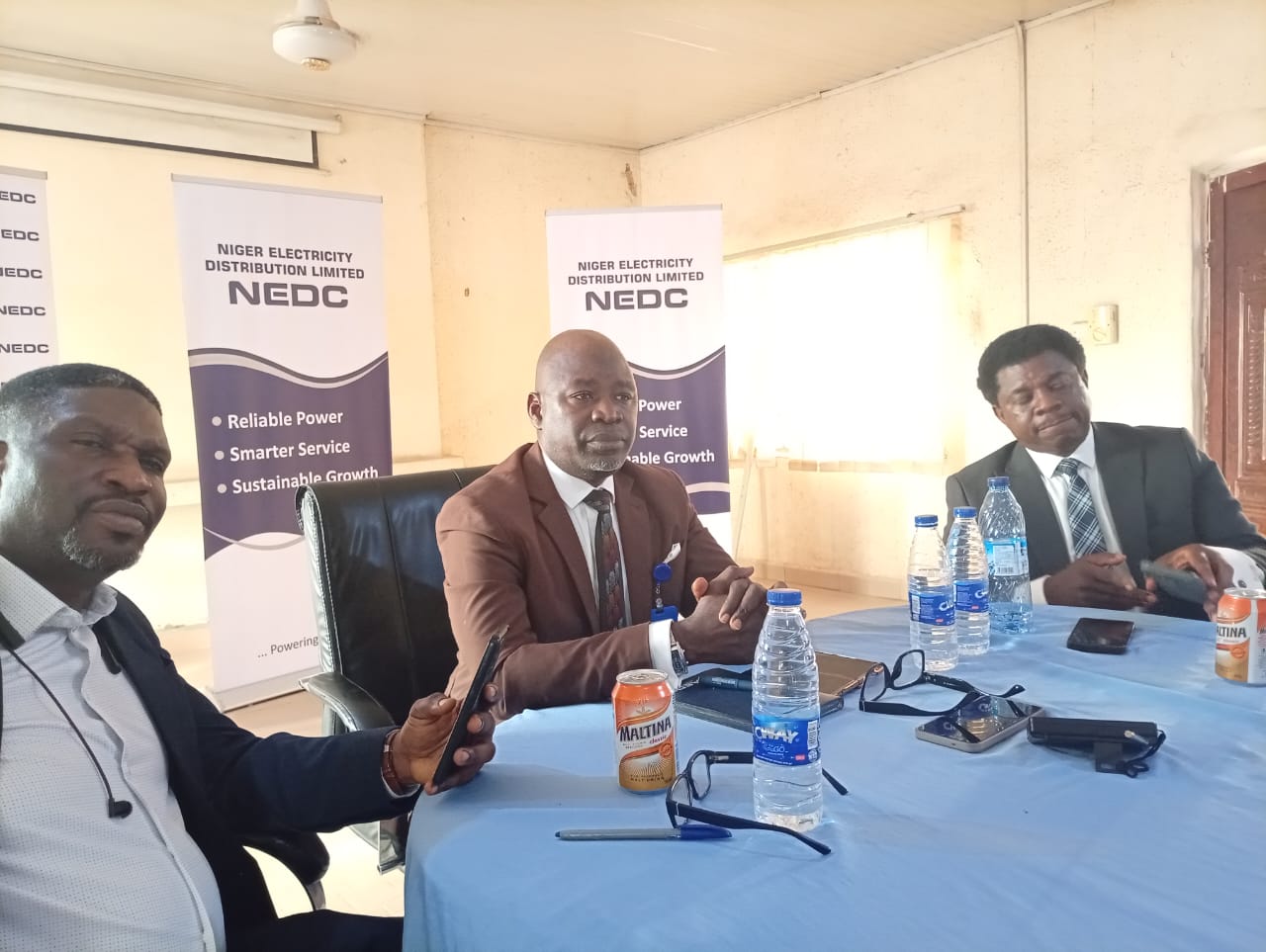
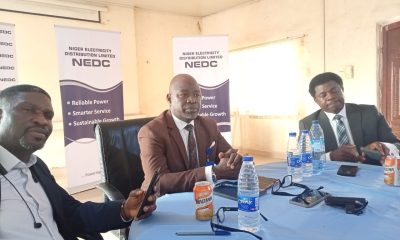
The Niger Electric Distribution Company Limited (NEDC) has announced plans to partner with journalists to improve development communication and increase public awareness of its activities and services.
The Managing Director of the company, Engineer Sam Odekina, made this known during a two-hour interactive session with journalists at his office.
He described the media as a key partner in progress, saying the company decided to work closely with journalists to better inform and educate the public about its operations, policies, and ongoing projects.
According to him, many electricity consumers want more information about the company’s activities. He explained that the media can serve as a reliable bridge between NEDC and its customers by providing accurate and timely information.
Engineer Odekina also described the media as the “fourth estate of the realm,” stressing its vital role in promoting transparency, accountability, and public understanding. He expressed confidence that the partnership would strengthen communication and build trust between the company and its customers.
In his remarks, the Head of Consumer Experience, Mr. Kene Ofili, appreciated the media for its contributions, noting that journalists have helped the company to properly inform and guide the public on important issues.
He appealed to journalists to always verify information with the company before broadcasting or publishing reports, to ensure accuracy and fairness.
Also speaking, the Head of Brand Marketing and Corporate Communication Mr. Omede Odekina assured journalists that the company would continue to share information about its challenges and activities so that the public can have a clearer understanding of its operations.
The interactive session highlighted the long-standing relationship between NEDC and the media and reaffirmed their commitment to working together in the interest of the public.

2026 Budget :INEC Seeks N873bn for 2027 Polls, …..Proposes N171bn allocation for this fiscal year
By George Mgbeleke Ahead of 2027 election the Independent National Electoral Commission (INEC) has proposed N873.778 billion for the conduct...

ADC Flags Off Membership Revalidation, Mobilisation and Registration; …… Inaugurates State MRMR Committees in Abuja
By Our Correspondent The African Democratic Congress (ADC) has successfully flagged off its nationwide Membership Revalidation, Mobilisation and Registration (MRMR)...

Budget : AGF under fire as Senators lambast him over zero capital allocation to MDAs … Non payment of executed contracts …Centralized payment System
By George Mgbeleke In a bid to put the record straight on the delays in disbursement of funds to Ministries,...
Real-time Transmission of Election Results Doesn’t Translate to E-Voting, Senate Clarifies …..Says IReV wasn’t specifically designed for electronic voting ……Faults claims that it declined the use of IReV for 2027 polls
By George Mgbeleke The Senate has clarified that the electronic transmission of election results in real time does not translate...

NEDC Strengthens Ties with Journalists to Boost Public Awareness
BY UTHMAN BABA-NASEER,MINNA The Niger Electric Distribution Company Limited (NEDC) has announced plans to partner with journalists to improve development...


Bayelsa High court Jails a 29 -Year-Old man For Sexually Assaulting A minor
By David Owei,Bayelsa A Bayelsa State High Court sitting in Yenagoa has sentenced a 29-year-old man, Ebimie Ajalla of Polobubo...


Veterinarians crucial to successful agenda on food security, employment -FG
By Abdul-Ganiyy Akanbi, The Federal Government has said veterinary professionals have a critical role to play in the realization of...


INC scribe, Engr. Ebipamowei Wodu, submits nomination form for position of President …. gets wide endorsement from aspirants
By David Owei The National Secretary of the Ijaw National Congress INC, Engineer Ebipamowei Wodu has submitted his interest/nomination form...


Niger state Judiciary launches its Electronic Filling (E- Filling) system across all High courts
By Uthman-Baba Naseer, Minna In a significant move towards digitalizing the Judicial process,the Niger State High Court has formally launched...


Lagos-Calabar, Sokoto-Badagry Coastal Highway Top N3.2trn Works Budget-Umahi
By George Mgbeleke In its bid to develop the nation’s road infrastructure and complete abandoned projects ,Minister of Works, David...
-
 Politics6 months ago
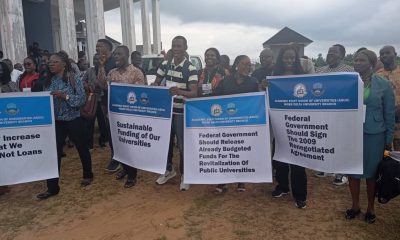
ASUU-NDU protest against FG loans, unpaid salaries,Non-Implementation of agreements …..says loans is generational slavery
-

 Politics9 months ago
Gov Okpebholo moves to end Cultism *Threatens action against leading cult groups *Vows to demolish more cult houses in Edo State
-

 Business & Economy6 months ago
PC-NCG Issues Disclaimer on Purported Nigerian Coast Guard National Orientation Exercise In Anambra State
-
 Entertainment2 years ago
Jubilation galore as Parishioners of CKC Kurudu celebrate their cultural heritage ….FG should exploit our Cultural heritage to unite Nigerians-Rev Fr Dim
-

 General News2 years ago
Reps hold public hearing on FMC Ugwuaji Awkunanaw
-

 General News2 years ago
Celebration galore as UDA Successfully Elected New Exco ……I will digitalize processes that will raise UDA to greater height -Comr. Okejiri
-
 Law & Crime8 months ago
ICPC pledges to collaborate with FIDA to end Sex for Marks in tertiary institutions
-

 Law & Crime7 months ago
Legal practitioner raises alarm over threat to his life by CSP Muhammed Abdulkareem