
Oil & Gas
Senate rejects NNPCL’s Explanations on unaccounted N210trillion …threatens to subpoena former GMDs

By Our Correspondent
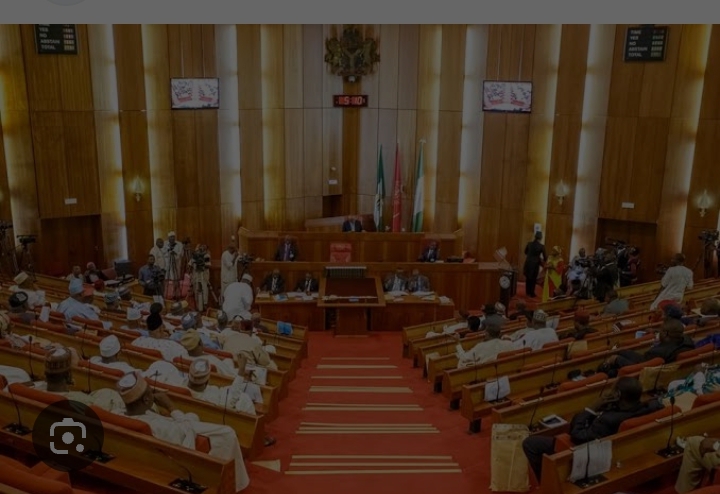
The Senate Tuesday through its committee on Public Accounts , rejected written explanations forwarded to it by management of the Nigerian National Petroleum Company Limited ( NNPCL) on unaccounted N210trillion from 2017 to 2023.
The Committee headed by Senator Aliyu Wadada Ahmed ( Nasarawa West) had on the strength of 19 different queries raised against NNPCL by Office of the Auditor – General of the Federation in the financial reports of 2017 to 2023 , directed NNPCL to account for N210trillion financial infraction as contained in the reports .
Though the management of NNPCL in line with the directive, responded to the 19 queries through written explanations but failed to physically appear before the Committee on Tuesday ( November 11, 2025) as earlier suggested and agreed .
Irked by the development , the committee through its Chairman at the session , slammed the Group Chief Executive Officer ( GCEO) of NNPCL, Engineer Bayo Ojulari for offensive evasiveness which according to him, will not make the committed recognise any representation from NNPCL again ,
He said : ” Today, November 11, 2025, was a date chosen by NNPC. it is rather unfortunate that none of the officials of NNPC is here on a date they themselves chose.”
“The public has been waiting for this. It is important that we keep Nigerians informed. Even though we cannot conclude today in the absence of NNPC officials, the committee must share our findings based on the responses already submitted by NNPC.”
He revealed that NNPC’s financial submissions raised serious red flags — particularly claims of ₦103 trillion in accrued expenses and ₦107 trillion in receivables, totaling ₦210 trillion between 2017 and 2023.
“NNPC claimed ₦103 trillion as accrued expenses and ₦107 trillion as receivables — amounting to ₦210 trillion. On question eight, NNPC’s explanation on the ₦107 trillion receivables — equivalent to about $117 billion — contradicts available facts and evidence provided by NNPC itself. The committee is duty-bound to reject this”, he said
He further questioned how NNPC could pay ₦103 trillion in cash calls to joint venture partners in 2023 alone, despite generating only ₦24 trillion in crude revenue between 2017 and 2022.
> “Cash call arrangements were abolished in 2016 under the Buhari administration. How can NNPC claim to have paid ₦103 trillion in one year, when it only generated ₦24 trillion in revenue over five years? Where did NNPC get that money?
“As far as this committee is concerned, that figure is unjustifiable and unacceptable. The ₦103 trillion must be returned to the Treasury. This will be concluded when NNPC appears before us.”
He added that the committee also outrightly rejected the ₦107 Trillion receivables which stand for assets in accounting.
“NNPC claimed of ₦107 trillion as receivables — part of which they said was held in defunct banks. However, no bank or amount was named.
“This lack of transparency is unacceptable. By the time you combine both figures — ₦103 trillion and ₦107 trillion — NNPC must account for ₦210 trillion.
“If the present management of NNPC is finding it difficult to provide acceptable answers, it is better they say so. The committee will not hesitate to subpoena former officials of NNPC and NAPIMS.
“NAPIMS, by law, is a department under NNPCL and cannot maintain an independent account. Yet, NAPIMS has been operating as if it were a separate entity”, he stressed .
He warned that any future absence of NNPC’s Group Chief Executive Officer (GCEO) before the committee would no longer be tolerated.
> “At any point this committee invites NNPC, the Chief Executive must appear in person. Being out of the country will no longer be accepted as an excuse. The next invitation will require the GCEO’s physical presence.”
In their separate remarks , all members of the committee present at the session , supported the decisions announced by the Chairman .






Oil & Gas
As Oil companies , Niger Delta Community Ask: Who Will Clean Up their exploited Environment
By David Owei
For families in Bille Kingdom, the water around them is more than a stretch of creek.
It is their means of movement, a source of livelihood and being part of everyday life ,it’s about tourism,aquatic splendor ,picnic and recreation and exploration of natural ambience.
So when reports of gas leaks and other environmental problems begin to raise concerns about the safety of the waterways, the issue is no longer just about oil production.
It becomes a question of how people will live, work and provide for their families.
Now, as International Oil Companies (IOCs) are divesting from onshore oil assets, residents of the Rivers State community in particular in particular and Niger Delta in general are asking yet another difficult question: who will take responsibility for the environmental problems left behind?
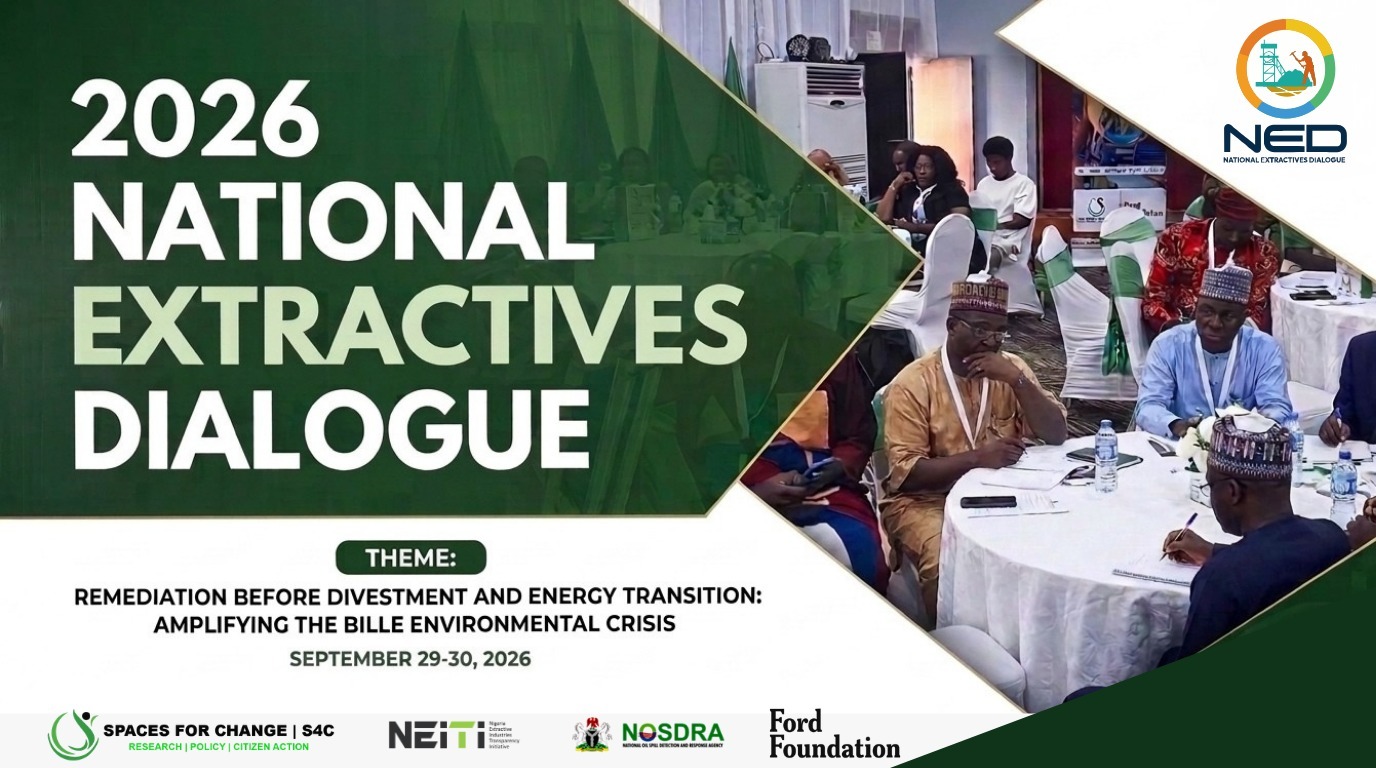
That question will take centre stage in Port Harcourt on September 29 and 30, when Spaces for Change (S4C), in partnership with the Nigeria Extractive Industries Transparency Initiative (NEITI) and the National Oil Spill Detection and Response Agency (NOSDRA), with support from the Ford Foundation, convenes the fifth National Extractives Dialogue.
The dialogue is themed “Remediation Before Divestment and Energy Transition: Amplifying the Bille Environmental Crisis.”
More than 150 stakeholders from the Niger Delta and beyond are expected to attend, including government officials, regulators, civil society organisations, host community representatives, academics and private-sector players.
Bille Kingdom, in Degema Local Government Area of Rivers State, hosts major oil assets including OML 18 and OML 24. The community is now at the centre of concerns over what happens to environmental liabilities as Nigeria’s oil industry undergoes major changes.
According to the organisers, reports from affected communities and preliminary field observations indicate persistent environmental challenges, including reported gas leaks affecting waterways, creeks, residential areas and agricultural livelihoods.
While technical assessments are still ongoing, residents are waiting for verified scientific findings and immediate relief measures, including access to clean water.
For people living in a riverine community, damage to waterways can quickly become a threat to livelihoods. Fishing, farming and transportation all depend on the health of the environment.
The organisers say this is why remediation must come before divestment and energy transition plans.
As IOCs transfer onshore assets to domestic operators, they argue that historical environmental liabilities must be properly identified and addressed so that communities are not left carrying the burden of decades of extractive activities.
The dialogue will provide residents of Bille and neighbouring communities an opportunity to engage directly with regulators, industry operators, security agencies and civil society organisations.
The press statement announcing the event was signed by Victoria Ibezim-Ohaeri, Executive Director of Spaces for Change (S4C).
For Bille residents, the issue is ultimately about more than who owns an oil asset.
It is about whether the water around their homes will be safe, whether their livelihoods can survive and whether the companies leaving will also leave behind a responsibility to restore the environment.
As Nigeria moves towards a new energy future, Bille is asking who will be responsible for the environmental cost of the old one.

By David Owei
The Health of Mother Earth Foundation (HOMEF) on Tuesday demanded urgent cleanup, compensation and accountability over an oil spill at Nembe Creek in Bayelsa.
The spill occurred on Aug. 22 during crude oil loading operations at Oil Mining Lease (OML) 29.
The operational mishap disrupted fishing activities and threatened the livelihoods of coastal communities.
The facility is operated by Nembe Exploration and Production Ltd., formerly Aiteo Eastern Exploration and Production Ltd., within Oil Mining Lease 29 (OML 29).
HOMEF made the call after a field visit to the affected area, where crude oil was observed in waterways and along mangrove banks.
The organisation said the pungent smell of crude was noticeable about two kilometres before reaching the community.
It added that residents reported tidal movements had spread the pollution through interconnected waterways and fishing settlements.
According to HOMEF, affected communities depend heavily on fishing for food and income.
Residents reportedly complained of damaged fishing nets, reduced fish catches and inability to use the waterways for fishing and domestic purposes.
They also reported the disappearance of aquatic resources following the pollution.
Vice-Chairlady of Nembe Creek women, Mrs Love Mark, said the spill had made fishing nets unusable.
“We cannot go out with our fishing nets and hooks for fishing again,” Mark said.
She said a fishing net now cost between N150,000 and N170,000, making replacement difficult for affected residents.
The Paramount Ruler of Nembe Creek communities, HRH Agent Waya, said repeated pollution had severely affected fishing livelihoods.
“Due to the destruction of aquatic life, there are no fish in the river,” Waya said.
He said fishermen could use two or three canoes and still return without any catch.
Following the incident, community women reportedly protested at the oil facility, demanding cleanup, damage assessment and support for affected residents.
The Joint Investigation Visit (JIV) concluded that the leak was due to operational failure.
HOMEF, however, said the volume of crude released and the full geographical extent of the pollution remained inconclusive as of Sept. 1.
The Executive Director of HOMEF, Dr Nnimmo Bassey, said identifying the cause of a spill should not end the accountability process.
Bassey said the latest incident occurred against the background of previous pollution incidents associated with OML 29.
He specifically cited the prolonged 2021 Santa Barbara Well 1 spill and wellhead blowout.
He emphasised that recurring spills should be treated as a systemic environmental governance concern rather than isolated incidents.
HOMEF urged Nembe Exploration and Production Ltd., the Bayelsa Government and relevant federal regulatory agencies to publish the complete JIV findings.
It said the findings should include the cause, estimated volume, geographical extent and communities affected by the spill.
The organisation also demanded an independent and comprehensive environmental assessment of affected waterways, mangroves, fishing grounds and settlements.
HOMEF called for immediate cleanup and ecological restoration, with clear timelines and transparent monitoring mechanisms.
It also demanded urgent relief for affected households, particularly fishing families whose livelihoods had been disrupted.
The organisation called for compensation for verified livelihood and economic losses, including damaged fishing equipment and lost fishing time.
It further urged authorities to include all affected communities and fishing camps in JIVs, damage assessments, cleanup and monitoring.
HOMEF called for sustained environmental and health monitoring of water, sediments, fish and other aquatic organisms.
It also urged the strengthening of spill prevention and emergency response systems around crude-loading facilities.
The foundation said authorities must address the wider legacy of pollution in OML 29 rather than treat each incident separately.
HOMEF also called for protection of community fishing livelihoods from the wider operational activities associated with crude loading.
It cited the impacts of navigational buoys and vessel movements on fishing grounds and equipment.
The organisation said communities should not continue to bear the environmental and economic costs of oil extraction amid limited accountability.
HOMEF urged authorities and the operator to move beyond emergency responses and strengthen pollution prevention and transparent investigations.
It also called for meaningful community participation, ecological restoration and livelihood recovery as integral parts of environmental governance in Nembe.
The foundation said the people of Nembe Creek deserved clean waterways, protected livelihoods and environmental justice.
Public Affairs officials at Nembe Exploration and Production have kept mum over the incident and declined to provide requisite updates on containment efforts.
By David Owei
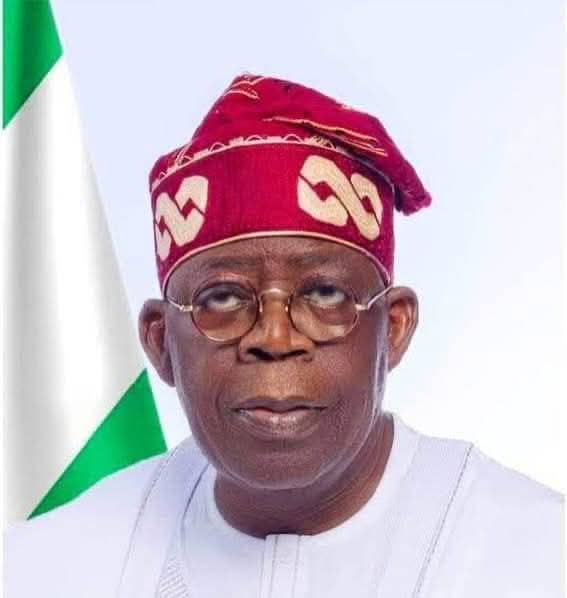
As Nigeria’s Niger Delta hits the highways of economic drive and evolvement, President Bola Tinubu will be in the region to flag off an investment and economic summit.
On September 15, the president is expected to declare open the Niger Delta Economic & Investment Summit 2026 in Port Harcourt, Rivers State.
The region is naturally the oil and gas bay of Nigeria and made of nine states that cut across the three geopolitical zones of southern Nigeria.
But the focus of the event is to look at the holistic economy of the region beyond just oil and gas to the development and growth of other potentials.
The event sets its attention on: Driving Investment, Innovation & Industrial Growth in the Niger Delta
The Niger Delta Economic and Investment Summit (NDEIS), aims to be a high-impact investment platform and will seek to address development challenges and unlock scalable, bankable, and sustainable opportunities in the Niger Delta Region.
Ambassador Ideare Ogan, Chairman of the Niger Delta Chambers of Commerce,Industry, Trade, Mines and Agriculture, (NDCCITMA), the host agency said the body is out to recreate the economic fortunes of the region beyond just oil and gas, and will use the event to make a statement about the economic robustness of the Niger Delta.
The Summit will position Nigeria’s most endowed region with mineral resources as an emerging multi-sector growth corridor with strong returns for forward-looking investors.
It will reposition the Niger Delta as a competitive hub for innovation, enterprise, and inclusive development
The Summit will convene government leaders, development partners, investors, industry experts, community leaders, and youth innovators to engage in focused dialogue on priority sectors such as energy transition, oil and gas value chain optimization, agriculture, blue economy, infrastructure, manufacturing, technology, environmental sustainability, and human capital development.
The Managing Director of Red Sapphire Consulting, Mr. Onoriode Akpe told Africa China Economy Magazine that the summit that has long been in the offing will reposition the region as the economic centrepiece of the country as it has been with oil and gas, but this time in a multi dimensional way.
Akpe said that the emphasis will be placed on inclusive growth, peacebuilding, climate resilience, and economic diversification, education industry development, manufacturing, service sector and ICT industry enhancement.
The Summit program will present keynote speakers, goodwill messages, technical session and structured plenary sessions, sector-specific investment forums, policy roundtables, and deal-making platforms that will address key issues on the economy of the region.
The Summit is expected to attract key development partners led by our benefactors, the Niger Delta Development Commission (NDDC).
The summit planned to be a world-class event, will align regional development priorities with national economic objectives and global investment trends.
The Steering Committee will provide strategic oversight, stakeholder coordination, and operational guidance to ensure the Summit achieves measurable outcomes, including policy commitments, investment deals, and actionable partnerships.
NDCCITMA sees the Summit beyond dialogue into deal execution. Investment-ready projects, public– private partnership (PPP) frameworks, The Summit will target B2G and B2B engagements that will enable investors and our members to structure partnerships that align profitability with long-term regional stability and impact.

2027: Over 30,000 Enugu Teachers Endorse Mbah, Tinubu, List Welfare, Increased Education Funding*
By Our Correspondent Contrary to the ongoing strike largely by techers in the Federal Capital Territary (FCT) Abuja for alleged...


Gun men again attack NDC governorship Campaign’s Rally in Enugu
By Our Correspondent Gun men suspected to be political thugs, Saturday shot sporadically into the air and even shot somebody...
2027: Over 30,000 Enugu Teachers Endorse Mbah, Tinubu, List Welfare, Increased Education Funding
By Our Correspondent Contrary to the ongoing strike largely by techers in the Federal Capital Territary (FCT) Abuja for alledged...


Man Stabs Wife in Anambra state, Kills himself with Sniper
By Our Correspondent In a bid to escape from capital punishment on assumption that he had killed his wife ,...

INEC Deploys 5,720 Election Devices, Intensifies 2027 Preparations
By Our Correspondent The Independent National Electoral Commission (INEC) has intensified preparations for the 2027 general elections, with the procurement...
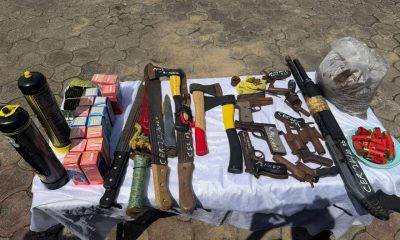

Police parades 23 persons over alleged involvement in cult clashes in Bayelsà ….recovers Eight firearms, cutlasses, bottles of codine,two battle axes,20 cartridges
By David Owei The Bayelsà State Police Command led by Commissioner of Police, Mr. Ajao Saka Adewale has paraded twenty...

Wike orders ‘no work, no pay’ as FCT strike deepens, accuses NLC of politics … says teachers’ demands already resolved, directs area councils to enforce policy against striking
By Our Correspondent In an affort to force FCT workers on strike end the ongoing strike ,Minister of the Federal...

Milton Dick Elected President of the IPU Assembly
By Our Correspondent Mr Milton Dick, Speaker of Australia’s House of Representatives, has been elected as the President of the...

Fubara Reaffirms Partnership with Army -Lauds Establishment of New Brigade in Ahoada
By George Mgbeleke Governor of Rivers State, His Excellency, Sir Siminalayi Fubara, has assured the Nigerian Army of his administration’s...

NSPWB Executive Sec.stresses Board’s readiness to support Christains, Muslim Pilgrims in Niger state
BY UTHMAN BABA-NASEER,MINNA The Executive Secretary of the Niger State Pilgrims’Welfare Board,(NSPWB) Muhammed Awwal Aliyu,has reiterated the Board’s preparedness to...
-

 Politics1 year ago
Gov Okpebholo moves to end Cultism *Threatens action against leading cult groups *Vows to demolish more cult houses in Edo State
-
 Politics1 year ago
ASUU-NDU protest against FG loans, unpaid salaries,Non-Implementation of agreements …..says loans is generational slavery
-
 Business & Economy1 year ago
PC-NCG Issues Disclaimer on Purported Nigerian Coast Guard National Orientation Exercise In Anambra State
-
 Entertainment2 years ago
Jubilation galore as Parishioners of CKC Kurudu celebrate their cultural heritage ….FG should exploit our Cultural heritage to unite Nigerians-Rev Fr Dim
-

 Sports8 months ago
Bayelsa-born ex-football star’s son, Opuama donates spike shoes to Athletics Association
-

 General News2 years ago
Reps hold public hearing on FMC Ugwuaji Awkunanaw
-

 Law & Crime1 year ago
Legal practitioner raises alarm over threat to his life by CSP Muhammed Abdulkareem
-

 General News2 years ago
Celebration galore as UDA Successfully Elected New Exco ……I will digitalize processes that will raise UDA to greater height -Comr. Okejiri