
Law & Crime
HURIWA Urges Ned Nwoko to release Regina’s brother from Detention , demands Police intervention in civil Matters

By Our Correspondent
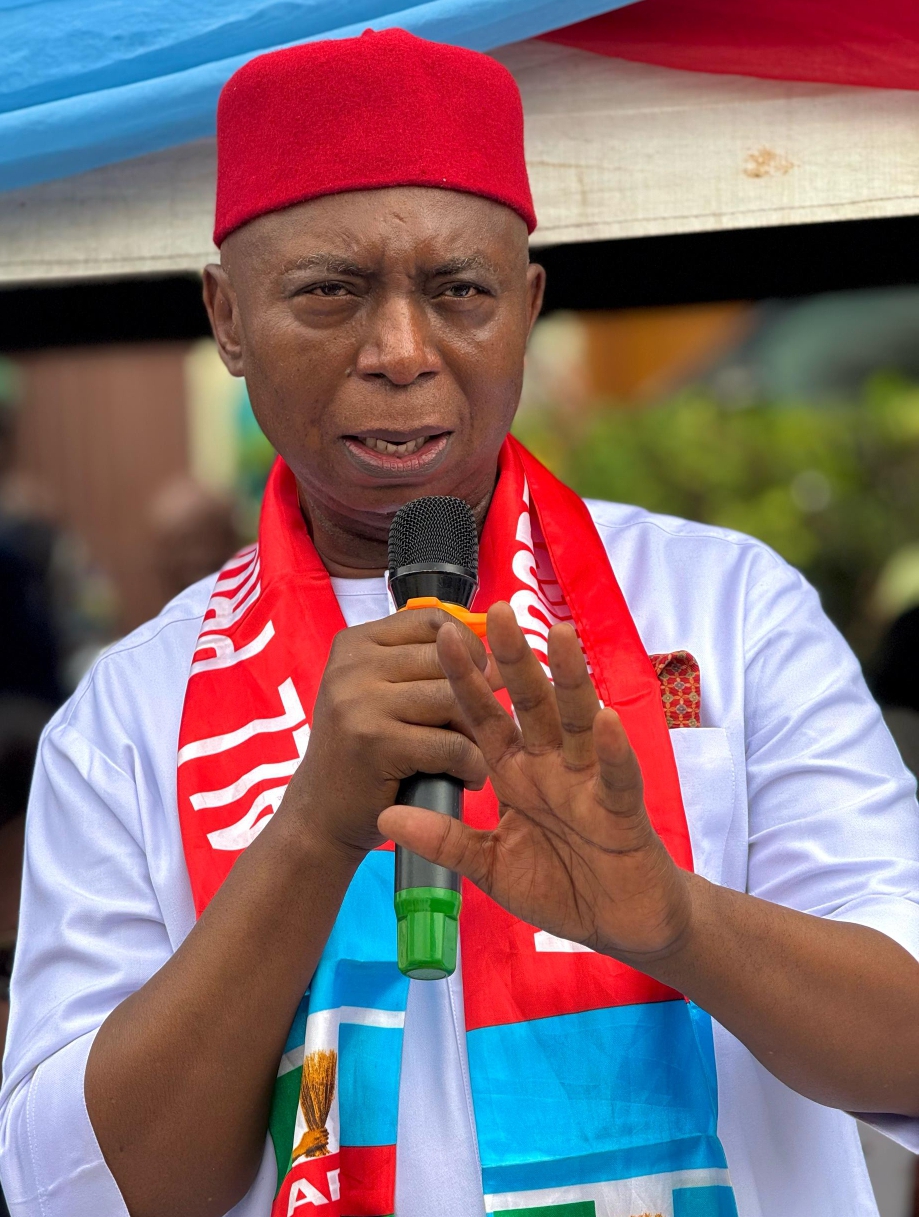
Prominent pro-democracy and civil rights advocacy group HUMAN RIGHTS WRITERS ASSOCIATION OF NIGERIA (HURIWA) has condemned as unconstitutional and extra legal the involvement of the Nigeria Police Force in the civil matters related to the widely publiscised marital squabbles between the Senator representing the good people of Delta North and his estranged younger wife Ms. Regina Daniels just as the Rights group has urged the distinguished senator to order the release from incarceration in Suleja prisons reportedly of his brother -in-law Mr. Samuel Ojeogwu also known as SammyWest.
HURIWA disclosed that it has received multiple calls from the good people of Delta North and from members of our organisation that the family of Regina Daniels are being incessantly and physically harassed by the police just as these callers have urged us to intervene to bring to the end the ordeals of the family members of the estranged youngest wife of Senator Ned Nwoko. “Most of our callers have asked if there is a way we can help out because according to the allegations, the distinguished Senator Ned Nwoko allegedly ordered the arbitrary arrest and then illegally locked up Regina Daniels brother in suleja prison. The callers also alleged that: “Now he wants to arrest The mum”.
In a media statement endorsed by the National Coordinator Comrade Emmanuel Onwubiko, HURIWA warned that the officers of the Nigeria police Force have continued to stain their global image and are been looked upon as agents of arbitrary arrest and unilateral jailing of the weak and vulnerable members of the society at the behest of the rich and prominent members of the Nigerian society.
“We are calling on the Inspector-General of Police Mr Kayode Egbetokun to direct his officers to show professionalism and stay off domestic and civil related matters of couples having marital squabble. It is one of the most debasing behaviour of the police that they let themselves to be seen as oppressors who can be paid to arbitrary use brute Force against the weak especially when the weak have disagreement with persons considered to be rich and powerful. The Nigeria Police Force has become the agent of human rights abuses and have found a way of twisting the cybercrime Act to suit their illegality just so they can service the interest of their pay masters. We condemn this practice.
“We are urging the Distinguished Senator Ned Nwoko to immediately order the release of his brother-in-law just as we are proposing that the Senator should adopt customary arbitration using the traditional institutions in his locality to seek a resolution of his marital crisis because quarrels and disagreement by couples are not criminal matters that should involve the police but civil matters and it is unconstitutional for the police to frame up the weak just to satisfy the yearning of the rich and powerful and then the police would turn back to the citizens and shout out empty rhetoric that the police is your friend. The truth is that due to corruption or perceived pecuniary benefits the police as an institution has degenerated to the petty work of doing the bidding of those who have the riches to settle them. This tendency is unconstitutional and we will petition the Police Service Commission if the police refuses to hand off this civil matter and release the wrongfully detained elder brother of Regina Daniels the estranged wife of the Senator.”
“Assuming without conceding that there is a reason for police to step in, it is unconstitutional to use the magistrate court to arrive at a predetermined denial of the fundamental human rights to freedom from arbitrary arrests and detention just as Section 36(5) of the Constitution recognises that an accused person is innocent in the eyes of the law until a contrary determination is used. The story being bandied about that the police was called in by the Senator to apply the use of police force to compel Regina Daniels to return to her marital union is unconstitutional. Both the husband and wife are adults that have their constitutionally guaranteed rights to decide their freedom of association. The police can’t be an instrument of coercion to compel an estranged wife to return to her home. The couple who disagree must be allowed to work out their reunification in their own terms as adults who had entered into marital union voluntarily. The police doesn’t have any role in marital squabbles except if a case of domestic violence is established.
Recall that the ace Actress Regina Daniels had openly accused her husband, Senator Ned Nwoko, of using his influence to arrest her siblings, adding that she is being pressured to return to “rehab.”
In a series of posts on her Instagram Story, the 24-year-old actress claimed that her elder brother and sister had been detained by police, while her younger sister was at risk of being arrested if she refused to comply with Nwoko’s demands.
“Someone please help me! I feel like I’m losing my mind. My big brother and big sister have been arrested, my baby sister might be arrested soon as well until I return and according to him, return to rehab,” she wrote. “Don’t even get me started on your stupid rehab talk! You said I’m a drug addict… What other name can you call me? A prostitute?”
Daniels continued, “Imagine the Nigerian police beating up my brother like a criminal. What exactly was the violent arrest for? Ned, you have power, connections and money right? Wild for you to think I have none.”
The actress, who married Nwoko in 2019 and shares two sons with him, expressed frustration at how their private issues have become public, saying, “It is obvious it’s war! And a big shame that the beautiful legacy we built is about to be ridiculed by the whole world. Must things go completely south if partners are no longer interested?”
Her outburst comes amid growing speculation about the state of their marriage. Last week, Nwoko accused Daniels of drug and alcohol abuse and claimed she needed rehabilitation. In a statement he posted on his Instagram page, he said her “emotional outburst” was due to substance misuse.
Daniels, however, dismissed her husband’s claims, responding with sarcasm to his accusation of drug use. “You said I’m a drug addict, me I use am rub body sir!” she wrote, implying that she had accepted the label rather than continue to argue about it.
The actress also hinted that she had tried to stay quiet about her marriage troubles for the sake of her children but could no longer hold back. “My sons and family are the biggest challenge of my life but I will overcome and give them what they truly deserve,” she said.
Her claims have drawn mixed reactions online. While many social media users have expressed sympathy for her, others urged both parties to handle the matter privately.
In earlier weeks, Daniels had been seen without her wedding ring and had stopped using her husband’s name on social media — signs that many fans took as confirmation that the marriage was on shaky ground.
Nwoko, 64, and Daniels have often attracted public attention because of their 40-year age difference and the senator’s polygamous household. Their marriage, which began with controversy, had until recently appeared stable, with Daniels frequently posting family photos and sharing stories about motherhood.
The latest allegations about her brothers’ arrests, however, suggest deeper conflict.
Neither the police nor Nwoko has issued a public response to Daniels’ new claims at the time of this report.
For now, Daniels’ posts have kept public attention on her. Beyond her acting career, her personal life once portrayed as glamorous has become a topic of national conversation.






By Our Correspondent
Barely three weeks after the Independent National Electoral Commission (INEC) declared governor Adeleke of Accord party winner of Osun election, the All Progressives Congress, (APC) and the Peoples Democratic Party, (PDP) have challenged the outcome of the August 15, 2026, Osun Gubernatorial elections incumbent governor’s victory as Tribunal displays two Petitions
The petitions were confirmed in a notice sighted by our correspondent at the tribunal secretariat in Osogbo on Monday, formally commencing the legal process arising from the August 15 governorship election.
The development followed confirmation by the secretary of the tribunal, Pefe Belemore, that petitions challenging the election outcome had been filed.
According to Belemore, “The necessary notices would be displayed on the tribunal’s notice board before noon on Monday.”
At the opening of the tribunal earlier in the day, Belemore was present in the courtroom alongside other officials of the secretariat as preparations were made for the commencement of proceedings.
The APC and PDP are challenging the outcome of the election, which returned Adeleke as governor for another term in office.
The display of the petitions is expected to pave the way for the service of legal processes on the parties involved and subsequent proceedings before the tribunal.
The APC’s petition, marked EPT/OS/GOV/01/2026, was filed by its governorship candidate, Bola Oyebamiji.
Oyebamiji listed Adeleke, the Accord and the Independent National Electoral Commission, INEC, as respondents in the petition challenging the election outcome.
The PDP’s petition, marked EPT/OS/GOV/02/2026, was filed by Adebayo Olugbenga Adedamola against Adeleke, INEC and the Accord.
Law & Crime
IPC-SPJ Hub Condemns Attack on Kano Journalists, …. Tasks Security Agecies on Protection during Political Rallies

By David Owei
The Safety and Protection of Journalists (SPJ) Hub of the International Press Centre (IPC) condemns the attack on journalists who were returning from covering the All Progressives Congress (APC) rally at the Sani Abacha Stadium in Kano on Saturday, 5th September 2026.
Reports reaching the Hub states that, “a vehicle conveying four Radio Nigeria Pyramid FM staff, a journalist from Guarantee Radio and another from Daily Trust, was attacked by hoodlums, who repeatedly hit the vehicle, leaving the driver to sustain injuries, while some of the journalists were hit by broken glass from the damaged vehicle.”
“The incident happened after the APC had held the Tinubu Support Group rally at the Sani Abacha Stadium in Kano,” the report further revealed.
The Executive Director of IPC, Mr. Lanre Arogundade in a statement described the unfortunate incident, as a serious concern and threat to press freedom, considering the damage on a Radio Nigeria, Pyramid FM vehicle.
Mr. Arogundade noted that, “the campaigns and rally just recently started, and journalists should not be subject to any form of attack at this time, when political activities are gradually increasing ahead of the general elections.”
The Hub is therefore calling on all security agencies to at this time be intentional about safeguarding journalists, especially those deployed to the field to cover political activities, especially during large gatherings where journalists are exposed to potential risks.
The Hub is also admonishing media organisations and journalists covering elections to always conduct security scan and safety consciousness in coverage of electoral issues.

By George Mgbeleke
The Human Rights Writers Association of Nigeria (HURIWA) has demanded the immediate suspension of officials in charge of the National Cash Transfer Office and ordered a full-scale investigation into the N33.75 billion cash transfer that the Auditor-General for the Federation and states have failed to properly account for.
HURIWA in a statement by its national coordinator, Comrade Emmanuel Nnadozie Onwubiko emphasized that Nigerians cannot continue to watch helplessly as billions of naira meant for poor and vulnerable citizens disappear into unverifiable transactions.
The group called on the Economic and Financial Crimes Commission (EFCC) to launch a vigorous forensic investigation, trace every naira, and recover any amounts determined to have been wrongly paid, diverted, or misapplied.
The Auditor-General’s findings revealed a significant breakdown in financial controls governing one of the Federal Government’s most sensitive social intervention programs, as payments to 3,295,207 households across 35 states in 2023 could not be authenticated.
HURIWA demands explanations for incomplete beneficiary details on payment vouchers and the unavailability of necessary Remita statements for reconciliation purposes. Disturbingly, auditors were reportedly obstructed by National Cash Transfer Office staff from accessing these records.
HURIWA insists on a thorough investigation to follow the money from government accounts to the final recipients, stating that no official should use bureaucracy to shield themselves as unverified billions remain in limbo. The organization urges the EFCC to verify each payment and identify genuine vulnerable Nigerians among the beneficiaries. Misallocated funds must be recovered, and those responsible held accountable.
Moreover, HURIWA stresses that this situation extends beyond the N33.75 billion, highlighting additional discrepancies totaling N36.74 billion and stressing the need for a comprehensive audit of the entire National Cash Transfer Programme.
HURIWA challenges President Bola Ahmed Tinubu to uphold public accountability and restore faith in government poverty-alleviation efforts. The organization insists that political connections should not shield individuals from accountability and demands prompt action.
HURIWA demands the Federal Government:
1. Suspend officials of the National Cash Transfer Office pending investigation.
2. Direct the EFCC to conduct a full forensic probe into the N33.75 billion and related transactions.
3. Trace every naira and identify persons/entities that received funds.
4. Recover misallocated funds and return them to the Treasury.
5. Publish credible disbursement records.
6. Investigate and prosecute those obstructing auditors.
7. Conduct a full audit of the social intervention programme and publish findings.
8. Prosecute culpable individuals following investigations and due process.
HURIWA urges that the funds meant for vulnerable citizens must reach them and calls for immediate action to restore public trust in government operations.
Find the money. Recover the money. Name those responsible. Prosecute the culpable. Return Nigerians’ money to the Treasury.**
That is the minimum accountability Nigerians deserve.

HURIWA Mourns Bello Mandiya, Hourns a Dependable Ally of Human Rights
By George Mgbeleke The Human Rights Writers Association of Nigeria (HURIWA) mourns the death of former Senator representing Katsina South...

HURIWA DEMANDS IMMEDIATE REMOVAL OF HANDCUFFS FROM Ufoma Joseph Immanuel
By George Mgbeleke The Human Rights Writers Association of Nigeria (HURIWA) says the Nigerian Correctional Service must immediately stop the...
Northern Senator Forum Mourns Senator Bello Mandiya
By George Mgbeleke The Northern Senators Forum has received with profound sadness the news of the passing of Distinguished Senator...

APC withdraws petition challenging Gov.Adeleke’s Victory
By Our Correspondent In dramatic twice the All Progressives Congress (APC) has filed an application seeking to withdraw the petition...

NUJ FCT Raises N5.01m Trust Fund for Late Chairman’s Children …265 members raised N5.01m to secure education, welfare of Osadebamwen’s three children
By Our Correspondent In a bid to ensure a good welfare package for its departed members and their families, the...

APC chieftain demands probe, prosecution of Atiku over $40M, SIEMENS, SPV allegations
By Our Correspondent A chieftain of the All Progressives Congress (APC), Ntufam Hilliard Eta, has called on the nation’s anti-corruption...
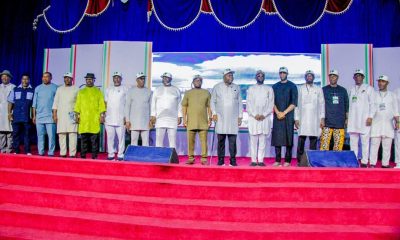

Nigerian Politics Becoming Less Violent, Says Gov Diri As CBM Holds Bayelsa Retreat
By David Owei Governor of Bayelsa State, Senator Douye Diri, has observed that the political arena in Nigeria was shifting...
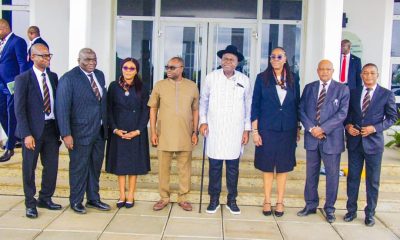

Gov Diri Seeks Increase In Law Students Quota At NDU
By David Owei Governor of Bayelsa State, Senator Douye Diri, has appealed to the Council of Legal Education to increase...


Nembe Spill: HOMEF demands cleanup, compensation, accountability
By David Owei The Health of Mother Earth Foundation (HOMEF) on Tuesday demanded urgent cleanup, compensation and accountability over an...

NCDMB to Feature Nwabuikwu’s The Pain and The Promise In Book Reading Session
By David Owei The Nigerian Content Development and Monitoring Board (NCDMB) will host the fifth edition of its Book Reading...
-
 Politics1 year ago
Gov Okpebholo moves to end Cultism *Threatens action against leading cult groups *Vows to demolish more cult houses in Edo State
-
 Politics1 year ago
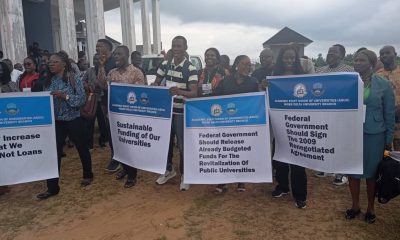
ASUU-NDU protest against FG loans, unpaid salaries,Non-Implementation of agreements …..says loans is generational slavery
-
 Business & Economy1 year ago
PC-NCG Issues Disclaimer on Purported Nigerian Coast Guard National Orientation Exercise In Anambra State
-
 Entertainment2 years ago
Jubilation galore as Parishioners of CKC Kurudu celebrate their cultural heritage ….FG should exploit our Cultural heritage to unite Nigerians-Rev Fr Dim
-

 Sports7 months ago
Bayelsa-born ex-football star’s son, Opuama donates spike shoes to Athletics Association
-

 General News2 years ago
Reps hold public hearing on FMC Ugwuaji Awkunanaw
-
 Law & Crime1 year ago
Legal practitioner raises alarm over threat to his life by CSP Muhammed Abdulkareem
-
 General News2 years ago
Celebration galore as UDA Successfully Elected New Exco ……I will digitalize processes that will raise UDA to greater height -Comr. Okejiri