
Uncategorized
2026 Budget to Focus on Wards, Infrastructure and Security

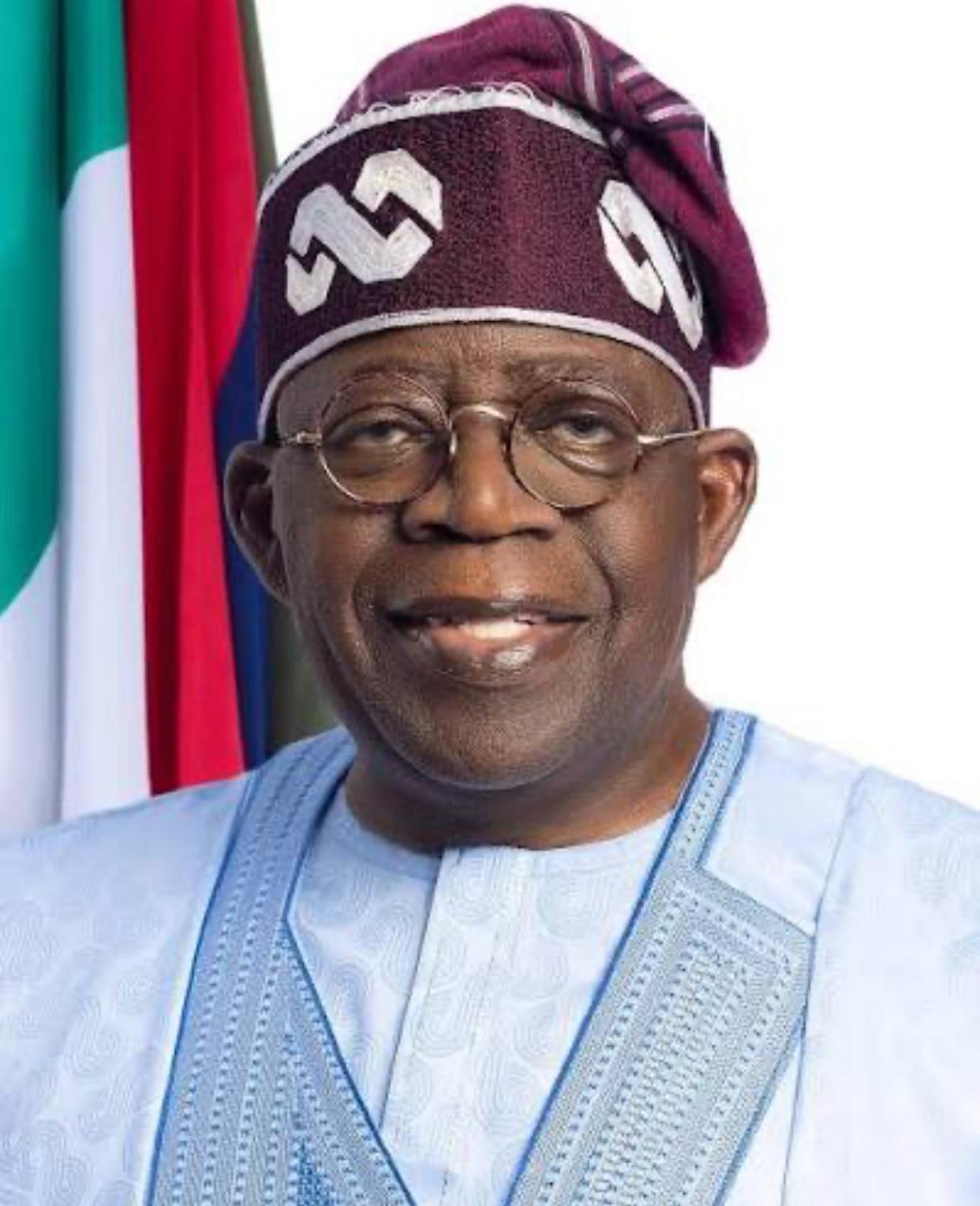
By Our Correspondent
The Federal Government has announced that the 2026 budget will concentrate heavily on ward-based development, critical infrastructure, security enhancements, and boosting domestic production as the country navigates a landscape of declining global development assistance.
Speaking at a stakeholders’ engagement with the Nigeria International Non-Governmental Organisation (INGO) Forum on Monday in Abuja, Senator Abubakar Atiku Bagudu, the Minister of Budget and Economic Planning, stated that the upcoming fiscal cycle is structured to propel the country toward its ambitious $1 trillion economy target.
Minister Bagudu detailed the strategic shift, explaining that the Medium Term Expenditure Framework (MTEF), which was approved by the Federal Executive Council (FEC), provides the revenue projections, production targets, and a new community-level strategy to drive national growth.
The core of the domestic plan, according to the Minister, is to ensure economic prosperity is felt at the grassroots. “Mr. President and the state governors have met and approved the Renewed Hope Ward Development Plan, where in each of the 8,809 wards, the programs will be designed ward-specific to ensure that economic prosperity in those wards is enhanced,” Bagudu said.
In tandem with grassroots focus, the Minister confirmed a continuous investment in physical assets: “Secondly, the Renewed Hope Infrastructure Fund. The state governors have agreed with Mr. President that there is an irreducible minimum of infrastructure investment that we need to continue making in order to sustain the trajectory of macroeconomic reforms that we are achieving.”
A significant portion of the 2026 fiscal plan will be directed towards security. Bagudu disclosed plans for a joint effort across all three tiers of government.
“Equally, more investment in security by all the three tiers of government,” he noted.
He added that a presidential committee led by the Enugu State Governor is assessing the nation’s security training institutions, stating: “They have presented an initial report where they indicated that an initial sum of $100 billion will be required to boost some of those training institutions. And recall that Mr. President had even directed recruitment of more security agencies, as well as the recall of security agents that are serving in non-operational areas.”
The government is also taking stringent measures to protect national income. “Equally, Mr. President and the National Economic Council have approved a program to ensure that loss of revenue is minimised from crude oil and gas sector, as well as the critical mineral sector,” the Minister explained. “There are allegations that a lot of our precious stones, a lot of our gold are being mined illegally. So all steps have been taken.”
Furthermore, the President has agreed with state governors on a commitment to “embark on more measures to support domestic production.”
Collaboration with INGOs Crucial as Aid Dries Up
The Minister explained that the meeting with INGOs was part of a broader effort to improve coordination, build capacity at the local level, and ensure alignment with Nigeria’s 2026-2030 growth plans.
“We are here to show appreciation on behalf of our nation to all the International Non-governmental Organisations that are engaged in one way or the other with our country’s progress, to hear from them what we can do differently, what we can do better, and how we can learn more from them, particularly given our federal structure,” Bagudu stated.
He acknowledged the role of INGOs in shaping public perception of government changes and offering valuable global insights. “They are instrumental in the way that we can do better as a country, because they have experienced how some countries, where they either come from or they have been engaged with, have solved the problems that we are dealing with currently,” he said.
Bagudu credited the INGO community, saying, “We have embarked on bold, tough reforms under the able and courageous leadership of President Bola Ahmed Tinubu. We couldn’t have done those reforms without their support, because we need public acceptance.”
Representing the international aid community, the Director of the Nigeria INGO Forum, Camilla Higgins, confirmed that the meeting comes at a critical time marked by a dramatic contraction of global development assistance.
Higgins disclosed that Nigeria is among the countries selected for a faster transition out of the international aid system, even as humanitarian needs across the country are mounting.
She noted the severity of the funding gap: “The 2025 humanitarian national response plan sought $910 million but only 24 percent has been fundraised,” making it imperative for the government to raise more local resources to assist people in need.
“What we are experiencing in Nigeria is an example of what’s being experienced globally, that international overseas development assistance is shrinking dramatically,” Higgins said.
She explained that the humanitarian response structure that has existed for nearly 15 years is being dismantled “in order to hand over responsibility more to national actors.”
Higgins cautioned that this transition does not reflect a reduction in need. “As resources are shrinking, the needs across the country are, in fact, growing,” she said. “So we need to partner very strongly with the government of Nigeria to put in place alternative systems and structures that can continue to meet the needs of people across the country.”
She concluded that the priority is now to build stronger systems with the government and redirect national resources to support the delivery of assistance.
By our correspondent
An Islamic scholar and Chief Imam of Nagazi-Uvete Jumu’ah Mosque, Okene, Imam Murtadha Gusau, has warned Nigerians to desist from cursing and insulting their leaders, saying such acts will never bring national healing but will further deepen moral and societal decay.
In his weekly sermon delivered on Sunday, Gusau said Nigerians must embrace spiritual intelligence and self-reformation instead of venting anger through abusive language against those in authority.
He said Islam teaches that leaders are a reflection of the collective state of the people, noting that a society that sows hatred and mockery cannot expect to harvest justice and mercy from its leadership.
According to him, cursing leaders corrupts the heart of the curser and does not reform the leader, but hardens his heart and widens the gap between the government and the governed.
The cleric quoted Imam Hasan al-Basri who said, “Indeed, the leaders are a torment from Allah. Allah inflicts them upon whoever He wills. So do not face the torment of Allah with anger and swords, but face it with humility, submission, and repentance.”
He also cited a prophetic tradition where the Prophet Muhammad (Peace be upon him) warned Muslims against insulting leaders, urging patience and fear of Allah, as contained in Sunan Ibn Majah.
Gusau stressed that the admonition is not a call to blind compliance but a call to constructive civic duty, sincere voting, and fervent prayer for guidance of leaders rather than lazy and toxic venting on social media.
He said from a psychological perspective, when a populace unifies only in hatred and vitriol, leaders build emotional walls and detach from the people they are meant to serve.
The Imam referenced the insight of Fudail Ibn Iyad who said if he had one guaranteed supplication, he would make it for the leader, because rectifying the leader brings wellbeing to the entire land and its people.
He urged Nigerians to replace curses with prayers such as “Ya Allah, guide our leaders, soften their hearts toward the weak, and grant them righteous advisors,” adding that personal reformation is a political act.
Gusau quoted the Qur’an, Chapter 6, Verse 129, “And thus We make some of the wrongdoers allies of others for what they used to earn,” and Chapter 13, Verse 11, “Indeed, Allah will not change the condition of a people until they change what is in themselves,” to emphasize that national change begins from within.
He recalled the encounter between Caliph Ali Ibn Abi Talib and a man who asked why there was chaos in his time unlike the peaceful reigns of Abubakar and Umar, to which Ali replied that Abubakar and Umar ruled over people like him, while he ruled over people like the questioner.
According to him, tyrant leaders do not drop from the sky but grow from the soil of a negligent society, and leaders are born from neighbourhoods, schools and markets, making them fruits of the collective moral tree.
He said cursing leaders is an act of spiritual self-sabotage and laziness that allows citizens to externalize guilt and feel morally superior without fixing their homes, businesses and character.
The cleric called on Nigerians to stop funding the economy of outrage, fix their small kingdoms as spouses, parents, employers and neighbours, and elevate their speech from curses to sincere supplication.
Gusau concluded that when a population shifts focus from blaming the shepherd to rectifying the flock, divine mercy descends and corrupt leaders are either reformed or replaced by Allah with those who will govern with justice and mercy.
By Our Correspondent
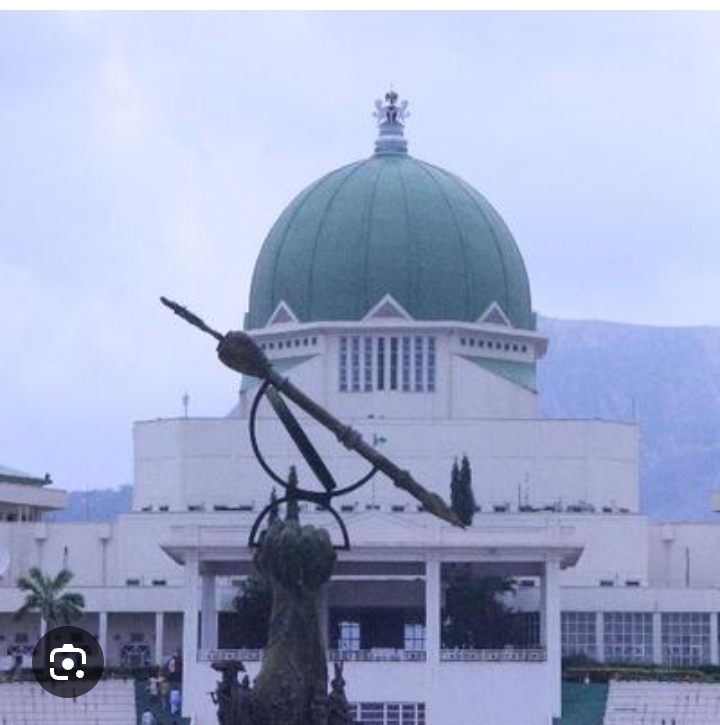
The National Assembly has allegedly received proposals for the creation of additional local government areas (LGAs) across Nigeria, with Lagos State seeking 37 new councils, while Akwa Ibom State is conspicuously missing from a published list of submissions.
The proposals, according to a report by The Insight Lens Project, cover various communities across the country’s six geopolitical zones and reflect demands for administrative restructuring, improved grassroots representation and better access to government services.
However, the complete list of submissions has not been independently verified, and the proposals do not constitute approval for the creation of new local government areas.
In the North-East, the reported requests include Bidoma and Michika South in Adamawa State, Boi-Tapshin in Bauchi, Banki in Borno, Cham in Gombe, Gudi in Yobe and Wukari in Taraba State.
In the North-West, the proposed areas reportedly include locations in Jigawa, Piriga in Kaduna, Dankama in Katsina, as well as Moriki and other communities in Zamfara State.
The North-Central zone also features in the reported submissions, with proposals covering Agasha and other communities in Benue State, alongside several areas in Kogi, Kwara, Nasarawa, Niger and Plateau states.
In the South-East, the list includes Abiriba in Abia State, proposed councils around Obosi in Anambra State, several communities in Ebonyi State and numerous proposed local government areas in Imo State.
The South-West proposals reportedly include Eso-Obe and Gbonyin in Ekiti State, Ogijo and other areas in Ogun State, as well as additional proposed councils in Osun and Oyo states.
Lagos State stands out with a reported request for 37 new local government areas, although the published report did not provide the names and proposed boundaries of all the councils.
In the South-South, the reported proposals include Akassa and other communities in Bayelsa State, Ughievwen in Delta State, several areas in Edo State, and Ataba, Evo and Alesa in Rivers State.
Cross River State is also listed, with proposed councils around Mbube and Calabar. Akwa Ibom State, however, has no clearly identified entry in the published list, raising questions about whether the state submitted proposals or was omitted from the report.
Constitutional Requirements
The creation of new local government areas is governed by Section 8 of the 1999 Constitution of Nigeria, which prescribes a series of procedures involving consultations, a referendum, legislative approval and the submission of relevant records to the National Assembly.
The constitutional process must be completed before newly created councils can be recognised and reflected in the relevant constitutional schedules.
Consequently, proposals submitted by states or communities do not automatically translate into legally recognised local government areas.
The reported development comes amid broader constitutional review efforts by the National Assembly. In October 2025, the legislature reported receiving 278 requests for additional local government areas and 55 proposals for the creation of new states.
Nevertheless, the specific state-by-state submissions contained in the latest published list, including Lagos State’s reported demand for 37 additional councils and the absence of Akwa Ibom, remain subject to confirmation through official National Assembly records.
The proposals, if confirmed, could reopen discussions on administrative boundaries, grassroots governance and the constitutional procedures required for the creation of additional local government areas in Nigeria.
Uncategorized
HURIWA Demands Immediate Withdrawal of Nutritionists’ Council Bill, Warns Against Criminalising Nigeria’s Indigenous Food Heritage

By George Mgbeleke
The Human Rights Writers Association of Nigeria (HURIWA) unequivocally endorses the position of the Centre for African Policy Research and Advisory (CAfPRA) opposing the proposed Nutritionists Registration Council of Nigeria Bill, 2025, sponsored by Hon. Chike John Okafor, representing Ehime Mbano/Ihitte Uboma/Obowo Federal Constituency.
HURIWA considers the Bill, in its present form, a deeply troubling legislative proposal that threatens to place Nigeria’s indigenous food knowledge, traditional nutritional practices and community-based systems of learning under the shadow of an overcentralised statutory regulator.
We therefore demand the immediate withdrawal of the Bill from the legislative process pending a transparent, comprehensive and genuinely inclusive national consultation involving nutrition experts, traditional knowledge holders, farmers, food sovereignty advocates, public health professionals, civil society organisations and affected communities.
This is not a rejection of professional standards, scientific research or the legitimate regulation of qualified nutrition practitioners. It is a principled rejection of legislation that seeks to establish sweeping regulatory powers over nutrition without first guaranteeing the protection of Nigeria’s cultural heritage, indigenous knowledge systems and the everyday food practices through which generations of Nigerians have sustained their families and communities.
A dangerous overreach into Nigeria’s cultural heritage
HURIWA aligns itself with CAfPRA’s central concern that nutrition did not begin with universities, professional associations or statutory councils. Long before the emergence of modern nutritional science, Nigerian communities had developed sophisticated knowledge of local foods, seasonal diets, food preservation, fermentation, medicinal plants, breastfeeding, complementary feeding and the nutritional properties of indigenous crops.
These practices form part of Nigeria’s living cultural heritage. They have been transmitted through families, farming communities, local markets, traditional food processors and generations of practical experience.
Yet the proposed legislation contains no clear safeguards protecting indigenous, traditional, cultural and family-based nutritional knowledge from being marginalised by a new statutory monopoly.
HURIWA finds this omission profoundly unacceptable.
A law that establishes a regulatory council with powers to determine professional standards, approve training institutions, control professional practice and impose penalties must clearly distinguish formal professional services from ordinary family guidance, cultural practices and the legitimate transmission of traditional knowledge.
Without such safeguards, the legislation creates unnecessary uncertainty over the boundaries of lawful practice and risks empowering a new institution to determine which forms of nutritional knowledge are recognised and which are excluded.
Nigeria must not enact a law that places its indigenous food heritage at the mercy of an unelected professional gatekeeping structure.
Why should Nigerians be exposed to criminal liability for inherited knowledge?
Sections 23, 27, 28 and 30 of the proposed Bill prescribe penalties for various forms of unapproved training, unregistered practice and the employment of unregistered persons.
Section 23 provides for a fine of up to ₦5 million or imprisonment for up to five years, or both, in specified cases involving unapproved training and certification. Sections 27 and 28 prescribe penalties for certain forms of unregistered practice, while Section 30 addresses the employment of unregistered persons.
These provisions become particularly troubling because the Bill does not clearly define the full scope of the expression “practice of nutrition” or establish an explicit exemption for traditional and family-based knowledge.
HURIWA is concerned that such ambiguity could create room for excessive discretion, selective enforcement and disputes over activities that have historically existed outside formal professional regulation.
A grandmother advising her family on traditional foods, a community elder transmitting knowledge about local diets, or a household maintaining inherited food preparation practices must not be placed under a cloud of legal uncertainty because the National Assembly failed to draw clear boundaries around a proposed regulatory regime.
We are not suggesting that every traditional practice is scientifically validated or should be exempt from legitimate public health safeguards. Rather, traditional knowledge should be respected, carefully researched and protected from indiscriminate criminalisation, while demonstrably dangerous or fraudulent health claims remain subject to appropriate laws.
The distinction is essential to a fair, culturally informed and constitutionally responsible legislative framework.
Suspicious foreign influence must be investigated, not presumed
HURIWA is also concerned by the Bill’s provisions permitting collaboration with international organisations, recognition of foreign qualifications, approval of training institutions outside Nigeria and the receipt of grants, endowments and donations into the proposed Council’s fund.
Sections 3, 14, 17 and 32 contain provisions that warrant particularly close scrutiny in this regard.
Of special concern is Section 32(2)(c), which permits grants, endowments and donations to form part of the Council’s funds without expressly establishing safeguards against external financial influence over the institution’s regulatory priorities.
Section 35(2) restricts the acceptance of gifts where their conditions conflict with or prejudice the Council’s functions. However, the Bill does not provide an equally explicit and comprehensive framework for transparency, disclosure and public scrutiny of foreign grants and other external funding.
HURIWA stresses that international cooperation is not inherently objectionable, nor is foreign funding proof of improper conduct. Nevertheless, where legislation proposes to create an institution with significant authority over professional standards, educational curricula and public nutritional guidance, Nigerians are entitled to demand full transparency about the interests that could shape its operations.
Who has advocated for this particular regulatory framework? What consultations informed its provisions? What evidence supports the proposed institutional arrangement? Have any foreign organisations, donors or commercial interests participated in developing or promoting the proposal? What safeguards will prevent conflicts of interest?
These are legitimate questions that deserve clear answers before the Bill proceeds any further.
HURIWA demands transparency and accountability, not speculation. No foreign or domestic interest should be permitted to shape Nigeria’s nutritional policies at the expense of the Nigerian people.
Nigeria’s food sovereignty must not become an afterthought
The Bill’s stated objectives include promoting sound nutritional practices, healthy lifestyles, sustainable food systems, research and public education. These are legitimate goals.
However, the legislation does not expressly require the proposed Council to prioritise indigenous food systems, local cuisines, agroecological knowledge or the protection of Nigeria’s diverse food cultures in carrying out those functions.
HURIWA agrees with CAfPRA that this omission requires serious attention.
Nigeria’s food security challenges cannot be addressed solely through the creation of another regulatory institution. They require sustained investment in local agriculture, support for smallholder farmers, improved food processing and storage, nutrition education, protection of biodiversity and stronger access to affordable, locally produced foods.
A regulatory framework that fails to recognise these realities risks elevating institutional licensing and professional gatekeeping above the broader public interest.
The National Assembly must not create an arrangement under which indigenous knowledge is treated as inferior simply because it was transmitted through community experience rather than formal academic institutions.
Nigeria’s traditional food systems should be examined through credible scientific research where appropriate, improved where necessary and protected against unjustified exclusion. They should not be erased through legislative silence.
The proposed Council could become an expensive new bureaucracy
The Bill proposes a governing board, a registrar, zonal or state offices, staff, accreditation mechanisms, registration fees, annual practising fees, disciplinary structures and a dedicated fund.
It also provides for the receipt of grants, endowments and donations, borrowing under specified conditions, investment of funds and the payment of salaries, allowances and administrative expenses.
HURIWA demands evidence that the proposed Council is necessary in its current form, financially sustainable and clearly differentiated from existing public institutions and professional structures.
At a time when Nigerians face severe economic pressures and public institutions are expected to demonstrate efficiency, the National Assembly must explain why the establishment of a new statutory council is preferable to strengthening existing professional associations and relevant regulatory arrangements, subject to an independent assessment of any genuine regulatory gaps.
The proposal to transform a professional field into a heavily licensed and centrally controlled structure must be justified by demonstrable public benefits, not merely by the desire to establish another institution.
HURIWA endorses CAfPRA’s position and demands withdrawal
HURIWA fully endorses CAfPRA’s call for a fundamental reconsideration of the Bill. Indeed, given the breadth of the proposed Council’s powers and the absence of essential safeguards, we believe that withdrawal is the most responsible immediate course of action.
The National Assembly should not proceed with a law whose implications for indigenous knowledge, cultural continuity, professional access, public health communication and food sovereignty have not been adequately addressed.
We therefore make the following demands:
1. Immediate withdrawal of the Nutritionists Registration Council of Nigeria Bill, 2025, in its present form, from further legislative consideration.
2. A transparent public disclosure of the consultations, research, stakeholder submissions and institutional assessments that informed the Bill’s drafting and sponsorship.
3. A credible examination of any foreign funding, technical assistance or external advocacy associated with the proposal, with all relevant interests disclosed and no unsupported presumption of wrongdoing against any individual or organisation.
4. An independent assessment of existing regulatory arrangements and the necessity, cost and likely public benefits of creating a separate statutory council.
5. Explicit legal protection for indigenous, traditional, cultural and family-based food knowledge, while preserving appropriate safeguards against demonstrably harmful practices and fraudulent health claims.
6. Any future proposal to regulate formal nutrition practice must clearly define the activities covered, establish proportionate penalties and provide transparent safeguards against arbitrary enforcement.
7. Any future regulatory framework must prioritise Nigeria’s food sovereignty, local food systems, indigenous knowledge and diverse cultural traditions, with meaningful representation for traditional knowledge holders, farmers, agroecological practitioners and community-based food advocates.
8. Clear safeguards must be established for foreign grants, donations, partnerships and externally developed standards, including disclosure requirements and independent scrutiny to protect the public interest.
The National Assembly must put Nigerians before institutional interests
HURIWA warns that legislation affecting what Nigerians eat, how communities understand food and how traditional knowledge is transmitted cannot be treated as a narrow professional matter.
Food is not merely a technical subject for licensed practitioners. It is inseparable from culture, agriculture, livelihoods, public health, family life and national sovereignty.
The National Assembly has a duty to ensure that professional regulation serves the public rather than creating unnecessary barriers around knowledge that belongs to the collective heritage of the Nigerian people.
We urge Hon. Chike John Okafor and the relevant legislative committee to take these concerns seriously and withdraw the Bill rather than proceed with a framework that leaves fundamental questions unanswered.
We equally call on the leadership of the National Assembly, relevant ministries, public health institutions and civil society organisations to insist on a transparent and inclusive process before any fresh legislative proposal is introduced.
HURIWA reiterates that it does not oppose scientific nutrition, professional competence or reasonable regulation of qualified practitioners. We oppose the creation of a sweeping regulatory monopoly without adequate protections for indigenous knowledge, public accountability and national food sovereignty.
Nigeria must not surrender its nutritional heritage through legislative omission. No professional council should possess powers broad enough to marginalise the people whose knowledge has sustained Nigerian food culture for generations.
The Bill should be withdrawn immediately, its implications subjected to rigorous public scrutiny, and any future legislation rebuilt around scientific integrity, cultural protection, transparent governance and the overriding interests of Nigerians.
Signed,
Comrade Emmanuel Nnadozie Onwubiko
National Coordinator
Human Rights Writers Association of Nigeria (HURIWA)
23rd October, 2026


2027: HURIWA Knocks Tinubu for Blaming Opposition for Hunger, Ignoring Terrorists’ Captives
George Mgbeleke The Human Rights Writers Association of Nigeria (HURIWA) has condemned President Bola Tinubu for blaming opposition parties for...
Stop cursing your leaders, pray for them, Islamic cleric tells Nigerians
By our correspondent An Islamic scholar and Chief Imam of Nagazi-Uvete Jumu’ah Mosque, Okene, Imam Murtadha Gusau, has warned Nigerians...


NASS Receives Proposals for New LGAs as Lagos Seeks 37, Akwa Ibom Missing in the List
By Our Correspondent The National Assembly has allegedly received proposals for the creation of additional local government areas (LGAs) across...
HURIWA Demands Immediate Withdrawal of Nutritionists’ Council Bill, Warns Against Criminalising Nigeria’s Indigenous Food Heritage
By George Mgbeleke The Human Rights Writers Association of Nigeria (HURIWA) unequivocally endorses the position of the Centre for African...

President Tinubu Flags Off 2027 Campaign In Kaduna, Seeks Renewed Mandate
By Our Correspondent The All Progressives Congress,( APC) has flagged off its campaign for the 2027 general elections on Saturday...
APC Flags Off 2027 Campaign In Kaduna, Tinubu Seeks Renewed Mandate. From Cyril Mbah, Abuja. The All Progressives Congress, APC, on Saturday flagged off its campaign for the 2027 general elections in Kaduna, with President Bola Tinubu seeking a second term on the strength of his administration’s record. Speaking at the Murtala Muhammed Square, Kaduna, President Tinubu said it was a great honour to return to the historic city where Nigeria’s early leaders converged before independence. Tinubu thanked Kaduna voters for the victory they gave him in 2023, saying he had come to thank them and seek their mandate for a second term to fulfil his promises of prosperity, continuity and progress. He dismissed opposition talk about hunger, saying “Who created it? They did. We are trying to eradicate it,” noting that his administration and APC governors now pay salaries regularly and are developing their states. The President urged supporters to get their Permanent Voter Cards, (PVCs), and come out en masse on January 16, 2027 to re-elect APC at all levels. “Fuel subsidy is in our past. No more corruption, no more falsification of invoices, no more smuggling. We are ushering in a new era,” he said. Vice President Kashim Shettima said Nigerians elected Tinubu in 2023 not because he was richest or best speaker, but because the alternative was calamity, and he urged Kaduna people to renew APC’s mandate. Shettima listed gains in Kaduna, including Federal University of Applied Sciences, Kachia, Federal University of Education, Zaria, vocational institutes in Rigachikun, Soba and Samaru Kataf with over 4,000 graduates, and NELFUND support for students. He said Tinubu has identified with the North for years, recalling how he gave political succour to former Vice President Atiku Abubakar in 2007, supported Nuhu Ribadu in 2011 and stood behind late President Muhammadu Buhari in 2015 and 2019, describing Tinubu as a man of honour. Director-General of APC Presidential Campaign Council, Senator Abdulaziz Yari, said Kaduna is the spiritual centre of Northern politics and that all northern governors were present to show support. Yari said Tinubu’s economic record, from exchange rate reforms to subsidy removal and trade balance, shows improvement, adding that APC will campaign with its records in infrastructure, health, education and cash transfers. Yari declared, “Northern Nigeria is 101 per cent for you, Asiwaju Bola Ahmed Tinubu, by God’s grace.” Governor Uba Sani, who welcomed guests, paid tribute to Tinubu and First Lady Senator Oluremi Tinubu for their love for Kaduna and the North, saying Renewed Hope Agenda has brought massive interventions in transport, education, healthcare, agriculture and security. Sani recalled that Tinubu defied security advice to travel to Birnin Gwari in December 2022, and has now fulfilled his promises, with N117 billion released for the 123km Kaduna-Birnin Gwari road abandoned for over 40 years, and restoration of security on the corridor. He also cited ongoing Zaria-Soba-Pambegua road, the $865 million Kaduna Metropolitan Red Line with $300 million already mobilized, N84 billion NELFUND benefit to North-West students, and 95 percent completion of N740 billion Abuja-Kaduna-Kano expressway. Sani challenged the “so-called Northern candidate” to show track record of 200km of road while in office, noting that over 1,000km of roads have been constructed in the North under Tinubu and Shettima. He warned supporters to be vigilant, alleging opposition has upgraded its campaign “from Facebook and Twitter to AI.”
By our correspondent As the 2027 election draws close, the All Progressive Congressive,(APC) on Saturday flagged off its campaign for...


Gov Fubara Inspects Creek Road Market, Assures Completion by January 2027
By George Mgbeleke Rivers State Governor, Sir Siminalayi Fubara, has expressed satisfaction with the pace and quality of work at...


Shouts of Joy Rock the World As Pastor Chris Opens Final Healing Streams Edition for 2026
By Our Correspondent Hundreds of millions participate in the global healing crusade as Pastor Chris ministers to the sick in...


Abuja land: Jordan Nyesom-Wike never admitted receiving $2.1m from anyone -Onoja
By Our Correspondent A Senior Advocate of Nigeria (SAN), Dr James Ogwu Onoja has warned social media commentators and bloggers...

Panel on death of 37dead illegal Miners: Commissioner alleges NSCDC goes beyond its official role of engagement
By Uthman Baba -Naseer,Minna The Commissioner for Homeland Security in Niger State Mr. Maurice Bello Magaji has alleged that the...
-

 Politics1 year ago
Gov Okpebholo moves to end Cultism *Threatens action against leading cult groups *Vows to demolish more cult houses in Edo State
-
 Politics1 year ago
ASUU-NDU protest against FG loans, unpaid salaries,Non-Implementation of agreements …..says loans is generational slavery
-

 Business & Economy1 year ago
PC-NCG Issues Disclaimer on Purported Nigerian Coast Guard National Orientation Exercise In Anambra State
-
 Entertainment2 years ago
Jubilation galore as Parishioners of CKC Kurudu celebrate their cultural heritage ….FG should exploit our Cultural heritage to unite Nigerians-Rev Fr Dim
-

 Sports8 months ago
Bayelsa-born ex-football star’s son, Opuama donates spike shoes to Athletics Association
-

 General News2 years ago
Reps hold public hearing on FMC Ugwuaji Awkunanaw
-

 Law & Crime1 year ago
Legal practitioner raises alarm over threat to his life by CSP Muhammed Abdulkareem
-
 General News2 years ago
Celebration galore as UDA Successfully Elected New Exco ……I will digitalize processes that will raise UDA to greater height -Comr. Okejiri