
Business & Economy
NDPA, Applauds Chief Ikenna Ukwa On His Humanitarian Gestures.

BY David Owei.
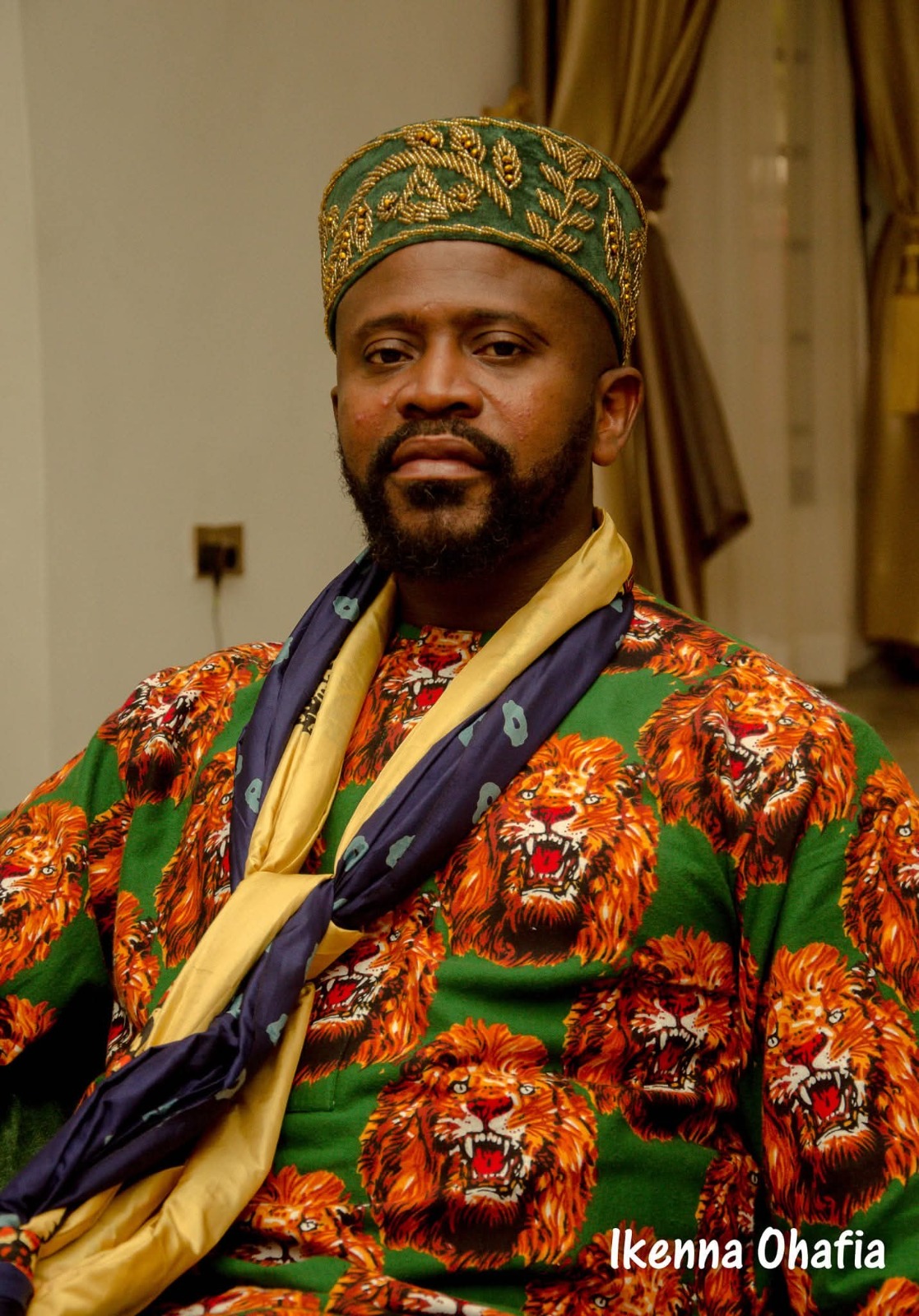
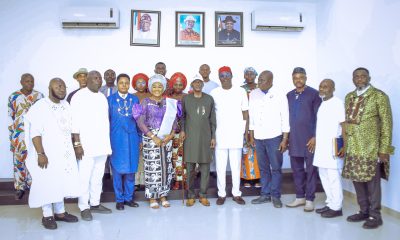
Niger Delta Progressive Alliance (NDPA) has felicitated with Chief Ikenna Nicholas Ukwa on the occasion of the Ikenna Ukwa Progressive Group Summit and Empowerement of Youths, Women and the Disabled in Arochukwu/Ohafia Federal Constituency on Sunday December 7, 2025.
The occasion, which took place at Ohafia Central School Playground, Elu Ohafia, provided an opportunity for Chief Ukwa, Senior Legislative Aide to the President of the Senate, to once again demonstrate his humanitarian and philanthropistic gesture to the people of his constituency.
Hundreds of youths, women and people living with disabilities were generously empowered with scholarships, skills acquisition training, business capital and other livelihood materials.
In its goodwill message the NDPA commended High Chief Ukwa on his social investment in his people describing it as a testament “of selflessness guided by humility and love for humanity”.
The message, signed by Ambassador Victor Ufoh, President General of NDPA said; “Certain moments in the chronology of a community transcend the ordinary passage of time, embedding themselves within collective consciousness with the gravitas of historical import. These are occasions when society collectively pauses, draws breath, and acknowledges that an occurrence of profound consequence has unfolded in its midst”.
Describing the occasion as one of such moments the NDPA said that it stood as precisely such a watershed moment. “Its significance derived not from theatrical display or calculated political spectacle, but from the substantive gathering of citizens at Ohafia Central School Playground, Elu Ohafia, who assembled to witness a deliberate and transformative act of communal elevation.”
“At the heart of this remarkable occasion stood Chief Dr Ikenna Nicolas Ukwa, Senior Legislative Aide to the President of the Senate, a distinguished leader who comprehends with crystalline clarity the authentic responsibilities they shoulder by virtue of humility and conscience.
“He addressed the assembly with the composed assurance characteristic of those who have discerned their fundamental purpose, projecting a conviction shaped and energized by the unwavering belief that genuine human advancement must be engineered through concrete, measurable intervention. His objective was unambiguous: to furnish the youth, women, and persons with disabilities with the competencies and resources capable of fundamentally redirecting the trajectory of their lives.
According to the group, the occasion was a chapter that found “its foundation in substantive empowerment rather than rhetorical flourish. Representatives from every ward within the constituency participated.
Each beneficiary was selected through meticulous deliberation. The animating principle was not to generate applause but to construct capacity and resilience”.
“To fully appreciate the magnitude of this moment requires examination of the patterns that preceded it. Ukwa’s philanthropic endeavours cannot be reduced to a sporadic collection of charitable gestures. His work has never announced itself through clamour or ostentatious display. Rathe, it constitutes a sustained tradition that has expanded methodically, incrementally, village by village and family by family, through actions that resonate far more powerfully than any declaration.
Across successive years, Ukwa has systematically transformed the physical and social landscape of Ohafia and Arochukwu through manifestly visible interventions”.
NDPA went further to catalogue Chief Ukwa’s interventions in the community; “He has installed solar-powered street illumination throughout rural communities. These installations accomplish far more than mere environmental lighting. They illuminate confidence, enhance security, and fundamentally alter the pattern of daily existence for families who have endured excessive periods shrouded in darkness and apprehension.
He has orchestrated comprehensive medical and ophthalmological outreach programs, visiting vulnerable households, supporting orphaned children, and delivering healthcare services where they remained desperately scarce.
He has championed educational advancement through the systematic distribution of academic materials to both pupils and educators. Chief Ikenna evidently recognizes that education functions as the subtle revolution capable of elevating populations from mere subsistence to visionary possibility.
Agricultural producers have received fertilizers during seasons when the soil proved particularly unforgiving. Women entrepreneurs have obtained support that stabilized their commercial enterprises. Medical interventions have reached remote villages and care facilities where assistance rarely penetrates. Even the Uzuakoli Leprosy Colony has experienced his compassionate attention.
Women and persons with disabilities have occupied not a peripheral position in his strategic vision but rather its very center. His empowerment initiatives acknowledge that these populations frequently stand at the threshold of opportunity rather than within it. By placing implements, capital, and professional training directly into their hands, he relocates them from the margins to the productive core of community life. These are not transient donations but rather invitations to reclaim autonomy and participate comprehensively in constructing more robust communities.
Yet what fundamentally distinguishes Ukwa extends beyond the inventory of accomplishments to encompass the very manner in which he conducts himself. What proves most striking about this leader is the elegant simplicity of his bearing. There exists no grandiosity in his self-presentation, no calculated effort to project an outsized persona. He carries himself as would a neighbour blessed with greater access who consciously elects to deploy those advantages for collective benefit”.





By George Mgbeleke
In its bid to develop the nation’s road infrastructure and complete abandoned projects ,Minister of Works, David Umahi, has declared that the Ministry’s 2026 capital budget will prioritise the completion of major highways and four “legacy” projects initiated by the Presidency.
Defending the Ministry’s proposal before the Senate and House of Representatives Committees on Works, the Minister said the 2026 capital estimate stands at N3.244 trillion.
He explained that many projects were rolled over after the administration inherited 2,064 ongoing projects in 2023.
Highlighting funding constraints, he disclosed that only N210.318 billion, about 9.7 per cent of the expected capital releases for 2025, has been paid so far.
He added that contractors are owed approximately N2.2 trillion for certified work carried out between 2024 and 2025.
The Minister said rising costs following the removal of fuel subsidy and the floating of the naira forced the government to re-scope and reprioritise projects.
Mr. Umahi listed key legacy projects, including the Lagos–Calabar Coastal Highway and the Sokoto–Badagry Superhighway, assuring lawmakers that delivery would be phased, with some sections scheduled for commissioning by May 29, 2026.
He noted that about 70 per cent of unfinished 2025 projects were carried into the 2026 plan, adding that new phases would be funded in stages to ensure timely completion.
During the session, Mr. Umahi announced an aggressive road infrastructure plan for 2026, termed an “Action Year,” aimed at completing major highway projects and four “legacy” projects initiated by the administration.
The Minister emphasized that road infrastructure is critical for security and economic recovery, noting that the 2026 budget intends to fix major arterial roads.
To ensure accountability, Mr. Umahi announced that all 10-kilometer stretches of federal road construction will now feature signboards identifying the ministry and displaying the President’s photograph.
The Nigeria’s Minister of Works praised President Bola Tinubu for his support, stating that the President has never directed him to award contracts to specific individuals, which has eased the procurement process.
Business & Economy
2026 budget:Oyetola proposes ₦10.5bn 2026 Marine and Blue Economy Budget, Laments Inadequate Funding
By George Mgbeleke
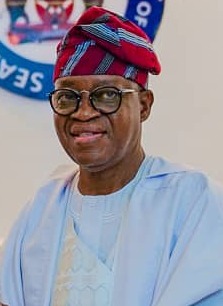
The Minister of Marine and Blue Economy, Dr Adegboyega Oyetola, on Tuesday presented a ₦10,499,984,667.10 budget proposal for the Federal Ministry of Marine and Blue Economy for the 2026 fiscal year, lamenting that the allocation was grossly insufficient to effectively execute the ministry’s wide-ranging mandate critical to Nigeria’s trade, transport efficiency and food security.
Oyetola made this known while defending the ministry’s budget before a joint sitting of the Senate Committee on Marine Transport and the House of Representatives committees on Ports and Harbours; Maritime Safety, Education and Administration; Shipping Services; Inland Waterways; and Ocean and Fisheries.
He said the proposed budget, which comprises ₦8.24 billion for capital expenditure, ₦453.86 million for overheads and ₦1.81 billion for personnel costs, would only sustain minimal operational continuity rather than deliver meaningful reforms or sectoral growth.
The Minister explained that the ministry oversees interconnected subsectors including ports, shipping, inland waterways, fisheries and aquaculture, which collectively handle over 90 per cent of Nigeria’s international trade by volume, national food and nutrition security, and economic competitiveness. He noted that while agencies such as the Nigerian Ports Authority, Nigerian Maritime Administration and Safety Agency and Nigerian Shippers’ Council were self-funding and made significant remittances to the Consolidated Revenue Fund, their operations were being severely constrained by excessive deductions at source by the Office of the Accountant-General of the Federation.
According to him, these deductions had weakened liquidity and reduced the operational flexibility of key agencies responsible for maritime safety, port efficiency and regulatory oversight, with far-reaching consequences including port congestion, higher logistics costs, delayed cargo movement, revenue losses and inflationary pressures. He stressed that what appeared to be an accounting issue had become a national economic concern.
Oyetola also said that the 2026 budget of the Council for the Regulation of Freight Forwarding in Nigeria (CRFFN) was wrongly placed by the Budget Office under the Federal Ministry of Transportation despite the fact that it is an agency under the Federal Ministry of Marine and Blue Economy, saying the misalignment undermined clarity in oversight and policy coherence within the maritime logistics value chain.
On inland waterways, the Minister appealed for increased funding to curb accidents and loss of lives. He said water transport is globally recognised as significantly cheaper than road transport. He noted that Nigeria’s heavy reliance on road haulage for over 80 per cent of freight movement had worsened road deterioration and increased the cost of goods, arguing that safer and more efficient inland waterways would ease pressure on roads and lower logistics costs.
On fisheries and aquaculture, Oyetola said Nigeria’s annual fish demand of over 3.6 million metric tonnes far exceeded domestic production of about 1.4 million metric tonnes, sustaining imports valued at more than one billion dollars annually. He added that post-harvest losses of up to 30 per cent further reduced supply, despite fish being one of the most affordable sources of animal protein for Nigerian households. He assured that the Ministry is working hard to increase local fish production and reduce importation.
The minister disclosed that in 2025, the ministry’s revised capital budget of ₦3.53 billion recorded an actual cash release of just ₦202.47 million, representing about 1.7 per cent, while overhead releases stood at 35 per cent.
He said engagements were ongoing with the Ministry of Budget and Economic Planning to address the funding gaps in line with the Federal Government’s drive to diversify the economy through the marine and blue economy.
The Chairman of the Senate Committee on Marine Transport, Senator Wasiu Eshilokun, assured that the National Assembly would carefully examine tc he proposals, noting the strategic importance of the marine and blue economy to national development and economic resilience.
Business & Economy
2026 budget:Oyetola proposes ₦10.5bn 2026 Marine and Blue Economy Budget, Laments Inadequate Funding
By George Mgbeleke
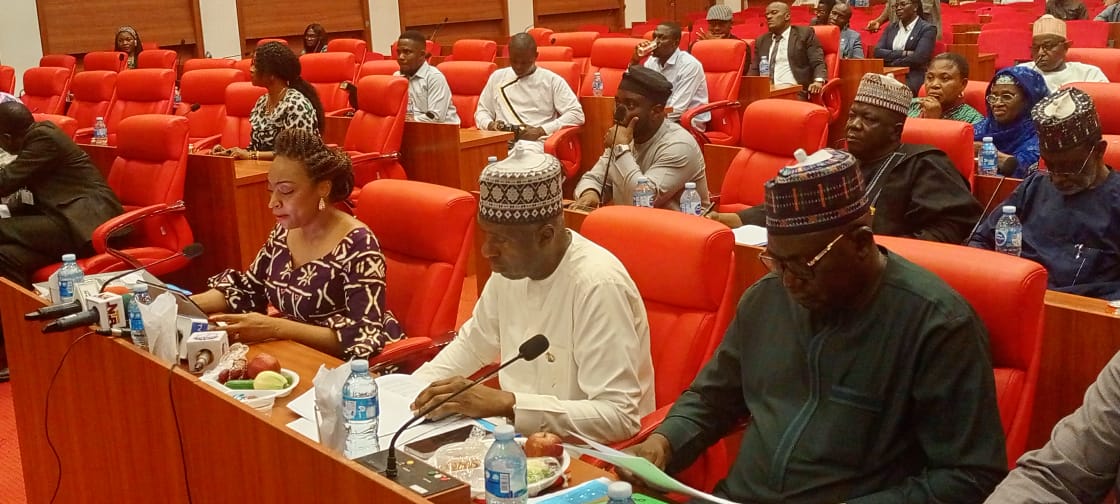
The Minister of Marine and Blue Economy,DrAdegboyega Oyetola, on Tuesday presented a ₦10,499,984,667.10 budget proposal for the Federal Ministry of Marine and Blue Economy for the 2026 fiscal year, lamenting that the allocation was grossly insufficient to effectively execute the ministry’s wide-ranging mandate critical to Nigeria’s trade, transport efficiency and food security.
Oyetola made this known while defending the ministry’s budget before a joint sitting of the Senate Committee on Marine Transport and the House of Representatives committees on Ports and Harbours; Maritime Safety, Education and Administration; Shipping Services; Inland Waterways; and Ocean and Fisheries.
He said the proposed budget, which comprises ₦8.24 billion for capital expenditure, ₦453.86 million for overheads and ₦1.81 billion for personnel costs, would only sustain minimal operational continuity rather than deliver meaningful reforms or sectoral growth.
The Minister explained that the ministry oversees interconnected subsectors including ports, shipping, inland waterways, fisheries and aquaculture, which collectively handle over 90 per cent of Nigeria’s international trade by volume, national food and nutrition security, and economic competitiveness. He noted that while agencies such as the Nigerian Ports Authority, Nigerian Maritime Administration and Safety Agency and Nigerian Shippers’ Council were self-funding and made significant remittances to the Consolidated Revenue Fund, their operations were being severely constrained by excessive deductions at source by the Office of the Accountant-General of the Federation.
According to him, these deductions had weakened liquidity and reduced the operational flexibility of key agencies responsible for maritime safety, port efficiency and regulatory oversight, with far-reaching consequences including port congestion, higher logistics costs, delayed cargo movement, revenue losses and inflationary pressures. He stressed that what appeared to be an accounting issue had become a national economic concern.
Oyetola also said that the 2026 budget of the Council for the Regulation of Freight Forwarding in Nigeria (CRFFN) was wrongly placed by the Budget Office under the Federal Ministry of Transportation despite the fact that it is an agency under the Federal Ministry of Marine and Blue Economy, saying the misalignment undermined clarity in oversight and policy coherence within the maritime logistics value chain.
On inland waterways, the Minister appealed for increased funding to curb accidents and loss of lives. He said water transport is globally recognised as significantly cheaper than road transport. He noted that Nigeria’s heavy reliance on road haulage for over 80 per cent of freight movement had worsened road deterioration and increased the cost of goods, arguing that safer and more efficient inland waterways would ease pressure on roads and lower logistics costs.
On fisheries and aquaculture, Oyetola said Nigeria’s annual fish demand of over 3.6 million metric tonnes far exceeded domestic production of about 1.4 million metric tonnes, sustaining imports valued at more than one billion dollars annually. He added that post-harvest losses of up to 30 per cent further reduced supply, despite fish being one of the most affordable sources of animal protein for Nigerian households. He assured that the Ministry is working hard to increase local fish production and reduce importation.
The minister disclosed that in 2025, the ministry’s revised capital budget of ₦3.53 billion recorded an actual cash release of just ₦202.47 million, representing about 1.7 per cent, while overhead releases stood at 35 per cent.
He said engagements were ongoing with the Ministry of Budget and Economic Planning to address the funding gaps in line with the Federal Government’s drive to diversify the economy through the marine and blue economy.
The Chairman of the Senate Committee on Marine Transport, Senator Wasiu Eshilokun, assured that the National Assembly would carefully examine the proposals, noting the strategic importance of the marine and blue economy to national development and economic resilience.

NEDC Strengthens Ties with Journalists to Boost Public Awareness
BY UTHMAN BABA-NASEER,MINNA The Niger Electric Distribution Company Limited (NEDC) has announced plans to partner with journalists to improve development...


Bayelsa High court Jails a 29 -Year-Old man For Sexually Assaulting A minor
By David Owei,Bayelsa A Bayelsa State High Court sitting in Yenagoa has sentenced a 29-year-old man, Ebimie Ajalla of Polobubo...

Veterinarians crucial to successful agenda on food security, employment -FG
By Abdul-Ganiyy Akanbi, The Federal Government has said veterinary professionals have a critical role to play in the realization of...

INC scribe, Engr. Ebipamowei Wodu, submits nomination form for position of President …. gets wide endorsement from aspirants
By David Owei The National Secretary of the Ijaw National Congress INC, Engineer Ebipamowei Wodu has submitted his interest/nomination form...

Niger state Judiciary launches its Electronic Filling (E- Filling) system across all High courts
By Uthman-Baba Naseer, Minna In a significant move towards digitalizing the Judicial process,the Niger State High Court has formally launched...


Lagos-Calabar, Sokoto-Badagry Coastal Highway Top N3.2trn Works Budget-Umahi
By George Mgbeleke In its bid to develop the nation’s road infrastructure and complete abandoned projects ,Minister of Works, David...

AIG Disu Assumes Duty as 55th AIG of FCID Annex Alagbon, Lagos.
Jonas Ezieke, Abuja The Force Criminal Investigation Department (FCID) Annex, Alagbon Close, Ikoyi, Lagos, of the Nigeria Police Force NPF...


32 PAP Scholarship Beneficiaries Bag First Class *134 Graduate With Second-Class Upper Division *Excellent Academic Feats Impressive- Otuaro
By David Owei,Bayelsa Thirty-two students on the scholarship of the Presidential Amnesty Programme made first class in different competitive courses...

Bayelsa Group Mulls Legal Actions Against Federal govt over 24 Additional LGAs,Resource Control
By David Owei,Bayelsa A group under the aegis of Supreme Egbesu Assembly ( SEA ) has not only asked a...


Oluremi Tinubu’s call for more US airstrikes logically sound: says HURIWA *
By George Mgbeleke Backing the wife of Nigeria’s President Mrs. Oluremi Tinubu’s advocacy for further aistrikes by the United States...
-
 Politics6 months ago
ASUU-NDU protest against FG loans, unpaid salaries,Non-Implementation of agreements …..says loans is generational slavery
-
 Politics9 months ago
Gov Okpebholo moves to end Cultism *Threatens action against leading cult groups *Vows to demolish more cult houses in Edo State
-
 Business & Economy6 months ago
PC-NCG Issues Disclaimer on Purported Nigerian Coast Guard National Orientation Exercise In Anambra State
-
 Entertainment2 years ago
Jubilation galore as Parishioners of CKC Kurudu celebrate their cultural heritage ….FG should exploit our Cultural heritage to unite Nigerians-Rev Fr Dim
-

 General News2 years ago
Reps hold public hearing on FMC Ugwuaji Awkunanaw
-
 General News2 years ago
Celebration galore as UDA Successfully Elected New Exco ……I will digitalize processes that will raise UDA to greater height -Comr. Okejiri
-
 Law & Crime8 months ago
ICPC pledges to collaborate with FIDA to end Sex for Marks in tertiary institutions
-
 Law & Crime7 months ago
Legal practitioner raises alarm over threat to his life by CSP Muhammed Abdulkareem