
Law & Crime
Dangote Threatens Kaduna Businessman, Kailani Mohammed with N100Bn Suit Over defamation


By Abdul-Ganiyy Akanbi
The President of Dangote Group, Dr Aliko Dangote has given a Kaduna-based businessman, Engr. Kailani Mohammed a 7 – day ultimatum to retract a libelous publication made against him and his business or face N100billion suit.
Dangote in a letter to the businessman demanded immediate public explanation, retraction and unreserved apology from the Kaduna businessman for accusing him of engaging in an unclean business especially in 1980s in Port Harcourt, Rivers State.
Dangote’s letter was served on the Kaduna businessman by his lawyer Dr. Ogwu James Onoja, a Senior Advocate of Nigeria of Onoja law firm in Abuja.
In the letter dated December 20th, 2025, Dangote complained that the Kaduna businessman defamed him, lowered his reputation and tarnished his business engagements with the accusation that he engaged in unclean business in Port Harcourt and also queried his source of wealth as the richest man in Africa.
The offending remarks were said to have been made by Engr. Kailani Mohamed during an interview aired on Wednesday December 17th, 2025 on TrustTV news in reaction to his petition against Dr. Farouk Ahmed submitted to independent Corrupt Practices and other Related Offences Commission, ICPC.
The letter is titled “Demand for public explanation, retraction and unreserved public apology on your libelous publication against Alhaji Aliko Dangote, GCON” and signed by Dr. Ogwu James Onoja, SAN.
It reads: “We are solicitors to Alhaji Aliko Dangote and we write pursuant to his express instructions regarding grievously libelous statements broadcast by TrustTV news and uttered by you during an interview aired on Wednesday, 17th December, 2025 in reaction to the petition submitted by our client to Independent Corrupt Practices and other Related Offences Commission (ICPC).
“Our client is a widely reputable international businessman. He his the richest black man on earth and he has the largest business conglomerate in Africa.
“Our client, through dint of hard work, integrity, diligent and perseverance over the years earned for himself the reputation and honour he is reckoned with all over the world.
“Our client’s attention has been drawn to statements made by you during the televised broadcast on TrustTV on the aforementioned date in reaction to our client’s petition submitted to Independent Corrupt Practices and the other Related Offences Commission (ICPC) to investigate and possibly prosecute Engr. Farouk Ahmad if found wanting, wherein you made false, reckless, malicious, scandalous and libelous publications concerning our client as a man that has monopolistic tendencies, corruptly enriched himself in business and engaged in economics cerbutach.
“Your statement also portrayed our client as a very cruel businessman whose stock in trade is vendetta and campaign of calumny to bring down others and exert monopolistic powers.
Among others you started as follows: “Can Dangote tell us the source of his money in the 80s when he was in Port Harcourt. Who is clean? Every time when you want to monopolize, you bring allegations against people. Let him come and proof it. In the 80s we are aware of what happened in Port Harcourt and how he got his money. Nobody came out and said all these things”.
“These statements are false, scandalous and gravely deliberately impute unlawful or morally questionable conduct to our client and are calculated to expose him to public hatred, ridicule, suspicion and oidium.
“By your reckless and unguarded defamatory statement and assertions, our client’s reputation has been greatly lowered in the sight of reasonable members of the International Community including his business partners, associates and various government of nations of the world where our client carries on business.
“Take Note that our client categorically states that at no time in his life has he carried out any business, commercial activity or wealth generating enterprise in Port Harcourt, whether in the 1980s or at any other period whatsoever as you alleged.
“Your assertion are therefore entirely fictitious, unfounded, malicious and without doubt, render you susceptible to both civil and criminal defamatory action.
“In view of the gravity and depth of the allegations made by you against our client, you are hereby demanded to do the following within 7 days upon receipt of this letter:
“That you publicly explain on the same TrustTV platform and to the same audience, when, where and in what capacity our client was allegedly involved in any unclean activity or any activity whatsoever in Port Harcourt as claimed by you.
“That in the absence of verifiable facts capable of substantiating your assertions, you immediately and unequivocally retract the said statement in their entirety.
“That you issue a full, clear and unreserved public apology to our client which must be broadcast with equal prominence as your original publication.
“To pay our client the N100Bn only in damages for loss of reputation, character defamation and public redicule our client has been subjected to since the said statements were published.
“That you give a written undertaking to desist from making or publishing any further false or defamatory statements concerning our client.
“Be advised that allegations of this nature made without proof in a national media platform are indefensible in law and amount to a gross abuse of the right to freedom of expression which will culminate in both civil and criminal liability.
“Take further notice that should you fail to comply with the conditions stated above and within the time frame, our client shall without further recourse to you, institute a legal action at a competent court of law against you and claim aggravated damages.
“This is without prejudice to our client’s right to make a formal report against you to the law enforcement agencies for your investigation and and prosecution for criminal defamation,” the letter said.



By Our Correspondent
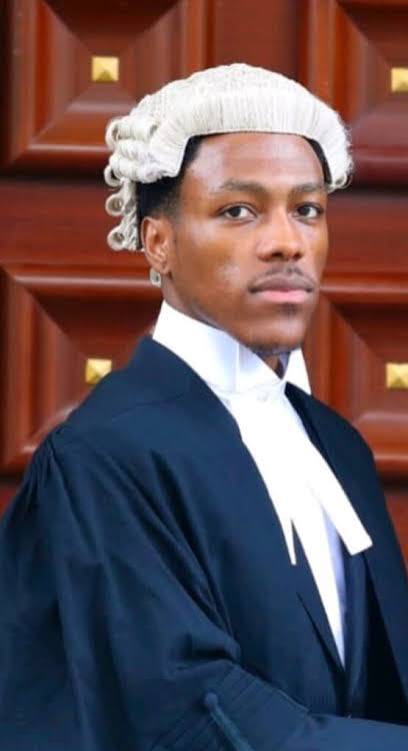
A Senior Advocate of Nigeria (SAN), Dr James Ogwu Onoja has warned social media commentators and bloggers to stop dishing out false narratives in a $2.1 million civil suit instituted against Barrister Jordan Nyesom Wike by one Safwan Garba in respect of Abuja land matter.
The lawyer warned that any commentator and blogger who continued the false narration in respect of court proceedings in the matter, would be susceptible to both criminal and civil actions for malicious falsehood, cyberbullying, slander and libel.
The reaction of Onoja SAN, lead counsel to Jordan Nyesom Wike was provoked by an interview granted by I. G Wuru, a lawyer to Safwan Garba, where he reportedly insinuated that Jordan Nyesom Wike admitted receiving the disputed $2.1 million from the plaintiff.
Social media commentators, especially Martins Vincent Otse known as Very Darkman (VDM) and bloggers were said to have been feasting on the falsehood, spreading it to unsuspecting members of the public.
In a statement on Friday in Abuja, Ogwu Onoja SAN, in setting the record straight, explained that his client (Jordan Nyesom Wike) never at any time admitted receiving any money from Safwan Garba as alleged by lawyer Wuru.
He warned that those who have made publications, conclusions, insinuations and casted aspersions that have drawn attention subject of the court case should take down that such publications, statements and conclusions as same are palpably unfounded
The statement read: “Our attention has been drawn to stories on series of blogs, comments and conclusions on social media by mischief makers and promoters of falsehood, attributed to the media briefing and interview granted by I.G. Waru, Esq., the lawyer to Safwan Garba, in respect of the suit he instituted against Jordan Wike presently pending at the High Court of the Federal Capital Territory, Abuja in Suit No: FCT/HC/CV/008/2026 and the court proceedings in relation thereto.
‘In the unverified reports, blog posts and commentaries as stated above, it was aired most maliciously that Jordan Wike admitted receiving $2.1 million for Abuja property. This particular story circulated by Sahara Reporters and Very Darkman (VDM) is most reprehensible.
“It is also sad that other media platforms such as Port Harcourt Specials, The Cable, Ogoni Times, Magic FM Aba, Information Nigeria, Kalabari TV, Sorosoye Gossip, Edo Updates and many more, on a daily basis continue to peddle this falsehood thereby tarnishing the reputation and image of Jordan Wike.
“This haze of lies and malicious fabrication appears to be an orchestrated media campaign intended to whip up sentiments, compromise the mind of the public and intimidate the judge.
“For the records, Jordan Wike in his defence before the court stated in an unequivocal terms that he has never met Safwan Garba G.Y. or any of his agents at any time. He maintained this line of defence while giving evidence in court on the 28th and 30th September, 2026.
“One therefore wonders why a lawyer would grant interviews to misrepresent what transpired in stop false narrative weeks after the court proceedings.
“It is baffling that this interview by I.G. Waru was granted this week at the Federal High Court, Abuja close to a month of the court proceedings at the FCT High Court and is clearly the source of defamatory comments, unfounded claims and unproven conclusions being made on social media by ignorant members of the public.
“As lawyers to Mr. Jordan Wike, we hitherto refrained from making any statement since the matter is subjudice. However, after taking a critical look at the daily name calling of this young man and the barrage of lies and misrepresentation by gullible people who believe anything without verifying the facts, it therefore becomes most cogent and imperative to clear the air on these poignant issues.
“Safwan Garba G.Y, instituted this action in court but it appears he is not contented with letting the court determine the matter. It is our opinion that in view of the pending proceedings in court, it behoves the lawyers representing both parties to maintain proper professional posture rather than resort to underhand measures using the media to craft false narratives intended to paint a different picture from what has so far transpired in court in order to mislead the public.
“One key point to note is that, contrary to the news making the rounds regarding the petition to the EFCC, we as lawyers to Jordan Nyesom-Wike exhibited the said letter to unearth the inconsistencies in the stories and claims of Safwan Garba G.Y and his lawyers.
“This is because Safwan Garba G.Y kept that vital documents away from the court by not referring to same in his pleadings. He also failed to follow up with the EFCC having realized that the lies he told in the said letter were too conspicuous even for the blind to see.
“In view of the above, we urge the general public to disregard the vicious and barefaced lies of Safwan Garba G.Y. and flagrant misrepresentation of his lawyer, I.G. Waru, Esq. whose conduct is apart from being contemptuous is copiously unethical.
“Any member of the public, bloggers or media houses who continue to propagate this blatant falsehood against the person of Jordan Nyesom-Wike will be susceptible to both criminal and civil actions for malicious falsehood, cyberbullying, slander and libel.
“Those who have made publications, conclusions, insinuations and casted aspersions that have drawn attention subject of this piece should take down with alacrity such publications, statements and conclusions as same are palpably unfounded.
“The general public is to take note and be guided accordingly.”
Law & Crime
Panel on death of 37dead illegal Miners: Commissioner alleges NSCDC goes beyond its official role of engagement
By Uthman Baba -Naseer,Minna
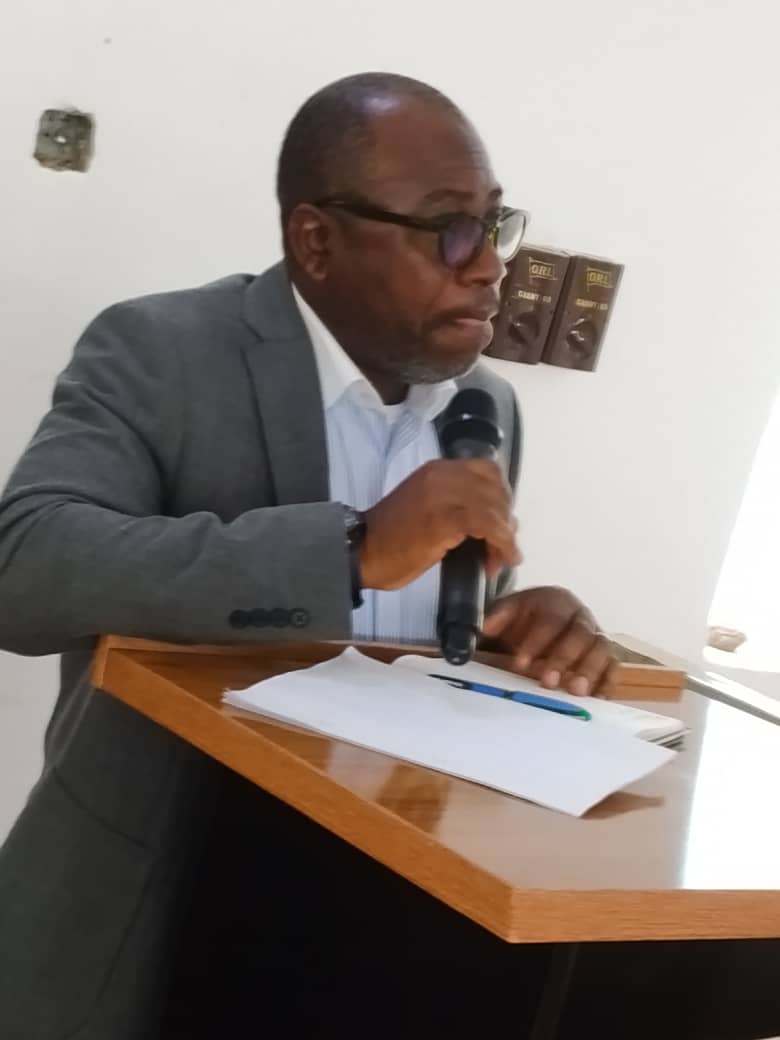
The Commissioner for Homeland Security in Niger State Mr. Maurice Bello Magaji has alleged that the operatives of Nigeria Security and Civil Defence Corps (NSCDC) are going beyond their official responsibility in their role of engagement.
He told the Justice Mohammed Mohammed Judicial Commission of Inquiry investigating the death of 37 suspected illegal miners in the custody of NSCDC that their mode of official conduct is uncivil and they should be more professional in the discharge of their duty.
According to the Commissioner, the men of the NSCDC needed more orientation in their mode of operation as security outfit stating that the revelations from the survivors of the NSCDC causality to “ our committee is so embarrassing and they needed more orientations in their official conducts”
“ My Lord. The information we received from the survivors in our committee as regards to the manner and the way the NSCDC carried out their operations could best be described as unprofessional and they need to be called to order” Maurice Magaji told the Commission.
He told the Commission that the excess of the NSCDC in their operational conduct does not portray the operatives of the NSCDC as security outfit warning that they should operate within the ambit of the law that established them.
“ The NSCDC was established under an enabling Act. But they operate outside the Act and the law establishing them. They should operate in accordance with the Act that established them. Their excesses in their operational conduct is unprofessional” he added.
Maurice Magaji who testified as the Commissioner for Home Security and the secretary Niger State committee of Investigation on the matter informed the commission the response of their committee to the incident and the stage of their investigation, challenging the mode of arrest and operation of the civil defence corps in the state.
He confirmed that on the 17th,of September,2026 he received a phone call from the suspended Commandant of the NSCDC in Niger State,Siayaka Zubeiru Aniriviye on the death of the 37 suspected illegal miners in the custody of the Command.
He stated that upon the receipt of the report,” I put a call to my boss,the governor, on the report I got from the suspended Commandant of the NSCDC.
“ The governor then directed that their bodies should be evacuated to the hospital,the suspended Commandant then told me that he needed some logistics to transport them to the hospital.
“ I then contacted my permanent secretary and raised some funds for transporting them to the hospital, “ the Commissioner told the Commission.
Head of civil defence operations Deputy Commander of Corps John Abraham narrated to Justice Mohammed Mohammed nine member commission of inquiry how they carried out the operation which led to the arrest of the 69 miners on the directives of the suspended commandant of the Corp Siaka Subairu Aniviye.
He maintained that after the arrest they handed over the suspects to the department of intelligence and investigation for further action.
Area Commander Mokwa Assistant commander of Corp Adebayo Tajuddeen and ASC Mamman Ibrahim testified in relation to the arrest, investigation and detention of Emmanuel Emeka who was detained six days and died alongside the suspected illegal miners.
They testified how they illegally arrested the boy, collected money for his detention and court warrant and as well clarified on the whereabouts of 1.4 Million Naira allegedly recovered from the 12 Million Naira in question.
However Wilfred Ugwu, the employer of late Emmanuel who reported him to the civil defence also
testified on their relationship with Emmanuel and how he accused Emmanuel of siphoning his business money to the tune of 12 Million Naira.
By Our Correspondent
A Senior Advocate of Nigeria (SAN), Dr James Ogwu Onoja has warned social media commentators and bloggers to stop dishing out false narratives in a $2.1 million civil suit instituted against Barrister Jordan Nyesom Wike by one Safwan Garba in respect of Abuja land matter.
The lawyer warned that any commentator and blogger who continued the false narration in respect of court proceedings in the matter, would be susceptible to both criminal and civil actions for malicious falsehood, cyberbullying, slander and libel.
The reaction of Onoja SAN, lead counsel to Jordan Nyesom Wike was provoked by an interview granted by I. G Wuru, a lawyer to Safwan Garba, where he reportedly insinuated that Jordan Nyesom Wike admitted receiving the disputed $2.1 million from the plaintiff.
Social media commentators, especially Martins Vincent Otse known as Very Darkman (VDM) and bloggers were said to have been feasting on the falsehood, spreading it to unsuspecting members of the public.
In a statement on Friday in Abuja, Ogwu Onoja SAN, in setting the record straight, explained that his client (Jordan Nyesom Wike) never at any time admitted receiving any money from Safwan Garba as alleged by lawyer Wuru.
He warned that those who have made publications, conclusions, insinuations and casted aspersions that have drawn attention subject of the court case should take down that such publications, statements and conclusions as same are palpably unfounded
The statement read: “Our attention has been drawn to stories on series of blogs, comments and conclusions on social media by mischief makers and promoters of falsehood, attributed to the media briefing and interview granted by I.G. Waru, Esq., the lawyer to Safwan Garba, in respect of the suit he instituted against Jordan Wike presently pending at the High Court of the Federal Capital Territory, Abuja in Suit No: FCT/HC/CV/008/2026 and the court proceedings in relation thereto.
‘In the unverified reports, blog posts and commentaries as stated above, it was aired most maliciously that Jordan Wike admitted receiving $2.1 million for Abuja property. This particular story circulated by Sahara Reporters and Very Darkman (VDM) is most reprehensible.
“It is also sad that other media platforms such as Port Harcourt Specials, The Cable, Ogoni Times, Magic FM Aba, Information Nigeria, Kalabari TV, Sorosoye Gossip, Edo Updates and many more, on a daily basis continue to peddle this falsehood thereby tarnishing the reputation and image of Jordan Wike.
“This haze of lies and malicious fabrication appears to be an orchestrated media campaign intended to whip up sentiments, compromise the mind of the public and intimidate the judge.
“For the records, Jordan Wike in his defence before the court stated in an unequivocal terms that he has never met Safwan Garba G.Y. or any of his agents at any time. He maintained this line of defence while giving evidence in court on the 28th and 30th September, 2026.
“One therefore wonders why a lawyer would grant interviews to misrepresent what transpired in stop false narrative weeks after the court proceedings.
“It is baffling that this interview by I.G. Waru was granted this week at the Federal High Court, Abuja close to a month of the court proceedings at the FCT High Court and is clearly the source of defamatory comments, unfounded claims and unproven conclusions being made on social media by ignorant members of the public.
“As lawyers to Mr. Jordan Wike, we hitherto refrained from making any statement since the matter is subjudice. However, after taking a critical look at the daily name calling of this young man and the barrage of lies and misrepresentation by gullible people who believe anything without verifying the facts, it therefore becomes most cogent and imperative to clear the air on these poignant issues.
“Safwan Garba G.Y, instituted this action in court but it appears he is not contented with letting the court determine the matter. It is our opinion that in view of the pending proceedings in court, it behoves the lawyers representing both parties to maintain proper professional posture rather than resort to underhand measures using the media to craft false narratives intended to paint a different picture from what has so far transpired in court in order to mislead the public.
“One key point to note is that, contrary to the news making the rounds regarding the petition to the EFCC, we as lawyers to Jordan Nyesom-Wike exhibited the said letter to unearth the inconsistencies in the stories and claims of Safwan Garba G.Y and his lawyers.
“This is because Safwan Garba G.Y kept that vital documents away from the court by not referring to same in his pleadings. He also failed to follow up with the EFCC having realized that the lies he told in the said letter were too conspicuous even for the blind to see.
“In view of the above, we urge the general public to disregard the vicious and barefaced lies of Safwan Garba G.Y. and flagrant misrepresentation of his lawyer, I.G. Waru, Esq. whose conduct is apart from being contemptuous is copiously unethical.
“Any member of the public, bloggers or media houses who continue to propagate this blatant falsehood against the person of Jordan Nyesom-Wike will be susceptible to both criminal and civil actions for malicious falsehood, cyberbullying, slander and libel.
“Those who have made publications, conclusions, insinuations and casted aspersions that have drawn attention subject of this piece should take down with alacrity such publications, statements and conclusions as same are palpably unfounded.
“The general public is to take note and be guided accordingly.”

Shouts of Joy Rock the World As Postor Chris Opens Final Healing Streams Edition for 2026
By Our Correspondent Hundreds of millions participate in the global healing crusade as Pastor Chris ministers to the sick in...

Abuja land: Jordan Nyesom-Wike never admitted receiving $2.1m from anyone -Onoja
By Our Correspondent A Senior Advocate of Nigeria (SAN), Dr James Ogwu Onoja has warned social media commentators and bloggers...

Panel on death of 37dead illegal Miners: Commissioner alleges NSCDC goes beyond its official role of engagement
By Uthman Baba -Naseer,Minna The Commissioner for Homeland Security in Niger State Mr. Maurice Bello Magaji has alleged that the...
Abuja land: Jordan Nyesom-Wike never admitted receiving $2.1m from anyone -Onoja
By Our Correspondent A Senior Advocate of Nigeria (SAN), Dr James Ogwu Onoja has warned social media commentators and bloggers...

Sea Incursion: Senate Demands Urgent Shoreline Protection As Ayetoro Community Faces Extinction
By our correspondent Senate on Thursday called for immediate and comprehensive shoreline protection to save Ayetoro community in Ilaje Local...


FG, labour meeting over fuel price, minimum wage, tax relief, others, deadlock, as NLC orders affiliates to be on alert.
By Our Correspondent The meeting between the federal government and organised labour, convened at the ministry of labour in Abuja,...

Ebola: No evidence of community spread in Nigeria — FG
By Our Correspondent In a bid to state the true situation of Ebola spread in the country,Federal Government has declared...

Benue Massacre: Death Toll Hits 113 ..As Senate demands FG’s Intervention
By George Mgbeleke The Senate has condemned the killing of 113 persons, including six mobile police officers, in a series...

Lagos-Calabar Coastal Highway: My Disagreement With Umahi – Diri *Says Duke A Jester, So-Called National Champion Without Base
By David Owei Governor of Bayelsa State, Senator Douye Diri, on Thursday, revealed his disagreement with the Minister of Works,...


HURIWA Condemns Killing of Passengers in Sokoto, Demands Intelligence-Led Security Operations
By George Mgbeleke The Human Rights Writers Association of Nigeria (HURIWA) has condemned the reported killing of passengers by armed...
-
 Politics1 year ago
Gov Okpebholo moves to end Cultism *Threatens action against leading cult groups *Vows to demolish more cult houses in Edo State
-
 Politics1 year ago
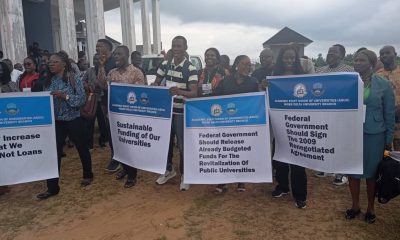
ASUU-NDU protest against FG loans, unpaid salaries,Non-Implementation of agreements …..says loans is generational slavery
-
 Business & Economy1 year ago
PC-NCG Issues Disclaimer on Purported Nigerian Coast Guard National Orientation Exercise In Anambra State
-
 Entertainment2 years ago
Jubilation galore as Parishioners of CKC Kurudu celebrate their cultural heritage ….FG should exploit our Cultural heritage to unite Nigerians-Rev Fr Dim
-

 Sports8 months ago
Bayelsa-born ex-football star’s son, Opuama donates spike shoes to Athletics Association
-

 General News2 years ago
Reps hold public hearing on FMC Ugwuaji Awkunanaw
-
 Law & Crime1 year ago
Legal practitioner raises alarm over threat to his life by CSP Muhammed Abdulkareem
-
 General News2 years ago
Celebration galore as UDA Successfully Elected New Exco ……I will digitalize processes that will raise UDA to greater height -Comr. Okejiri