
Law & Crime
HURIWA bemoans kidnappers successes in Nigeria – Blames Saboteurs in the naferous act *Tasks service chiefs to adopt the MALIAN MODEL*

By George Mgbeleke
Prominent pro-democracy and civil rights advocacy group HUMAN RIGHTS WRITERS ASSOCIATION OF NIGERIA (HURIWA) has tasked the Nigerian intelligence community and thd armed forces of Nigeria to adopt similar technique adopted by the Army in Borno state or much more sophisticated intelligence led actions to catch kidnappers before they successfully negotiate and pick up ransoms from relatives of victims of kidnappings by terrorists.
In a statement by the National Coordinator the group,Comrade Emmanuel Nnadozie Onwubiko,
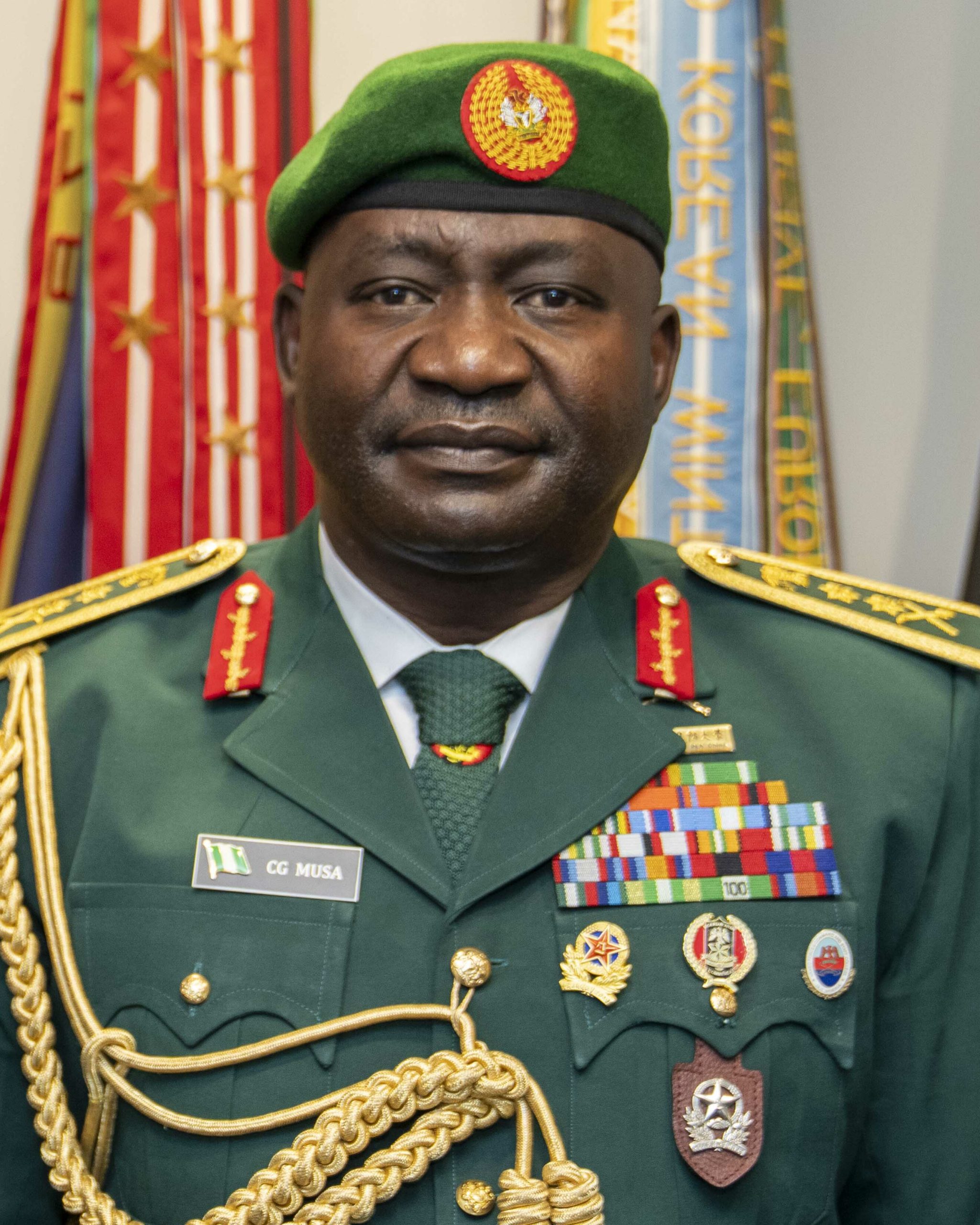
HURIWA said ” We are hereby calling on the Minister of Defence General Christopher Gwabin Musa, Chief of Defence Sraff, the National Security Adviser, Army chiefs, Air Force chief of Staff and Naval Chief of Staff of Nigeria to set up a joint committee to fish out saboteurs and criminal elements embedded in the armed forces who are using their privileged positions to aid and abet terrorism, kidnappings and other sophisticated crimes that have substantially gone undetected for years.
“The Defence minister must take the job of fishing out saboteurs as a fundamental task if Nigeria ever hopes to defeat terrorists and their affiliates who are kidnapping Citizens for ransom just as most of these kidnappers are engaging in HUMAN ORGANS TRAFFICKING.”
The group expressed optimism that if the intelligence community in the country and the armed forces as a collective can copy the intelligence led technique of the Operation Hadin Kai (OPHK), the Military Joint Task Force responsible for counter-terrorism in the Northeast, which successfully identified Shariff Umar as the key coordinator of recent suicide bombing activities in the zone, then kidnappers and terrorists wouldn’t successfully negotiate freely and pick up humongous amount of ransoms from their victims unless and except there are saboteurs embedded within the armed forces who benefit from the multi billion dollars kidnapping industry in Nigeria.
“What then are the functions and powers of military police? What are the functions of Nigerian Intelligence organisations in Nigeria including the Department of State Services and why are the communication and telephone conversations of terrorists and kidnappers not been effectively flagged down, monitored and the suspected terrorists arrested and prosecuted for their crimes against humanity? The honourable minister of Defence who incidentally was the immediate past Defence chief of Nigeria, should prioritise the fishing out of public enemies who are working within the military set ups to actively undermine the war on terror and the counter-kidnapping activities of the armed security forces of Nigeria.
HURIWA recalled that in the North East, findings by OPHK show that Umar is responsible for recruiting, preparing, directing, and dispatching suicide bombers to assigned targets, as well as coordinating logistics and delivery of Improvised Explosive Device (IED) components.
The Media Information Officer of the JTF, Lt Col Sani Uba, said in a statement on Saturday that the confession of 14 suspects arrested during intelligence-led cordon-and-search operations revealed that Umar is the coordinator of recent suicide bombings.
Uba said the cordon-and-search operations were conducted at the Kalmari area of Maiduguri on 31 December 2025.
“Subsequent detailed identification and investigative processes established the structure, roles, and operational linkages of the terror cell.
“During the investigation, a suspected suicide bomber currently in custody, Ibrahim Muhammad, unequivocally identified Shariff Umar (also known as ‘Yusuf’) as the ringleader and coordinator of the terror network.
HURIWA therefore challenged the hierarchy of the Armed forces of Nigeria to look inwards for serving officers who are patrons of kidnappers and terrorists that actively undermine the efforts by the security forces to combat terrorist attacks and the incessant cases of kidnappings for ransoms that happen in parts of Nigeria.
HURIWA is therefore shocked and concerned that the Armed forces and the entire intelligence community in the country that gulps billions of Naira in yearly budget have so far failed on many occasions to intercept and arrest kidnappers and terrorists operating freely in the country with the particular case of the kidnappers of the Kwara State traditional ruler, the Oniwo of Aafin, Oba Simeon Olaonipekun, his son, Olaolu, and other abducted villagers who have demanded a ransom of N450 million for their release. The Rights group described the inability of the armed forces to track kidnappers who freely use communication gadgets in Nigeria as a spectacular sabotage of the national security interest of Nigeria by some persons within the armed forces given that billions of dollars have been committed by the Nigerian state in the procurement of crime fighting technologies in the past few years. Why is the National Assembly not demanding accountability?
Specifically addressing the widespread kidnappings in Kwara state, HURIWA recalled that a palace source (names withheld) made the huge ransom request by kidnappers known to a media house on the phone just as credible sources also confirmed that the abductors demanded N150 million for the monarch and his son, who is a member of the National Youth Service Corps (NYSC).
According to a source, an additional N300 million ransom was demanded for the release of the other eight residents abducted in Adanla-Irese, a suburb of Igbaja in Ifelodun Local Government Area of the state.
The Coordinator of the Kwara South Joint Community Security Watch Network, Elder Olaitan Oyin-Zubair, confirmed that negotiations had begun for the release of the abductees.
“Only two days ago, the kidnappers demanded N300 million for the release of the Adanla abductees. Today, they demanded N150 million for the monarch and his son,” he said.
Recall that the monarch was abducted on Wednesday night, when gunmen reportedly stormed his palace in Aafin community, Ile-Ire district of Ifelodun LGA, at about 8 pm.
HURIWA alluded to the widely published story of a trafficking incident in Mali involving a Nigerian female victim but the prompt action of the Malian armed forces led to the interception and arrest of the kidnappers using intelligence monitoring gadgets just as Mr. P. Michael an anti- human trafficking activist narrated how Malian security solved thd kidnapping case within hours of it happening.
The anti-human trafficking campaigner quoted by HURIWA stated as follows: “Why do kidnappers succeed in collecting ransom from their victims? Based on my job, I learnt something special this week from Security Agents in Mali that we went on a rescue mission together. I don’t know if the Nigerian Security Agencies are in collaboration with kidnappers to take ransom and share together, if not no kidnapper can succeed in taking any ransom where security formation is effective.
The story is that, I received a message from Nigeria concerning a 16 year old girl that was trafficked to Mali for sex trade. This victim called her parents about the situation and they passed the message to me from government agency for an urgent rescue.
When I called the number that the victim used to call her parents and I asked the traffickers to send the victim to me so that she can go back to Nigeria, they refused. Later they remove the line from their phone, now the number is out of use. I now informed a security agent about the situation because what is important is to rescue the 16 years old girl from sexual exploitation.
Now, the number I used to contact the traffickers is no more in use. I don’t know the name of the village the victim is. I sent the number that they have removed and brake to the security agent. After two hours, they notify me the name of the village and the current new number the traffickers are using. We went on a mission without calling the new number. We arrived at the village in the midnight because it was about 15 hours journey. The second day, Information reach us the exact location the phone number was last used before they switched off the phone. After an hour, information came again that the person is having appointment with somebody by 11:00am. We hang around the place. When the person came around, there was a vibration from one of their security gadget to know the person coming with the number. We monitor her entry to the house. We were able to rescue the victim on 20/12/22. No call. Nothing.
So ransom collection in Nigeria could be between the kidnappers and security agencies. If not, no Nigerian should pay ransom to any kidnapper if really our policemen have the necessary security gadgets,” he concluded. HURIWA has therefore asked President Bola Ahmed Tinubu to set a deadline of three months for the service chiefs to reduce kidnappings and successful collection of ransoms to the barest minimum of 25% of the current high statistics or be dismissed from their highly esteemed offices.







By Our Correspondent
Barely three weeks after the Independent National Electoral Commission (INEC) declared governor Adeleke of Accord party winner of Osun election, the All Progressives Congress, (APC) and the Peoples Democratic Party, (PDP) have challenged the outcome of the August 15, 2026, Osun Gubernatorial elections incumbent governor’s victory as Tribunal displays two Petitions
The petitions were confirmed in a notice sighted by our correspondent at the tribunal secretariat in Osogbo on Monday, formally commencing the legal process arising from the August 15 governorship election.
The development followed confirmation by the secretary of the tribunal, Pefe Belemore, that petitions challenging the election outcome had been filed.
According to Belemore, “The necessary notices would be displayed on the tribunal’s notice board before noon on Monday.”
At the opening of the tribunal earlier in the day, Belemore was present in the courtroom alongside other officials of the secretariat as preparations were made for the commencement of proceedings.
The APC and PDP are challenging the outcome of the election, which returned Adeleke as governor for another term in office.
The display of the petitions is expected to pave the way for the service of legal processes on the parties involved and subsequent proceedings before the tribunal.
The APC’s petition, marked EPT/OS/GOV/01/2026, was filed by its governorship candidate, Bola Oyebamiji.
Oyebamiji listed Adeleke, the Accord and the Independent National Electoral Commission, INEC, as respondents in the petition challenging the election outcome.
The PDP’s petition, marked EPT/OS/GOV/02/2026, was filed by Adebayo Olugbenga Adedamola against Adeleke, INEC and the Accord.
Law & Crime
IPC-SPJ Hub Condemns Attack on Kano Journalists, …. Tasks Security Agecies on Protection during Political Rallies

By David Owei
The Safety and Protection of Journalists (SPJ) Hub of the International Press Centre (IPC) condemns the attack on journalists who were returning from covering the All Progressives Congress (APC) rally at the Sani Abacha Stadium in Kano on Saturday, 5th September 2026.
Reports reaching the Hub states that, “a vehicle conveying four Radio Nigeria Pyramid FM staff, a journalist from Guarantee Radio and another from Daily Trust, was attacked by hoodlums, who repeatedly hit the vehicle, leaving the driver to sustain injuries, while some of the journalists were hit by broken glass from the damaged vehicle.”
“The incident happened after the APC had held the Tinubu Support Group rally at the Sani Abacha Stadium in Kano,” the report further revealed.
The Executive Director of IPC, Mr. Lanre Arogundade in a statement described the unfortunate incident, as a serious concern and threat to press freedom, considering the damage on a Radio Nigeria, Pyramid FM vehicle.
Mr. Arogundade noted that, “the campaigns and rally just recently started, and journalists should not be subject to any form of attack at this time, when political activities are gradually increasing ahead of the general elections.”
The Hub is therefore calling on all security agencies to at this time be intentional about safeguarding journalists, especially those deployed to the field to cover political activities, especially during large gatherings where journalists are exposed to potential risks.
The Hub is also admonishing media organisations and journalists covering elections to always conduct security scan and safety consciousness in coverage of electoral issues.

By George Mgbeleke
The Human Rights Writers Association of Nigeria (HURIWA) has demanded the immediate suspension of officials in charge of the National Cash Transfer Office and ordered a full-scale investigation into the N33.75 billion cash transfer that the Auditor-General for the Federation and states have failed to properly account for.
HURIWA in a statement by its national coordinator, Comrade Emmanuel Nnadozie Onwubiko emphasized that Nigerians cannot continue to watch helplessly as billions of naira meant for poor and vulnerable citizens disappear into unverifiable transactions.
The group called on the Economic and Financial Crimes Commission (EFCC) to launch a vigorous forensic investigation, trace every naira, and recover any amounts determined to have been wrongly paid, diverted, or misapplied.
The Auditor-General’s findings revealed a significant breakdown in financial controls governing one of the Federal Government’s most sensitive social intervention programs, as payments to 3,295,207 households across 35 states in 2023 could not be authenticated.
HURIWA demands explanations for incomplete beneficiary details on payment vouchers and the unavailability of necessary Remita statements for reconciliation purposes. Disturbingly, auditors were reportedly obstructed by National Cash Transfer Office staff from accessing these records.
HURIWA insists on a thorough investigation to follow the money from government accounts to the final recipients, stating that no official should use bureaucracy to shield themselves as unverified billions remain in limbo. The organization urges the EFCC to verify each payment and identify genuine vulnerable Nigerians among the beneficiaries. Misallocated funds must be recovered, and those responsible held accountable.
Moreover, HURIWA stresses that this situation extends beyond the N33.75 billion, highlighting additional discrepancies totaling N36.74 billion and stressing the need for a comprehensive audit of the entire National Cash Transfer Programme.
HURIWA challenges President Bola Ahmed Tinubu to uphold public accountability and restore faith in government poverty-alleviation efforts. The organization insists that political connections should not shield individuals from accountability and demands prompt action.
HURIWA demands the Federal Government:
1. Suspend officials of the National Cash Transfer Office pending investigation.
2. Direct the EFCC to conduct a full forensic probe into the N33.75 billion and related transactions.
3. Trace every naira and identify persons/entities that received funds.
4. Recover misallocated funds and return them to the Treasury.
5. Publish credible disbursement records.
6. Investigate and prosecute those obstructing auditors.
7. Conduct a full audit of the social intervention programme and publish findings.
8. Prosecute culpable individuals following investigations and due process.
HURIWA urges that the funds meant for vulnerable citizens must reach them and calls for immediate action to restore public trust in government operations.
Find the money. Recover the money. Name those responsible. Prosecute the culpable. Return Nigerians’ money to the Treasury.**
That is the minimum accountability Nigerians deserve.


HURIWA Mourns Bello Mandiya, Hourns a Dependable Ally of Human Rights
By George Mgbeleke The Human Rights Writers Association of Nigeria (HURIWA) mourns the death of former Senator representing Katsina South...


HURIWA DEMANDS IMMEDIATE REMOVAL OF HANDCUFFS FROM Ufoma Joseph Immanuel
By George Mgbeleke The Human Rights Writers Association of Nigeria (HURIWA) says the Nigerian Correctional Service must immediately stop the...
Northern Senator Forum Mourns Senator Bello Mandiya
By George Mgbeleke The Northern Senators Forum has received with profound sadness the news of the passing of Distinguished Senator...

APC withdraws petition challenging Gov.Adeleke’s Victory
By Our Correspondent In dramatic twice the All Progressives Congress (APC) has filed an application seeking to withdraw the petition...

NUJ FCT Raises N5.01m Trust Fund for Late Chairman’s Children …265 members raised N5.01m to secure education, welfare of Osadebamwen’s three children
By Our Correspondent In a bid to ensure a good welfare package for its departed members and their families, the...


APC chieftain demands probe, prosecution of Atiku over $40M, SIEMENS, SPV allegations
By Our Correspondent A chieftain of the All Progressives Congress (APC), Ntufam Hilliard Eta, has called on the nation’s anti-corruption...

Nigerian Politics Becoming Less Violent, Says Gov Diri As CBM Holds Bayelsa Retreat
By David Owei Governor of Bayelsa State, Senator Douye Diri, has observed that the political arena in Nigeria was shifting...

Gov Diri Seeks Increase In Law Students Quota At NDU
By David Owei Governor of Bayelsa State, Senator Douye Diri, has appealed to the Council of Legal Education to increase...


Nembe Spill: HOMEF demands cleanup, compensation, accountability
By David Owei The Health of Mother Earth Foundation (HOMEF) on Tuesday demanded urgent cleanup, compensation and accountability over an...


NCDMB to Feature Nwabuikwu’s The Pain and The Promise In Book Reading Session
By David Owei The Nigerian Content Development and Monitoring Board (NCDMB) will host the fifth edition of its Book Reading...
-
 Politics1 year ago
Gov Okpebholo moves to end Cultism *Threatens action against leading cult groups *Vows to demolish more cult houses in Edo State
-
 Politics1 year ago
ASUU-NDU protest against FG loans, unpaid salaries,Non-Implementation of agreements …..says loans is generational slavery
-
 Business & Economy1 year ago
PC-NCG Issues Disclaimer on Purported Nigerian Coast Guard National Orientation Exercise In Anambra State
-
 Entertainment2 years ago
Jubilation galore as Parishioners of CKC Kurudu celebrate their cultural heritage ….FG should exploit our Cultural heritage to unite Nigerians-Rev Fr Dim
-

 Sports7 months ago
Bayelsa-born ex-football star’s son, Opuama donates spike shoes to Athletics Association
-

 General News2 years ago
Reps hold public hearing on FMC Ugwuaji Awkunanaw
-
 Law & Crime1 year ago
Legal practitioner raises alarm over threat to his life by CSP Muhammed Abdulkareem
-
 General News2 years ago
Celebration galore as UDA Successfully Elected New Exco ……I will digitalize processes that will raise UDA to greater height -Comr. Okejiri