
Uncategorized
FCT Council Polls: INEC charges Media on Responsible Coverage,Voter Mobilisation


By George Mgbeleke
As the February 21, 2026 Federal Capital Territory (FCT) draws close, the Independent National Electoral Commission (INEC) has called on the media to intensify voter education, promote professionalism and uphold ethical standards in election coverage of election.
The call was made in Abuja on Tuesday, at a forum for media executives, producers, reporters and online personalities, organised by the Commission as part of its ongoing stakeholder engagement for the forthcoming election.
Speaking at the forum, the Supervising National Commissioner for the FCT and Chairman, Information and Voter Education Committee (IVEC), Malam Mohammed Haruna, underscored the central role of the media in safeguarding Nigeria’s democracy, stressing that voter participation and responsible reportage remain key to the credibility of elections.
He urged media organisations to use their platforms to educate and mobilise eligible voters, noting that effective election coverage requires not only a sound understanding of the Constitution, the Electoral Act and INEC’s Rules and Guidelines, but also integrity, fairness and strict adherence to the Code of Conduct for Election Coverage.
Commissioner Haruna cautioned that while journalists, like all citizens, may hold personal views, such prejudices must never interfere with objective and professional reporting, adding that democracy thrives when the media places public interest above partisanship.
Providing an update on INEC’s preparedness, the National Commissioner disclosed that the Commission had successfully conducted 10 of the 13 key activities outlined in the Timetable and Schedule of Activities for the election. He said the most recent milestone was the publication of the final Register of Voters on January 14, 2026, copies of which have been distributed to all political parties participating in the election.
According to him, the remaining activities are the publication of the Notice of Poll on February 7, the end of political party campaigns on February 19, and Election Day on February 21.
Malam Haruna also highlighted other critical preparations not listed in the timetable, including the accreditation of observers and journalists, which have been conducted online since the lead-up to the 2023 General Election as part of INEC’s technological innovations. While the observer accreditation portal has closed, he noted that the media accreditation portal remains open until February 8, urging media organisations yet to apply to do so promptly to enable timely issuance of accreditation cards.
On logistics, he revealed that the Commission had acquired virtually all non-sensitive materials required for the election and batched them according to the six Area Councils, 62 Wards and 2,822 Polling Units in the FCT. He added that sensitive materials, including ballot papers and result sheets, would be printed ahead of time and formally received from the Central Bank of Nigeria (CBN), FCT Branch, on February 18, in the presence of party agents, security agencies, civil society organisations and the media.
He further disclosed that adequate Bimodal Voter Accreditation System (BVAS) machines were being configured and prepared for deployment to all polling units.
Commissioner Haruna explained that although FCT Area Council elections are similar to Local Government elections conducted by State Independent Electoral Commissions, Section 299 of the Constitution applies the Constitution to the FCT “as if it were one of the States of the Federation.”
“In practical terms, FCT Area Council elections are conducted like governorship elections,” he said, noting that the FCT’s voting population is larger than those of Bayelsa and Ekiti States. He added that the Territory’s status as the political capital of Nigeria naturally attracts national and international attention.
He stressed that as the first FCT Area Council Election since the Electoral Act extended council tenure from three to four years, the Commission was determined to leave no stone unturned to ensure a free, fair and credible poll.
Earlier in his welcome address, the Resident Electoral Commissioner (REC) for the FCT, Malam Aminu Kasimu Idris, described the forum as a strategic platform for strengthening collaboration and aligning expectations between INEC and the media ahead of the elections.
He noted that public confidence in elections is shaped not only by how the process is conducted, but also by how it is reported and communicated, stressing that INEC’s commitment to a peaceful, transparent and inclusive election cannot be achieved without the support of a responsible and professional media.
The REC outlined the Commission’s level of preparedness, listing activities already undertaken, including the monitoring of party primaries, publication of final lists of candidates, campaign monitoring, delivery and batching of non-sensitive materials, activation of BVAS devices, stakeholder engagements, voter education and sensitisation, collaboration with security agencies, and the training of election security personnel.
He disclosed that INEC had approved the replacement of the All Progressives Congress (APC) candidate for Igu Ward in Bwari Area Council following the demise of the initial candidate, Zachariah James Danbaki, with Danbaki Titus emerging as the replacement.
Malam Idris also announced that the Commission would conduct a mock accreditation exercise in 289 selected polling units across the six Area Councils to test election technologies, including BVAS accreditation, voting procedures and dummy result uploads to the INEC Result Viewing (IReV) portal. He called on the media to give the exercise wide publicity to ensure voter awareness and participation.
On voter statistics, the REC revealed that following the revision of the register, the total number of registered voters in the FCT now stands at 1,680,315. He added that INEC had approved the decongestion of large Registration Area Centres (RACs) in select wards of Bwari Area Council and the Abuja Municipal Area Council (AMAC) to enhance efficiency on Election Day.
He further clarified that elections would not hold in four polling units, hree in Garki Ward and one in Jiwa Ward, due to the absence of registered voters.
In a goodwill message, the Chairman of the Nigeria Union of Journalists (NUJ), FCT Council, Ms. Grace Ike, commended INEC for convening the forum, describing it as timely in an era where misinformation spreads faster than facts.
She noted that elections are not only won or lost at polling units, but also in the information space, urging journalists to prioritise accuracy over speed, reject hate speech and incitement, ensure fairness and balance, and uphold professionalism in their coverage.
Ms. Ike also emphasised the importance of the safety and protection of journalists, calling on INEC, security agencies, political parties and their supporters to respect the media and guarantee the safety of reporters and their equipment before, during and after the elections.
She further called for sustained transparency and effective communication from INEC to counter rumours and fake results, noting that information gaps often fuel misinformation.
By George Mgbeleke
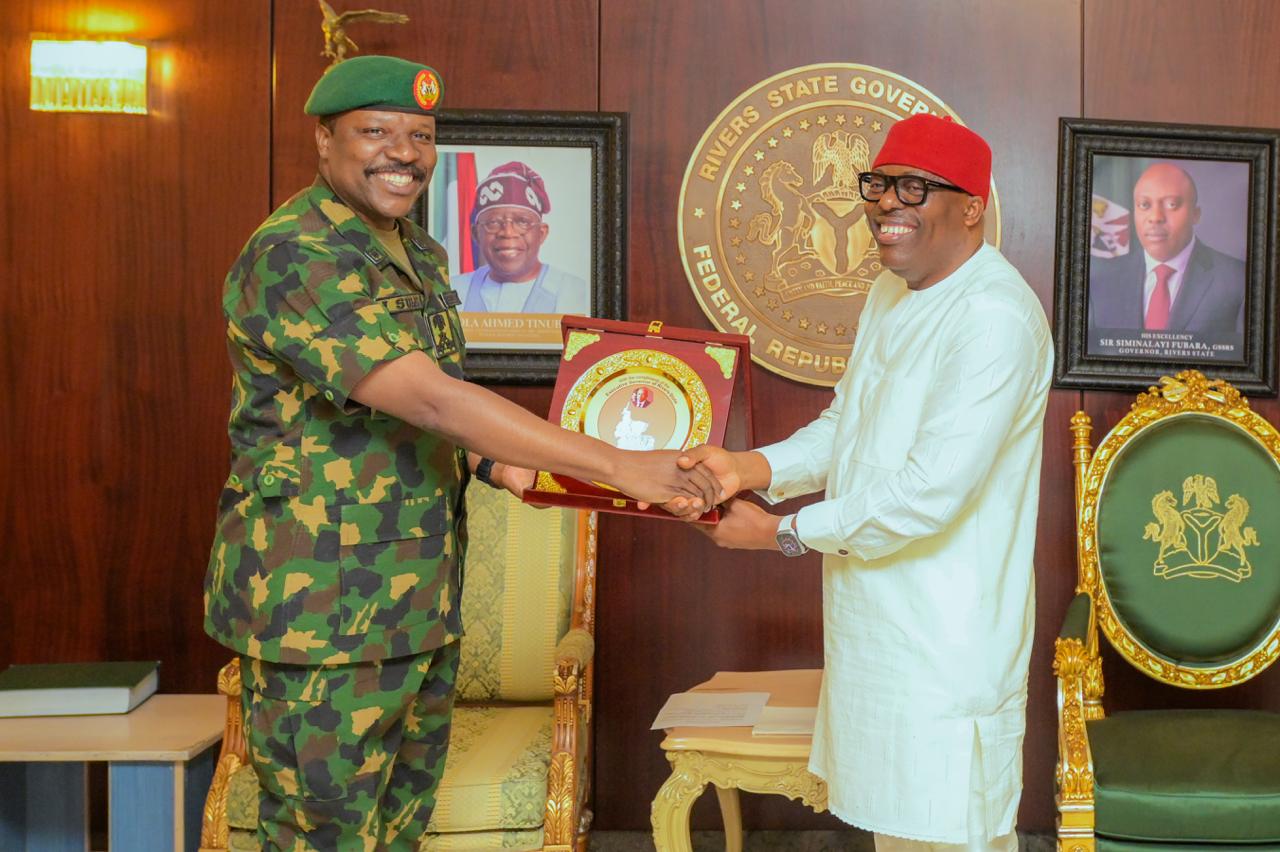
Governor of Rivers State, His Excellency, Sir Siminalayi Fubara, has assured the Nigerian Army of his administration’s continued support in the task of providing adequate security for oil and gas facilities as well as other critical national assets located in the state
In a statement by Chief Press Secretary to the governor,Onwuka Nzeshi, Fubara gave the assurance on Friday while receiving the new Commander, 6 Division Garrison and Sector 3, Joint Task Force (South-South), Operation Delta Safe, Brigadier General Ismaila Sule, at Government House, Port Harcourt.
The Governor congratulated the senior officer on his posting to Rivers State and noted that the State has, across different administrations, maintained a wonderful and mutually beneficial relationship with the Nigerian Army.
He described the partnership as a win-win relationship, stressing that government’s support to security agencies is not an extraordinary gesture, but a normal responsibility, given the importance of security to the social and economic development of the country.
Governor Fubara expressed appreciation for the new military formation being created and sited in Ahoada, describing it as a strategic decision that will help reduce agitation, tension and security challenges prevalent in that part of the state. He thanked President Bola Ahmed Tinubu, Commander-in-Chief of the Armed Forces, and the Chief of Army Staff, Lt. General Waidi Shaibu for the favour done to Rivers State.
The Governor emphasized that his government will never ask the military to do anything that will undermine its professional and statutory responsibilities or oppress any citizen, adding that his only interest is peace, progress and the development of Rivers State.
He said Sector 3, which is responsible for protecting critical national assets including oil pipelines, has always enjoyed massive support from the Rivers State Government, and assured that the support will not only be sustained but improved in the current dispensation.
In his remarks, Brig. Gen. Sule thanked Governor Fubara for the warm reception and for the consistent support of the State Government to the Army, pledging to strengthen synergy during his tour of duty in Rivers State.
Brig. Gen. Sule disclosed that he had been briefed by his predecessors on the consistent support the Army had received from the Rivers State Government, and conveyed the appreciation of the military high command to the state.
The Commander said his visit was to officially introduce himself to the Governor as the Chief Security Officer of the State, and to inform him of his plans to tour all 23 Local Government Areas in the State as well as nearby military formations.
Brig. Gen. Sule further disclosed that following the directive of President Bola Ahmed Tinubu to expand the Nigerian Army from eight to twelve Divisions, Rivers State will benefit from the expansion with a new Brigade to be stationed in Ahoada along with its affiliate battalions.
He said the new formation will help tackle security challenges in that axis and assured that under his command, the Army will do its best to ensure lasting peace and security across Rivers State.
Uncategorized
NSPWB Executive Sec.stresses Board’s readiness to support Christains, Muslim Pilgrims in Niger state
BY UTHMAN BABA-NASEER,MINNA
The Executive Secretary of the Niger State Pilgrims’Welfare Board,(NSPWB) Muhammed Awwal Aliyu,has reiterated the Board’s preparedness to provide equal support and welfare services to Christian and Muslim Pilgrims from the state.
The assurance was contained in a press statement issued by the head of Media and Communication of the Board Hajiya Lubabatu Muhammed Kusheriki and made available to Journalists in Minna Friday,the 9th of October,2026.
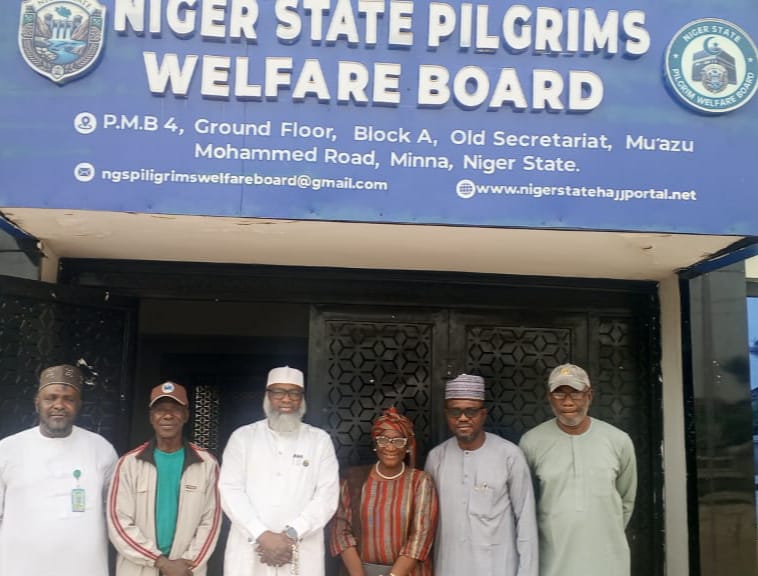
He gave the assurance in Minna while receiving newly appointed members of the Board’s Christian Department, led by Mrs. Deborah Salawu, during a courtesy and solidarity visit to formally introduce the team following their appointments.
Congratulating the new Board Members, the Executive Secretary described their appointments as timely and important to the effective administration of pilgrimage affairs in Niger State. He urged them to demonstrate commitment, integrity and professionalism in the discharge of their responsibilities.
The Executive Secretary stressed that the Christian Department remains an integral part of the Board, with the responsibility of coordinating and addressing the needs of Christian Pilgrims’ undertaking pilgrimage to approved Holy sites.
He assured the delegation that the Board would continue to provide the necessary institutional support and resources to ensure that Christian Pilgrims’ enjoy a smooth, well-coordinated and spiritually fulfilling pilgrimage experience.
“We are one family in the Niger State Pilgrims’ Welfare Board. We will continue to serve both Muslim and Christian Pilgrims’ without discrimination,” he said.
He further charged the Board Members to regard their appointments as a call to service, urging them to uphold transparency, accountability and the fear of God while working collaboratively with other departments to strengthen the Board’s operations.
He then assured the delegation of his full support and cooperation, while commending the Farmer Governor of Niger State, Farmer Mohammed Umaru Bago, for promoting inclusiveness and fairness in the governance of the State.
Earlier, the leader of the delegation, Mrs. Deborah Salawu, expressed appreciation to the Niger State Government for the opportunity to serve. She pledged the team’s commitment to supporting the Board’s mandate and promoting religious harmony through effective service delivery.
Also speaking, the Director of Administration of the Christian Department, Mr. Lawrence Paul, welcomed the newly appointed members and briefed them on the Board’s administrative structure and operational procedures.
He assured them of the department’s readiness to provide the necessary guidance and administrative support to enable them to settle into their responsibilities and contribute effectively to the success of pilgrimage operations in the state.
By Our Correspondent
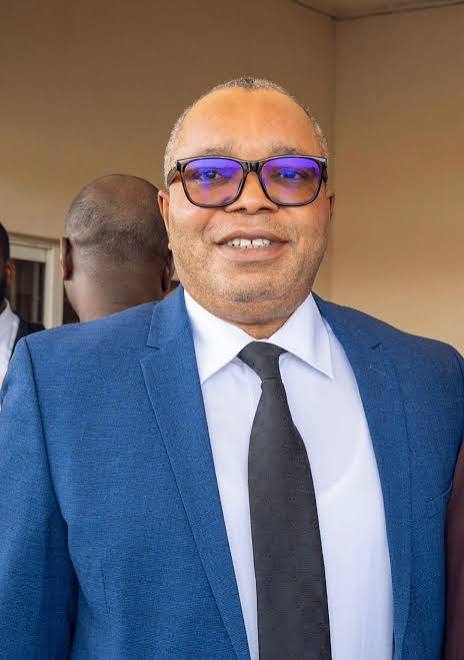
The Chairman of the All Progressives Congress, APC in Edo State, Emperor Jarret Tenebe, says his AK-47 remark was a metaphor for electoral strength and firmness, not a call to arms.
Tenebe said the expression was meant to communicate the importance of standing firmly by one’s democratic choice and protecting votes.
He explained that just as AK-47 is associated with strength, firmness and reliability, voters must show same qualities in defending their mandate.
The APC chairman stressed the reference was never intended to introduce violence into the electoral conversation.
He said the strength invoked was strength of conviction, not strength of arms.
According to him, defending the vote is a civic responsibility that requires vigilance, transparency and accountability throughout the process.
He said the analogy falls within political symbolism where familiar objects are used to convey resilience and determination.
Tenebe maintained such firmness must remain anchored in law, through peaceful participation, lawful observation and legitimate democratic mechanisms.
He said the message was about being steadfast in political choice and unwavering in democratic participation, not about wielding weapons.
“The essence was resilience without violence and firmness without lawlessness,” he said.
He urged electorate to understand the statement as call to value their votes and stand responsibly behind lawful choices.

Police parades 23 persons over alleged involvement in cult clashes in Bayelsà ….recovers Eight firearms, cutlasses, bottles of codine,two battle axes,20 cartridges
By David Owei The Bayelsà State Police Command led by Commissioner of Police, Mr. Ajao Saka Adewale has paraded twenty...

Wike orders ‘no work, no pay’ as FCT strike deepens, accuses NLC of politics … says teachers’ demands already resolved, directs area councils to enforce policy against striking
By Our Correspondent In an affort to force FCT workers on strike end the ongoing strike ,Minister of the Federal...

Milton Dick Elected President of the IPU Assembly
By Our Correspondent Mr Milton Dick, Speaker of Australia’s House of Representatives, has been elected as the President of the...
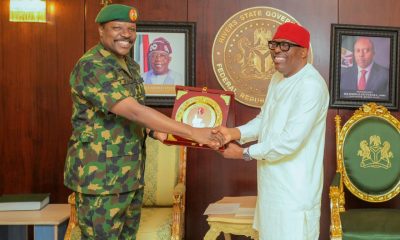

Fubara Reaffirms Partnership with Army -Lauds Establishment of New Brigade in Ahoada
By George Mgbeleke Governor of Rivers State, His Excellency, Sir Siminalayi Fubara, has assured the Nigerian Army of his administration’s...
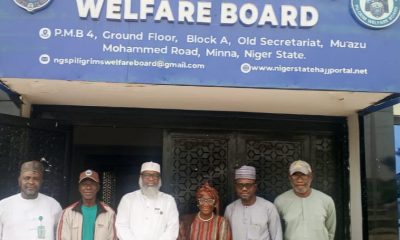

NSPWB Executive Sec.stresses Board’s readiness to support Christains, Muslim Pilgrims in Niger state
BY UTHMAN BABA-NASEER,MINNA The Executive Secretary of the Niger State Pilgrims’Welfare Board,(NSPWB) Muhammed Awwal Aliyu,has reiterated the Board’s preparedness to...

Niger CJ Seeks mutual understanding between the Bar and Bench to enhance speedy dispensation of criminal, Civil Justice
By Uthman Baba-Naseer,Minna The Chief Judge of Niger State,Justice Halima Ibrahim Abdulmalik, has stressed the need for continued cordial and...

$1trn economy: NBTI showcases 298 Nigerian innovators to global investors
By Our Correspondent The National Board for Technology Incubation (NBTI) has showcased 298 Nigerian innovators from the 36 states and...


HURIWA Demands Answers Over Corps Members’ Release, Says Authorities Must Clarify Ransom Claims
By George Mbgeleke The Human Rights Writers Association of Nigeria (HURIWA) demands an urgent explanation from the Federal Government, the...

Tinubu’s Petrol Discount is a Loan To Nigerians-ADC
By George Mgbeleke The African Democratic Congress (ADC) has described the Tinubu administration’s proposed petrol price intervention as a loan...
HURIWA Demands EFCC Prosecution of Okowa, Bello …. Condemns Parties’ Choice of Politicians Facing Corruption Allegations*
By George Mgbeleke The Human Rights Writers Association of Nigeria (HURIWA) has called on the Economic and Financial Crimes Commission...
-
 Politics1 year ago
Gov Okpebholo moves to end Cultism *Threatens action against leading cult groups *Vows to demolish more cult houses in Edo State
-
 Politics1 year ago
ASUU-NDU protest against FG loans, unpaid salaries,Non-Implementation of agreements …..says loans is generational slavery
-

 Business & Economy1 year ago
PC-NCG Issues Disclaimer on Purported Nigerian Coast Guard National Orientation Exercise In Anambra State
-
 Entertainment2 years ago
Jubilation galore as Parishioners of CKC Kurudu celebrate their cultural heritage ….FG should exploit our Cultural heritage to unite Nigerians-Rev Fr Dim
-

 Sports8 months ago
Bayelsa-born ex-football star’s son, Opuama donates spike shoes to Athletics Association
-

 General News2 years ago
Reps hold public hearing on FMC Ugwuaji Awkunanaw
-
 Law & Crime1 year ago
Legal practitioner raises alarm over threat to his life by CSP Muhammed Abdulkareem
-
 General News2 years ago
Celebration galore as UDA Successfully Elected New Exco ……I will digitalize processes that will raise UDA to greater height -Comr. Okejiri