
Oil & Gas
ADC advocates urgent price limit on Petroleum prices as global crisis drives costs higher

By George Mgbeleke
The African Democratic Congress (ADC) has called on the Federal Government to introduce a temporary cap on petrol prices to prevent further increases that it says are worsening the cost-of-living crisis for millions of Nigerians. In a statement signed by its National Publicity Secretary, Mallam Bolaji Abdullahi, the party said while global oil market volatility linked to the crisis in the Middle East may be contributing to the latest price hikes, the government must act to protect citizens from the impact.
The ADC also urged the introduction of targeted palliatives for low-income Nigerians and criticised the Federal Government’s plan to distribute 100,000 CNG conversion kits, noting that the figure represents less than one percent of Nigeria’s over 11 million vehicles and questioning the limited availability of CNG refuelling stations across the country.
The full statement read:
The African Democratic Congress (ADC) calls on the Federal Government to immediately introduce a temporary and time-bound cap on petrol prices to prevent further increases that continue to push the cost of living beyond the reach of millions of Nigerians.
Recent hikes in petrol prices reflect rising volatility in global oil markets, driven in part by the ongoing crisis in the Middle East. However, the African Democratic Congress believes that external shocks cannot justify allowing fuel prices to spiral without restraint in an already fragile economy, one that continues to reel from the consequences of the Tinubu-led APC government’s abrupt removal of the fuel subsidy.
For everyday Nigerians, petrol determines the price of food, transportation, and survival. When petrol rises, everything else rises with it. This is why the African Democratic Congress urges the Federal Government to take urgent action to stabilize petrol prices. For once, the APC-led federal government should try to be responsible by taking responsibility for protecting citizens from the harshest consequences of the ongoing fuel price hikes.
We also call on the government to introduce targeted palliatives, particularly for low-income Nigerians who are most-affected by the impact of rising fuel prices.
The government must look beyond temporary solutions to real, scalable answers to Nigeria’s energy challenges. This is why the African Democratic Congress questions the practicality of the Federal Government’s recently announced plan to distribute 100,000 Compressed Natural Gas (CNG) conversion kits.
Nigeria has over 11 million vehicles on its roads. When placed in context, 100,000 CNG kits would reach less than one percent of the nation’s vehicle fleet.
A policy that touches only a fraction of vehicles cannot meaningfully address a national fuel crisis. Beyond that, the number of CNG refueling stations across the country remains extremely limited, raising serious questions about accessibility for ordinary Nigerians. If Nigerians cannot easily find where to refuel, then the policy risks becoming an announcement without real impact.
The African Democratic Congress therefore urges the Federal Government to pursue a more credible and comprehensive energy strategy that protects Nigerians from extreme fuel price shocks. Nigeria is an oil-producing country, and it should not be a place where the cost of petrol repeatedly pushes millions of citizens deeper into hardship
At a time of rising global uncertainty, protecting the welfare of citizens must remain the first duty of any government that knows what they are doing.









Oil & Gas
As Oil companies , Niger Delta Community Ask: Who Will Clean Up their exploited Environment
By David Owei
For families in Bille Kingdom, the water around them is more than a stretch of creek.
It is their means of movement, a source of livelihood and being part of everyday life ,it’s about tourism,aquatic splendor ,picnic and recreation and exploration of natural ambience.
So when reports of gas leaks and other environmental problems begin to raise concerns about the safety of the waterways, the issue is no longer just about oil production.
It becomes a question of how people will live, work and provide for their families.
Now, as International Oil Companies (IOCs) are divesting from onshore oil assets, residents of the Rivers State community in particular in particular and Niger Delta in general are asking yet another difficult question: who will take responsibility for the environmental problems left behind?
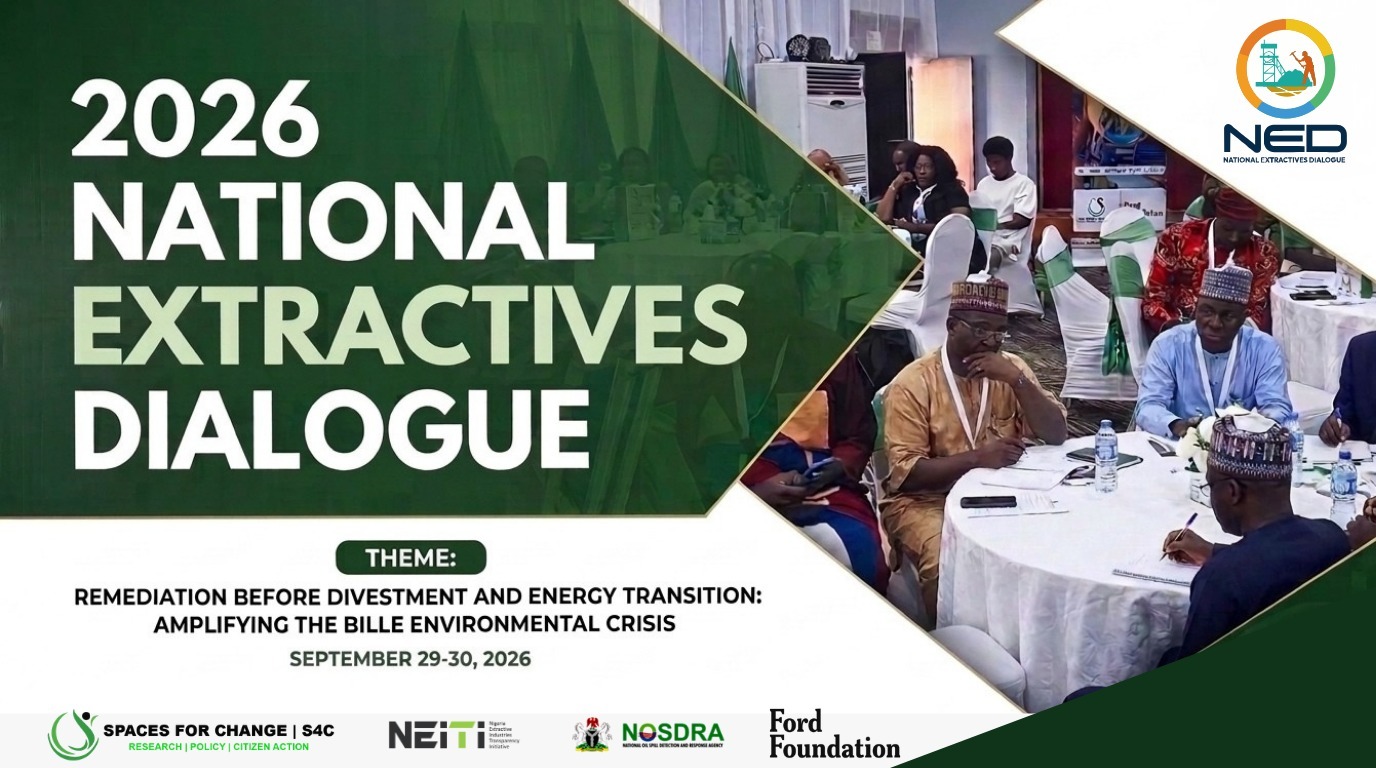
That question will take centre stage in Port Harcourt on September 29 and 30, when Spaces for Change (S4C), in partnership with the Nigeria Extractive Industries Transparency Initiative (NEITI) and the National Oil Spill Detection and Response Agency (NOSDRA), with support from the Ford Foundation, convenes the fifth National Extractives Dialogue.
The dialogue is themed “Remediation Before Divestment and Energy Transition: Amplifying the Bille Environmental Crisis.”
More than 150 stakeholders from the Niger Delta and beyond are expected to attend, including government officials, regulators, civil society organisations, host community representatives, academics and private-sector players.
Bille Kingdom, in Degema Local Government Area of Rivers State, hosts major oil assets including OML 18 and OML 24. The community is now at the centre of concerns over what happens to environmental liabilities as Nigeria’s oil industry undergoes major changes.
According to the organisers, reports from affected communities and preliminary field observations indicate persistent environmental challenges, including reported gas leaks affecting waterways, creeks, residential areas and agricultural livelihoods.
While technical assessments are still ongoing, residents are waiting for verified scientific findings and immediate relief measures, including access to clean water.
For people living in a riverine community, damage to waterways can quickly become a threat to livelihoods. Fishing, farming and transportation all depend on the health of the environment.
The organisers say this is why remediation must come before divestment and energy transition plans.
As IOCs transfer onshore assets to domestic operators, they argue that historical environmental liabilities must be properly identified and addressed so that communities are not left carrying the burden of decades of extractive activities.
The dialogue will provide residents of Bille and neighbouring communities an opportunity to engage directly with regulators, industry operators, security agencies and civil society organisations.
The press statement announcing the event was signed by Victoria Ibezim-Ohaeri, Executive Director of Spaces for Change (S4C).
For Bille residents, the issue is ultimately about more than who owns an oil asset.
It is about whether the water around their homes will be safe, whether their livelihoods can survive and whether the companies leaving will also leave behind a responsibility to restore the environment.
As Nigeria moves towards a new energy future, Bille is asking who will be responsible for the environmental cost of the old one.

By David Owei
The Health of Mother Earth Foundation (HOMEF) on Tuesday demanded urgent cleanup, compensation and accountability over an oil spill at Nembe Creek in Bayelsa.
The spill occurred on Aug. 22 during crude oil loading operations at Oil Mining Lease (OML) 29.
The operational mishap disrupted fishing activities and threatened the livelihoods of coastal communities.
The facility is operated by Nembe Exploration and Production Ltd., formerly Aiteo Eastern Exploration and Production Ltd., within Oil Mining Lease 29 (OML 29).
HOMEF made the call after a field visit to the affected area, where crude oil was observed in waterways and along mangrove banks.
The organisation said the pungent smell of crude was noticeable about two kilometres before reaching the community.
It added that residents reported tidal movements had spread the pollution through interconnected waterways and fishing settlements.
According to HOMEF, affected communities depend heavily on fishing for food and income.
Residents reportedly complained of damaged fishing nets, reduced fish catches and inability to use the waterways for fishing and domestic purposes.
They also reported the disappearance of aquatic resources following the pollution.
Vice-Chairlady of Nembe Creek women, Mrs Love Mark, said the spill had made fishing nets unusable.
“We cannot go out with our fishing nets and hooks for fishing again,” Mark said.
She said a fishing net now cost between N150,000 and N170,000, making replacement difficult for affected residents.
The Paramount Ruler of Nembe Creek communities, HRH Agent Waya, said repeated pollution had severely affected fishing livelihoods.
“Due to the destruction of aquatic life, there are no fish in the river,” Waya said.
He said fishermen could use two or three canoes and still return without any catch.
Following the incident, community women reportedly protested at the oil facility, demanding cleanup, damage assessment and support for affected residents.
The Joint Investigation Visit (JIV) concluded that the leak was due to operational failure.
HOMEF, however, said the volume of crude released and the full geographical extent of the pollution remained inconclusive as of Sept. 1.
The Executive Director of HOMEF, Dr Nnimmo Bassey, said identifying the cause of a spill should not end the accountability process.
Bassey said the latest incident occurred against the background of previous pollution incidents associated with OML 29.
He specifically cited the prolonged 2021 Santa Barbara Well 1 spill and wellhead blowout.
He emphasised that recurring spills should be treated as a systemic environmental governance concern rather than isolated incidents.
HOMEF urged Nembe Exploration and Production Ltd., the Bayelsa Government and relevant federal regulatory agencies to publish the complete JIV findings.
It said the findings should include the cause, estimated volume, geographical extent and communities affected by the spill.
The organisation also demanded an independent and comprehensive environmental assessment of affected waterways, mangroves, fishing grounds and settlements.
HOMEF called for immediate cleanup and ecological restoration, with clear timelines and transparent monitoring mechanisms.
It also demanded urgent relief for affected households, particularly fishing families whose livelihoods had been disrupted.
The organisation called for compensation for verified livelihood and economic losses, including damaged fishing equipment and lost fishing time.
It further urged authorities to include all affected communities and fishing camps in JIVs, damage assessments, cleanup and monitoring.
HOMEF called for sustained environmental and health monitoring of water, sediments, fish and other aquatic organisms.
It also urged the strengthening of spill prevention and emergency response systems around crude-loading facilities.
The foundation said authorities must address the wider legacy of pollution in OML 29 rather than treat each incident separately.
HOMEF also called for protection of community fishing livelihoods from the wider operational activities associated with crude loading.
It cited the impacts of navigational buoys and vessel movements on fishing grounds and equipment.
The organisation said communities should not continue to bear the environmental and economic costs of oil extraction amid limited accountability.
HOMEF urged authorities and the operator to move beyond emergency responses and strengthen pollution prevention and transparent investigations.
It also called for meaningful community participation, ecological restoration and livelihood recovery as integral parts of environmental governance in Nembe.
The foundation said the people of Nembe Creek deserved clean waterways, protected livelihoods and environmental justice.
Public Affairs officials at Nembe Exploration and Production have kept mum over the incident and declined to provide requisite updates on containment efforts.
By David Owei
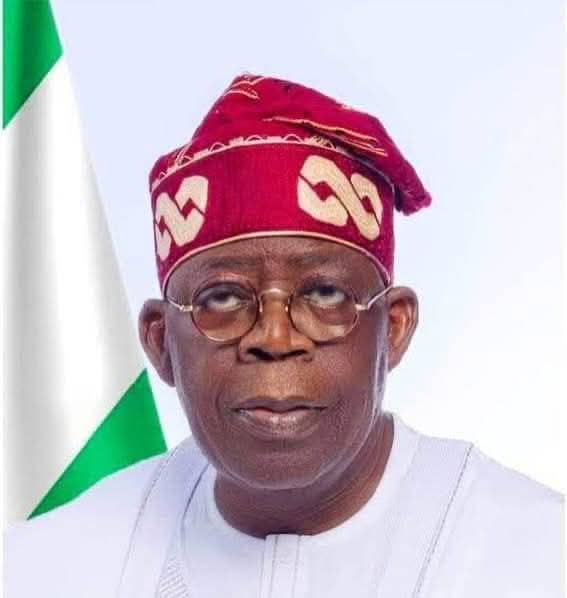
As Nigeria’s Niger Delta hits the highways of economic drive and evolvement, President Bola Tinubu will be in the region to flag off an investment and economic summit.
On September 15, the president is expected to declare open the Niger Delta Economic & Investment Summit 2026 in Port Harcourt, Rivers State.
The region is naturally the oil and gas bay of Nigeria and made of nine states that cut across the three geopolitical zones of southern Nigeria.
But the focus of the event is to look at the holistic economy of the region beyond just oil and gas to the development and growth of other potentials.
The event sets its attention on: Driving Investment, Innovation & Industrial Growth in the Niger Delta
The Niger Delta Economic and Investment Summit (NDEIS), aims to be a high-impact investment platform and will seek to address development challenges and unlock scalable, bankable, and sustainable opportunities in the Niger Delta Region.
Ambassador Ideare Ogan, Chairman of the Niger Delta Chambers of Commerce,Industry, Trade, Mines and Agriculture, (NDCCITMA), the host agency said the body is out to recreate the economic fortunes of the region beyond just oil and gas, and will use the event to make a statement about the economic robustness of the Niger Delta.
The Summit will position Nigeria’s most endowed region with mineral resources as an emerging multi-sector growth corridor with strong returns for forward-looking investors.
It will reposition the Niger Delta as a competitive hub for innovation, enterprise, and inclusive development
The Summit will convene government leaders, development partners, investors, industry experts, community leaders, and youth innovators to engage in focused dialogue on priority sectors such as energy transition, oil and gas value chain optimization, agriculture, blue economy, infrastructure, manufacturing, technology, environmental sustainability, and human capital development.
The Managing Director of Red Sapphire Consulting, Mr. Onoriode Akpe told Africa China Economy Magazine that the summit that has long been in the offing will reposition the region as the economic centrepiece of the country as it has been with oil and gas, but this time in a multi dimensional way.
Akpe said that the emphasis will be placed on inclusive growth, peacebuilding, climate resilience, and economic diversification, education industry development, manufacturing, service sector and ICT industry enhancement.
The Summit program will present keynote speakers, goodwill messages, technical session and structured plenary sessions, sector-specific investment forums, policy roundtables, and deal-making platforms that will address key issues on the economy of the region.
The Summit is expected to attract key development partners led by our benefactors, the Niger Delta Development Commission (NDDC).
The summit planned to be a world-class event, will align regional development priorities with national economic objectives and global investment trends.
The Steering Committee will provide strategic oversight, stakeholder coordination, and operational guidance to ensure the Summit achieves measurable outcomes, including policy commitments, investment deals, and actionable partnerships.
NDCCITMA sees the Summit beyond dialogue into deal execution. Investment-ready projects, public– private partnership (PPP) frameworks, The Summit will target B2G and B2B engagements that will enable investors and our members to structure partnerships that align profitability with long-term regional stability and impact.

2027 : PDP Candidate re-connects Zanchita community with National grid after two years of darkness
By Uthman Baba-Naseer,Minna It was a celebration galore in Zanchita community in gbako local government area of Niger State,as former...

Insecurity ,displacement alters distribution of Christian communities in Niger state to 3,417,636
By Uthman Baba -Naseer,Minna Niger state Christian leaders have disclosed that out of the Seven million, four hundred and seventy...


Death of 37 suspected illegal Miners:11 member of Judicial commission of inquiry set for inauguration on Tuesday by govrrnor Bago
BY UTHMAN BABA-NASEER,MINNA Sequel to the constitution of the Judicial commission of inquiry by the governor Mohammed Umar Bago, to...


Thanksgiving Service Heralds Bayelsa 30th Anniversary Celebration
By Dabid Owei Bayelsa State Government on Sunday held an inter-denominational thanksgiving service to kick-start activities marking the 30th anniversary...


Former Speaker challenges substition of his name with Suleiman as winner of APC primary election at Minna Fed.High Court
By Uthman Baba-Naseer,Minna The Former Speaker of the Niger State House of Assembly,Rt Hon. Adamu Usman,has filed a lawsuit before...


SWAN President to Storm Bayelsa for 30th Anniversary Celebration, Igali Confirms*
By David Owei The President of the Sports Writers Association of Nigeria (SWAN), Benjamin Isaiah, has been confirmed among dignitaries...

Panic Grips Delta Residents as Deputy Director Dies After Alleged Assault
By Our Correspondent There is palpable tension among Delta residents following an alleged death of a deputy Director in Asaba,...

SPC 2026 Annual Wkshop: Journalists Deliberate on Legislative Oversight, Budget Integrity,Media Collaboration
By Our Correspondent The 2026 Capacity-Building Workshop of the Senate Press Corps will focus on strengthening legislative oversight and media...

The Day the Church ‘Blessed’ the Media
By Emmanuel Nnadozie Onwubiko For a media practitioner and a Catholic, Thursday, September 24, 2026, will remain a remarkable day....

As ‘Ọsọ Marwa’ Sweeps Across Nigeria’s Forests
By Emmanuel Nnadozie Onwubiko Today’s reflection is on a new and increasingly significant battlefront opened by the National Drug Law...
-

 Politics1 year ago
Gov Okpebholo moves to end Cultism *Threatens action against leading cult groups *Vows to demolish more cult houses in Edo State
-
 Politics1 year ago
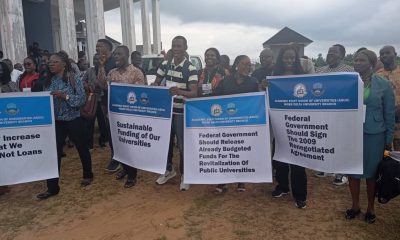
ASUU-NDU protest against FG loans, unpaid salaries,Non-Implementation of agreements …..says loans is generational slavery
-
 Business & Economy1 year ago
PC-NCG Issues Disclaimer on Purported Nigerian Coast Guard National Orientation Exercise In Anambra State
-
 Entertainment2 years ago
Jubilation galore as Parishioners of CKC Kurudu celebrate their cultural heritage ….FG should exploit our Cultural heritage to unite Nigerians-Rev Fr Dim
-

 Sports7 months ago
Bayelsa-born ex-football star’s son, Opuama donates spike shoes to Athletics Association
-

 General News2 years ago
Reps hold public hearing on FMC Ugwuaji Awkunanaw
-

 Law & Crime1 year ago
Legal practitioner raises alarm over threat to his life by CSP Muhammed Abdulkareem
-

 General News2 years ago
Celebration galore as UDA Successfully Elected New Exco ……I will digitalize processes that will raise UDA to greater height -Comr. Okejiri