
General News
Dantsoho: Reforms, Oyetola’s Impact Responsible for Maritime Sector’s Recent Transformation **Says Nigeria can dominate Africa’s blue economy

Jonas Ezieke
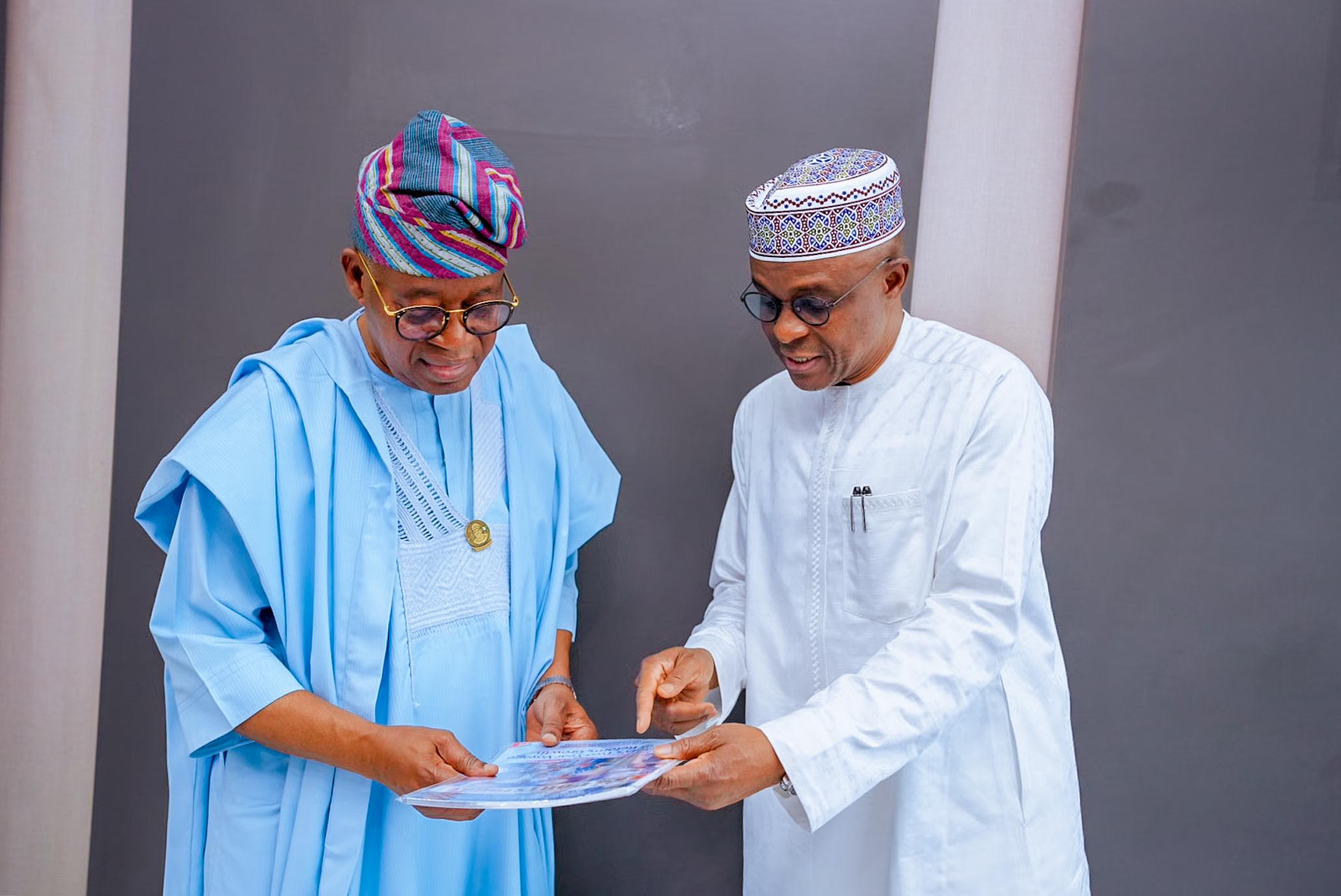
Managing Director and Chief Executive Officer CEO of the Nigeria Ports Authority NPA Dr. Abubakar Dantsoho, has attributed the transformation of the nation’s maritime sector to the impact of the Minister of Marine and Blue Economy, Dr Adegboyega Oyetola and the federal government reforms.
This was as Dantsoho has assured investors that Nigeria has the capacity to dominate Africa’s blue economy, citing ongoing federal government reforms and increased private sector participation as critical drivers of transformation in the maritime sector.
Dantsoho gave the assurance while speaking at the Blue Economy Investment Summit in Abuja, where he stressed that Nigeria’s port system would play a pivotal role in unlocking strategic investments and accelerating economic growth.
He noted that the country must urgently refocus its economic priorities toward fully harnessing its vast marine resources in line with global sustainability goals.
“The time has come for a paradigm shift in the structure of Nigeria’s economy towards the full utilisation of our marine resources. Our port system, if properly harnessed, can serve as a major driver of economic growth,” Dantsoho said.
The NPA boss explained that Nigeria’s strategic location, large population and economic strength position it to become a maritime hub for West Africa, comparable to global leaders such as Singapore and Morocco.
“By virtue of our strategic location, market size and economic strength, Nigeria is well-positioned to function as the maritime hub for West Africa,” he added.
Despite these advantages, Dantsoho expressed concern that Nigeria currently handles only about 25 per cent of cargo traffic in the region, even though it accounts for over 60 per cent of West Africa’s GDP.
“It is worrisome that Nigeria, despite controlling over 60 per cent of West Africa’s GDP, handles only about 25 per cent of the region’s cargo traffic. This clearly shows that we have not fully optimised our potential,” he said.
He, however, assured investors that the tide is turning, as the federal government, through the Federal Ministry of Marine and Blue Economy, is implementing far-reaching reforms to reposition the sector.
According to him, key initiatives include port modernisation, deployment of a Trade Single Window, implementation of a Port Community System, development of deep seaports and full digitalisation of port operations.
“We are implementing key strategic initiatives such as port modernisation, trade single window, port community system, deep seaport development and full digitalisation to reposition our ports for global competitiveness,” he stated.
Dantsoho emphasised that private sector funding remains central to achieving these goals, noting that the NPA is actively encouraging project financing to bridge infrastructure gaps and improve efficiency.
“We are open to private sector participation through project financing. This approach is already improving efficiency and providing access to funding for critical infrastructure,” he said.
He added that the reforms are designed to enhance port efficiency, improve connectivity, reduce freight costs and boost non-oil exports, ultimately driving revenue growth.
“The ultimate goal is to improve liner connectivity, attract bigger vessels, reduce freight costs, and expand our export base, which will significantly boost revenue generation,” he noted.
Dantsoho stressed that competitiveness in the global maritime industry requires efficient operations, competitive pricing and strong hinterland connectivity, adding that Nigerian ports must remain adaptive to evolving global shipping trends.
“With sustained commitment to these initiatives, Nigeria’s port system will enter a new phase and emerge as a leading maritime logistics hub in Africa,” he assured.
Also speaking, the Minister of Marine and Blue Economy, Gboyega Oyetola, said Nigeria’s natural endowments, including its 823-kilometre coastline and extensive inland waterways, place it in a strong position to lead the sector.
“With over 823 kilometres of coastline, extensive inland waterways and a prime location along the Gulf of Guinea, Nigeria is uniquely positioned to harness the immense potential of the marine and blue economy,” Oyetola said.
He added that reforms by the federal government have improved coordination, strengthened maritime security and boosted investor confidence, noting that the sector accounts for over 90 per cent of Nigeria’s international trade by volume.





By Our Correspondent
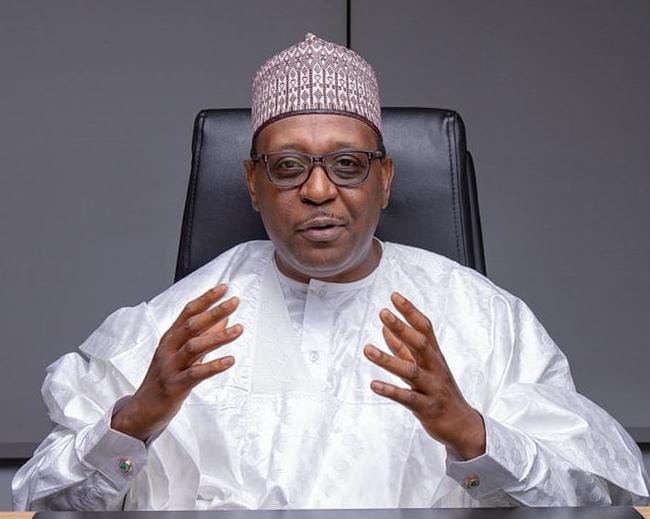
In a bid to state the true situation of Ebola spread in the country,Federal Government has declared tthat there is no evidence that the Ebola virus disease has spread into Nigerian communities, assuring citizens that the country’s response remains focused on containing the single confirmed imported case, as the patient shows significant improvement and may recover.
The Coordinating Minister of Health and Social Welfare, Professor Muhammad Ali Pate, gave the assurance at a ministerial press briefing on the government’s response to the outbreak, saying health authorities had intensified contact tracing, isolation and surveillance to prevent further transmission.
Pate disclosed that the patient, who developed symptoms a few days after arriving in Nigeria, was responding to treatment, with laboratory results indicating considerable improvement.
“Today, I spoke to the clinicians and I understand that her lab results are showing great improvement and there’s a possibility that she would recover from this,” he said.
The minister, however, cautioned that health authorities would not relax their efforts, stressing the need to sustain treatment and monitoring until the patient fully recovers.
He explained that the case was classified as imported because of the patient’s travel history, adding that she was asymptomatic when she arrived in Nigeria but developed symptoms a few days later.
According to him, contact tracing commenced immediately after the case was confirmed, with health authorities identifying contacts at hospitals, a private clinic attended by the patient and within her household.
Pate said the contacts had been categorised according to their levels of exposure, with high-risk individuals placed in a designated quarantine facility, while others were isolated in line with established public health guidelines.
“Our focus is on the contact tracing and ensuring that we know exactly where those contacts are and it doesn’t go into the communities. And at this moment, there is no evidence to indicate that,” he said.
The minister said the Nigeria Centre for Disease Control and Prevention (NCDC) was coordinating the operational response through the national incident management system, working closely with the Federal Capital Territory Administration and other relevant agencies.
He added that the federal government had briefed the Presidential Task Force, the Nigeria Governors’ Forum and the National Economic Council, chaired by Vice-President Kashim Shettima, to ensure coordinated action at all levels of government.
Pate disclosed that all state governments had been informed of the outbreak, with most already having response plans developed with guidance from the NCDC. States yet to complete their plans had been directed to do so urgently.
He said the government had also provided additional resources to the NCDC to support containment activities, while mobilising further domestic resources to strengthen the country’s preparedness and response capacity.
The minister added that the federal government would continue engaging state commissioners of health and information to ensure consistency in public communication and coordination.
On Nigeria’s diagnostic capacity, Pate said health authorities had been able to diagnose and confirm the case, notify the World Health Organisation (WHO) and activate the response within 24 hours of being informed.
He said the government was working to sequence the virus’s genome to obtain further information about the infection, adding that Professor Christian Happi of Redeemer’s University had been invited to support the NCDC’s efforts.
“The capabilities are in country and the investments that have been made to get us here are bearing fruit,” he said.
Pate noted that the WHO, Africa Centres for Disease Control and Prevention (Africa CDC) and other international technical partners were supporting Nigeria’s response, including experts with experience in managing Ebola outbreaks in other countries.
He said traditional and religious leaders had also been engaged to promote public awareness and encourage Nigerians to follow verified health advice.
The minister stressed that Ebola was not an airborne disease, explaining that it spreads through contact with infected body fluids. He urged healthcare workers to observe infection prevention and control measures when attending to patients.
He advised Nigerians to practise regular handwashing, avoid contact with other people’s body fluids and promptly report symptoms such as fever, headaches and muscle aches, particularly where there was a relevant travel history.
Pate said federal hospitals and health facilities in the FCT had been directed to prepare isolation beds and strengthen infection prevention measures, while state governments were being encouraged to ensure similar preparedness in their facilities.
He also urged private healthcare providers to remain vigilant and promptly notify public health authorities of suspected cases, noting that the confirmed patient had visited a private facility.
On planned conferences and other large public gatherings, the minister said the government had not recommended changes to existing arrangements because the case remained contained.
“At this moment, there is no indication that requires us to alter the course of large gatherings that have been planned, but if the situation changes, we’ll make a determination,” he said.
Pate urged political leaders to avoid politicising the outbreak, describing health as a unifying issue that transcended political, religious and ethnic differences.
He also warned against the spread of misinformation, particularly on social media, saying unverified claims could undermine containment efforts by encouraging people under isolation or quarantine to disregard public health instructions.
“The alternative to trusting the expert is a tragedy,” he said, urging journalists and members of the public to rely on verified information from health authorities.
On border surveillance, Pate said the government was strengthening screening at the country’s points of entry in line with WHO guidance and the International Health Regulations.
He disclosed that additional capacity had been requested for port health operations, including ensuring that thermal imaging equipment was functional and that travellers were assessed according to the risk categorisation of affected countries.
The minister said the government would continue to monitor the situation and provide regular updates as investigations progressed, with the NCDC maintaining daily response meetings.
He called on Nigerians to cooperate with health authorities, particularly by complying with contact-tracing, isolation and quarantine instructions, to prevent further transmission of the virus.
END
General News
Lagos-Calabar Coastal Highway: My Disagreement With Umahi – Diri *Says Duke A Jester, So-Called National Champion Without Base
By David Owei
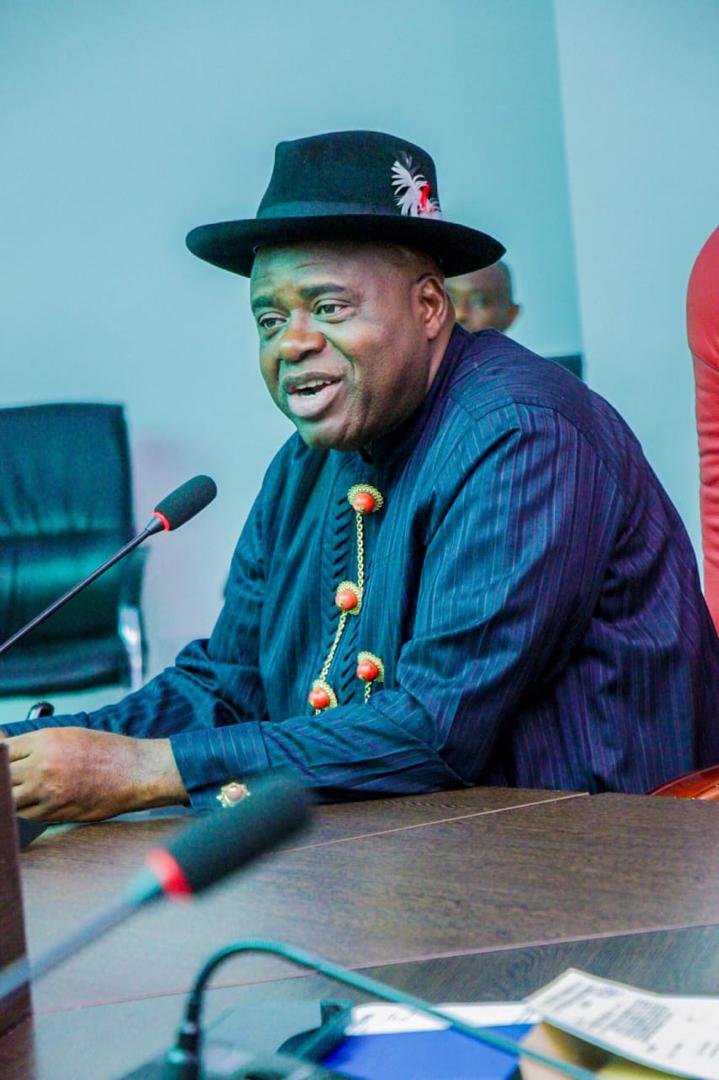
Governor of Bayelsa State, Senator Douye Diri, on Thursday, revealed his disagreement with the Minister of Works, Senator David Umahi, on the ongoing Lagos-Calabar Coastal Highway project.
Governor Diri also disclosed the position of the South-South governors on the project, insisting that they were unanimous in their support for the coastal road and against its re-alignment with the East-West road.
The Bayelsa governor was however unsparing in his response to the comments of a former governor of Cross River State, Mr. Donald Duke, who he described as a jester, a pretender and a politician without a base.G
A statement by his Chief Press Secretary, Mr. Daniel Alabrah, said he spoke during the 200th session of the state executive council in Government House, Yenagoa.
His words: “I read, like everyone else, that there would be a realignment and that the coastal road would be merged with the East-West Road, which I do not believe is the same project. That should be a South-South road.
“I privately called the Minister of Works and said, “Honourable Minister, that is a no, no, no for us. These are two different projects.
“I agree with you that the East-West Road should be reconstructed. It is called the East-West Road, but its reconstruction should not take the place of the coastal road.
“While you reconstruct the East-West Road, the coastal road must continue because you have already won the hearts of all the coastal states.”
He stated that the discussion got to the point that they disagreed.
“I told him that, for me and my state, the coastal road must continue. He kept mentioning Mr President’s name, and I felt that he was the implementer, and was the one who addressed the media. So, go back and tell Mr President that this is the position of the governors of the South-South, because I also speak as chairman of the South-South Governors’ Forum.”
On Donald Duke, the Bayelsa governor said he was perplexed watching a video clip of the former Cross River State governor speak on the project on a television programme.
Diri expressed shock that a son of the South-South could describe the project as not feasible because, according to him, Bayelsa was a swamp.
“When I watched the video and listened to everything he said about the coastal road, what actually made me respond was the example he gave using my state, Bayelsa. He said the coastal road was not feasible, and his reason was that even the state capital of Bayelsa is a swamp. According to him, for the coastal road to pass through Bayelsa, 100 to 200 bridges would have to be constructed.”
The Bayelsa helmsman, who described Duke, the Peoples Redemption Party (PRP) presidential candidate as a pretender, said he did nothing as governor when the Bakassi Peninsula was ceded from Nigeria to Cameroon.
“You pretend to be a presidential candidate of PRP. There is not even a councillor from PRP in Cross River. Not even in your own ward. Yet, you pretend to be a presidential candidate so that at the end of the day you can be rehabilitated.
“You can continue to be your national and international champion without a nucleus, without a base.
“I advise you to go back and settle the huge debts hanging over the heads of generations yet unborn, debts that you incurred and passed on to successive governments in your state.
“Do not use Bayelsa State as an example of a place where roads cannot be built. You were in office when Bakassi was ceded out of Nigeria. But because you were not a local champion, you did nothing about it.
“Above all, Donald Duke, you embarked on a white-elephant called Tinapa. You took loans and incurred debts that you placed a huge burden on the people of Cross River State and every governor and government that succeeded you. That is because you were not a local champion.
“I believe you are more of a jester and a pretender. You pretend to be a presidential candidate, even though you have been out of government for over a decade — almost two decades.”
Diri explained that it was not in his character to engage in public disagreement or fight with people.
“I am not one of those who insult people. I do not insult leaders or elders. But what you have done is not just about me. It is about my environment and my people. I will always stand tall to defend this environment and the people of Bayelsa State.
“With our limited resources as a state government, we are building bridges and roads in the same swamp that he says cannot be developed. We are inviting him to come to Bayelsa since he has used our state as an example.”
He said that in his earlier response, he reminded Duke that it was the same swamps that produced the golden egg that fuelled the entire Nigerian economy.
“Yet, after that press statement, which I asked my Chief Press Secretary to issue, the former governor of Cross River State went back to say what I saw as more of an insult to my person. He started by saying, “That fellow.”
“Donald Duke, I am not that fellow. I am the sitting governor of Bayelsa State.
“He also said, I don not even know that fellow. But I do not want you to know me from Adam, and I don not know you just as you do not know me.
“Hear me well: I am not that fellow. I am an elected, sitting governor of Bayelsa State, and I am very surprised that this is coming from a son of the Niger Delta and, more importantly, a former governor who should respect the office of a governor at all times.
“He did not stop there. He went on to say that, since I do not know him, he is a local champion.
“Yes, I am a local champion because that is where I was raised. I was elected to defend the local people. I was elected to champion their cause. I was elected to see possibilities where there seem to be impossibilities.”
According to Diri, it was time to end the difficult terrain narrative about Bayelsa in relation to its development.
“Enough of this narrative that the Bayelsa environment cannot be developed. Oil and gas resources can be taken away from our land, but the land itself cannot be developed? That is a fat lie from the pit of hell, and we reject it.”
Diri praised President Bola Tinubu for the coastal highway project and that it holds much significance for the Niger Delta people and the Ijaw nation in particular.
“The coastal road is a very important, relevant and impactful project for every state along the coastline, particularly for us in the South-South and Bayelsa State.
“If you recall, on the day we were all crossing over from PDP to APC, I brought out a document containing the demands of the Ijaw National Congress (INC). One of the major demands, dating back to the military era, was the construction of the coastal road. These were some of the relevant issues that made some of us decide to say, “okay, let us go.”
“I like to seize this opportunity to thank Mr President. The very thought of it alone — that these coastal people should not continue to wallow in poverty and be dehumanised, and that they should not be seen as second-class citizens of this country — is commendable.
“If we can have roads in the North and other parts of the country, then the coastal road should also be built. The very idea of it is a big plus for Mr President and his administration. I welcome it with both hands.”
By Our Correspondent
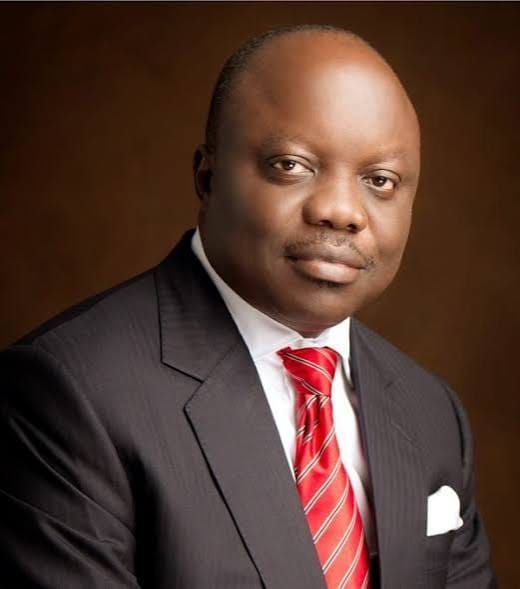
Delta State has declared three days of mourning for its former governor, Dr Emmanuel Eweta Uduaghan, CON, who died in the early hours of Monday, 19 October 2026 at the age of 71.
The mourning period takes effect from Monday, 19 October. The late former governor would have turned 72 in three days.
Governor Rt. Hon. Sheriff Oborevwori has directed that all flags on public buildings across the state be flown at half-mast throughout the three-day mourning period.
The directive was announced in a statement signed by the Secretary to the State Government, Dr Kingsley Emu.
Uduaghan served as governor of Delta State from 2007 to 2015, and the declaration is seen as a mark of respect for his contributions to the state.
End

Gov Fubara Inspects Creek Road Market, Assures Completion by January 2027
By George Mgbeleke Rivers State Governor, Sir Siminalayi Fubara, has expressed satisfaction with the pace and quality of work at...


Shouts of Joy Rock the World As Postor Chris Opens Final Healing Streams Edition for 2026
By Our Correspondent Hundreds of millions participate in the global healing crusade as Pastor Chris ministers to the sick in...


Abuja land: Jordan Nyesom-Wike never admitted receiving $2.1m from anyone -Onoja
By Our Correspondent A Senior Advocate of Nigeria (SAN), Dr James Ogwu Onoja has warned social media commentators and bloggers...

Panel on death of 37dead illegal Miners: Commissioner alleges NSCDC goes beyond its official role of engagement
By Uthman Baba -Naseer,Minna The Commissioner for Homeland Security in Niger State Mr. Maurice Bello Magaji has alleged that the...
Abuja land: Jordan Nyesom-Wike never admitted receiving $2.1m from anyone -Onoja
By Our Correspondent A Senior Advocate of Nigeria (SAN), Dr James Ogwu Onoja has warned social media commentators and bloggers...

Sea Incursion: Senate Demands Urgent Shoreline Protection As Ayetoro Community Faces Extinction
By our correspondent Senate on Thursday called for immediate and comprehensive shoreline protection to save Ayetoro community in Ilaje Local...


FG, labour meeting over fuel price, minimum wage, tax relief, others, deadlock, as NLC orders affiliates to be on alert.
By Our Correspondent The meeting between the federal government and organised labour, convened at the ministry of labour in Abuja,...

Ebola: No evidence of community spread in Nigeria — FG
By Our Correspondent In a bid to state the true situation of Ebola spread in the country,Federal Government has declared...

Benue Massacre: Death Toll Hits 113 ..As Senate demands FG’s Intervention
By George Mgbeleke The Senate has condemned the killing of 113 persons, including six mobile police officers, in a series...

Lagos-Calabar Coastal Highway: My Disagreement With Umahi – Diri *Says Duke A Jester, So-Called National Champion Without Base
By David Owei Governor of Bayelsa State, Senator Douye Diri, on Thursday, revealed his disagreement with the Minister of Works,...
-
 Politics1 year ago
Gov Okpebholo moves to end Cultism *Threatens action against leading cult groups *Vows to demolish more cult houses in Edo State
-
 Politics1 year ago
ASUU-NDU protest against FG loans, unpaid salaries,Non-Implementation of agreements …..says loans is generational slavery
-
 Business & Economy1 year ago
PC-NCG Issues Disclaimer on Purported Nigerian Coast Guard National Orientation Exercise In Anambra State
-
 Entertainment2 years ago
Jubilation galore as Parishioners of CKC Kurudu celebrate their cultural heritage ….FG should exploit our Cultural heritage to unite Nigerians-Rev Fr Dim
-

 Sports8 months ago
Bayelsa-born ex-football star’s son, Opuama donates spike shoes to Athletics Association
-

 General News2 years ago
Reps hold public hearing on FMC Ugwuaji Awkunanaw
-
 Law & Crime1 year ago
Legal practitioner raises alarm over threat to his life by CSP Muhammed Abdulkareem
-
 General News2 years ago
Celebration galore as UDA Successfully Elected New Exco ……I will digitalize processes that will raise UDA to greater height -Comr. Okejiri